What should you do if wasps appear in or near your home? The venom of these insects can cause serious harm to the human body. Therefore, it's important to understand why the insects have appeared and how to protect yourself and your loved ones from them. There are many time-tested methods for this. The key is to know how to use them correctly.
Content
The main reasons for the appearance of wasps and wasp nests
Wasp nests in a residential area or on a property pose a real danger. If no measures are taken, the insects will begin to constantly produce new individuals. Finding their breeding site can be quite difficult.
The emergence of such a hive is associated with the queen wasp's selection of a suitable location to build her empire. Why do wasps choose nesting sites close to home? There are usually several reasons. The main ones are:
- sweet foods left in plain sight;
- aroma of food;
- availability of dry and warm places for housing;
- the need to find a place to spend the winter protected from possible precipitation (the problem becomes more acute at the end of the summer season).
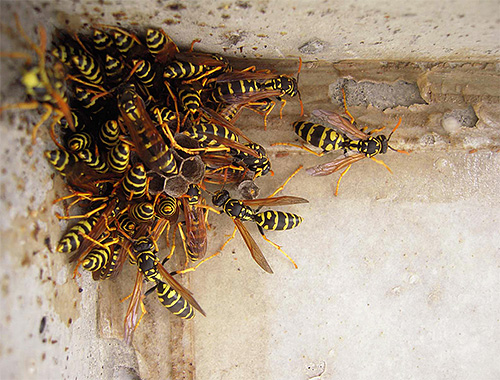
The appearance of wasp nests can become a real problem for summer residents.
Groups and species of insects
Wasps are divided into two main groups:
- Solitary beetles are individuals that build simple nests. Each individual queen lays eggs and raises the young.
- Social - colonies with one female that live in communities and collectively care for the offspring.
The main difference in the behavior of solitary wasps from social ones is that they often lead a primitive lifestyle and do not build special nests.
There are various types of insects that differ in appearance, habitat, feeding method, and home arrangement:
- German wasps;
- paper;
- sand;
- floral;
- road;
- real;
- scoliosis;
- lustrous wasps;
- typhus;
- hornets.
Photo gallery: the most famous and original representatives of wasps
-
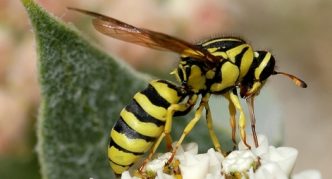
- Flower wasps are found mainly in desert areas and there are about 100 species.
-
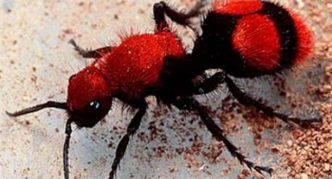
- German wasps are very similar to ants, but they are not related to them in any way.
-
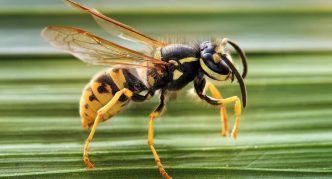
- Paper wasps are bold builders, creating their nests from paper.
How to spot a wasp nest
To find a wasp nest, you need to know that insects build their nests in the most secluded, hidden places. Such areas are usually difficult for humans to access. Wasps' favorite places to build nests are in the semi-dark corners of buildings: on a balcony, under a roof, in an attic, in a barn. Often insects settle in cracks in window niches or in semi-basements.
Wasps build their nests by chewing passages into walls, bypassing layers of insulating materials, wooden planks, and even obstacles such as cement mortar.
If you can't find the nest right away, you'll have to carefully observe the insects. This is usually done by placing bait—a strongly smelling piece of fish or sweet fruit—in a prominent spot. Then, all you have to do is watch where the wasps fly after they've eaten.
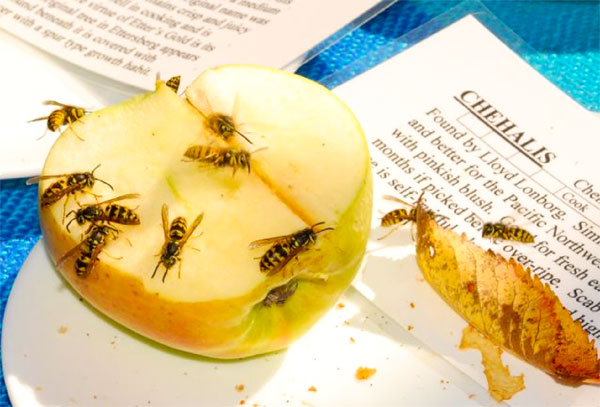
Fruit bait will help you track the insects' path to the wasp nest.
How dangerous can wasps be?
Many people believe that wasps are not aggressive and that living in their presence poses no particular danger. However, harm from these uninvited guests is quite real. These are very vengeful insects, programmed to defend their nest to the last. They will attack virtually any living creature that comes close.
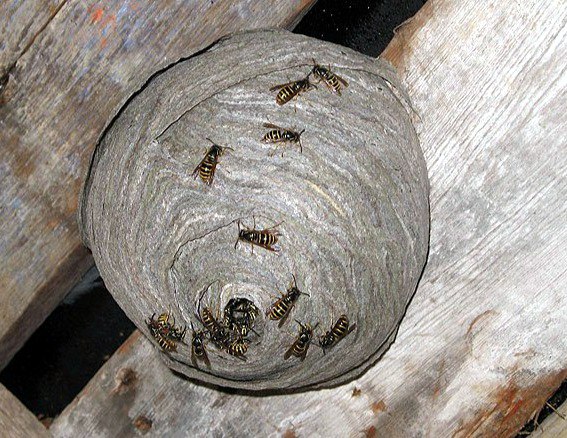
A wasp nest indoors poses a very serious danger.
A nest built near the entrance to a house or barn will become a constant source of insect infestation. The risk of being stung daily increases with prolonged exposure to wasp-infested areas. This can be dangerous for several reasons:
- Wasp stings are known to be particularly allergenic;
- wasp venom, in addition to toxins that destroy cell walls, also contains substances that have a strong effect on nerve endings;
- Insects swarming around cesspools and garbage containers often become carriers of intestinal infections.
It should be noted that different types of poisons contain different chemical compositions. This affects the painfulness of the sting. The most painful sting comes from the small, long-bodied road wasp.
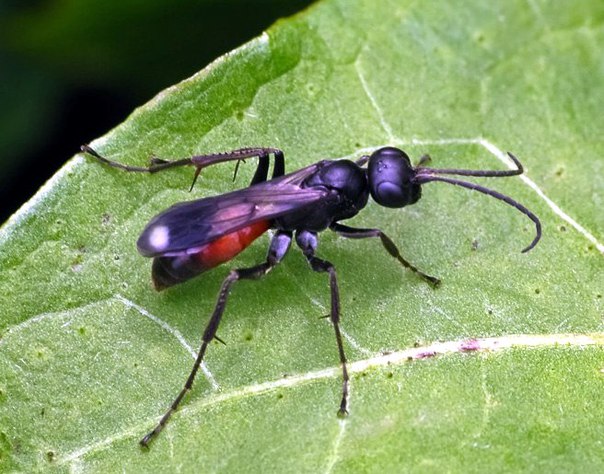
Road wasps, known for their painful stings, are found all over the planet.
No less unpleasant are the stings of representatives of the species True wasps, whose menu includes not only nectar, but also rats, geckos, and some birds.
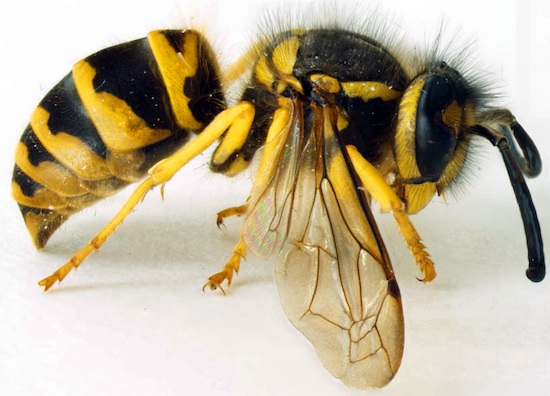
Real wasps are bloodthirsty insects, their venom is extremely strong and allergenic.
The stings of other wild wasps are not much different from each other.
When repelling an attack, wasps use not only their stingers but also their jaws to bite their prey. Their stingers are barbed, so they don't injure themselves. These features allow these venomous insects to strike repeatedly.
How to get rid of nests and their inhabitants
Nest building typically begins in early spring, immediately after the insects awaken. Therefore, it's crucial to check attics, verandas, and other hidden corners early this time of year.
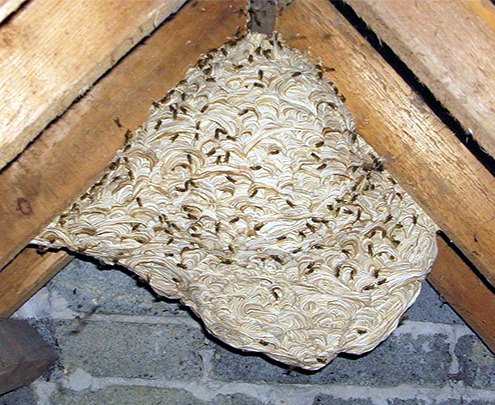
The nest is easiest to find in the spring by examining remote corners of sheds and attics.
Any improvised hives discovered are destroyed or moved as far away from the house as possible. If you decide to get rid of the uninvited guests, do so while they are inactive. It's best to approach the insects after sunset or early in the morning, before they begin to fly out of the nest. At these times, you can douse their nest with smoke and remove it.
Exterminating a wasp colony requires extreme caution. Disturbed wasps are extremely dangerous, as, unlike bees, they can sting multiple times in a row. It is not recommended to use an open flame, otherwise the nest will flare up with such force that the flames will spread further.
Folk remedies
Throughout the centuries-long history of human coexistence with wasps, proven methods of combating poisonous insects have been established:
- Luring them into a trap. Fill an empty container, such as a plastic bottle, with water and jam, kvass, or fruit drink. For greater effect, coat the rim of the bottle with something aromatic, such as jam or honey. Then add boric acid or another odorless insecticide. Hang these traps near wasp infestations: on tree branches or on the walls of buildings. This will attract the insects and cause them to drown. According to beekeepers, wasp traps do not work on bees.
- Bait distraction. Place a sweet treat far away, beyond the fence or property line. Gradually, most of the wasps will be drawn there. This method is beneficial because it preserves the insects' lives.
- Submersion. Carefully lower the removed nest into a full bucket of water. You can leave it there, but simply lift the bucket so that the nest is inside. This procedure takes at least 4-6 minutes. During this time, the nest becomes soaked, and its inhabitants drown. The former nest site is treated with a chemical or paint.
- Covering a nest in the ground. A lid coated with a sticky substance is placed over the entrance hole. When it is completely covered with wasps, it is scraped off and coated again. All the wasps that fly out gradually become stuck.
- Pouring boiling water. Prepare a bucket of very hot water and dig a small hole in the ground. Place the nest and all its inhabitants in the hole, pour boiling water over it, and immediately bury it, compacting the soil.
- Kerosene used to be a good wasp control agent. However, recently the insects have adapted to it and no longer respond.
All work is carried out in very thick clothing with the face protected by a net.
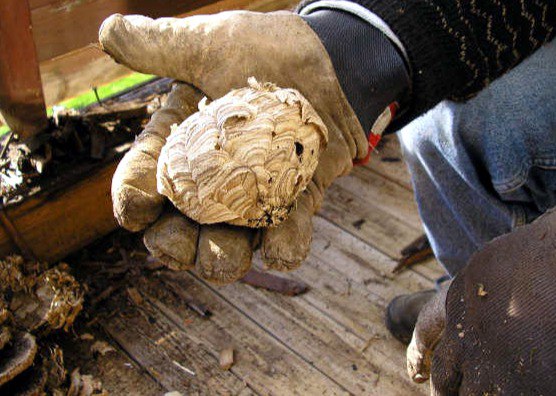
Destruction of a wasp nest should be carried out carefully, protecting exposed areas of the body with clothing.
Video: Making a wasp trap from a plastic bottle
Chemicals and their application features
If a nest is discovered after the insects emerge from hibernation and all safe control periods have been missed, specialized chemicals can be used. These are usually sold in household chemicals.
When using such products, it's important to remember that they can cause chemical burns and render the treated soil unusable for a long time. They must be used strictly according to the instructions, and all steps must be performed with extreme caution, with your back to the wind.
From the many well-known preparations for the destruction of poisonous insects, you should choose the most recognized and proven remedies.
Karbofos
A popular and inexpensive insecticide sold in liquid or powder form. It requires dilution with water. Although considered somewhat outdated, it remains reputable for its effectiveness.
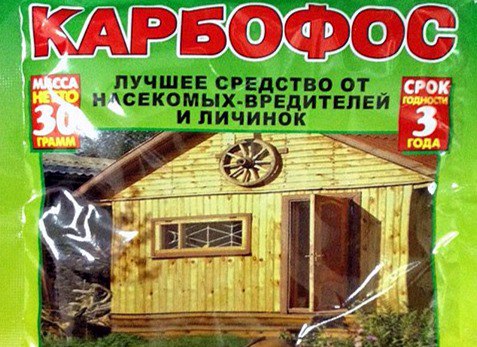
Karbofos is a reliable and timeless remedy for controlling insects in summer cottages.
Karbofos is known for its pungent odor. For this reason, it is not used in poisoned baits.
Dichlorvos
When choosing this traditional remedy, keep in mind that the nest will need to be treated repeatedly. Spraying it will only "intoxicate" the wasps at first, but it will take several days to completely kill them. Furthermore, the nest will only need to be destroyed at night.
Dichlorvos is available under various brands, is inexpensive, and is sold in hardware stores. One canister is enough to completely destroy a wasp nest.
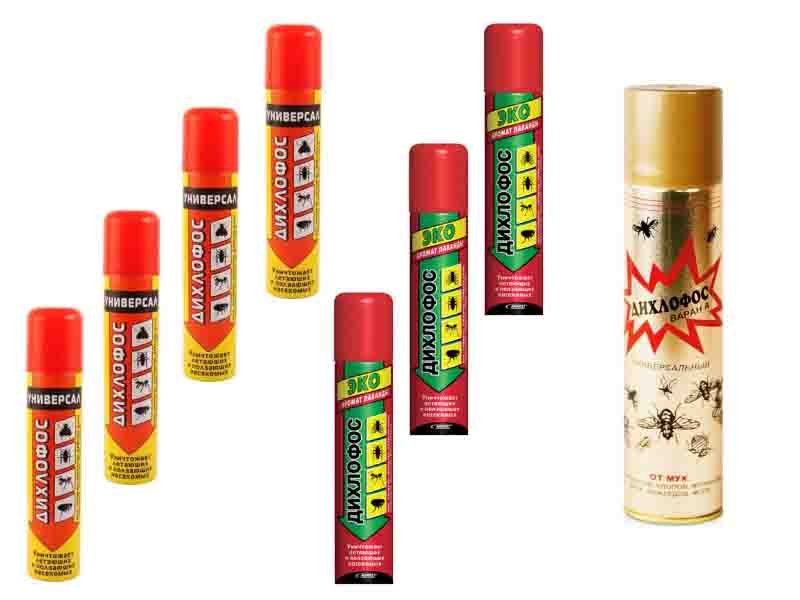
Dichlorvos is a universal remedy that helps fight wasps.
Cockroach gels
You can kill wasps with any cockroach gel, among which the following are especially popular:
- Raptor;
- Globol;
- Absolute;
- Face.
The products should be applied to paper or another surface near the nest. The effect of these products is not as immediate as with aerosols, but the aftereffect is much longer. It will take several days to completely eradicate the wasps. After this, the treatment area is washed with water. If the gel was applied to areas that are not in contact with people, there is no need to rinse it off.
Encapsulated suspensions
This new product contains nanocapsules containing chlorpyrifos. These adhere to the wasp's legs, transporting them to the hive where they are activated and destroy the entire colony. The product is water-soluble and applied to areas where insects congregate.
In Russia, the suspension is sold as a professional insect killer called Get. A significant drawback is its high cost.
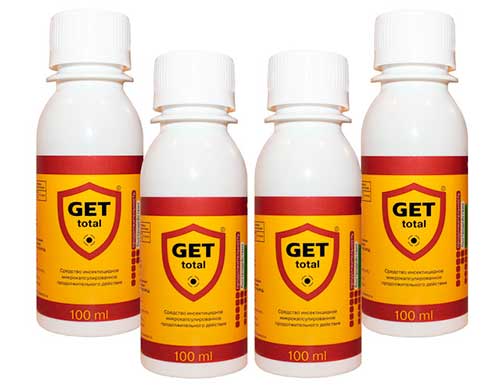
Encapsulated suspensions containing nanocapsules with chlorpyrifos are the most effective among all chemical agents
There are many similar products on the market, including Xulat, Empire, Smelnet, Master, and Delta Zone. These are successfully used against wasps and hornets. Their main feature is a subtle smell. This quality makes it possible to use the preparations for making poison traps.
The effects of encapsulated suspensions begin to appear approximately two or three days after application. During this time, the already mild odor will completely disappear, and washing the applied surface will become unnecessary.
Especially resourceful gardeners know that you can get rid of wasps using an aerosol can of paint. Once painted, the wasps will no longer be able to fly, and they will no longer use the nest.
Ultrasonic wasp repeller
The ultrasonic repeller is a simple dummy nest. Its creators assumed that insects would avoid the structure for fear of attack from their hosts. But the main tool is magnetic waves. These devices can have a negative impact on human health, so it is recommended to use them in empty summer cottages, garages, and sheds.
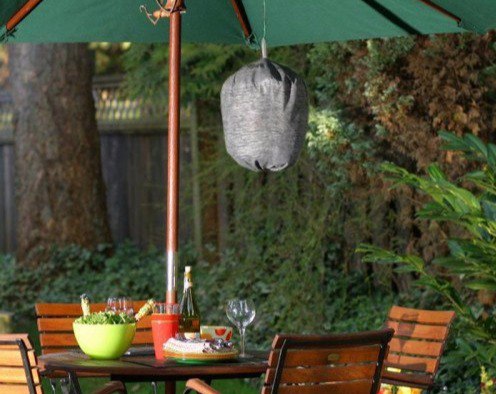
The Weitech WK-0432 repeller imitates a large wasp nest in its shape.
The most popular repellents:
- Weitech WK-0432. From a distance, it truly resembles a wasp's nest. Its killing range is 4 to 6 meters. This device is easy to use and install. It is non-toxic.
- The AirComfort XJ-90 mosquito repellent. Despite its name, this device repels not only mosquitoes but also other insects, including wasps, bees, and hornets. Its effective range reaches 22–26 meters.
- The Mosquito-Away repellent emits high-frequency electronic vibrations. Its kill zone extends up to twenty meters.
Professional services
If you've tried everything and nothing works, don't hesitate to call the professionals. There are specialized pest control companies, both private and public. They'll send experienced technicians who are responsible for the effectiveness of their work.
The cost of a comprehensive professional service ranges from 1,000 to 6,000 rubles. Prices vary depending on the region and the products used. The procedure will cost approximately 200–300 rubles if one wasp nest needs to be removed.
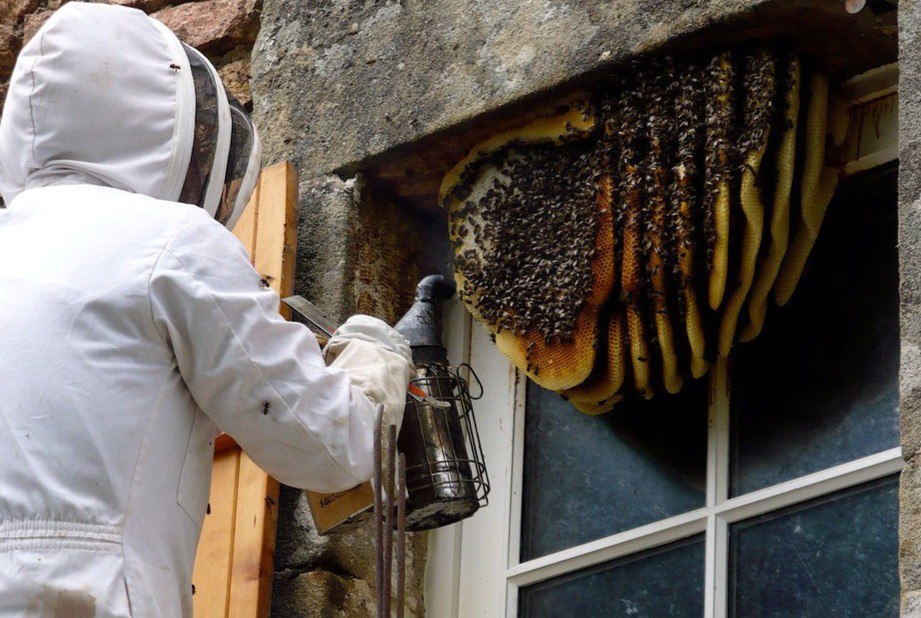
Professionals from special services will help you remove a wasp nest.
The presence of wasps in your home or near buildings always poses a danger to your household. The wasp nest must be destroyed. It's important to remember that this should only be done after proper preparation and research into all options for dealing with these dangerous insects.
 Yuri Pomoshchnikov
1 comment