Garden plants are threatened by many pests, including the bud mite. It's important to be alert to its presence to avoid irreparable damage. To do this, you need to know the signs of a mite infestation.
Content
Kidney mites: what are the dangers and how to recognize them?
The currant bud mite, also known as the currant mite or currant mite, is a microscopic pest less than a millimeter in size (0.2–0.3 mm). Its body is white, worm-like, and has four legs. It is common wherever currants grow.
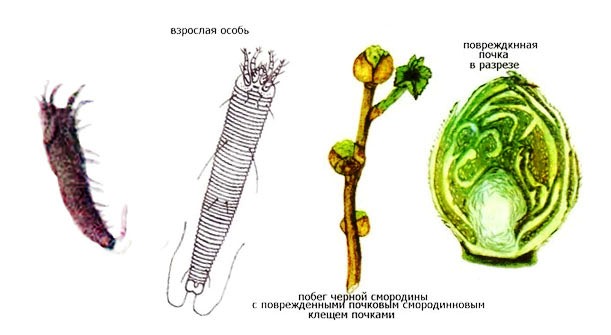
These mites are so small that it is almost impossible to see them individually with the naked eye.
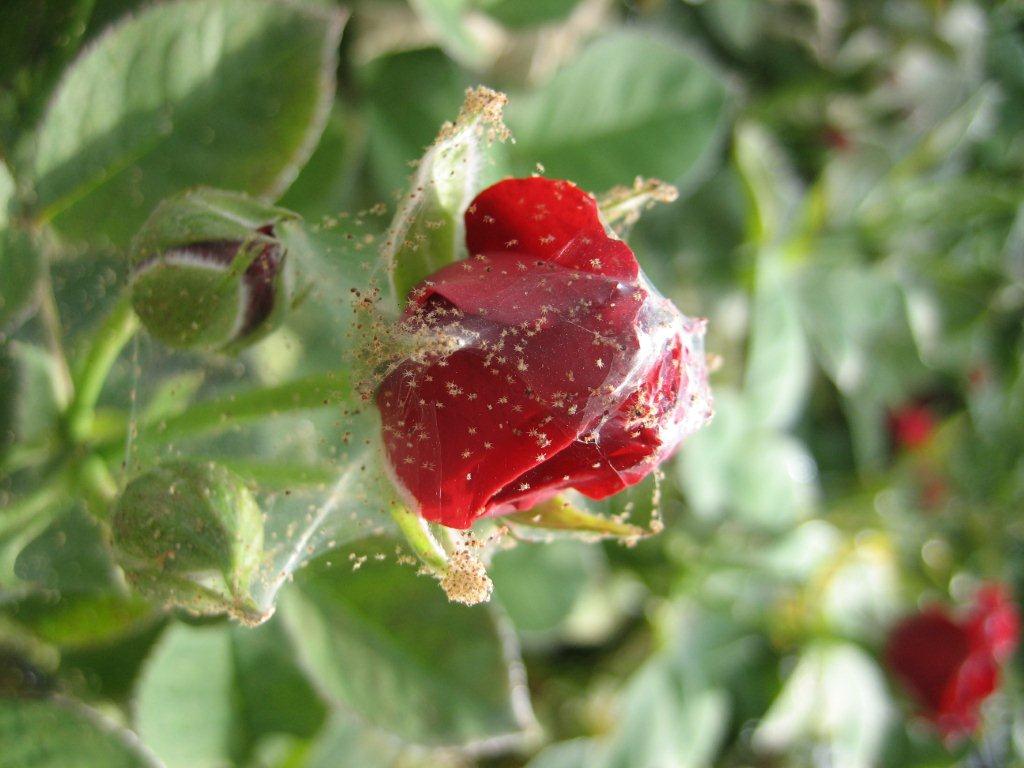
The currant beetle differs from other members of its subclass that inhabit plants primarily in its preferences: its name itself suggests that this pest prefers currants. Observations indicate that it prefers blackcurrants, but it also attacks other varieties, as well as gooseberries. Unlike, for example, spider mites, which leave dots and webs on leaves, the presence of currant mites is only revealed by swollen buds and the general condition of the plant.
The bud mite is dangerous for plants because it attacks buds, preventing them from producing leaves and shoots. This can lead to the loss of the entire berry harvest. The mite also transmits the pathogens that cause a dangerous currant disease called terry leaf spot.
This is interesting. Currant reversion is a disease that, in its final stages, completely deprives the plant of berries. It is usually detected by the appearance of red or purple flowers that become double.
Symptoms of kidney mite infestation include:
- In winter, a significant increase in the size of some plant buds is noticeable.
- In early spring, when temperatures rise, the mites awaken and the females lay eggs. Therefore, swollen, diseased buds are especially visible on still-bare branches. As they open, the mites migrate to the immature buds. At this point, the pests can be seen. Uneven shoot development and stunted growth are observed. Some buds dry up and fail to produce leaves. The plant produces few flowers.
- In summer, the growth of mite-infested bushes is noticeably stunted. Some shoots are crooked. Berries are few, and some fall off before they ripen. By late summer, some buds swell.
- In autumn, it is clear that the shoot rudiments on the bush are of different sizes, some of them are round in shape and larger than others.
Video: Signs of currant mite infestation
Reasons for appearance on the site
Most often, ticks enter a garden plot with planting material. Currant seedlings purchased from unscrupulous sellers or taken from friends may be infected.
The pest also spreads in other ways: birds, insects, and even people whose clothing the ticks attach to can carry them. They can also be carried by the wind.
How to fight kidney mites
If you notice swollen buds, you need to start fighting the pest as soon as possible to try to save the bush and prevent infection of healthy plants.
Chemicals
Insecticides won't work against ticks, as these arthropods are biologically related to arachnids. It's best to use specialized pest control products for your garden—acaricides.
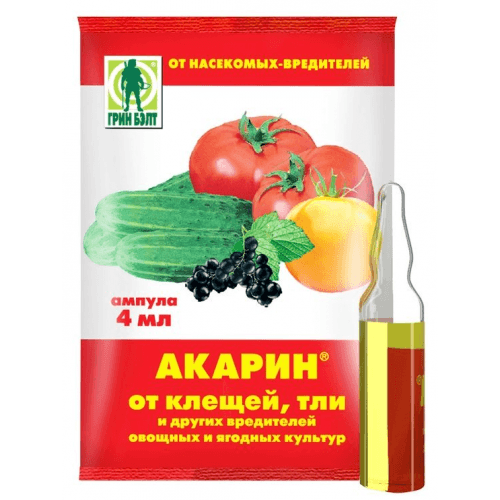
Insectoacaricides are effective against both insects and ticks.
In spring, the following preparations with reduced toxicity are used:
- Nissoran;
- Envidor;
- Oberon;
- Judo;
- Forbid 4F;
- Movento;
- Contos.
Since these products do not have a strong effect, they are used at least twice with a break of 10–12 days.
There are preparations that can only be used after the berries have been picked, as they are more toxic and should not come into contact with edible fruit:
- Bi-58;
- Phosphates;
- Famidofo;
- Rogor-S;
- Accent;
- Pilarmax;
- Danadim.
To prevent bud mites from developing immunity, it is recommended to alternate spraying with different products. It is important to follow the instructions to avoid harming the plant. Keep in mind that this procedure will be ineffective in rainy weather.
This is interesting. The common ladybug can help protect your garden by eating currant mites. Bugs, lacewings, and carnivorous parasites also do this.
Another remedy against currant mites is colloidal sulfur. It is slightly toxic to humans, so it's best to try to get rid of the pest with it first. Spraying with a sulfur-based suspension or preparation, as well as a solution of sulfur powder at an 80% concentration (50-100 grams per 10 liters of water) is recommended before flowering or during bud formation. However, this treatment will only be effective at temperatures above 20°C. OWITH. Gooseberries are sensitive to sulfur-based products. If the emulsion containing it comes into contact with a plant, it will cause burns.
Folk remedies
Traditional methods of pest control include mechanical removal of affected plant parts, pouring boiling water over the plants, and spraying with various compounds. The main advantage of these methods of currant mite control is their safety for people and pets.
Pruning branches
Heavily infected branches with swollen buds should be partially or completely pruned with clean pruning shears, depending on the affected part of the shoot. In cases of severe infestation, all branches should be cut back to the root. But this method does not guarantee that there are no mites left, and it is better to combine it with spraying, since on a diseased bush the pests live in almost every bud.Only those that contain more than a hundred parasites swell noticeably.
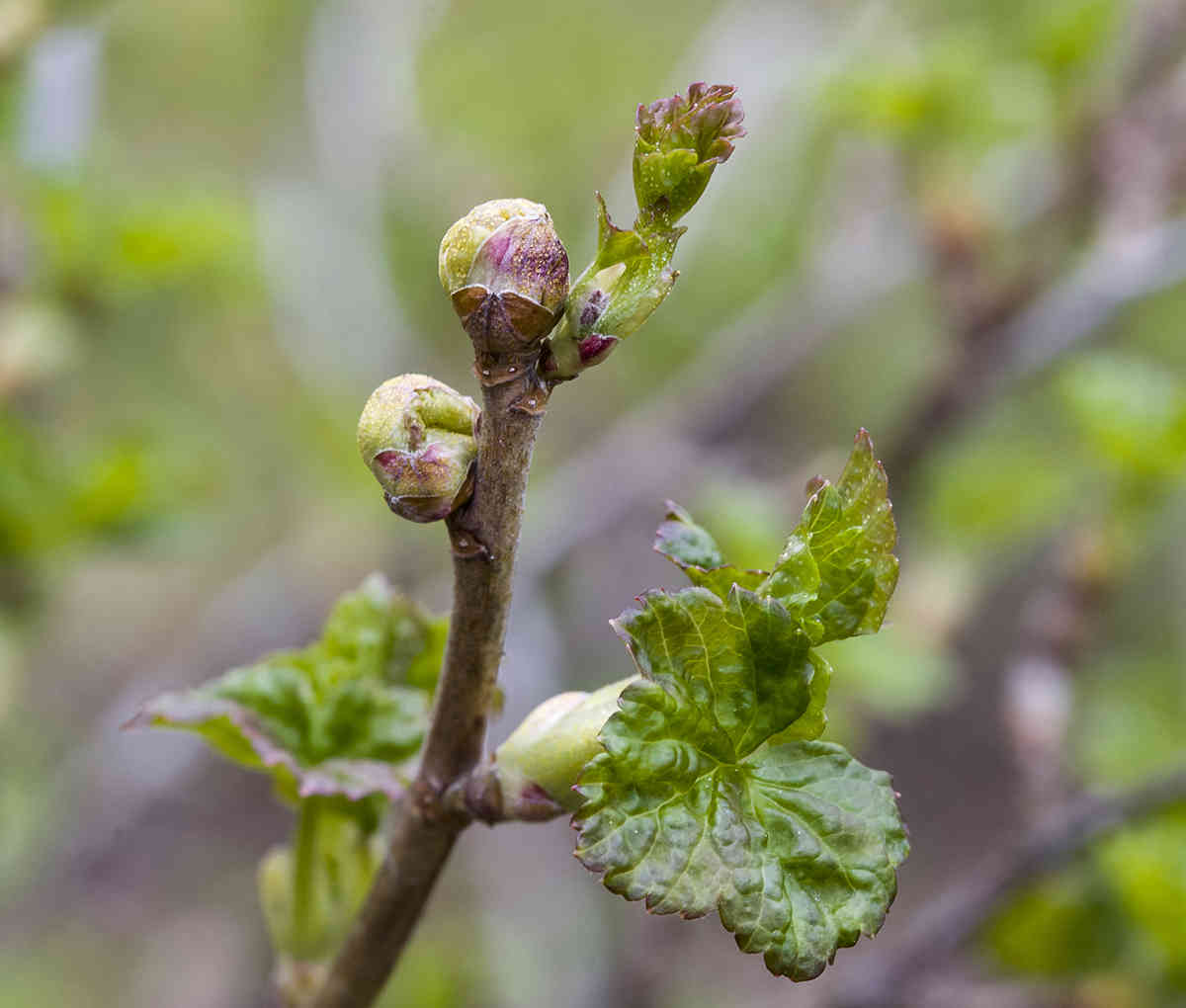
Buds affected by currant mites resemble miniature heads of cabbage.
The cut branches are burned to prevent the mite from crawling onto other plants.
Treatment with boiling water
The boiling water treatment is used in late winter or early spring, before buds open. It is also effective against aphids and powdery mildew fungi.
The procedure for using this method is as follows:
- Take a strainer or make a sprayer from a plastic bottle (cut off the bottom and drill or burn about 5-10 holes in the lid).
- Boil water.
- Pour boiling water through a strainer or sprayer onto the bush from a distance of 10 centimeters.
You can also use a watering can. Apply the water evenly, making sure to cover every branch to ensure all mites are killed.
Video: Boiling water against kidney mites
Spraying
Spraying should be done throughout the plant's active growth period (from spring until the onset of cold weather). The downside of this method is the need for constant treatment with weekly breaks. This method can help control the pest, but only if the damage to branches and buds is minor. The following remedies should be tried:
- tobacco (you can use smoking tobacco, pour 200 grams of tobacco into 10 liters of water and boil for 2 hours);
- onion peel (fill half a bucket with boiling water to the top and leave for 5 days);
- wormwood (fill half a bucket of herbs with water to the top, leave for a day, then boil for half an hour, dilute with water in a 1:1 ratio before use);
- dandelion (400 grams of greens, pour a bucket of water, leave for 3 hours, strain);
- walnut leaves (3 kg of dry leaves, pour a bucket of water and leave for 24 hours).
All these remedies can be combined with each other and also used for prevention.
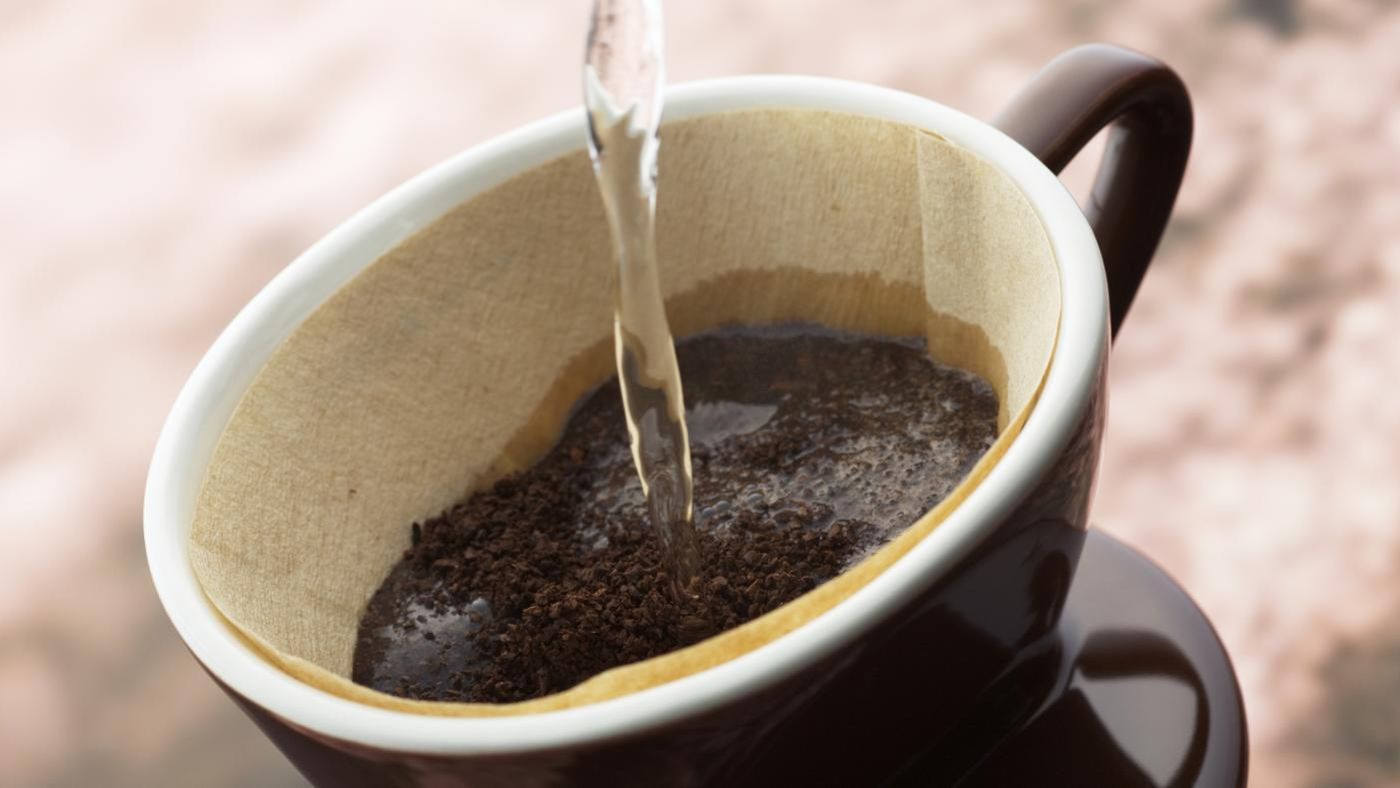
You can also spray the bushes with a strong tea infusion.
In the spring, affected branches can be treated with a garlic decoction. To prepare it, peel 200–300 grams of garlic cloves and pour 10 liters of boiling water over them.
Prevention
It is always better to prevent a disease than to treat it. The main rule for preventing the appearance of currant mites is to take planting material from proven locations. If you have any doubts about the quality of a purchased seedling, you can treat it with a solution of colloidal sulfur (40 g) and agrovertin (10 g), soaking it in the solution for 24 hours. Another option is to warm the planting material in hot water (40–45 OC) within 10–15 minutes.
Gardeners say that planting garlic or perennial onions around bushes can protect them from spider mites. These plants are planted in rows around currants or gooseberries.
In the spring, when buds begin to appear, spray the plants prophylactically with a garlic infusion (crush 150 grams of cloves and add 10 liters of water). Repeat the procedure three times, at intervals of 5-6 days.
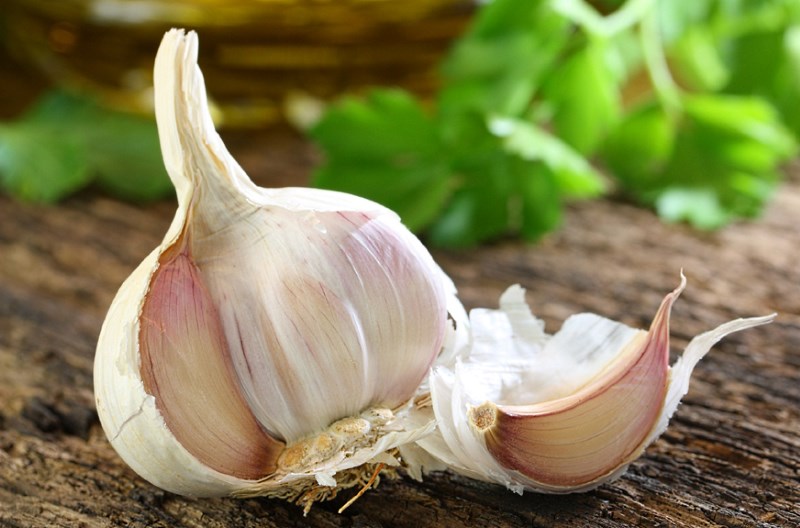
Garlic helps to deal not only with various mites, but also with aphids.
In autumn and winter, inspect the bushes for swollen buds. To avoid problems with this pest, you can grow a currant variety resistant to this mite.
Table: Blackcurrant varieties resistant to bud mite
| Variety | Description | Sustainability |
| Otradnaya | Vigorous bush with large berries | Above average |
| Early Potapenko | Early-ripening currant with large sweet fruits | High |
| Nuclear | Tall plant with plum-shaped sweet berries | High |
| Nara | A spreading bush with early ripening fruits sweet fruits | High |
| Kipiana | Medium-sized plant with early large berries | High |
Table: Red currant varieties resistant to bud mite
| Variety | Description | Sustainability |
| Earring | A winter-hardy plant with small sweet and sour berries | Above average |
| Early Sweet | Medium-sized bush with small sweet fruits | High |
| Early Dutch | Early ripening currant with large sour berries | High |
| Transdanubian | A spreading but compact bush with large berries | High |
| In memory of Gubenko | A medium-sized plant that produces high yields of small, tasty fruits. | Very high |
Is kidney mite dangerous to humans?
Bud mites pose no threat to humans, as they don't carry dangerous diseases. Furthermore, currant mites are incapable of biting humans. Their mouthparts are designed to feed on plant juices and are incapable of piercing human skin.
Although the bud mite is harmless to humans, currant and gooseberry crops are at risk when the pest infests a garden plot. Control is difficult, but not impossible. Chemical and folk remedies can help.