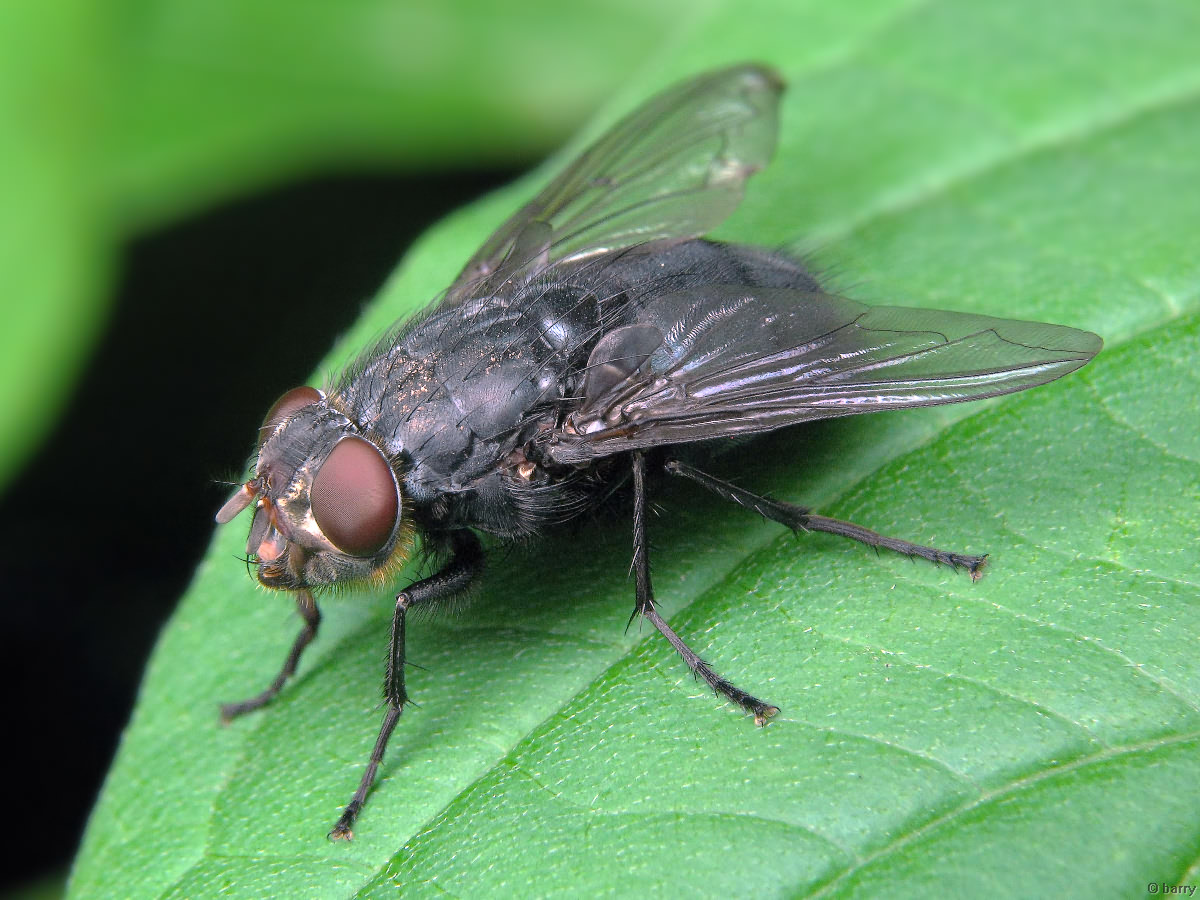
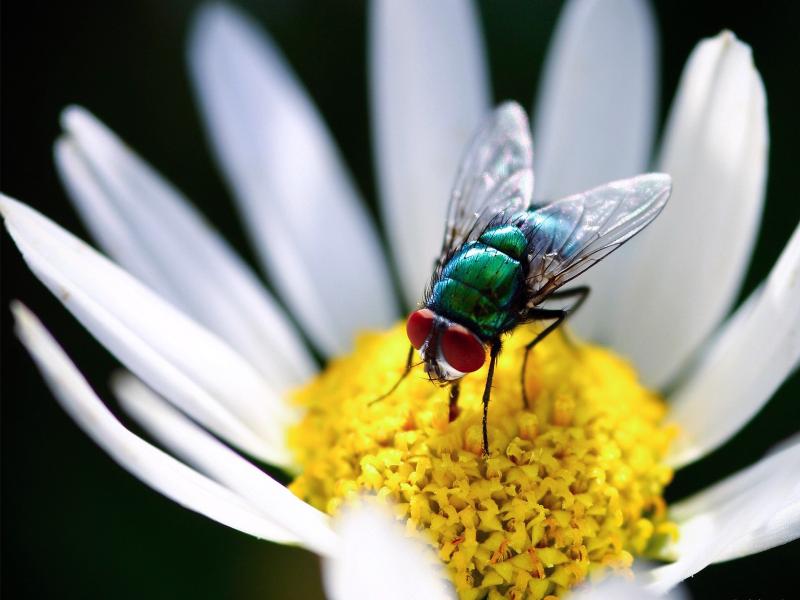
Houseflies are familiar to everyone—in the warmer months, they often visit our homes, buzzing around and making an unpleasant buzzing sound. If there are only a few of them, we pay them no attention: let them fly, as long as they don't land on food or reproduce in large numbers. This attitude is fundamentally wrong, as flies, like many other insects, carry various diseases, so even the slightest contact with these creatures can lead to infection with dangerous diseases.
Content
Reasons why flies appear in the house
The housefly is a small winged insect that visits every home every summer. It has a black body resembling a seed, very large eyes located on the sides, two membranous wings, each the size of the fly's body, and three pairs of legs. The insect's body length is no more than 1 centimeter, and its wingspan reaches 3–3.5 cm, making it far from inconspicuous.
The annoying buzzing sound we hear when this creature flies is nothing more than the sound of wings cutting through the air.
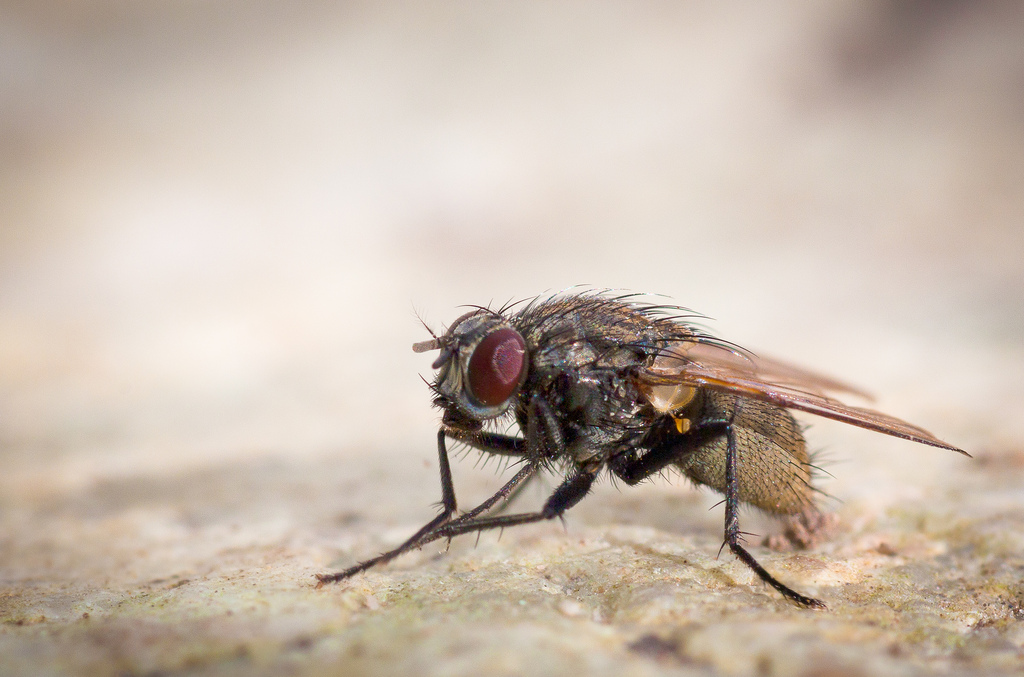
Houseflies carry a large number of diseases, so they can hardly be called harmless insects.
Houseflies lack a proboscis, so they can't bite through skin. They can't even eat solid food—to do so, they must first dissolve it with their saliva.
The optimal temperature for these insects is 23–25 OWITH. Their lifespan depends on this: the warmer the weather, the longer the flies live. In winter, the insects (including adults) hibernate and awaken when the outside temperature reaches 10 degrees Celsius. Typically, the life cycle of these insects lasts up to 100 days (this includes the "pupal" stage).
A female housefly lays 100–150 eggs at a time (an average housefly lays 6–7 clutches in its lifetime). Egg development lasts up to 50 hours, and the larvae live in any rotting liquids and feces; they are 13-millimeter-long, soft white cones with a pointed mouth. Three molts occur over the course of 3–25 days, after which the larva moves to a cool, dark place where it transforms into a pupa. This pupa develops for 3 days, after which it emerges as an adult, capable of producing its first offspring within 36 hours.
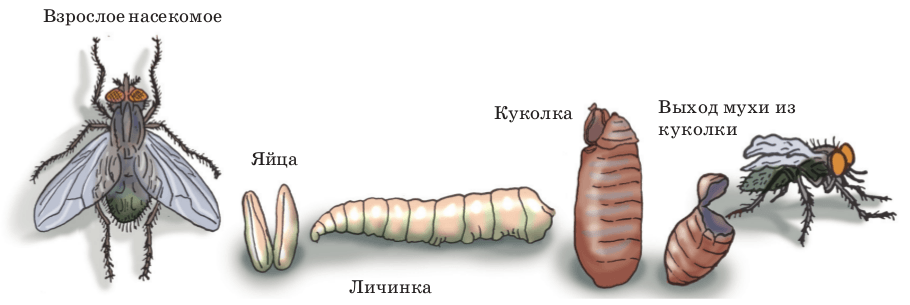
During its short life, one female fly can produce up to 1000 new insects.
Flies feed on rotting food, garbage, and feces, but they also enjoy fresh fruits, vegetables, and sweets. They have a highly developed sense of smell, so they can detect odors from miles away and fly toward them. They enter homes primarily through transoms and open windows, but they can also enter as larvae in rotting food if you accidentally bring poor-quality goods into the house.
Houseflies thrive outdoors and indoors where there's a lot of waste, such as near trash containers. There's always something to eat there, and countless bacteria thrive there. These bacteria, along with food scraps, stick to the flies' legs and are carried long distances.
There's a misconception that houseflies bite people. This isn't true because they simply have nothing to bite with. If you've been bitten by a fly, it was probably a stingray: it looks very similar to a housefly, the only difference being that it has an elongated proboscis with two appendages that act as jaws.
Why are houseflies dangerous?
While bacteria carried by flies can be eliminated by cooking food or washing it in warm water, pathogens that cause various diseases are not so easily dealt with. These microorganisms primarily live on the insect's body, from which they spread to humans. Contact with flies can result in the following diseases:
- tuberculosis;
- cholera;
- diphtheria;
- dysentery;
- anthrax;
- tularemia;
- helminthiasis.
Houseflies pose the greatest danger to small children when they handle fruits, vegetables, and other food items with unwashed hands that have been infested with flies. Mild consequences of this can include poisoning or worms.
Fighting annoying insects
To get rid of annoying insects, you first need to find what attracted their attention, namely, something rotting. It could simply be waste in the trash can. Dispose of it, then try to drive the flies out of the room. You can use a fly swatter or a regular towel. If there are a lot of flies in the room, it's much easier to buy sticky tape, which has a very distinctive smell, and hang it from the ceiling. The scent attracts the insects, who land on the tape and stick.
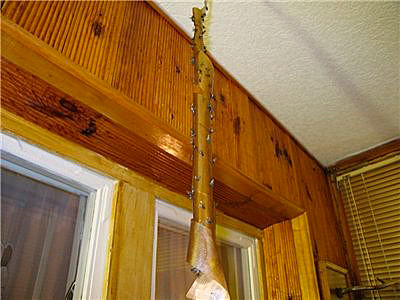
Sticky tapes are completely safe for people, but for flies they are an excellent trap.
Remove all food and lock it in the refrigerator or cupboard, then treat the area with an insecticide. This is a product designed to repel and kill insects (including their larvae). Insecticides include:
- Aerosols. They allow you to quickly get rid of all mosquitoes and flies that have managed to enter your apartment, and the residual effect will temporarily protect against future infestations. The main advantages of aerosols are their rapid effect and ease of use. Examples include Extrasol, Agita spray, Raid, Komaroff, and others.
- Coils and sticks that can be used to fence off outdoor areas to protect against flying pests. The most popular include the Raptor, Tornado, Argus, and Komaroff coils.
- Fumigators are devices powered by the mains and designed to repel and kill insects by evaporating a special pyrethrum-based substance. Fumigators use sheets or liquid fillers as their source. The most popular are Raptor and Raid.
- Electric fly traps. These devices attract insects with a special light and a small amount of carbon dioxide that mimics human body odor, so flies perceive them as living objects.
Photo Gallery: Common Fly Control Products
-
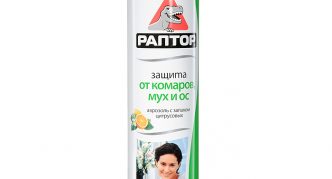
- Fly spray does its job quickly
-
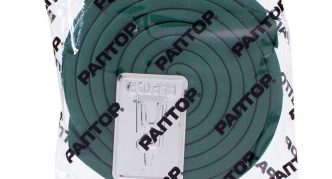
- The spiral will come in handy if you are going out into nature.
-
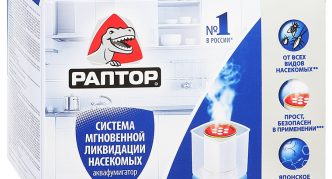
- The fumigator effectively gets rid of insects and is safe for children.
-
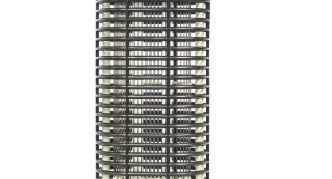
- An electric trap is quite suitable for a large room.
After treatment, be sure to ventilate the room and keep children and pets out until all the smell has disappeared.
To keep flies from returning to your home, hang special mosquito nets on your windows. If you choose a net with small mesh, even dust and fluff will be kept out.
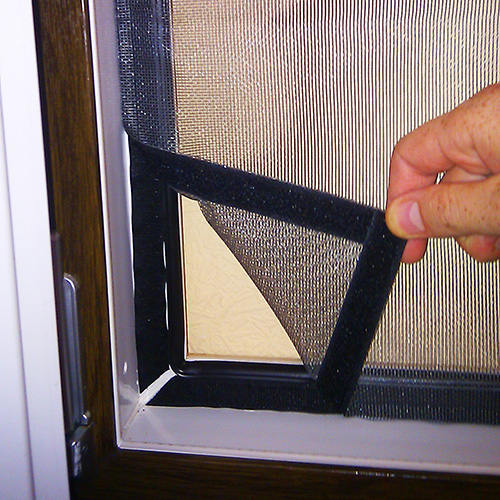
Mosquito nets are very easy to attach to window and door openings.
If you don't have pets, especially cats, you can buy a carnivorous plant and place it in the kitchen, where there's a lot of food. These plants have a very pleasant scent that attracts many insects, including flies and mosquitoes. When an unsuspecting creature lands on the flower, the petals snap shut, trapping the fly. Some types of flowers even absorb the fly's fur, while others "spit" it out. If you have a pet, it's best to avoid this idea: carnivorous plants are poisonous, and pets love to eat flowers.
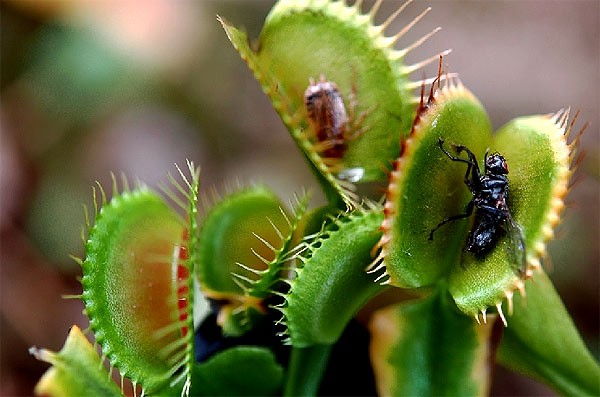
The flytrap plant attracts all types of flies and midges and eats them
Preventive measures against the appearance of houseflies
To prevent houseflies from appearing in your home, it's essential to always keep it clean and tidy, especially areas where food and household waste are stored. During hot weather, take out the trash at least once a day, even if the trash can isn't full: heat accelerates the decomposition process, and the smells of decay attract various types of flies and gnats. Don't leave food uncovered, and install mosquito nets on your windows to keep insects out.

Special hoods allow you to cover food from insects, protecting it from dangerous bacteria.
Video: Methods for getting rid of flies
Reviews
We've had this umbrella cover for many years now. We use it mainly in the summer, when various insects prey on our food. In cold weather, the cover sits folded in a drawer, taking up some space and sometimes even getting in the way, as it's about 40 cm long when folded.
The tape remains effective for two months after use. You'll agree, it's incredibly simple. And this is especially true in a third-floor apartment. But at least not a single fly will fly past or land in your face! So, don't buy fly swatters; just stick on some tape.
There are clouds of mosquitoes, small black flies, and other insects outside. We took the time to attach the net to the doorway. And now we're just using it. Flies, mosquitoes, and moths are kept out of the house. There's plenty of fresh air. The net holds well, and the magnets work.
Houseflies are very harmful insects that need to be eliminated as soon as they appear. Spend a lot of time cleaning your home every day during the summer and fall, especially in areas where food is stored. Install mosquito nets for all windows that open. Sure, you won't be able to look out the window or admire the sunset, but the nets will protect you from these pesky insects.