Houseplants are one of the best and most beloved decorations in a person's home. But unfortunately, they too sometimes suffer from various diseases. For example, plants, just like their owners, can contract fungus—yes, the same mold you sometimes see in pots. Believe me, it's far from harmless.
Content
Why do flowers get moldy?
If you have houseplants in your home or office, you've probably seen a whitish or yellowish coating on the soil or sides of pots and planters. This is how mold begins to develop—from a barely noticeable coating. Most often, flowers that do not require intensive watering and cannot absorb a large amount of moisture at once suffer from this insidious fungus. These include, for example, cacti, succulents (including aloe, milkweed, the “money tree” and the very popular “mother-in-law’s tongue” or sansevieria), so-called “living stones”, and violets.
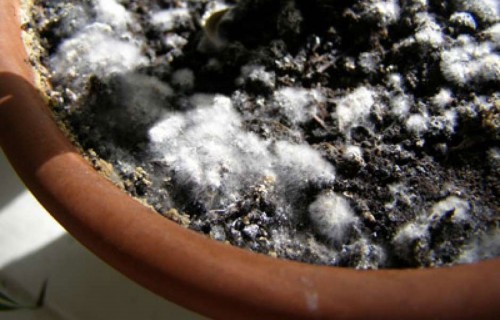
A moldy flower pot is a sad sight.
There are not as many varieties of mold as there are plants, but several types can still be listed.
- White mold. That white coating that can later grow into a fluffy blanket on the ground. It's one of the most common types of mold and perhaps the safest. At first, by the way, it can be confused with a mineral coating on the soil, but to the touch it is much softer and thinner.
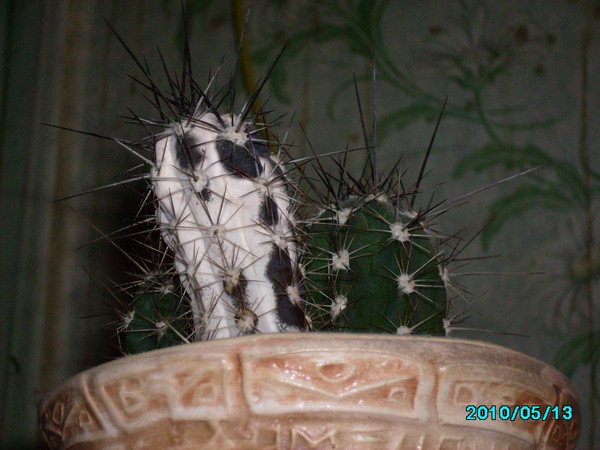
White mold, appearing in a pot, can destroy the plant itself.
- Blue mold. This bluish fungus most often attacks wood, meaning it's especially dangerous for indoor trees, decorative wood chips that many people use to decorate flower pots, and wooden planters and tubs.
- Black mold. The most dangerous type of mold—for both plants and humans—is black mold. It's difficult to spot in soil, but much easier to spot on a pot tray or windowsill. At first glance, black mold can be confused with soil, but the resemblance is superficial. Unlike soil, black mold is not easily removed. If you wipe a dirty surface, it will most likely leave behind some ingrained marks.
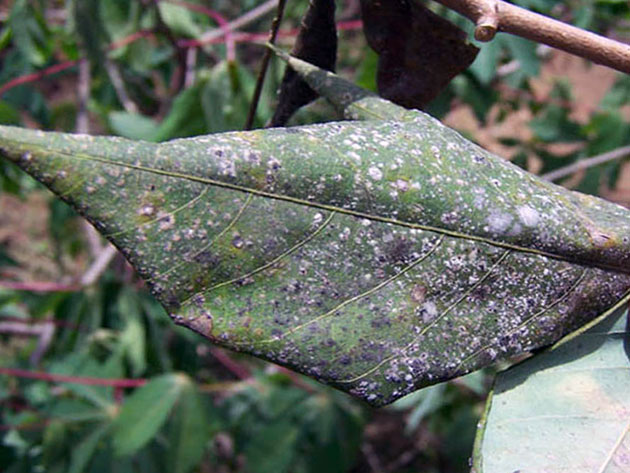
Black mold can also spread from the soil to the plant's leaves.
Regardless of the type of mold, all these species are related and the reasons for their appearance are similar.
- Contaminated substrate. The simplest possibility is that the soil in your pot was already contaminated with mold before you even put it there. If you dug it up in the yard, this isn't surprising. But if you bought the soil from a store, this is a serious reason to question the integrity of the manufacturer. Or whether the store's storage conditions were met.
- Overwatering. As mentioned above, some plants don't require much water, and you may be simply overwatering them. Flowers don't have time to absorb as much water, and their lower leaves and roots begin to rot—all of this, combined with extremely high humidity, creates a breeding ground for fungus.
- Humid air. If watering is fine, the problem may be that the air in the room containing the flowers is too humid. This is fine for a greenhouse with tropical plants, but for most of our houseplants, such conditions are unsuitable—the plants will wilt and mold will thrive.
- Poor drainage. Another possible cause is an improperly designed pot. It must have a drainage hole and a large tray to catch excess water. At the bottom, it is worth creating a drainage layer of pebbles or expanded clay. The soil should be structured appropriately for the specific plant—it's best to purchase a special substrate formulated for different types of houseplants. Clay soils should be used with particular caution, as they retain a lot of moisture and can also promote mold growth.
Why is mold dangerous?
Since humans are accustomed to treating fungal diseases, it seems fairly obvious that they are also dangerous for plants. And here, it's worth highlighting several key points.
- Soil deterioration. The quality of the substrate affected by mold is significantly reduced. Not only water metabolism, but also mineral metabolism, as well as the acid-base balance, are disrupted in it; its composition changes and becomes unsuitable for cultivated plants.
- Plant death. Mold causes the top layer of soil to turn into a crust, impermeable to air and retaining water. Plant roots cannot tolerate excessive moisture and begin to rot, leading to plant death. Furthermore, due to all these negative changes, the plant is deprived of sufficient nutrients, which also harms and leads to death. The same fate can also await lower branches, leaves, and young flower shoots.
- Infestation of the premises. If you're dealing with black mold, the danger is especially great. It can spread to the window sill, frames, walls and ceiling. Black mold is harmful to the human body, especially for children, the elderly, and allergy sufferers.
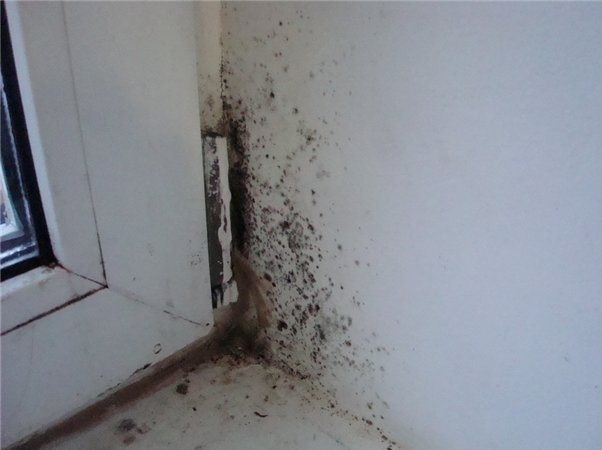
Following the plants, black mold can also affect the window and window sill.
How to defeat fungus
Now that the need to combat fungus becomes clear, it's logical to ask how to get rid of it reliably. The first thing you can do right away is repot the plant in new soil and a new pot, and thoroughly wash the old one and rinse it with boiling water. As a last resort, simply remove the top layer of soil and replace it with new, healthy soil.
In the soil, mold develops in patches, spreading not only horizontally but also in depth. Therefore, as soon as you discover mold in a flowerpot, you should immediately remove it along with the top layer of soil, replacing it with fresh soil. This is essential, because if this fungal infection penetrates too deeply, it will also affect the plant's roots, and then the plant's death is inevitable.
But what if for some reason a transplant is not possible?
Anti-mold chemistry
To kill mold in a pot, you'll need to resort to fungicides. They can be roughly divided into two broad groups: organic and inorganic. Strictly speaking, only the latter group can be considered "chemicals"—it includes products that kill fungi using chemical compounds. Fundazol is rightfully considered one of the best and most popular.
This fungicide is dissolved in water at a concentration of no more than 2 grams per liter, then the soil is moistened and the plant leaves are sprayed with it. Fundazol is highly toxic, so gloves and a respirator are essential when handling it. Many mold removers contain benomyl, the active ingredient in Fundazol, so you simply need to choose the most suitable one and treat the plant according to the instructions. Ferazim and other products based on carbendazim, a metabolite of benomyl, are similar to Fundazol in their action and application method. Less toxic, but also widely available and effective, chemical antifungal agents include Oxychom, Topaz, Skor, Vitaros, Topsin, and Maxim.
All of them are also suitable for combating mold in pots and on the plant itself. Typically, you need to water the soil and spray the affected plant's leaves. The exact ratio of water to chemical can be found in the instructions, as it varies for each product. Chemical products are highly effective, but due to their toxicity, careful attention must be paid to protecting skin, eyes, and respiratory tract from toxic fumes.
Until recently, I never thought I'd need anything other than orchid fertilizer. But then the time came when my flowers needed treatment. Black spots appeared on some of the leaves of two orchids. After reading numerous forums, I decided I needed Fundazol, as these spots were most likely a fungus. <…> The instructions say it can be used in "personal gardens" and that it's a "moderately hazardous compound." However, avoid contact with skin, and wear a respirator when spraying. Judging by this, this product is far from harmless. <…> The downside is the inconvenience of using the packaging. Firstly, it's difficult to measure out the right amount if you only need a small amount, not enough for 10 liters of water, as stated. Secondly, it's difficult to store.
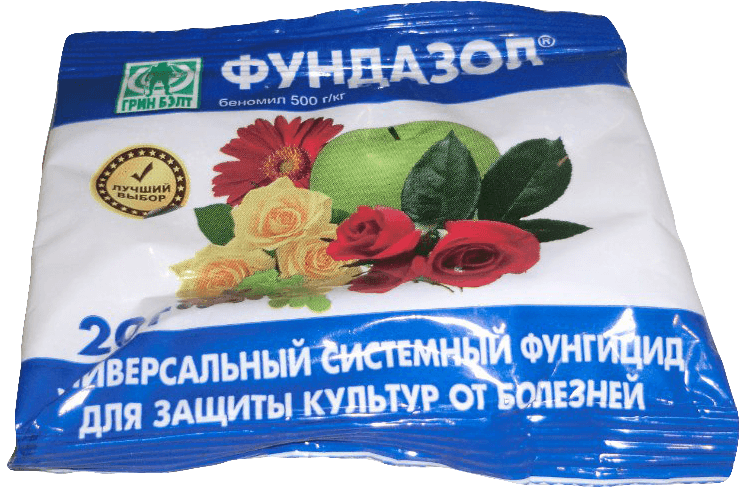
Fundazol is one of the most popular chemical fungicides
Organic products generally contain living organisms—bacteria—rather than inert chemicals. Their vital activity is what fights mold. Some of these products not only help eliminate fungus but also improve the soil. One of the most effective organic products is considered to be Fitosporin. This product consists of soil bacteria that destroy fungus and its spores. Fitosporin is available as a powder, paste, and solution. The powder and paste must be diluted with water in a 1:2 ratio; however, the paste dissolves fairly quickly, while the powder requires soaking beforehand. The solution is sold pre-bottled and ready to use in bottles and canisters.
Simply water the affected soil or spray the leaves. In this case, you can add a little liquid soap to create a protective film on them. In addition to Fitosporin, biofungicides also include Trichodermin, Agat 25K, Baktofit, Mikosan, and Fitolavin. Most of these are available as powders or concentrates that need to be dissolved in water and left to infuse to activate the bacteria. There are also ready-made liquid mixtures, and some biofungicides, such as Gliocladin, come as tablets that are buried in the soil to combat or prevent fungus. Organic fungicides are beneficial because they are non-toxic and therefore virtually safe for humans.
I had to remember Fitosporin last April, when I saw a green-blue coating, very similar to mold, in a couple of places on the roots of my phalaenopsis through the plastic walls of the pot.
The orchid was in bloom, so I didn't want to disturb it by repotting and trimming the roots. <…> Out of desperation, I bought two packets of dry solution from two stores. At home, I diluted it with water according to the package instructions and soaked the orchid and its pot in the solution for half an hour. The pot partially lost its transparency (dry Fitosporin resembles gray ash) and cleanliness, but this can be remedied by wiping it with a cloth or rinsing it in the shower (not immediately, but after a couple of weeks, to allow the activated microorganisms time to consume all the fungi). I repeated the procedure two weeks later, after the substrate had completely dried out. One packet was enough for 2-3 applications. One packet cost 17 rubles. On the second or third day after the first immersion in the solution, the blue coating on the roots disappeared <…> In the fall, when I transplanted the phalaenopsis into a new pot, I did not find any rot or mold on the roots.
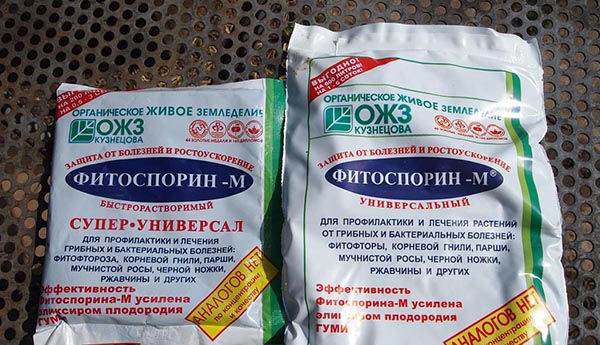
Fitosporin-M is an effective biological fungicide
Folk remedies
Years of keeping houseplants in houses and apartments have also shaped a unique arsenal for combating mold in flower pots. Here are the most popular methods.
- Citric acid. Some suggest watering the affected plant with water mixed with a few drops of lemon juice or citric acid, and then repeating this procedure once a month. However, this method must be used with great caution, especially on highly acidic soils.
- Garlic. One of the "grandmother's" methods is to sprinkle cut garlic cloves around the perimeter of the pot. They need to be replaced occasionally, being careful not to let the garlic rot. Otherwise, it won't prevent mold, but rather, will attract more.
- Charcoal. Activated charcoal, wood charcoal, or ash are also recommended as handy options. Activated charcoal tablets are available at any pharmacy. The tablets should be crushed and mixed into the potting soil. Charcoal can be made at home (scooped out of a stove or fire pit) or purchased at gardening stores, where it's sold pre-crushed and packaged. You can also crush it and mix it with the soil, or cover the soil with it as mulch. Some also recommend combining charcoal with river sand.
1) I remove as much of the top layer of soil as possible (to avoid damaging the roots). I do this 2-3 times a year, just as a preventative measure. 2) I mix fresh, loose, nutritious soil (suitable for the plant or a general-purpose one), sand, and coal dust. 3) I sprinkle all this richness on top in place of the damaged soil. 4) I don't water for a couple of days.
Mold Prevention
If there is no mold on your houseplants yet, or, on the contrary, you have just successfully overcome it, you should take certain preventative measures to prevent the fungus from reappearing.
- Soil. It's crucial to maintain the quality of the soil your flowers grow in. It's best to buy ready-mixed soil from a store: firstly, this way you can be sure the soil won't be contaminated with fungi from the start, and secondly, many manufacturers now specially blend soil to suit different plant species. The soil surface should be well covered with pieces of coal, gravel or expanded clay.
I had the same problem—mold in the soil. I got rid of it very simply: I removed the top layer of soil (with the mold). I added fresh soil and then some charcoal bought at a flower shop (it was very cheap). I crushed the charcoal a little beforehand to make it finer. I also loosened the soil a little so the charcoal mixed with the soil on top. That's it. After that, I just water sparingly and try to place the pot in a well-lit spot. And I didn't use any chemicals! The mold is gone now.
- Pot. Ceramic pots are best. The porous structure of the material allows the soil to "breathe" rather than retain excess moisture. Plastic and metal pots are significantly inferior to ceramic pots in this regard.
- Drainage. To prevent water from stagnating in the soil, it is necessary to ensure drainage. First, the pot must have a hole in the bottom. Second, a special drainage material should be placed directly above it—this can also be purchased at gardening stores. Alternatively, you can simply place pieces of gravel, expanded clay, or brick on the bottom. Third, the soil surface should be loosened occasionally to prevent crusting and ensure even distribution of moisture throughout the soil.
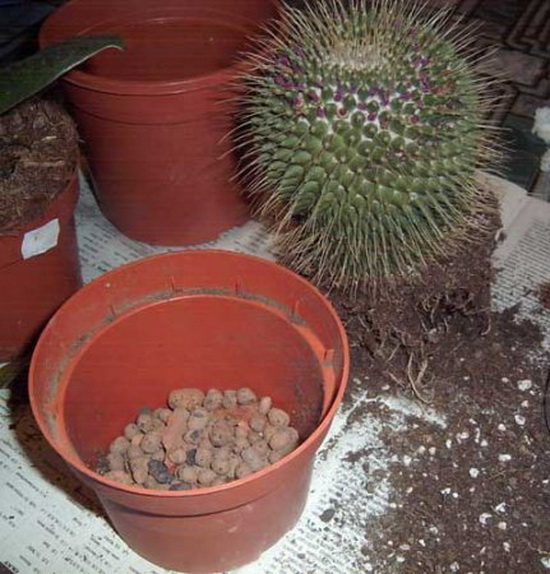
Expanded clay at the bottom of the pot will ensure good soil drainage.
- Watering. Be sure to find out what watering schedule is appropriate for each plant and adhere to it. Some flowers tolerate excess moisture worse than too little, while others—for example, cacti and succulents—require very little.
- Disinfection. Before placing the soil in the pot, it's worth disinfecting it using high temperatures. To do this, you can either roast it on a baking sheet in the oven or steam it thoroughly over boiling water. You can also, as a preventative measure, water the soil with a weak solution of potassium permanganate, and before placing it in the pot, mix in crushed activated carbon.
- Conditions. Plants should receive sufficient sunlight—it also kills mold. It's also important to ensure the room containing the plants isn't too humid or drafty.
If you follow all these rules, most likely your houseplants will not suffer from mold, and you will not feel sorry for diseased flowers.
Mold in a flowerpot isn't a death sentence, and the plant can be saved. Treating the fungus that has appeared is both possible and necessary. However, it's best to take care of your houseplants early—and they'll continue to delight you, enriching the air with oxygen and decorating your home with shiny green foliage and vibrant flowers.