Mold on the walls or ceiling of an apartment not only spoils the appearance of the space but also causes the walls to deteriorate. Mold spores that enter the body can cause serious health problems. Therefore, at the first sign of mold in the home, it's essential to begin combating the fungus immediately to rid yourself and your family of this dangerous presence.
Content
Where does mold come from?
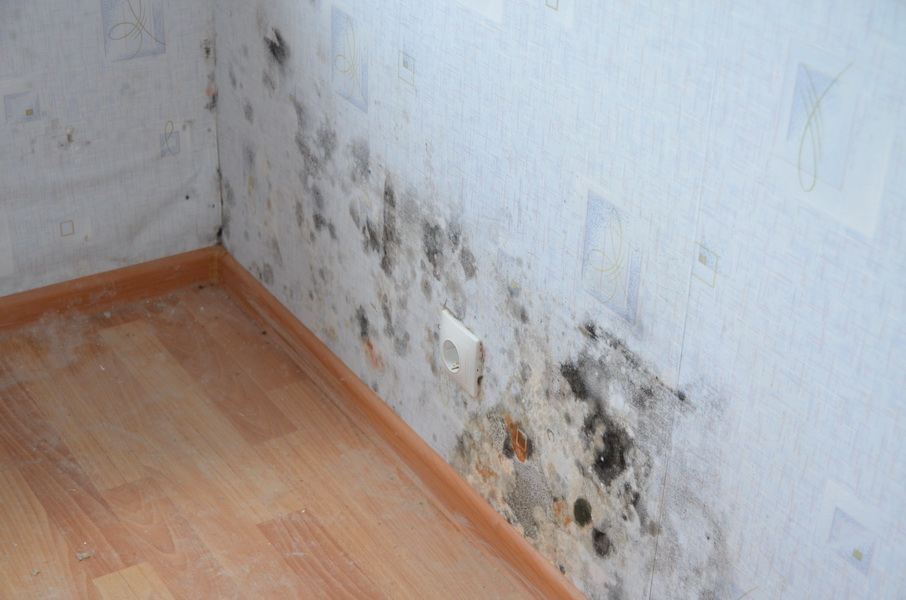
Mold on walls poses a health hazard to humans.
In fact, mold spores are everywhere. However, until a favorable environment for their growth is created, the spores remain dormant and pose no danger. Rapid mold growth is typically observed in warm, humid rooms with poor ventilation.
As fungi multiply, they destroy the surface they inhabit, whether it's plaster, concrete, or paint. Mold is especially dangerous for wood. The sooner you begin combating this unpleasant phenomenon, the more problems you can avoid.
We fight different types of mold in our home
Getting rid of mold involves, first and foremost, eliminating the factors that promote its growth. Since the spores are constantly suspended in the air and can develop on virtually any surface, the only way to prevent mold from appearing on walls, ceilings, or floors is to create an unfavorable climate for fungal growth. Mold thrives in damp, warm spaces.
The main reasons for high humidity:
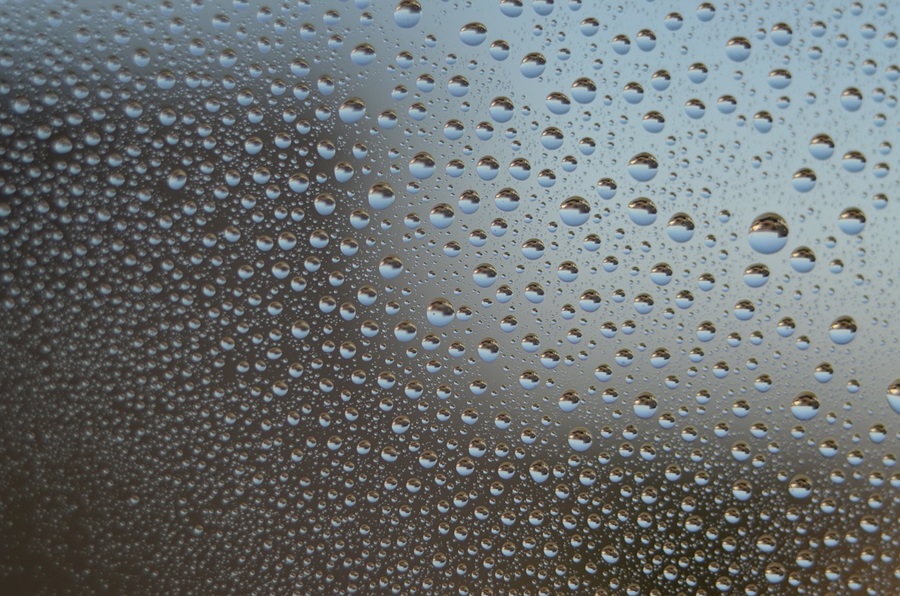
The main cause of mold is a damp, warm environment with poor ventilation.
- poor or non-existent ventilation system;
- leaking water pipes or sewerage system;
- lack of waterproofing of the house;
- excessive thermal conductivity of walls and corners, leading to heat loss from the outside;
- ground moisture;
- cold external walls, which contribute to the formation of condensation on them.
You should begin actively fighting mold only after eliminating the causes that caused it. Then you can get rid of unpleasant and dangerous colonies of fungus forever.
Types of mold in an apartment and the specifics of combating each type
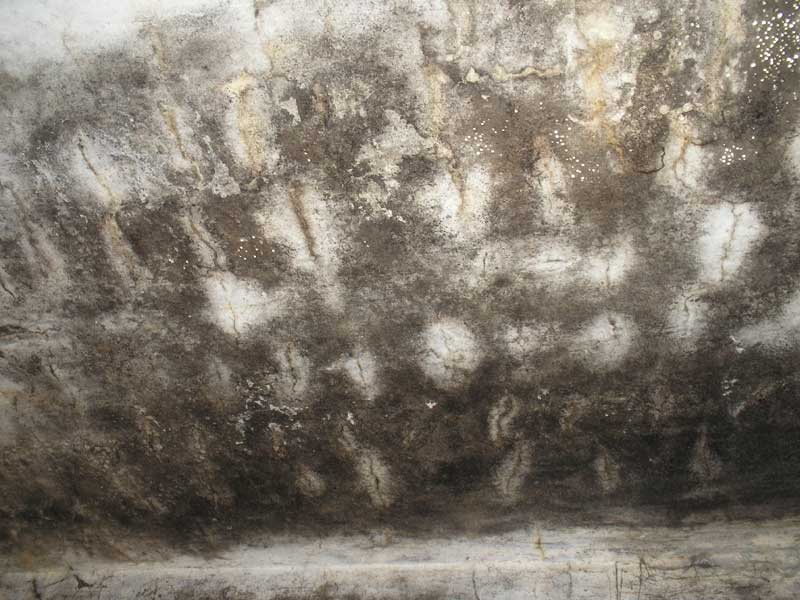
Black mold is the biggest danger
- White mold It appears on soil and in potted houseplants. A white coating called efflorescence may appear on surfaces, often confused with white mold. It differs from mold in its crystalline structure. White mold can cause allergies in humans and animals. It rarely appears on walls and responds to all antifungal treatments, including folk remedies (vinegar, baking soda, and borax).
- Green mold Most often attacks food products, but sometimes affects building materials. It can be destroyed from surfaces with a formalin solution.
- Black mold – the most dangerous and widespread type of mold, affecting any surface. It's the most difficult to remove and requires thorough treatment of the area using specialized products or folk remedies.
- Blue stain mold Spreads on wooden surfaces: parquet, furniture, etc. Requires treatment with special agents.
- Mold rot Affects the tree, destroying it over time. This species can only be eliminated with the use of special products.
Preparing for mold removal
To combat mold you will need:
Before you start getting rid of mold, you need to prepare everything in advance.
- A respirator to prevent mold spores from entering the respiratory tract.
- Gloves are necessary for work to prevent contact with mold.
- A sponge or cloth to wash away mold from the surface.
- A bucket or spray bottle of water to moisten the mold-damaged surface, as dry mold spores quickly spread into the air.
- A metal brush, scraper or spatula - anything that can be used to physically treat the affected area.
- Containers for diluting the solution.
- A brush, roller or sprayer that can be used to apply the product to the wall.
- Dry cloth to collect excess moisture.
- Anti-mold agent (solution of folk remedies, industrial antiseptic, special primer).
- Surface drying device (fan heater, hair dryer). An air conditioner with heating can be used.
Physical mold removal
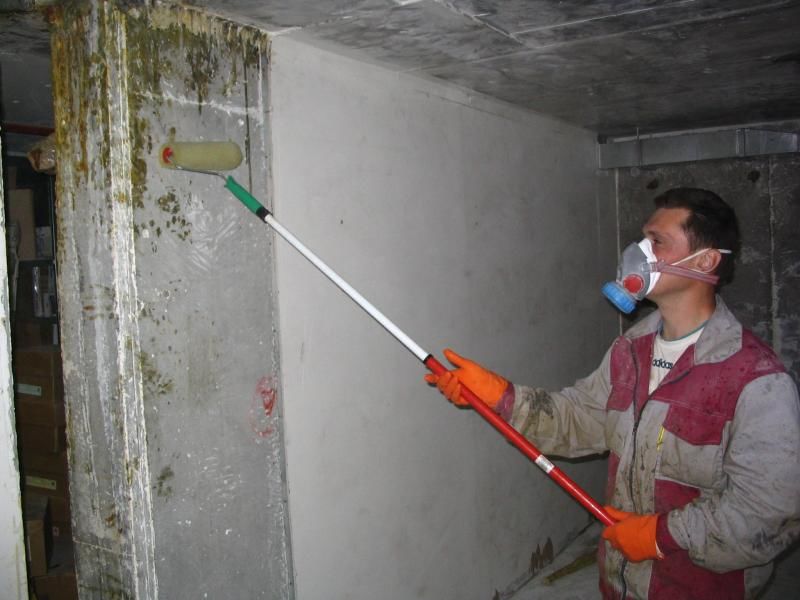
We are carrying out preparatory work
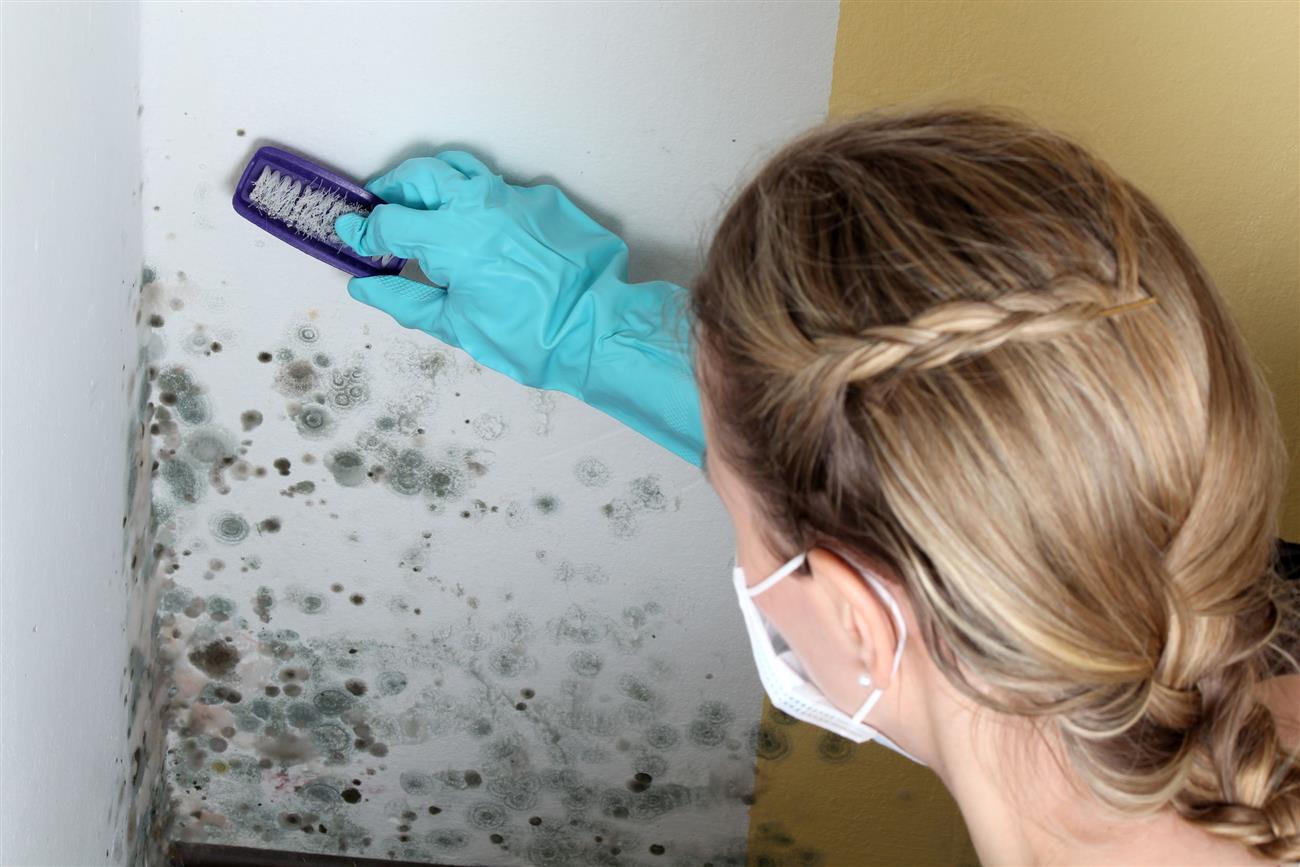
Before treating surfaces with special solutions or products, it's necessary to first eliminate the causes of the mold, then clean the affected areas of the walls, ceiling, or floor of any existing fungus. All work should be performed wearing a respirator or mask and rubber gloves. This will protect you from direct contact with the mold and prevent spores from entering your body.
Preliminary work:
- Before starting work, you need to put on protective equipment, then generously wet the affected areas with water using a rag or spray bottle, then harmful spores will not rise into the air.
- Apply a disinfectant solution or product to the moldy surface to prevent it from spreading further. Apply the disinfectant with an extra area, extending approximately 1 meter beyond the affected area. This extra area is necessary to ensure that areas with invisible mycelium are treated.
- Wipe off excess water.
Removing mold from the walls or ceiling of an apartment
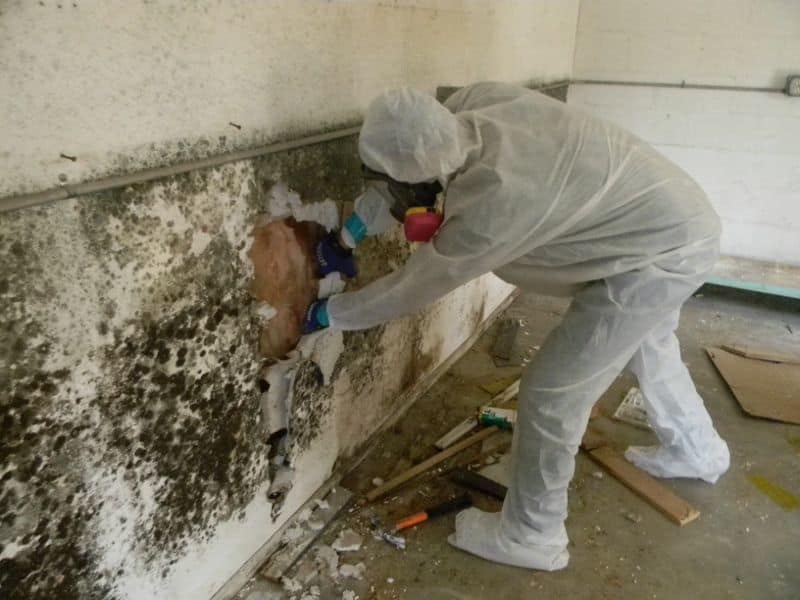
Removing mold-damaged trim
- Using a wire brush or scraper, clean the surface, removing any affected areas down to the base. If a complete clean requires removing the wall's finish down to the brick, this is essential to prevent future mold recurrence.
- If it's possible to completely replace the moldy area, do so. If this isn't possible, then cleaning should be done to the maximum possible depth.
- After thoroughly cleaning, the surface is treated with an antifungal agent or solution and dried using any available device (fan heater, air conditioner, heat gun). A heat gun has proven to be the best option for this purpose.
- Treat the area a second time, and if necessary, a third time. Apply each subsequent layer of antiseptic only after the previous one has completely dried.
- Apply waterproofing material to the surface.
- Leave the treated surface for at least 48 hours, after which any finishing work can be carried out.
Removing mold from a balcony
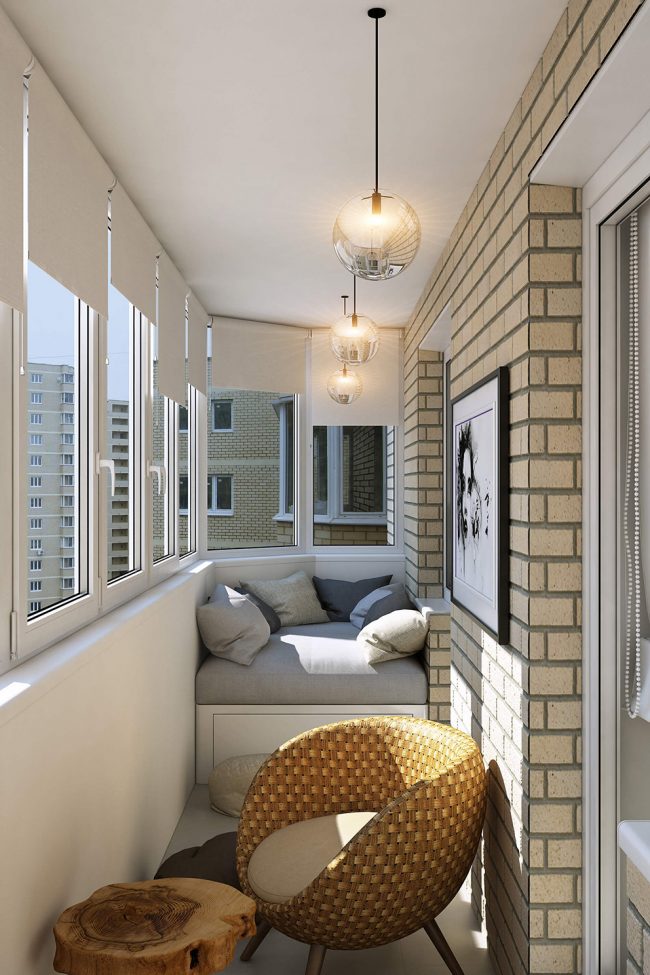
A balcony can become a favorite place to relax if it is free of mold.
If mold appears on a glazed balcony, it's important to ensure adequate ventilation. If the balcony can't be left exposed to air for long periods, drill several holes in the siding to allow air to pass through. Additional insulation may be necessary to ensure better thermal insulation.
After this, the same work is carried out on the walls as in the apartment. However, after physically removing the mold, special products are applied to the walls and floor. These remove the film from the cement and walls and help open the pores, and then they are treated with an antifungal agent. After treatment, a layer of primer with an antiseptic is applied. Once this dries, the surface is treated with a waterproofing compound, applied with a brush or roller. Once dry, a final primer with an antiseptic is applied, followed by standard finishing work.
Removing mold from windows
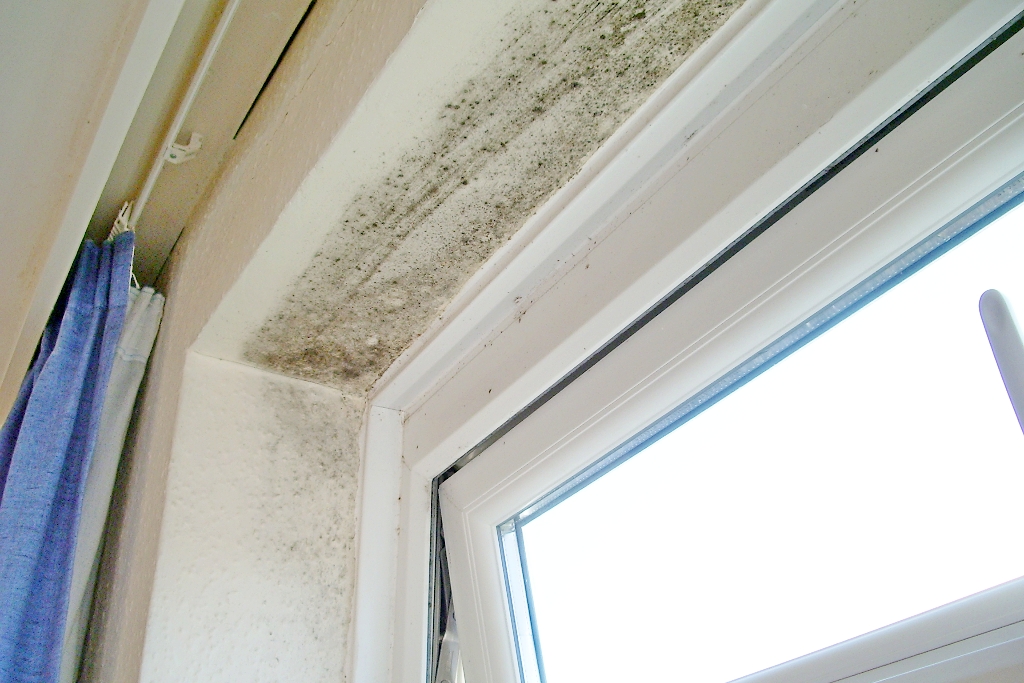
There should be no mold on the windows.
Typically, mold on windows most often appears from under the window sills. In this case, the window sill trim is removed and the walls are disinfected and treated as usual, just like the rest of the room.
If drywall was used to finish the slopes, it's best to replace it entirely, as mold may have penetrated deep into the material. After finishing, seal the finished surface with a waterproofing material to prevent future mold growth. Rubber-based mastic or primer are most commonly used for waterproofing windows.
Clean plastic windows thoroughly with household bleach, diluted in a 5:1 ratio. Special chlorine-containing cleaning products (such as Belina and Domestos) can also be used.
Removing mold from wooden surfaces
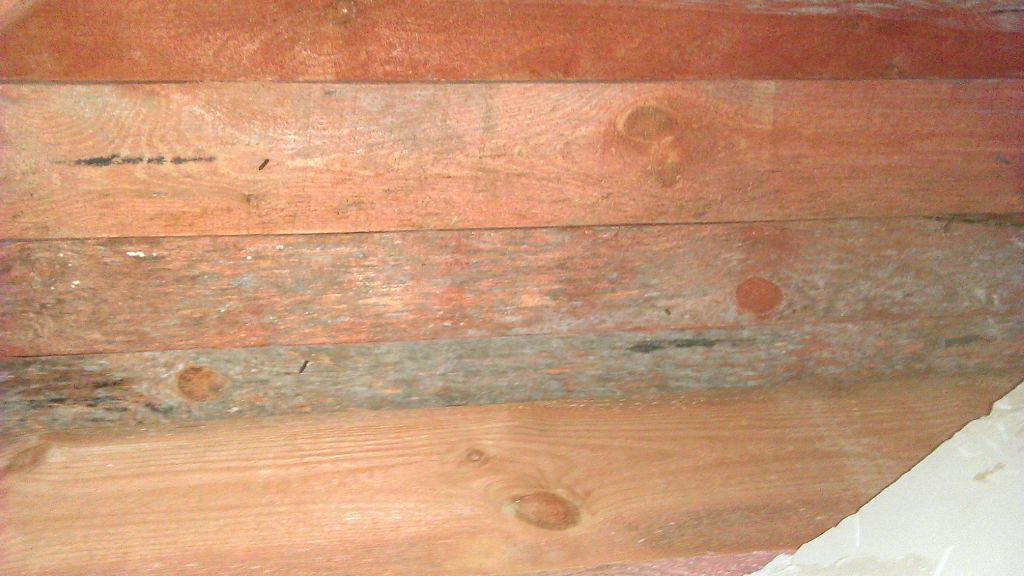
Mold has a destructive effect on wood.
When removing mold from wooden surfaces, avoid pre-wetting them, as this will encourage the mold to penetrate. Beforehand, prepare a suitable area to burn off any dust or wood shavings containing mold residue after cleaning the wooden surface.
- First, wipe the wood with a dry cloth or paper towels.
- After preliminary cleaning, remove the fungus using a metal brush, scraper or knife.
- The cleaned material is burned.
- The cleaning area is washed with water with the addition of detergent.
- The affected area is treated with a special wood preservative. It is not recommended to use chlorine bleach, as it can lighten the wood.
Products used to get rid of mold
To get rid of mold, both folk remedies and industrial ones are used, which can be purchased at construction or hardware stores.
Folk remedies
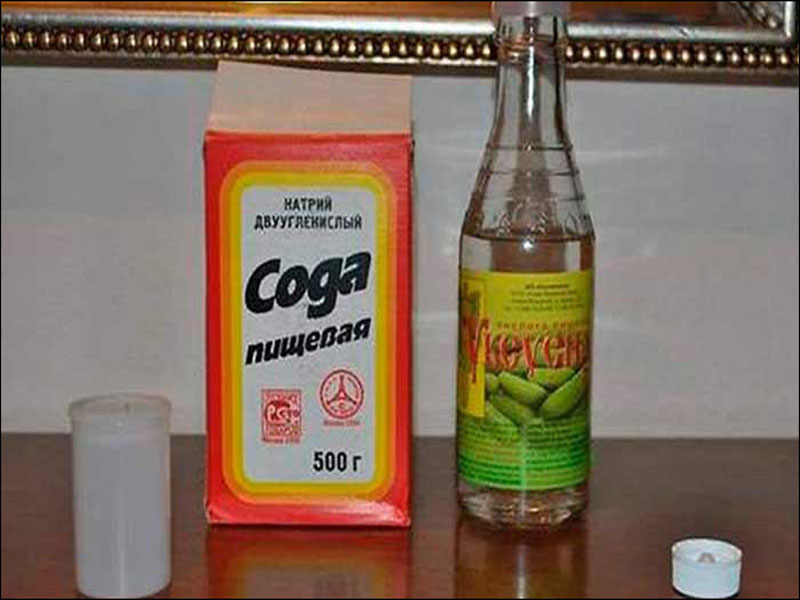
Folk remedies for mold are harmless, but they are not effective enough and act very slowly.
Folk remedies are popular because they are the safest for humans, but the fight against mold takes a long time, as repeated treatments are often required.
- Chlorine-based bleaches. They combat all types of mold and effectively remove mold stains, but they also discolor materials, damage items, and release toxic chemicals. The solution is prepared at a ratio of 1 part bleach to 10 parts water.
- Baking soda is diluted at a rate of 1 teaspoon per glass of water. It is completely harmless to humans.
- Hydrogen peroxide is sprayed onto the affected area in its prepared form. It is harmless to humans and has a bleaching effect.
- Vinegar is harmless; multiple treatments are required to remove mold. Apply it to the affected area and rinse with water after an hour.
- Ammonia has a pungent smell, it is applied for 4-5 hours, after which it is washed off with water.
- Dilute 1 cup of borax in 4 liters of hot water, apply to the surface, and brush off the treated area after 10 minutes. The solution is not rinsed off.
- Apply tea tree oil (10 ml per 2 cups of water) to the affected area and do not rinse. The downsides of this remedy include its high price and a rather pungent odor after application.
- Dilute grapefruit seed extract at a ratio of 20 drops per two glasses of water. Do not rinse after application.
Solutions of copper sulfate (diluted with water in a ratio of 1:10), iron sulfate (1.5:10), sodium fluoride (1:10), and an aqueous solution (comprising copper and iron sulfate in a ratio of 0.5:0.5:10) are also used to treat walls and are popular with consumers. However, today, a better alternative is available: specialized mold-fighting products.
Industrial mold control products
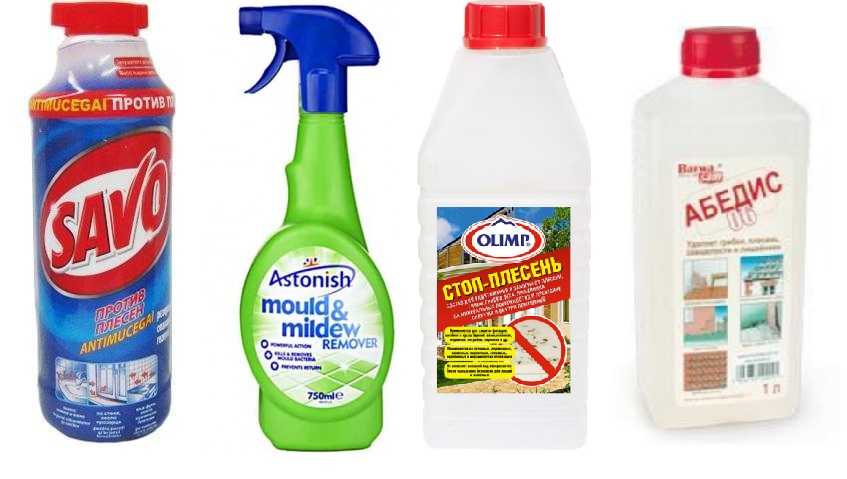
Today, the chemical industry produces a variety of mold removers.
The modern chemical industry offers both universal chemicals for combating various types of mold and for various materials, as well as specialized antiseptics designed for specific types of mold and surface materials.
- "Olympus Stop Mold" is an antiseptic for damp areas—it's used in basements and bathrooms. It's safe for animals and people and contains no chlorine. It can be used on wood and concrete walls.
- "ABEDIS 06" – dilutes 1:2 with water. Effectively removes mold, moss, and lichen. Contains chlorine. Does not damage finishing materials, nor does it affect their color or texture.
- Alpa's Fongifluid is a domestic product used for interior and exterior walls. It is effective at temperatures above +5°C.
- "Biocid" (Biozid Sanierlösung) – dilutes 1:3 with water and has a pleasant scent. It's not chlorine-based, but chemical antifungal agents.
- "Dali" effectively removes mold from wood, brick, and concrete walls, even cardboard and tiles. It can also be used on wallpaper, door frames, and window frames. This product is domestically produced.
- After removing stains, it's a good idea to use a deep-penetrating primer with mold-repellent additives, such as Tikkurila's "Optimum." This primer will completely remove the gray color before applying paint or wallpaper.
- "Atlas mykos" kills moss, fungus, algae, and mold. The concentrate is used on exterior and interior walls. It is diluted with water at a ratio of 1:2; for mineral surfaces, a ratio of 1:5 is used.
- "Izohan Grzybostop" removes mold and mildew from walls made of various materials, including concrete.
- "Spectrum Fungicide" removes fungus from plaster, painted and wooden walls.
- "PS 50" - removes algae, fungi and mold that affect concrete, wooden walls and plasterboard structures.
- "Snezhka" impregnation is used for internal and external walls, removes fungi, mold, algae and lichen.
- Titan Fungicide removes fungus from painted walls without removing paint, suitable for preventing infections.
- "Boramon" destroys mold and mildew on wood, brickwork and plaster.
Professional comprehensive treatment of premises against mold
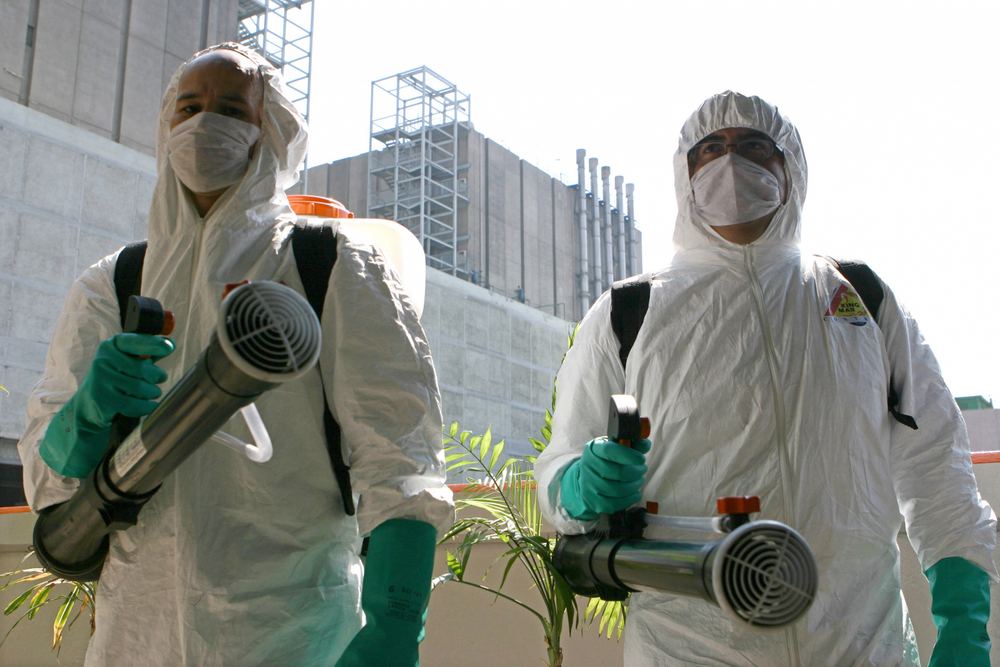
Sanitary and epidemiological service staff have extensive experience in combating mold.
Often, homeowners or office owners prefer not to bother with treating the premises themselves, but rather to let professionals do the job. The highest quality and most professional mold removal services are now provided by sanitary and epidemiological service personnel.
To eliminate mold from an apartment, SES (Sanitary and Epidemiological Service) staff not only treat the affected areas, but after a thorough analysis of the premises and its microclimate, they also perform a fumigation procedure. A special chemical cloud eliminates various types of parasites and fungi and additionally disinfects the premises.
When working in a private home, a range of measures is used to determine the source and causes of mold, accurately calculate the dosage of chemicals for use in a specific room, and select the most appropriate type of antifungal agent.
Technologies used to get rid of fungus by professional SES staff:
- Hot fog generation is a very effective and fast way to get rid of mold when a cloud of active chemicals is sprayed at high temperature.
- Cold fog generation – spraying of an active chemical substance without the use of hot air.
- Wet disinfection involves wet treatment of affected surfaces and the entire premises.
- Gasification is considered the most effective method of mold control. In this case, gas containing active chemicals completely fills the room, leaving no room for pests to spread.
Preventing mold recurrence

A mold-free home is a healthy home.
Once you have gotten rid of the mold, you need to make sure it never appears in the room again.
- If you have plastic windows that are too tightly sealed, you can install special valves. These will ensure the flow of fresh air, which will help improve circulation in the room.
- To prevent mold growth under and on wallpaper, regularly ventilate the room. Opening a small window or even a single vent for just 15–20 minutes once a day is sufficient. This allows for adequate air exchange with the outside environment and significantly reduces the risk of mold growth.
- Poor quality repairs and damp building materials are also common causes of mold growth. If a person didn't do the repairs themselves, they'll likely have to call in the appropriate services to fix the problem.
Preventing the initial appearance of mold in the home
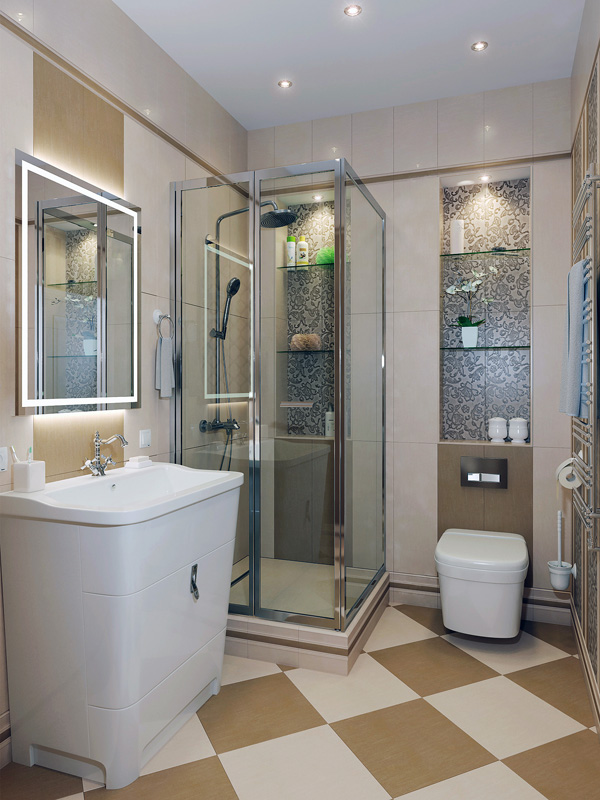
It is always easier to prevent mold from appearing.
Preventing mold from appearing indoors is much easier and safer than dealing with the mold itself and the consequences of its spread.
- When doing renovations, treat all walls with a special antiseptic before painting or wallpapering.
Ventilate the room regularly, as good ventilation is the key to a healthy climate in your home.
Avoid overcooling of premises and sudden temperature changes.
Don't dry damp laundry indoors. If you have no other choice, use a household dehumidifier to remove excess moisture.
Improve ventilation in your home. Ideally, the ventilation system should be a supply and exhaust system, preferably with filters and heating.
When renovating, use moisture-resistant materials, especially in corner rooms and bathrooms.
Install a range hood in the kitchen.
Leave a gap between the wall and furniture placed along it to allow free air circulation.
Getting rid of mold in an apartment: video
Reviews
The only unpleasant aspect of using this product is its smell. It has a strong chlorine odor. It's the chlorine in the product that kills mold. The smell in the bathroom lingered for about a day after treating the walls and ceiling. I highly recommend Belizna Gel as a quick and virtually free way to get rid of mold in the bathroom.
Olimp "Stop-Mold" is a solution for killing and protecting against mold, rot, mildew, moss, and lichen. It was a real lifesaver. We used it on window slopes because the builders hadn't installed the windows correctly, which led to this problem. The solution has a matting effect—it not only kills mold but also slightly "whitens" the spots, making them less noticeable. The mold did indeed disappear from the treated surface, but we had to treat it several times to get it completely gone. We were pleased with the results and highly recommend it.
Alpa "Fongifluid" mold and mildew killer is excellent at removing mold, mildew, and microorganisms from walls and corners. I followed the instructions, cleaning the walls and corners and applying the solution, spreading it out in a wide circle. It's a good preventative treatment with an effective and broad spectrum of action.
I applied the solution repeatedly as a precaution. The Fongifluid mold and mildew killer can be applied to any surface and eliminates excess microorganisms on the walls. After following the instructions, the walls returned to their normal color. I really liked the mold and mildew killer and will now keep it in stock at home.
Dali Universal Antiseptic is an excellent all-purpose antiseptic against mold and mildew. Since mold has already taken hold in our bathroom, the manufacturer recommends first mechanically removing the mold and only then applying Dali antiseptic. This is essential to prevent mold from returning. If the surface isn't cleaned first, the product won't kill existing harmful bacteria. After cleaning and drying the walls, we applied the antiseptic. Anyone can do this, as the bottle comes with a convenient spray dispenser with on and off positions, which is great for when the product isn't in use.
It's worth noting that the liquid has a very unpleasant, pungent chemical odor. I recommend wearing a respirator when performing this task. We treated the bathroom walls three times, allowing them to dry thoroughly each time. It turned out that the antiseptic was very economical—a little more than a bottle was used for a 6-square-meter room. Although we could have treated it twice, we decided to be on the safe side. A little over a year has passed, and we haven't had a single trace of mold. A good result for an inexpensive product.
Tikkurila Optimum deep-penetrating primer with mold-resistant additives—it has an indicator and protects against mold and mildew. We were just starting renovations, and my husband bought this deep-penetrating primer with an indicator for the walls. Since the apartment is new and the walls are only plaster, we decided to prime everything thoroughly. One canister costs 526 rubles, but I think it's worth it. It's better to spend money now than to suffocate from mold and mildew later.
Mold is inherently dangerous. It can and should be eliminated using any available means. When choosing a mold repellent, it's best to consult with a sales associate before purchasing. However, it's best to take preventative measures to prevent mold from growing in your home.
 Dmitry
1 comment