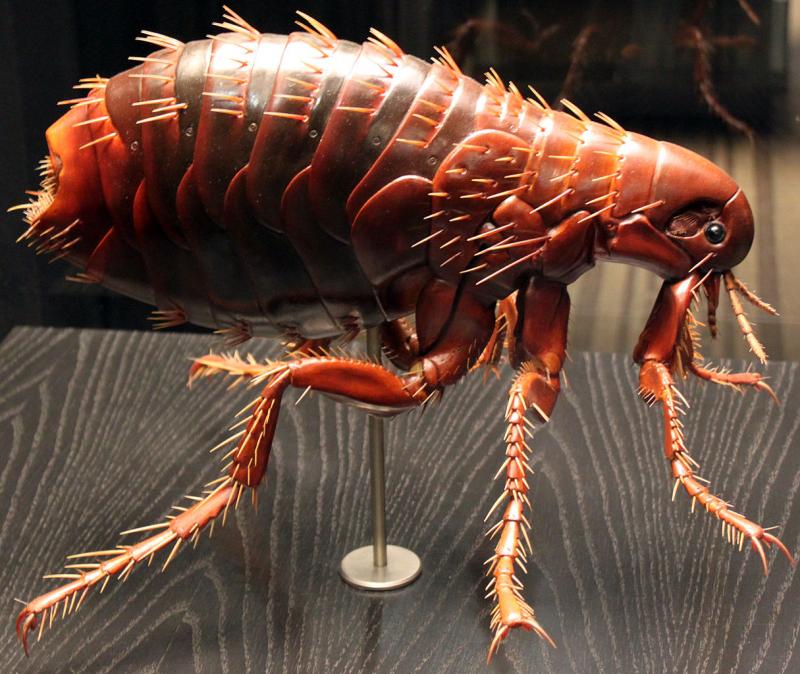
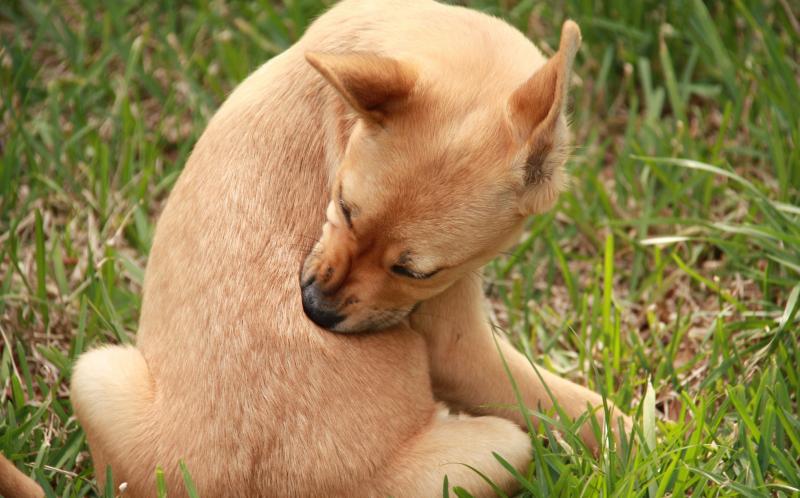
The sand flea is a small, dangerous parasite found in hot tropical regions of the planet. Currently, 80 countries are considered endemic, with infestations in some countries reaching 50% of the population. Fleas of this species are the causative agents of a severe skin disease called tungiasis.
Content
Anatomy and life cycle of the sand flea
The sand flea is also known as the "penetrating flea" (literally translated from Latin: Tunga penetrans) and the "Brazilian ground flea." Its closest relatives are the rat fleas, which are widespread in Russia. It attacks all warm-blooded animals (livestock, cats, dogs, rodents, birds) and humans.
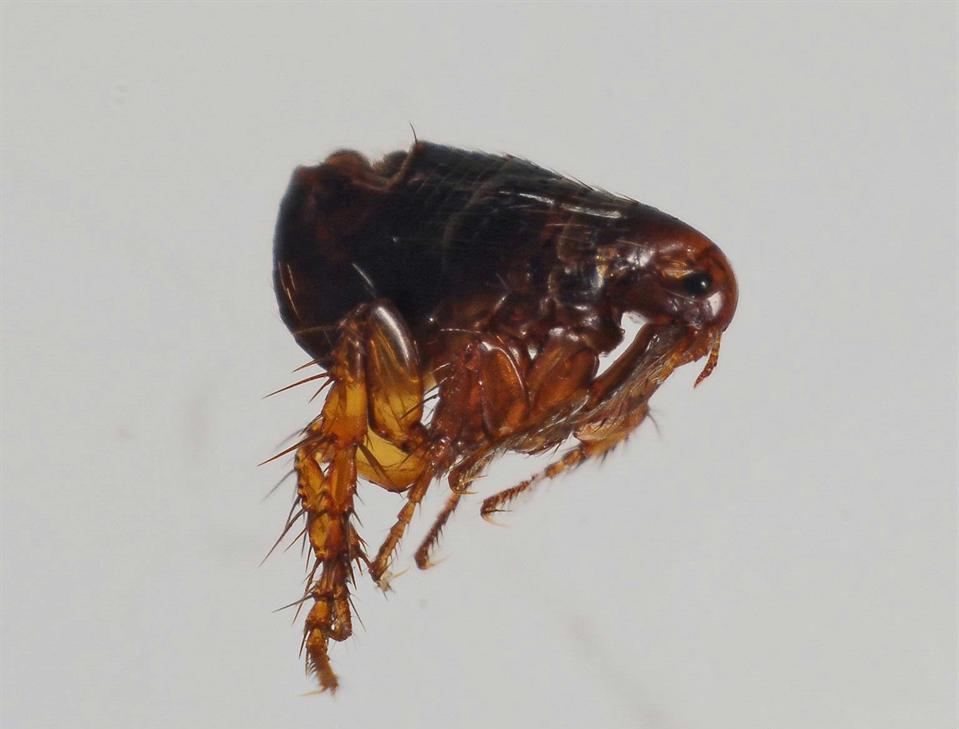
The hind legs are significantly larger than the flea's body, allowing the arthropod to jump up to 35 cm in height.
Sand fleas are the smallest members of the order, with adults measuring no more than 1–2 mm. Their bodies are oval, short, and laterally compressed. The insect's carapace is characteristically reddish-brown, with a distinctive white spot in the center of its back. Its head is small and dark brown. The hind legs are greatly elongated. Visually, without magnification, the insect resembles a small black dot. Unfertilized females and males pose no serious threat to humans or warm-blooded animals, attacking rarely or not at all. The bites themselves are indistinguishable from those inflicted by closely related species, appearing as papules (nodules) and occasionally causing allergic reactions and local inflammation. However, a pregnant insect, in dire need of a host, is extremely dangerous. Importantly, unlike other members of the flea order, sand fleas don't simply pierce the skin; they penetrate it, attach to a blood vessel, and feed directly from the bloodstream. This contact carries a high risk of contracting various diseases. Thus, the main distinguishing feature of sand fleas is their entoparasitism (penetration of the host's body), while most members of the order are considered ectoparasites.
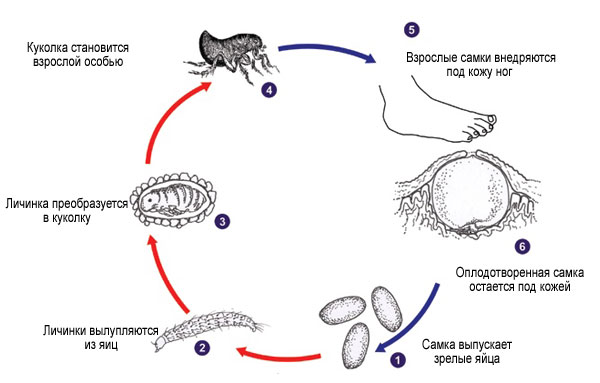
The life cycle of the sand flea cannot be achieved without the blood of warm-blooded animals and humans.
Having penetrated the skin (with her hindquarters remaining exposed), the female locates a blood vessel and burrows deeply into it. She will no longer bite and remains motionless for the remainder of her life cycle. Having received an abundant supply of the necessary blood, she begins actively laying eggs through the lateral (rear) end of her body, the number of which ranges from several hundred thousand. The large white eggs emerge to the surface without lingering inside the host. As the flea engorges, it greatly increases in size, its abdomen swells, and it resembles a white ball with two symmetrical black dots on its sides: the first represents the head and thorax, the second the rear portions of its chitinous shell. After 3–12 days, the flea dies and detaches, leaving an ulcer at the puncture site.
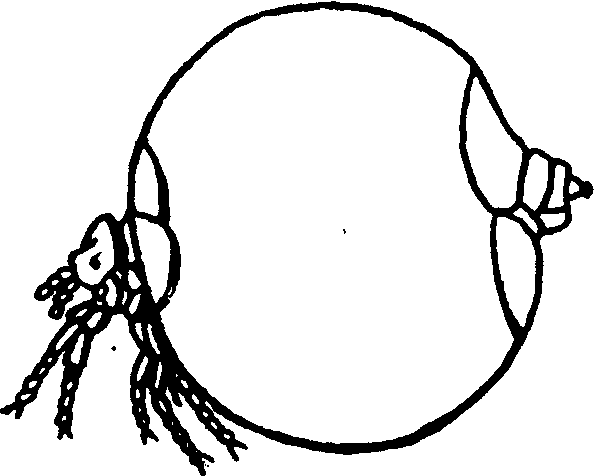
A schematic representation of a female sand flea shows the multiple increase in the individual during feeding, the abdomen is greatly stretched, pushing parts of the chitinous shell to the poles
The habitat of the sand flea
Sand fleas are heat-loving arthropods, so they are found primarily in the tropics and hot, arid regions of the planet. Their distribution range is extremely extensive. They are found in India, the Caribbean, throughout West Africa (from the southern borders of the Sahara to the Atlantic Ocean), southern China (Hainan Island), Southeast Asian countries such as Vietnam, Thailand, Myanmar, the Philippines, Indonesia, Cambodia, and Laos, and in Central and South America, where their main locations are Guiana (northeastern coast) and Brazil (hence the second name, "Brazilian ground flea"). Russia's closest "attacked" neighbor is Turkmenistan. Sand fleas are not found in our country.
This arthropod lives primarily near human habitation, farms, and livestock areas. In forests, it waits for its prey on the branches of low trees and shrubs, and is also often found in dry grass, on sandy beaches, and in the soil near bodies of water. In India and Africa, it even nests inside houses with earthen floors, burrowing into them.
Sand fleas are also found in popular tourist destinations such as southern China, Vietnam, and Thailand. In resort areas, fleas are most often encountered on the beach. However, due to regular sand sifting and sand treatment, attacks are rare. The main danger comes from uninhabited beaches, abandoned areas, and sparsely populated areas. Sand fleas do not live in the water column.
The term "sand fleas" is sometimes used as a catchall term for various species of animals that attack beaches. As such, true sand fleas are often confused with small crustaceans, midges, and mosquitoes. Other aggressors pose no serious health risks; their bites manifest as a rash or nodular lesions and resolve fairly quickly.
The dangers of sand fleas and the diseases they carry
Fleas themselves are the primary cause of tungiasis (sarcopsillosis), a severe dermatological disease. A sand flea bite, or more precisely, its penetration into the skin, is accompanied by sharp pain and subsequent debilitating itching. Locating in the soil and on plant branches close to the ground, these jumping parasites primarily affect the legs, feet, fingers (especially often attaching under toenails), and less commonly, the hands, armpits, groin, and buttocks. At the site of attachment, a round white abscess with a dark spot in the center appears. The arthropod's body is inhabited by pathogens that cause serious diseases: viruses, bacteria, rickettsia, sporozoans, etc. Therefore, self-removal can lead to the parasite's disintegration within the tissue and a number of complications (self-amputation, tetanus, sepsis, gangrene, tissue necrosis, nail loss, lymphostasis, etc.). Multiple infestations increase the risk of gangrene and sepsis.
Photo gallery: manifestations of tungiasis
-
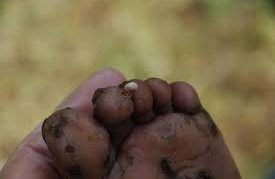
- Tungiasis is a disease that is widespread among the poor in tropical countries, with infection rates reaching 76% in Nigeria, Tobago, Brazil and Trinidad.
-
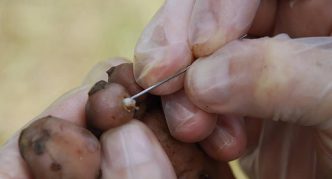
- Only a medical professional should remove a flea with a needle; in inexperienced hands, the parasite's body can disintegrate and further infect the wound, which will lead to a protracted course of the disease, gangrene, sepsis, and even death.
-
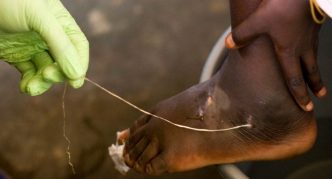
- In West African countries, doctors practice removing the parasite using a thread, securing one end at the base of the flea.
-
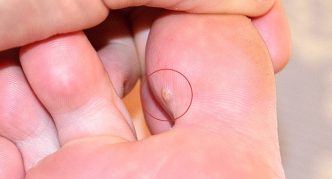
- The big toes are a favorite area for fleas to infest, so if you suspect a bite, you should carefully examine the entire foot, the areas between the toes and the pads.
-
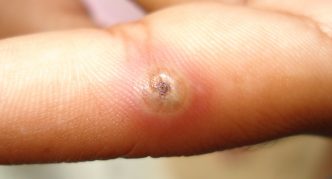
- The fingers are also a common location for the parasite, causing a lot of pain and preventing full use of the hands.
Tungiasis is characterized by acute purulent inflammation, pain, and debilitating itching. The disease is diagnosed after collecting a medical history and removing a flea from the skin. The incubation period ranges from 8 to 12 days. The stages of tungiasis development are:
- flea getting on the skin;
- penetration;
- attachment to a vessel, feeding, swelling, laying eggs;
- death of an individual, detachment;
- infiltrate formation, healing.
In addition to eggs, the wound actively releases waste products of the flea (feces, enzymes that corrode the skin, etc.). Damage to and scratching of the abscess opens the gates to secondary infection, which can be fatal.
Treatment of bites
Sand flea bites are unusual and require more thorough treatment. Delayed removal, spontaneous removal of the parasite, and improper handling can lead to serious complications, infection, and sepsis. Surgical intervention is the only appropriate measure. Immediately after a bite, seek qualified medical attention, such as an emergency room, a general practitioner, or an infectious disease specialist. The arthropod is removed with tweezers or a needle, using disinfectants. Sometimes, to reach the parasite, the doctor will cut away the top layer of skin before excising the pest. A sterile bandage is then applied, and a course of antibiotics, such as erythromycin, co-amoxiclav, trimethoprim, flucloxacillin, etc., is prescribed.
Sand Flea Removal Video
Methods of bite prevention
- In endemic areas, wild, dirty and neglected beaches should be avoided.
- Do not lie on the sand, use sun loungers or thick mats.
- After each visit to the beach, conduct a self-examination, paying special attention to the parasite's "favorite" areas - the feet and toes.
- Use repellents.
- Wear closed shoes, socks, and long pants.
- After a walk, you should thoroughly wash your feet in warm water—this simple measure reduces the risk of the parasite penetrating under the skin.
Sand fleas most often attack barefoot locals and careless tourists unfamiliar with the region's wildlife. To avoid negative consequences during your vacation, consult your guide or tour operator about the potential risks in advance. Prompt diagnosis and medical attention are key to a speedy recovery.