Many small insects can cause significant problems for humans and animals. Fleas are unlike other blood-sucking parasites. They are extremely resilient, active, and tenacious. Fossilized remains of these insects indicate that fleas already existed 5 million years ago, and Aristotle frequently mentioned them in his works. But their most terrifying impact on human history occurred in the Middle Ages, when these parasites became the source of the plague epidemic that claimed the lives of millions.
Content
What do fleas look like: morphological features
Fleas are blood-sucking wingless insects that parasitize animals, birds, and humans. They are modest in size—up to 5 mm (regardless of species). As they become engorged, females swell and enlarge.
It's difficult to confuse a flea with other bloodsuckers. The insect's specific structure is as follows:
- The body is laterally flattened, and lined with bristles and combs. This allows the insects to move more quickly through the fur and cling more firmly to the hairs, reducing the chances of removing the fleas to zero.
- They have three pairs of strong legs with forked claws at the ends. The hind limbs are the longest, enabling them to jump long distances (up to 30 cm).
- The mouthparts are piercing and sucking, but there is no proboscis (like that of bedbugs). The flea uses its upper jaws to cut the skin, then widens the opening with its lower jaws. After this, the insect makes its way to the blood vessel.
- On the back is the pygidium (abdominal sensillum), the flea's sensory organ. This is a round shield covered with sensitive hairs called trichobothria, which can detect even the slightest movement of air.
Fleas are very hardy parasites that are difficult to detect and remove on your own. Moreover, they don't reside on the host's body constantly. Insects live in the home: near a person's bed, in the bedding of animals and birds. The main thing is to be close to the host so they can regularly land on their body and feed.
If the probability of finding a new feeder is very low, the flea remains on the body permanently.
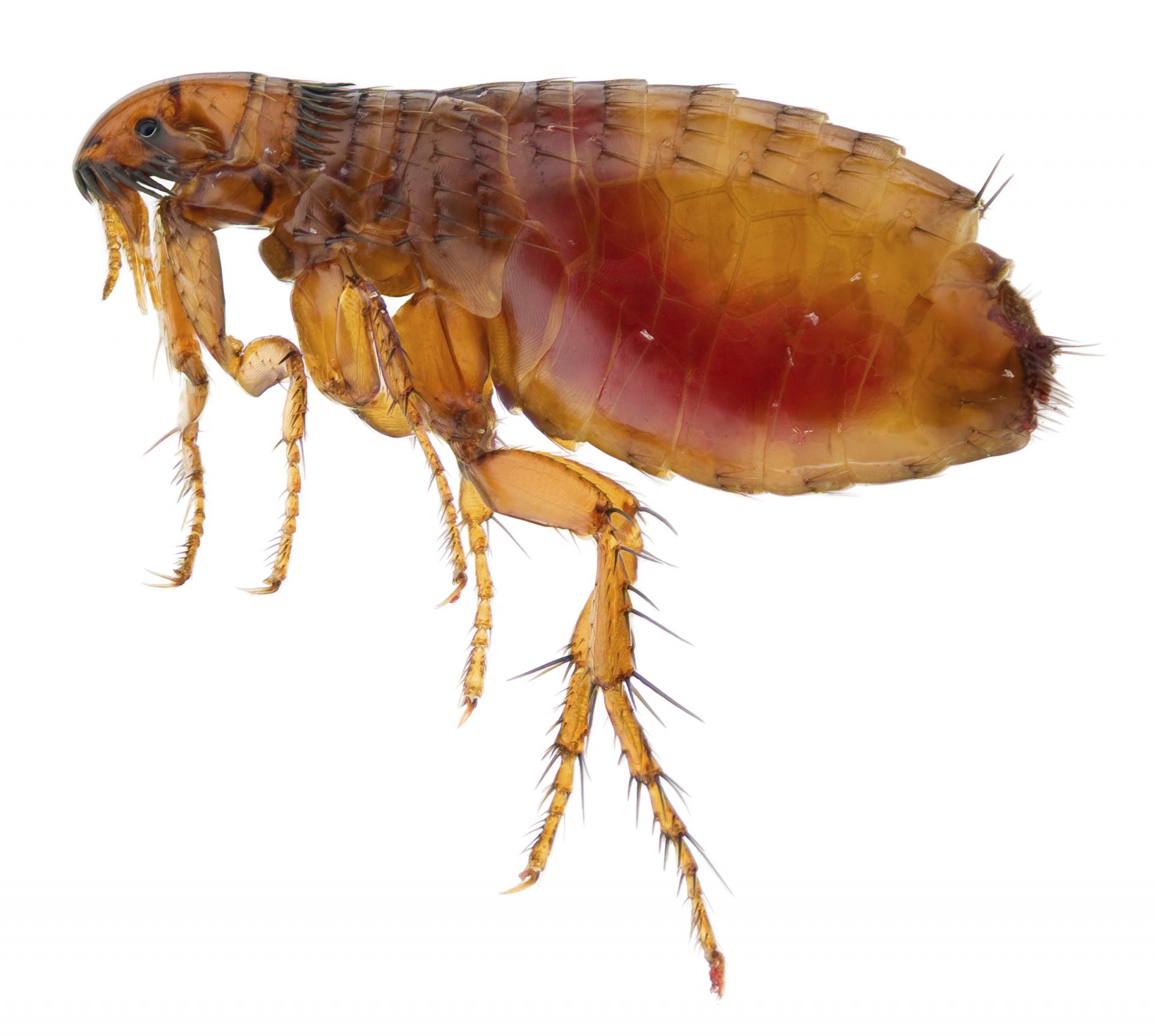
Fleas are able to jump up to 30 cm thanks to their long hind limbs.
Without food, fleas do not die and, unlike ticks and bedbugs, do not go into suspended animation, but only slow down their development and become less active.
Females squeeze their eggs out rather than lay them. The embryos don't always remain in the fur; they usually fall to the floor or ground.
Parasites can be carriers of various diseases:
- plague;
- brucellosis;
- encephalitis;
- hepatitis;
- tularemia;
- salmonellosis.
Types of insects
There are approximately 20 families of these insects in nature, comprising 20,000 species. The largest group is considered to be the house fleas. They are also known as linen fleas (bed fleas, carpet fleas, furniture fleas, and floor fleas). This refers to the location where they are found. These insects often make their home in people's homes: typically under baseboards, floors, mattresses, and carpets.
The way fleas get into a home is not complicated. Pets can bring parasites with them after a walk, or they can be brought in in the folds of clothing from an already infested room. These insects often come to people's homes in search of a new host, often from basements and neighboring apartments. House fleas are often classified into species based on the host they infest:
- human;
- canine;
- feline;
- chicken;
- rat.
Sand fleas and alakurts, which are not typical for our climate, are also known throughout the world.
Human
The most common species is the human flea (Pulex irritans). This insect is characterized by its brown color and is no more than 4 mm in length. It differs from other fleas by the absence of thoracic and cephalic teeth—this can only be seen under a microscope.
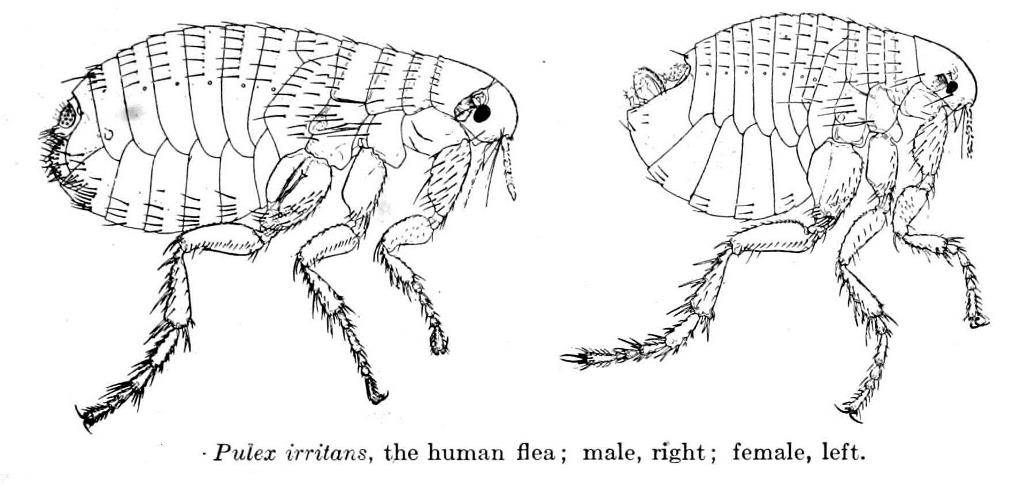
The human flea's body structure is well adapted to movement on the host's body.
Flea bites are painful and itchy. However, they don't leave open wounds because the edges of the skin are pulled together.
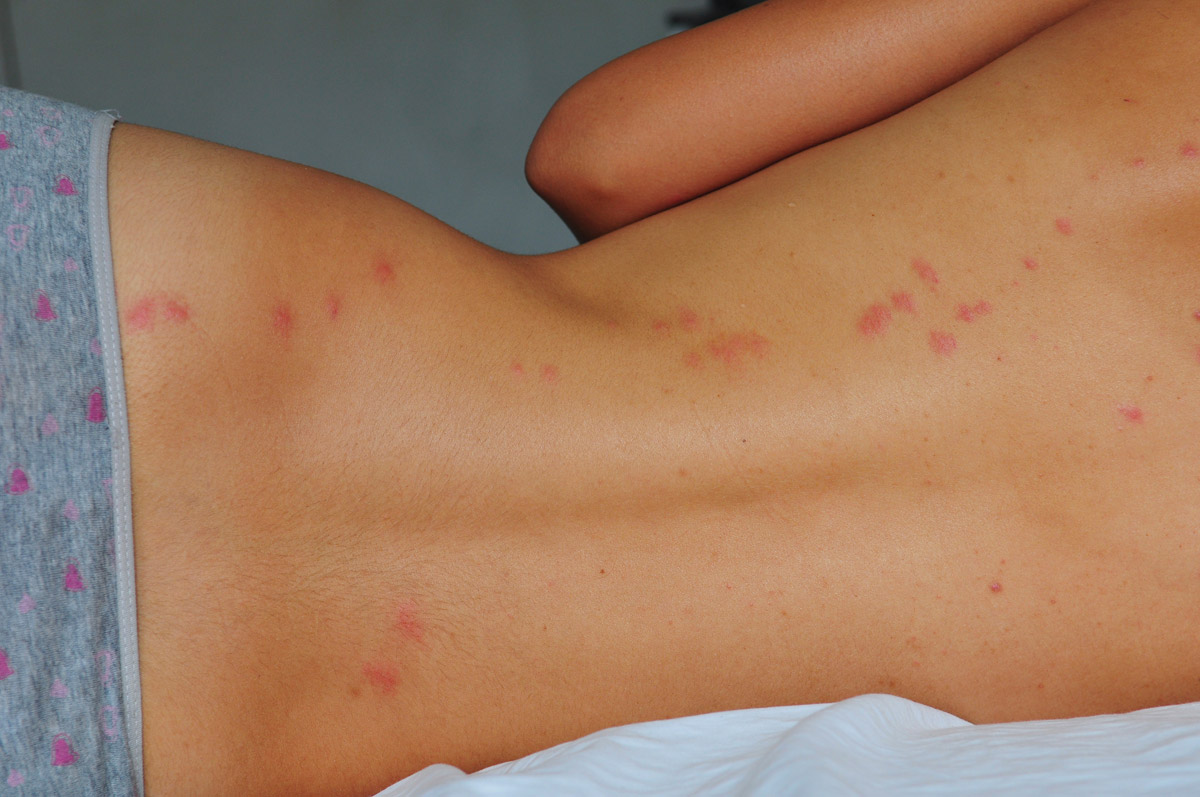
Human flea bites typically become red, slightly hardened and swollen.
Bites from these insects often cause pulicosis, a skin lesion that is accompanied by:
- enlarged lymph nodes;
- increase in body temperature;
- insomnia.
Felines
The cat flea (Ctenocephalides felis) is a species that infests cats during the warmer months. They are smaller than other fleas and are also distinguished by their dark color and noticeable sheen.
Cat fleas are dangerous because they can carry rickettsioses (febrile diseases, such as typhus).
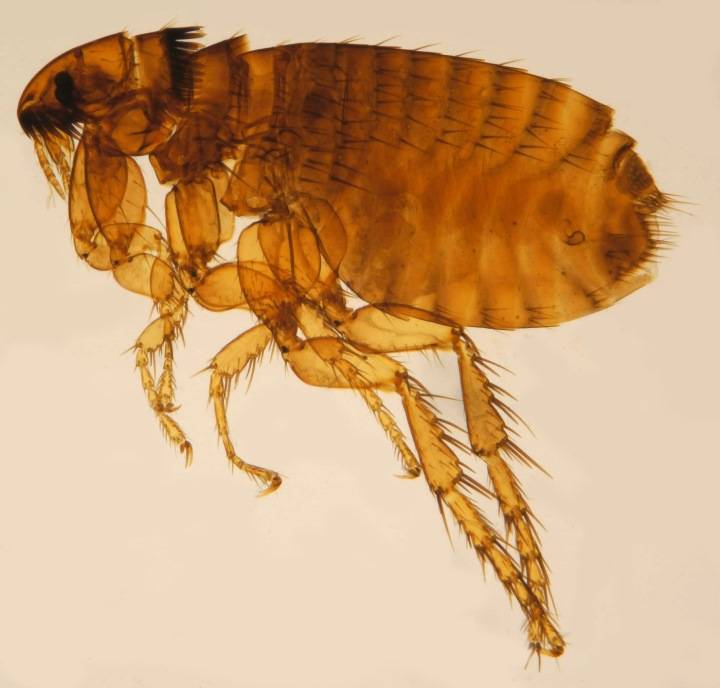
A cat flea can even bite a human.
You can detect the presence of fleas on your cat by its behavior. The animal becomes restless, distracted, and sleeps poorly. A weakened immune system, exhaustion, and anemia may also occur. The cat's appearance also worsens: its fur becomes ruffled, dull, and matted. Scratches, swelling, and blisters may appear at the bite site. Most often, insects bite cats under the paws and on the stomach, and humans - in hairless parts of the body: legs, arms, chest. It is known that when cat fleas get onto rats, they displace rat fleas.
Canine
The closest relatives of cat fleas are dog fleas (Ctenocephalides canis). Their main difference is their longer proboscis.
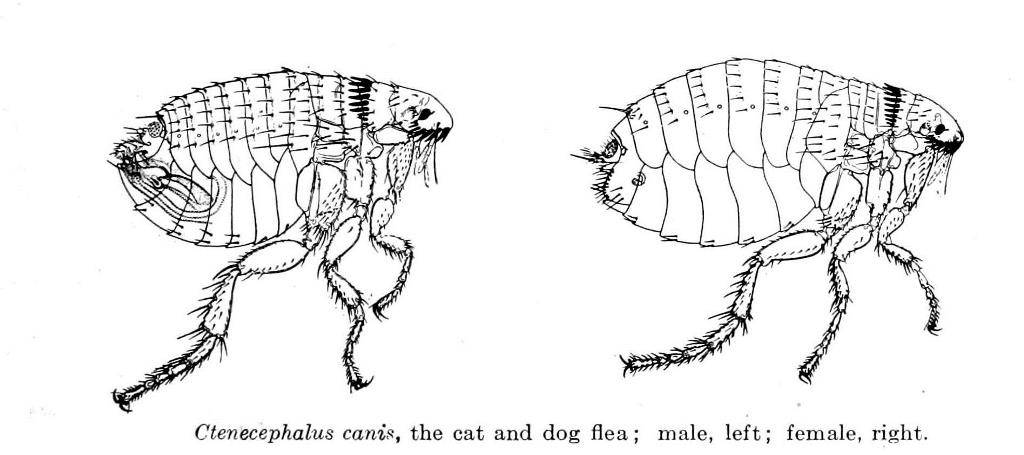
Dog fleas have a body length of up to 3 mm, are distinguished by their dark brown color and shiny body.
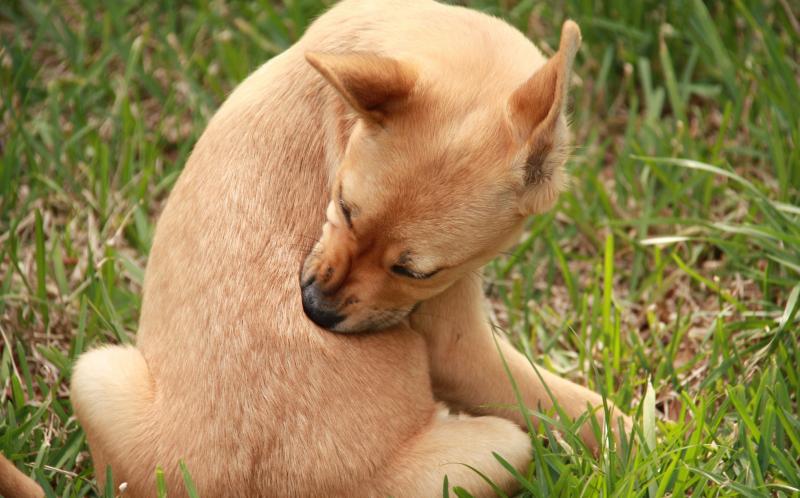
A dog infested with fleas scratches, whines, searches for parasites on itself, sleeps poorly, and eats little. Sometimes the animal becomes aggressive.
You can check for fleas at home: simply place your dog in a bathtub filled with water. Fleas will try to escape by jumping onto the animal's head and distant objects.
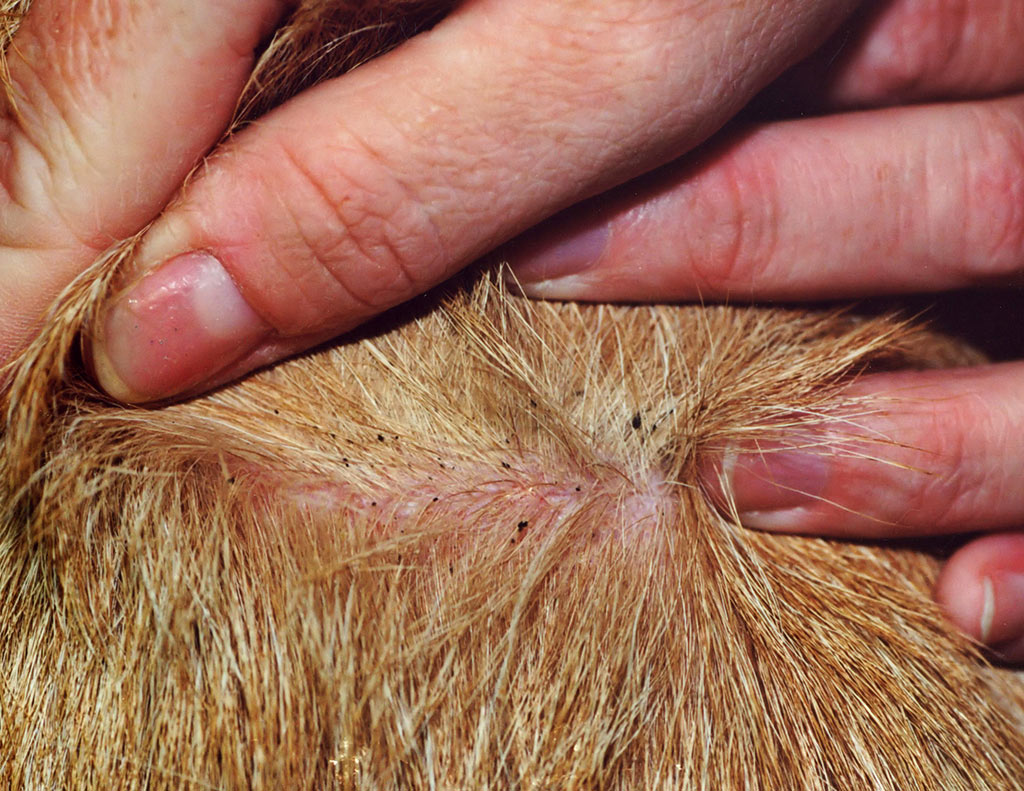
Insects often leave feces that can be found in dogs' fur.
Dog fleas carry flatworms, cucumber tapeworm eggs, Marseilles fever and trypanosomes.
Chicken
The chicken flea (bird flea) has a tiny body (up to 2 mm) and is black. Unlike other species, it has antennae and a flatter body. Another characteristic of this parasite is its demanding habitat: chicken fleas can only survive at high temperatures of 40°C.0C. For this reason, they do not leave the body of the breadwinner, but live on it permanently. The parasite can bite a person, but will quickly leave due to lack of heat. In addition, human skin is too thick for an insect to gnaw through.
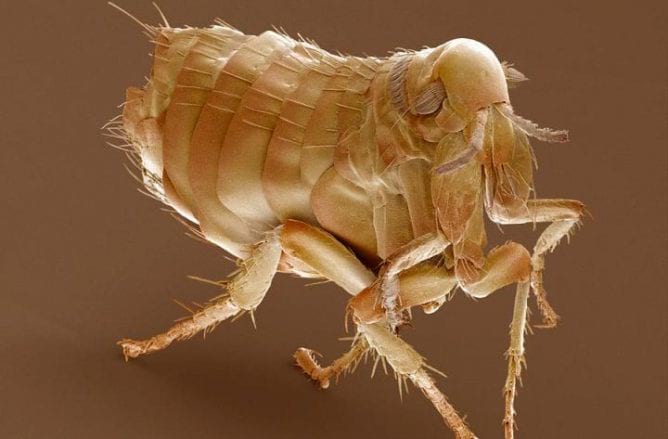
Chicken fleas can live on any birds, including domestic ones (parrots, canaries)
The bites of these fleas are very painful and itchy. Birds begin to scratch the affected areas with their beaks. The parasites can be seen with the naked eye: the insect crawls out from under the feathers onto exposed areas (skin around the eyes, paws).
The presence of fleas on the body has an extremely negative impact on the health of birds: chickens stop laying eggs and often die from exhaustion.
Rats
Rat fleas are one of the most dangerous species of the order.
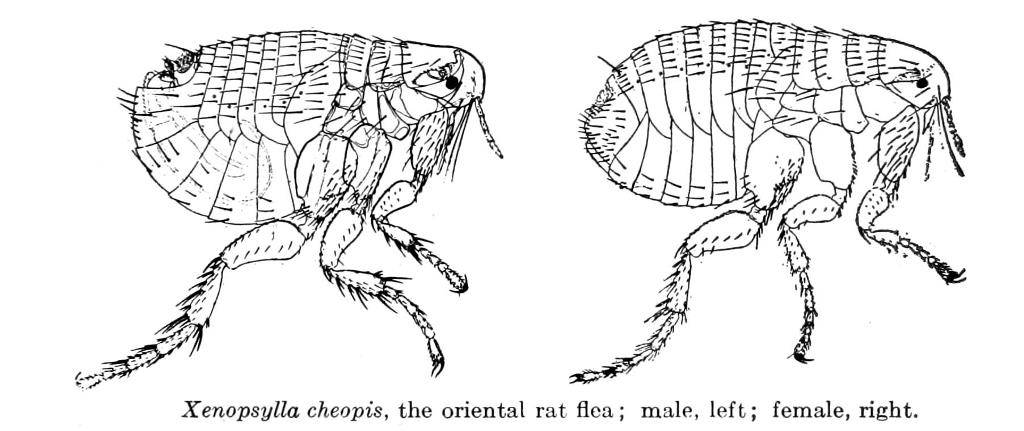
The structure of the limbs allows the rat flea to jump long distances (up to half a meter)
The insect transmits bubonic plague, murine and rat tapeworms, and typhoid and murine typhus. The parasite is distinguished by its lighter color and elongated body shape. A distinction is made between European and southern rat fleas.
Sandy
The rat flea's closest relative is the sand flea (Tunga penetrans). It differs from other species in that its body is oval and reddish in color. The insect reaches no more than 1 mm in length.
Sand fleas live in sand, on beaches, in dry grass, and in cold weather they hide in the ground, where they lay eggs. This insect can be found in Africa, India, South America and Vietnam. In these regions, human dwellings have earthen floors, which makes it easy for parasites to find a host.
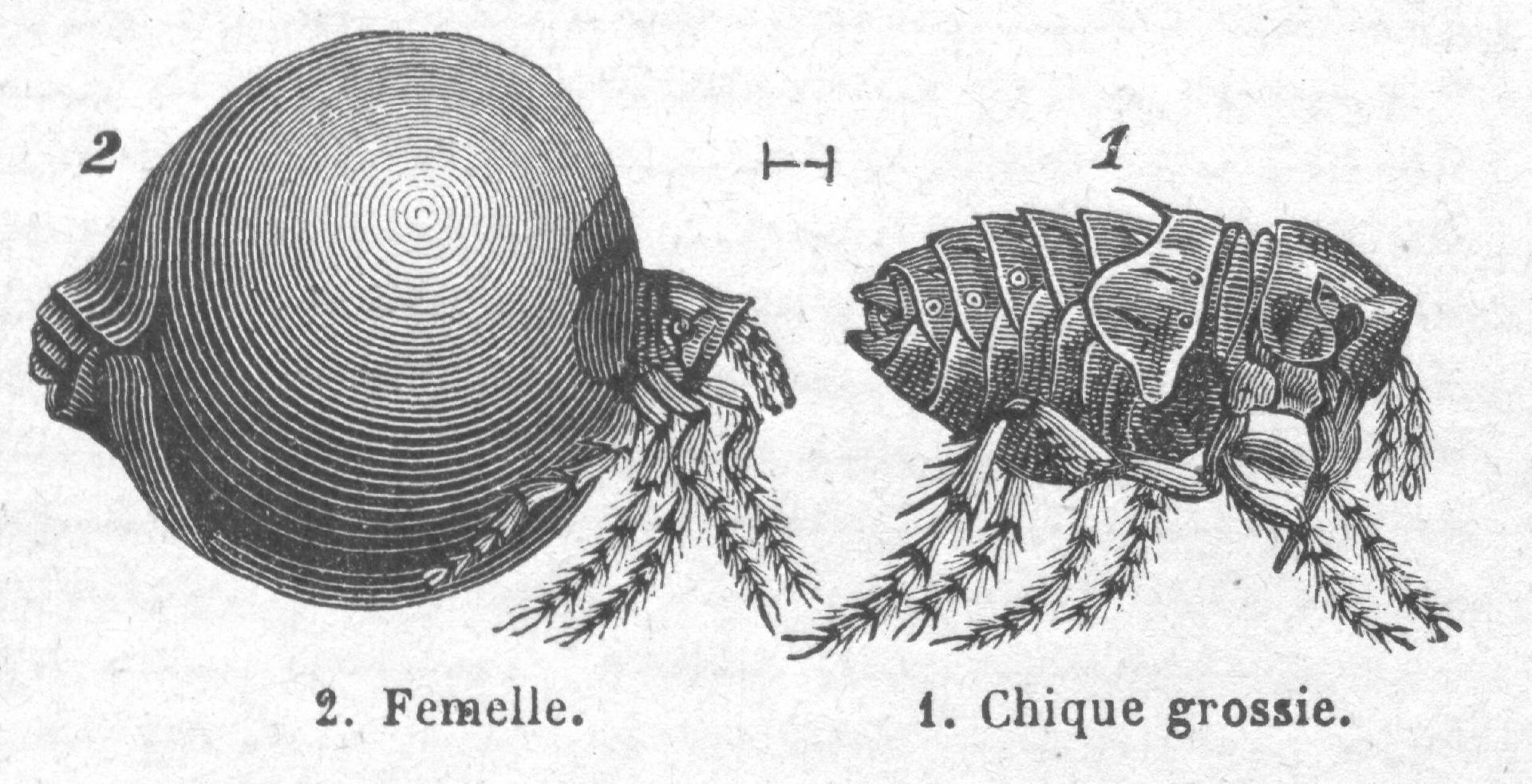
Fertilized female sand fleas differ significantly from males in appearance.
Females attach themselves to the skin of the foot and begin biting. After engorgement, the parasite becomes spherical and burrows deeper into the body, where it begins laying eggs. If the female dies within the skin, aching pain and inflammation occur. Male bites are less painful, resembling mosquito bites, and resolve within 2–3 days.
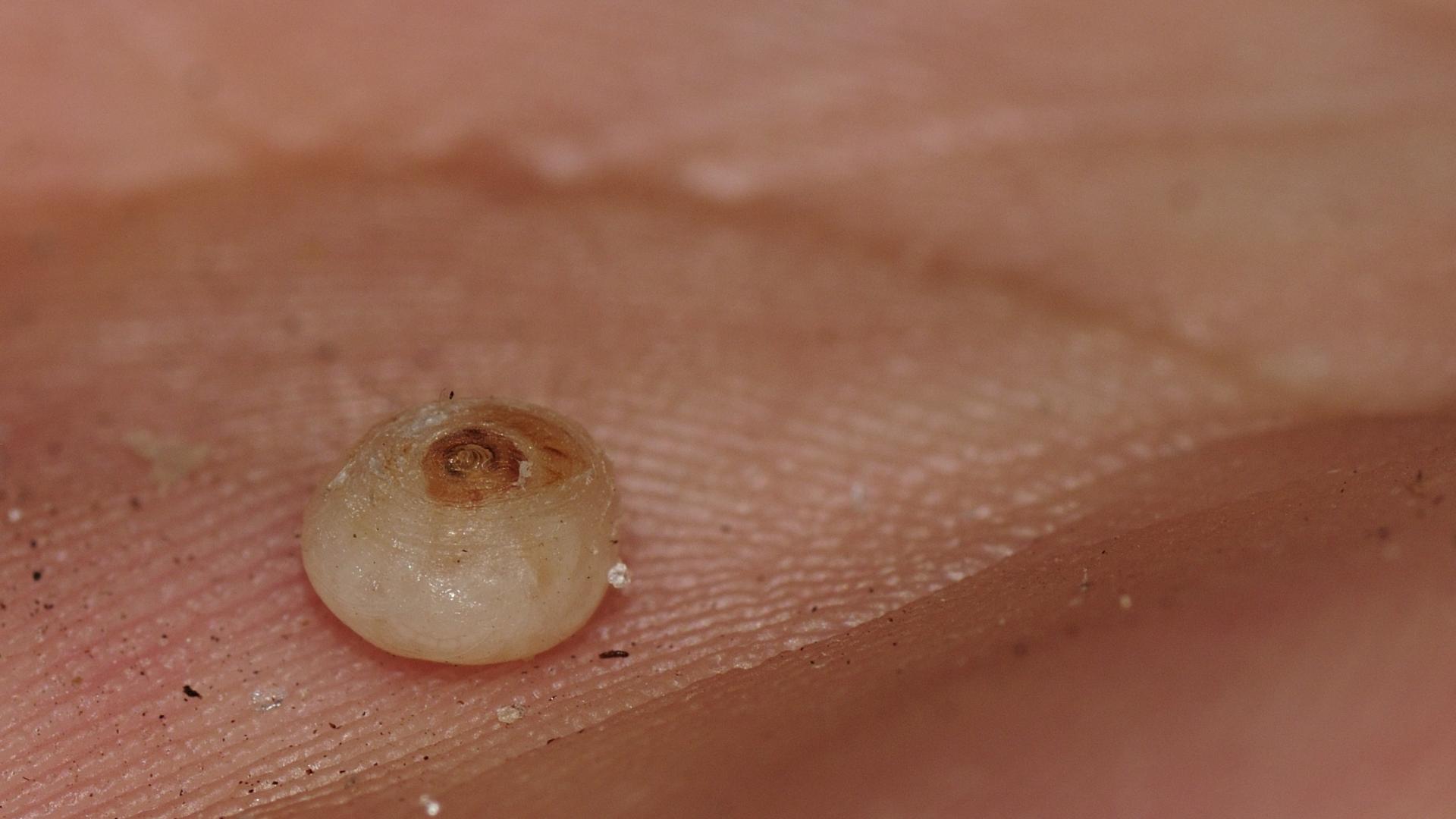
The fertilized female sand flea becomes spherical
Sand fleas carry the disease sarcopsillosis, better known as tungiasis. The symptoms of the disease are as follows:
- sharp pain at the site of the bite;
- the appearance of blisters and swelling;
- itching;
- sepsis.
The pain can be so severe that it interferes with movement. In advanced cases, the consequences of tungiasis can be very serious. Without treatment, it can lead to deformity and possible amputation of fingers, tissue necrosis, and thrombophlebitis of the venous walls of the extremities.
Sand flea bites most often affect members of the poorer classes of society who do not wear shoes and cannot afford treatment.
Alakurts
The Alakurt is one of the least studied flea species, native to Central Asia. Its name literally translates from Kyrgyz as "motley worm." This is because fertilized females are elongated and resemble a worm. Unfertilized individuals are small (up to 5 mm) and typically black.
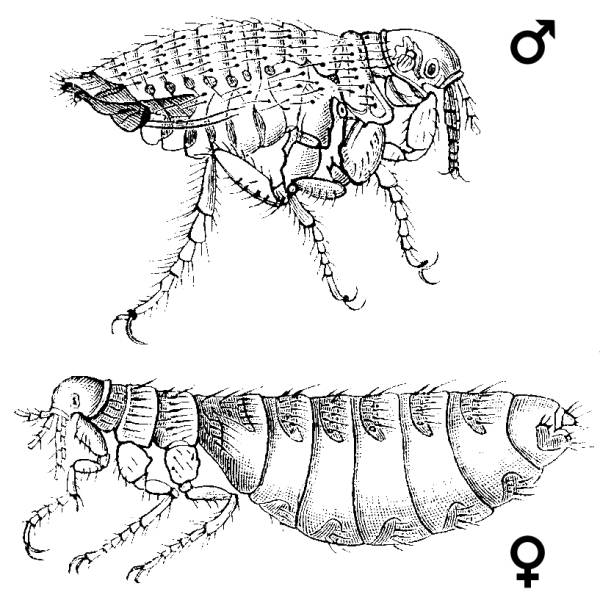
Male alakurts differ from females in that their backs are concave.
The alakurt (also known as the Tien Shan flea) appears in winter, attacking horses, sheep, and camels from frozen grass. As the parasite saturates, it turns white and enlarges. It is difficult to remove because the flea clings to the skin like a tick.
Not fleas at all
Sometimes fleas are used to refer to creatures that are not actually fleas:
- Psyllids (Psyllidae). These are actually common bugs. They have two pairs of wings and resemble aphids in their lifestyle. Furthermore, this insect feeds on plant sap, not blood.
- Flea beetles (Alticini). These are green beetles of the leaf beetle family. They also have wings and do not feed on blood.
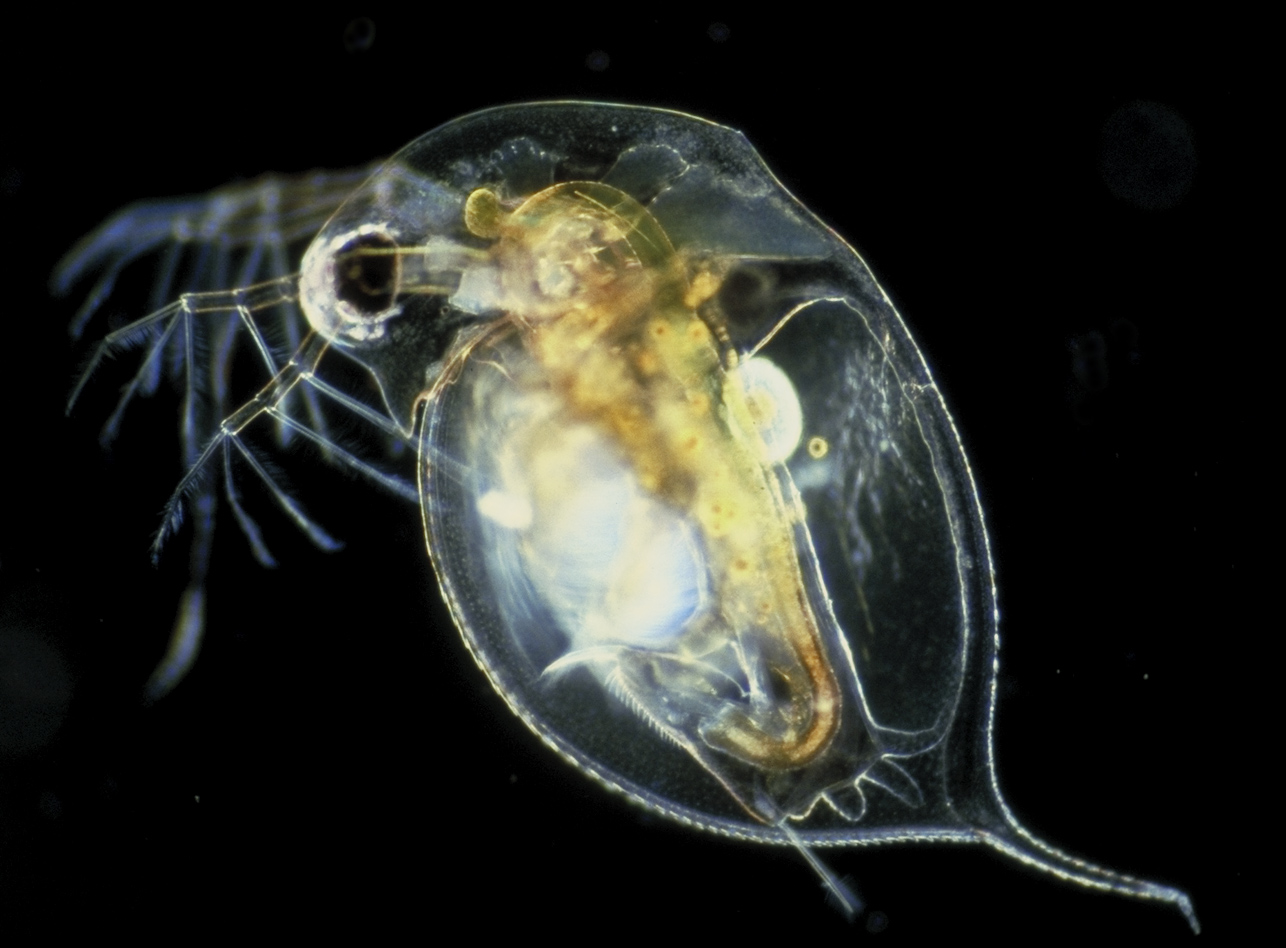
- Water fleas (Daphnia) are crustaceans. They live in freshwater (Daphnia) and seawater (Amphipods). Their diet includes plankton, bacteria, and other single-celled organisms.

The water flea is a crustacean that poses no threat to humans.
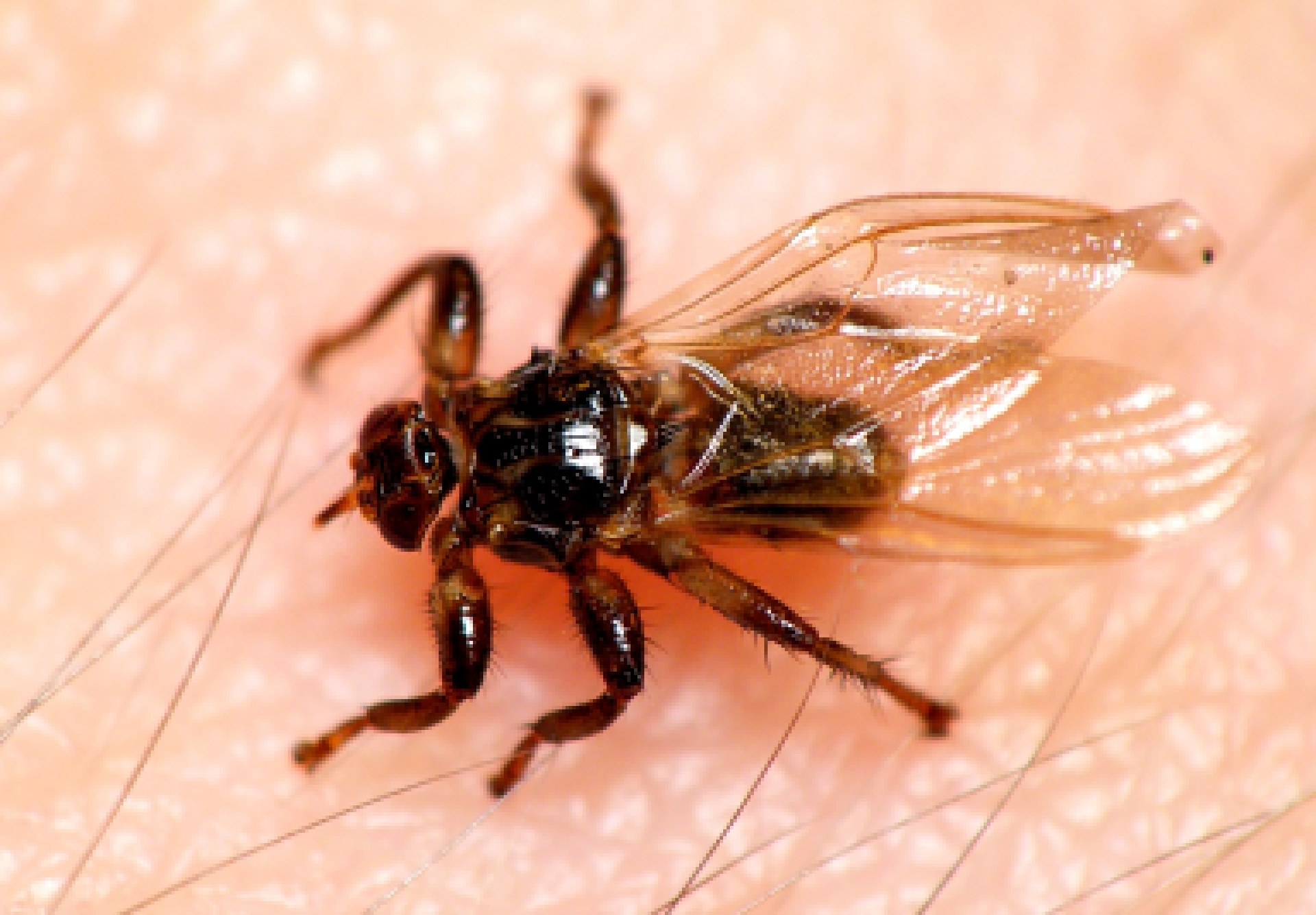
- Moose fleas (Lipoptena cervi) resemble many insects, which is why they are often called moose flies and deer ticks. They are actually bloodsuckers. They prefer to feed on the blood of large and even-toed ungulates, and attack humans only in extreme cases, by mistake. However, their bites can cause pain and severe allergic reactions in humans.
Bloodsuckers are often confused with fleas, ticks and lice.
Fleas, though small, are very numerous. There are many different species, all of which are dangerous and harmful to both humans and pets. Knowing how to identify these parasites is the first step to getting rid of them.