If your pet has become restless, frequently twitching and scratching vigorously, and your family members are being attacked by strange, mosquito-like but very aggressive insects, don't rush to replace your mosquito nets. The problem may already be internal. These could be fleas—small, jumping parasites that are difficult to spot until they've multiplied.
Content
What are fleas?
These insects are small (1 to 5 mm), have a painful bite, are difficult to catch, and quite challenging to kill. They have attracted the persistent interest of scientists and researchers worldwide. One reason for this is the adaptive mechanisms fleas have developed over the course of evolution. Even its appearance is ideal for adaptation to a parasitic lifestyle.
The parasite's name, translated from ancient Greek, means "wingless pump," a name fully justified by its appearance and life cycle. Fleas lost their wings during evolution, but instead acquired complex mouthparts that, via the esophagus, pump blood into the parasite's abdomen like a pump. Because of this, some species stretch up to 10 mm in length while feeding. Fertilized females, while carrying eggs, grow up to 1.5 cm.
The largest member of this order is the moose flea. Its natural size ranges around 10 mm.
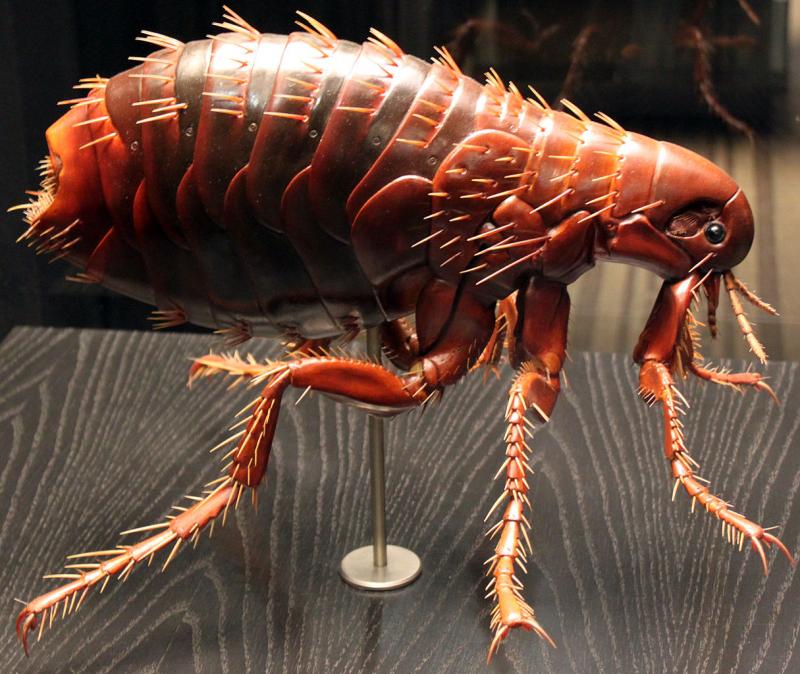
The flea's body is strongly flattened laterally and vertically, covered with bristles, spines, and scutes that help it maneuver freely in its host's environment—on feathers, in fur, or in clothing and building materials of a burrow or nest. Three pairs of legs, equipped with hard spines, extend from its thorax. For jumping, it uses its second and hypertrophied third pair of legs.
A flea's jump lasts 0.001 seconds, so for a long time, experts believed that fleas jumped using four points of support, that is, pushing off using the spines and knees of their hind legs. Recent research has shown that nearly one in ten fleas studied can jump from two points, without using their knees.
Fleas have a unique sensory organ, characteristic only of this order of parasites – the abdominal sensillum. Over the course of evolution, they abandoned their visual senses, replacing them with a sensor for detecting air vibrations. The parasite's color ranges from light brown to black.
Photo gallery: What a flea looks like
-
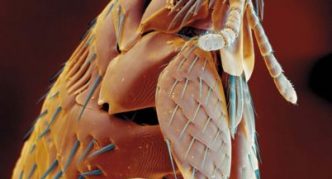
- The flea's mouthparts are of the piercing-sucking type, which means that it pierces the skin when biting and sucks the host's blood.
-
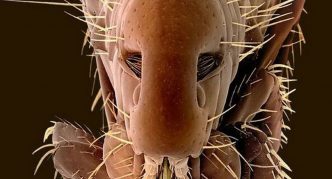
- Because of the fleas' hard shell and flattened body, it is difficult for animals to bite the parasites out of their fur, and even after catching them, a person cannot crush the insect with his fingers.
-
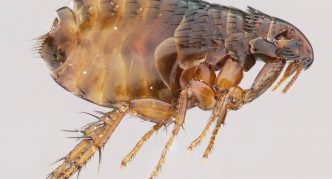
- The abdominal sensillum is located at the rear of the flea's body: under a microscope, its location can be determined by clearly visible sensory hairs called trichobothria.
-
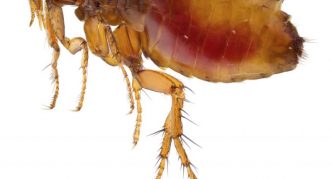
- The structure of the limbs allows the flea to stay on a plane at any arbitrary angle, but only if the surface is rough
Reproduction and life cycle
Despite the high rate of reproduction, the mating process of fleas is lengthy, especially in relation to their lifespan. Fertilization itself takes 10 to 15 minutes, and mating itself takes several hours. There are two factors that influence reproduction:
- ambient temperature - normal - from +18 °C up to +25 °C, when they go beyond the lower frame, the fleas do not die, but do not reproduce;
- nutrition - the male and female must be well-fed.
After a single mating, females of some species lay up to a thousand eggs in batches - 2 times a day.
You can't call them caring parents: a fertilized female doesn't lay eggs, but simply forcefully pushes the eggs out of herself, as if "shooting" them. The life cycle of a flea includes all four main stages of insect development.
Egg
Scattered throughout their future habitat, the eggs hatch at some distance from one another. This method of laying eggs has an evolutionary basis: future fleas do not compete with each other for food and better living conditions. The eggs are typically light in color—from snow-white to light cream. They are oval in shape and reach no more than half a millimeter in length. Depending on the species and temperature conditions, it takes on average from 2 days to 14 days for an egg to mature. As the temperature decreases, the time it takes to transition to the next stage increases.
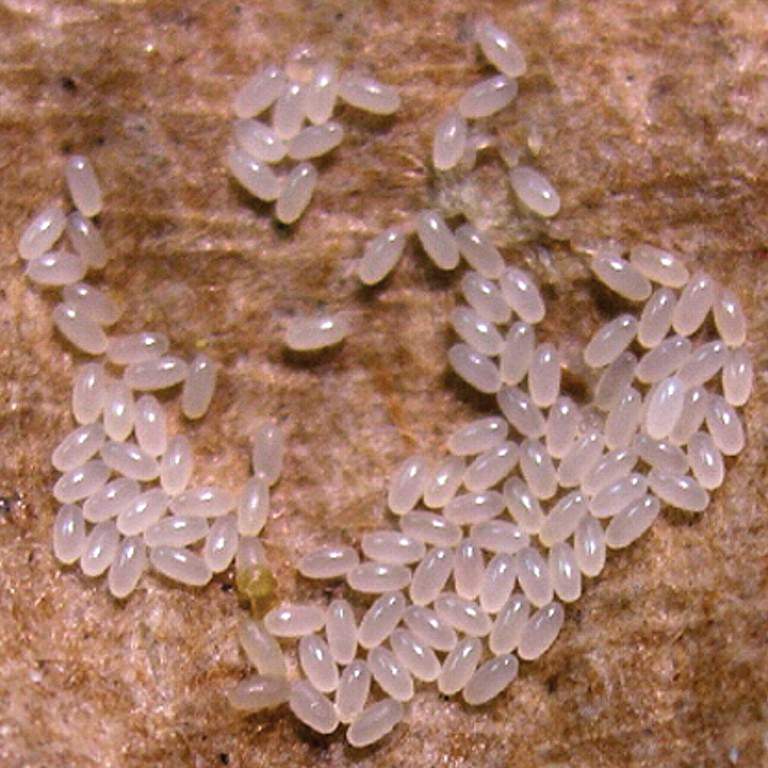
Sand flea eggs, when magnified, resemble mother-of-pearl beads.
Larva
The insects spend their second stage as small, worm-like larvae, feeding on flea excrement containing remnants of undigested host blood and rotting organic matter. They lack vision and legs, so they move by wriggling their entire bodies. However, their feeding organs are slightly overdeveloped: their large heads are equipped with powerful, strong jaws. The parasite spends 5 to 15 days in this state, depending on the ambient temperature and the characteristics of the species.
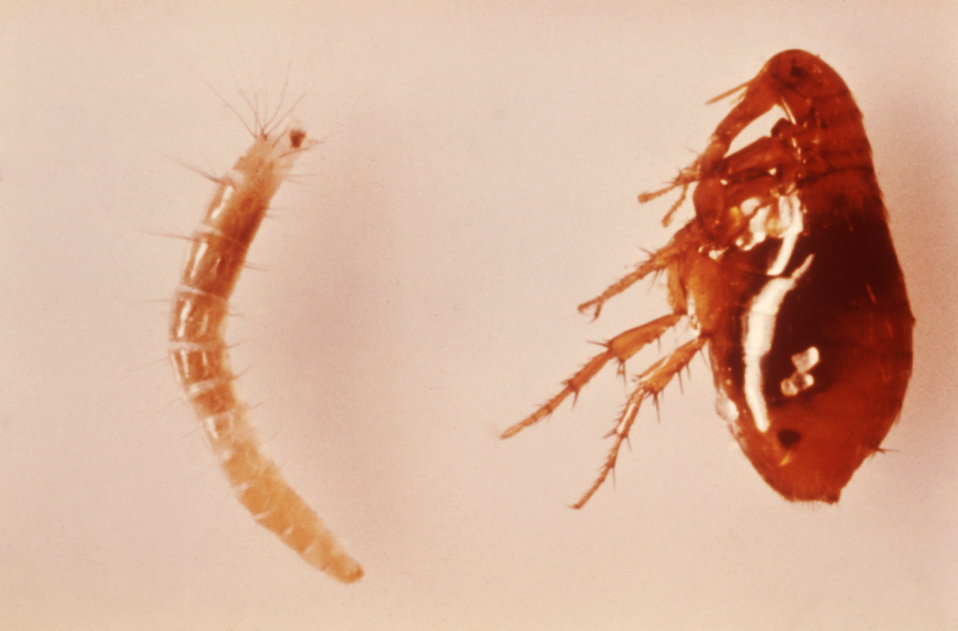
The flea larva is comparable in length to an adult insect.
Doll
At this stage, the flea forms a strong, sticky cocoon, in which it spends anywhere from 5 days to several months. Some species survive unfavorable seasons in this cocoon, while others emerge immediately after maturation, as soon as they sense the presence of a potential host. Temperature conditions delay the hatching of the adult insect for an indefinite period, and this must be taken into account when fighting parasites.
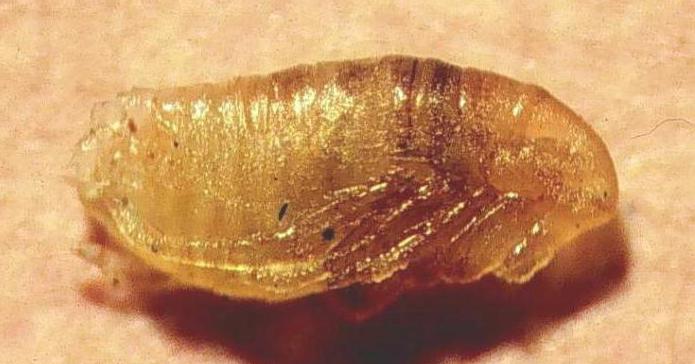
Because of the stickiness of the cocoon, the flea pupa is usually covered in fine dirt, which helps it camouflage itself.
Adult insect
Upon emerging from the cocoon, the adult immediately begins searching for a host. Its landmarks are:
- locally elevated temperature - fleas move towards the heat source;
- the presence of carbon dioxide - all warm-blooded animals emit carbon dioxide, and in the process of evolution, fleas have adapted to use it to determine their food source;
- vibration - when moving, the potential host creates vibrations that the parasite detects.
Fleas don't spend their entire lives directly on their host's body. Some species live in nests, on bedding, or in the furnishings of a room. They only jump onto their prey to feed.
Life expectancy and nutritional characteristics
Under optimal conditions, fleas live for an average of about two months. However, there are factors that can prolong the insects' existence indefinitely:
- the approach of cold weather delays the development of the insect egg and pupa, and the adult insect, when the temperature drops, enters a state of suspended animation;
- air humidity;
- food sources - an adult flea can search for food for a long time (from a month to a year and a half) without losing its ability to move.
A hungry flea is not capable of reproduction. Parasites feed exclusively on fresh blood. If their host dies, they immediately leave the body. If a food source is nearby, fleas eat daily.
The saliva of some species does not contain an anesthetic substance, but all contain a coagulant that prevents blood clotting and potential allergens.
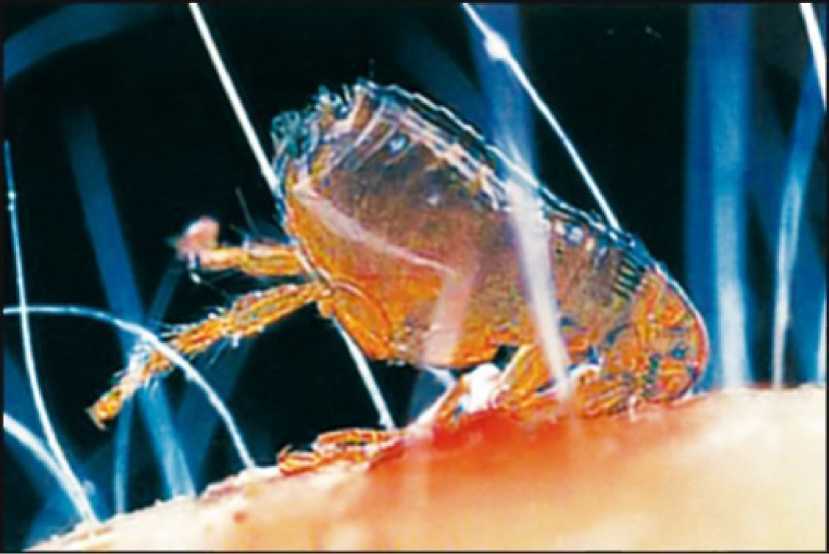
When feeding, the flea literally plunges its head into the host's skin to reach a blood vessel.
Types of fleas
Members of this order are widespread throughout the world. They can be found on every continent, including Antarctica. In our latitudes, human dwellings are inhabited by several species of fleas, parasitizing both humans and animals. They are sometimes confused due to the mistaken belief that each flea species can only feed on one host species. Fleas, common in our latitudes, do not limit themselves to one type of host, and many of them bite people.
Bird lice are often mistaken for chicken fleas, dog and rat lice are most often found on goats and rabbits, and carpet and household fleas are a collective name for all species that live in human dwellings.
Human flea (Pulex irritans)
This parasite is found everywhere, feeding on both humans and other animals, including some predators. It is distinguished by the absence of the row of teeth found on most fleas, and its main danger is its ability to transmit pathogens that cause serious diseases, such as plague and helminthiasis (pumpkin and rat tapeworms, and heartworm).
References to the human flea are found in a fundamental work on New Spain from the 16th century, which cites remedies for the parasite based on Aztec recipes.
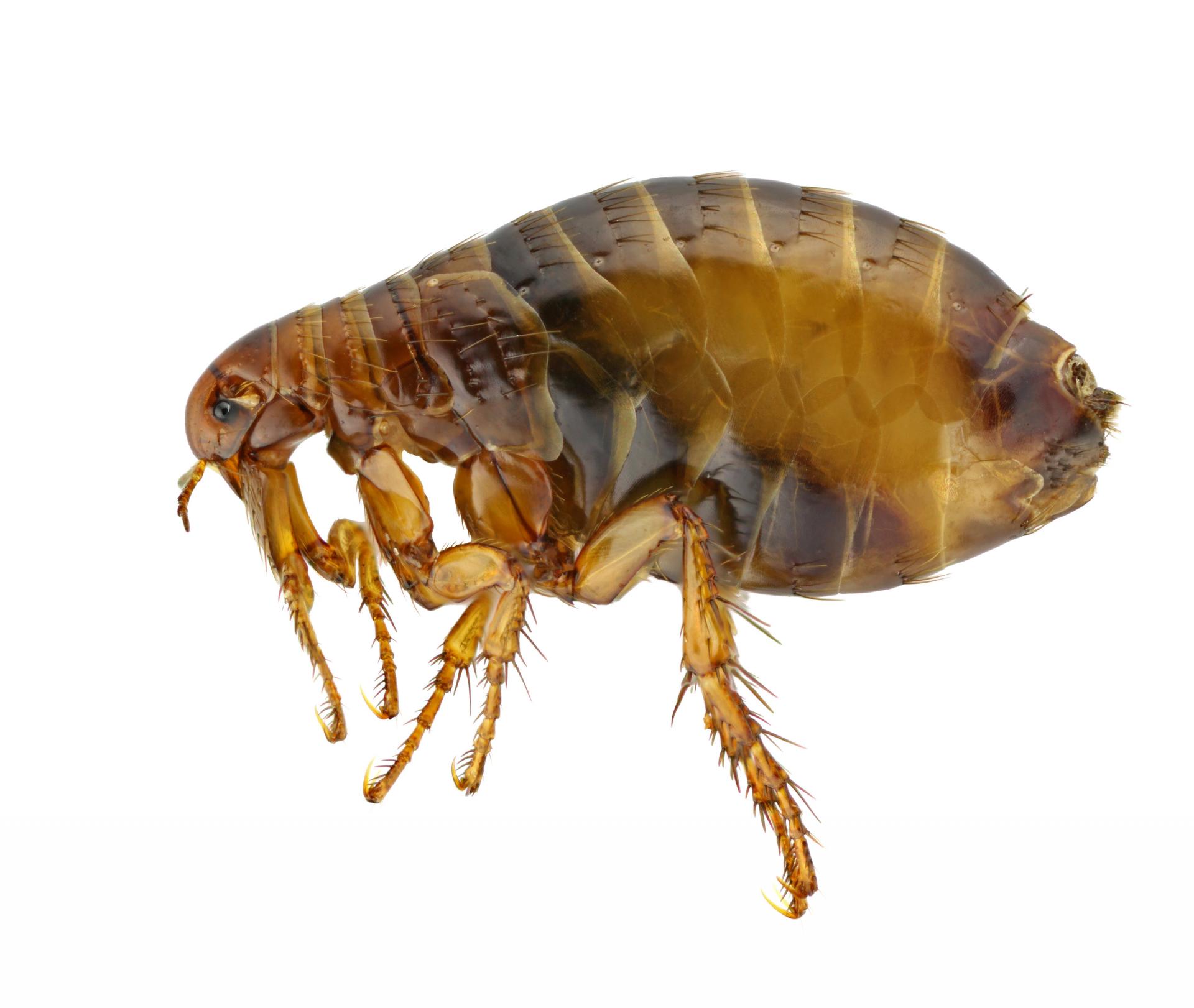
A female human flea lays about 500 eggs after a single fertilization.
Cat flea (Ctenocephalides felis)
This type of parasite is ubiquitous. Besides plague, they carry rickettsiosis and brucellosis, which they transmit through bites not only to animals but also to humans. Their unique feature is the ability of the fertilized female to swell to 16 mm in length due to the presence of eggs in her body.
Having infected a rat, cat fleas completely displace the “legal” parasite – the rat flea – from the host.
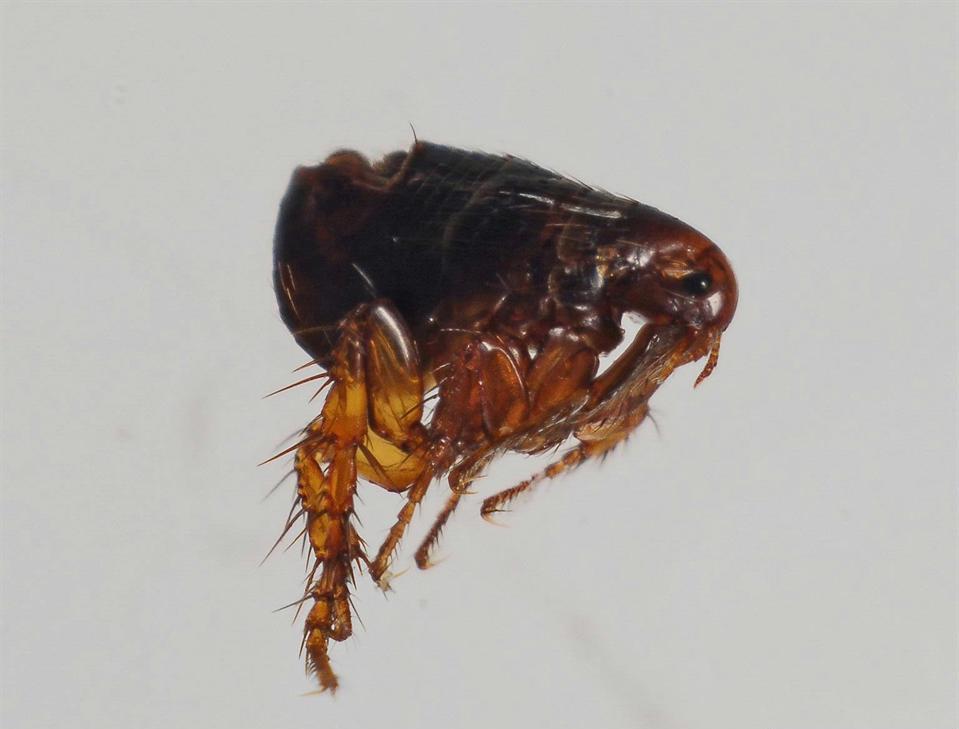
The cat flea is a kind of leader: this species bites humans more often than others.
Dog flea (Ctenocephalides canis)
Members of this species are so closely related to their feline relatives that they can only be distinguished under high magnification by their more sloping forehead and the structure of their genital claws. In addition to the plague vibrio, their saliva contains leprosy, rat-borne rickettsiosis, and Marseilles fever bacteria.
The first description of the species was made by the English scientist John Curtis in 1826.
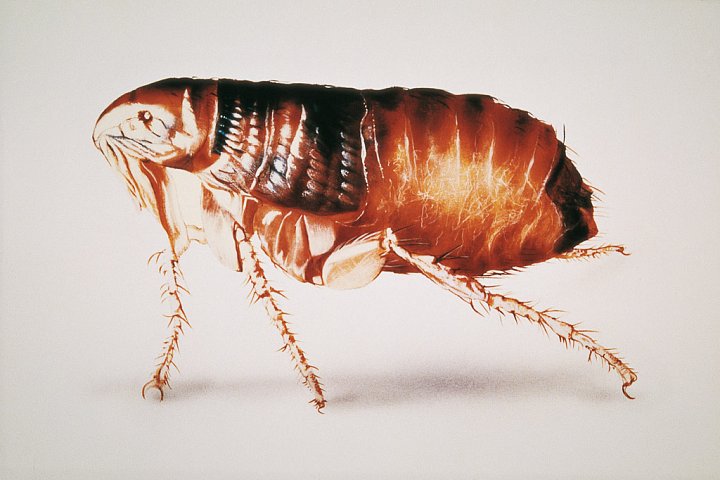
Dog fleas carry flatworms and trypanosomes (the causative agents of sleeping sickness).
Rat flea (southern)
According to the most common theory, it came to us from the tropics along with improved wintering conditions. Previously, the rat flea (Xenopsylla cheopis) was kept out of the north by the cold, but now this parasite has spread everywhere. It poses the greatest danger to humans because its bite introduces plague and typhus pathogens into the blood.
In 1901, the English banker and entomologist Charles Rothschild made the first description of the rat flea, and in 1907 the species was included in the classification of another genus of these insects.
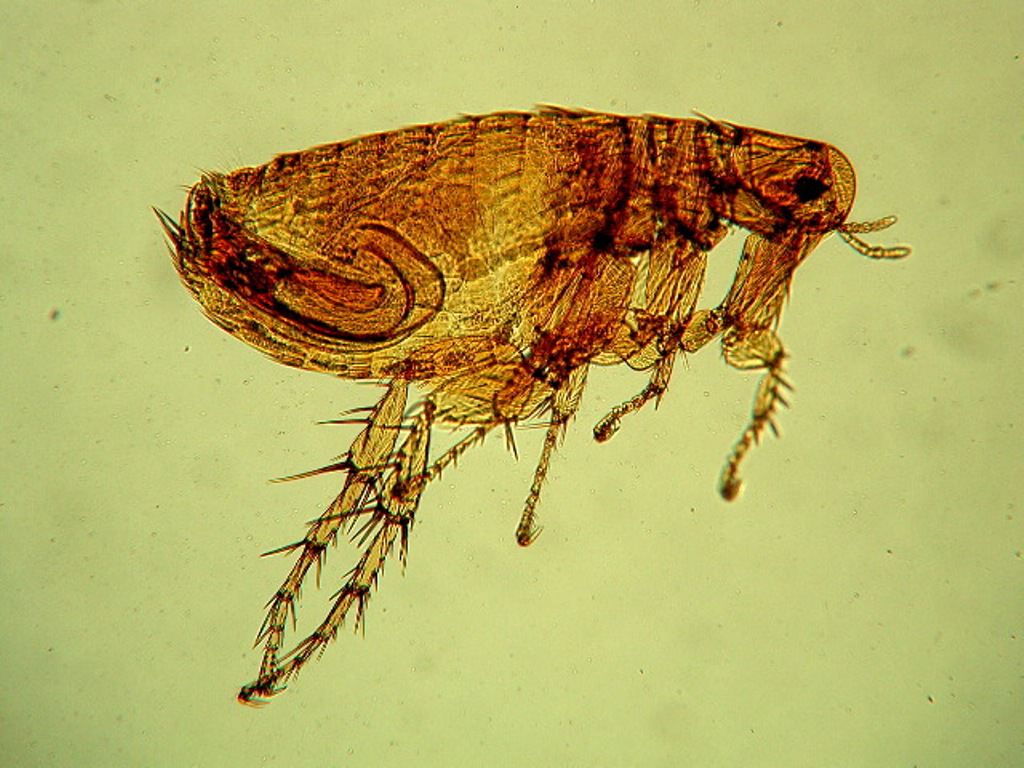
Diseases carried by rat fleas are passed from generation to generation through eggs.
The sand flea (Tunga penetrans)
This parasitic species prefers southern latitudes. It differs from its relatives in its tiny size (1–2 mm) and its ability to burrow into the host's skin. Another name for this flea is "penetrating flea." It typically nests in dry grass, from where it attacks people, wild and domestic animals, and birds.
Until the 1870s, ground fleas were found only in Central and South America. This species then spread to West Africa, where it spread rapidly.
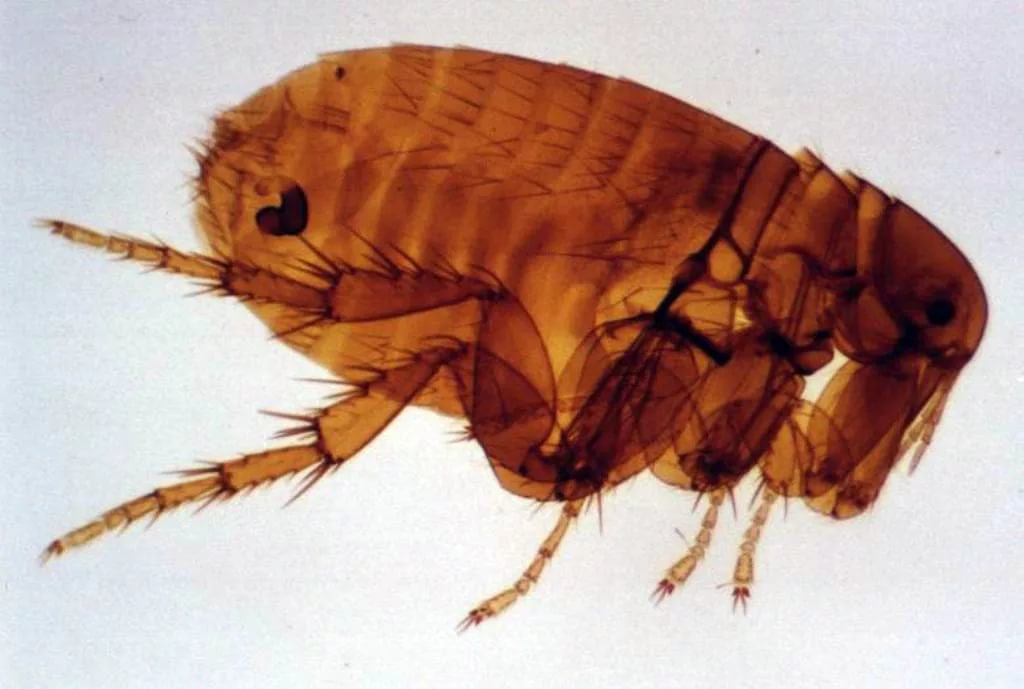
After fertilization, female ground fleas burrow under the host's skin to receive continuous nutrition.
Fighting fleas
In the event of a widespread infestation, it's important to remember that most folk remedies are preventative. To eliminate parasites, it's best to choose a commercial insecticide or contact a specialized company. If you decide to do it yourself, follow these steps:
- Identify the source of the infestation. Once you've determined where the fleas entered your home, prevent them from returning: seal cracks and crevices in the floor, walls, and ceiling.
- Remember that fleas are carried by animals on their fur. Get rid of the parasites and take measures to prevent re-infestation. Use special collars, sprays, and long-lasting treatments.

The flea collar is impregnated with a product that repels parasites from your pet.
- Using the chosen product, thoroughly and meticulously treat the home.

When treating premises for fleas, use protective equipment: gloves and a respirator. Keep all apartment residents, including pets, out of the premises during treatment.
To prevent fleas from reappearing, consider several factors:
- Killing adult fleas won't rid your home of fleas. When choosing a product, choose one that kills fleas at all stages of development.
- Treat the entire room without missing a single centimeter. Parasite eggs and adult insects can hide anywhere, even under the ceiling.
- The residual effect of the product lasts up to 1 month. Avoid wet cleaning during this period, otherwise the parasites will survive.
- Carry out the treatment in the morning. Since the room should be closed at this time, it will take time to ventilate it.
Whenever possible, don't limit yourself to just gloves and a respirator when working with chemicals: use full-body protection.
- Prepare the room in advance: make baseboards and other hard-to-reach areas accessible, remove washable fabrics (furniture covers, curtains, throws), remove rugs from the walls, and remove bolsters and mattresses from beds and sofas.
- If the premises are heavily infested, in addition to the main product, use long-acting powders, sprinkling them after treatment in areas where fleas are most likely to appear.
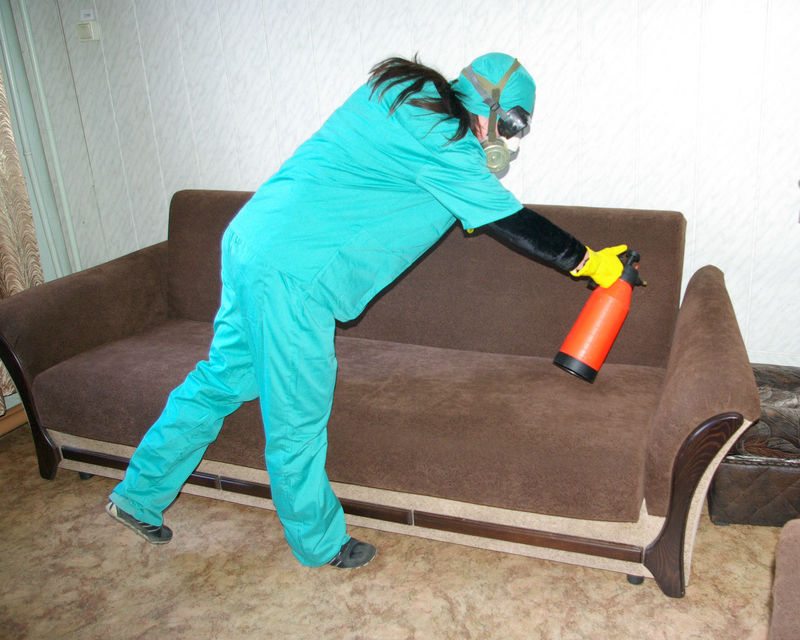
Take steps to eliminate fleas at the first sign of their appearance. Parasites are very prolific, and if left unchecked, your home will soon be overrun with bloodsuckers.
Photo Gallery: Types of Flea Control Products
-

- The most popular flea control products are emulsion-based products.
-

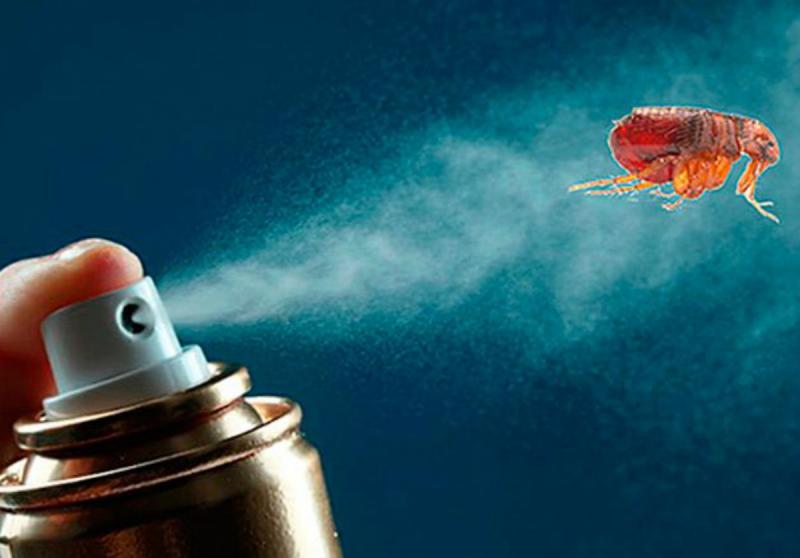
- Modern flea remedies are available in aerosol form for convenience.
-

- Safe for humans and animals, but effective against fleas, pyrethrum powder is sprinkled in all hard-to-reach places in the house.
-

- To get rid of fleas in pets, medications in the form of shampoo, drops, tablets or flea collars are used.
When dealing with fleas, it's important to remember that spot-fixing is a waste of time. Treating your pet or the only ottoman they've found will be ineffective. Use this information and remember preventative measures, and fleas will never bother you again.