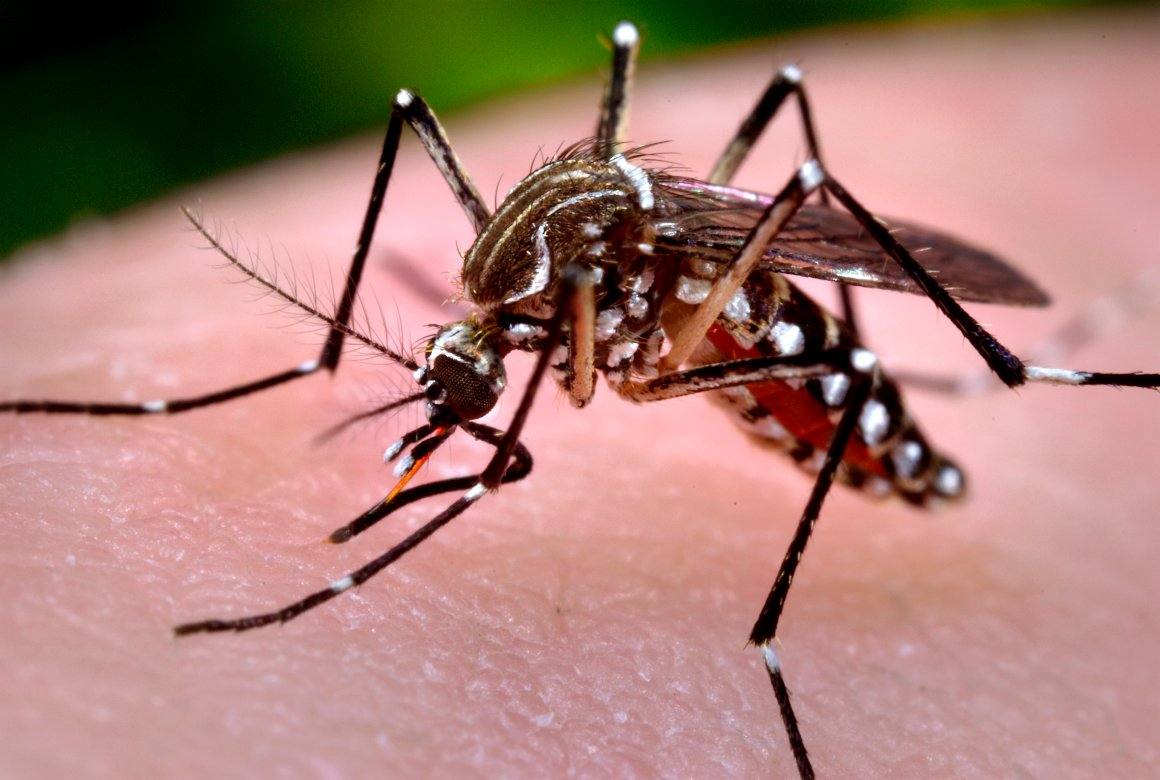
In spring, everything awakens: snowdrops, the first leaves, the pleasing fresh green of the grass. But along with the plants, insects also awaken. The tick infestation has been a growing concern in recent years. Every third bite can be dangerous. Everyone knows: these parasites carry serious diseases. The most common ticks can infect humans with viral encephalitis, monocytic ehrlichiosis, Q fever, Lyme disease, and other dangerous diseases, and dogs with piroplasmosis. So how can you avoid unpleasant moments while enjoying the fresh air of your country house on weekends away from the bustling city? Can a tick-free vacation in a country house become a reality?
Content
Checking the area for ticks
In order to survive, ticks require certain conditions. They like to settle in damp (but not flooded) places where tall grass and low bushes grow. Larvae don't reach heights higher than 30 cm, nymphs don't reach heights higher than 1 meter, and adult ticks don't reach heights higher than 1.5 meters. The edges of deciduous forests, covered with grass and ferns, are ideal habitats for these insects. In dry pine forests, where there is no other vegetation, these parasites are quite rare. They don't roost in tall trees.
Rodents often overwinter in piles of fallen leaves and branches. This is where insect larvae can feed. If, when opening your summer cottage, you discover evidence of mouse infestation (feces, etc.) in your home, or you know of such "cohabitants," ticks may also be nearby.
If your neighbors on the estate have managed to catch the parasite on their property, or your beloved pet has brought it in on itself, then it's clear even without research: there are ticks on your property. How can one guess that they are nearby if there is no such “identifier” nearby?
It's very simple: take a piece of white fabric (a waffle towel would be ideal, as it'll be easier to grab onto), tie it to a stick, and slowly move it across the grass. It's best to do this in the morning, after the dew has dried. Pests are easily visible on light-colored fabric and are more likely to attach.
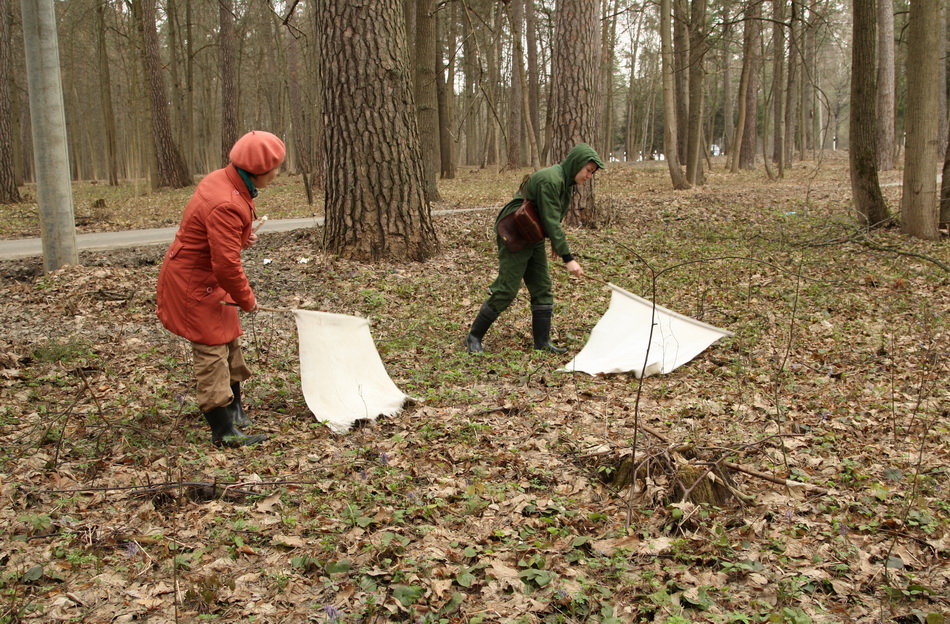
Checking the area for parasites
Sadly, there's no way to protect yourself from the infections these insects carry in advance. The only exception is tick-borne encephalitis, for which there is a vaccine. However, only timely antibiotics can protect against Lyme disease. Therefore, you'll have to manage it yourself.
How to protect and effectively rid your property of ticks
To prevent the short summer from being filled with constant fear of an invasion of nasty parasites, the area needs to be protected.
There are several ways to combat these small insects:
- prevention;
- mechanical cleaning;
- chemical treatment.
To prevent ticks, the lawn should be regularly mowed or trimmed to avoid creating a haven for ticks to live and breed. Insects rarely hide in short, cut grass. It's also important to mow the area around the fence, which will also serve as an additional deterrent to these unwanted "guests."
Interesting fact: There are insecticidal plants that also combat unwanted pests. These include certain species of chamomile: Caucasian chamomile (Pyrethrum carneum), pink chamomile (Pyrethrum roseum), and Dalmatian chamomile. These plants contain a substance called pyrethrin, which is toxic to pests.
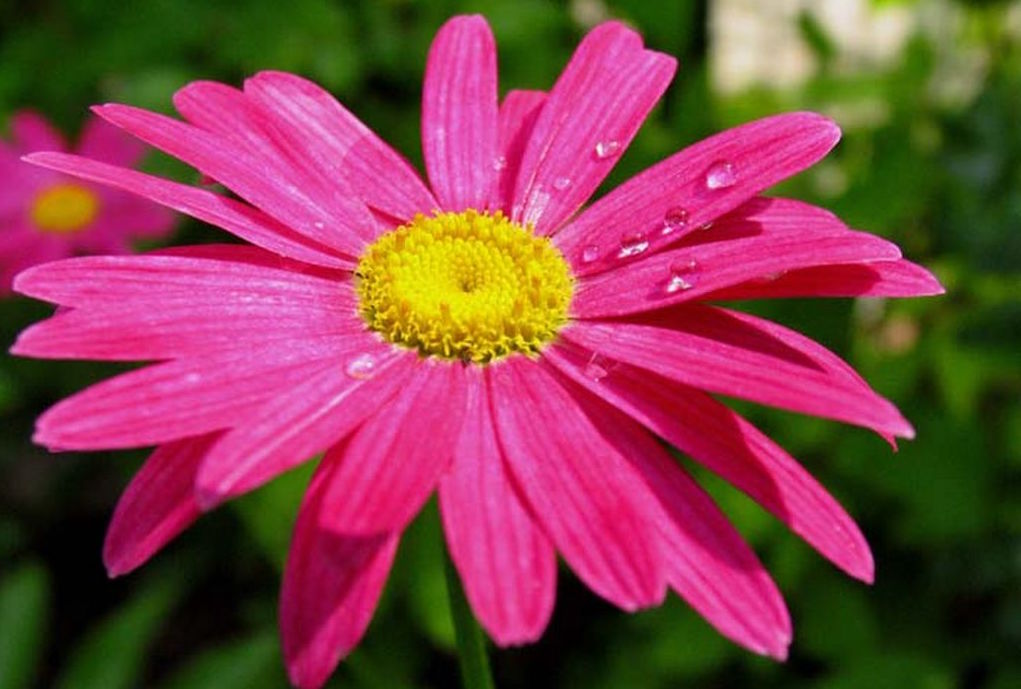
An insecticidal plant fights ticks and other insects.
Mechanical cleaning requires monotonous manual collection of parasites, using the same white flag. It's unlikely you'll be able to collect all the insects in one go, so it needs to be done several times over the course of a week or two.
If the morning harvest of ticks is not a joy, then you can declare chemical warfare on them.
Chemicals for tick control
If you decide to resort to a chemical attack on ticks, you should proceed directly to choosing the weapon of destruction.
Classification of acaricidal drugs
Acaricides are used to kill insects. Acaricides are chemical or biological agents that kill insect pests. There are three types of substances:
- Insectoacaricides. They cause damage to the nervous system and paralysis, killing ticks and insects. These include inorganic sulfur compounds, organophosphorus compounds, and some types of pyrethroids.
- Specific acaricides. These primarily affect ticks. These include products containing bromine (bromopropylate), sulfur (propargite), and nitrogen-containing heterocycles.
- Acarofungicides. They have a detrimental effect on ticks and pathogenic fungi.
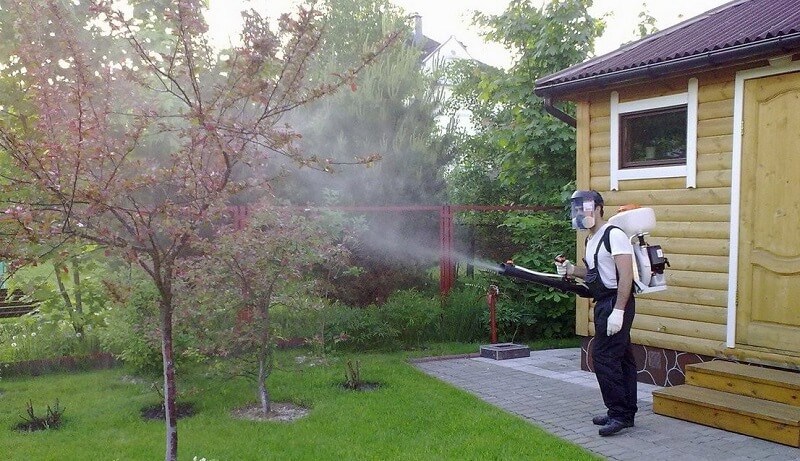
The application of the acaricidal solution is carried out using a special generator with a fine spray
Acaricides differ in their mode of action, composition and toxicity:
- Pyrethroids are synthetic analogs of the natural pyrethrin (found in chamomile, chrysanthemum, and tansy). They act on leaf-eating insects. They are only dangerous to ticks and some other parasites. They are low in toxicity. Third-generation preparations are low-risk for fish, birds, and bees. They are eliminated from the body within a short period of time and do not accumulate in cells or tissues.
- Sulfur preparations are low-toxic to humans, mammals, fish, and bees. They have acaricidal and fungicidal properties and are used against ticks and fungal pathogens.
- Bromine-based products are effective against ticks at all stages of development, except eggs. They are completely non-toxic to plants, bees, humans, and animals. They are effective at low temperatures and are effective against all types of ticks.
- Propargite is an ingredient in many modern products and is effective against all motile insects. It begins to act almost immediately and remains active for two weeks. It is safe for plants but harmful to bees and fish.
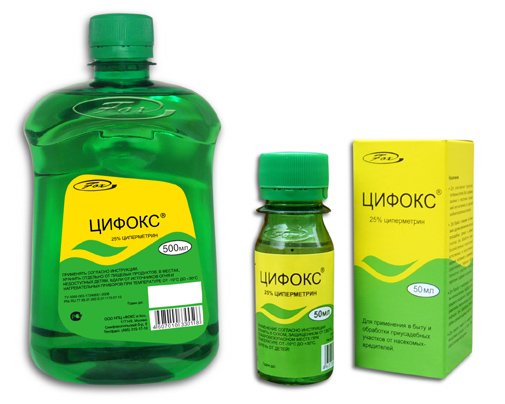
Cyfox kills not only ticks, but also cockroaches, bedbugs, wasps and flies.
Insectoacaricides are the largest of these chemicals and offer several advantages: they are effective, easy to use, decompose quickly, do not persist in the soil, and are economical to use. However, these products have a significant drawback: they are toxic to humans and animals. They differ in their mechanism of action:
- intestinal (act when ingested with food);
- contact (act upon contact of body parts);
- systemic (they move through the vessels of plants and when eaten, they cause the death of insects);
- fumigants (act through the respiratory system of parasites, poisoning them with vapors).
Medilis Ziper, an insecticidal acaricide, is often used for treatment. According to gardeners, it's an effective, yet economical and easy-to-use product. One of the most popular products is Force-Site. It's also used to clear areas of parasitic insects.
Tsifox is an acaricide approved for use in Russia and is effective against more than just ticks.
Photo gallery: the most well-known types of acaricidal preparations
-
- The blaster is non-phytotoxic and therefore safe for agricultural crops.
-
- Sanmite is effective in combating various types of mites: spider mites, strawberry mites, grape mites
-
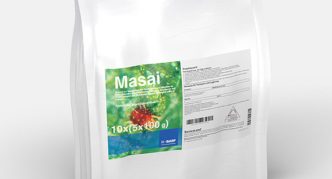
- Masai has a high level of toxicity, but the protective effect of the acaricide is considered to be longer lasting.
Table: Selecting a Chemical
| Current substances | Name drug | Description and effect of the drug | Class danger to humans |
| Cypermethrin | Cyfox | It is most effective against ixodid ticks, but also works well against rat ticks. | 3 (moderately dangerous) |
| Sipaz is super | This broad-spectrum product kills a variety of insects, including mosquito larvae. It has a subtle odor, leaves no residue, and is non-irritating to the respiratory tract. | 3 | |
| Samarovka insecticide | Effective against household insects (cockroaches, flies, bedbugs, fleas, ants, etc.), mosquitoes (imago, larvae) and ticks. | 3 | |
| Medilis-Ziper | It combats ixodid ticks and destroys rat ticks, synanthropic arthropods (cockroaches, bedbugs, fleas, ants), as well as adult flies and mosquitoes. It is used as part of indoor pest control programs to eliminate scabies mites and lice. | 3–4 | |
| Breeze | Most often used to control mosquitoes and ticks. | 3–4 | |
| Fenthion (organophosphorus compound) | Baytex | It is better known as a veterinary drug, but since 2000 it has been approved for treating areas against insects. | 3 |
| Force-Site | The product is designed to kill cockroaches, ants, bedbugs, fleas, flies, mosquitoes and rat ticks, as well as ixodid ticks. | 3 | |
| Fenthion and cypermethrin | Acarocide | A combination product containing a mixture of two compounds: 40% fenthion, an organophosphorus compound, and 10% cypermethrin, a pyrethroid. Its advantage over other products is its high effectiveness against various tick species, especially rat ticks. | 3 |
| Alphacypermethrin | Akaritoks | A white crystalline powder that must be dissolved in water to form an emulsion. It is designed to kill synanthropic insects (cockroaches, bedbugs, fleas, ants, flies, and mosquitoes) and ticks. | 4 (low hazard) |
| Zetacipermethrin | Ram | Kills not only ticks but also other insects (mosquitoes, flies, fleas, ants, cockroaches, and bedbugs). The product is odorless, leaves no residue, and does not accumulate in plants or soil. | 3 |
Important to know: You should treat the area with chemicals at the very beginning of the season, and at a time when no one will be at the dacha.
Acaricidal preparations that kill ticks are toxic and dangerous to people, animals and birds. There's a high risk that chemicals will end up on the garden beds during treatment, and subsequently in human consumption. The effects of the treatments last from 3 to 6 months, and re-treatment will be necessary after harvest. Liquid treatments are more effective than powders and granules.
Is it possible to process the area yourself?
You can treat the area yourself, strictly following the instructions and taking safety precautions when working with chemicals. The manufacturer provides detailed instructions on how to prepare the working solution on the packaging or in the appendix. It is essential to adhere to the dosage of the chemical to avoid poisoning. The solution is a single-use solution; any remaining material is safely disposed of after treatment. The working solution cannot be stored or reused. For successful treatment of the area, follow these recommendations:
- Be sure to use a respirator, gloves and protective light-colored overalls;
- Do not eat or drink anything immediately after working with chemicals;
- Treat the area in windless and dry weather;
- Before the procedure, make sure that there will be no rain for the next three days.
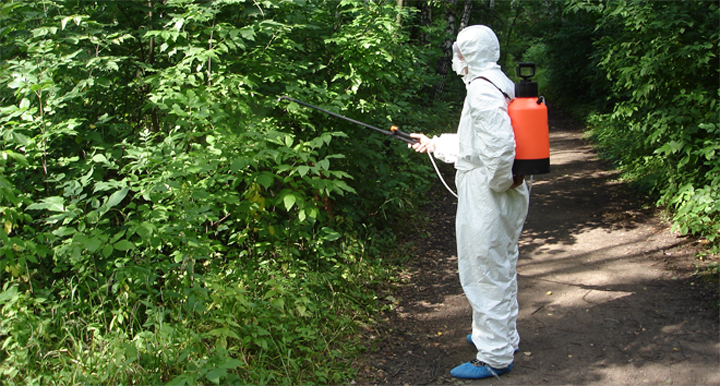
When treating your garden plot on your own, special attention should be paid to the selection of special clothing.
Some time after the treatment (assuming there has been no rain), you can safely head to your dacha with your family. The effects of the treatments usually last 2-3 weeks. Insects die upon contact with the treated plant surface. A repeat cleaning of the area is recommended, but not earlier than 3 weeks later.
While all acaricidal products are more effective, they are also more toxic (can be dangerous to people, birds, and bees). The instructions for each product state that at least three days must pass after treatment before you can return to your dacha. If you follow all the rules and recommendations, there will be no unpleasant consequences, and you can safely spend your weekends with your children and pets in your beloved country house.
Be careful! The manufacturer indicates the toxicity class on the packaging. Carefully read the instructions and strictly follow the manufacturer's recommendations.
Video: How to properly treat your garden plot for ticks
If you're not completely confident in your abilities, it's best not to take risks. You can contact a professional pest control service to treat your property. They'll recommend the right product for your needs and save you from risking your health while eliminating pests. Trust the professionals!
Reviews: advantages and disadvantages of using anti-tick products
Medilis-Ziper insecticide - It does the job - got rid of ticks
Advantages: Rids the area of ticks, affordable price.
Cons: It was not easy to find in the store.
The thing is, for two years in a row, ticks had been living on my dacha plot (9 acres)—I'd pick them off my clothes. Last year, I treated the area with Medilis-Zipper. I followed the instructions on the website—encephalitis (they're specifically about ticks; the instructions for the product provide little information on tick treatments). I was pleased with the results—I didn't see any ticks. I carried out the treatment wearing a respirator and gloves (it's a toxic product with an unpleasant odor), and I used a sprayer from the Soviet era. Overall impression: It gets the job done—it got rid of the ticks. Would I recommend it to friends? YES.
Medilis-Ziper Insect Killer - It's good that such a product has appeared
Pros: The product is expensive, but your health is more valuable.
Disadvantages: none
Hello everyone. Last year, my sister bought a garden plot, and where do we find garden plots in the Urals? That's right, almost all of them are located in the forest. Their plot, in particular, is located so that beyond the fence there's a forest—not a forest plantation, but a dense, beautiful forest. And in the forest, there are ticks and mosquitoes. I'm terrified of ticks myself, and I don't go into the forest without treating my clothes against them, so I convinced her to treat the plot for ticks. After all, the kids come to their garden. The salesperson at the gardening store recommended this product. Of course, it's a bit pricey, but the area we're treating is quite large. When the neighbors found out we were treating it, they immediately contributed money, and we treated several plots at once. It was safer that way. After treating the plots, we haven't encountered any ticks, and there weren't as many mosquitoes as last summer. We finally did the math and decided that even if we didn't split the cost among our neighbors, but just for ourselves, 600 rubles wasn't that much money to be much more secure in the knowledge that a tick wouldn't bite you. After reading the instructions, I saw that it can be used to get rid of cockroaches, bedbugs, and house ants, too. So, it's a fairly broad-spectrum product. Sincerely, Curious Varvara.
Fox & Co. insecticide "Cifox" is a good product, but it doesn't work for long.
Pros: Kills mosquitoes and larvae; helps control other insects; relatively harmless when used correctly. Cons: Some may find the price high.
This year, we were plagued by a plague of blood-sucking insects, which attack in swarms, trying to bite through even thick denim. What caused this misfortune remains anyone's guess: early spring, heavy rainfall, late winter... It doesn't really matter. Since we had no desire to put up with more bites, we decided to buy Cyfox, which contains cypermethrin. We diluted it according to the instructions, namely 1 ml of liquid per 2.5 liters of water. We treated the area around the house and the entire garden. The insects decreased slightly, which was great news. This happiness was short-lived, as rain fell and the bloodsuckers returned. As an experiment, we increased the concentration and applied it again. Well, this time the effect was better!!!
If you absolutely don't want to have these tiny pests in your dacha, create an uncomfortable environment for ticks: mow your lawn regularly and regularly burn old leaves and debris. Kill two birds with one stone by planting chamomile: it will decorate your country house and repel these nasty insects. If these simple measures still don't work, declare chemical warfare on the pests, but be sure to follow the instructions and take precautions. As we can see, a tick-free dacha is a truly achievable goal. Don't let any pest ruin your dacha vacation!