A warm summer evening can sometimes be ruined by mosquitoes. Bites and constant buzzing force you indoors. But even here, there's no escape from the insects. While males feed on plant sap, females are less humane: they require human blood to reproduce. Furthermore, the situation is exacerbated by the fact that mosquitoes carry infectious diseases. There's only one solution: find a trap that will quickly and effectively solve the problem of mosquito attacks. In this article, we'll look at such devices and learn how to build your own mosquito trap.
Content
Types of mosquito traps
All mosquito traps operate on a similar principle: they lure mosquitoes into an area from which there is no return. They are attracted by warmth, food, moisture and human scent. That is why each type of trap is based on one of the factors that attracts mosquitoes.
Traps manufactured industrially and available commercially are divided into five groups:
- thermal;
- water;
- ultraviolet;
- carbon dioxide;
- propane.
Let's look at the features of each type.
Heat traps
As the name of this type of trap suggests, it emits heat currents and this is what attracts mosquitoes. The big advantage is that this type can be used both outdoors and inside country houses and apartments. Let's talk about other benefits of a thermal mosquito trap:
- The trap is designed to attract insects not only by the heat it emits but also by the simulated presence of a human. This is achieved by containing carbon dioxide or attractants whose composition and odor closely resemble human sweat.
- The standard trap coverage radius is 50 meters. In calm weather, one device will protect your dacha from mosquitoes. However, when choosing a trap, pay attention to its power—depending on its coverage radius, the device will cover an area ranging from 20 to 50 meters.
- Some heat traps are equipped with LEDs, which significantly extends their lifespan: LED lamps last longer. They also boast minimal energy consumption, which benefits housekeeping and savings.
- Traps are equipped with special nets and water reservoirs, allowing the owner to choose how to dispose of trapped mosquitoes. The presence of a net and water reservoir is determined by the specific type of trap. If the device is equipped with a net, mosquitoes trapped in the trap are unable to escape and die of dehydration. If a special reservoir is provided, into which water must be poured to a specified level, the mosquitoes attracted to the trap drown. In most cases, judging by customer reviews, the option of pouring dead insects out of the trap is convenient—it's easier than emptying the net. Furthermore, mosquitoes lay eggs in water, but they quickly drown in any liquid.
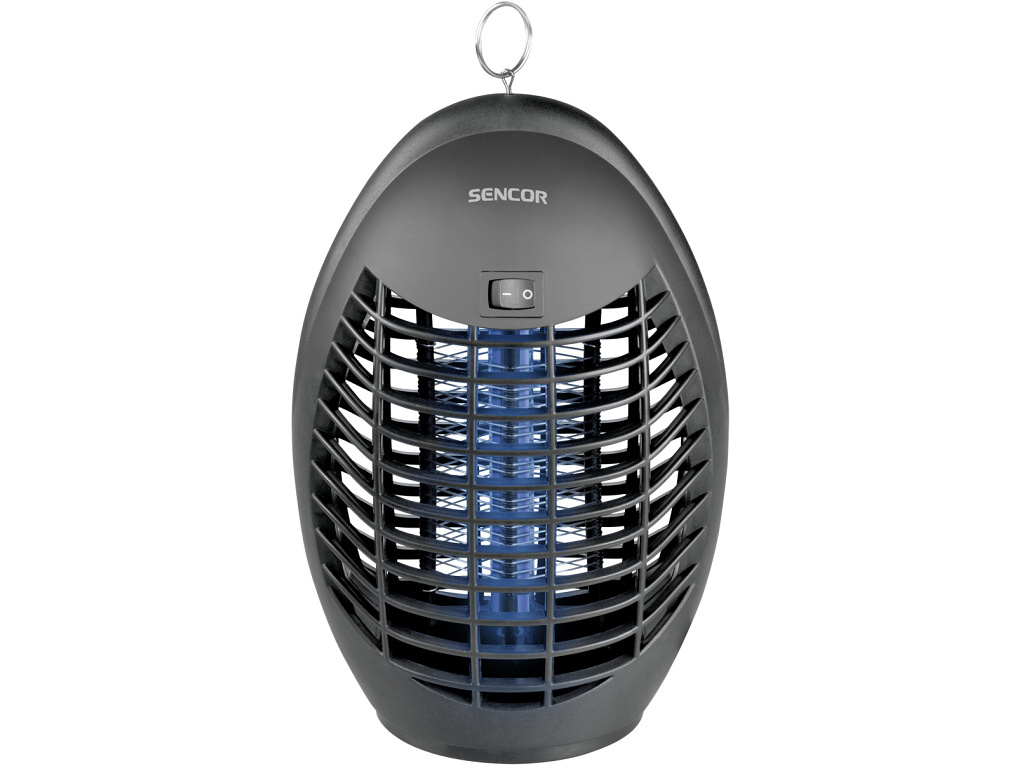
Heat is one of the mosquito baits that attracts them well.
There are also three significant disadvantages of thermal devices:
- The high price (some units reach $1,000) is due to their high efficiency and ability to cover large areas. These products are not in widespread demand and are suitable for outdoor use or in large homes.
- Requires a lot of space for installation (devices are bulky).
- Constant access to the power grid is required, so they are not suitable for summer cottages where there is no electricity.
They are usually installed near the recreation area, ensuring absolute comfort. The traps do not distract the owners from their relaxation or make themselves known, and are safe. However, you should not place it in close proximity to sofas, outdoor chairs, or in places where people sit, as the device produces heat. People sitting nearby will feel uncomfortable due to the heat directed at them, especially during hot weather. The ideal installation distance is 2–2.5 meters from the seating area.
Consumers frequently leave reviews of Mega-Catch devices from the Pro 900 series. While these devices don't completely eliminate mosquitoes, they do significantly reduce their numbers. Although the Mega-Catch trap has received overwhelmingly positive reviews, customers often complain about the difficulty of choosing a location for installation due to its relatively bulky size. Creating bait when using liquid mosquito traps is also difficult. Many customers are also confused by the confusing timer settings.
Water traps
The safest mosquito traps for people are water traps. They are also characterized by ease of use and high efficiency.
The trap works by attracting mosquitoes to a moist environment—that's where the females lay their eggs. The water itself acts as a lure—mosquitoes are drawn there and are unable to escape, quickly drowning. Periodically, the trap needs to be cleared of dead insects and refilled with fresh water—this is all that's required to maintain the device.
Water devices also have their disadvantages:
- In dry weather, water evaporates quickly and it is necessary to constantly replenish its reserves, otherwise the device will be ineffective;
- The device operates from the mains.
Traps of this type attract mosquitoes with ultraviolet light—usually a lamp or flashlight, supplemented by a water trap. This dual action allows for greater effectiveness. Sometimes these devices are equipped with fans, CO2, and other cooling devices.2 or other effective attractants. The Dyntrap Insect Trap, for example, fully demonstrates the advantages and disadvantages described above. It must be manually turned on every evening and water must be added frequently.
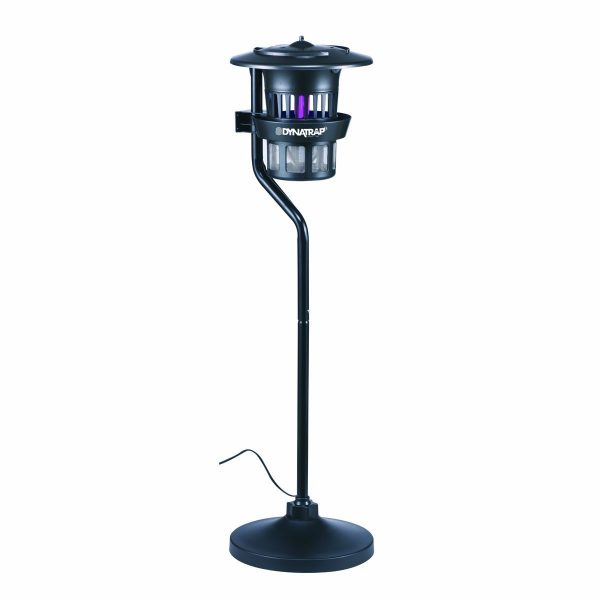
Dyntrap Insect Trap with water tray, costing no more than $70
Carbon dioxide traps
These devices emit energy similar to human breath. This is the essence of mosquito bait, which mosquitoes can detect from up to 20 meters away.
The principle of operation is as follows: for mosquitoes, the smell of carbon dioxide is a signal that a person is nearby, and as soon as they detect it, the insects are completely ready to attack. As soon as insects fly to the device, they are sucked into a sealed, removable compartment, where they subsequently die from lack of air and food.
Caution! These devices are intended for outdoor use. Frequent gas cylinder replacement is required for their operation. In enclosed spaces, these devices may pose a health hazard.
Choosing CO2 traps, pay attention to the following factors:
- Give preference to portable devices that are easy to move and can be hung.
- Pay attention to the safety of your appliances: they should have a feature similar to the "gas control" found in modern gas stoves. When the appliance is turned off, the gas supply should be cut off. There are appliances available without this feature, so it's best to choose ones that do for safety.
- "Smart" and improved traps release gas in portions, at specific time intervals - they are even safer.
There are also devices that operate without cylinders. They rely on attracting insects with the smell of carbon dioxide, generated through a photocatalytic reaction. A small amount of carbon dioxide is released due to the reaction of metal and ultraviolet rays. This amount is sufficient to attract mosquitoes. The main drawback of this device is its limited range.
Disadvantages of carbon dioxide traps:
- heavy weight, need for constant refueling;
- It is better to constantly monitor the operation of the device and not leave the device unattended for a long time;
- Not recommended for use near small children and pets.
A popular brand that produces CO2 Traps — Dynatrap. They produce cylinder-based devices and photocatalytic traps, which are also highly functional (despite their smaller coverage area).
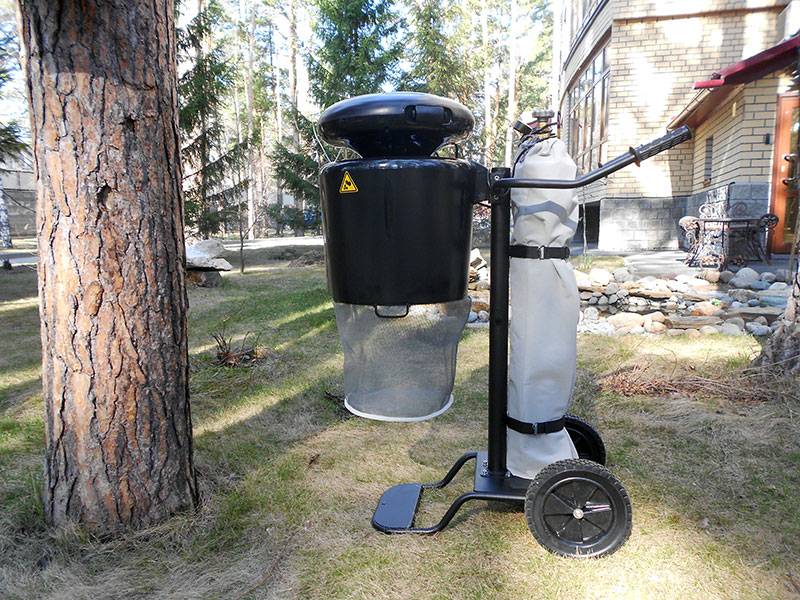
Mosquitoes enter the carbon dioxide trap through special compartments.
Propane traps
As users note, this type of trap is effective and time-tested. It works by using propane gas, which is heated by a burner, to actively release carbon dioxide. Manufacturers recommend placing propane traps 20 meters from a terrace or seating area to ensure the device does not create a barrier for people and mosquitoes.
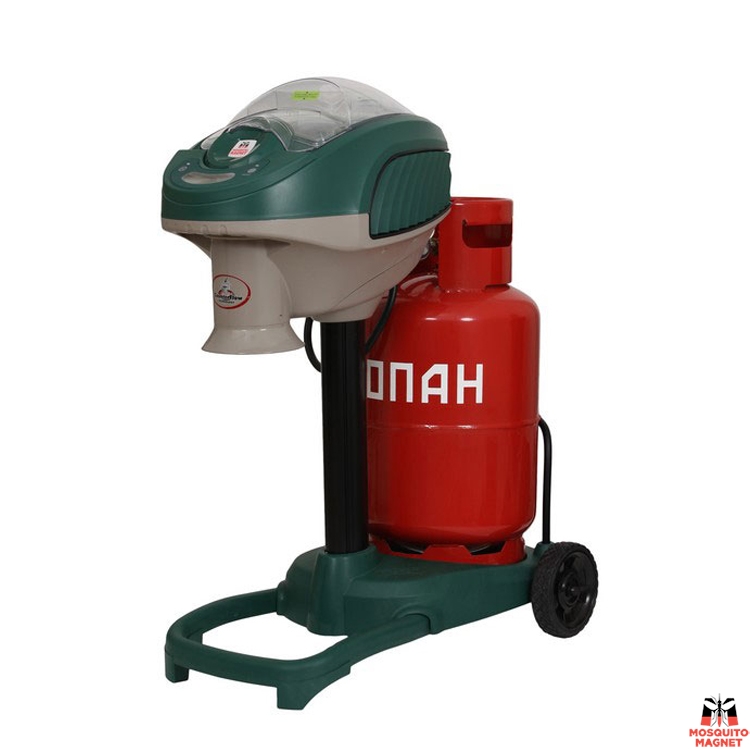
Propane produces carbon dioxide, which attracts mosquitoes.
Let's list the main advantages of such baits:
- In addition to mosquitoes, the device kills mosquitoes, flies and midges;
- there is a choice between wired and wireless devices;
- Such traps are easy to install and use.
There are also some disadvantages that will affect users:
- you will have to buy propane frequently - one cylinder lasts about a month;
- Propane is not a cheap gas, but its costs can be reduced by initially choosing a low-power device with a small area of influence.

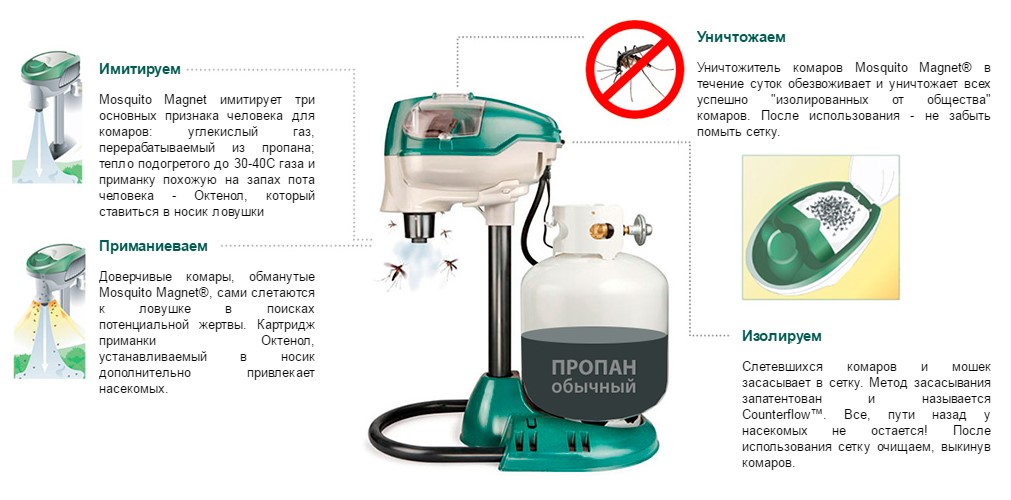
How the Mosquito Magnet Propane Mosquito Trap Works
Ultraviolet electric traps
The general public often associates this type of trap with conventional home fumigators. The active element of a fumigator is a plate or liquid containing a repellent or insecticide. Ultraviolet mosquito traps operate on a different principle—using a special ultraviolet lamp.
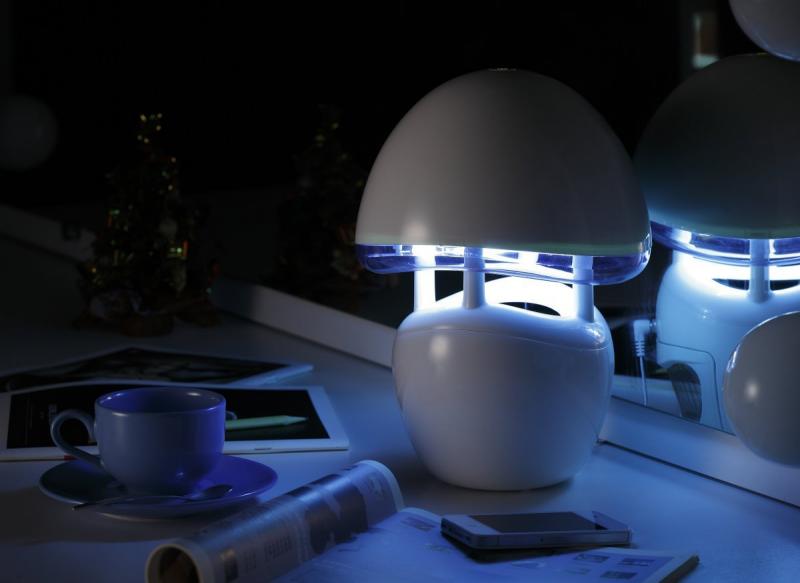
The device can be used both at home and outdoors, it is compact and easy to move from place to place. In appearance it resembles a small lamp emitting a soft glow.
The lamp traps are safe for humans and environmentally friendly: they do not irritate the eyes and do not emit any odors.
Ultraviolet lamps last a long time, and if they burn out, you can always buy a replacement lamp at a low price and quickly replace it.
The principle is as follows: a lit lamp emits light, attracting mosquitoes. A fan in the device sucks the mosquitoes into a special container. Once trapped, the insects die from dehydration.
Among the disadvantages of ultraviolet traps, the following can be highlighted:
- To actively attract insects, the device must operate continuously. If it is turned off, the trapped mosquitoes crawl out through small cracks.
- The noise emitted by the device interferes with sleep.
- If there is a person near the trap, it will be difficult for the mosquito to be attracted to it.
The following popular ultraviolet devices have similar characteristics: Stinger Indoor Insect Trap, Dynatrap DT 600, Sititek Still. According to users, traps of this type do not completely eliminate mosquitoes, but they significantly reduce their numbers.
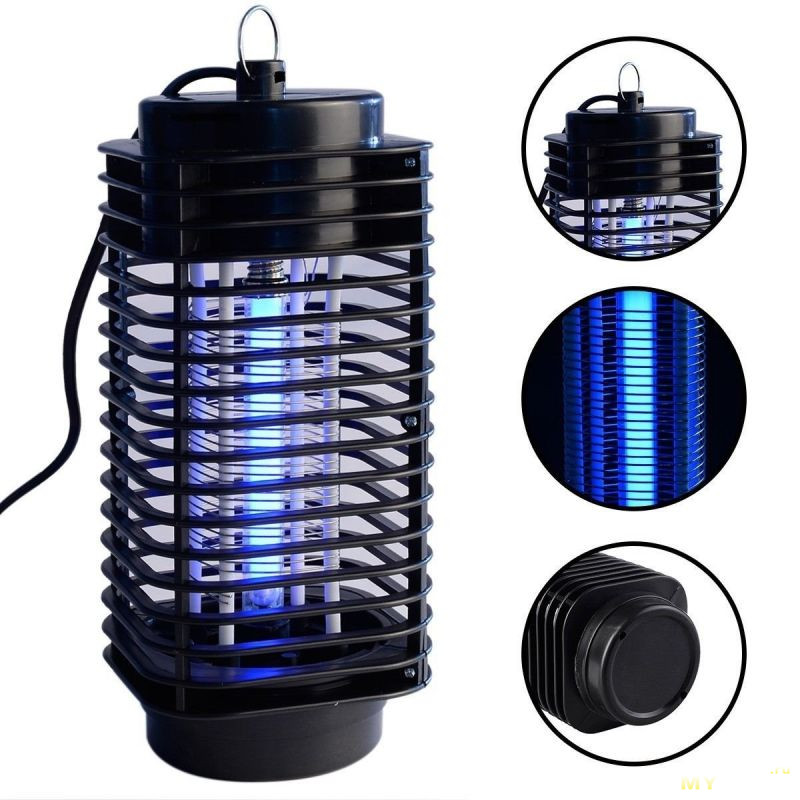
UV traps attract mosquitoes with light and radiated heat.
Popular mosquito traps and repellents
There are several devices that have gained significant popularity among their peers due to their effectiveness and ease of use. These include:
- Skat-23;
- Insect killer 14044 er;
- MT 64;
- laser gun.
Insect Repellent Skat-23
The SKAT-23 is a Russian-made device suitable for outdoor use. It features two powerful ultraviolet lamps with a low heat output, just enough to attract mosquitoes. As a bonus, it features an electrified metal mesh that kills the insects upon contact. The device covers a 60 square meter area, is completely safe for humans, and makes no sound.
Insect killer 14044 er — mosquito killer
The Insect Killer 14044 er is a device manufactured in the USA by Flowtron. It is equipped with an ultraviolet lamp that attracts insects with light. Mosquitoes only need to approach the trap to be killed by an electric shock passing through the metal mesh. A special compound called Octenol, which resembles human sweat, is used as an additional bait. As a result, insects are more readily attracted to this bait. The device is completely safe for humans and does not emit any toxic substances.
MT 64 for insect protection
The MT 64 is a Chinese-made device. It attracts mosquitoes with the heat and carbon dioxide it emits. The manufacturer recommends running the device continuously for 15 days, after which the mosquito breeding cycle is disrupted and the insect population is significantly reduced. The device can protect an area of up to 6,000 square meters from pests.
Laser gun for killing mosquitoes
An innovative device that allows you to get rid of large numbers of mosquitoes with high efficiency. The manufacturer claims that this device is capable of killing up to one hundred mosquitoes in one second.
The device is equipped with a special optical system that processes signals in the form of images using infrared radiation. The system sends a signal from a distance of thirty meters to destroy any insect that comes into its field of view.
This device is powered by a powerful laser. It leaves insects no chance of survival. The laser targets only mosquitoes and other small flying insects. The design is enhanced with LEDs, extending the lifespan of the device.
How to choose the right trap
When choosing a trap, consider the specific situation: where you plan to use it (outdoors or indoors), whether it will be effective, what area it should cover, and more. For a house or apartment, a low- or medium-power trap—a portable ultraviolet or electric insecticidal trap—is usually sufficient.
If you need to protect the area around your home, find salvation from mosquitoes on the terrace of your house, then your choice is water, thermal or gas (CO2, propane) traps. However, please keep in mind that gas traps should be used with caution, instructions should be read carefully, and use should not be done near small children or pets.
Before purchasing a mosquito trap, set yourself a task: picture in your mind the problem the device should solve—what area it should cover, how it should work, its safety and environmental friendliness, etc.
Mosquito traps: DIY
You can make your own insect traps, and of any type: from regular sticky traps to poison baits and reservoirs.
Homemade mosquito traps are a simple, effective, and safe way to get rid of mosquitoes.
How to make a sticky trap
To make your own mosquito sticky trap, follow these steps:
- Take a sheet of paper, one half of which is cut into strips (this will make it easier to secure the sheet securely).
- Prepare a masking tape mixture. It can be made from pine resin, wax with honey or glycerin, rosin, or Vaseline with honey. It's best to mix these mixtures in a double boiler and then apply them to the paper.
- Hang Velcro from the ceiling, above doors, near windows.
Video: DIY Sticky-Paper Insect Trap
Plastic bottle container trap
To make such a trap, you need to do the following:
- Take a plastic bottle (1.5 l), cut off a third of the top of the bottle.
- The cut-off piece is turned over and placed into the bottom of the bottle, like a funnel. The trap is ready.
- A bait is made and then poured into the bottle. The bait is made from water, sugar, and yeast. The ingredients are mixed thoroughly and poured into the bottle trap.
- The bottle is wrapped in thick colored paper and placed in a dark corner.
The insect is trapped in a bottle filled with a special compound. As a result, it can no longer escape and dies. Mosquitoes are attracted to the carbon dioxide produced by fermentation (yeast consumes sugar), and females fly in, thinking it's a human or animal breathing.
In a bottle trap, the two parts should be tightly connected so that mosquitoes that get caught in it cannot crawl out through the cracks and fly away.
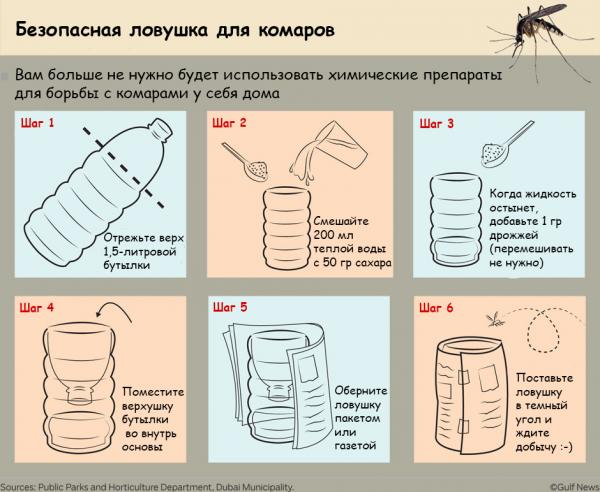
The simplest and most common way to catch mosquitoes is a bottle trap.
Video: Mosquito trap made from a plastic bottle
Electric trap-lamp
Electric traps are sold in stores, but you can make your own. To do this, you'll need some knowledge of physics. The device is a small lamp with a removable bottom, from which dead insects are periodically removed. The trap uses an incandescent bulb, whose light attracts mosquitoes. When insects are attracted to the light, they try to reach the lamp through a stretched wire mesh, which is connected to high voltage. When flying through the net, the mosquito receives an electric shock and dies.
To make such a trap you will need:
- fluorescent energy-saving lamp;
- high voltage module;
- finger battery;
- soft aluminum wire;
- switch.
Let's take a step-by-step look at how to make such a device:
- Two holes are drilled in the base of the lamp on opposite sides, through which a soft aluminum wire is threaded. The end of the wire is then secured and wound around the lamp in a spiral, with the remainder being cut off.
- The procedure is repeated with the second drilled hole.
- After this, two ends of wire are visible from the light bulb. One of them is twisted with only the wire wound around it.
- There are two wire leads remaining: the original one from the light bulb and the other end of the wound aluminum wire. Both connect to the module, which is pre-wired to an AA battery via a switch.
- A lamp with a high-voltage winding is placed on this module. This is done so that the wires align and contact is made.
- The device turns on, the lamp lights up, and mosquitoes flock to the light.
- The device works by attracting mosquitoes to the light from the lamp. As soon as they land on the wires wrapped around the lamp, they immediately receive an electric shock.
- A small plastic bucket or a regular polyethylene lid is used as a tray.
The advantage of such a trap is that it works autonomously when the general light is turned off.
If the device has a fan, it will suck the insect inside (like a vacuum cleaner). A light trap with a fan is convenient when hung outside near an open window. This is especially true at the dacha in the heat, when it's unbearable to sleep without an open window—it's stuffy and a fresh air supply is needed. Mosquitoes, like other insects, are attracted to the light of a lit lamp, and a fan helps quickly draw the bloodsucker into the container. It's best not to install these types of fan traps indoors, as they create an irritating noise that can interfere with sleep (of course, this depends on the individual: if such background noise doesn't cause problems, a fan-powered lamp trap can be placed indoors).
Mosquitoes that get inside the device die within eight hours from dehydration (as per the diagram below, mosquitoes first get into a tetra pack, and then, with the help of a fan, into a gauze bag).
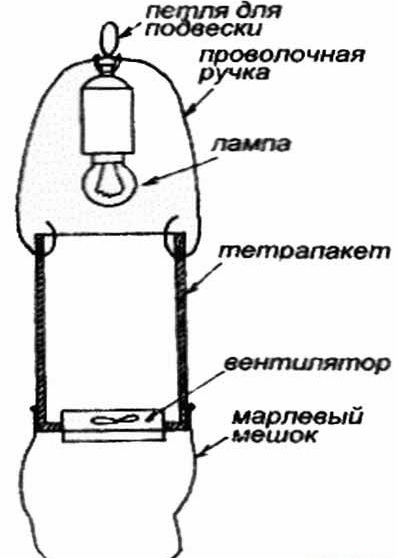
Schematic representation of a trap with a lamp and a fan
If you have electrical repair or DIY skills, you should be able to build a similar device yourself using the diagram. This way, you'll protect your family from attacks by blood-sucking insects.
The light trap has several advantages: it is completely safe (it does not contain chemicals or ultrasound—for example, some people get headaches from ultrasound) and does not use high voltage.
Video: How to Make an Insect Trap Light
User reviews
The EGS-08–4W electric discharge trap and the SKAT 21 photocatalytic trap do their job perfectly. But I think the SKAT 21 is more effective; it caught flies, mosquitoes, and gnats. The electric discharge trap seemed to be slightly misplaced. It also did its job faithfully, but the insect "harvest" was smaller; next summer will tell. So, for now, you can safely order the SKAT 21 for your dacha and home. I also want to say this: these traps are most effective in complete darkness, when there are no extraneous light sources (TVs, light bulbs, etc.). This is a very useful and helpful thing; we've been sleeping soundly at home for two nights now with the windows and doors open. So that's how it is. But summer and fall are still ahead, and I'll continue testing my traps.
The SKAT-21 trap works well. I bought it last spring, and it worked faithfully from spring until fall. I placed it on the veranda near the front doors. There were no mosquitoes in the house or on the veranda, and it manages to catch them when they sneak through the doors or open windows. I haven't tried it in the yard, although mosquitoes and midges are plentiful there. I bought a couple more of these traps this year; I'll place them outside and see what happens.
The SKAT-21 trap has gone up in price considerably, so I had to buy one instead of two. I also bought an EGS-08–4W electric discharge trap to go with the SKAT-21; I think the price tag is still the same. Both traps work perfectly. In the dark, you can hear the clicking sounds of the discharges and the slapping of the SKAT fan blades every now and then. Within three hours, the mosquitoes and flies had disappeared from the house; some ended up in the stingray's "stomach," and some were left roasted on the EGS-08–4W electric discharge trap. It's funny to see all this in the morning.
I also have a Sititek Garden-M mosquito repellent, which attracts mosquitoes with its light and kills them. To make it effective outdoors, I add octenol, an attractant. It enhances the repellent's effectiveness by attracting them with its scent. Give it a try; it should help.
Any mosquito trap can solve the problem of mosquito attacks. When choosing a specific device, consider your own needs and preferences, as well as the terrain and the area you need to protect from mosquito infestations. Only with this approach will you be able to choose or build an effective trap that will completely satisfy your needs.