We're used to thinking of flies as harmless insects that cause virtually no inconvenience. Moreover, they're the first harbinger of summer and a source of entertainment for pets. However, there are varieties of these insects that can become a real problem and even life-threatening. One such example is the tsetse fly.
Content
Tsetse Macha: Characteristics and Features
Tsetse (or Glossina in Latin) is a genus of the fly family, comprising 23 species. The tsetse fly is called the "scourge of Africa" because, despite scientific advances, this insect continues to destroy livestock and claim thousands of human lives.
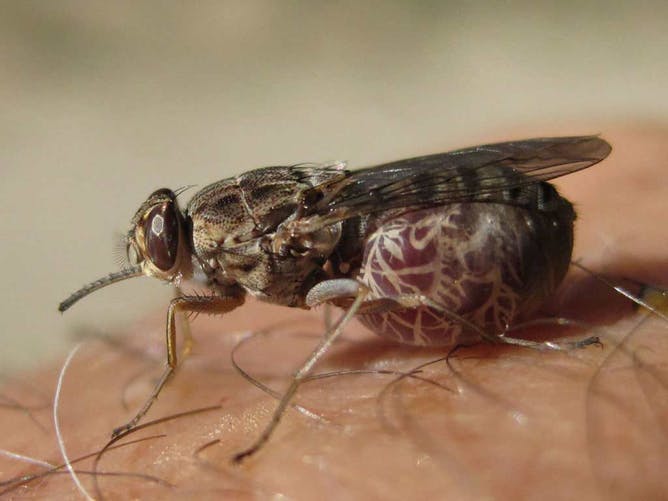
Around 60,000,000 people are constantly at risk of dangerous infection
Appearance
The tsetse fly is a small, reddish-grey insect, ranging from 8 to 15 millimetres in length. To distinguish it from members of another genus, pay attention to its wings. Firstly, the veins on the tsetse fly's wings resemble an axe. Secondly, when at rest, the fly folds its wings so that one completely overlaps the other. Furthermore, the tsetse fly has a clearly visible elongated, forward-facing proboscis and branching, hairy antennae. Characteristic dark brown stripes line the body, and the abdomen is colored in a gradient from yellow to gray.
Photo gallery: external differences from other flies
-
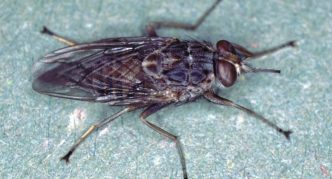
- When at rest, the fly folds its wings so that one completely covers the other.
-
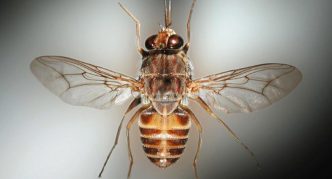
- The veins on the wings reveal the shape of an axe.
-
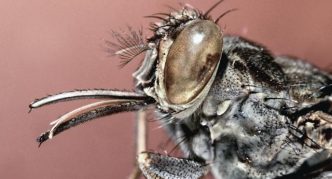
- The tsetse fly has a clearly visible, elongated, forward-facing proboscis and branching, hairy antennae.
Life cycle and reproduction
The tsetse fly's reproductive process differs from that of other flies. Primarily, the female mates with the male only once, after which she produces about ten larvae throughout her life—one every two to three months. The gestation period lasts one to two weeks, and, unlike other flies, the tsetse fly does not lay eggs, but gives birth to fully developed larvae, which immediately after hatching burrow into the ground and pupate. The tsetse fly lives from one to two and a half years.
Nutrition
Tsetse flies (both males and females) are real vampires, as they feed on the blood of small and large mammals: both animals and humans. With their proboscis, tipped with teeth, these insects are capable of biting through even the thickest animal skin. When biting, they secrete blood-thinning substances along with their saliva and drink until they nearly double in size. It is this feeding method that causes problems, as tsetse flies carry trypanosome parasites.
Interestingly, when searching for prey, tsetse flies pay attention to moving, warm objects, which is why they often "attack" cars. The only lucky mammal that tsetse flies don't consider as a meal is the zebra. Scientists speculate that this is due to the insects' distinctive black-and-white coloring, which disorients them.
Habitats
All species of tsetse fly live in Africa, preferring the tropics and subtropics. They are found mostly in tropical forests and along rivers.
The flies' fondness for damp places prevents humans from exploiting large tracts of fertile land. However, scientists have also noted the insects' benefits: for example, tsetse flies are believed to be the reason why untouched wildlife habitats remain in Africa, and fly-borne diseases protect the continent from overgrazing and the soil erosion they cause.
The danger of a tsetse fly bite: sleeping sickness
As already mentioned, tsetse flies are carriers of blood-borne trypanosomes, which, in turn, cause sleeping sickness in humans and nagana disease in animals. Sleeping sickness first attacks the immune system, then the nervous system. After some time, tumors appear throughout the body, which ultimately lead to death.
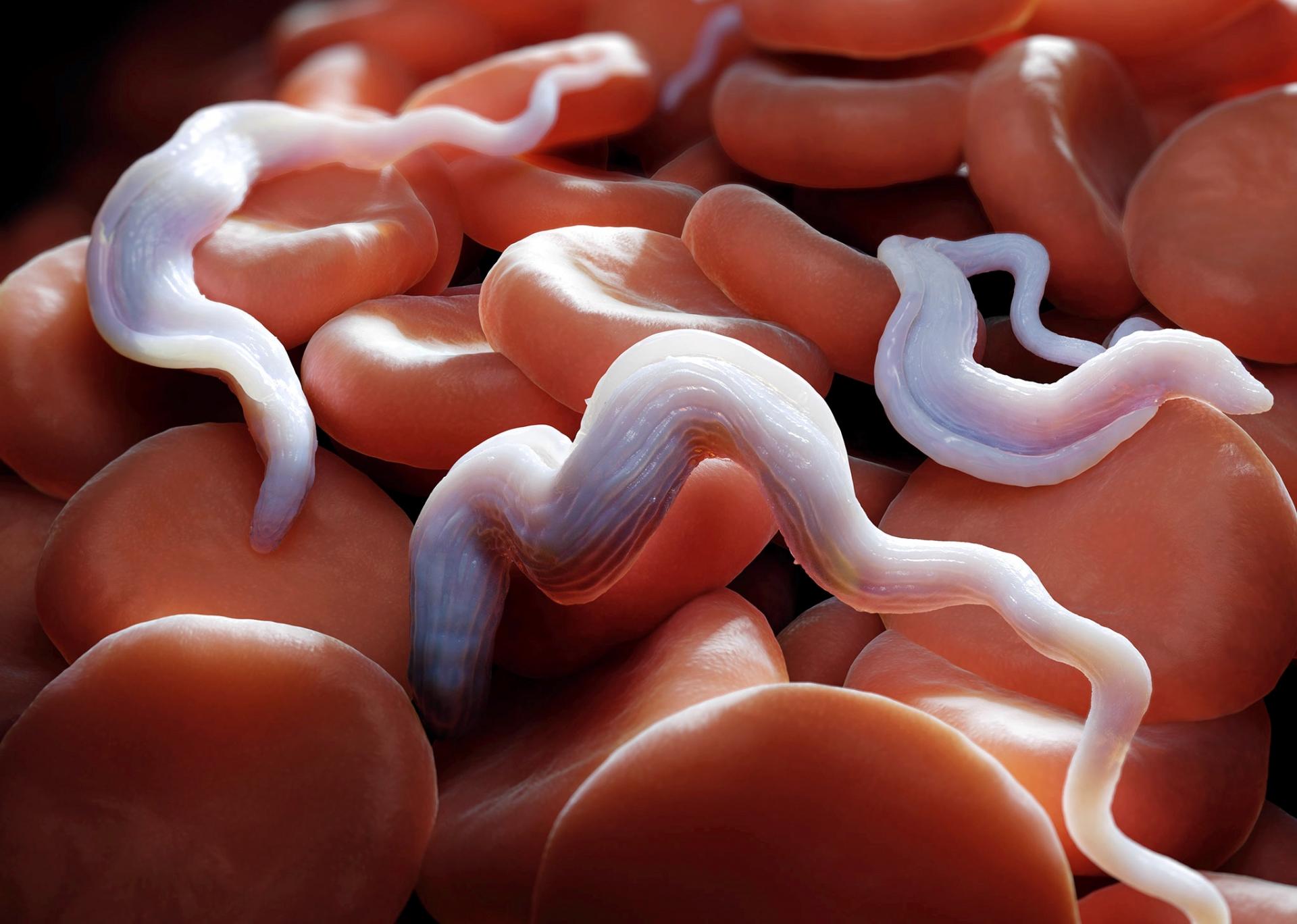
Tsetse flies are carriers of trypanosome parasites.
Trypanosomes, which pose a deadly threat to humans, are transmitted by tsetse flies from antelopes. The parasites are a permanent part of the animals' blood, but they suffer no harm. Once in human blood, the trypanosomes alter their protein coat in a variety of ways, making it very difficult to find a suitable treatment. The flies themselves also carry the parasites asymptomatically. There are theories that trypanosomes even increase lifespan.
Approximately 60 million people are at constant risk of tsetse fly bites. Each year, the diseases it carries claim more than 3 million livestock and 9,000 human lives. The highest infection rate (>80%) is recorded in the Democratic Republic of Congo. Efforts to combat this problem have been underway since the mid-20th century, with insecticides and even radiation treatments used, but significant results have yet to be seen.
Symptoms of sleeping sickness
There are two types of sleeping sickness: Rhodesian and Gambian, their symptoms are almost identical. Rhodesian flu is considered a more acute form, and its symptoms appear more quickly. Gambian flu can remain latent for a long time, and a flare-up can suddenly give way to a deceptive improvement. The initial stage of the disease (damage to the immune system) can be completely asymptomatic until nervous system problems suddenly appear.
The first sign of sleeping sickness is the appearance of a trypanosomal chancre, a boil-like nodule, a week after infection. It appears not at the site of the bite, but most often on the head or arms and legs. It is painful and may be accompanied by ulcers, pink or purple spots (5–7 centimeters in diameter), and swelling of the face and extremities. It heals within 2–3 weeks, leaving only a scar.
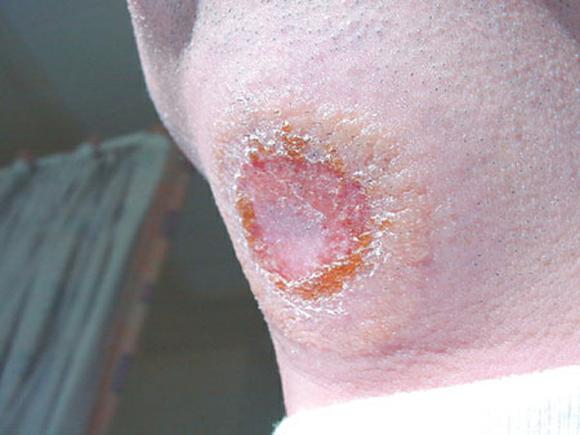
The trypanosoma chancre that forms at the site of the bite is a large, painful blister, it has a characteristic round shape and a dense structure, the area around the chancre has a whitish tint
During the first month, a person may experience fever, headache, and joint pain. The early stage of the disease can last from several months to several years. It will be accompanied by various pains, fever, tachycardia, swelling and skin spots, and impaired coordination and sleep. If left untreated, a person may die before the typical sleep problems appear.
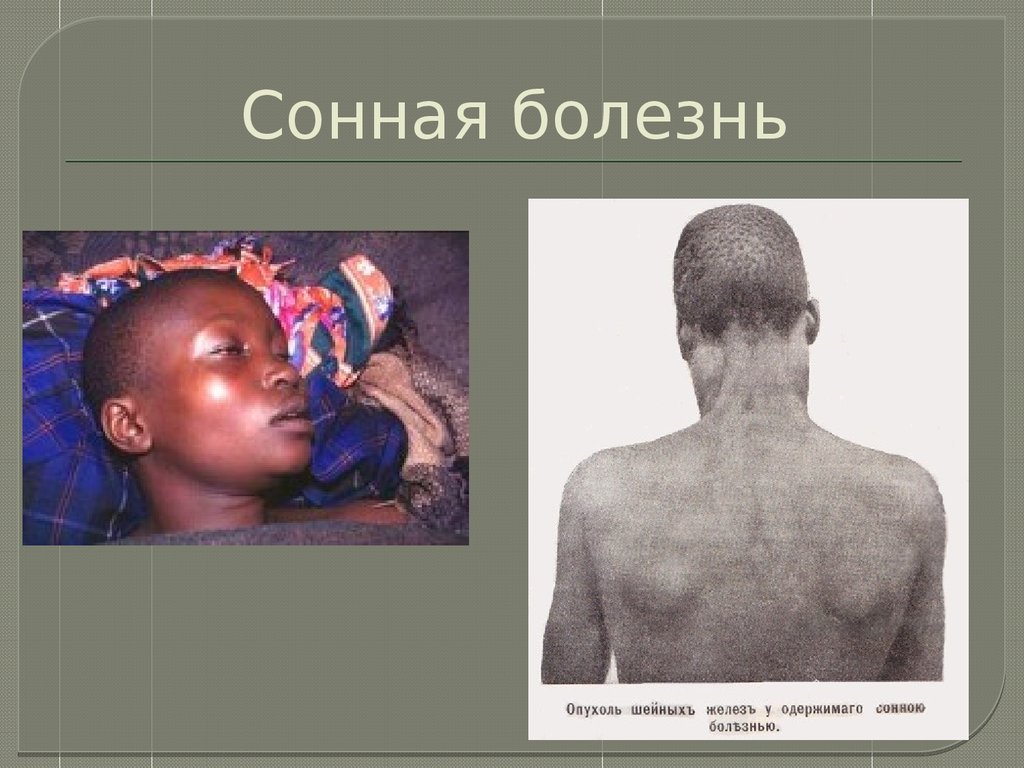
The spread of parasites through the lymphatic vessels leads to an increase in lymph nodes, the most noticeable increase in the nodes is in the back of the neck, they do not become denser and do not hurt when pressed.
The hematolymphatic (early) phase of sleeping sickness is followed by the meningoencephalitic (terminal or late) phase. During this stage, the parasites affect the brain, symptoms intensify, and the person may fall asleep while performing some activity.
How to diagnose and treat sleeping sickness
Tsetse flies move almost silently, so a bite is almost impossible to prevent, and you might only notice it when a chancre appears. In any case, at the slightest suspicion of a bite, you should immediately consult an infectious disease specialist. No folk remedies will help with this disease. The sooner you consult a specialist, the greater your chances of a full recovery. Without treatment, this disease inevitably leads to death.
To diagnose sleeping sickness, a blood test and a lumbar puncture (analysis of fluid in the lymph nodes) are performed. Treatment is individualized for each case, depending on the severity of the disease, the time since infection, and the patient's condition. Highly toxic medications are used, including pentamidine, suramin, and organic arsenic compounds; in later stages, eflornithine and nifurtimox are used. Severe side effects are expected with these medications, but these can be managed clinically.

If trypanosomiasis, transmitted through the bites of blood-sucking flies, has been detected in one or more residents of a locality, mass chemical treatment of the population is carried out using the drug Pentamidine.
Before going on a trip to Africa, it is essential to administer Pentamidine intramuscularly. On the continent, it is best to avoid areas where tsetse flies are most likely to attack, wear light-colored clothing that covers the entire body, and use insect repellents.
The tsetse fly is a small insect that poses a significant threat. While African scientists develop solutions to combat this scourge, tourists seeking exotic destinations should exercise extreme caution, take all preventative measures, and seek medical attention immediately at the first sign of sleeping sickness.