When someone tries to take our bread, it always makes us angry and indignant, doesn't it? When the brazen pest gets into the food itself and starts shamelessly devouring it, the anger is doubly intense. And that's exactly what mealworms do—the scourge of experienced housewives, precisely those whose kitchens contain more than just salt, butter, and instant noodles. But is it possible to save our flour and grain supplies and protect them from the beetles? Will it be possible to drive them away from the house forever?
Content
Meat beetles: appearance, stages of development and area of distribution
First, let's figure out who eats our bread as eagerly as we do. First, let's talk about mealworms (both large and small). These pests are widespread throughout the world, as grain storage facilities and bakeries are practically everywhere, where they live and breed. And, of course, after a while, they also infiltrate ordinary human homes.
Large mealworms, also known as flour beetles or mealworms, grow quite large: up to 12–18 mm in length, not counting the antennae. They themselves are dark, brownish-black in color, and reddish below, while their body is almost flat.
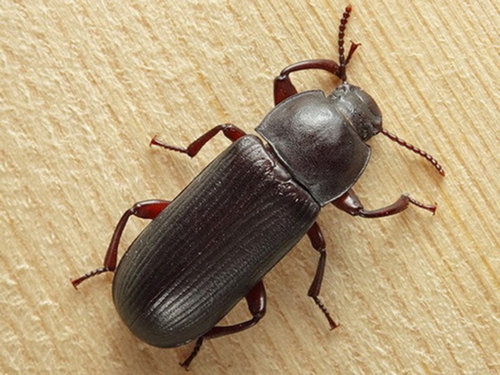
The large mealworm is considered one of the most common pests of stored products.
The larvae are significantly longer than their older relatives: their minimum length is 25 mm. Their color is brownish-beige with transverse dark rings, and after molting, it becomes cloudy-whitish.
Many call them "mealworms." This is somewhat true, as the mealworm spends its entire larval stage in a nutrient-rich environment, nesting in a kind of "burrow" dug into flour or grain. The larva grows for a full year and molts four times, then pupates and develops to the final stage of its life cycle, becoming a fully fledged beetle.
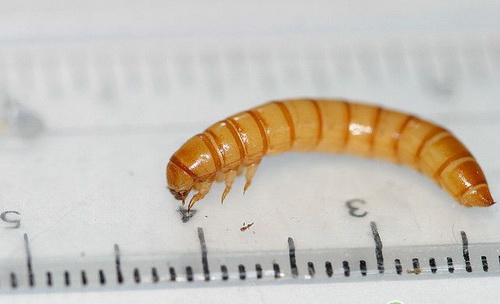
The larvae of the large mealworm are often specially bred as food for fish and birds.
It must be said that mealworms are quite unpretentious when it comes to food: flour, baked bread, bran, cereals, starch, dried fruit, and even wool or fabric will all do. Moreover, the larvae can truly be called scavengers: they sometimes devour the dried corpses of mice, birds, and even their own dead relatives.
The small flour beetle is most common in Russia and Ukraine. This pest inhabits roughly the same areas as the larger one. They are also quite similar in appearance, but the smaller one is lighter in color. And, as the name suggests, their size also varies: smaller mealworms don't grow larger than 3–4 mm, while their larvae are approximately twice the length of an adult.
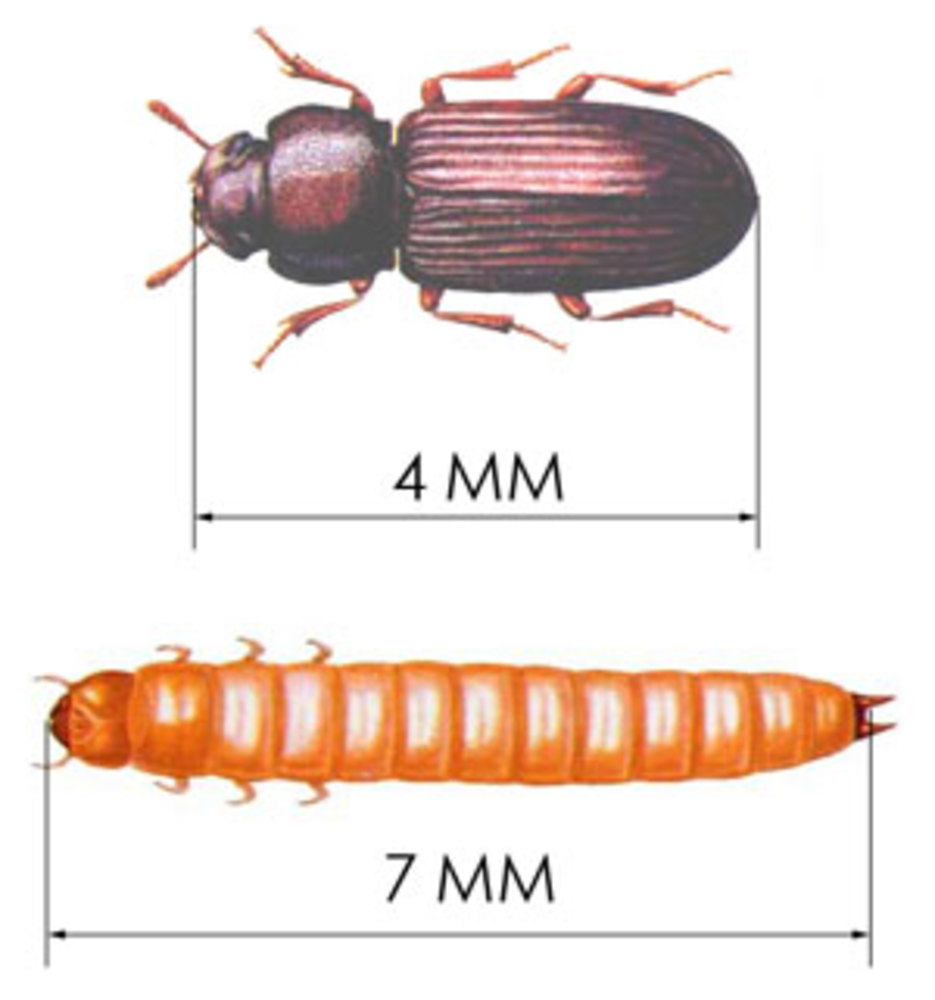
The beetles and larvae of the small flour beetle damage buckwheat and semolina, rice, dried fruits, and flour (especially coarse flour).
These pests inhabit the same places as their larger relatives: grain warehouses, mills, and bakeries. Moreover, thanks to their slimy shells, their eggs easily adhere to the parts of various machinery and equipment, so the small mealworms breed not only in the grain itself but also in the processing equipment, making it truly difficult to reach.
It should be noted that both species of these insects don't eat much flour or grain, so their main harm lies elsewhere. The beetles themselves, once fully developed, don't linger inside food and try to escape into the light as quickly as possible. The main danger comes from the larvae, as they leave their excrement and skins after molting in the food – all of which, of course, can be harmful to humans. When there is a lot of this “good stuff” in flour or cereal, it is easier to throw the product away.
How do these insects appear in the house?
As mentioned above, beetles are primarily interested in grain storage facilities and large food warehouses. They rarely raid human dwellings. Nevertheless, we sometimes find these pests among our supplies. How do they get there? It's logical to assume they come from the same place where the flour or cereal packages arrived. This often happens when, due to oversight, the pests infest a storage facility, but no one eradicates them. Damaged products end up in the store and then in our kitchens. However, this isn't the only possible route. Sometimes things are more complicated: pigeons and sparrows can carry eggs and larvae from those same storage areas to the attics of our homes. And since there's little to feed on there, the beetles descend into our apartments (for example, through ventilation).
How to spot a kitchen pest
Mealworms (both large and small) and their larvae are quite clearly visible on the surface of flour with the naked eye; they are slightly less noticeable among dark grains (for example, buckwheat).
Photo gallery: flour beetles in flour and various cereals
-
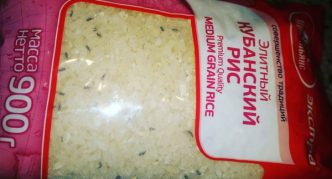
- Mealworms can also be found in store-bought rice packaging.
-
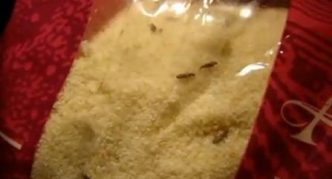
- The mealworm also eats semolina.
-
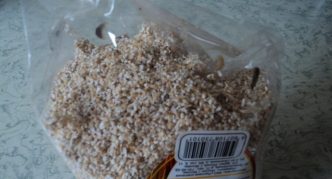
- Barley groats are an excellent food for mealybug larvae.
-
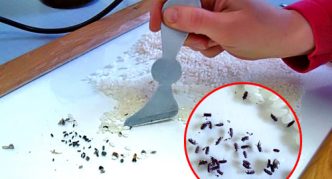
- The mealworm is called a flour beetle because it is often found in flour.
-
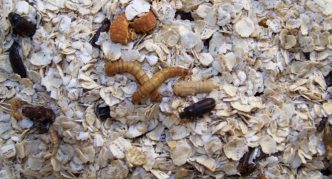
- Oatmeal with maggots and beetles isn't the healthiest breakfast.
Furthermore, if flour is heavily infested with larvae, it becomes lumpy and unpleasant to the touch. The pests often burrow deeper into the grain. In this case, you'll only find them when you're preparing the flour for cooking. An unusual odor coming from the bag or container may also indicate that the contents have spoiled. However, mealworms can also hide in kitchen cabinets, drawers, behind door frames and under baseboards, so when getting rid of them, you should pay attention to these places.
Methods of combating flour beetles
Now that the enemy has been identified, it's time to neutralize it. There are many popular methods for this, among homemakers.
Mechanical and folk methods
The first thought that comes to a person who suddenly discovers insects and their larvae in his kitchen is to quickly throw everything in the trash.Well, it's best to do just that, especially if the food is badly spoiled.
Most beetle control practitioners prefer folk remedies over chemical ones, as they are less toxic and more readily available. Cabinets and other potential hiding places are washed with vinegar, baking soda, or bleach. Food storage containers are also treated in the same manner.

Using bunches of dried lavender, you can effectively get rid of mealworms, which cannot stand strong odors.
You can also place bunches of plants on the shelves whose smell the mealworms cannot stand:
- chamomile,
- laurel branches with leaves,
- garlic,
- citrus zest,
- lavender.
In fact, if you know for sure that the larvae have appeared recently, you can try sifting the flour or sorting the grains. However, this may be a temporary measure: while the beetles and their waste products are easily detected and separated, the pest eggs are much smaller in size, so you may simply not notice them, and they will end up in your food, which is highly undesirable.Even rinsing and blowing with air does not destroy them, so it is much easier to completely renew the stock than to save the old ones.
If preserving your grains is crucial, you can try to destroy the beetle eggs using extreme temperatures: either place them in the freezer for several days or, conversely, bake them in the oven (at maximum heat) for an hour. Unfortunately, freezing is only suitable for grains, pasta, and dried fruit, while baking is only suitable for grains. Flour will be permanently ruined by such treatment.
Chemicals
Pesticides against mealworms are typically used in warehouses and storage facilities where they infest en masse. One of the most popular and effective methods is fumigation with hydrogen phosphide, which kills the insects. However, this gas is toxic to humans and should be used with caution, and is not used at all in apartments.
Insecticide treatment of indoor spaces has become popular recently. Pyrethroid chemicals (pyrimophos, bifenthrin, and others) are used for this purpose. This method is also suitable for home use. Pyrethroids and other insecticides are available as tablets, solutions, gels, and aerosols, which are sold in hardware stores..
Photo gallery: popular insect repellents
-

- Combat Superbat helps not only in the fight against cockroaches, but also against other household pests, including mealworms.
-

- Averfos is an effective pyrethroid insect repellent.
-
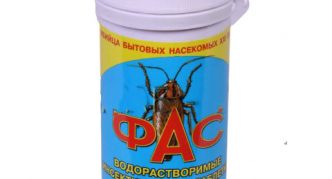
- Even professional pest control professionals use FAS insecticidal tablets.
-

- Effective Ultra is an ultra-effective insect repellent
Typically, these products are aimed not only at killing flour beetles, but also cockroaches, bedbugs, and other household pests. They need to be carefully used to clean out drawers and spaces behind cabinets, door frames, baseboards - in general, all hidden places in the kitchen where beetles can hide.Before this, of course, it is necessary to isolate undamaged products, and after processing, the room should be thoroughly ventilated.
Help from professionals
Another option is to not try to deal with mealworms yourself, but entrust the matter to professionals. Nowadays, many sanitary and epidemiological stations and private pest control companies are willing to rid your home of pests, including flour beetles and their larvae, for a fee. Professionals often use special strong chemicals that you can't just buy in a store.Many housewives prefer to turn to pest control specialists.
Reviews of ways to get rid of the problem
The best way to clean the cabinet is with vinegar. Dilute 70% acid 1:4 and wipe all interior surfaces with the solution. Microwave the containers for 3 minutes. If you can't microwave them, at least scald them with boiling water. Incidentally, these bugs usually infest dried fruit and semolina.
Go through all your grains and spices; they're probably living in there somewhere. Clean out the drawers and put some sliced garlic cloves on the shelves. That should help. They were living in my oatmeal.
I threw everything out and called the police, they poisoned it and that's it.
Insect Prevention
You may be lucky and have never seen a trace of mealworms in your kitchen. Perhaps you've successfully dealt with the insects and don't even think about them. But that doesn't mean you can relax. It's worth taking preventative measures against pests. What should you do first? Let's outline the main preventative measures:
- Keep your kitchen clean. Regularly wash your kitchen cabinets and food storage containers with vinegar or a weak bleach solution. This will help keep the cabinets clean and prevent beetles from appearing, even killing their eggs if they've been found.
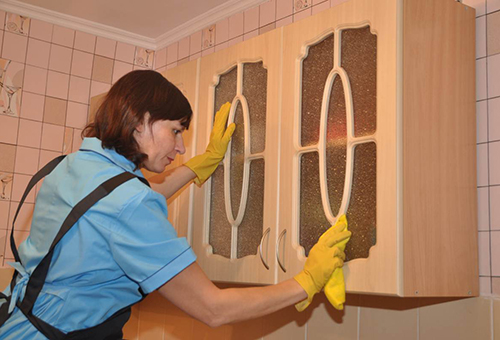
Kitchen cabinets should be cleaned regularly with vinegar or baking soda.
- Browse products. Store-bought flour and cereals should be checked for the presence of beetles. It’s better to do this right away: sift the flour, sort out the cereals and dried fruits.
- Store grains and flour properly. Loose supplies should be transferred to airtight containers. If a single grain is contaminated, it will have to be thrown out, but at least you'll be protecting its neighbors on the shelf.
- Repelling beetles. Fragrant herbs, lavender oil, and garlic repel mealworms: simply place them on cabinet shelves and in drawers, and coat the surfaces with lavender or chamomile essential oil (sachets also work). Some homeowners recommend placing foil or a few dry steel nails in bags containing groceries.
Mealworms are a common problem for many. There are currently several ways to get rid of them. Chemicals, home remedies, or professional pest control—the choice is yours. However, it's important to remember that timely prevention will prevent the problem from arising. Keep a close eye on your kitchen cabinets and drawers and don't blindly trust store-bought food packaging. This way, these unwanted guests will stay away from your home.