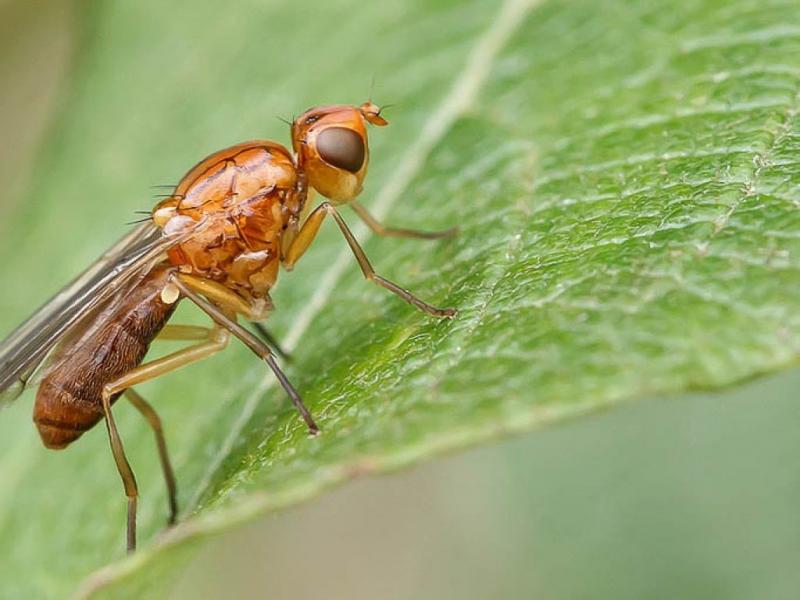
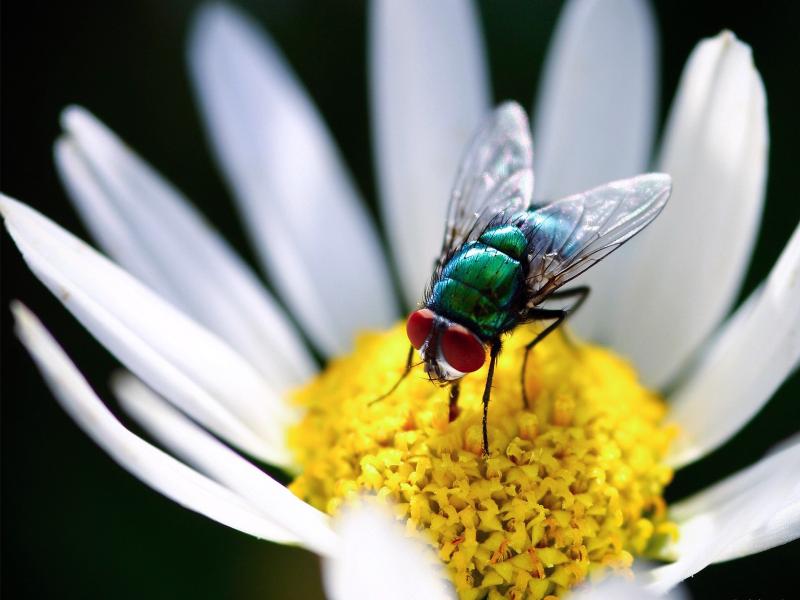
Gardeners and vegetable growers are always busy saving their harvest. It's a given that every plant is susceptible to at least one pest. Raspberry bushes also have such a "personal" enemy. In the spring, young shoots are threatened by the raspberry cane fly. If left unchecked, you could be left without fresh berries and your winter jam supply.
Content
The fly that loves raspberries
The raspberry cane fly is a pest of raspberry and blackberry bushes. To understand how it parasitizes plants, it's important to understand its life cycle. The flight and reproduction of these insects usually begin in the second half of May. Adults do not harm raspberry bushes: they don't eat them, don't chew them, and don't infect them with any poisons. The problem arises when the insect begins to lay eggs.
The raspberry cane fly lays a single white oval egg on the apical leaves of young shoots. A single female can lay up to 90 eggs. At this point, the leaves begin to slowly wilt. At this stage, the lower portion of the raspberry bush appears healthy. A week later, a legless, cylindrical, white larva emerges from the egg. The stems of young shoots are soft, so the larva easily burrows under their skin. As it feeds, it shreds the stem and chews tunnels: first straight down, then annular into the core, and then damages the base of the shoot.
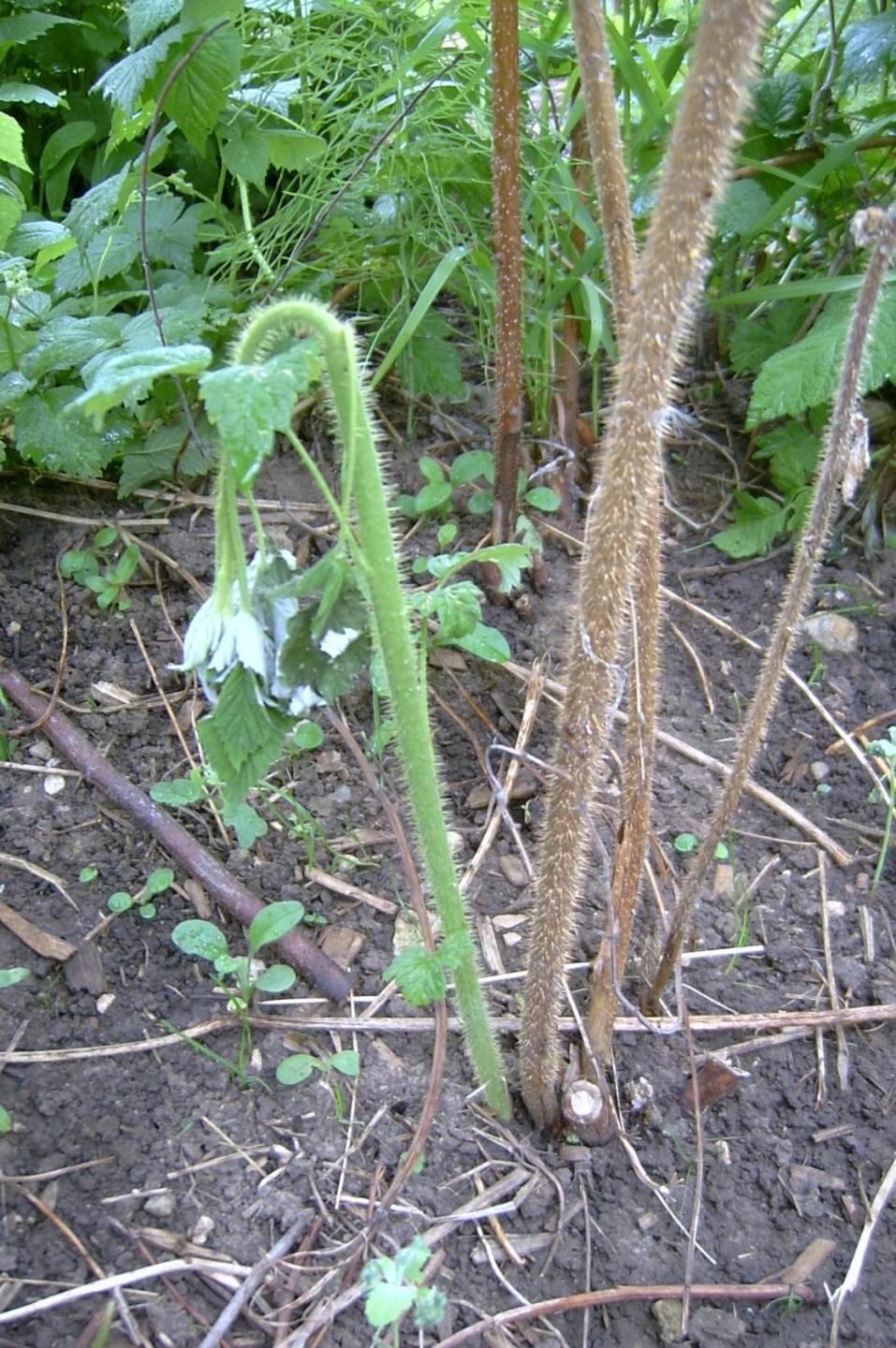
The larvae feed on plant fiber in the cracks of shoots.
It turns out that when last year's shoots bloom, the satiated larvae have already burrowed through the burrowed passage into the soil to overwinter (as pupae). And in the spring, the cycle repeats.
Table: What the raspberry stem fly looks like and where it lives
| Stage of insect development | What does it look like? | Where to find |
| Imago | The body size is 5-7 mm, the color is gray-brown, with black legs and a pair of transparent wings. | On plants |
| Egg | Size: 3 mm, oval elongated shape, white color. | Axils of young, not yet formed leaves of the upper shoots |
| Larva | Size: 5 mm. The caterpillar is dirty white, legless. The mouthparts are located between the anterior segments. | Plant stems (internal space) |
| Doll | Size: 5–7 mm. Caterpillar in a barrel-shaped cocoon. Color: brown. | Topsoil |
Photo gallery: appearance of the fly and signs of damage to bushes
-
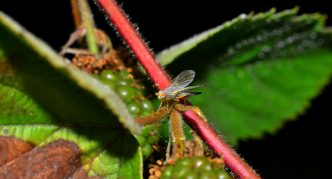
- The adult raspberry fly lives on plant stems.
-
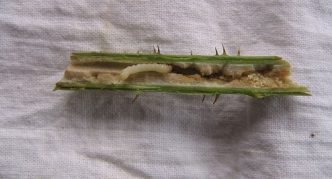
- Through the gnawed stem, the raspberry fly larvae go into the soil for the winter.
-
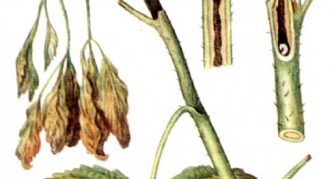
- The raspberry stem fly lays eggs on the tips of young shoots.
How the stem fly gets into the raspberry patch
Some agricultural errors can cause pests to appear on your bushes:
- Bad neighborhood—avoid planting new raspberry bushes near blackberries, meadowsweet, and meadowsweet. These plants are susceptible to attack by the raspberry cane fly. The same goes for your neighbor's raspberry patch—no fence will protect you from these pests.
- Raspberry thicket – don't neglect the raspberry patch. Prune the bushes regularly. It's important to dig the soil thoroughly, which is difficult if the plantings have become a dense, impenetrable forest;
- Honey fly – the raspberry stem fly can be attracted by aphids, or more precisely, by the honeydew they secrete. If one pest is not controlled, another will soon appear;
- bad fertilizer - fly larvae can get in with contaminated humus when mulching the soil under the bushes.
Control of raspberry stem fly
It's best to begin raspberry fly control early, implementing some preventative measures before the insects begin their flight. When dealing with an existing pest, the key is to not miss the moment when plant infestation begins. If the raspberry fly is allowed to run wild, up to 80% of young shoots will die.
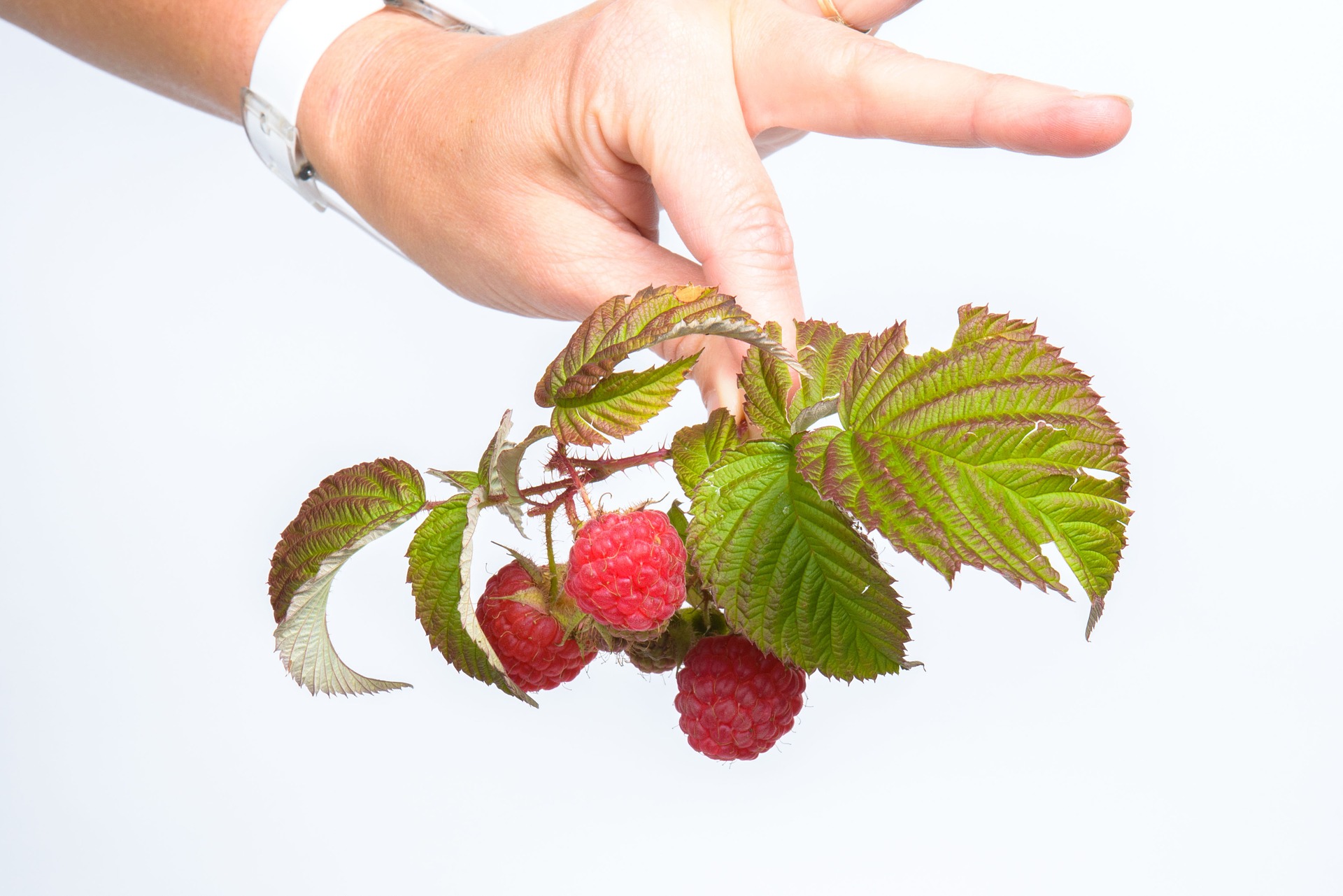
You can preserve the harvest by following the rules for caring for raspberry bushes.
Experienced gardeners recommend the following steps:
- inspect the bushes in a timely manner and remove damaged shoots;
- If you notice the first wilting leaves on the tops of your raspberry bushes, prune them immediately. Be sure to do this just below the damaged area.
- The main thing is to trim before the larva descends. If, upon inspection of the pruning site, a hole is visible in the middle of the stem, you will have to trim further (to the part not affected by the pest). Removed leaves and stem parts should be burned;
- Be sure to thoroughly loosen the soil under the raspberry bushes in early spring (before the flies emerge) and in the fall (when the larvae begin to overwinter in their cocoons). Not all the larvae may die, but most of them certainly will;
- Sprinkle a thick layer of wood ash on the soil under the raspberry bush;
- mow the weeds around the area in a timely manner;
- Every year, with the arrival of spring, treat the bushes with Bordeaux mixture.
Bordeaux mixture (an aqueous solution of calcium hydroxide and calcium sulfate) is a product with a long history of use. As early as the 19th century, this substance was used to spray crops affected by fungal diseases and pests. It acts as an antibiotic on diseased plants.
The benefit of using Bordeaux mixture in protecting plants from raspberry stem fly is that it increases their resistance. Healthy shoots have a better chance of fighting the pest. Once damage from larval activity appears, raspberry bushes are at increased risk of contracting diseases. For spraying, use a 1% solution of Bordeaux mixture (100 g each of quicklime and copper sulfate per 10 liters of water).
Video: How to make Bordeaux mixture
Spraying raspberries
There are special preparations from which solutions are prepared for spraying bushes. Biological agents are used immediately after flowering, and chemical ones - during the period of shoot growth.
Table: Means of control of stem fly
| Name of the drug, brief description | Brief description | Active ingredient | Release form | Dosage | Number of treatments; exposure time | How to process |
| Fitoverm | intestinal-contact insecticide and acaricide | avermectin C | in ampoules | 1.5 ml per 1 liter of water |
| Spraying bushes affected by raspberry fly larvae. |
| Akarin | bioinsecticide with contact and stomach action | extract from the streptomyces fungus | in ampoules and liter bottles | 2–3 ml per 1 liter of water |
| Spraying bushes affected by raspberry fly larvae. It is not recommended to carry out treatment in hot weather. |
| Karbofos (preparations Iskra, Actellik, Fufanon, etc.) | FOS, insectoacaricide | malathion | in all forms and with different concentrations | 0.2% solution (20 ml of 50% emulsion concentrate per 10 liters of water. When using a 10% malathion emulsion concentrate, 75 ml of the preparation is taken per 10 liters of water) | 2-3 times (7-10 days interval) during the insect flight period | Spraying young shoots and soil under bushes. |
| Kerosene | flammable substance of general application | Water-kerosene composition (1%): 100 ml of kerosene per 10 liters of water | 2-3 times (interval 7-10 days) during the insect flight period | Spraying young shoots and soil under bushes. |
Important! Do not spray with solutions containing Karbofos during flowering or near beehives. The product is toxic to bees and other pollinating insects.
Video: Spring treatment of raspberries against pests
Folk remedies
Although the effectiveness of folk remedies for controlling this pest is questionable, many gardeners prefer to experiment with "eco-friendly" solutions before resorting to chemicals. The following folk remedies with a repellent effect may be useful in controlling this pest:
- treating bushes with a water-mustard solution (a glass of powder per 10 liters of warm water);
- Spraying raspberry bushes during the budding period with a herbal decoction of tansy (300 g of dried tansy is boiled for 20-30 minutes in 3-5 liters of water, the decoction is infused for 24 hours. The volume is brought up to 10 liters with cold water);
- planting garlic and onions in close proximity to raspberry bushes.
A good preventative measure against raspberry bush stem infestation is loosening the soil in the rows during the insect pupation period. This simple method will reduce the number of pest fly colonies several times over. In some cases, it may be necessary to completely remove the top layer of soil (approximately 3 cm) and replace it with humus, manure, or a layer of sawdust.
Photo gallery: folk remedies for raspberry flies
-
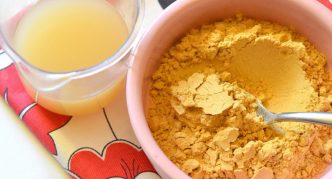
- Raspberry bushes can be treated against pests with a mustard powder solution.
-

- A decoction of tansy repels many pests, including the raspberry stem fly.
-
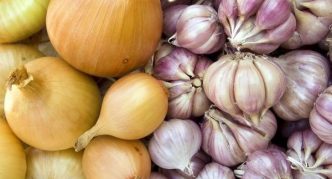
- The proximity of onion and garlic beds protects raspberries from stem flies.
Pest-resistant varieties
It turns out that the raspberry variety also plays a significant role. Some varieties are considered more resistant to pest attacks. Here, everything depends on the shoots: it's better if they are more pubescent and not too cracked early in growth. Recommended varieties with relative pest resistance:
- Faith,
- Bell,
- Zorenka,
- Balm,
- Reward,
- Seedling,
- Ruby,
- Falconet,
- Brilliant.
Reviews
In early spring, before the buds open, raspberries should be treated with a solution of "Iskra" (one tablet per 10 liters of water). During flowering, shoots infested by the fly should be pruned back to healthy wood. In the fall or late summer after harvesting, spray the plants with "Karbofos" (6 grams of the product per liter of water).
Last year, I discovered a severe fly infestation in June. If I hadn't treated it, I would have lost the harvest. My main medicine in my first aid kit is Kinmix. I also have Intavir, which I sometimes use.
Traditional treatment involves pruning affected shoots almost to ground level and frequently loosening the soil to prevent the larvae from pupating. And the idea of remediation is a very practical one! Triple insurance: part of the planting material is remedied (at least one root will survive), remediation eliminates the parasite 100%, and the healthy roots are replanted in a new, remote location (crop rotation is an effective way to control pests and diseases). This approach also works for diseases. And if you're taking plants from an unverified source, quarantine them before propagating.
The best time to combat the raspberry cane fly is at the very beginning of its flight, preventing it from laying eggs on the raspberry leaves. At this stage, you can experiment with folk remedies. If the insect larvae have already appeared in the stems, chemical treatments are essential. You will also need to thin out the bushes by pruning away damaged parts. You can reduce the risk of fly infestation by properly caring for your raspberry bushes.