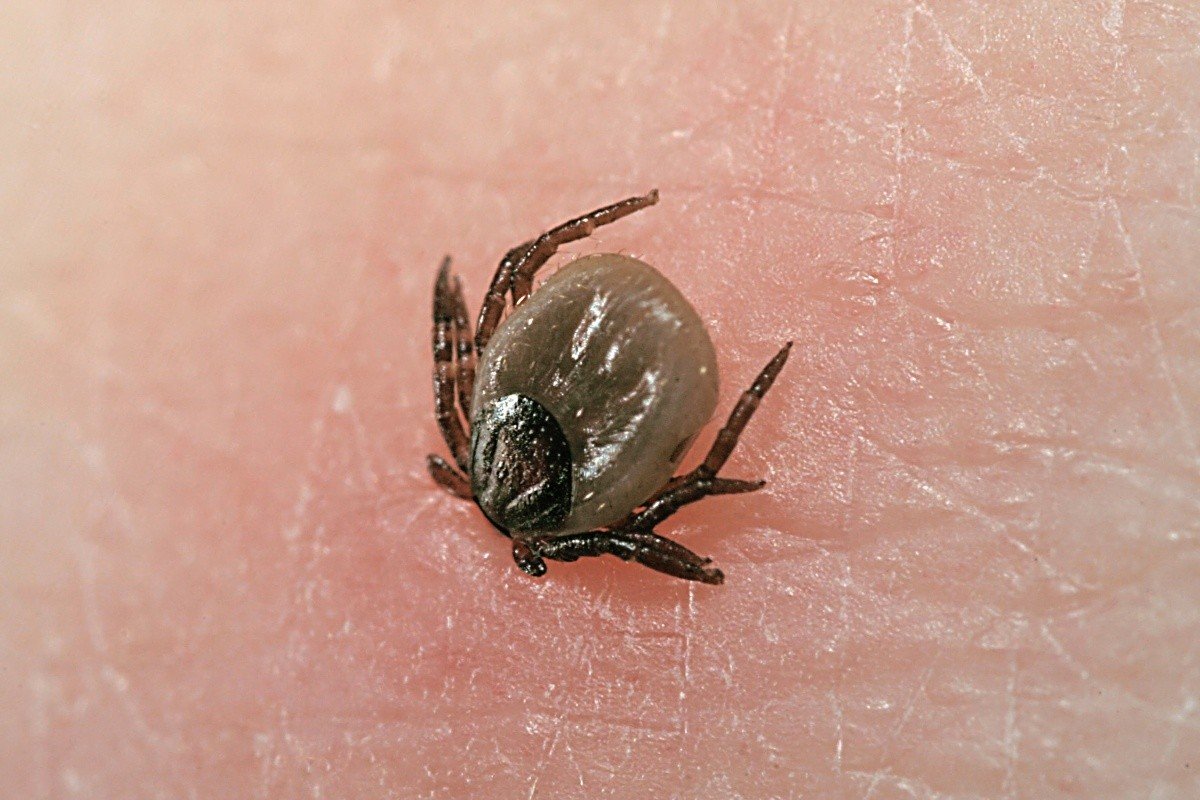
Every time we head out for a walk in the woods, we always wear long sleeves and a hat, even on a hot day—all to protect ourselves from ticks. Some careless people consider such precautions unnecessary. Are they right or wrong? Are ticks as scary as they're made out to be?
Content
What does a tick bite entail?
You might not feel the bite itself, or worse, not notice it right away. The problems start later. Removing an attached tick from the wound isn't easy, and it can take a long time to heal. Besides the pain itself, other unpleasant—and sometimes downright dangerous—consequences are possible.
Danger in the wound
The first thing you might experience after a tick bite is inflammation. Along with it come its inevitable companions: swelling, redness, itching, and fever. Furthermore, the wound can become infected. If the damaged area is not treated with antiseptics in time, suppuration may begin. Therefore, you shouldn't pull out a tick right in the forest, especially if you don't have disinfectants with you.
The danger of allergies
Redness and itching at the site of the bite usually resolve quickly, but some people may develop an allergic reaction to the tick's saliva. Therefore, if your fever persists for several hours, accompanied by a reddish rash all over your body, itching, a runny nose, and general weakness, you're likely unlucky enough to have a tick bite sensitivity. These are the first and least dangerous symptoms, followed by shortness of breath, numbness in certain parts of your body, and even partial paralysis! Therefore, as soon as you discover an allergy, you should immediately take an antihistamine (cetrin, suprastin, tavegil, and the like). And if necessary, don’t hesitate to call an ambulance.
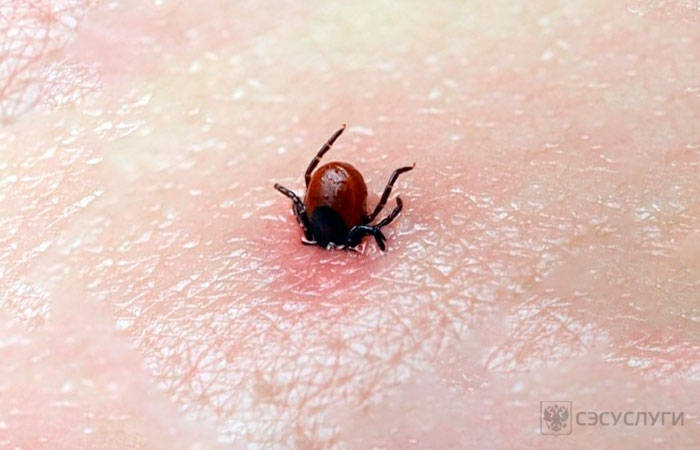
Redness and itching at the site of the bite usually go away quickly, but some people may develop an allergic reaction to the tick's saliva.
The danger of disease
However, the primary concern about tick bites is that they can transmit truly dangerous diseases. These parasites carry encephalitis, borreliosis, tularemia, and many other diseases that can cause serious harm to your health and even lead to death. Therefore, if the initial redness after a tick bite does not subside but worsens, and your condition worsens, consult a doctor immediately before it's too late.
Tick-borne encephalitis
Spring-summer tick-borne meningoencephalitis is a dangerous disease that affects the human brain and spinal cord. The virus, carried by the tick, enters the brain tissue, causing inflammation, swelling, and hemorrhages. The incubation period is 1 to 2 weeks, during which time the person experiences muscle and head pain, weakness, and vomiting, all accompanied by a high fever. Then, after apparent improvement, the second phase usually begins—meningitis proper (the fever rises again, the patient experiences severe headache and neck stiffness) or encephalitis (which can manifest as disturbances of consciousness, sensation, and movement, even leading to complete paralysis).
Mental and nervous system problems may persist even after recovery from the disease; this occurs in 10–20% of cases. The danger of tick-borne encephalitis depends on the subtype: while European tick-borne encephalitis kills only 1–2% of those infected, Far Eastern tick-borne encephalitis kills up to 25%. The Far Eastern subtype of encephalitis is more severe: the temperature immediately rises to 38–39°C and is accompanied by severe nausea, sleep problems, and severe headaches. The nervous system is seriously affected within three days, and death can occur within five days. Children experience tick-borne encephalitis even more severely; symptoms, both nonspecific and neurological, develop even more rapidly, so action must be taken immediately upon suspicion of the disease. Although only 6% of parasites carry tick-borne encephalitis, and only 2–6% of those bitten can contract it from a tick, this disease is one of the main reasons why tick bites are considered so dangerous.
Three people diagnosed with tick-borne encephalitis are currently in intensive care at the city infectious diseases hospital. Only one case has a relatively favorable prognosis. The condition of the other two is extremely serious, with damage to the central nervous system, cerebral edema, and paralysis.
Lyme disease
Lyme disease, a form of tick-borne borreliosis, is one of the most common tick-borne diseases. These parasites transmit pathogenic spirochete bacteria. The first sign of the disease is redness at the bite site. At first, it may look like a normal erythema (and therefore you may mistake this symptom for an allergic one), but then its shape becomes characteristically ring-shaped, which is typical for this type of borreliosis.
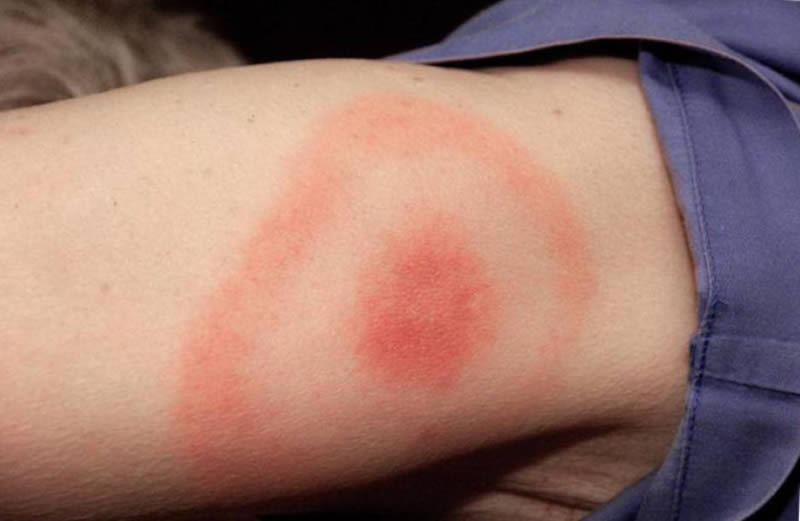
This type of erythema on the skin is characteristic of Lyme disease.
At the onset of the disease, a person experiences general malaise, weakness, nausea, and chills, followed by signs of nervous system damage: photosensitivity, severe headache, and vomiting. If Lyme disease is not treated promptly, the illness will persist for several months and spread further, potentially leading to meningitis and encephalitis. In adults, the peripheral nervous system is more often affected, while in children, the brain itself is affected, making Lyme disease particularly dangerous for them. Untreated Lyme disease can lead to arthritis, seizures, psychosis, and other forms of brain damage that can lead to death, with children being at a higher risk. Sometimes the disease is discovered months or even years later.
We had a similar situation two years ago. My husband was bitten by a tick. We didn't get tested right away, and Lyme disease was only diagnosed several months later. But we were told they had two infections: a relatively new one and an old one, apparently because the tick had bitten him several years ago. My husband underwent treatment for several months, then got tested again, and everything was fine; nothing was found.
If the disease becomes chronic, it will most often look like advanced arthritis with gradual destruction of cartilage tissue.
Those who have recovered from the disease may not be reinfected until 5-7 years later. If 1-2 doxycycline tablets had been given within 76 hours of the tick bite, Lyme disease would not have occurred. All doctors in Germany say that if IgM antibodies are not elevated, there is no Lyme disease. Yes, I haven't contracted Lyme disease, but the consequences remain, and I feel it myself <…> Yes, I also didn't start treatment right away; after the first bite, my family doctor simply prescribed an ointment for erythema. And the second bite was seven years later. They prescribed antibiotics, but my antibodies are still very high even now, three years later. I won't even write about how I feel.
Relapsing fever
In addition to Lyme disease, Borrelia spirochetes can also cause a serious illness called relapsing fever. It occurs in attacks: initially, chills and headache appear, followed by a high fever with delirium and hallucinations, nausea, and muscle pain in the legs. The patient's skin becomes dry and sometimes develops a rash, and jaundice may also develop due to an enlarged liver.
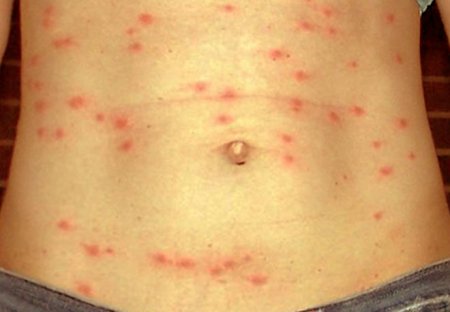
Yellowish skin covered with a rash is a symptom of relapsing fever.
Those with chronic heart disease may also experience damage to the heart muscle. After 2-6 days, the fever subsides and the patient feels better, but this is temporary. Why is this disease called relapsing fever? After 4-6 days, the person is overcome by a new attack, and there can be four or more of them in total! Repeated attacks, except for the second one, are usually tolerated somewhat better. Immunity persists after complete recovery, but for a very short time, so it's not worth relying on.
Spotted fever
Rocky Mountain spotted fever (RMSF) is an infectious disease common in the United States, Canada, Brazil, and Colombia. It is highly dangerous, as even with modern medical care, 5–8% of infected individuals die despite treatment. The disease is caused by the rickettsia bacteria, carried by certain American forest ticks. It spreads through the human body via the lymphatic system, affecting the lungs, heart, adrenal glands, skin, and brain. The patient almost immediately experiences a severe headache, muscle and bone aches, chills, nausea, and a fever that rises sharply to 39–40°C (102–104°F). Thrombohemorrhagic syndrome sometimes develops immediately, causing profuse nosebleeds and vomiting of clotted blood. After 2–4 days, a rash of ichor-filled blisters appears all over the body, which later develop into bruises and hemorrhages.
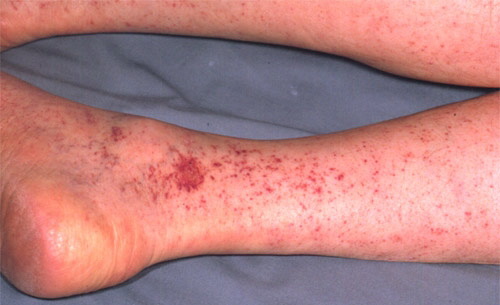
A bloody rash is characteristic of spotted fever.
Then, hearing, vision, and consciousness impairments appear, leading to hallucinations and paralysis. If the person recovers, it happens slowly. And with the so-called fulminant form, the patient dies in literally 3-4 days, despite the treatment provided. Children suffer from spotted fever just as severely as adults; moreover, in this case, it is not the young children who are at risk, but, on the contrary, patients over 40 years of age – among them, the mortality rate is significantly higher.
Tularemia
Tularemia is a dangerous infection caused by cocci bacteria, usually transmitted by rodents (hares, rabbits, voles), but sometimes by wood ticks. Infected individuals experience a sharp rise in temperature (39–40°C), dizziness, headaches, and muscle aches in the legs, back, and lower back. Nausea and muscle pain, coupled with a sharp increase in blood pressure, can lead to vomiting and nosebleeds. Sometimes bubonic ulcers develop on the skin, which then develop into fistulas with abundant discharge of thick pus.
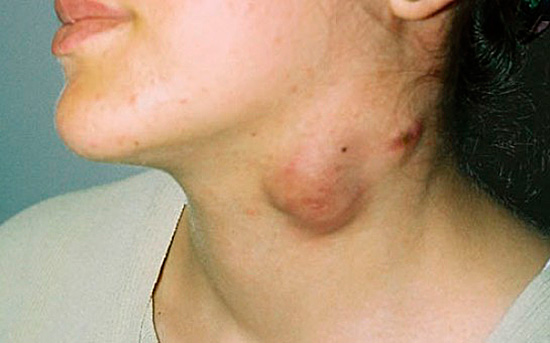
With tularemia, buboes like these may appear near the lymph nodes.
One of the most serious consequences is lymphadenitis, but it can also lead to pneumonia, pericarditis, brain inflammation, and intestinal inflammation, and gangrene sometimes develops at the site of the buboes. Although tularemia is not considered a very common disease in Russia, at least a hundred people fall ill annually, primarily in the central regions. However, there is a vaccine against this disease.
It was recently time for us to get this vaccine. For those who don't know, you can get tularemia from <…> On the first day, I felt a slight discomfort, but nothing that would interfere with my normal life. A few days later, the injection site became extremely itchy. Then it started to fester, as I was told, but it was still unpleasant. I didn't wear open shirts; I always wore sleeves. My husband, by the way, tolerated the vaccine much better; he barely had any itching or pus, and within a week, everything had healed. It's all individual. As for sensations, I can't feel anything anymore, only a visible scar. I hope the skin in that area will return to its normal color.
Those at particular risk include children under 7 years of age and pregnant and breastfeeding women, for whom the tularemia vaccine is contraindicated. In addition, asthmatics, cancer patients, allergy sufferers, and people living with HIV should also avoid vaccination.
Ehrlichiosis
Human monocytic ehrlichiosis is an infectious disease caused by the Ehrlichia bacteria, which are transmitted by parasitic ticks. The bacteria cause extensive granulomatosis in the infected person, affecting the bone marrow, liver, and central nervous system. The mortality rate is 1–3%, and the disease is particularly acute and severe in people under 7 (children) and over 40 years of age. Ehrlichiosis begins like any other fever: a sharp rise in temperature, chills, nausea and vomiting, dizziness, severe muscle and headache pain, and hypertension. Patients sometimes complain of a severe cough and runny nose, sometimes inflammation of the facial nerve, and some develop a vesicular rash on the skin.
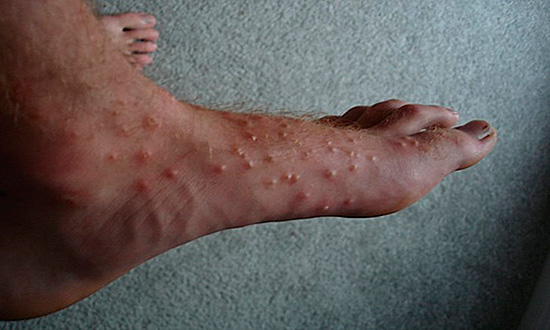
Ehrlichiosis is characterized by a skin rash.
The affected liver can become significantly enlarged, and if the infected person already has problems with this organ (cirrhosis, cholecystitis), they are at great risk. Beyond its symptoms and complications, ehrlichiosis is also dangerous because it was discovered and described relatively recently, in the early 2000s, and therefore, not all laboratories can yet correctly diagnose it. However, the number of ticks that carry the disease is relatively small, and not every person bitten can become infected with the disease.
Much depends on the tick's physiological characteristics. For example, the more studied and more common Lyme disease requires the tick to feed for many hours (vomiting after satiation), while lice must be crushed and rubbed into a skin defect in cases of typhus (also a rickettsiosis). The same cannot yet be said for ehrlichiosis, but infection occurs in a small number of cases.
Babesiosis
A group of diseases called babesiosis is caused by a protozoan called Babesia. They are transmitted by both forest and pasture ticks. Babesiosis typically affects animals, especially cattle and dogs, and they are severely ill. However, a healthy adult may not even notice they are infected with Babesia. It's a different matter for the elderly and sick people who have undergone major surgeries or illnesses and therefore have weakened immunity; 5% of such infected people die. Also at risk are HIV-infected individuals who are not receiving adequate treatment or are in the advanced stages of AIDS. Babesiosis initially manifests as fever, chills, and general weakness. If it becomes acute, the temperature can rise to as high as 41°C (104°F), along with enlarged liver and spleen, muscle pain, and headaches. Some species of Babesia can cause acute renal failure, jaundice, and death.
Spring is when ticks become active. Remember Misha? He might have been saved if he'd been diagnosed and treated immediately. Up to 30% of ticks carry more than one infection. Misha was bitten by a single tick! Postmortem examination revealed Babesia, Anaplasma, and Theileria infections in his bone marrow, spleen, and liver.
Omsk hemorrhagic fever
Omsk hemorrhagic fever is a dangerous viral disease transmitted by parasitic forest ticks, similar to tick-borne encephalitis, and similar to the latter. The virus that causes this disease is particularly common in Eastern and Western Siberia. It attacks the adrenal glands, circulatory and nervous systems, and then the brain and spinal cord. The disease begins with a sudden rise in temperature, reaching 39–40°C (102–104°F), flushing of the face and upper body, headaches, nausea, vomiting, and a bloody rash. With prompt diagnosis and proper treatment, patients typically make a full recovery. However, the mortality rate remains at 1–5% of those infected, who die mainly due to complications such as encephalitis, cerebral edema, and strokes.
Necessary prevention
Tick-borne diseases, while treatable, are often quite dangerous and can lead to serious complications. However, if you're afraid of ticks, don't go into the woods. What can you do to avoid getting sick in the first place?
- Vaccinations. For some of the above diseases, there are vaccines developed by medical scientists. For example, vaccination against tick-borne encephalitis is necessary in the fall and winter to ensure immunity for the following year. The same vaccine is also effective against Omsk hemorrhagic fever. Tularemia vaccination is also available, but not everyone is recommended.
- Injections. If a person bitten by a tick has not been previously vaccinated, they are given a dose of immunoglobulin immediately and then a second dose 10 days later. This is believed to help prevent the disease from developing, even if the tick was a carrier, but the effectiveness of immunoglobulin has not yet been proven.
- Vigilance. Many illnesses are easier to treat with early diagnosis, and this requires prompt detection of a tick bite, as it's not always possible to feel it. Carefully inspect your body, hair, and clothing after visiting forests, meadows, and parks. If you find a tick, remove it immediately and disinfect the wound with iodine, hydrogen peroxide, or chlorhexidine. You should report the bite to your nearest hospital. Having the tick tested in a laboratory will help collect statistics on bites and infestations, and you will receive medical attention if needed. By the way, it wouldn’t hurt to wash clothes at a temperature of at least 60°C to kill tick larvae.
- Avoiding danger. It's not that you should stop going into the forest in the summer, but you should avoid tall grass and bushes—that's where ticks most often lurk. Furthermore, ticks can often be picked up on skin or clothing where animal sweat remains on plants—so it's best to avoid following livestock tracks and visiting pastures.
- Physical protection. If you're heading into the forest to pick mushrooms, make sure your body is as fully covered as possible—trousers, high boots, long sleeves, a high collar, and hats will help with this. Also, watch out for exposed parts of the body - face, neck, hands.
- Chemical protection. Before visiting the forest, protect yourself and your children with tick repellents containing permethrin or DEET. Stores offer a wide range of such products.
As we can see, common forest ticks carry a variety of diseases that can be dangerous and even fatal to humans, and their complications can cause long-term harm even to those who recover. So ticks are undoubtedly among the most harmful parasites. And since prevention is always easier and safer than treatment, it's important to take all possible precautions against ticks.