Ticks carry many dangerous diseases. Even with the best preventative measures, your pet cannot be completely protected from ticks. You can remove a tick from your cat at home, provided you observe safety precautions and take appropriate precautions.
Content
What places on cats do ticks choose to bite?
Ticks become active in the spring, with the first warm weather, and continue to do so until November. Pets that interact with other cats and are frequently outdoors are most susceptible to tick attacks. However, these furry homebodies aren't immune: parasites can be brought home on clothing, shoes, or bags.
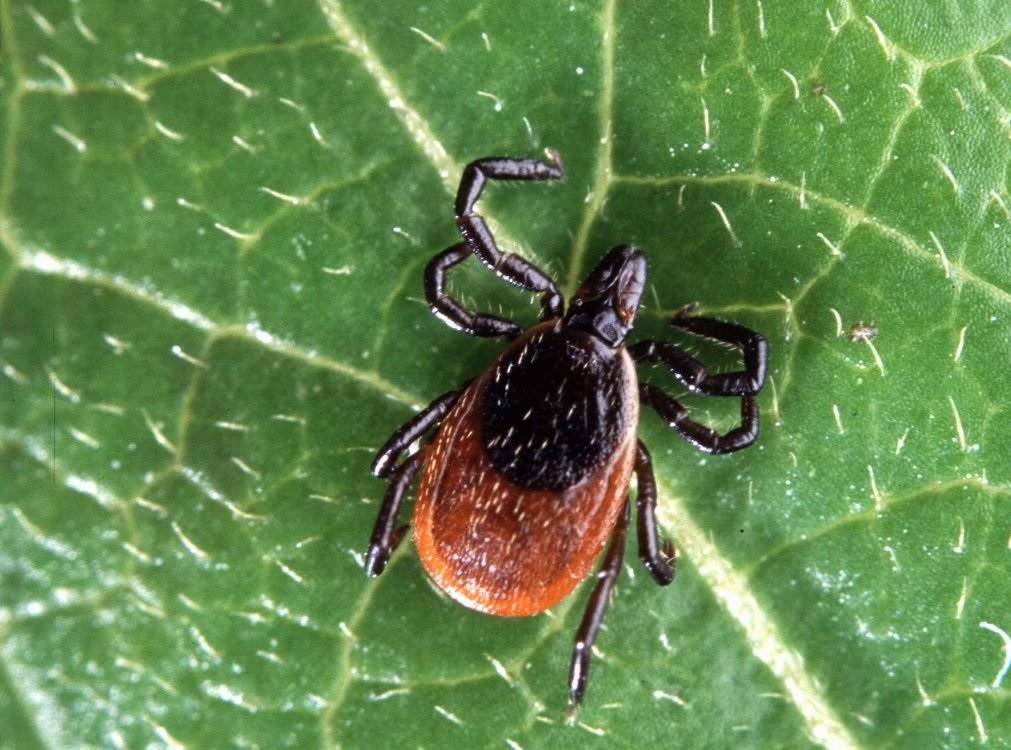
Ticks are most active from spring to autumn.
Once a bloodsucker gets on the skin, it can search for a suitable place to live for several days. Most often, ticks choose the abdomen, thighs, ears, armpits, elbows, and groin area to bite. Once it has found a home, the tick cuts the skin and inserts its proboscis. Its hook-like teeth and sticky saliva help the tick hold on securely, making it difficult to remove. Once it has established itself in its new "home," it feeds on the cat's blood. The cat may not even notice the tick's presence: the tick injects special substances (enzymes) that prevent pain.
If the tick has already attached itself to the animal's body, it will look like a pea or a seed.
Methods for removing pests at home
There are several ways to remove a tick:
- with tweezers or surgical clamps;
- with a special device;
- with hands;
- with a thread.
When removing a tick, do not:
- apply caustic liquids (ammonia, gasoline, etc.) to the bite site;
- burn the tick with a cigarette;
- if you jerk the tick sharply, it will break;
- picking at a wound with a dirty needle;
- apply various compresses to the bite site;
- crush the tick with your fingers.
First of all, be sure to wear rubber gloves to protect yourself from possible infection, as ticks can carry dangerous diseases.
Pulling with tweezers
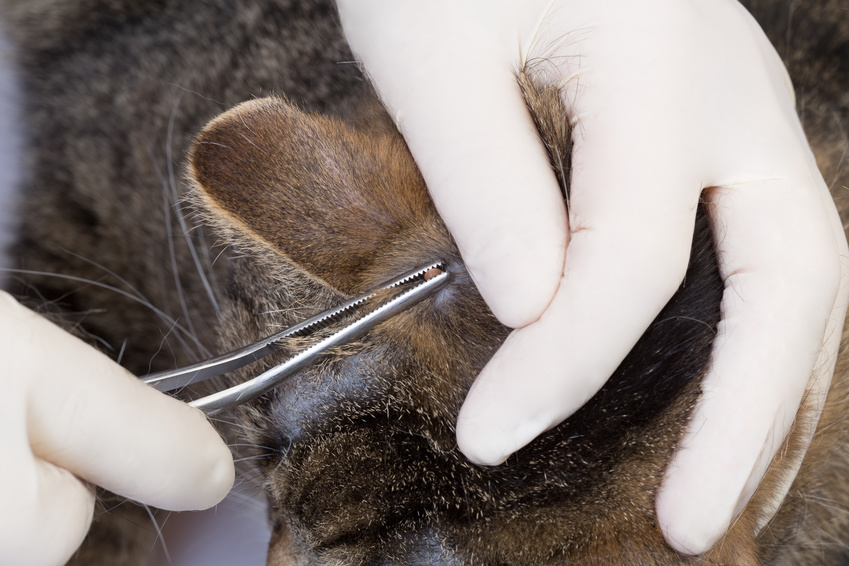
Try to grab the tick as close to the proboscis as possible
The most convenient way to remove the pest is with curved tweezers or surgical clamps:
- Grasp the tick as close to the proboscis as possible, without touching the abdomen.
- Then carefully begin to pull it out, while rotating it in any direction.
Usually after 1–3 turns the tick is pulled out completely.
The myth that you only need to twist a tick in a certain direction remains true. The tick attaches to the cat's skin with its hook-like teeth, creating a tunnel. This is the basis for the "twisting" method: like a key with notches, the tick is removed from the "lock." To do this, twist it in different directions, first one way, then the other.
Video: How to remove a tick with tweezers
Wrapping a tick with thread
Experts advise against wrapping a tick with thread:
- This method is quite complicated and requires certain skills;
- During the procedure, the tick may be damaged or not removed completely.
If you decide to try it, try tying a strong thread around the tick as close to the bite as possible (the tick's head is closest there). Using smooth, circular motions, gently pull the thread upward.
Video: Removing a tick with a thread
Removing a tick by hand
The tick is grasped with the fingers and “twisted” from side to side, carefully pulling it towards you. This method is suitable for small sized ticks. In this case, it is gently stroked in circular motions in one direction and the other.
You should not pull the tick sharply, as this can damage the cat's skin, and the tick's proboscis and head will remain inside.
Video: How to remove a tick by hand
Using a syringe
Use a knife to cut off the top (needle end) of the syringe, leaving a smooth edge. Then, press the cut syringe firmly against the bite site and pump out the air. The pressure difference will push the tick out. All that's left to do is treat the bite site.
In practice, this method is not always effective: since the tick is firmly attached to the skin with its hooks, the vacuum force will not be enough to push it out. The additional pressure created by the vacuum will only increase blood flow and cause discomfort to the cat.
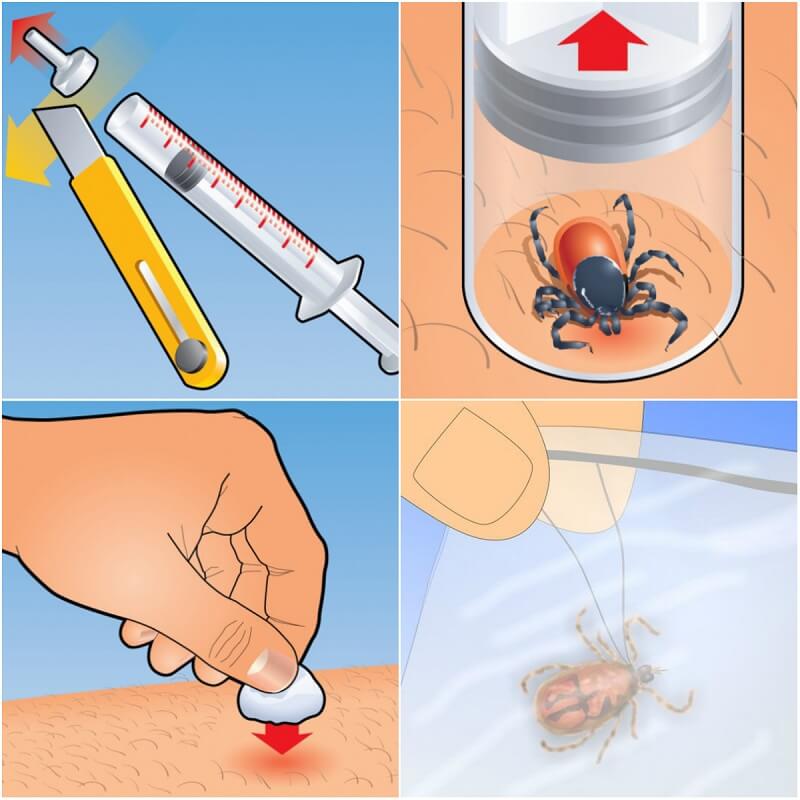
The method of extracting a tick with a syringe is practiced, but it does not always help, and can also cause discomfort to the cat and cause a hematoma.
Special pliers
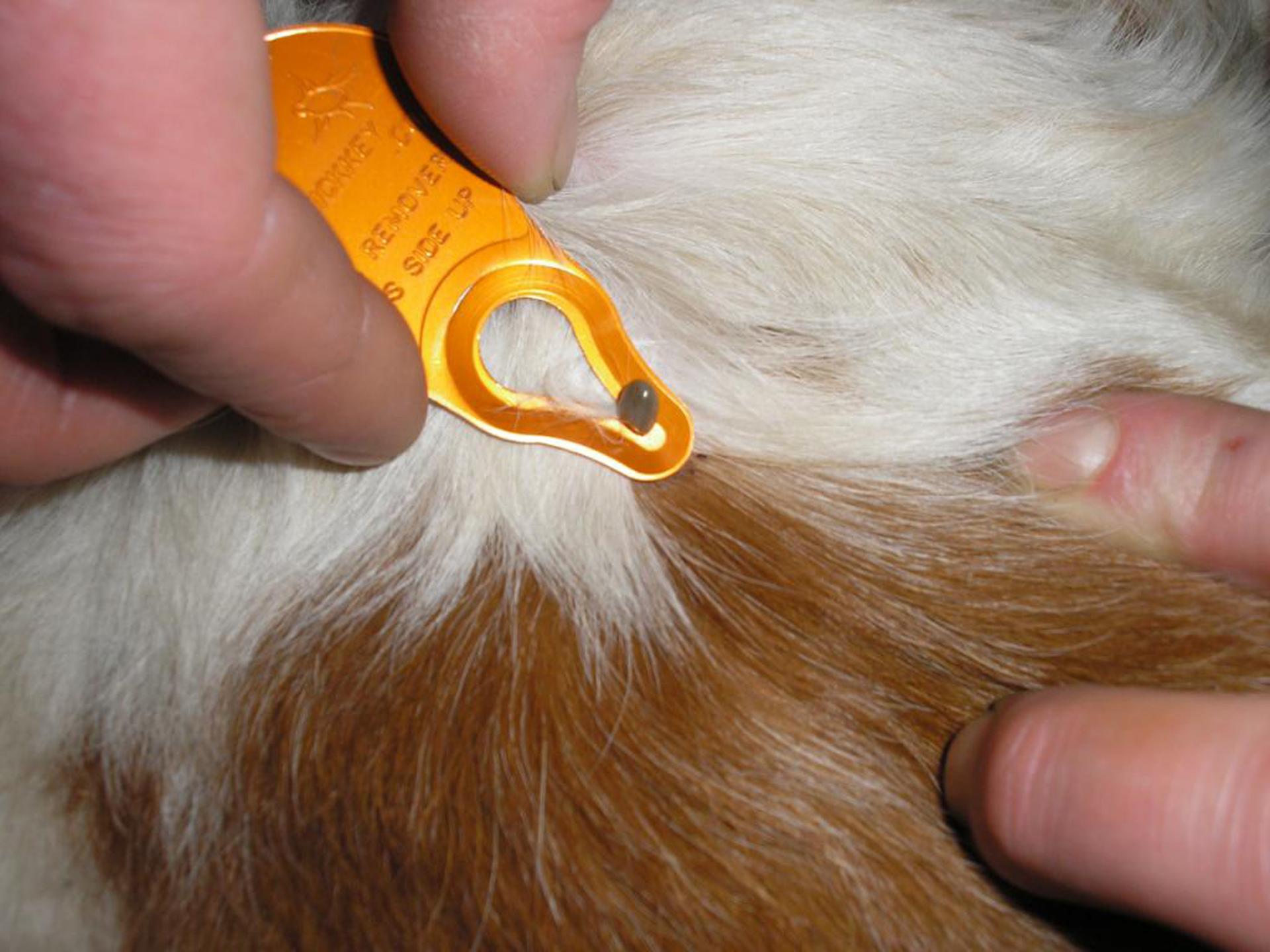
The tick remover is specially designed for removing ticks.
A tick-twister is a tool specifically designed for removing ticks. Use the hook to hook the tick and gently twist it out. You can purchase one at a pet store or veterinary clinic.
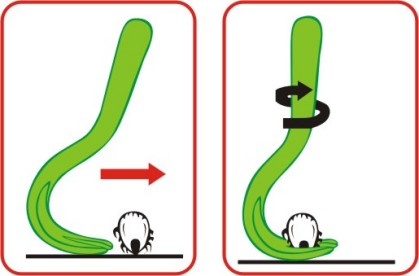
With the help of a mite remover, pests will easily come to the surface.
Using oil
There is a method for removing ticks using oil, cream, or Vaseline. Opinions vary: some believe it's possible and even necessary, while others argue that these substances deprive the tick of oxygen, killing it, and therefore require veterinary assistance to remove it. For precise information, consult a veterinary reference book.
To remove a tick, lubricate the bump with any vegetable oil (sunflower, corn, olive) or petroleum jelly, cologne, alcohol, gasoline, or kerosene. This will clog the skin pores, specifically the hair follicles and sebaceous glands. The tick will be unable to breathe, so it will crawl to the surface.
Also, if you lubricate the bite site with Vaseline, after a while the ticks will fall off on their own, and all that remains is to comb them out with a flea comb.
What to do after removing a tick
Place the removed tick in a sample jar (a baby food jar will do), a test tube, or a zip-lock bag. Place a paper towel soaked in water inside the container. This will help the tick survive until you take it to the vet for testing (to check for dangerous infections). It's best to do this within 48 hours. It's also important to take your pet to the veterinarian. If you can't get to a clinic, burn the tick. The tick itself isn't as dangerous as the pathogens it carries (such as piroplasmosis).
Also, thoroughly clean the bite site (with alcohol, iodine, or hydrogen peroxide). Wash your hands and any tools thoroughly.
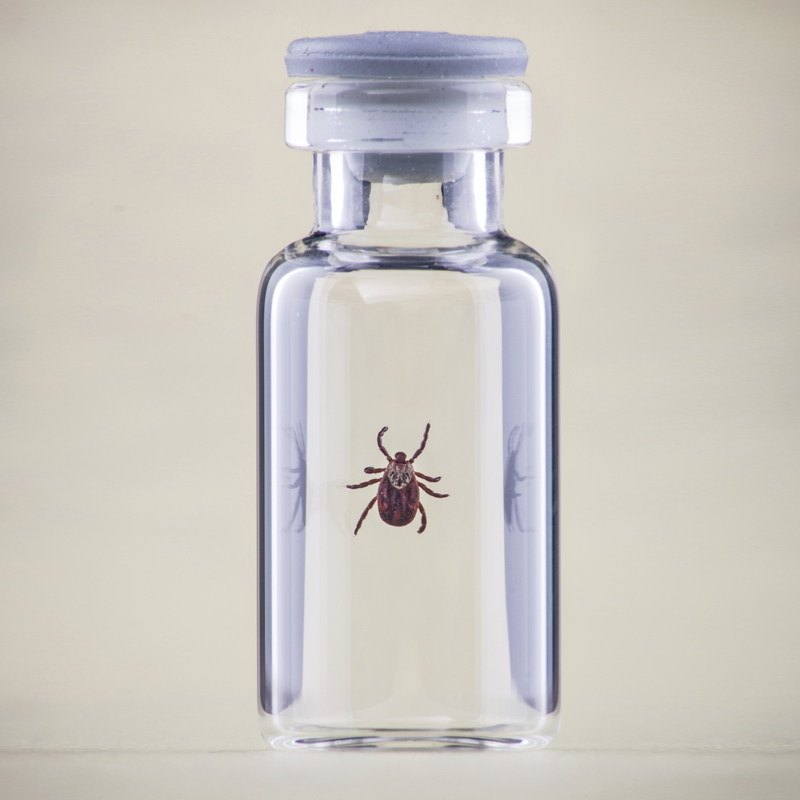
After removing the tick, place it in a suitable container and take it to the clinic for examination.
Cat owner reviews of tick removal methods
Let's now look at what methods of tick removal readers recommend.
I remove the tick from the dog with tweezers and then treat it with antiseptic. Don't throw the tick away right away; place it on cotton wool or a white cloth and examine it. If the insect's head is still there, then everything was done correctly.
If you notice a tick on your pet (and this requires regular inspection of cats outdoors), remove it mechanically, using tweezers or a twisting motion with your fingers, being careful not to tear the tick from its proboscis. Before removing the tick, treat the area where it attaches to the skin with kerosene, petroleum jelly, or vegetable oil. Disinfect the bite site with alcohol or vodka. There are special tick removal products, such as shampoos and aerosols. Pyrethroid-based flea protection products, such as Stomosan and Neostomosan, are also available at veterinary pharmacies.
If you can't quickly get to a veterinarian, you can remove the tick from your beloved pet yourself. However, none of these methods replaces treatment and examination by a specialist. Only a doctor can diagnose the disease, prescribe treatment, and protect your pet from unpleasant consequences.