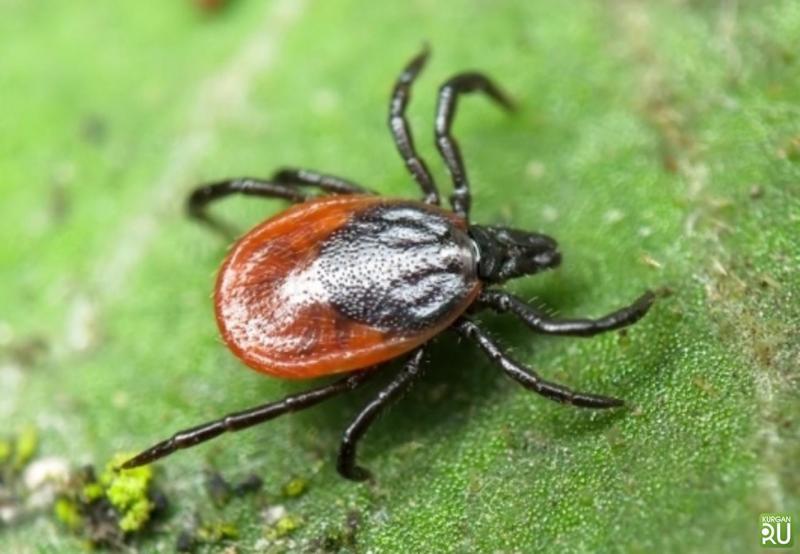
Along with nature, ticks awaken in spring, carrying viruses that are dangerous to human health and life through their bites. They infect people with encephalitis, the consequences of which are dire, often fatal. City parks and gardens are treated annually to combat parasite infestations. However, private property remains untouched, making the problem of controlling these insects a pressing issue for summer cottage and garden owners.
Content
What does a tick look like and how to spot it?
All types of ticks should be eliminated from areas frequented by people and pets. Some are dangerous to humans, while others are harmful to cultivated plants. Treating the area will significantly reduce the risk of damage to fruit and berry plants and protect pets and people. First, make sure that the parasites have already taken root in the area.
The tick has a rounded body, ranging from 0.2 to 36 mm in length, and four pairs of legs. Its color ranges from gray to red. This depends on when the insect fed on blood: the hungrier the insect, the less red it has. Females are larger than males.
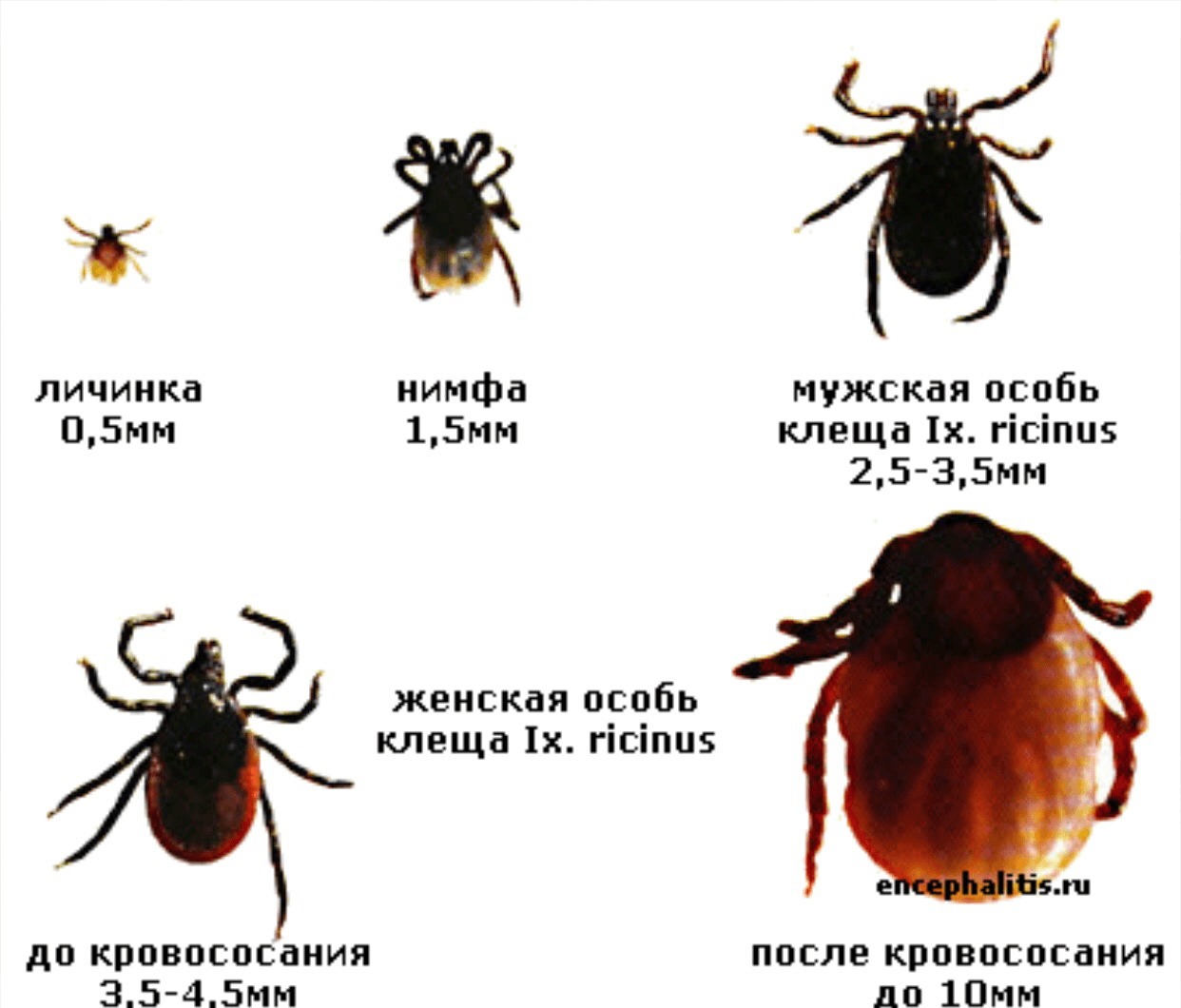
The size of a tick depends on its species, maturity, sex and degree of satiety.
To detect a tick on your property, do the following:
- Wear clothing that covers all areas of your body—socks, pants, a long-sleeved shirt, and a hat. Wear high-top boots.
- Apply tick protection and repellent to yourself.
- Take a large white waffle towel: it will make it easier to see attached ticks.
- Attach both ends of it to a wooden stick, pole, or other long object to create a flag-shaped device.
- Place it on the ground with the end attached to the towel and drag it across the surface of the soil, grass, and bushes. Do not let the towel curl up.
- Periodically lift the lowered end to examine the surface of the canvas for ticks.
- Walk around the entire area at least twice.
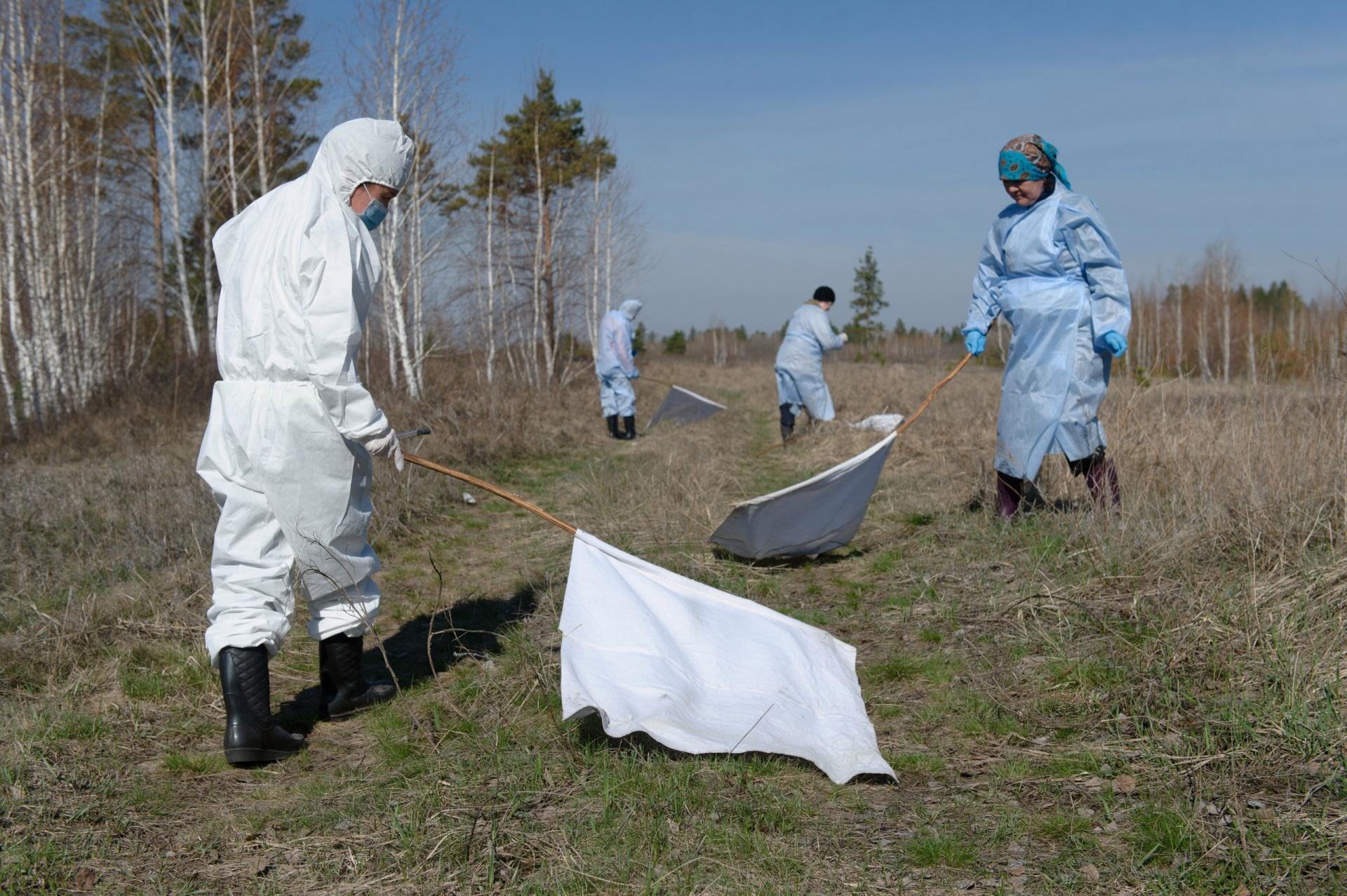
Before you begin to fight ticks, make sure that they are present in the area.
If no ticks are found after 2-3 inspections, take preventative measures. If you find even one tick, immediately begin treating the area with specialized products.
General recommendations for site treatment
To effectively rid your area of ticks, remember five important rules:
- Treat the area twice per season: in early spring before planting seedlings (April - early May) and in late autumn after harvesting (late October - November).
- Choose a dry, warm, windless day. In this weather, ticks are on the surface and easier to kill. Ideally, there should be no rain or snow for three days before and three days after treatment. If it rains immediately after applying chemicals, the toxins will be washed away and the effect will be negligible. Therefore, check the weather forecast.
- Apply the treatment no later than 40 days before harvest. This is necessary to allow any chemicals that fall on garden crops to be neutralized by rain, watering, and plant activity. The risk of poisoning and severe intoxication of the body is high during the first month after treatment. Also remove garden furniture and equipment before the procedure.
- On the day of the procedure, keep children and pets away from the area. Don't forget to take care of yourself, too. Wear a gown or protective suit, a headscarf, gloves, and high boots or closed shoes over your regular clothing. Wear a respirator to protect your breathing. Afterward, wash your clothes, clean your shoes, and take a hygienic shower. Prevent chemicals from getting into water, especially drinking water. Enter the territory without protection after 3 days.
- Pay special attention to garden paths, seating areas, and areas near entrances. Spray any shrubs and trees no higher than 1.5 meters. There's no point in spraying higher than that, as ticks won't be found there.
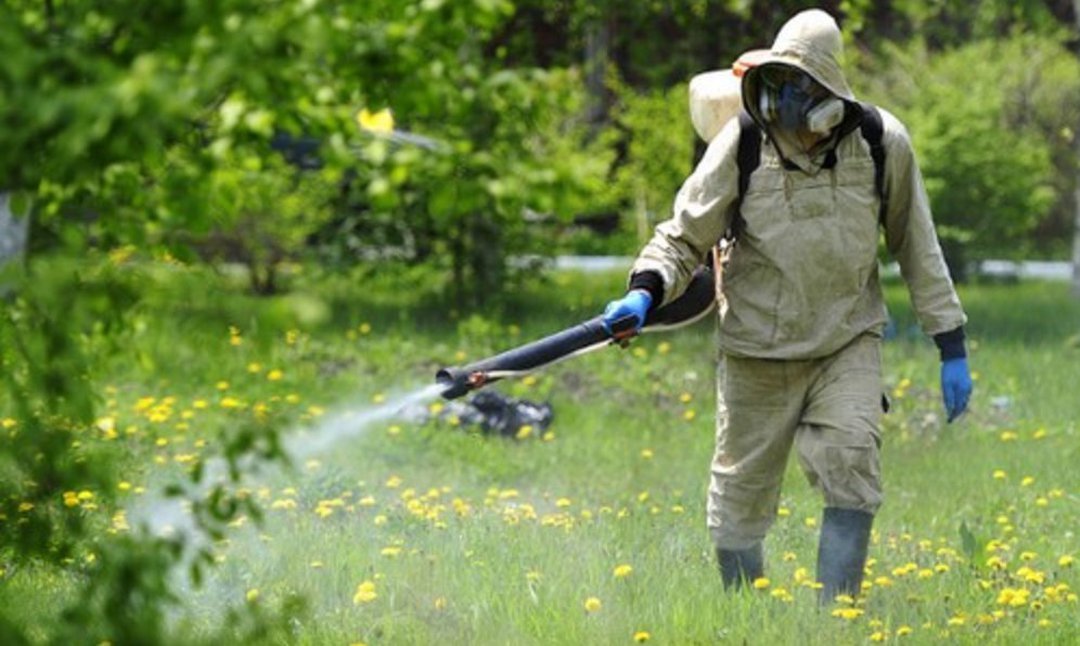
A great protection option is a special suit for chemical treatment.
For maximum effectiveness, collaborate with your neighbors on a joint tick control program. The larger the tick-free area around your property, the less likely it is that the pests will invade your property.
Preventive measures
They are not used as an independent method of protection against ticks, but only as an auxiliary or temporary measure to protect an area:
- tidy up: remove all dry grass and leaves from last year;
- regularly mow the greenery growing in the garden and trim the lawn;
- get rid of excess vegetation between the beds and around the perimeter of the site;
- sprinkle crushed stone or sawdust around the area at least half a meter wide: they will repel ticks coming from outside;
- build fences to prevent dangerous insects from entering the area on stray cats and dogs;
- Regularly treat your pets with tick protection products and inspect them periodically;
- Get rid of rodents, which can also become carriers of parasites.
Biological tick repellents
In addition to preventative measures, you can try using biological agents:
- Plant mint, chamomile, thyme, garlic, lavender, and calendula around the perimeter of the plot and in its territory. These plants contain a natural insecticide that repels ticks.
- Build several bird feeders in your area. Starlings and thrushes eat ticks. They also provide food for other insects, such as ants, ground beetles, ladybugs, and wasps.
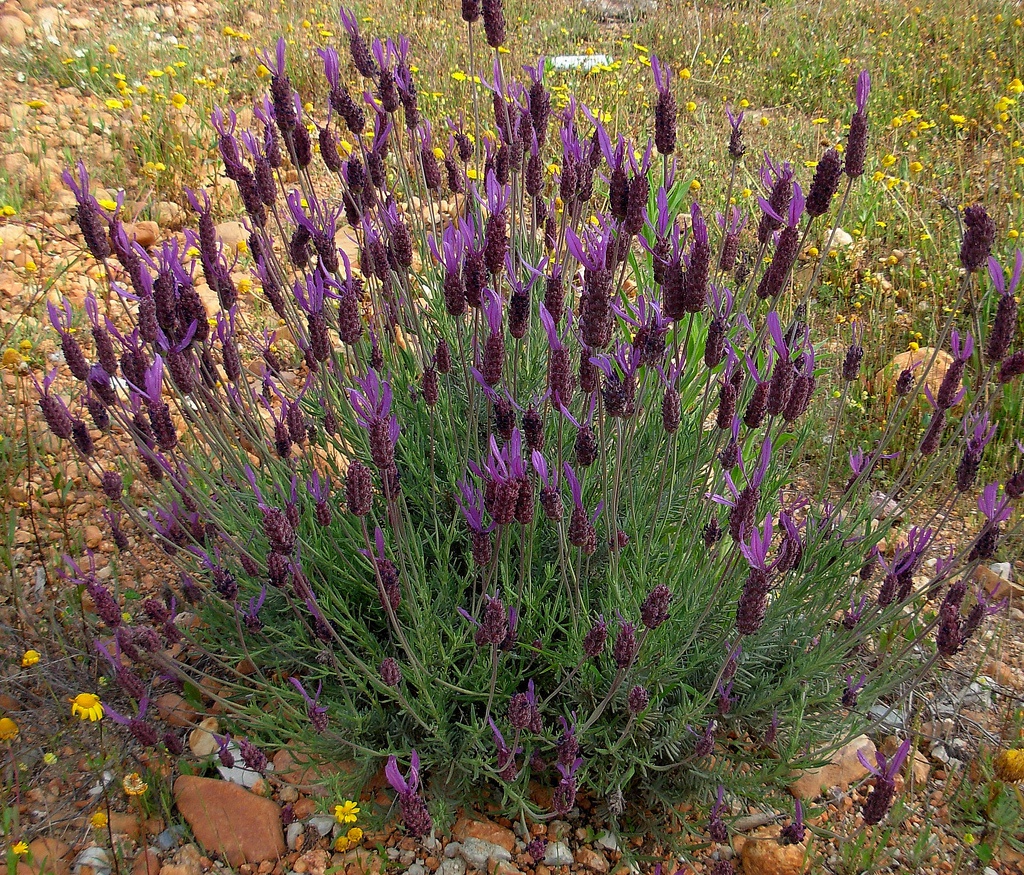
Lavender, thyme, mint and other plants repel ticks from the area
Use of chemicals
Tick control is achieved using acaricide-based chemicals. There are two groups:
- Permethrin-containing products. They are the safest, have low toxicity, and do not harm the soil. The downside is their lack of effectiveness.
- Organophosphorus products. They are highly effective, designed for treating large areas, and quickly decompose in the soil. Their drawback is toxicity: they cause burns and poisoning when in contact with skin and mucous membranes.
Acaricides kill not only ticks but also other insects and pathogenic fungi. They are dangerous to humans, animals, and birds.
These products can be purchased in specialized stores or online.
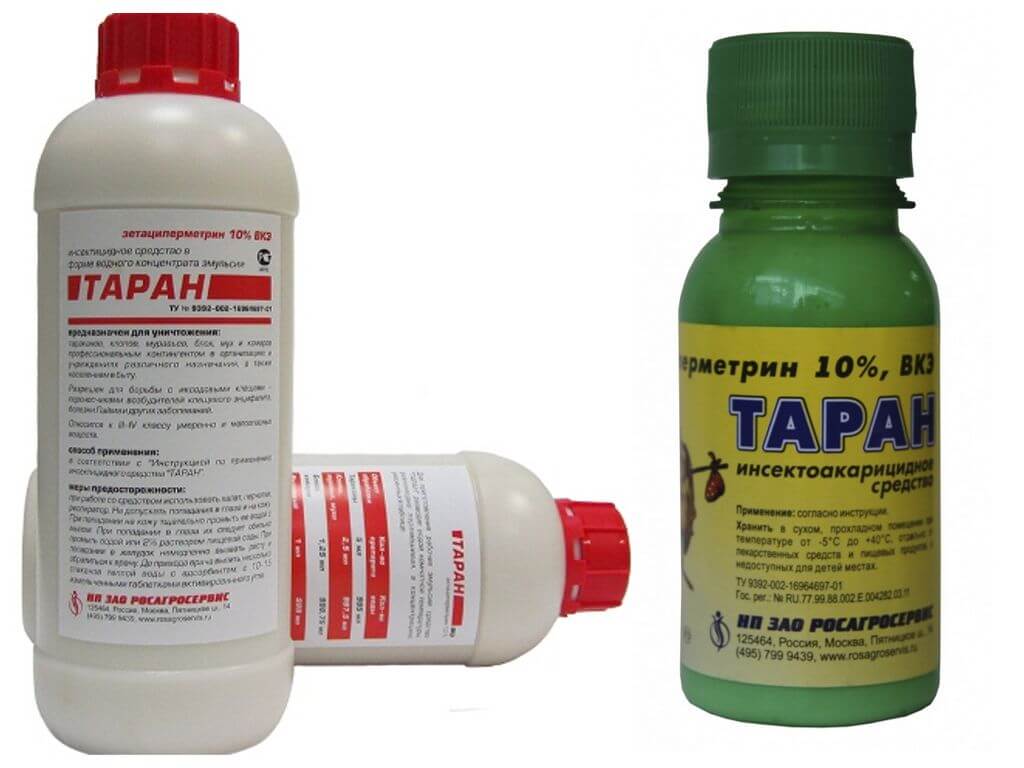
Concentrated liquid Taran
It is diluted with water. The product is toxic. It protects the land for two months from the date of application.
Instructions for use:
- Pour the concentrate into a plastic container.
- Gradually add water, stirring continuously for 5 minutes.
- Put on a protective suit.
- Apply the emulsion evenly to all surfaces. Use special equipment for spraying.
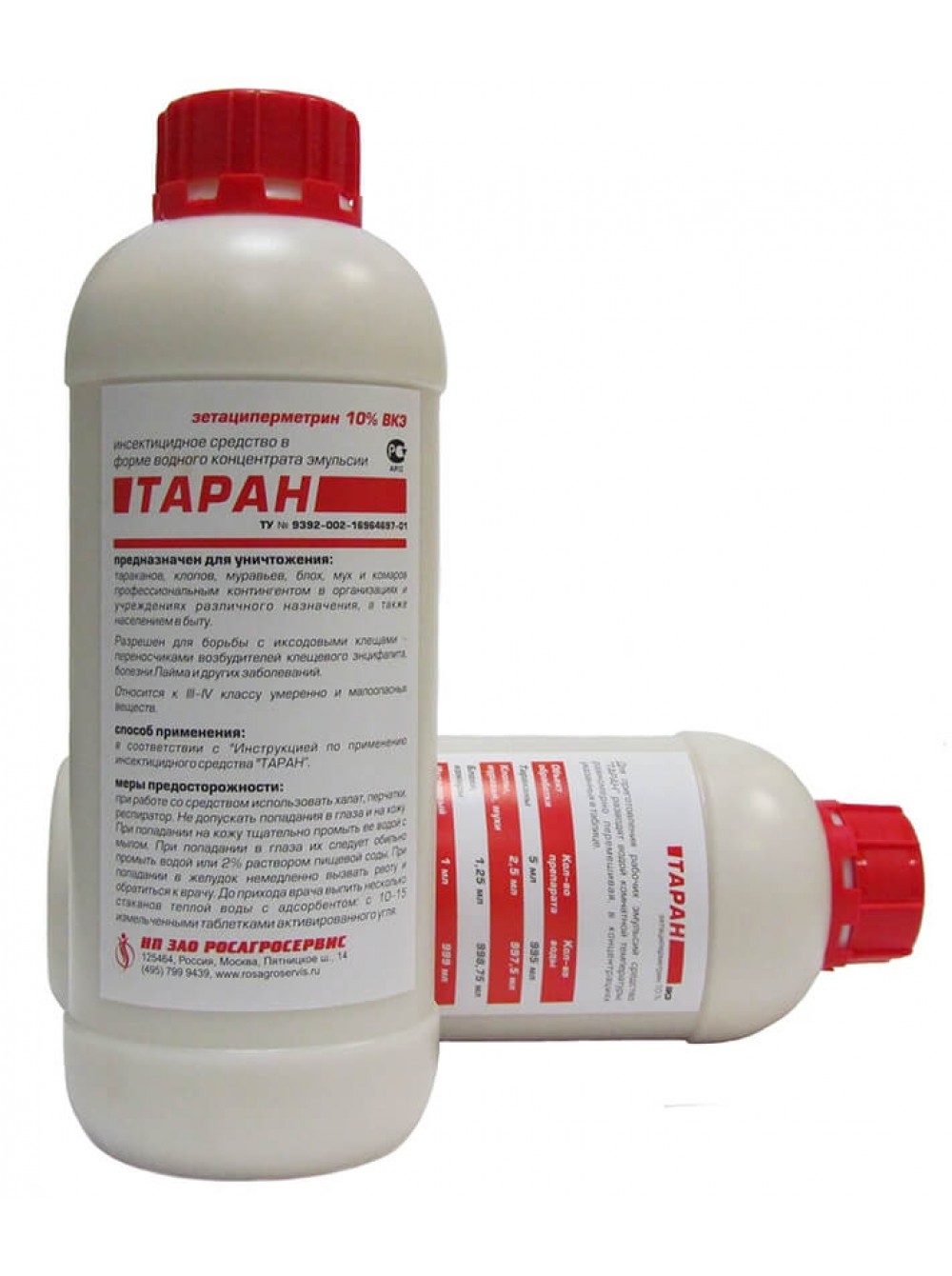
Taran is a popular tick repellent.
Dilute the concentrate immediately before spraying and use within 8 hours of preparation. Consumption volume: 100 liters of solution per 1 ha. The finished solution is white in color, reminiscent of milk.
Table: Taran consumption rates
| A genus of ticks | Consumption rate of the product, l/ha | Concentration of working emulsion, % | Amount of product in the working emulsion, ml | |||
| by active substance | by means | 1000 | 2000 | 5,000 | ||
| Ixodid | 0.25 | 0.025 | 0.25 | 2.5 | 12.5 | 25.0 |
| 0.50 | 0.050 | 0.50 | 5.0 | 25.0 | 50.0 | |
| 0.75 | 0.075 | 0.75 | 7.5 | 37.5 | 75.5 | |
| Dermacentor (pasture), Haemaphysalis | 1.25 | 0.125 | 1.25 | 12.5 | 62.5 | 125.0 |
Video: Instructions for use of Taran
Reviews of the drug
As a landscape designer, I recommend treating the area with Taran Insecticide... It's effective against many insects, including ticks. It's a very good product.
Unfortunately, I only started using this product last year, and I haven't regretted it. Unlike others, this product is very cost-effective. Taran's advantage is that it's also ideal for controlling ticks, which is also very important for gardeners. The large 50 ml bottle allows you to use Taran almost the entire season. It lasted me several times for my entire plot, and it works on all insect pests.
I also liked that Taran also works on other pests, including ticks, which are also unwelcome guests on plantations. I recommend it!
We used Taran (a concentrated emulsion diluted in water) and sprayed the area. It's sold at the Lyubimy Sad store at the oil depot. We haven't had any ticks, knock on wood.
Medilis Ziper
The active ingredient is cypermethrin. It is suitable for indoor and outdoor use. The product's effectiveness lasts for 2–3 months. It is used in the same way as the previous product.
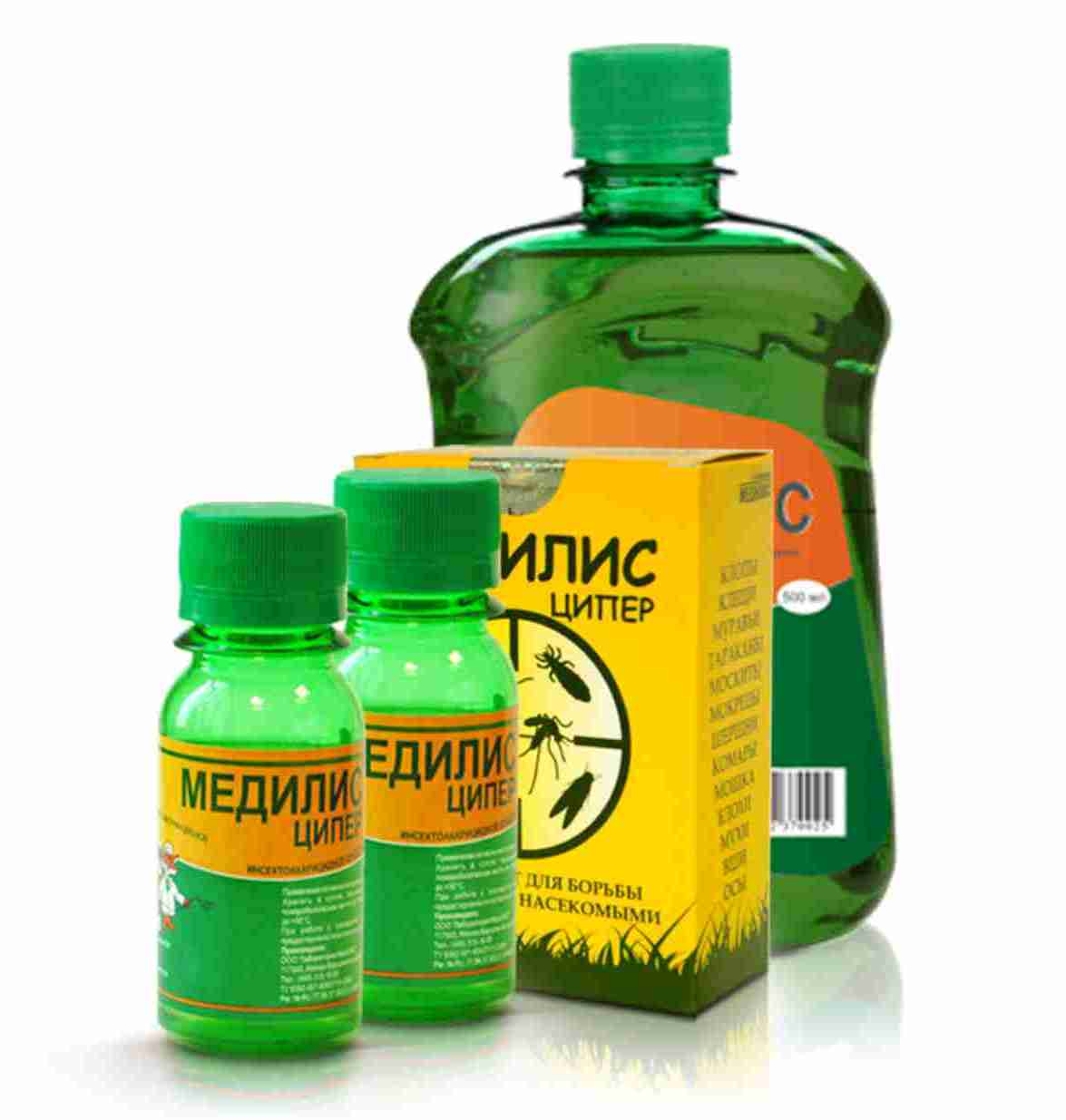
Medilis Zipper is used to kill all types of ticks.
Table: features of use of the product
| Disinfection measures | Quantity funds, ml | Quantity water, l | solution, l | Average consumption of solution | Conditions, nature and method of processing |
| Treatment of the territory | 120 | 9.88 | 10 | 10 liters per 10 acres | With medium to high numbers and dense grass cover. |
| 25 | 9,975 | With low numbers and sparse grass cover. | |||
| 50 | 9,950 | With average numbers and sparse grass cover. | |||
| 75 | 9,925 | With medium to high numbers and dense grass cover. | |||
| Clothing processing | 5 | 0.995 | 1 | 40 ml/m2 fabric, or 160–200 ml per 1 set of clothes |
|
| Treatment of the territory | 200 | 9.80 | 10 | 10 liters per 10 acres | When identifying local areas with a high risk of tick attacks on people. |
Video: Instructions for treating a site with Medilis Ziper
Reviews of Medilis CIPER (25% cypermethrin)
The product's effectiveness lasts for approximately 2-3 months. I treat the soil three times per season. The first treatment is in April, with a mandatory requirement of no precipitation for three days after treatment. The effect is almost immediate, and there are no ticks.
This product is excellent—we've been having nightmares about these crawling insects for six months now! It's quite cost-effective. I didn't have to re-treat it, even though the instructions say so. There's no odor as such. I highly recommend it. I highly recommend this effective product to everyone.
Ladies, who wants to treat their property? The product is called "Medilis-Zipper." We've been using it for three years now, and the ticks are completely gone.
Dobrokhim FOS
The active ingredient in this product is fenthion. It is highly toxic and harmful to bees. Treatment should be carried out during periods of low bee activity (early morning or late evening). The residual effect lasts for 1–1.5 months.
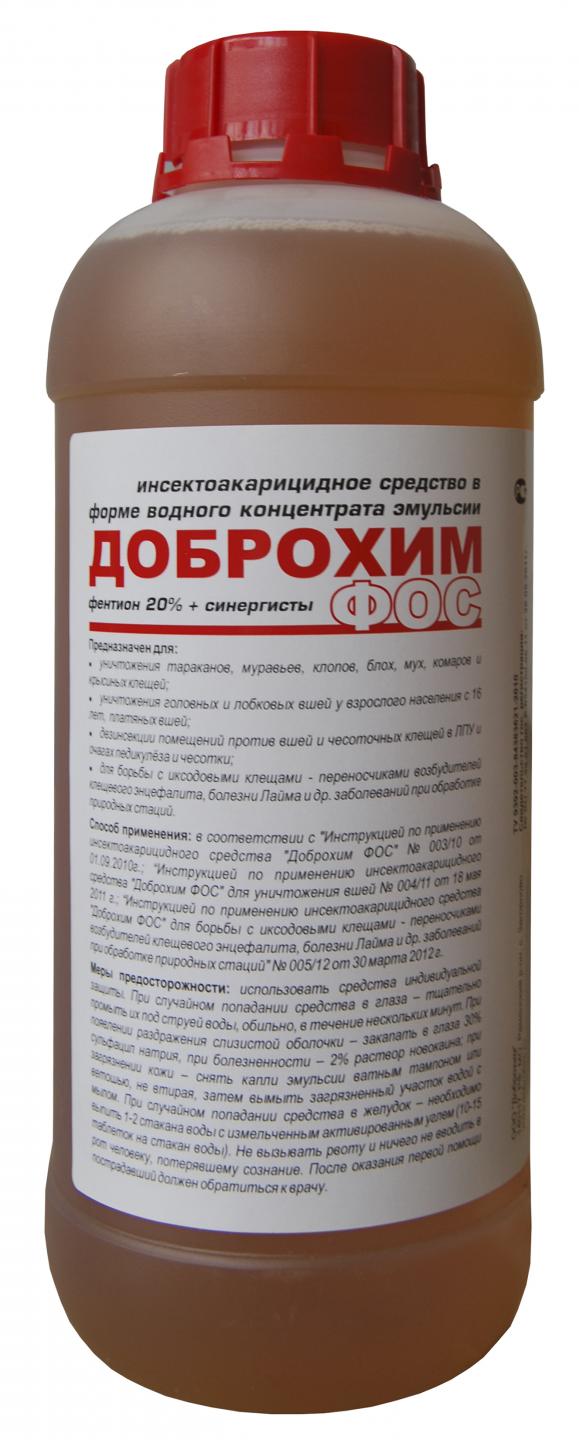
Dobrokhim FOS is a toxic mite control agent that is harmful to bees.
Table: drug consumption rates
| Insect species | Emulsion consumption per 1 liter of water, ml | Treatment area of 1 liter of the preparation, m2 |
| Cockroaches, rat mites | 10 | 2,000 |
| Bedbugs, ants, adult flies | 5 | 4,000 |
| Fleas, mosquitoes imago | 2.5 | 8,000 |
| Fly larvae | 4 | 5,000 |
| Mosquito larvae | 0.25 | 8,000 |
Reviews of the product
A reliable and effective product. The smell is its only drawback. I always keep Dobrokhim FOS in my arsenal. I recommend it to all exterminators.
But I was offered a new product—Dobrokhim Phos. So I took it. The scent wasn't impressive. It was quite pungent and unpleasant. But the main thing is to get rid of the mustachioed invaders. So, for me, this characteristic wasn't a big deal. Overall impression: effective. Would I recommend to friends? YES.
Dr. Klaus
This product is suitable for use in open areas and indoors. Its active ingredient is alphacypermethrin. It features a more convenient reusable bottle with an ejector than other products. Replacement bottles with screw-on lids are also available.
Instructions for use:
- Shake the container with the preparation well.
- Connect the water hose to the water source.
- Connect the other end to the adapter on the bottle.
- Start treatment from the farthest section. Hold the hose steady to prevent it from kinking.
- Turn on the water and point the ejector nozzle at the area to be treated, bend the safety valve using your thumb.
- Without releasing your thumb, turn the ejector valve to the ON position (clockwise until it stops).
- Treat the area, moving in such a way as to avoid stepping on areas that have already been sprayed.
- Move evenly at a leisurely pace.
- Monitor the consumption of the product using the scale on the end of the container.
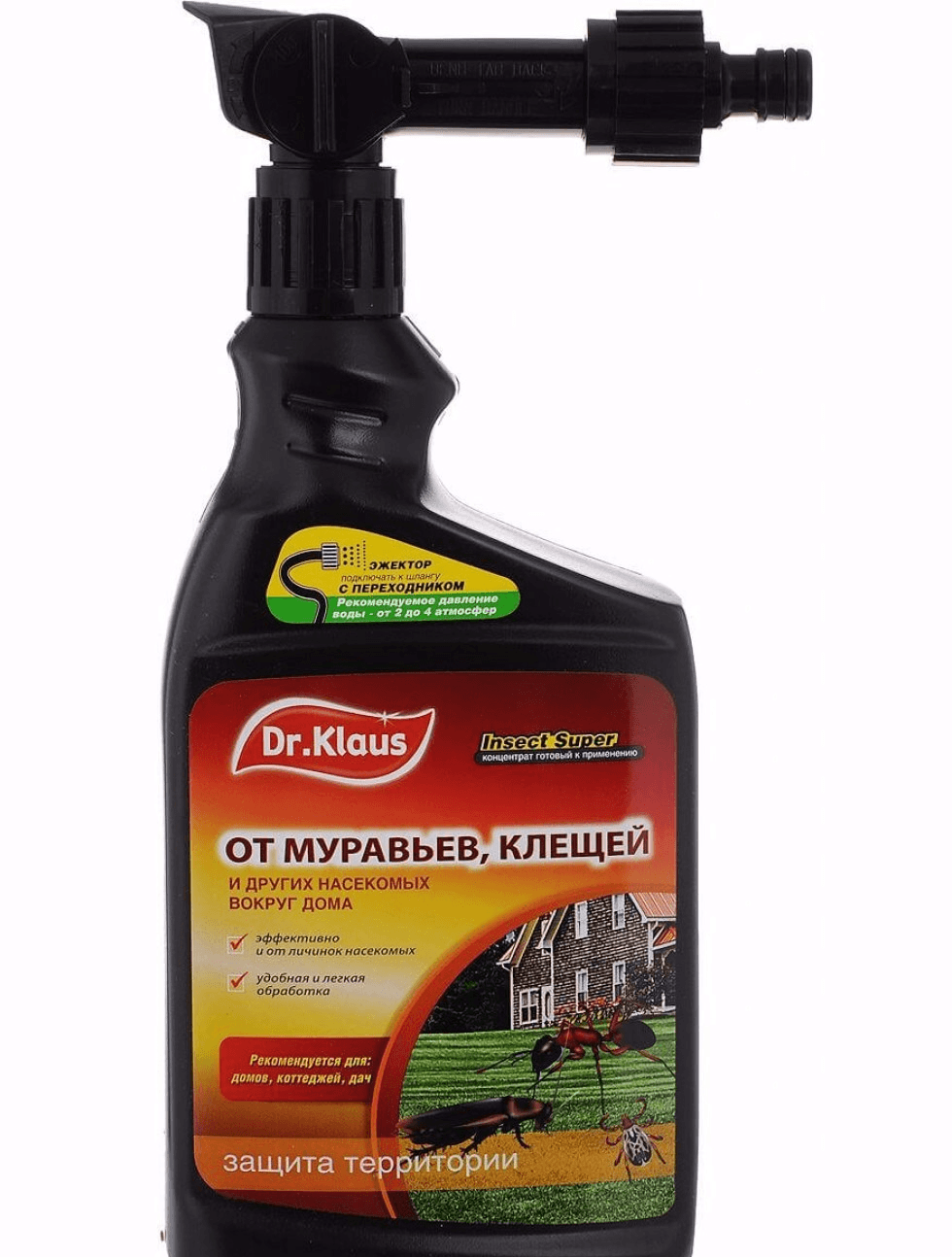
The product has a convenient spray container.
Before starting the procedure, check the water pressure in your tap. It should be 2-4 atmospheres. If the pressure is lower, the fertilizer will not mix well with the water, significantly reducing the effectiveness of the treatment. If it is higher, the ejector may break.
Video: Using Dr. Klaus
Reviews
The area where our property is located sees a huge number of ticks every year. Last year, we sprayed it with Dr. Klaus in the spring. I wouldn't say there weren't any ticks, but there were certainly far fewer.
We've been treating our property with this for three years: Dr. Klaus Insect Super "For ants, ticks, and other insects around the house."
Cyfox
The active ingredient is cypermethrin. It is sold as a concentrate in 50 ml, 0.5 l, and 1 l volumes. The product lasts for 1–1.5 months after spraying. It is economical: one 0.5 l bottle is enough for approximately 100 acres.
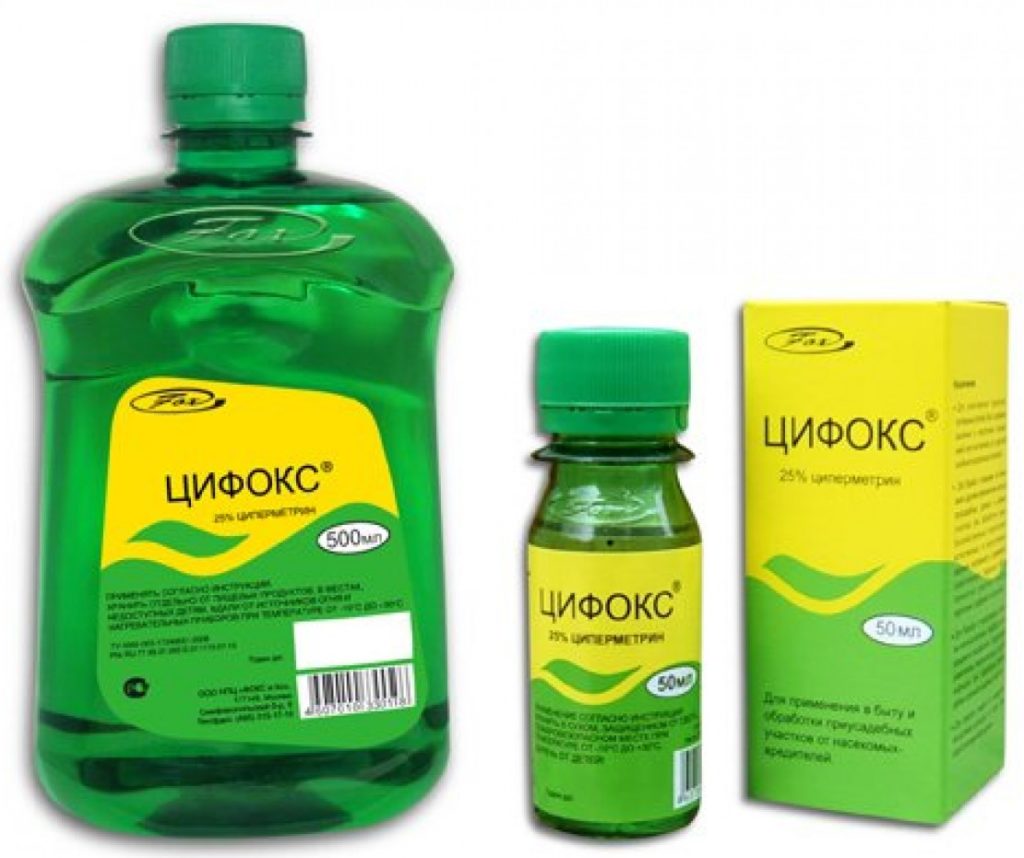
Cyfox is sold as a concentrate in different volumes.
Table: emulsion consumption for tick control
| A genus of ticks | Consumption rate of the product, l/ha | Concentration of working emulsion, % | Amount of product in the working emulsion, ml | |||
| by active substance | by means | 1 l | 5 l | 10 l | ||
| Ixodes (ixodid) | 0.25 | 0.0625 | 0.25 | 2.5 | 12.5 | 25.0 |
| 0.5 | 0.1250 | 0.5 | 5.0 | 25.0 | 50.0 | |
| 0.75 | 0.1880 | 0.75 | 7.5 | 37.5 | 75.0 | |
| Dermacentor (pasture), Haemaphysalis | 1.2 | 0.3 | 1.2 | 12.0 | 60.0 | 120.0 |
Reviews of the drug Cyfox
I buy Cyfox. I put on gloves, a respirator, and goggles, grab a spray bottle, and systematically, step by step, cover the entire area. Wait a week after treatment... They say the product is non-toxic to humans, but who knows?
I treated it with Cyfox, and it helped in that the mites became significantly fewer. But I still couldn't get rid of them completely.
We've been using this product [Cifox] for several years now to spray our garden plots against ants and ticks that carry encephalitis and other dangerous diseases. It's really working. In several years of using it, we haven't had a single bite, and I haven't even found any on my dog, even though he runs around everywhere. It works against Colorado potato beetles, aphids, and all sorts of other pests. I highly recommend it.
And the best chemical product is Cifox. I treated it and there are no ticks or mosquitoes for 3 months. The plot and 2 meters around the perimeter of the plot.
Other means for treating the area against ticks
Also intended for the destruction and repelling of insects from land areas are:
- liquid concentrates with the active ingredient cypermethrin - Yuraks, Breeze, Kukaracha - are sold in vials and bottles of different volumes and percentages of the active substance;
- emulsions based on organophosphorus pesticides (Acarifen, Avalon) - are considered particularly dangerous toxins;
- Cypermethrin-based powders and aerosols - Argus Garden, Akaritoks, Alfatrin.
All chemical tick control products are toxic and pose a health and safety risk to insects, animals, and even humans. Avoid direct contact of chemicals with garden beds, fruits, and berries, or with water sources. Keep household members away from the treated area for three days after treatment. Take care of yourself and your health during spraying and follow the product instructions.