Pets are meant to bring joy to their owners. When bringing a kitten into the home, a person must understand the full responsibility of their new friend. They will not only have to play and cuddle with their pet, but also care for it: feed, clean, treat, and walk it. One problem is fleas in young kittens. They must be removed, but with extreme caution to avoid harming the kitten.
Content
What do fleas look like and why are they dangerous?
Fleas are parasitic insects that infest animals. They are repulsive in appearance: small (up to 2–3 mm), with flattened bodies and a chitinous covering with a brownish tint. They are difficult to see, and even more difficult to catch. When touched, these ectoparasites (which live on the surface of a person or animal) exhibit remarkable jumping agility. They can live on any inhabitant of a home, not just cats. Fleas thrive on dogs, rabbits, and pet rodents, and can even bite humans. Once inside a home, they jump to other inhabitants and reproduce.
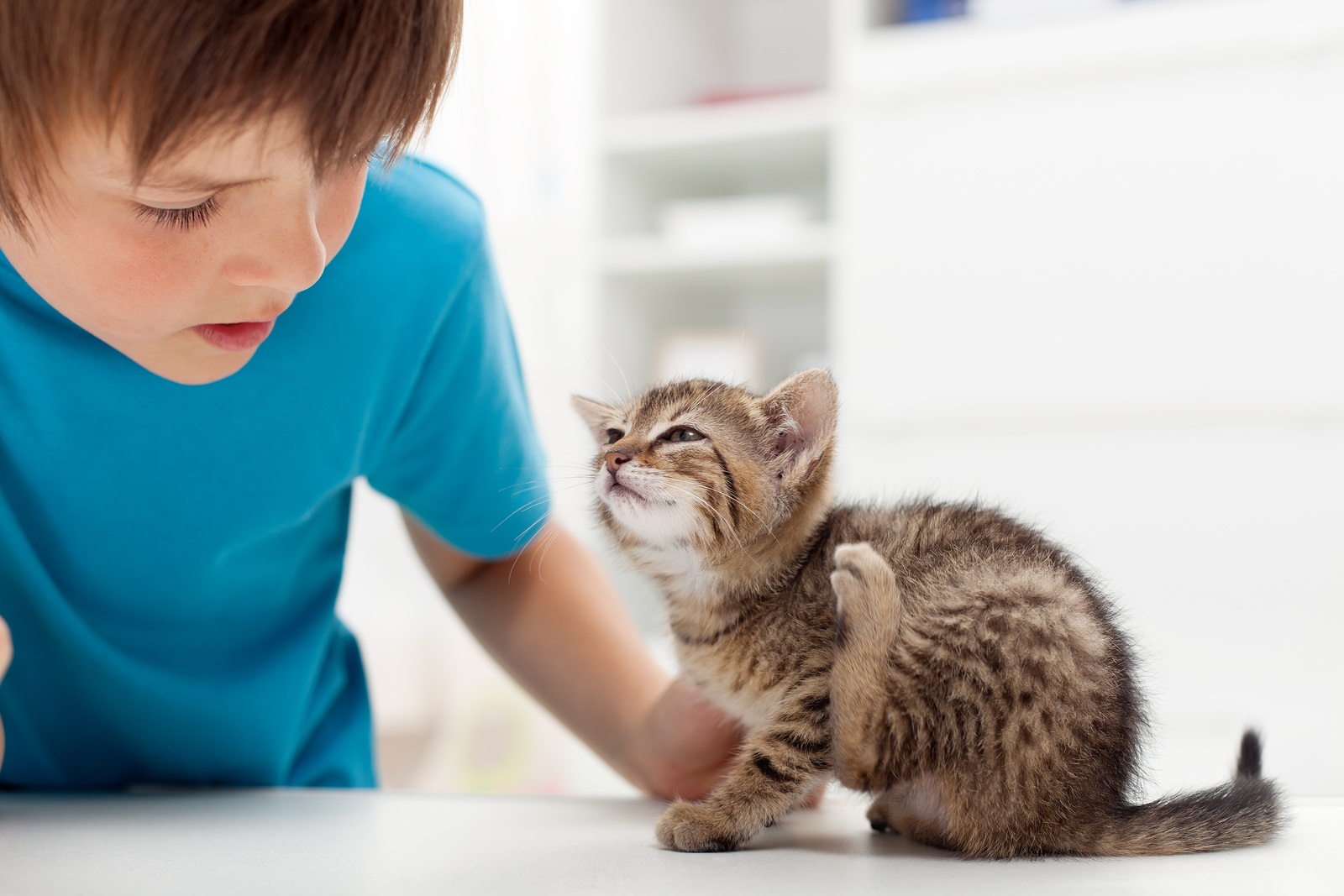
Fleas cause a lot of inconvenience to your pet and can infect their owner with unpleasant diseases.
Fleas themselves are a nuisance. The main problem is itching and irritation at the bite site. But the danger of fleas is that they are carriers of dangerous infections (anthrax, encephalitis, hepatitis, plague, etc.), as well as helminths. The appearance of fleas in a kitten leads to infection with worms.
Sources of occurrence and signs of flea infestation
A small kitten suffers from fleas more than an adult animal, so it is important to notice when your pet becomes infested.
Where do fleas come from?
There are several ways a newborn kitten can become infested with fleas. The kitten can be infected by its mother cat or another animal living in the house. If the kitten is the only pet in the apartment, there's a chance it picked up fleas from its previous owner.
Another very common way is to bring in larvae or even adult insects on shoes or clothing. A person can unknowingly bring a new tenant into an apartment. Once in favorable conditions, the insects feed on the blood of their new hosts, mate, and reproduce. After 21 days, the hatched larvae develop into adults, and their life cycle repeats.
Symptoms of a flea infestation
You can only determine if your kitten has fleas through a thorough examination. Signs to look out for include:
- scratched wounds appear on the skin;
- On the belly, ears, and muzzle, the insects themselves or their black excrement and white eggs, attached to the fur with a sticky secretion, are visible.
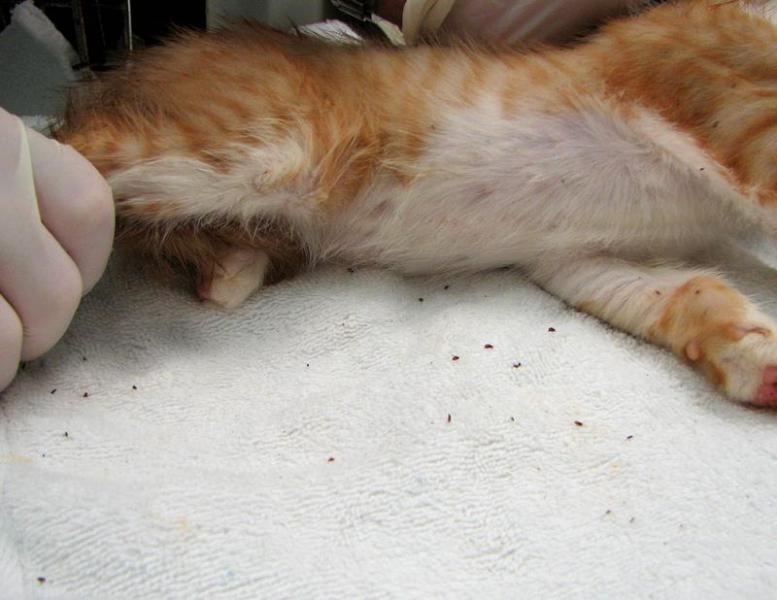
A thorough examination by a veterinarian can help identify fleas in a kitten.
The behavior of the little pet also changes:
- the kitten's sleep becomes restless, he twitches his paws or even jumps;
- the animal eats poorly;
- The baby constantly scratches with its paws or bites certain parts of the body with its teeth.
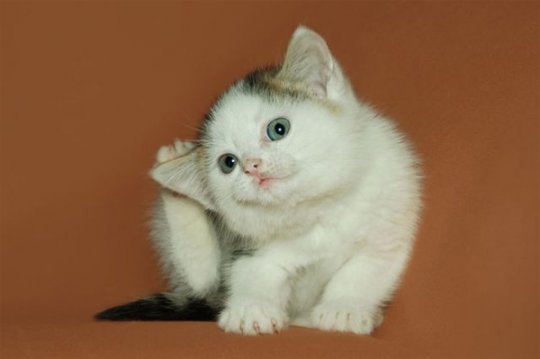
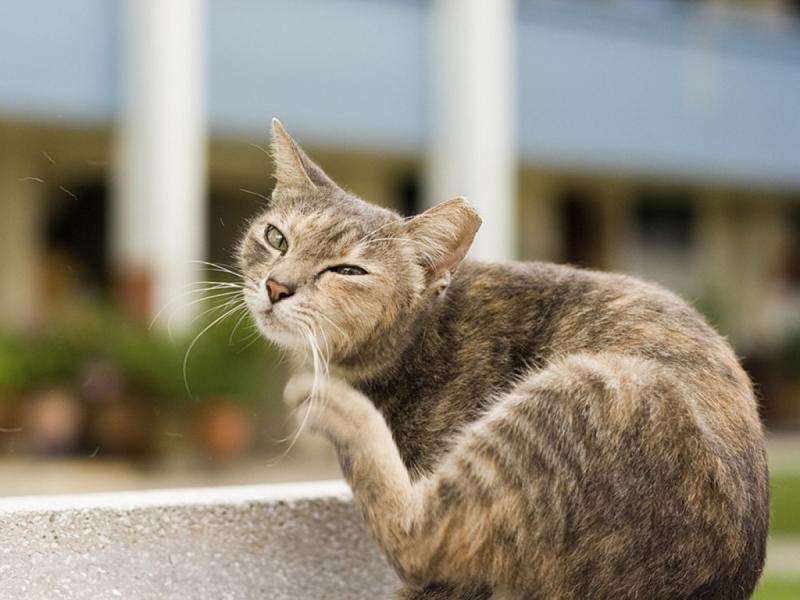
If your kitten is constantly scratching itself, this could be a sign of a flea infestation.
How to safely remove fleas from a kitten at home
The younger the kitten, the more difficult it is to treat fleas. Most anti-flea medications contain chemicals that are highly undesirable for use on an animal at such a young age.
The main stage of flea control should begin with disinfecting the room using special means:
- Clean house,
- Karbofos,
- Raid,
- Raptor.
Before treatment, it is important to read the instructions and carefully follow the manufacturer's recommendations.
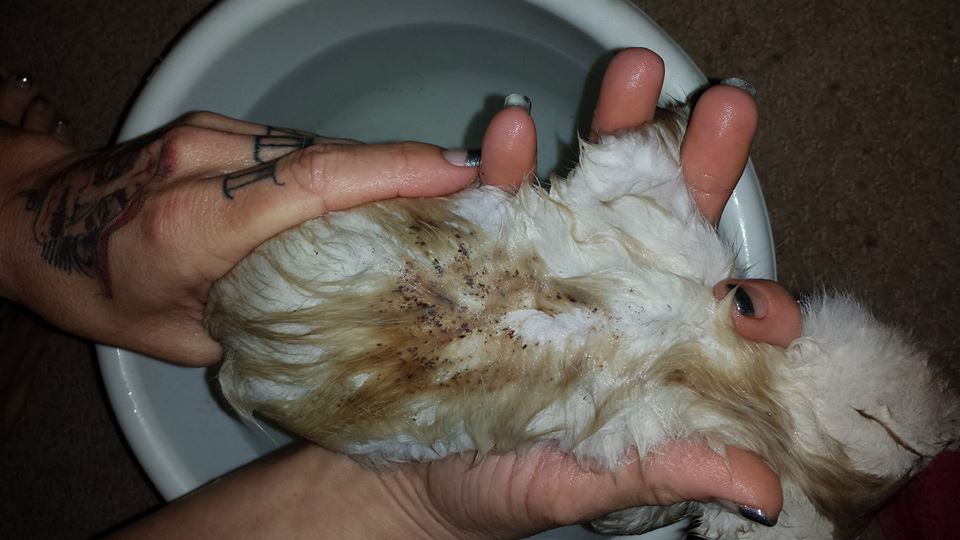
To remove fleas from a kitten, you should use the safest possible products.
There are several methods you can use to kill parasites on your animal:
- Bathe the baby using anti-flea shampoos.
- Use flea drops or spray according to the instructions.
- Put an insecticidal acaricidal collar on the animal.
- Use natural herbs and flea repellents.
- Comb out the insects with a fine comb or brush.
The last two methods are considered the safest, as they do not expose the kitten to chemicals.
Flea treatment for kittens depending on age
The range of flea control products for kittens depends on the animal's age. The younger the pet, the fewer medications are available and the more caution should be exercised when using them.
Newborn kitten
If fleas are detected on a newborn kitten, you have two options: wait until it grows up, or begin treatment immediately. A newborn kitten is considered a newborn during the first month after birth. Any medications, even those intended for two- to three-month-old kittens, are very dangerous for them. When choosing a treatment, be sure to consider the following:
- Collars marked "for kittens" are designed for animals aged 2-3 months and older, so they should not be used.
- It's best to avoid bathing a kitten, as it needs only its mother's care, and it could also catch a cold. Shampoos are recommended only after five weeks of age.
- The use of insecticides is contraindicated, as the mother cat may ingest some of the product while grooming, and the poison may be passed on to the kitten through her milk. This can lead to severe allergies in the kitten.
Video: How to remove fleas from kittens
A mother cat typically removes some fleas when she grooms herself, so a massive infestation of insects doesn't occur during the kitten's first month of life. In this case, it's best to wait until the kitten grows up and becomes stronger. If a kitten is growing up without a mother, or there are too many fleas, gentler methods can be used to combat the parasites.
- Combing. This is the safest method. You'll need a soft brush or comb, but you can also use a damp chamois cloth instead. Place a bowl of water nearby. Pick up the kitten and begin combing it with extreme caution. Immediately place any fleas you catch in the water to prevent them from jumping back onto the kitten.
- Powder. Pet stores sell special anti-flea powders suitable for treating newborn kittens. Gamma and Hartz are considered the least safe. The application procedure is as follows: rub the powder into the kitten's skin, then comb out the fleas as described above. To prevent poisoning the mother and transferring the poison to the kitten through milk, the mother should not be allowed near the kitten for 3-4 hours, and the kitten should be fed directly.
- Bathing. If the flea infestation threatens the kitten's health or life, you'll have to take the extreme step of bathing it. Avoid using insecticides; baby soap or tar soap will do. The water should be warm—38–39°C. oC, it's best to measure its temperature with a thermometer. Bathing procedure: pour water into a basin, plug the kitten's ears with cotton wool, wet the kitten with water, and lather it (avoid touching the face; it should remain dry). Lather the animal for three minutes, then rinse thoroughly, dry the pet with a soft cloth, and comb its fur. Most fleas will seek refuge from the soap on the kitten's dry face. Therefore, it's important to pay special attention to this part of the animal's body when combing. You can use a toothbrush for this purpose to prevent injury to the pet if you move carelessly.
Important: For very young kittens, we recommend products containing herbal extracts, such as those from the Fitoelita and Doctor ZOO lines.
A kitten in its second month of life
A month-old kitten is already stronger and able to withstand the elements. More flea control products can be used at this age, but only if the kitten is weaned. If your pet continues to suckle, it's best to stop at brushing and bathing.
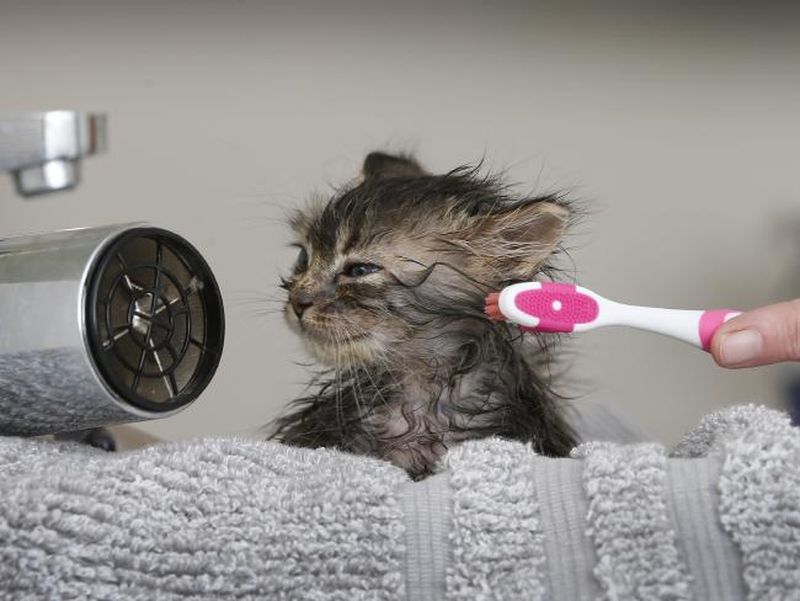
After bathing the kitten, fleas should be combed out, paying special attention to the face.
So, to remove fleas from a kitten over one month old, you can use:
- Shampoo. Miss Kiss shampoo is approved for use from four weeks of age. Dilute 1 ml of the product in 400 ml of warm water and then wash the kitten. Important: Do not allow shampoo to come into contact with your pet's eyes, mouth or nose. The product is left on the fur for 5-7 minutes, then rinsed out and the pet is dried. For the first wash, dilute the shampoo to a lower concentration—for example, use only 0.5 ml per 400 ml of water. This is necessary to test for any allergies to the detergent. After two weeks, repeat the shampooing, diluting it according to the standard formula.
- Drops. From 5 weeks of age, flea drops, such as Stronghold, can be applied to the withers. Apply the drops to the top of the kitten's neck and rub in, but be careful not to let the kitten lick them. Repeat the procedure after 2 weeks.
A kitten in its third month of life
An older kitten can be treated for fleas using a variety of methods. In addition to traditional combing, you can use shampoos, sprays, drops, and powders. Important: Please pay attention to the instructions, which indicate the age from which the use of a particular product is permissible.
According to veterinarians, the following products are effective in killing fleas in kittens:
- shampoos Fitoelita or Rolf Club;
- Gamma or Beaphar powders;
- Frontline or Hartz sprays;
- Advantage or Hartz drops;
- Bolfo or Hartz collars.
Please note: all of the listed products (except collars) may only be used when weaning a kitten from its mother. Otherwise, she will lick her baby and may get poisoned.
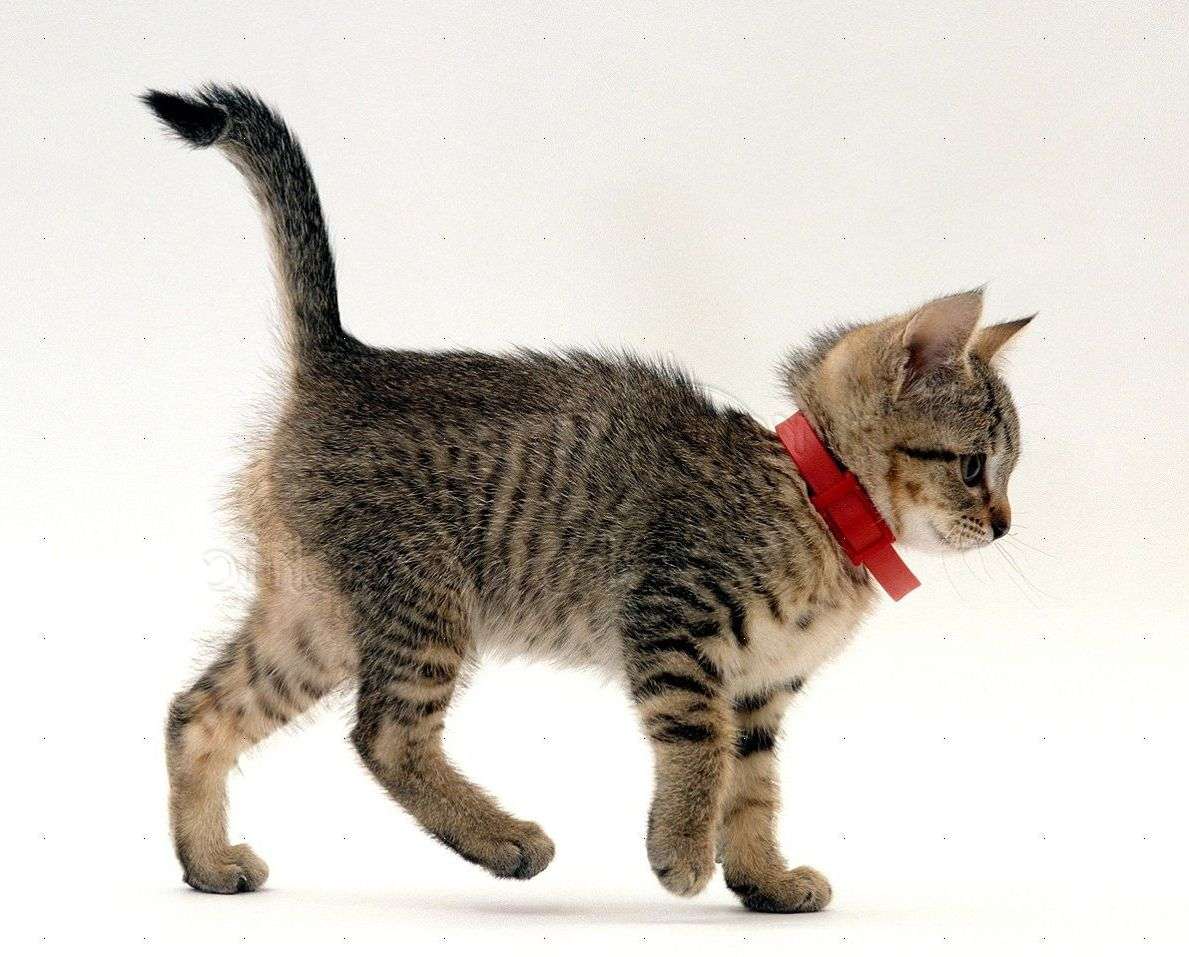
In the third month of a kitten's life, a collar can be used against fleas.
Kittens from six months and older
A four-month-old kitten usually transitions to solid food, which makes flea control much easier for such a young kitten. All the products and methods suitable for an adult cat can now be used for treatment:
- flea prevention collars,
- sprays for the destruction of parasites,
- drops on the withers,
- insect combing powder,
- insecticidal shampoos for killing fleas,
- antiparasitic pills,
- mechanical methods (combing and selecting).
Of course, when implementing flea control measures, you should follow the manufacturer's recommendations. Products for treating kittens can be found in the following product lines: Beaphar, Bolfo, Hartz, and Frontline., Gamma, Advantix.
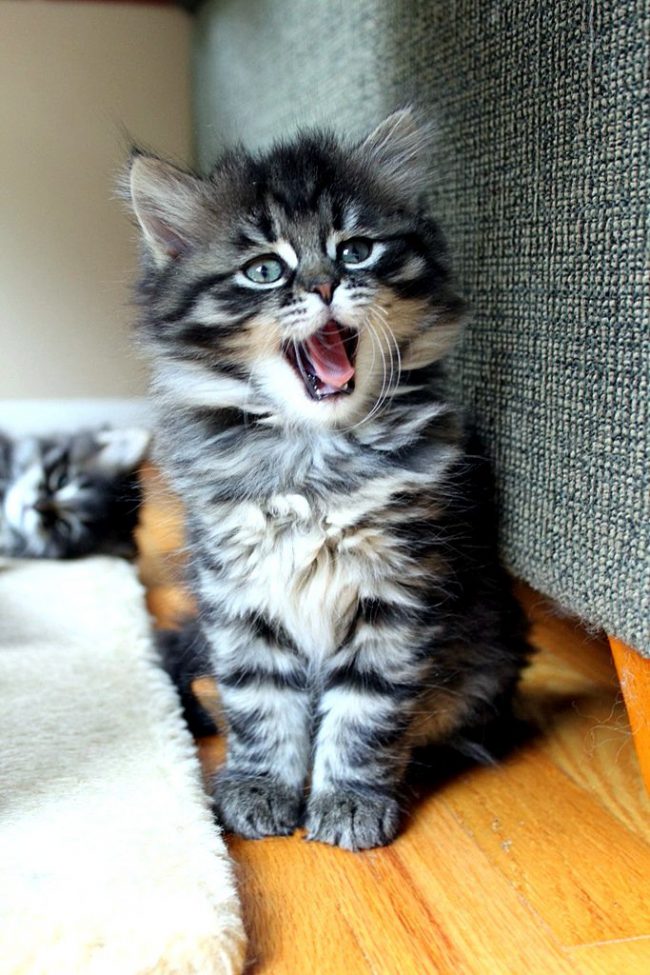
A healthy kitten brings a lot of joy to its owner.
Folk remedies
Folk remedies have accumulated a whole arsenal of remedies for killing fleas in kittens. Unlike medications, these are herbal and do not pose a health risk to cats and kittens. These include, for example:
- Wormwood. Pour boiling water (500 ml) over a tablespoon of dried leaves and simmer for 15 minutes. Wash the animal with the resulting infusion. A mother cat will not be poisoned, even by licking her kittens. Fresh wormwood can be simply placed in the kittens' home.
- Tansy. A tansy decoction is made similar to wormwood. It's used to treat kittens' fur.
- Garlic. Press a head of garlic through a press, add a liter of warm water, and let steep for 12 hours. Apply the resulting infusion to the kitten's skin, especially in areas where insects are most common: the armpits, tummy, and groin.
- Geranium. 2 tablespoons of leaves are poured into 500 ml of water and boiled for 20 minutes. Small kittens are bathed in the infusion.
- Lemon. Chop a small lemon, add a glass of water, and let it steep for 24 hours. Then spray the kitten with the resulting infusion from a spray bottle.
- Essential oils. Peppermint, cedarwood, lemon, geranium, rosemary, and lavender oils have proven effective against fleas. Dilute 2-3 drops of oil in 2-3 cups of water and spray on kittens.
Another proven way to get rid of fleas is to fill the kitten's bed with pine sawdust or fresh shavings.
Video: Personal experience using folk remedies against fleas
Flea prevention for kittens of different ages
The best treatment for kitten fleas is prevention. Of course, the first step is to eliminate fleas from your apartment. This requires daily vacuuming. Pay attention to the areas where your cat frequents the house. It's been shown that up to 50% of all fleas in a house can be eliminated with this simple hygiene procedure. It's important to keep your kitten away from strays and other animals.
You'll need to clean your kitten's sleeping area at least once a week. The bedding can be vacuumed or washed. Don't forget to clean the car and the cat carrier.
At the same time, it's important to perform preventative treatment on the animal itself. You can put a collar on it (if its age allows) and carefully examine its skin.
Important: If your kitten's health noticeably worsens, you should seek help from a veterinarian without delay.
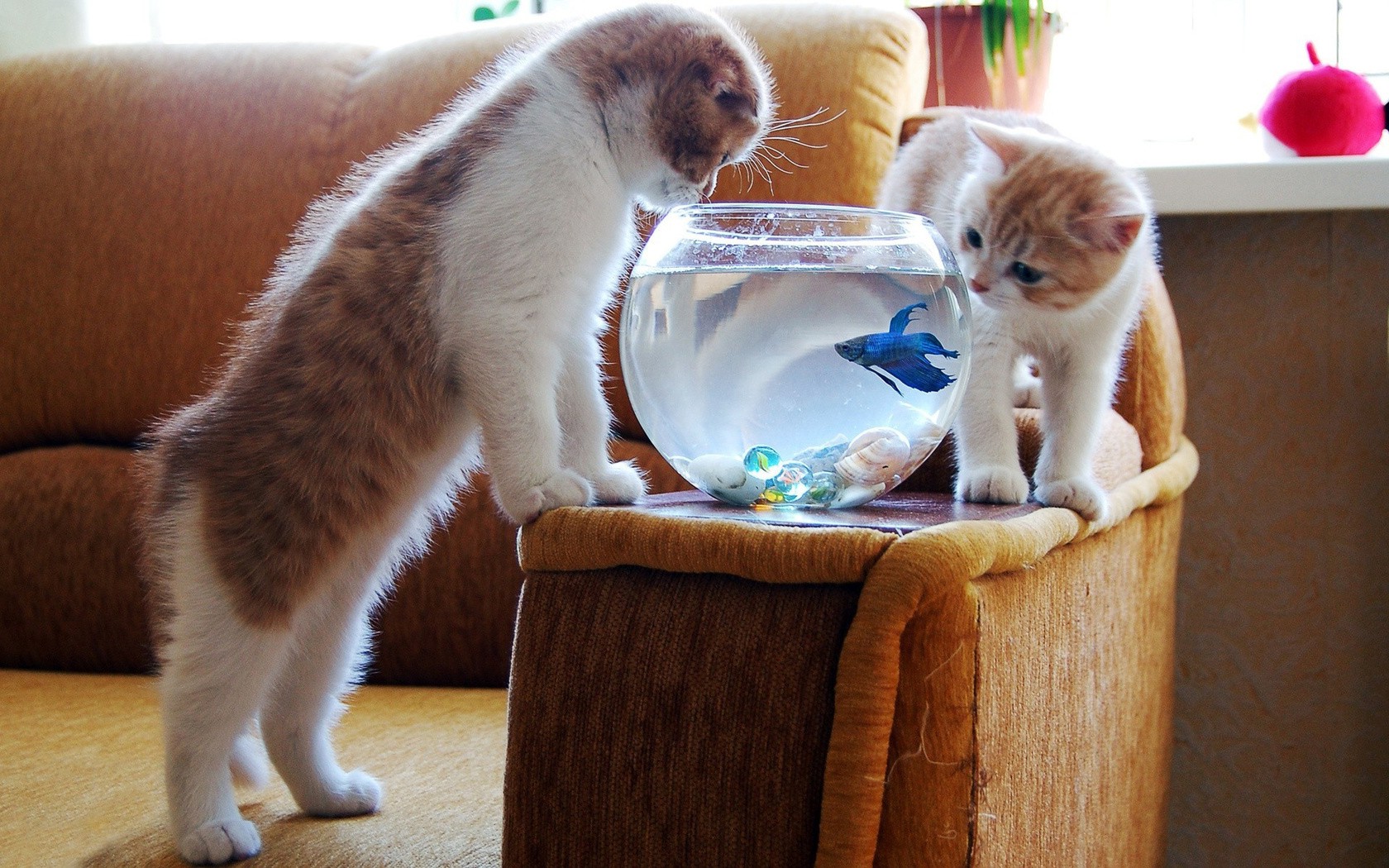
Timely prevention of fleas is the key to a kitten's activity and curiosity.
Little kittens need love and constant care from their owners. Raising a helpless, fluffy bundle of fur into a beautiful, devoted, and independent individual requires effort. Flea control is just one of the challenges faced when caring for a kitten. But your efforts will be rewarded with your pet's happy purrs and love.