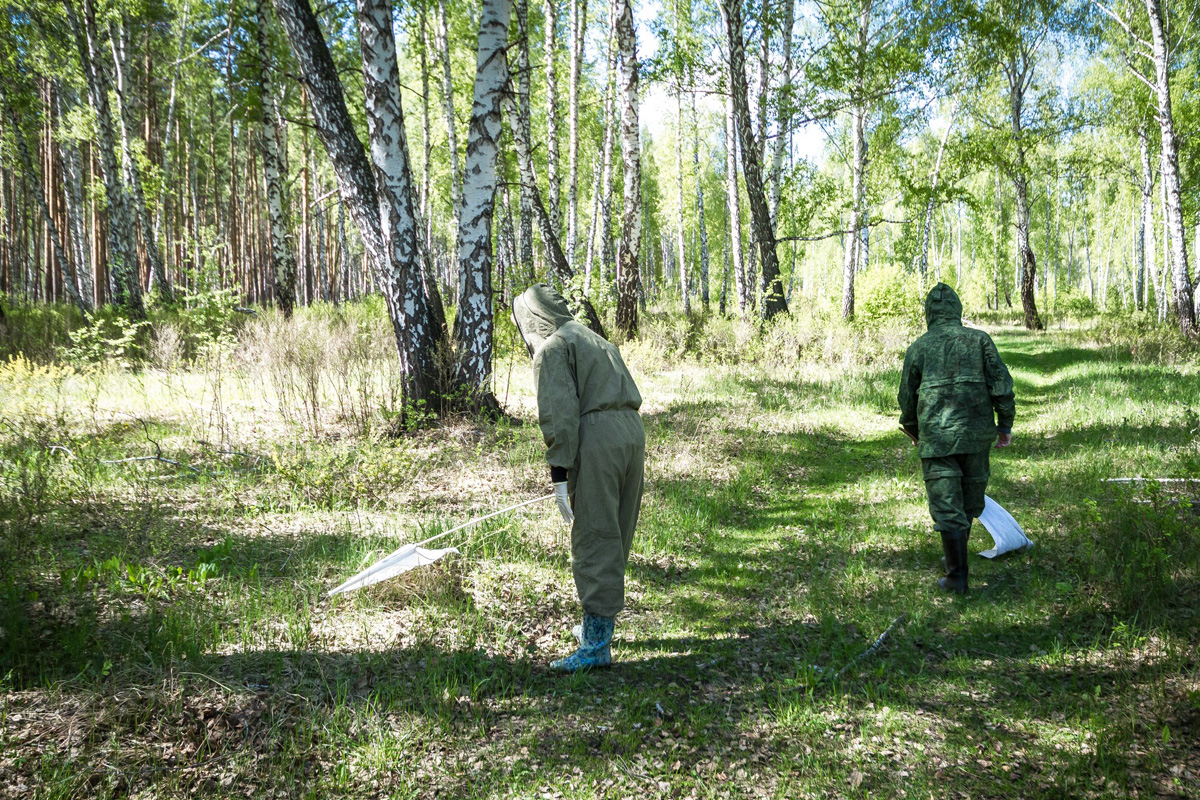
Almost everyone has likely encountered these unpleasant parasites at least once in their lives while outdoors. Ticks are mistakenly considered insects. In fact, they belong to the subclass of arthropods within the class of arachnids. They primarily inhabit the upper layers of soil.
Types of ticks in nature and their characteristics
Currently, more than 47,000 tick species have been identified worldwide. Some are harmless to humans, but the majority are bloodsucking and can transmit dangerous diseases through their bites. Let's look at the species that pose a threat to humans.
Gamasid mites
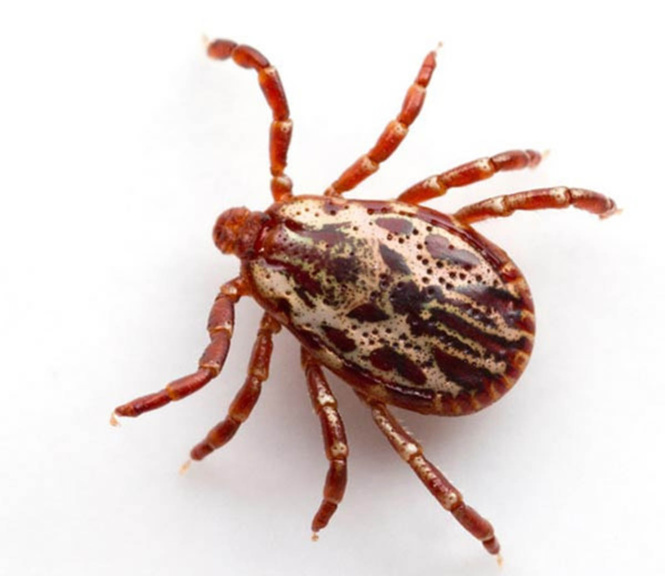
The rat mite is a parasite mainly on rodents, but occasionally attacks humans.
The rat tick, a member of the Gamasidae family, feeds on the blood of rodents and small animals. This parasite is only 2.5 mm long. It has a head with mandibles used for biting, and an oval, light-colored abdomen with brown spots and a tough, chitinous covering. The tick also has four pairs of light-brown legs, which it uses to crawl over its prey. It is a carrier of typhus, plague (very rare), and rickettsiosis. In cases of hypersensitivity, a bite can cause an allergic reaction, such as urticaria or angioedema.
Argasid ticks
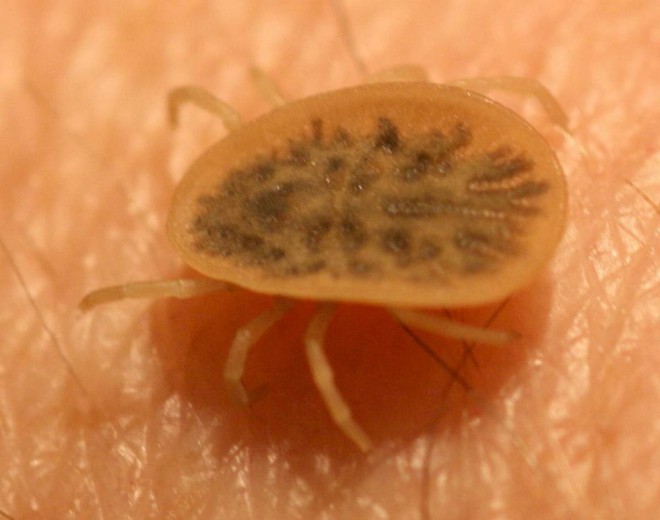
The argas tick can bite both animals and humans.
This species primarily inhabits crevices, burrows, or caves, and can sometimes be found in outbuildings or sheds. The tick has a flat, oval body with a light-brown chitinous covering covered with small dark tubercles. The proboscis is located in the abdominal cavity, making it invisible from above. This arachnid varies in size, from 3 to 30 mm.
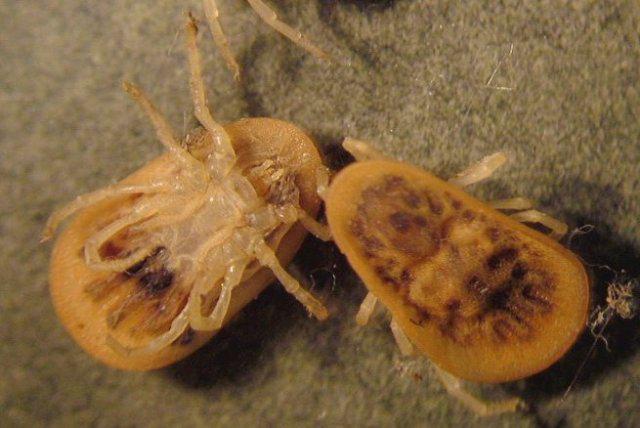
The appearance of the argasid tick does not evoke pleasant emotions
Their main food is animal blood, but in rare cases they can also attack humans. After feeding on blood, the parasite's body turns dark brown. The tick bite itself is very painful and can cause an allergic reaction: the affected area turns sharply red, then swells and becomes intensely itchy.
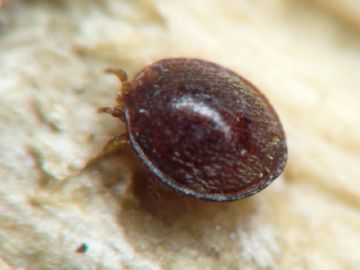
The tick increases in size after feeding.
The argasid tick can transmit serious infectious diseases through its bite, including tick-borne borreliosis, hemorrhagic fever, and relapsing fever. Infection occurs within the first minute of the bite, so after contact with a tick, it's important to see a doctor as soon as possible.
Dust mite
This species of arachnid is impossible to see with the naked eye: its size ranges from 0.1 to 0.5 mm. Its body is oval, with four pairs of limbs and jaws used to capture food.
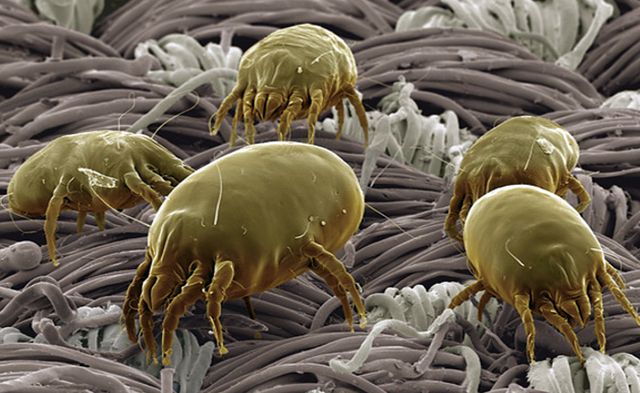
Dust mites are a cause of asthma in children.
Dust mites inhabit apartments: pillows, upholstery, bedding, and dust mites. They don't drink blood; they feed on dead skin cells. The substances contained in their excrement pose a danger to humans. The enzymes Der p1 and Der f1 in these excrements help break down human epidermal cells and are strong allergens for humans. This can lead to the following diseases:
- allergic rhinitis;
- bronchial asthma;
- respiratory allergies - with periodic inhalation of mites and their excrement;
- atopic dermatitis;
- conjunctivitis;
- rhinoconjunctivitis;
- Quincke's edema;
- deep acariasis - when ticks enter the gastrointestinal tract.
Taiga tick
The most well-known and widespread species on the entire planet. They primarily inhabit the upper layers of soil, and when hunting, they climb onto grass and shrubs and freeze, waiting for prey. The body consists of a proboscis and a trunk. In hungry bloodsuckers, the proboscis points forward and is pointed, allowing them to move freely through the fur and feathers of their hosts. Adults have four pairs of legs. The body length of the female is 3-4 millimeters, and that of the male is 2-3 millimeters. The body is oval in shape; in females, about one-third of its length is covered by a dense chitinous shield; in males, the shield covers the entire body. The protective shield is black in both males and females, causing males to appear completely black, while the body of hungry females is dark red or reddish-brown.
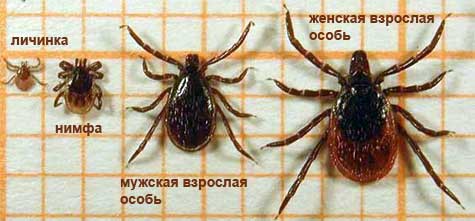
The development of the taiga tick occurs in several phases
Females feed for 6-10 days; after satiation, their body size increases by 7-8 times, reaching 200 times their initial weight. Once the female has sated, she separates from her host and seeks a secluded spot to lay her eggs.
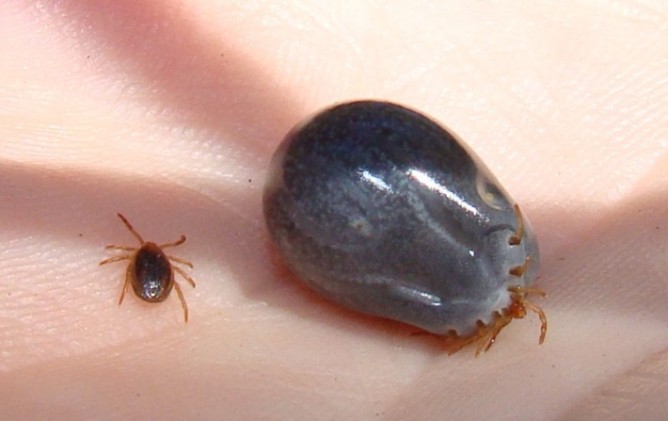
After feeding, the female tick significantly exceeds the male in size.
The taiga tick carries diseases dangerous to humans. Among these, tick-borne encephalitis and Lyme disease are particularly notable, and can be fatal if medical attention is not sought promptly.
Determining a tick as a carrier of diseases by external signs
Many people mistakenly believe that a tick's color can be used to determine whether it's infected. However, it's impossible to visually detect infections in bloodsucking ticks. To do this, after discovering a tick, take it to a specialist who will conduct a series of tests to determine whether the tick poses a threat.
Video: Laboratory testing of ticks for infections
A tick on a human body
If a tick has managed to burrow into the skin, it's often impossible to detect immediately, as it injects anesthetic substances into the wound at the moment of the bite. As it bites, the tick moves deeper into the puncture site to reach the blood vessels, gradually assuming a standing position. Only the abdomen and two pairs of hind legs are visible on the surface.
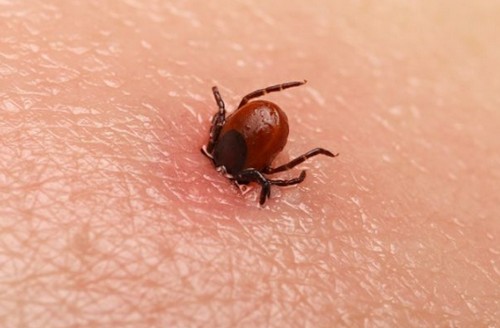
The tick bites into the skin at the moment of the bite.
When bitten, do not apply vegetable oil, alcohol, or other liquids to the tick. Otherwise, the tick will choke and vomit blood back into the wound, increasing the risk of infection.
Video: How to Properly Remove a Tick
If you've been bitten by a tick, don't hesitate to see a doctor immediately to diagnose any potential illnesses. Regardless of the color or type of tick, infection detection is only possible in a laboratory.