Encountering rats is always unpleasant, as they carry diseases dangerous to human health. Furthermore, the furry creatures running around the house are a nuisance, so people always try to get rid of such neighbors. The oldest and most effective method of rodent control is using a variety of traps, either store-bought or homemade.
Content
Types of rat traps
Currently, there are several types of rat traps available on store shelves, differing in design and operating principles:
- those that cause injury to animals:
- those who kill them;
- those that catch rodents without harming them.
In addition to mechanical traps, electronic devices are often used, which are equally effective. The trap should be set where rats most often roam, as well as near the discovered burrow, after first confirming that the nest is inhabited. To do this, seal the entrance with paper or cotton wool before going to bed. If the entrance is clear in the morning, the burrow is inhabited. Otherwise, look for another nesting site. Rats try to remain unnoticed, so they move along walls and prefer dark areas of the room. The rat trap must be installed against the direction of their movement.
Electronic trap
The electronic device consists of a battery-powered or electrically powered container containing bait. It has one or more inputs and an indicator light. When the trap is ready to use, the green light illuminates. Red indicates that the device has been triggered.
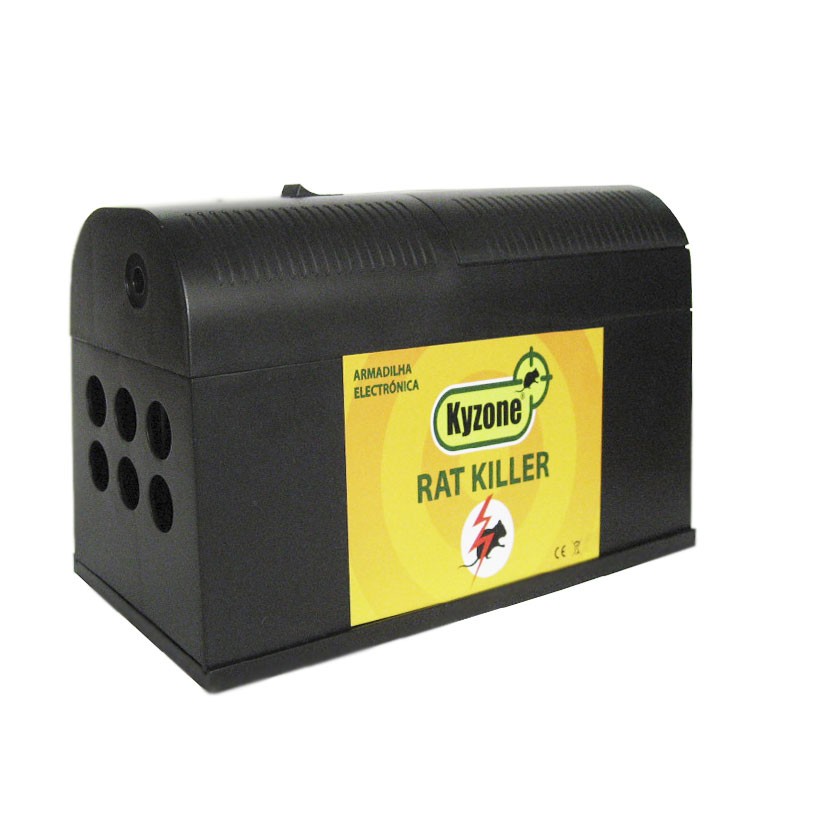
When caught in an electronic trap, a rat receives a powerful electric shock.
The device's mechanism automatically detects any rodent entering the chamber, after which the trap snaps shut. When a rat steps on the electrodes or tries to bite the bait, it is killed by an electric shock. This trap is safe for humans and pets. Installation is simple:
- We place the bait inside the trap through special round holes.
- We place the rat trap where we most often encounter rodents (in front of the hole or along the wall).
- Turn on the device.
- Once the rat is caught, turn off the device and shake out the pest.
Video: How an electric rat trap works
Mechanical rat trap
A mechanical trap is a device with a metal or wooden base with two clamps attached to it. They secure a frame made of thick wire with a spring at the bottom.
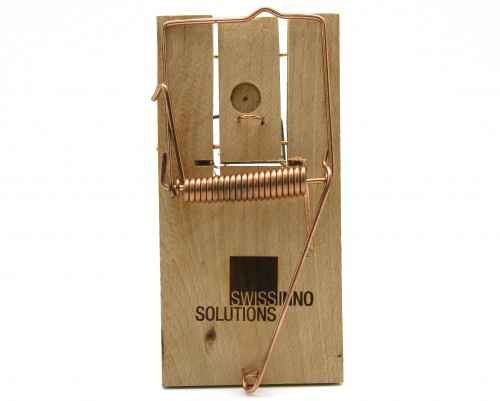
It is not necessary to use cheese as bait placed in the recess of a mechanical trap.
The device installation process looks like this:
- First, we pull back the frame and cover it with a metal arrow.
- We insert the arrow into the loop located in the movable part of the base.
- We place the bait in a special recess.
- We set the trap in the right place.
Video: How a mechanical rat trap works
Usually, a blow from the frame immediately breaks the rodent's spine or skull, but there have been cases when the rat managed to twitch and its limbs or body were pinched. After this, the pest remained alive but was unable to escape the trap. If the animal remained in this position for a long time, death would occur within 3-4 days from dehydration.
Rat traps
The rat crusher trap is up to 30 cm long. Its operating principle is identical to the classic trap. Thanks to its powerful teeth, reminiscent of the jaws of a trap, the rat has no chance of survival.
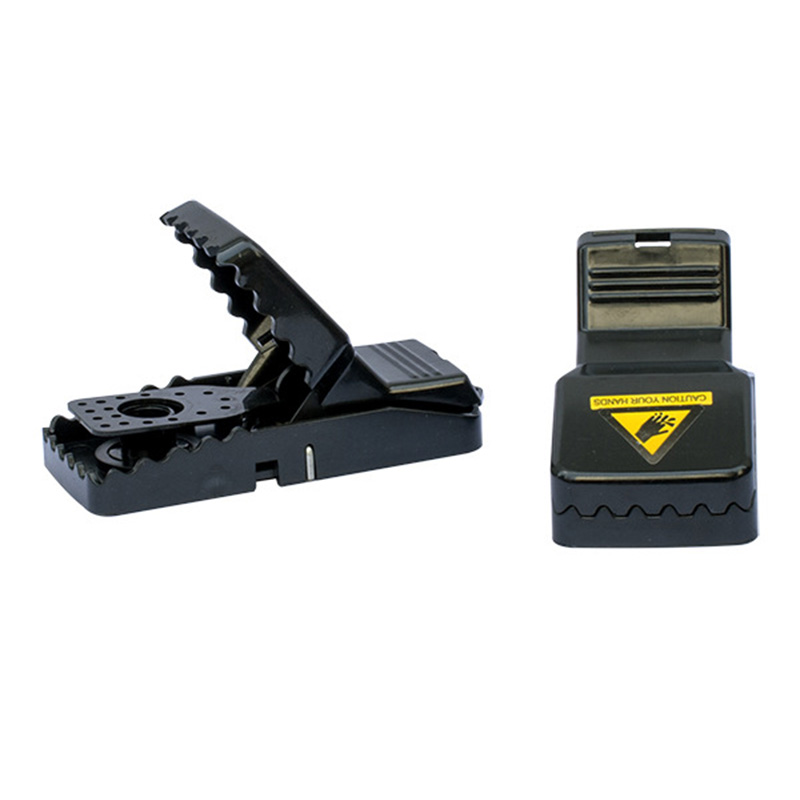
After catching the rat, the clamp is lifted and the carcass is thrown out
When installing the trap, the device must be configured correctly. To do this, you must:
- Open the jaws of the rat trap.
- Place the bait in a special opening.
- Place the trap in front of the hole or along the walls.
Live trap cages
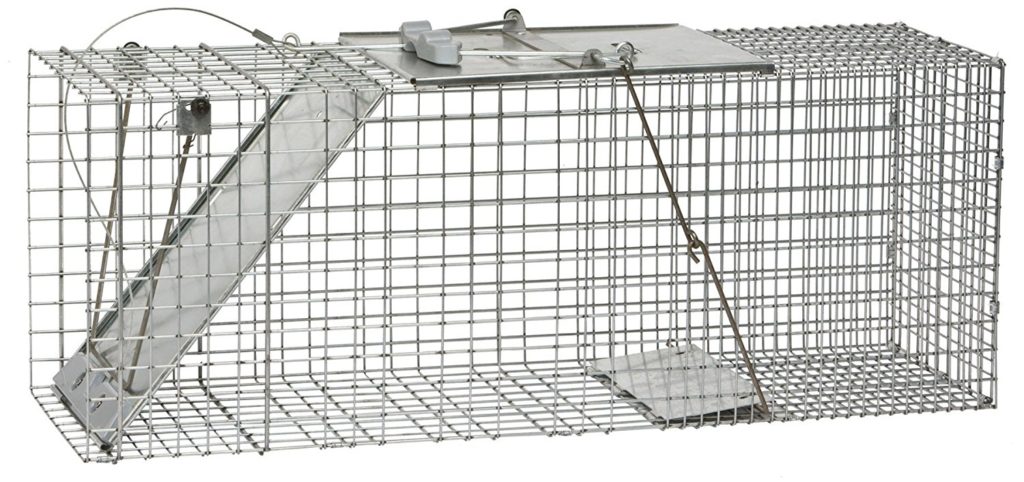
Using a live trap is the most humane way to get rid of rodents.
A live cage trap is an easy-to-use trap that does not harm people or pets. This method of catching rodents is suitable if you don’t want to kill them. Once the trap snaps, the rat is not injured and can be released further away from the area. The live traps themselves are rectangular or round wire cages.
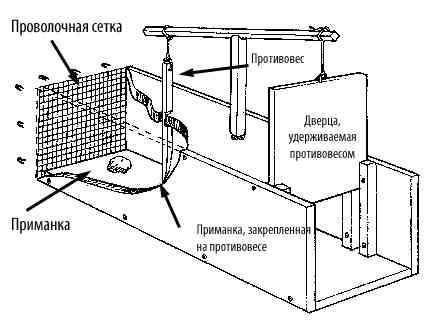
The structure of the live trap cage is extremely simple.
On one side of the device is a metal door that opens with a special locking handle. It's secured to the end of a hook, onto which bait is placed. Once the rat climbs inside and pulls the treat, the handle pops off and the door slams shut, trapping the rodent.
Live traps come in single-person and multi-person designs. The latter can hold up to 10 rats. A typical rat trap measures 50 x 30 x 24 cm. The victim enters the trap through an opening, crosses a swinging bridge, and falls into another compartment with no exit.
The instructions for using the device are as follows:
- We pull the handle completely out of the cage.
- We open the door and put the bait on the hook located inside.
- We insert the frame located on top of the cage into the handle and attach it to the hook.
- We place the trap in the right place.
Video: How a rat trap works
There are some useful tips when using such a device:
- When choosing a quality live trap, make sure it's made of natural materials. The base should be iron or wood. Avoid using a device made of cheap plastic, as its smell repels rodents.
- The mesh should be of a thick diameter so that the rat cannot chew through the bars.
- If the trap hasn't been checked for a long time and the animal died in it, it should be thoroughly cleaned before the next use. Rats have a highly developed sense of smell, and if they smell a dead rat, they may not even approach the trap.
The design's drawbacks include its large size and bulkiness. It doesn't always fit where needed and takes up a significant amount of space when stored.
Glue trap
Adhesive traps are often used to catch rats. These traps are placed at the entrance to burrows and in areas frequented by rodents. Adhesive traps do not emit harmful fumes, making them safe for humans and pets. However, avoid placing these traps in areas where children and pets play. It's also important to keep the area where they are placed clean. Dirt and dust settling on the surface of the traps significantly reduces their stickiness.
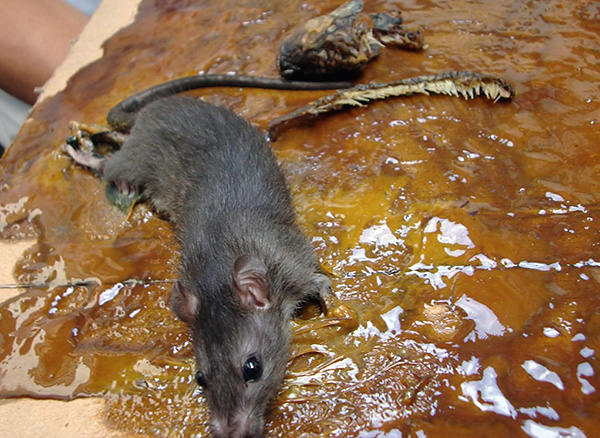
A trap based on a special glue for rats is inexpensive, but its duration of action is limited.
This trap is sold both ready-made and as a tube of glue, which is spread on a sheet of cardboard or other surface. Bait is then placed on the glue. Once a rat's paws or body touch the sticky area, it tries to escape, which causes it to become even more stuck and eventually becomes completely stuck, with no chance of escape. Multiple animals can become stuck at once.
Despite all the advantages, the device also has a number of disadvantages:
- Captured animals suffer for a long time in such traps, gradually dying of hunger and thirst. Not everyone has the courage to kill the animal outright.
- If you take the mousetrap outside the room, there is a risk that birds will get stuck.
- If a child or pet gets into the glue, it won't be easy to remove. You'll have to scrub the skin with vegetable oil for a long time, as it's the best solvent for the trap's active ingredient. And the animal's fur will need to be trimmed.
Rat traps: a review of the best designs
Today, markets, hardware stores, and online websites offer a huge selection of different mousetraps and rat traps. People trying to get rid of rodents often wonder which trap will be the most effective. Below, we'll look at a few examples to help you choose the right design.
Wooden rat trap
The Wood Rat Trap consists of a wooden board with a small mechanism attached to it, including a frame and spring. The frame is pulled back and covered with a trigger. The trigger is inserted into a loop on the moving wooden part. Bait is placed in a special recess. The rat trap is installed in areas where rodents congregate. The device operates lightning fast thanks to a spring.
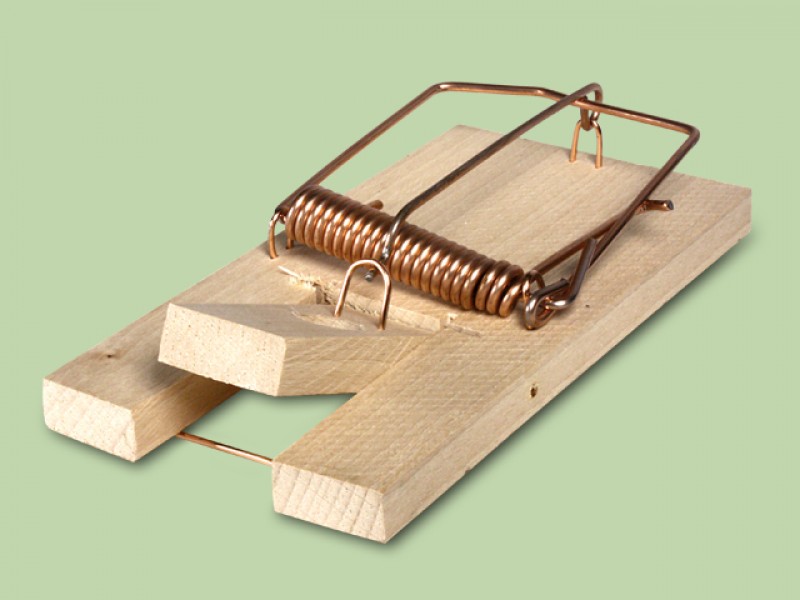
The Wood Rat Trap's easy-to-install design works at incredible speed.
Advantages:
- durable wooden base, resistant to deformation;
- does not require connection to electricity;
- compact, does not take up much space when stored;
- easy to use.
Flaws:
- does not always kill the rodent quickly;
- The wood is difficult to clean.
Weight: 175g
Dimensions: 20x80x165 mm
Price: from 180 RUR
Video: Unboxing a Wooden Mousetrap
Swissinno SuperCat rat trap
The SWISSINNO SuperCat mechanical trap is a trap with a pre-baited bait. The device is made of plastic. Thanks to a very strong spring clamp, the rodent has no chance of survival. Before setting the trap, open the jaws and remove the protective cap from the bait compartment. After catching the rat, hold the trap over a trash can and straighten the cap, causing the rat to fall into the container.
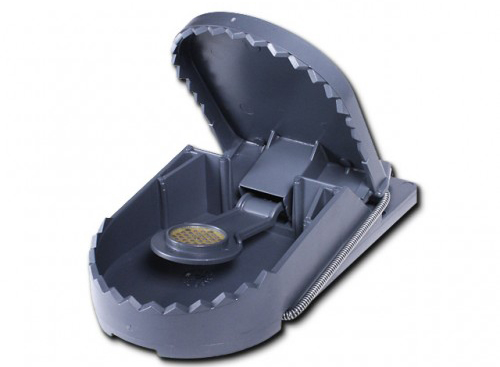
The SWISSINNO SuperCat rat trap is characterized by its quick response and effectiveness against rodents.
Advantages:
- the mechanism works with lightning speed;
- The gripping teeth quickly kill the animal;
- you can remove the rat without touching it with your hands;
- the device is easy to clean;
- the trap is easy to use;
- does not contain toxic substances;
- There are replaceable nozzles with ready-made bait available for sale;
- the shelf life is not limited.
There is only one drawback to such a mechanical trap: it can injure a child or a pet that accidentally gets caught in the trap.
Weight: 560 g
Dimensions: 20x10x15 cm
Trap price: from 650 RUR.
Price of replacement nozzles: from 500 RUR.
Video: Unboxing the Supercat Rat Trap
Victor Electronic Rat Trap
The Victor Electronic Rat Trap is a universal rat trap that delivers an 8,000-volt electric shock to rodents. It operates on four batteries, which are sufficient to kill 50 rats. Before setting the trap, the batteries are inserted and bait is placed. A built-in indicator light is integrated into the mechanism. When the device is activated, a green light illuminates, and when a rat is trapped, it receives a powerful electric shock that lasts for two minutes. The light then turns red, indicating the rat has been caught.
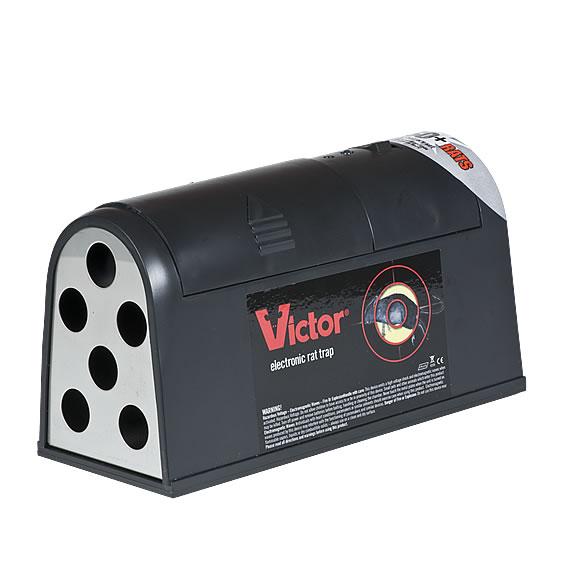
Using the Victor Electronic Rat Trap is the ideal solution for rodent control.
Advantages:
- efficiency and reliability;
- safety for humans;
- durability;
- ease of use;
- the ability to get rid of the carcass without touching it with your hands;
- unlimited shelf life.
Flaws:
- high price;
- large size.
Weight: 1 kg
Dimensions: 20x10x10 cm
Price: from 4,000 RUR
Gryzunoff is a glue trap for rats.
The Gryzunoff trap captures rats using glue. It's ready to use right out of the box. It consists of a small, ridged base containing a non-toxic adhesive. It's safe for humans and pets. Once caught in such a rat trap, the animal gets stuck and cannot escape.
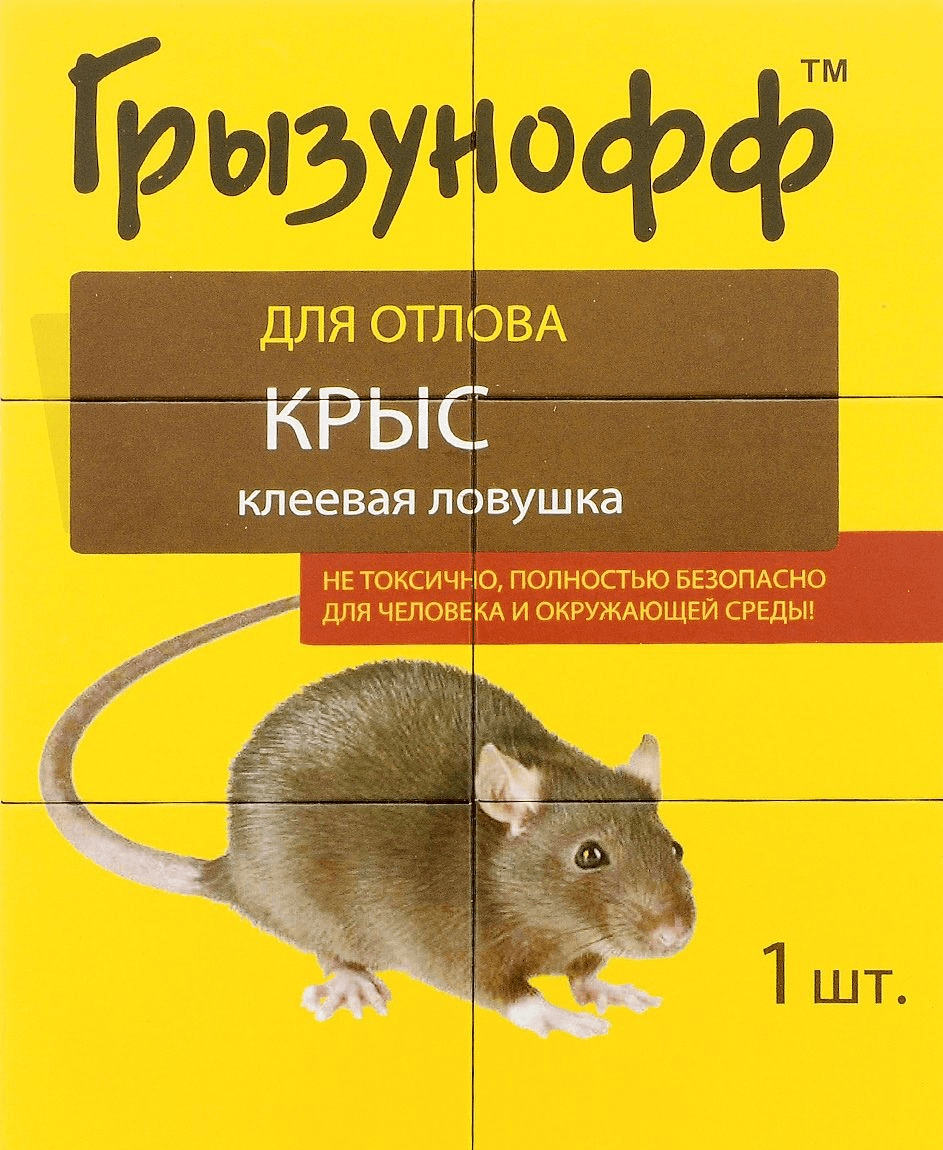
The area of application of one Gryzunoff rat trap is 10 sq. m.
Advantages:
- ease of use;
- low price (from 150 RUR).
Flaws:
- a captured rat dies slowly, suffering from dehydration, so you have to choose: finish off the animal yourself (which is also not very pleasant) or throw it in a landfill in this state;
- does not always keep rats out;
- Children and pets may step in the glue.
Swissinno rat trap
The safest and most humane device for catching rats is the Swissinno live trap. Bait is placed in the cage, and when the rat enters, the door slams shut. The animal suffers no injury. However, such traps should be checked daily to avoid death.
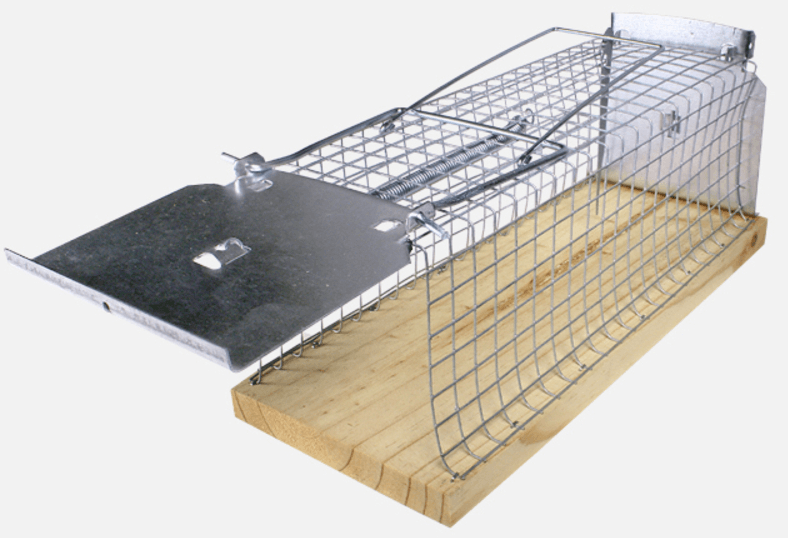
The Swissinno live rat trap is also suitable for large rats.
Advantages of a live trap:
- humane;
- durable;
- inexpensive;
- environmentally friendly.
This type of cage has only one drawback: it is bulky and takes up a lot of space.
Material: stainless steel, wood.
Weight: 470 g
Dimensions: 275x125x110 mm
Price: from 500 RUR
Which trap to choose?
With so many traps available, varying in effectiveness and price, choosing the right one can often be difficult. Professionals offer a number of tips to help you choose the right rat trap.
Helpful tips:
- If one or more rodents have appeared and there are no children or pets in the room, a rat trap or single-person live trap will help catch the pest. If budget allows, an electronic trap is worth considering.
- If rats appear in large numbers, you should set up a multi-place trap or strangler.
- It is recommended to use a product made of natural materials. If you choose a plastic device, make sure it is free of chemical odors.
How to make a rat trap yourself
If for some reason you can't buy a ready-made rodent trap, you can always try making your own rat trap using materials you have on hand.
From a flower pot
This rat trap is the simplest and most accessible. However, the pot itself must be large enough to completely cover the rat. If you don't have one, an enamel or tin bucket will do.
Step-by-step instructions for making such a trap are as follows:
- Prepare a high plastic bar. It should be large enough to allow the rat to easily enter the pot.
- We sharpen one side of the plank and place the bait on the tip. We point the sharpened edge inside the pot.
- We place the bar on its edge.
- We place a pot on top, with one side resting on the bar and the other on the floor.
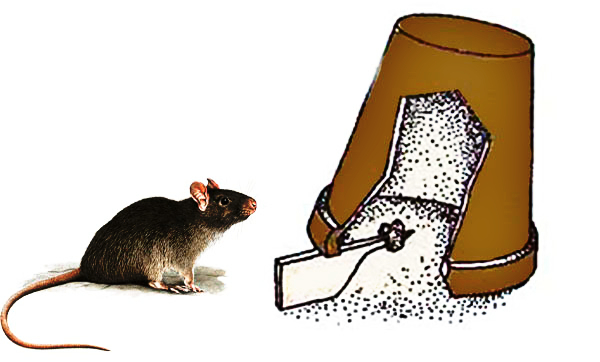
To create a home trap, you can use any similar container instead of a pot.
When the rodent grabs the bait, the bar falls, the pot descends, and the rat remains trapped inside.
Note: It's a good idea to place cardboard or plywood underneath the structure to make it easier to remove the animal.
From the bucket
To make a trap, you can use an old plastic or metal bucket, a sheet of cardboard, and some tape. Set up the rat trap as follows:
- A tunnel is made from cardboard and secured with tape.
- One half is placed on the edge of the table (it is advisable to secure it to the table with tape so that it does not move), and the other should hang down.
- A bait is placed at the edge of the tunnel.
- A bucket is placed under the hanging half of the cardboard structure.
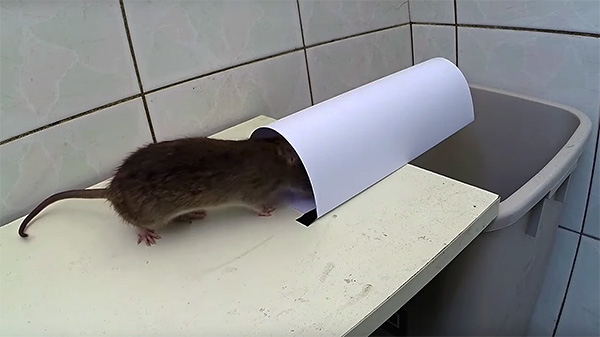
To create a rat trap, you can use a piece of wide plastic pipe instead of cardboard.
When the rat smells the bait, it will follow it into the tunnel and, having reached the edge, will fall into the container.
Video: How a rat trap made from cardboard and a container of water works
Note: Before placing the bucket, it's a good idea to fill it with water. This will ensure the rat doesn't escape the trap.
From a plastic bottle
To catch a large rat, use a 2-5 liter bottle and follow these steps:
- The top of the bottle is cut off, but not all the way, so that it can be opened slightly.
- A long rod is secured to the bottom of the cut-out opening. A cord is attached to it, which serves as a spring.
- A hole is made near the bottom of the bottle. A hook with bait attached to it is attached.
- The door that is made is pulled to the top of the bottle itself and, as soon as the rodent pulls the treat, it slams shut.

The traditional version of the bottle trap is very easy to make.
Electric homemade rat trap
To make an electric trap, we'll need plexiglass, wood, a fork with wires cut from an old appliance, and the following steps:
- We're building a house. The top and bottom are made of wood, the rest is made of plexiglass.
- An exit is created in one wall, and long grooves are drilled in the other two, located parallel.
- A glass plate is inserted into them. It should slide easily in the grooves.
- Another gap is made on the door side. Two bare wires are passed through it, crossed over each other.
- They are led to the trap door.
- The bait is placed inside.
As a result of these simple actions, the rat falls into a trap, where it is killed by electricity.
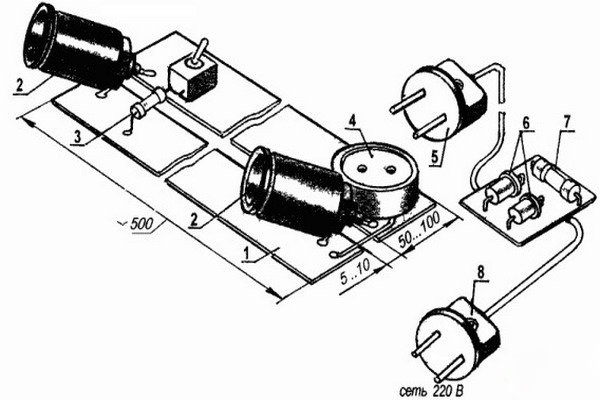
An electric trap can be made by people who have at least some knowledge in this area.
Noose
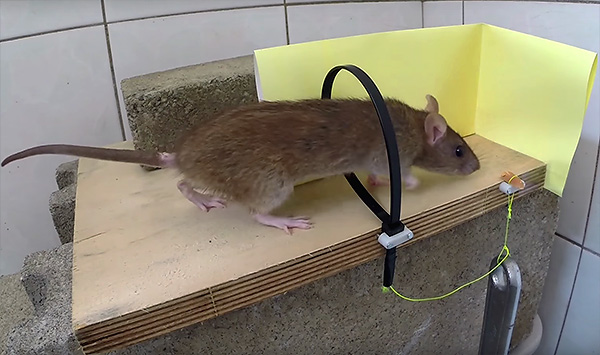
Making your own noose rat trap is easy.
To make a noose we will need:
- rubber band;
- a piece of strong thread or fishing line;
- wooden plank;
- load (wrench, hammer);
- bait.
Step-by-step instructions:
- We make a loop from a rubber band that should tighten easily.
- Attach the noose to the edge of the board. The end of the ribbon should hang down.
- We attach the bait to the edge of the board so that, when approaching it, the rat runs through the loop.
- We tie the bait with a thread, one end of which is tied to a weight, the other to a noose.
- When the animal grabs the bait, the weighted object drops sharply, and the noose around the rodent's neck tightens.
Video: How a rat trap works
https://youtube.com/watch?v=Uo_i2mZIFqM
Which bait to choose?
Rats are very fond of animal products. Therefore, the following baits are suitable for traps:
- fish;
- sausage;
- ground meat;
- salo;
- cheese;
- egg.
Make sure the bait has a strong odor. This will attract the rat and make it want to eat the treat, overcoming its fear. Smoked foods (sausage, cheese, lard) are excellent for this purpose.
Note: When handling bait, keep in mind that you shouldn't touch it with bare hands, as the human scent repels rodents.
If the bait remains untouched for several days, it should be replaced with something else.
User reviews of the most effective rodent control products
I've been plagued by rats at my dacha; I've tried everything. I started with poison, and the rats gained noticeably more weight. The people selling the poison explained that the rats need to be kept away from water after they eat the poison (I wonder how), but I don't think that's feasible. Ultrasonic repellents had no effect on the rats at all. Battery-powered rat traps also didn't work. I immediately rejected glue because I'd have to kill the mice and rats myself. Getting a cat is out of the question since no one lives in the house full-time. The only thing left is an old mechanical trap. It couldn't be simpler. You put out the bait, pull the lever, and that's it. Just wait until you hear the thud. It's unpleasant to clean up the dead rodents, but there's nothing else I can think of. This rat trap is very powerful and not at all safe. You need to be extremely careful when using it; you might not break a finger, but you'll remember it for a long time. Keep children away. After using three pieces for three months, the number of rats decreased significantly.
I used ultrasound at my dacha, and the experience was positive. And this isn't the first advice I've given here. So, we're buying the "Tornado" ultrasonic rat and mouse repeller—frequency range 18–70 kHz. Coverage area 200 m2. Price: 1,700 rubles. Or the imported ATTACK WAVE PESTREPELLER (LS-927) for 1,400 rubles. Or the UZG Spektr-Sigma rodent repeller, frequency range 15–90 kHz (you should get it), price: 3,900 rubles. The device should run continuously for the first three weeks, then take a week off and then do maintenance again. It worked for us.
In the old days, people used glass to control rats and mice. They'd crush it finely and sprinkle it on the path. The creatures didn't like the idea of their bare paws on glass, so they'd leave. I've replaced the glass in these cases more than once in my life with good, crunchy fiberglass wool. The kind that makes you scratch and leaves glass dust on you. You have to be careful with that kind. It's usually used to cover heating pipes outside. Cement plugs for mouse/rat holes are rubbish. They even went up to the 7th floor and made a hole through the heating pipes into the room. They need wool and glass.
Knowing how to make a trap yourself will make rodent control a breeze. If you're having trouble getting rid of rats yourself, you can try using an ultrasonic repeller or contacting a specialized service.