Every owner of a summer cottage or private home sooner or later encounters uninvited guests on their property—insect pests, rodents, or, most unpleasantly, snakes. Therefore, it's important to know how to deal with them and protect your property from infestations.
Content
Where do snakes come from in the area?
Snakes are just as unenthusiastic about being around people as we are about them. They may have been living on the property long before the house was built. But sometimes these animals are brought in along with building materials. And they're reluctant to leave the property, as the conditions humans create for their own comfort are also attractive to snakes: food pantries, warm, humid saunas, and decorative stone structures. Rodents and garbage cans on the property are another reason for the appearance of these creepy crawlies.
In private property you can find:
- Grass snakes are black, easily identified by the two yellow spots on their heads. They are non-venomous and shy.
- Copperheads. They typically have a copper tint and black "arrows" under their eyes. They are mistakenly called poisonous.
- Snakes. They are impressively large (up to two meters) and have stripes along their bodies. They can be aggressive and can attack, but their bite is not fatal.
- Vipers are the most dangerous snakes. They can be identified by the zigzag pattern on their backs. They don't attack without provocation, but they dislike unexpected situations and inject venom along with their bite.
Photo gallery: types of snakes living in a summer cottage or house
-
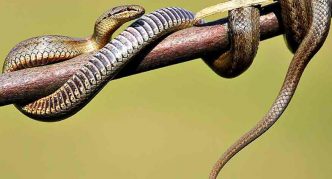
- The copperhead is a snake that is mistakenly considered venomous.
-
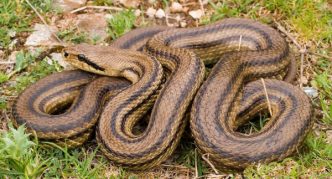
- The racer is a large, aggressive snake.
-
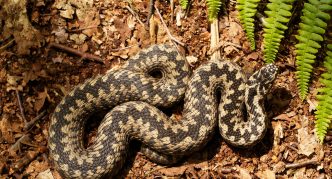
- A viper is a snake whose venom is dangerous to humans.
-
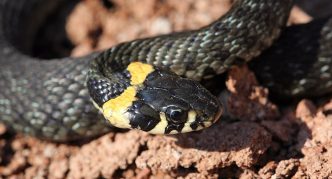
- A grass snake is a small, timid snake.
How to get rid of snakes
You can't call such creatures peaceful neighbors. Folk and industrial remedies are used to drive them away from the property.
Folk methods
Try placing natural repellents around the perimeter of your property or near the snake's nest. Make sure it has somewhere to escape beforehand. Don't fence the perimeter if the snake is still present. Use:
- Sound repellents - rustling film, plastic pinwheels and bells.
- Smell: sheep's wool, kerosene, burning garbage, grass or car tires, dry mustard, naphthalene, herbicides, saltpeter, diesel fuel. Some of these products are harmful to humans and pets, so use them with caution.
Do some renovations or mow the grass. This will create noise and scare away the snakes.
Another option is to prepare bait from strawberries or milk and wait for the snake to appear. Then, catch it and carry it away from the area, or take a more drastic approach and remove the predator with a hoe, shovel, or other sharp tool.
If you find snake skin on your property, remove it as far away from residential areas as possible, as it has an odor and attracts other snakes. Do not handle it without gloves.
Chemicals
There are ready-made reptile control mixtures available at the store, including Dr. T's granules, Havahart 6400 Snake Repellent, Sweeney's 5200, and others. These remedies alone rarely provide 100% results, so it's best to combine them with natural remedies. Before using the drug, carefully read the instructions to ensure it is used correctly and does not cause harm to your health.
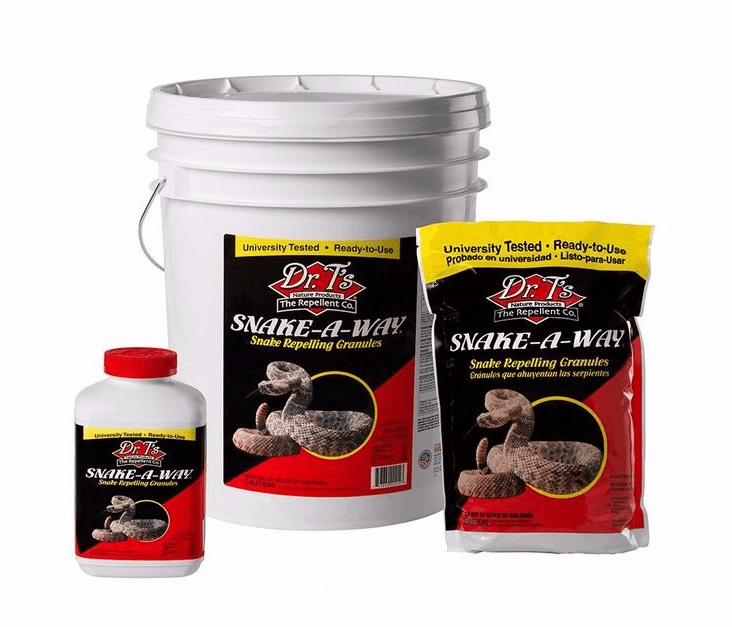
It is better to combine chemical snake repellents with folk remedies
Snake repellents
To repel reptiles, use specialized devices such as EcoSniper, YOCHOMI, Ultras, LS, and Solar. They emit vibrations of varying frequencies, which trigger a sense of danger in snakes.
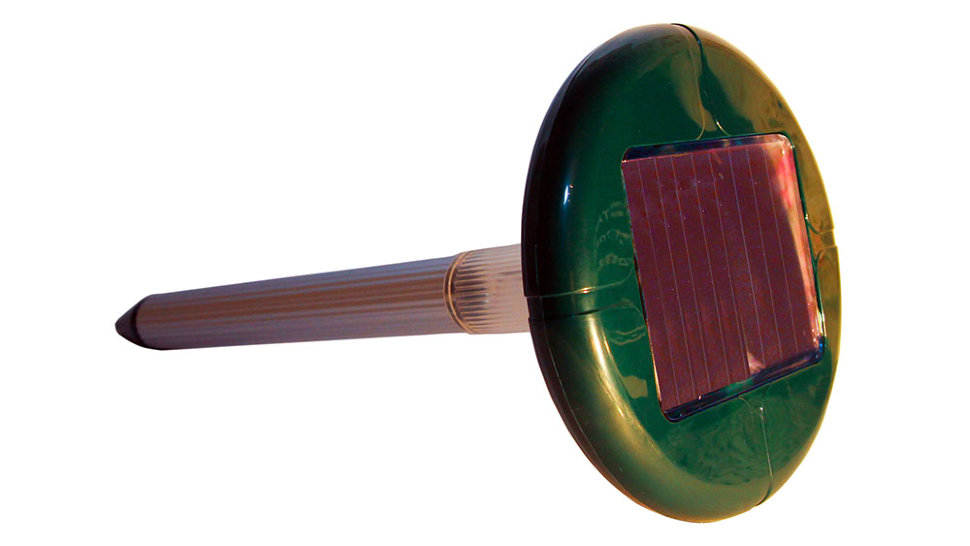
The vibrations produced by the repeller make snakes feel threatened.
There are repellents that only work on snakes and do not have a negative impact on other animals, but most will rid you of many types of pests. When installing devices in an area where snakes already live, it is best to stay outside the area for two or three days, as the reptiles will be aggressive.
Video: Herpetologists test repellents
What animals are snakes afraid of?
One of the main enemies of snakes are hedgehogs. They also hunt small animals—mice, rats, toads, and lizards. Berries can be used to lure this prickly friend to your property. Any cat or dog can act as a territory guard, as long as they're willing to hunt. Their mere presence on the property is a deterrent for snakes. People have bred dog breeds specifically to fight snakes, such as Jagdterriers and Australian Terriers.
Photo Gallery: Animal Hunters
-

- Hedgehogs are the scourge of snakes
-

- A cat may bring a snake to its owner to show off its catch.
-

- Jagdterriers were bred to hunt snakes.
How to prevent snakes from appearing on your property
To prevent dangerous neighbors from appearing again, take a number of preventative measures:
- Maintain order in the area: do not dig garbage pits directly on the site, do not leave leaves and branches in piles for a long time, get rid of garbage, do not allow overgrowth to spread;
- stack the firewood tightly against each other so that there are no gaps, and sort through it periodically;
- Seal holes in the house, adjacent buildings, and roots of large trees;
- prevent the spread of mice, rats and moles, which snakes feed on;
- Treat the perimeter with one of the repellents.

To prevent snakes from appearing on your property, keep the area tidy.
What to do if bitten
If a snake attacks, do not panic and follow clear instructions. Although viper venom is dangerous, it rarely leads to death.If bitten by any snake, follow these steps:
- Call a doctor or take the victim to the hospital. The specialist will administer the necessary antidote to neutralize the poison.
- Get rid of the snake. If possible, take a photo of it or note its coloration to report to a medical professional.
- After a bite, lie down and move as little as possible to prevent the venom from spreading throughout your body and increasing your heart rate. The affected area should remain still. Bend your leg or arm, and place your head lower than your body to facilitate blood flow.
- Suck out the venom by pressing on the edges of the damaged area. Do this for 15 minutes. Make sure there are no wounds in your mouth, otherwise the poison will enter your bloodstream.
- Cauterize the wound, but not with alcohol (or other alkaline-containing liquids), but with iodine or brilliant green.
- Drink plenty of water to help flush the poison out naturally. Tea, coffee, alcohol, and other liquids that increase heart rate are prohibited.
- Take antihistamine tablets - Suprastin, Diphenhydramine or Tavegil.
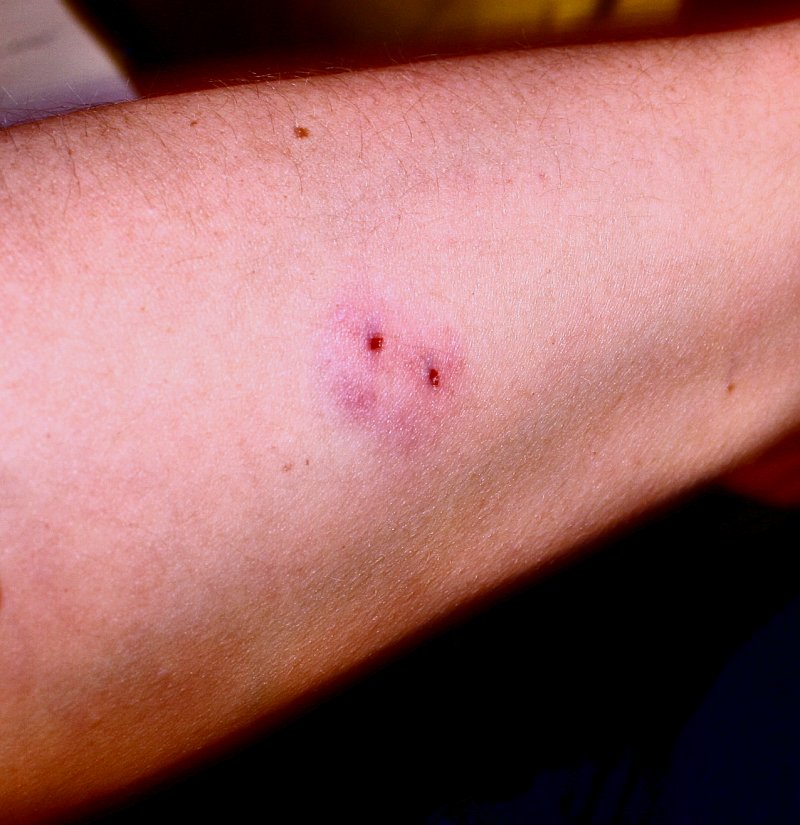
If you are bitten by a snake, it is advisable to consult a doctor immediately.
Advice from experienced travelers
Snakes (like mice) really dislike ordinary wood ash. If you sprinkle ash around the perimeter, they associate the area with a fire. And no one likes fires. Furthermore, ash is an olfactory irritant.
I'm personally 100% certain of their (repellers') ineffectiveness, and according to reviews, they're more effective against rodents living in burrows beneath the surface than against snakes crawling above. I admit they could force a viper that's taken up residence in a burrow to "leave its habitat," as advertised, but if a viper takes up residence on your property, you can force it to "leave its habitat" with a shovel. The problem is migratory snakes. They certainly won't protect against a migratory snake, meaning one that's already left its habitat and is crawling somewhere along its own known snake path (for example, against the same repeller on a neighboring property).
The best way to keep snakes out of your property is to keep it clean and free of food. This will discourage them from crawling onto your property. Another way is to plant as much mint as possible, as snakes dislike the smell of mint.
Snakes are common visitors to private property. If you maintain the area and take preventative measures, they won't bother you. If a reptile is already on your property, handle it with care and try to remove it humanely. It's not just a pest, but also a vital part of the ecosystem.