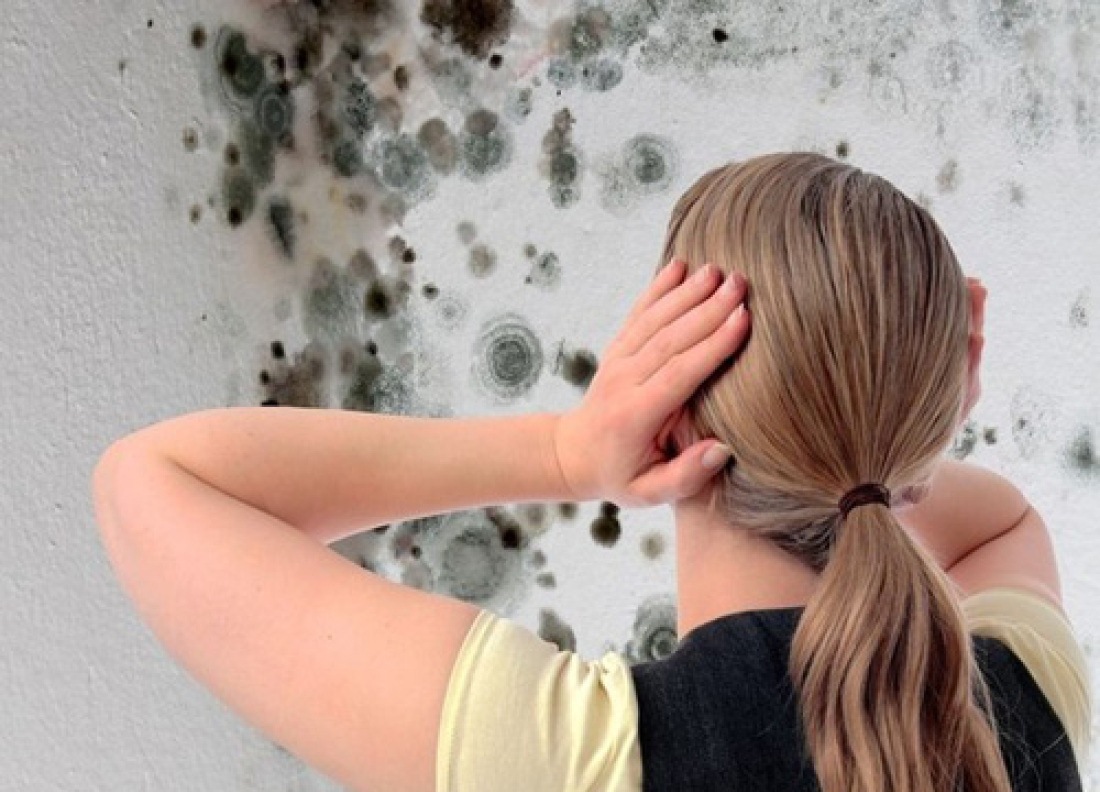
Every home has its own unique aroma. But sometimes the pleasant smell of baked pies or the light fragrance of fresh air is suddenly mingled with an unpleasant, and sometimes dangerous, hint of dampness and mustiness. This is a clear sign that mold has taken hold. The homeowner will have to make every effort to rid the home of this unhealthy presence and restore its cozy scents.
Content
Causes of moldy odor
A musty odor typically develops in areas with high humidity due to lack of light and insufficient air circulation. Naturally, it doesn't arise naturally, but rather with the growth of mold spores. Even if it seems that there is no mold in the house, the smell indicates the opposite.
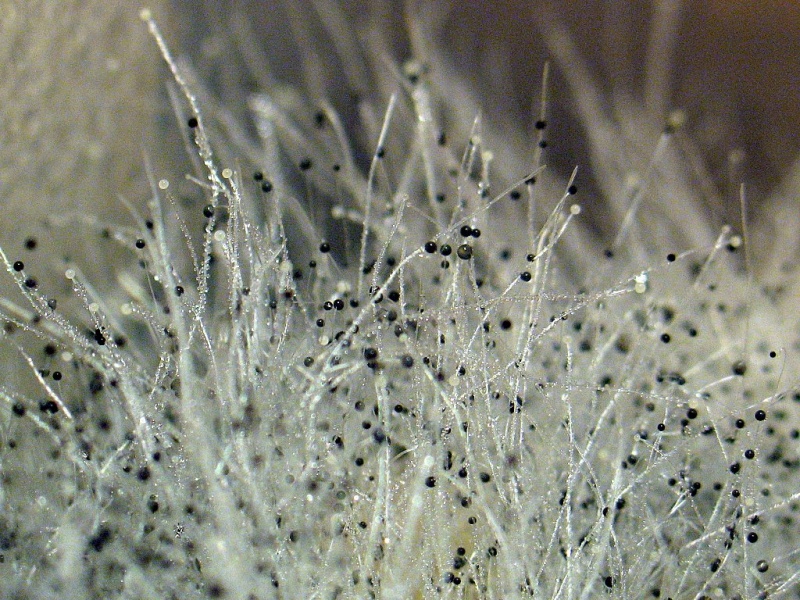
Mold can cause dangerous diseases in humans and pets.
Causes of mold
There are only two main reasons why mold might settle near you:
- excess humidity in the room or in certain areas of it,
- insufficient ventilation.
In a damp, unventilated environment, mold grows quickly, appearing on clothes, furniture, and any household items. There's no point in trying to combat the odor alone—it's necessary to eliminate its source, which means eliminating the entire mold colony.
Folk remedies and household chemicals against mold
There are various methods for effectively combating mold, including a whole arsenal of folk remedies and household chemicals. However, different approaches are needed for different surfaces and materials.
Folk remedies
Traditionally, folk remedies for combating mold include:
- copper sulfate: 1 kg per 10 liters of water, it is possible to prepare such a solution with the addition of 2 liters of acetic acid, then 0.5 kg of copper sulfate is added to the same amount of water;
- ferrous sulfate: 1.5 kg per 10 liters of water, and you can also prepare a combined aqueous solution by adding 0.5 kg of copper and ferrous sulfate to 10 liters of water;
- sodium fluoride: 1 kg per 10 l of water, variations with acetic acid are not recommended in this case;
- Hydrogen peroxide is usually used in its pure form: it is sprayed on the affected areas and then washed off with water;
- ammonia is diluted with water in a 1:1 ratio, after treatment the solution is left on the affected area for 2 hours, after which it is thoroughly wiped with a wet sponge;
- Table vinegar is used in its pure form: spray it on the area with fungus, leave it for 2 hours, then wipe the surface, and after 10 days repeat the treatment;
- laundry soap: wipe the moldy area with a soapy sponge and leave for 1–2 hours, then rinse with warm water;
- lemon juice: to fight mold, simply apply it to the infected surface;
- Baking soda: dilute 1 teaspoon in a glass of water. After treating the area, rinse the soda solution with water and reapply. Re-treatment does not require rinsing with water, as baking soda prevents new mold growth. However, it is only effective on small moldy areas.
Video: Testing Home Remedies for Bathroom Mold
It's important to remember, however, that folk remedies aren't always as effective as homeowners might hope. Specially developed products and formulations often prove more effective.
Household chemicals
Antiseptics and specialized chemical compounds are more expensive, but also more effective, methods for combating mold and its odor. They have antiseptic and antifungal properties. These solutions are typically made with creosote, white spirit, or turpentine. Each surface type requires its own antiseptic.
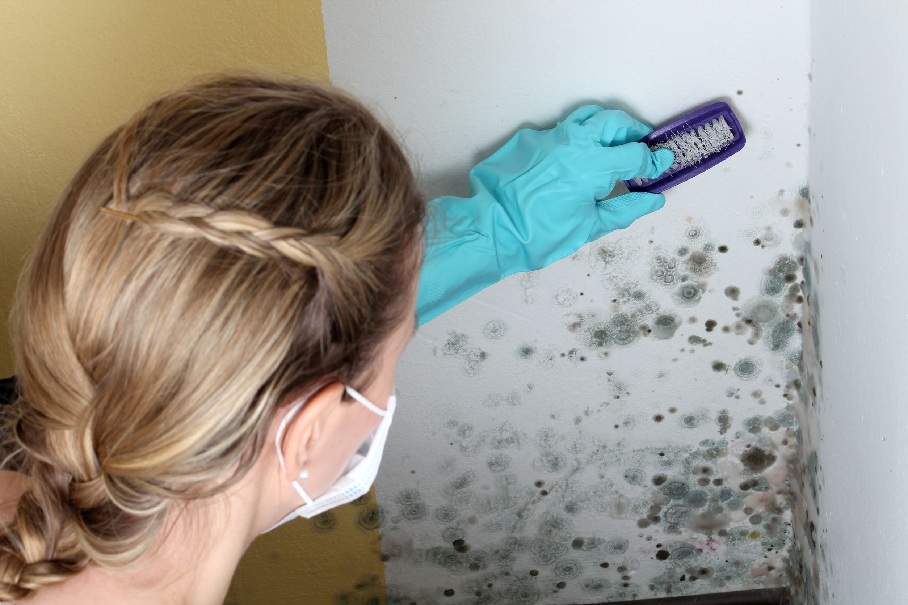
When fighting mold, you need to carefully treat surfaces with special products.
According to consumer reviews, the following products have proven themselves to be effective:
- Olimp Stop-Mold is a special white product for use on porous mineral surfaces (stone, brick, plaster, etc.). It effectively combats fungus and odors, but mold reappears after a while, requiring repeat treatment.
- Fongifluid Alpa is suitable for all surfaces, does not leave stains, and is available as a spray.
- Dali Universal Antiseptic is suitable for both indoor and outdoor use and effectively combats mold, but it has a very pungent odor.
- Antifungal - effectively removes mold and simultaneously combats mold stains, lasting for 100 days, after which re-treatment may be required.
- MILKILL emulsion is a special antiseptic primer used both as a preventative and to combat mold. It is suitable for use in temperatures above freezing.
In addition to the antiseptics mentioned above, there's a wide range of other industrial products available. New products are constantly being developed. To avoid confusion, simply ask a sales associate at a hardware or construction store, and they'll help you choose the right product.
Getting rid of mold in your home and car
Mold and its unpleasant odor in an apartment can be quite difficult to combat. First, it's necessary to identify the source, then carry out preliminary cleaning and a series of preparatory steps.
The walls of the apartment
First, ventilate the room well and then thoroughly inspect the room for the source of the dampness. This could be a leaky pipe, a crack in the wall allowing moisture to penetrate, or a surface where condensation constantly accumulates.
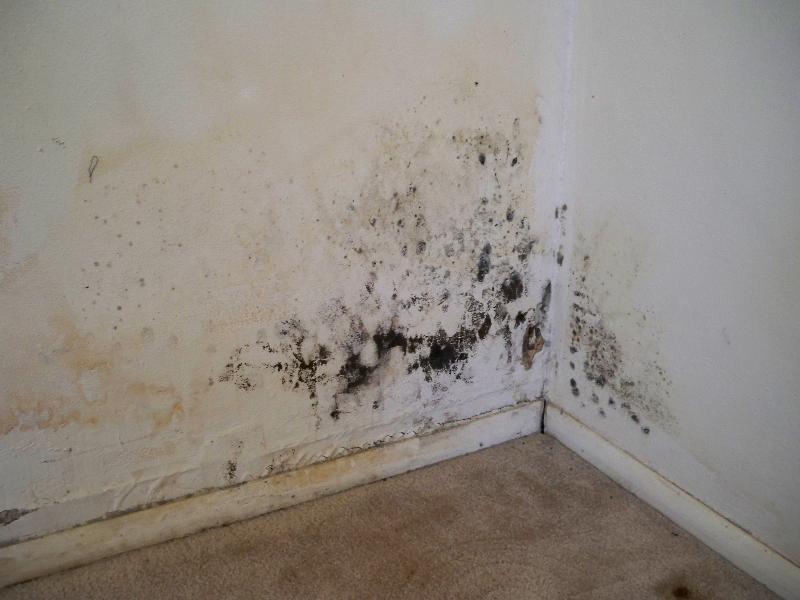
Mold on walls threatens the health of household members
Ideally, you should clear the room of furniture. If mold has appeared on wallpaper or plaster, you'll need to remove all affected decorative elements and materials, otherwise the mold colony may reappear over time.
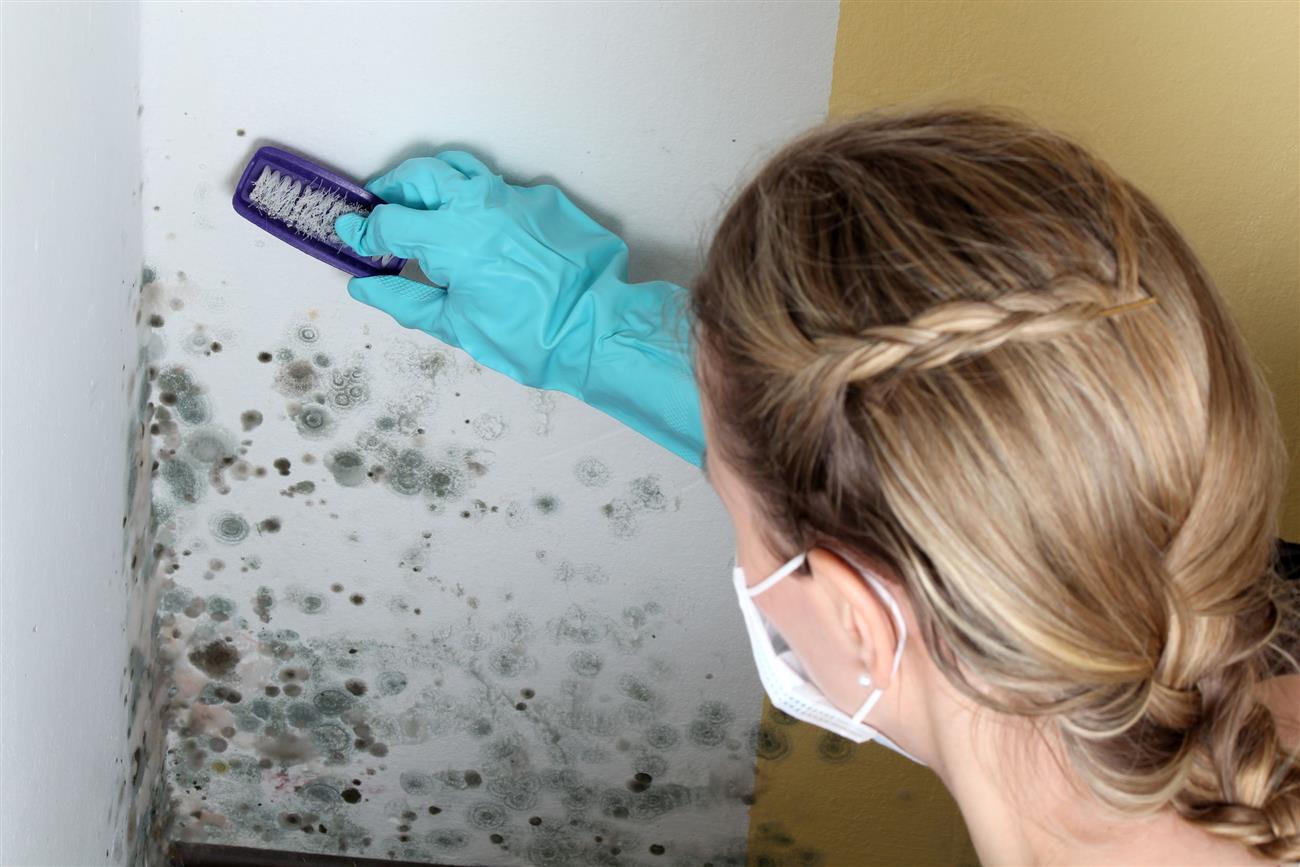
Once all preparatory work is complete, you can begin the process of removing mold and its odor. This process must be carried out while protecting yourself as much as possible from both the fungus and the pungent odors of the products used. Therefore, it's important to wear gloves and a respirator, and ensure there's plenty of fresh air in the room while working.
Furniture
In a damp, unventilated room, there's a high risk of mold infestation not only of the walls, ceiling, and floor of the home, but also of furniture within. A steam generator, suitable for both wood and fabric, is very effective in removing mold. After steaming, it's recommended to wash cabinets, chairs, and sofas as usual and then treat them with antifungal solutions or folk remedies. However, while harsh solutions are used on walls, gentler folk remedies are better suited for furniture:
- hydrogen peroxide,
- vinegar,
- borax,
- ammonia,
- baking soda,
- ground coffee.
Chlorine-containing bleaches (Belina, Domestos) and other brands of disinfectants are also actively used.
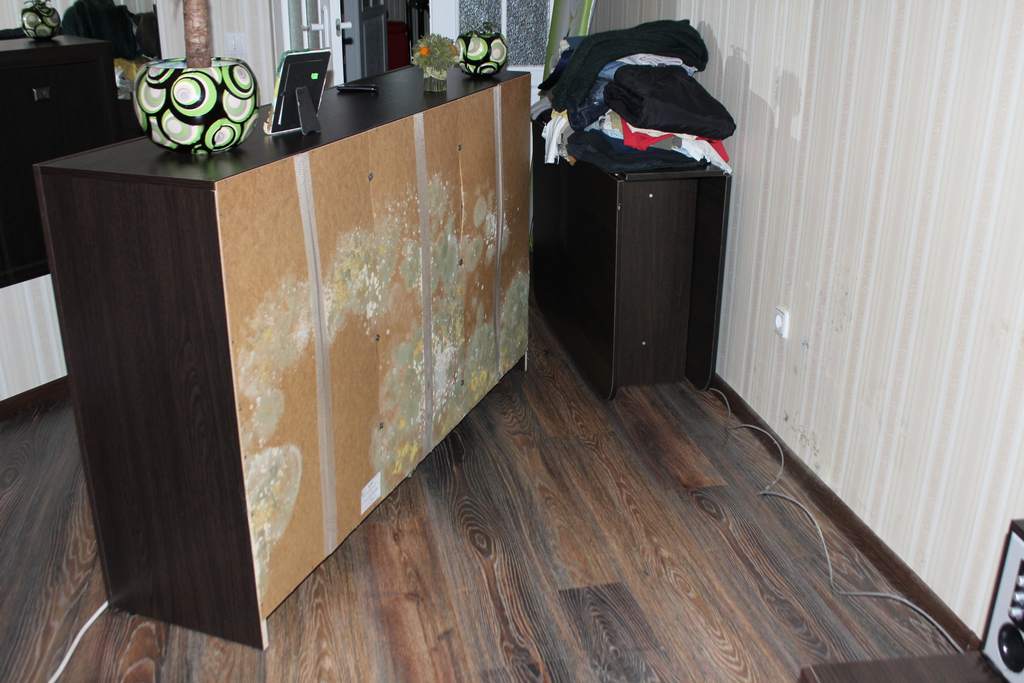
To eliminate mold on furniture, it is better to use more gentle products.
Removing mold from wooden furniture
To remove mold and mildew odor from cabinets, chair surfaces, wooden sofa parts, and other items, you must first wash them thoroughly, then treat them with a special solution, and then dry them thoroughly. Folk remedies or specialized chemical solutions are quite effective for use on furniture. However, mold often affects more than just the surface: its spores penetrate much deeper than the top layer. In this case, you will need to sand the affected area, then apply a special primer and varnish. It's best to use a primer containing an antifungal component.
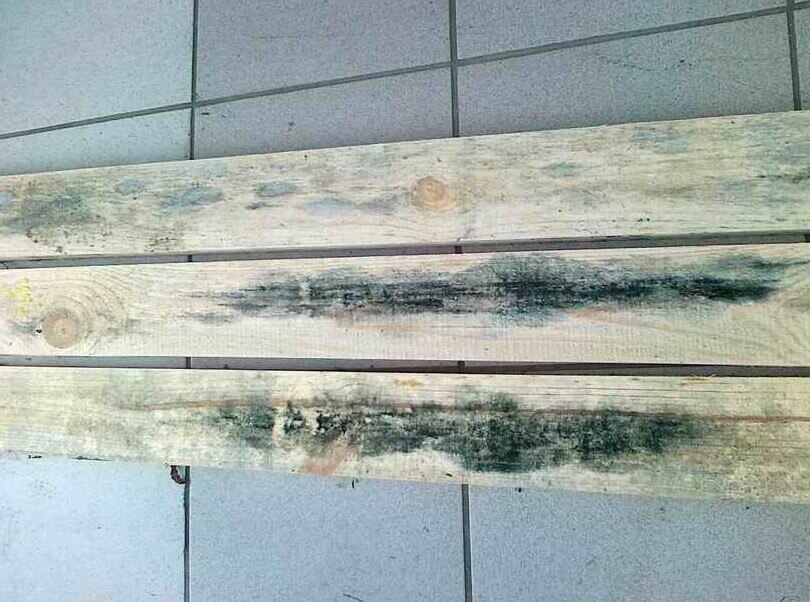
Mold spores penetrate deep beneath the surface of wood products
It's best to work outdoors to avoid spreading mold spores indoors. If this isn't possible, the procedure should be carried out in a well-ventilated area. Wearing protective equipment, such as a respirator and gloves, is essential.
After treatment, thoroughly dry the furniture before using it. If mold has infected a cabinet, after drying and before filling it with items, it's a good idea to place containers of salt inside to absorb excess moisture. Any other suitable absorbent can be used. Ground coffee is particularly popular, as it not only absorbs excess moisture but also fills the cabinet and its contents with a distinctive, invigorating aroma. Naturally, the containers containing the absorbent should be replaced at least once a month.
Removing mold from upholstered furniture
To remove mold from upholstered furniture, first vacuum it to remove dust and dirt. Then apply an antifungal solution (either homemade or store-bought) to the fabric upholstery, paying particular attention to areas affected by mold. The furniture is left for a while, then washed with specialized detergents and left to dry.
When using bleaching compounds, test them first on a small, inconspicuous area. If the fabric is damaged or the color changes, select another, less aggressive product.
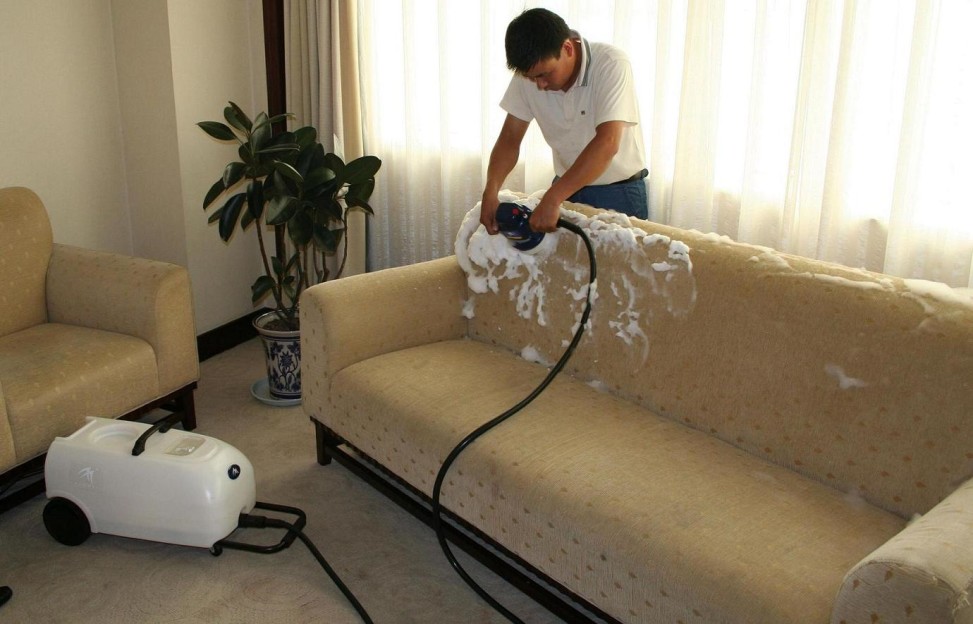
Removing mold from upholstered furniture can be difficult.
Washing machine
To get rid of mold and its odor in the washing machine, both folk methods and household chemicals are used.
- Add chlorine or citric acid containing products to the powder container, then start the longest wash cycle without laundry at high (from 60 OC) temperatures.

Citric acid and vinegar are useful for cleaning mold from a washing machine.
- Approximately halfway through the cycle, the program is stopped and the machine is left to stand for half an hour to an hour and a half, after which washing is resumed.
- After washing, it is recommended to add regular table vinegar to the fabric softener tank and run the machine in rinse mode.
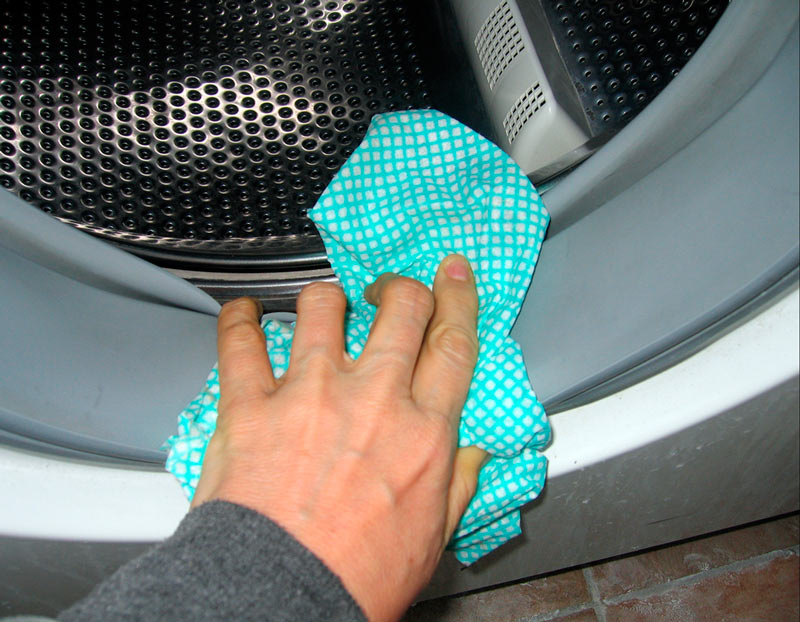
- The final cleaning is carried out by thoroughly wiping the entire interior of the machine (including the rubber seals) with a dry cloth. Then, let the machine dry, leaving the door and all containers open.
After finishing the treatment, the washing machine must be wiped dry.
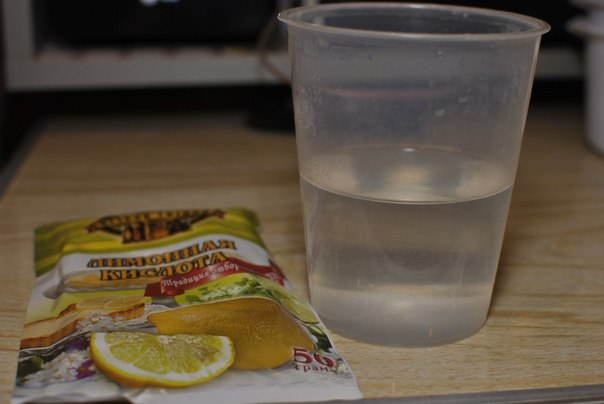
Baking soda is effectively used on small areas affected by mold. It is diluted with water to form a paste, then applied to the affected areas, rinsed, and left to dry.
To prevent mold from reappearing in your machine, it is recommended to periodically run an empty wash with citric acid at high temperatures. Using high temperatures when washing, wiping the machine dry after use, and airing it out also help prevent the appearance of harmful mold and its odors.
Fridge
If a moldy odor appears in your refrigerator, remove all food from it as quickly as possible and identify the source of the unpleasant odor. Since mold spores may be invisible to humans at the initial stage, the entire unit must be treated.
All food items will need to be inspected for suitability. Any items that are in doubt about their freshness should be immediately thrown in the trash. Safe food should be temporarily moved to a cool room or a special container filled with ice.
After defrosting the refrigerator, remove all removable shelves, awnings, and drawers. Beforehand, prepare a special solution in the bathroom with detergent and vinegar, and soak all refrigerator parts in it for a while. While the parts are soaking, thoroughly clean and disinfect the inside of the refrigerator. For this purpose, you can use:
- chlorine-containing substances,
- special antiseptics for the refrigerator,
- hydrogen peroxide,
- table vinegar,
- baking soda,
- citric acid,
- ammonia.
When cleaning and treating the refrigerator, pay special attention to the drain hole. High humidity inside can create a breeding ground for mold. After cleaning all surfaces, thoroughly clean the refrigerator, then ventilate and dry.
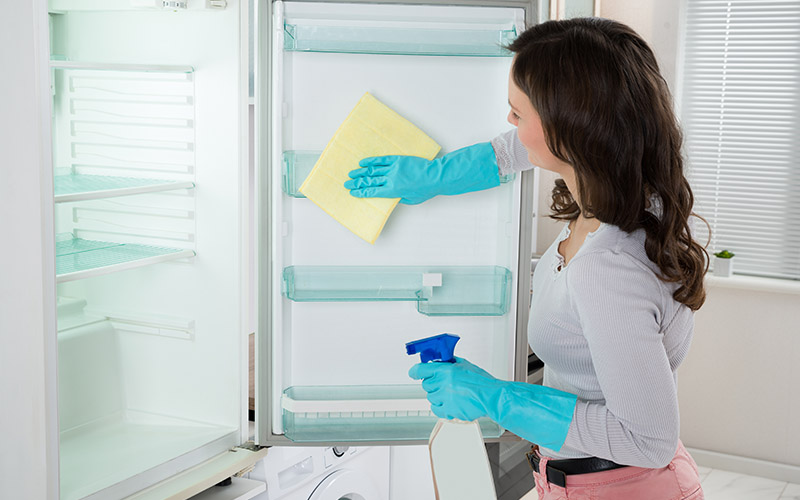
To prevent moldy odors from appearing in your refrigerator, you need to keep it clean all the time.
After cleaning the refrigerator itself, thoroughly wash and rinse all its removable parts. Then wipe them dry and return them to their original locations.
To completely eliminate mold odors, place slices of black bread or a few activated charcoal tablets in the refrigerator. Silica gel packets can be used to reduce humidity in the refrigerator. All absorbents should be changed at least twice a month.
Automobile
If you notice a moldy odor in your car, as with all other situations, it's important to identify its source. Mold most often appears under floor mats or on car seats. Once you've located the mold, you should first thoroughly dry the car with the heater on full blast. If mold is found under floor mats, they should be thoroughly washed, treated with an antifungal solution, and dried.
The same solutions used for furniture or products from a special line of household cleaning products for cars can be used. After treating the mats, they are left to dry, and the mold-prone areas in the car's interior are treated in a similar manner and then dried.
If mold is found under the seats or on the upholstery of the seats themselves, pre-treatment with steam, followed by treatment with a solution, washing, and final drying of the interior is very effective.
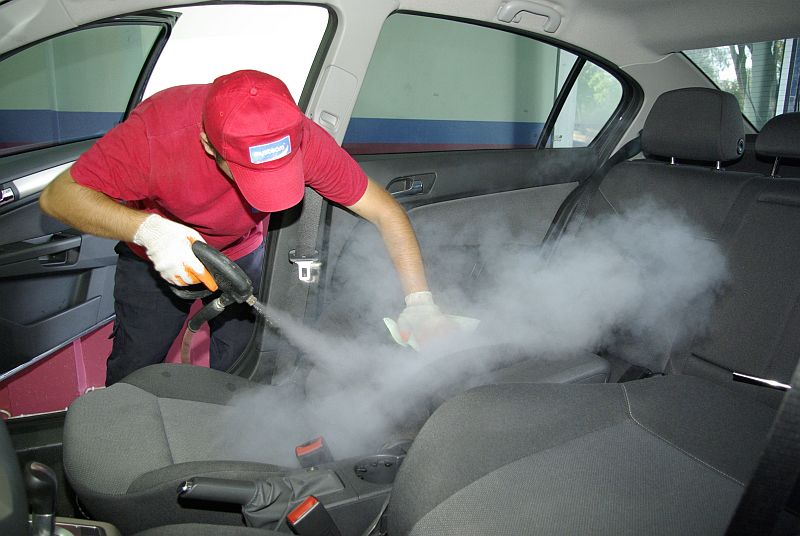
Steam cleaning is very effective against mildew on car seats.
The main difficulty is that car owners often can't detect the source of the unpleasant odor or completely eliminate it on their own. Professional interior cleaning with antifungal treatments may be more effective.
Whether you remove mold yourself or have it car washed, you also need to eliminate the source of the moisture. You may need to replace the door and trunk seals or repair a faulty air conditioning vent system. Incidentally, the latter malfunction is often the cause of fluid accumulation under the front seat mats.
Using car air fresheners is extremely ineffective in combating the smell of mold; they only temporarily mask the odor, which will reappear again and again until its cause is eliminated.
Clothes and shoes
A moldy smell on shoes and clothing occurs when items are stored for long periods in damp conditions or in closets and rooms already infested with mold. Once mold reaches these items, it spreads rapidly and can cause irreparable damage.
Mold and its smell on clothes
If you discover mold or mildew odor on your clothing, you must immediately remove the source. First, remove all clothing from the closet and treat both furniture and clothing.
If isolated areas with dark or whitish mold stains are found on clothing, treat those areas first. Different methods apply to different types and colors of fabric.
- Wool or silk fabric can be wiped with turpentine, then the affected area can be sprinkled with regular baby powder and ironed through a sheet of paper.
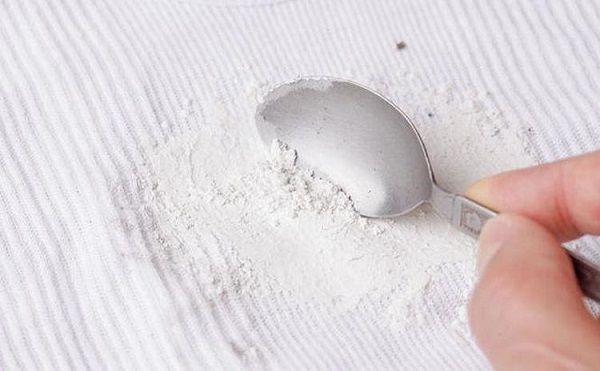
- Sprinkle cotton fabric with regular chalk and then iron it through a napkin. Lemon juice or vinegar can be used instead of chalk. The treated area is then sprinkled with salt and left to dry completely.
It is recommended to sprinkle chalk on mildew stains on cotton fabric.
- Colored fabric can be treated with ammonia diluted with water in equal proportions.
- White fabric is treated with bleach or hydrogen peroxide.
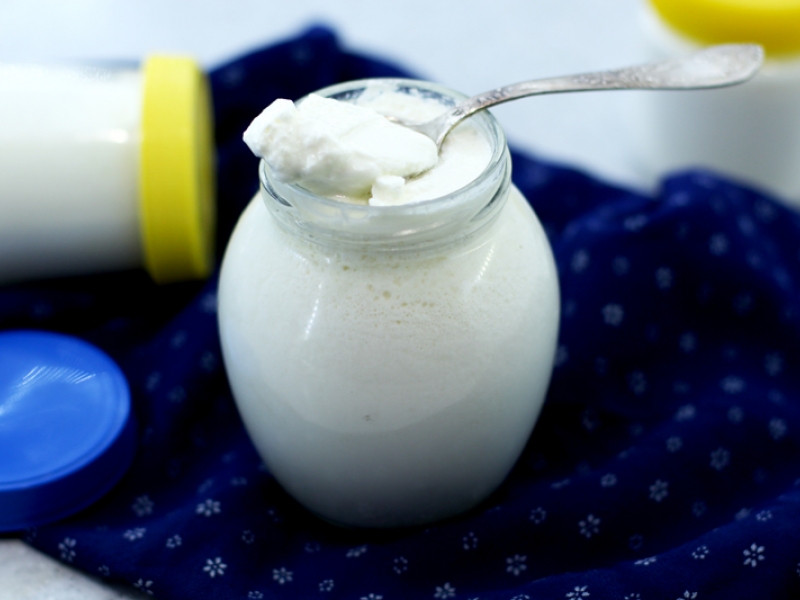
- A folk method of treating mold stains with onion juice or regular yogurt is suitable for all types of fabric.
Sour milk helps get rid of mold on all types of fabrics.
- If the mold infestation is large or if you simply want to get rid of the odor without any mold-affected areas, soak the foul-smelling item in a soapy solution of vinegar and household laundry detergent: dilute one tablespoon of each in a liter of warm water.
After any treatment, the item must be washed as usual and then dried, preferably outdoors. After drying, iron the garment at the highest temperature allowed for the fabric.
Mold and its smell on shoes
Removing moldy odor from shoes is much more difficult. At a minimum, you need to discard the old insole. Afterwards, thoroughly wash the shoes inside and out. Using a steam cleaner makes the process much easier. Next, you can sprinkle ground coffee into the shoes and leave them for 24 hours, add a few drops of essential oil, or treat them with shoe deodorizer. After thoroughly drying, insert a new insole and wipe the surface with a cloth soaked in a weak vinegar solution.
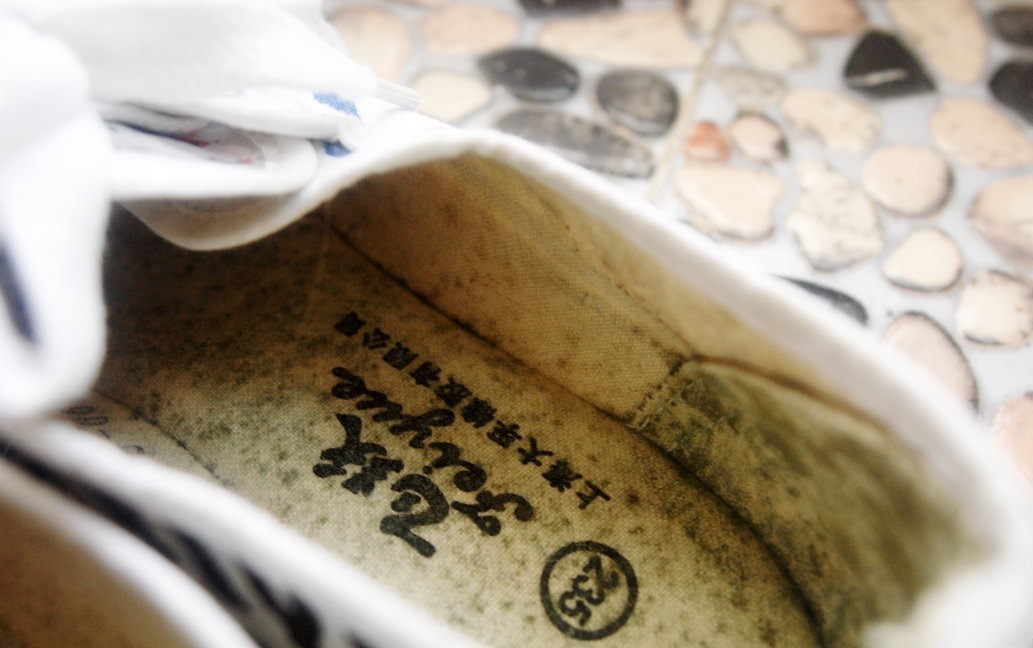
You cannot wear shoes affected by fungus.
Another method that takes more time to implement, but is very effective in eliminating unpleasant odors:
- Place a cotton swab soaked in vinegar essence into each shoe.
- Place the shoes in a plastic bag and leave for 24 hours.
- After the allotted time has passed, remove the tampons and treat the inside of the boots with ammonia.
- Pour table salt into each shoe and leave for another day.
- The next day, shake out the salt, treat the boots with ammonia, and put new insoles inside.
- Treat with shoe deodorant.
To prevent mold from appearing on clothes and shoes in the future, closets where items are stored should be periodically ventilated, and clothes and shoes should only be stored when they are perfectly dry.
Tableware and small household appliances
Mold is a kitchen's worst enemy, so as soon as you notice the first signs or smell the odor, you must take immediate action to eliminate it.
Eliminate mold odor and its source from dishes
To get rid of the mold smell and the fungus itself on ceramic, porcelain, earthenware, glass or clay dishes, it is usually enough to wash them thoroughly using a regular detergent, repeat the treatment with soda, rinse in a weak vinegar solution (1 tablespoon per liter of warm water) and rinse under running water.
The second way to get rid of mold is to simply boil the water with the addition of baking soda (1 tablespoon per liter of water), followed by rinsing in a vinegar solution and under running water.

Baking soda or ground coffee will help fight mold on dishes.
A third effective method is washing dishes with ground coffee. Simply sprinkle a small amount of coffee on the dishes, rub them, and then wash as usual.
Plastic dishes are usually difficult to treat in this way, as the fungus penetrates deep inside. It is better to simply get rid of plastic items affected by fungus. If there is no visible mold penetration into the plastic, then it is treated in the usual way, like ceramics or glass.
Removing the moldy smell from a thermos
It often happens that a thermos is forgotten to be thoroughly washed after use, leading to the development of harmful mold due to food or liquid residue. Getting rid of this mold and its odor is quite simple. Usually, it's enough to remove any food residue, wash with detergent, and rinse with baking soda or vinegar. If the smell persists, you can pour boiling water into the thermos, add a few lemon slices, and leave it for two hours. After this treatment, only a pleasant lemon aroma remains.
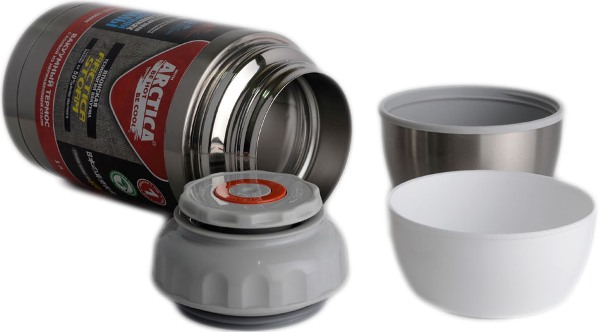
To prevent mold from forming in your thermos, it must be thoroughly washed and dried after each use and stored disassembled.
Then leave the thermos open to dry and use as usual. To prevent unpleasant odors, store the thermos clean and open.
Mildew smell on small appliances
To eliminate mold odors from small appliances (microwaves, bread makers, air fryers, steamers, multi-cookers, etc.), wash the appliances with special detergents, then wipe them with a solution of citric acid, vinegar, or lemon juice, rinse, and let them dry. These steps are usually sufficient to eliminate the unpleasant odor. Boiling water with lemon slices can also be used in multi-cookers and steamers. During processing, care must be taken to ensure that moisture does not come into contact with the heating elements of the devices.

There should be no mold on household appliances.
It's important to remember that it's much easier to maintain your equipment without allowing mold to form inside or outside. To do this, all equipment should be washed after use, wiped dry, and stored open, preventing excess moisture from accumulating.
Reviews
Hello. My husband and I bought a house in the Moscow region a year and a half ago. We were overjoyed. But we ran into a problem that first winter. Dampness appeared in the children's room on the second floor. Literally a week later, the room was overgrown with mold. We fought it as best we could. For the longest time, which was eight days, regular bleach helped. I really wanted to get rid of the mold once and for all. We spent a long time searching for a mixture and its ingredients. I scoured the internet. I was afraid it might not work again, and mold is our enemy for life. But by pure chance, I found Olimp Stop-Mold. We decided to see if it really helped. I can say one thing: we haven't had any problems with mold for two years now. Now I don't regret our decision to try it. After the children's room, mold spread throughout the entire house. And now it's simply gone. Thank you, Olimp.
Hello! I'd like to tell you about Dali universal antiseptic. When starting any renovation, regardless of the room or its intended use, it's essential to ensure its sanitary hygiene, and Dali antiseptic is an indispensable tool. It's available in several forms at specialty hardware stores, but this one comes as a 600 ml spray. It effectively eliminates sources of biological damage, such as fungi, mold, and various types of lichen. It's universal and suitable for all types of surfaces, including brick, concrete, plaster, wood, cardboard, gypsum, ceramic tiles, and many others. It's safe and chlorine-free, doesn't alter the properties of the materials being treated, and easily penetrates deep into any surface. Prevent the growth of various types of biological pests in your home by preemptively treating healthy surfaces.
I chose Alpa's Fongifluid mold and mildew killer while browsing the supermarket. After the winter, mold appeared on the walls of my dacha. I tried washing it off and treating it with lime, but no cleaning efforts worked. I went out specifically to look for solutions or suspensions that would help combat this problem. I didn't need large canisters or packaging, so I chose a small spray bottle—a mold and mildew killer. It's great that the instructions are printed on the bottle, and the fungicidal additives do a great job.
Alpa mold and mildew killer is a liquid antibacterial agent based on antifungal and antifungal agents. It's designed to remove and kill virtually all mold and mildew microorganisms. It's highly effective, environmentally friendly, and safe, and contains no added chlorine. It's virtually odorless and sprays with a convenient spray bottle. This remarkable product was developed by French microbiologists in compliance with safety standards. I followed the instructions, cleaning the corners of the walls and applying the solution, spreading it out in a wide circle.
A good preventative treatment with an effective and broad spectrum of action. I applied it repeatedly as a precaution. The Fongifluid mold and mildew killer can be applied to any surface and eliminates excess microorganisms on the walls. After following the instructions, the walls returned to their normal color. I really liked the mold and mildew killer solution and will now keep it in stock at home.
It's important to remember that prevention is always better than dealing with the consequences. To prevent mold from spreading, keep items clean and dry. Avoid excessively humid and warm rooms, as mold thrives in these conditions. Regularly ventilate your home, ensure pipes are in good working order, and promptly repair any leaks. If walls or floors become leaky, the source of excess moisture must be eliminated promptly.