Bees are an integral part of the ecosystem. There's a theory that the death of the last insect will mean the end of all life on the planet. Like people, bees value comfort and quiet, which may be why they're drawn to human dwellings. Once they've burrowed into the foundations of houses and taken over garden trees, they no longer seem like the planet-wide guardians of life they once were. The only thought when encountering these striped neighbors is to flee. However, long-term coexistence can work wonders; getting rid of bees is possible without resorting to drastic measures.
Content
Where can bees settle?
To understand the reasons for bee swarming near human habitation, it's important to understand why migration occurs. After hibernation, natural reproduction and colony growth begin. The young bees are responsible for creating new combs, feeding the larvae, and then flying out to collect forage. At a certain point, the number of young bees becomes overwhelming, creating a shortage of work in the nest—the queen simply can't lay eggs quickly enough. There aren't enough "field" responsibilities for everyone. Eventually, a separate colony is formed: some drones, the old queen, and young worker bees join the new colony.
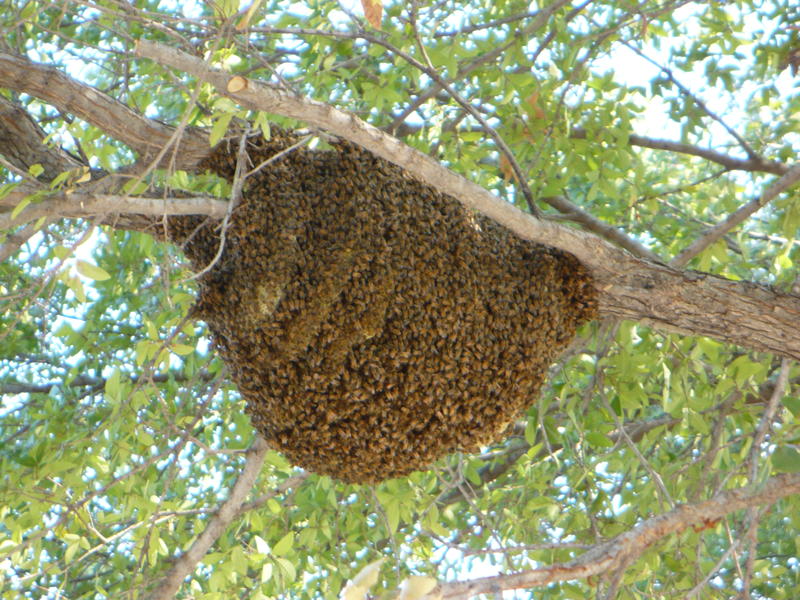
At a certain point, there are too many young, and there is a shortage of work in the nest - the queen simply does not have time to lay eggs.
In search of a new home, the colony relies on quiet, inaccessible locations, and sufficient food sources in the surrounding area. Therefore, the appearance of a swarm in a garden plot or under the roof of a private house is not entirely uncommon. A hive can also be found in the attic, balcony, basement, in cracks in the foundation and walls, in a shed, in trees on the property, in compost, even in the ground or an abandoned well.
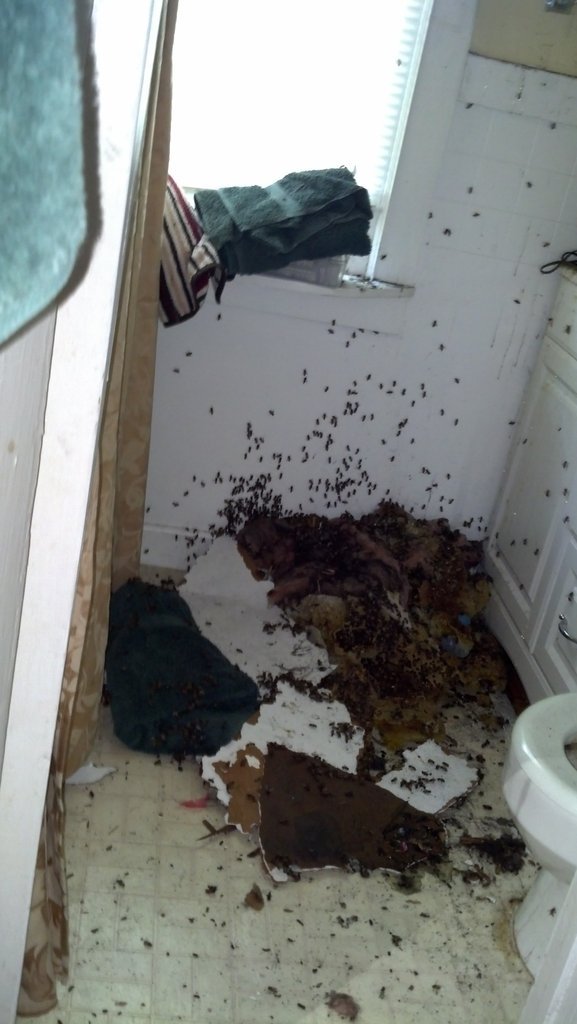
Most often, wild bees swarm in dry and warm places.
Types of bees
Bees belong to the most evolutionarily advanced order of Hymenoptera. Their distinctive behavioral traits include a busy schedule and a lack of unnecessary aggression. However, wild species are usually more hostile than domesticated ones; even an unpleasant smell or sound can provoke their attack. A distinction is made between social (living in large swarms), semi-social (forming small colonies) and solitary insects.
Solitary bees should not be killed; they are generally not aggressive and are valuable pollinators. Solitary bees include osmia bees, carpenter bees, leafcutter bees, and others. Sometimes, such bees form small colonies.
Wild ground and wood bees
Ground bees include many endangered species. They reach a size of 2 cm. They are characterized by a black abdomen and a dark brown head covered with thick black fluff. Yellow spots are noticeable on the jaws. Differences between the sexes are minor. Like most Hymenoptera, they live in colonies. The young rarely fly far from the main nest; settling nearby, they can build a spacious underground home. Bees prefer to swarm under the soil layer, and depending on the region, they choose both sandy and fertile types of soil.
The phylum Arborealis (wood bee) includes numerous unstudied species. These insects play an important role in pollination; some are honey bees, while others destroy pests in the garden. Experts believe that exterminating these bees is not unreasonable, as their presence near human homes is temporary. Wood bees range in size from 2 mm (dwarf bees) to 4 cm (a species native to Indonesia). Their coloration is usually uniform and dark. Dry (and even rotten) wood is usually chosen as a swarming site.
Photo Gallery: Commonly Seen Wild Bee Species
-
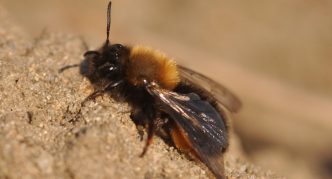
- Andrena Clarkella resembles a bumblebee in appearance, with its distinctive red hind legs.
-
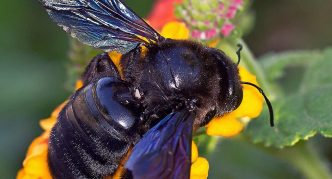
- The carpenter bee (also known as the wood bee) is a peaceful species characterized by large, dark purple eyes and wings of the same hue.
-
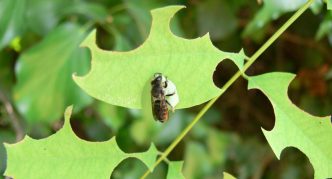
- The leafcutter uses the foliage of shrubs and trees as building material for its nest; the insect can be detected in the area by the characteristic round holes in the leaves.
-
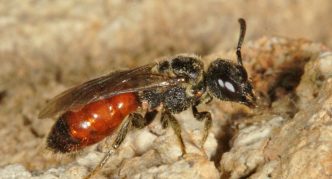
- Halictus sphecodex has a bright fiery or green color, representatives of the species are usually small in size
-
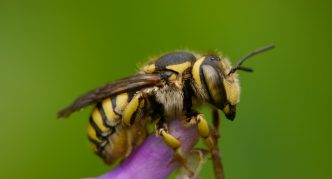
- The wool-eater prefers to occupy other people's homes rather than build its own hive, and lines the inside of the nest with animal hair.
-
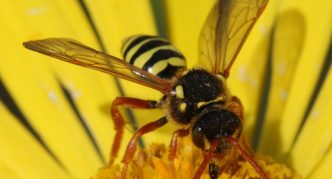
- Nomad looks like a wasp
-
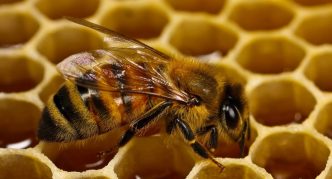
- The Burzyan (Bashkir) bee is a honey-bearing species found in the forests of Bashkiria and is often domesticated due to its exceptional working abilities.
Why are bees dangerous?
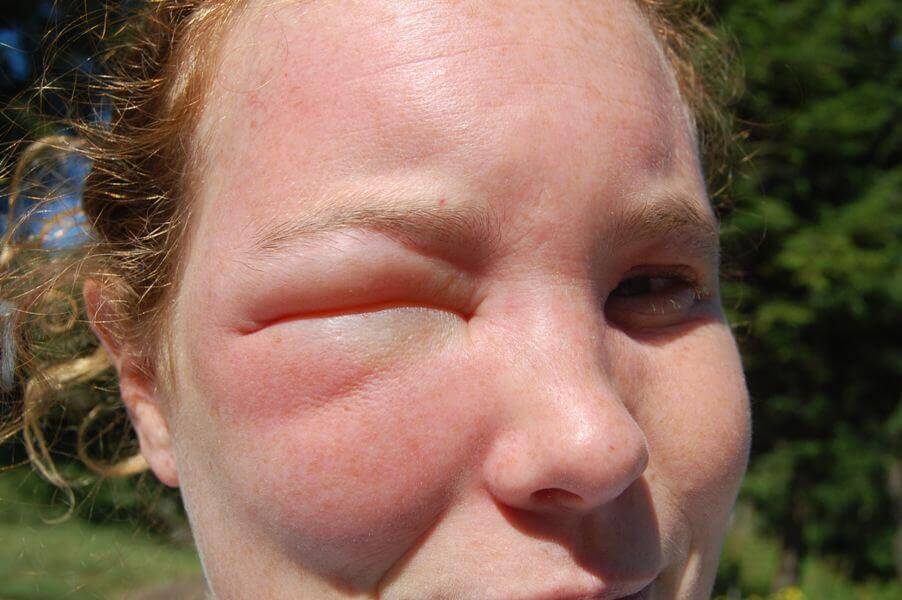
A bee sting is always painful and toxic, and its effects can cause a severe local reaction. Typically, the affected area becomes red, swollen, itchy, and feverish. Symptoms subside within the first 24 hours. Stings in the following areas are considered particularly dangerous:
- eye (possible complications - conjunctivitis, panophthalmia, blepharitis);
- mucous membranes of the mouth and throat (swelling can cause difficulty breathing);
- lips and neck (thin skin is more sensitive to swelling).
Bee venom is a unique combination of proteins, fats, carbohydrates, acids, various chemical elements, and biologically active substances. It is the latter that cause toxic and allergic reactions.
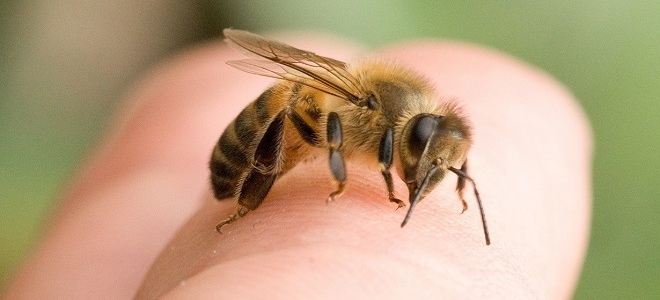
A bee sting is always painful and toxic.
Table: hazardous substances found in bee venom
| Name | Effect on the body |
|---|---|
| Melitin (poison) |
|
| Histamine (amino acid) |
|
| Apamin (natural peptide, neurotoxin) |
|
| MSD peptide (2% of the total venom volume) |
|
| Phospholipase A2 | Destroys the cell membrane |
The value of bee venom lies in its balance. Along with active toxins, it contains substances with a high therapeutic index. For example, the peptide adolapin is a natural pain reliever, and cardiopep has regulatory properties.
For children, pregnant women, and people who haven't encountered bees before, the consequences can be much more serious. An allergic reaction is the most dangerous complication following such an encounter. Symptoms:
- increase in body temperature;
- gastrointestinal disorders;
- skin rashes (in particular urticaria);
- Quincke's edema (manifested as partial or complete acute swelling of the face or limb);
- headache;
- dyspnea.
In rare cases, cardiovascular dysfunction and anaphylactic shock occur. Untreated symptoms are usually fatal.

Rapidly increasing swelling may be a symptom of an allergic reaction.
How to find a nest
Determining the actual presence of bees is quite difficult, as the insect's size, coloration, and overall behavior are geared toward defense. And often, only professionals can detect a nest. However, there are several factors that indicate the presence of a swarm.
If bees appear at the dacha
The occasional appearance of bees in your garden isn't cause for concern. There may be an apiary nearby. The main thing is to avoid provoking the insects unnecessarily, swatting them away, or killing them. When they die, they emit a special alarming substance that can attract other members of the colony.
Frequent encounters with insects, however, are cause for concern. First, you should make sure that bees are the ones in your area. Wild species are unfamiliar to the average gardener, so confusion can occur. For example, carpenter bees are often compared to bumblebees. Distinguishing characteristics of bees:
- Their food source is flower nectar. Other Hymenoptera specialize in food scraps or hunt insects.
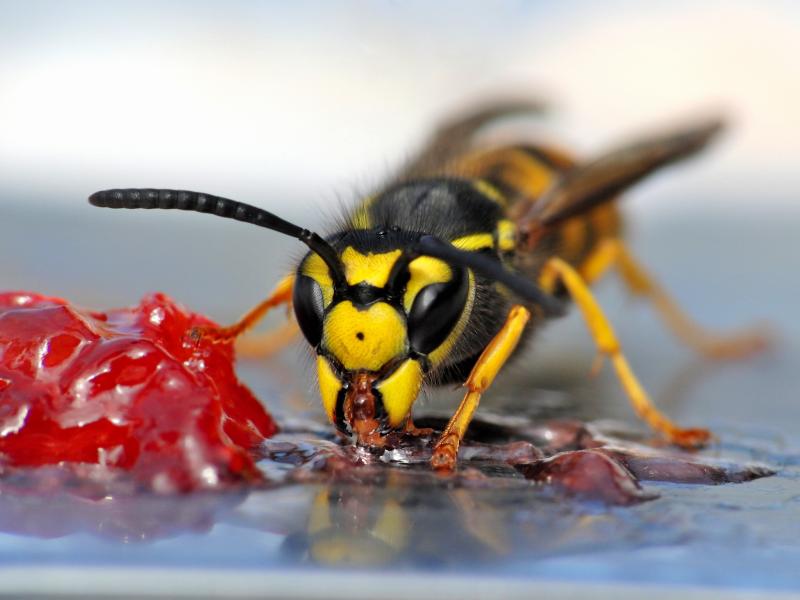
- Shape and size: Bees, particularly honeybees, have a voluminous abdomen. Hornets and wasps have a thinner, more elongated body.
- Fluffiness—the presence of hairs on an insect's body—can also aid in identification. Hornets and wasps are significantly less fluffier than bees, and carpenter bees are less fluffier than bumblebees.
- Behavior is an important determining factor. Bees are more disciplined, less aggressive, and usually travel in small groups. Exception: carpenter bees, which move alone.
- The insect's nest will also help identify the species. Burrows in the ground are typical for bumblebees and some species of ground bees. Honey bees usually swarm in hollow structures (trees, old logs, utility poles, eaves, etc.).
Photo gallery: types of nests
-
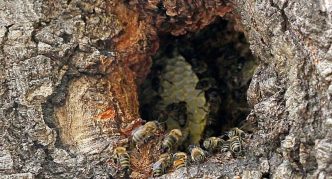
- Bees often settle in tree hollows.
-
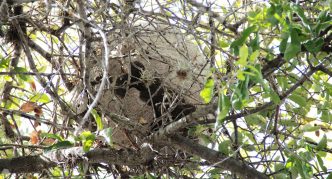
- In unkempt areas, bee hives can be found in tree branches.
-
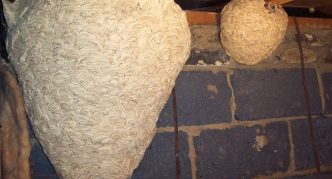
- A characteristic feature of hornet nests is the wave-like patterns on the surface
-
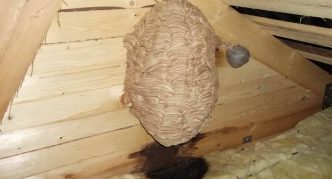
- A family of hornets is always on guard; approaching their nest closer than 50 meters is dangerous.
-
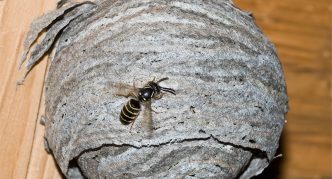
- Wasp nests are typically grey in colour and spherical in shape.
-
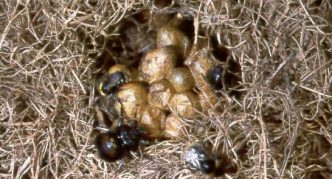
- The bumblebee nest is distinguished by its unkempt appearance.
-
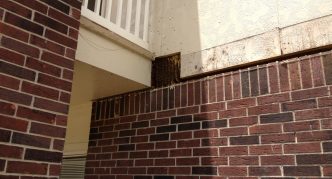
- You can detect a bee nest in the wall of a house or barn by the characteristic hum and smell
-
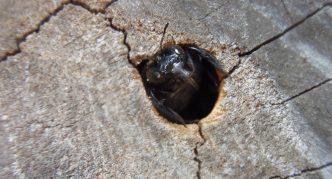
- Black carpenters enter their nest through a tiny hole the size of a coin.
The easiest way to find out where the insects are swarming is to follow them. Bees are most active during the day, and in the evening they return to the nest. If following them doesn't help, you'll have to thoroughly inspect the entire area and any buildings within it.
If bees appear in the apartment
Bees appearing in an apartment is a relatively rare occurrence. Due to the smaller size of the home, the danger from such cohabitation increases several times. As with "summer cottage" guests, the first step is to ensure that they are indeed bees.
The following will help you find the nest:
- careful inspection of the entire area, including the balcony;
- hearing, the hum can be used to determine the location of the swarm;
- insect observation.
How to get rid of bees
Before attempting bee repression, it's important to determine what kind of bees they are. It's possible the pests could be a neighbor's commercial honey bees or aggressive ground bees. In either case, complications are inevitable without preparation.
Neighborhood bees
It is better to fight neighboring bees using complex methods. According to the rules, the owner must build a high, solid fence around his apiary. Polycarbonate or corrugated sheets are most commonly used. A bee raised 2–3 meters will have a wide field of view and will be more likely to head for fields and meadows than to the nearest plot. Although this method may seem like a half-measure, it actually works in practice.

Keeping bees away from neighbors is a beekeeper's responsibility.
If a swarm of neighboring bees regularly visits your property, you'll need to talk to their owner. In the worst-case scenario, call a professional bee exterminator or contact the authorities.
Special traps (you can buy them or make them yourself) will help limit the movement of insects on your property. You should not intentionally kill other people's bees - this will be considered damage to someone else's property and may result in a lawsuit. Therefore, capture and subsequent transfer to the rightful owner is the most appropriate step.
Wild bees
Trying to control wild bees on your own is a dangerous endeavor. If a whole swarm is nearby, it's best to seek professional help; you might be able to find a beekeeper willing to take the stinging colony. Otherwise, prepare in advance:
- first aid kit (antihistamines and anesthetics);
- protective suit;
- a clear plan of action.
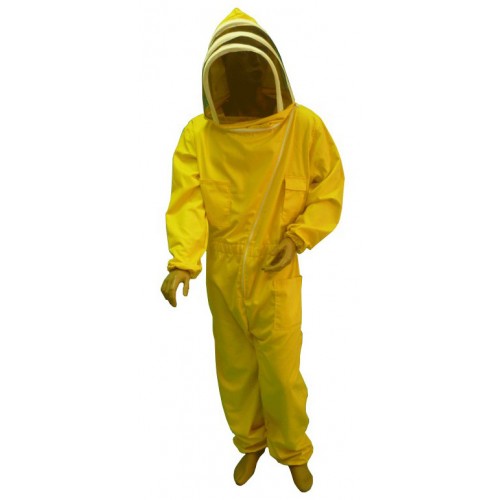
Protective overalls should be chosen according to size so that insects cannot get into the folds.
If possible, hive dismantling should be postponed until cold weather sets in, when the insects are less active and easier to kill. Alternatively, disinfestation should be carried out early in the morning or late in the evening, after the entire colony has returned to the nest.
When destroying a hive:
- Treat the nest with smoke.
- Direct a stream of insecticide (aerosol or diluted poison) inside.
- After using the chemical, quickly close the entrance hole.
- Cut the hive from the attachment point with a knife.
- Place it in a plastic bag or a barrel of water.
- Wipe the attachment site with any insecticide (vinegar or potassium permanganate).
- Dispose of the nest and destroy all traces of the bees' presence.
If all goes well and you successfully find an interested beekeeper, it is best to ignore steps 2, 5 and 7 (partially).
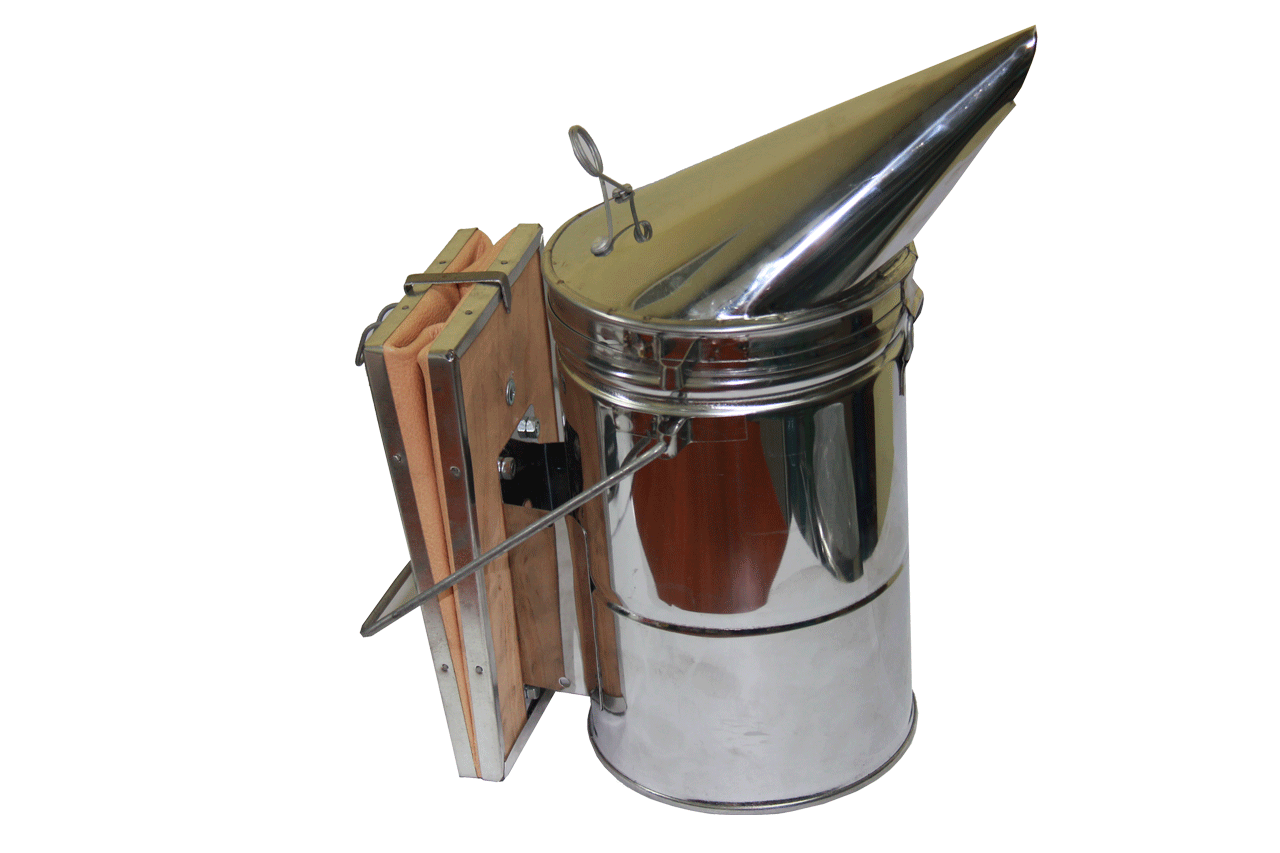
A smoker is a special device for fumigating bees.
If a bee colony has taken up residence within the walls of a house or other hard-to-reach location, professional help is essential; construction workers may be required. In any case, if an entrance is discovered, do not seal it. This will lead to massive aggression from the bees, forcing them to seek a new exit. This could result in the insects appearing within the home itself. If the gap is large enough for access, smoke can help extract the colony. After fumigation and removal of the swarm into a bag or suitable box, it should be handed over to the new owner. Then, begin a thorough cleaning of the bee colony.
Folk remedies
Conventionally, all folk remedies boil down to catching and repelling (for honey bees). Wild, aggressive bees that have taken up residence are usually dealt with without regret. For example, in the case of ground bees, their burrows are doused with boiling water or covered with soil.
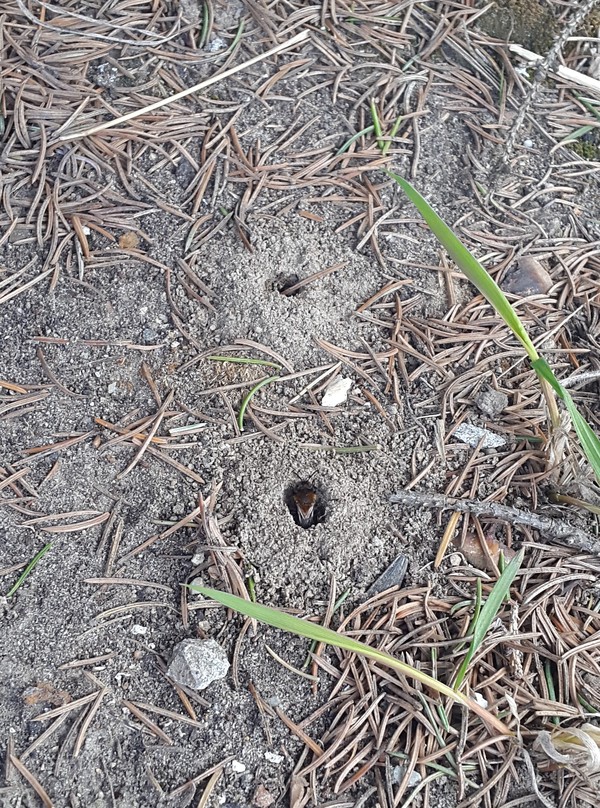
When destroying a nest in the ground, you need to act carefully and decisively.
Repelling with smells:
- plant insect-repellent plants and herbs (lemon balm, mint, lavender, wormwood) around the perimeter;
- fumigate the surrounding area - even the simplest smoke will slow down the insects and make it easier to deal with them;
- hang up aroma lamps (essential oils based on citrus and mint have proven themselves to be effective).
Sound repellents:
- singing of swallows;
- bee-eater's song;
- loud vibrations.
Traps come in two types: humane and lethal. If you don't want to make one yourself, you can purchase the appropriate model from specialty stores.
Types of traps
- A container of water. A regular basin (or bucket) filled with sugary water and any insecticide suitable for bees will do.
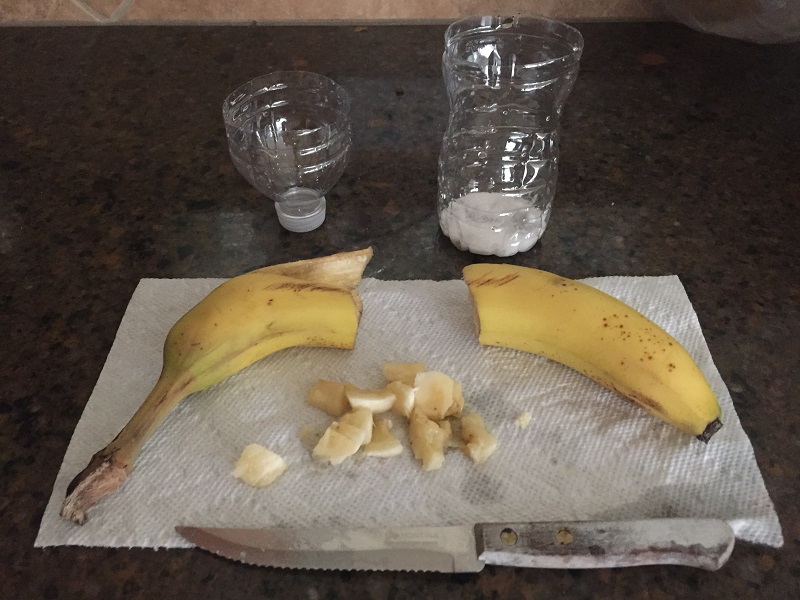
- Plastic bottle. Cut the cone off a regular 1.5-liter plastic bottle and insert it upside down into the remaining part. Use an awl and fishing line (or wire or strong twine) to secure it. Pour any enticing liquid (sugared water, juice) into the bottom of the resulting trap. The principle is simple: the insect, sensing the scent, will fly into the neck and be unable to find its way out.
A bottle trap is a universal method for controlling any insects, the main thing is to choose the right bait
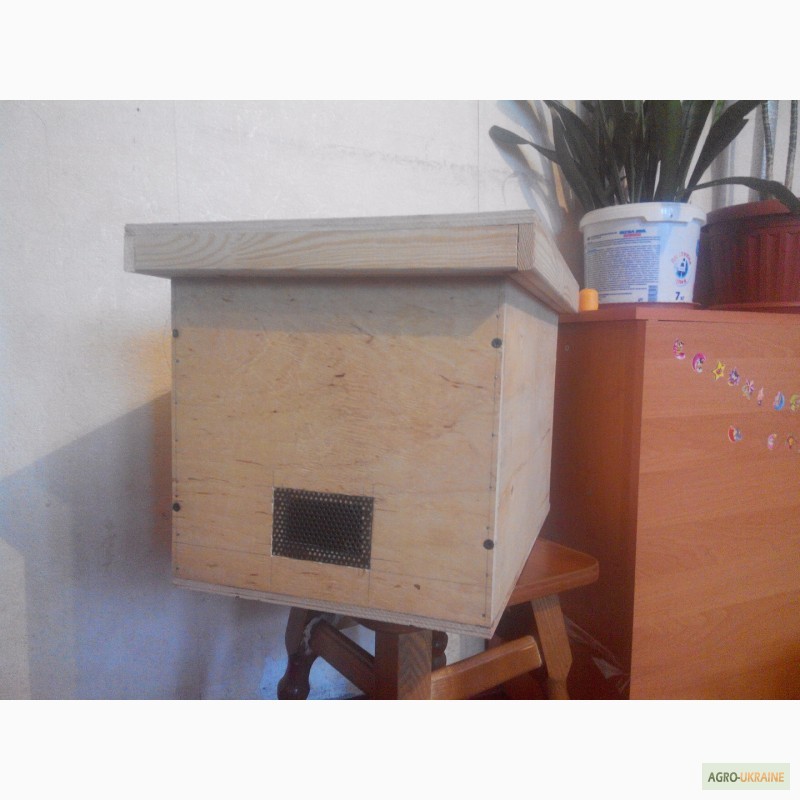
- A box trap. To make one, you'll need a medium-sized cardboard or wooden box and a matching lid. All you need to do is poke a small hole in the side of the box, and the trap is ready. You can place bait inside.
You need to put bait inside the trap box.
Video: DIY Plywood Trap
Chemicals
Bees, even wild ones, are of great value to the ecosystem. It would be a good idea to take a photo of the bee to understand what species it belongs to. Some species are listed in the Red Book. Drastic measures are only appropriate in extreme cases, when repellents and traps no longer work.
Universal insecticides do not work on bees, but only make them more aggressive.
Liquid poisons
- Get. Sold in 100 ml ampoules, diluted 1:15. One ampoule covers 100 square meters. The product is considered a modern insecticide safe for humans;
- Medilis-Cyper. Available as a concentrate in 100 ml ampoules. Coverage area: up to 100 square meters. Active ingredient: cypermethrin. An effective, inexpensive, prolonged-release product.
- Lambda Zone. Emulsion, available in 50 ml bottles, relatively expensive. Suitable for all surfaces, effective;
- Delicia. A highly effective product against all types of stinging insects. Comes in a convenient, ready-to-use spray bottle. Harmless to humans and animals.
- Tetrix. Available in canisters, effective. Difficult to access for private use.
Reviews of insecticide use
For example, the Get tool is considered useless by some.
My country house in the countryside is plagued by hordes of insects—mostly bees, less often wasps, and recently, hornets. There hasn't been a day when someone on the property hasn't been stung by bees. Even if there are any containers of water, they're simply covered in bees. I started reading up on how to combat this pest and found this company's official website. It was all beautifully described: you drop a drop of sugar on it, the insect eats it, flies back to the hive, and everything dies. I bought a small box of sugar cubes, dropped a drop of this miracle product on each one, and placed it in every corner I could. As a result, the cubes have been sitting there for a year, untouched by the bees, wasps and hornets fly around freely, and there are even more of them. Don't fall for this scam; don't waste your money. I spent 1,300 rubles for everything, including delivery. It's better to buy regular dichlorvos for 100 rubles. Crawl through attics and spray the nests themselves, especially at night when the insects are sleeping. For those who say it's for bedbugs, the website sells this product for both bedbugs and bees, and it's the same bottle.
And the Delicia remedy helped.
Yes, this spray really does kill insects, and quite well. The spray is economical and lasts for many uses, and the insects disappear for a long time, so if you need it, get it, you won't regret it.
Aerosols
- Raid. Easily accessible, pleasant-smelling product. Effective as a preventative measure, harmless.
- Bros. is primarily designed to combat wasps and hornets. It is easy to use, effective, and safe for humans.
- Combat. An affordable, safe, and insecticidal product for home use both indoors and outdoors.
- Clean House. Suitable for treating nests and using around the home. Odorless, it's rated as moderately effective.
It's worth clarifying that aerosols are not a panacea for bee infestations. Their maximum effectiveness is achieved only with direct contact with the nest and in combination with other measures.
Ultrasonic repeller
The operating principle of an ultrasonic repeller is simple: once turned on, the device begins emitting low-frequency waves capable of affecting insects. The human ear cannot detect such vibrations. The device's purpose is to evoke a sense of danger in bees, causing them to leave their occupied territory. Today, there are emitters to suit every taste: keychains, bracelets, and battery-powered devices are available. The range of most "pocket" repellers is short—about 7–10 meters.
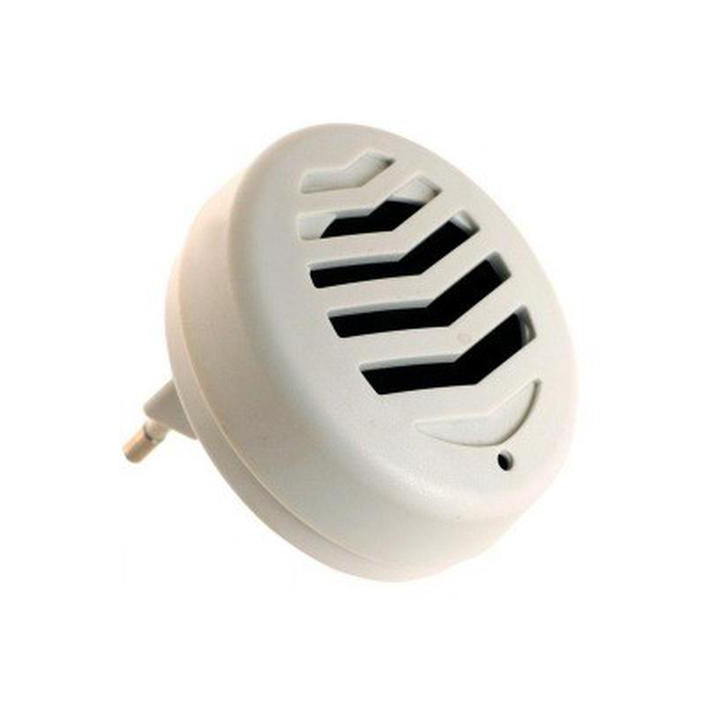
The ultrasonic repeller, powered by the mains, begins to emit low-frequency waves when connected
When choosing, you also need to pay attention to individual characteristics, such as temperature conditions, power, dimensions, and power source.
Pros:
- noiselessness;
- portability;
- safety;
- universality (effective against insects and rodents);
- affordable price;
- minimal energy consumption.
It is not necessary to buy a special device; you can download an app to your phone that emits ultrasonic waves.
The ultrasonic repeller is an experimental device whose effectiveness has not been officially proven. Many users report little or no effect.
After buying a mole repellent, my parents were given two rodent and insect repellents as a gift. They gave us one. After reading the instructions, we laughed for a long time. The device is simple; just plug it in. It reaches its maximum effectiveness within the first seven days. However, it doesn't kill insects; it just drives them out of the area. Before using it, you need to catch all the insects and close the windows. If you do this, the insects will be gone anyway. Take mosquitoes, for example; you'll catch them and close all the windows. Why do you need a device then? It's unclear. One device covers a room of approximately 70 square meters.
Electromagnetic repeller
The principle of operation is based on the transmission of electromagnetic pulses that negatively affect the insects' nervous system. This effect leads to anxiety and disorientation. Unable to find the hive, the bee may simply die. A prerequisite for operation is the presence of electrical wiring through which the signal can be transmitted.
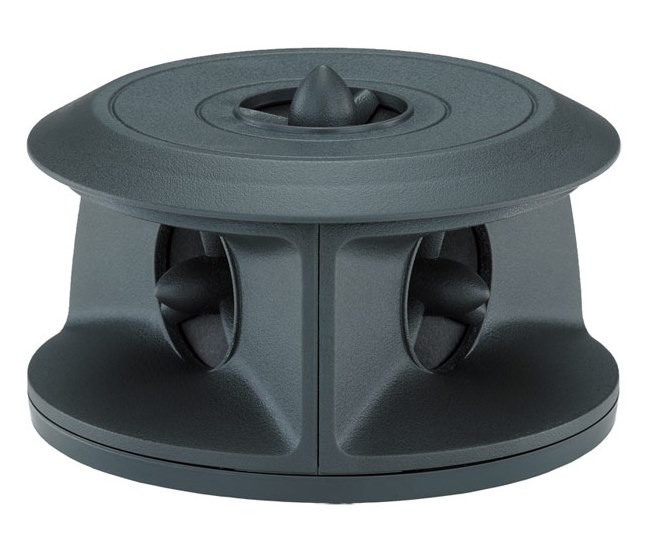
You should carefully read the manual for electromagnetic devices; not all of them are suitable for use near humans.
When exposed to an electromagnetic field with a frequency of 50 Hz, a bee begins to panic.
Pros:
- noiselessness;
- environmental friendliness;
- large coverage area;
- versatility.
Modern emitters are completely harmless to human health, but their power and exposure time should still be considered. Furthermore, domestic rodents (guinea pigs, hamsters, etc.) should be kept away from the radiation.
Good afternoon. Today I'll tell you how I once again fell for a TV ad and then ordered an electromagnetic and ultrasonic rodent and insect repellent. And I ordered not just one, but several. The device came in a small plastic package. As the description says, it repels mice, rats, and other insects. It's certainly not expensive, only 190 rubles. However, there were no instructions in Russian. When I plugged it in, the indicator lights lit up as they should. After leaving it in the outlet for over a month, the mice still haven't gone away. It still works, but as far as I can tell, it's of little use. It serves as a nighttime light near the outlet. The device isn't worth more than that, really. Thank you all for your attention.
I bought it, falling for the hype. I wait a day, then two... No results, just a nervous wreck, my husband laughs, I've lived to be 30, and I still believe in fairy tales))) I'll never order anything like this again!!! And I've completely lost all desire to order online.
Electric traps with attractant
A synonym for attractant is bait. For example, sweet foods and flowers are natural attractants for bees. Modern traps often include a canister of synthetic attractant. These substances are highly specialized, so it's important to choose a safe one that specifically targets bees.
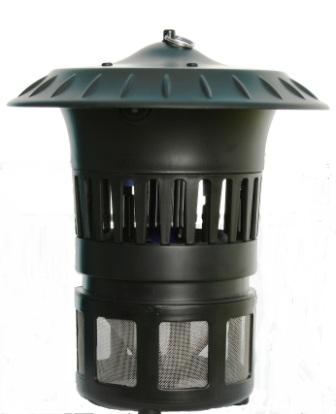
Electric traps with attractants are effective against all types of insects.
Preventing bees from appearing in your home or garden
The following measures will help prevent the appearance of bees and prevent them from nesting again:
- Completely destroy bee nests, honeycombs, and all traces of their presence on the property. It's a well-known fact that if a nest is left empty, a new colony will soon move in. It's important to eliminate odors. For spraying former nest sites, both specialized sprays and homemade mixtures based on citrus peels, essential oils (almond, wormwood), and herbal infusions (mint, lemon balm, wormwood) with a repellent effect are suitable. Vinegar can also be used for this purpose.
- Carrying out the necessary repairs is the next step. If removing the nest required dismantling the floor or wall, or making a hole in the roof, you'll need to undertake reconstruction. It's also important to inspect the house and all outbuildings for cracks and holes that could potentially become new havens for the bees. It's best to seal the holes with bee-resistant materials such as insulating foam, cement, steel wool, etc. Painting all wooden elements will provide additional protection—the insects will avoid paint.
- All trees (and even logs) on the property should be inspected for cracks, fissures, and hollows. Some may need to be removed.
- Large cracks in the ground and holes made by rodents should also be insulated.
- Avoid allowing garbage to accumulate, leaving old furniture in the yard for long periods of time, or keeping the compost pit open.
Whether or not to exterminate bees is a personal decision; it's important to weigh the risks and benefits of such a presence. Of course, the best option is to contact professional exterminators and beekeepers for advice. If this isn't possible, rushing into battle without prior preparation is a dangerous proposition, as hundreds or even thousands of insects can live in a nest at once. An attack by such a large number of bees could easily end in tragedy.