One of the most basic human needs is a roof over our heads and security, including the ability to protect ourselves and our homes. And here we're not just talking about abstract external invaders, but also those who enter our homes secretly, surreptitiously, trying to remain unnoticed. You've probably already realized that we're talking about domestic rodents—primarily mice. Is it possible to get rid of them from your apartment or house for good?
Content
Where does what come from?
Mice are small and stealthy animals, and they go to great lengths to remain unnoticed. However, spotting them isn't as difficult as it might initially seem. There are several telltale signs of rodent infestation in your home.
Sounds. Daytime noise masks all extraneous sounds, so it's best to listen closely at night. A distinctive rustling sound, seemingly coming from behind walls, furniture, a basement or crawlspace—in short, from somewhere below—should alert you. If you don't believe in ghosts, you'll have to admit that rodents are most likely infesting your home. Incidentally, those with particularly sensitive hearing may also hear the squeak of a mouse.
- Excrement. Since mice in human dwellings feed on human food (or whatever else God sends, in the case of garages and sheds), they also defecate there. It's difficult to confuse mouse pellets with anything else; they look recognizable and smell equally recognizable.
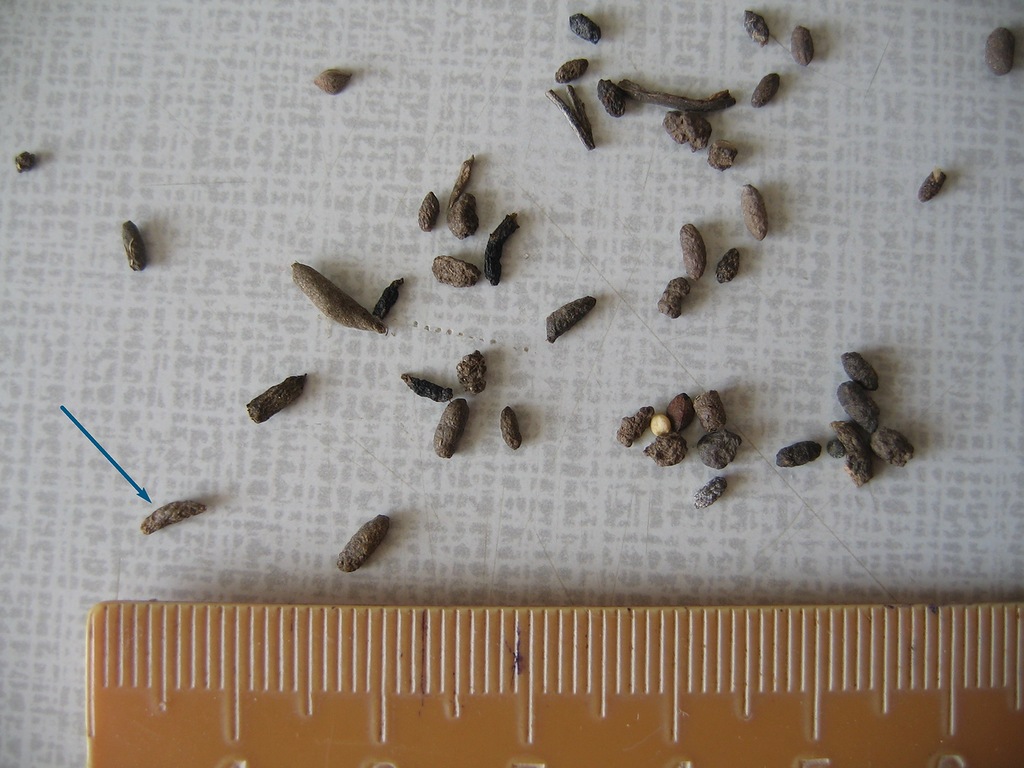
Mouse droppings are small in size but easily visible to the naked eye.
- Smell. Even if you haven't encountered any makeshift mouse litter boxes yet, you might still notice the distinctive mouse odor. Moreover, not only rodent excrement, but also their decomposing carcasses (if for some reason the animal died right in your home) can emit an unpleasant odor.
- Ask your cat. Finding rodents is easier if you have a predator in your home—a cat, dog, or ferret. They're more likely to spot the pest first. So, if you catch your cat staring at a seemingly uninteresting baseboard, be aware: a mouse hole could be hiding there.
- Damage. As we've already noted, mice eat the same foods as humans. Therefore, you may find evidence of their meals: scraps and crumbs in corners or chewed-up bags of food, such as cereals, nuts, and dried fruit. You might be “lucky” enough to stumble directly upon a mouse nest, the entrance to which may also be gnawed—in a baseboard, in the floor, or even in the wall of a forgotten closet.
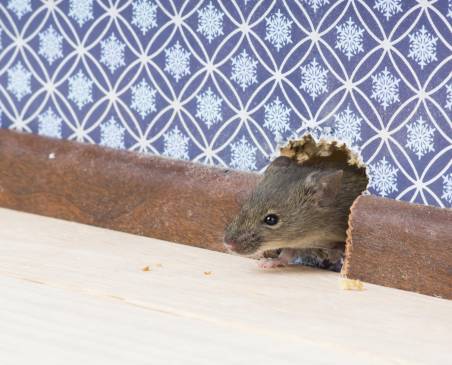
Mice easily gnaw passages in walls and under baseboards
Many housewives, upon discovering the presence of mice in their home, look up in sorrow and mournfully ask why this happened to them. But really, why?
Neighbors. If mice are already nesting in your neighbors' homes, as they multiply, they may gradually move to yours in search of new territories to colonize and food to eat.
Garbage cans. Many rodents find food in garbage cans. If they're close to your house or even right next to your porch, mice may be drawn to your home. They'll crawl straight from the garbage can into your home.
Chaos. A mouse can wander into a house or apartment completely by accident. Whether it stays or not will largely depend on whether it finds your home comfortable enough. And if you have a lot of hidden corners filled with junk, and scraps, crumbs, and other debris are scattered all over the floor and tables, then there is a high probability that a rodent will decide to make a nest in your place. And at the same time move your family there.
How to get rid of uninvited guests
Now that you've confirmed the presence of mice in your apartment (or house, or garage), it's time to think about how to get rid of them. Domestic rodents have plagued humanity for hundreds of years, so over that time, people have accumulated considerable experience in dealing with them. It's worth considering different methods and deciding which is right for you.
Chemicals against rodents
Hardware stores now offer a wide range of rodenticides. These typically contain a poisonous substance in powder, granule, or solution form. Ready-made poisoned baits are also available, as are specially designed houses for placing them. Depending on the active ingredient, the chemical may simply kill the animal, cause severe indigestion, or cause hemophilia. Some poisons even contain a mummifying component to prevent the dead animal's body from filling the house with putrefactive bacteria and odors.
Popular Rodenticides - Photo Gallery
-

- Poison "BoyCat-Super" - instead of a cat
-

- "Explosive mixture" against rodents
-

- Mythifying poison - "Mouse Death"
-

- "Ratid-1" - the winner of rats and mice
-

- Rubigon poison
-

- Rodenticide "Gryzunoff"
-

- Ratobor granules are a universal rodenticide.
House mice are amazing creatures. I could write an entire book about their behavior, habits, and dietary preferences in a home. However, for now, I'd like to discuss the advantages and disadvantages of poisonous rodent baits, using the rodenticide "Rat Death No. 1" as an example. <…> The advantage of such bait is that it attracts mice with its scent, and they eagerly and quickly consume it, as long as you keep adding new portions. Catching these pests with a mousetrap, however, is a more time-consuming process; mice are reluctant to willingly part with their lives for a piece of black bread. While you're catching some, others are being born. The bait package contains all the basic instructions for use and safety precautions, and even includes an antidote, just in case something happens. <…> The bait's effectiveness lies in the fact that I can kill the entire population in the house within a week, and then we live mouse-free for weeks, like white people, until new ones arrive. <…> Now comes the other side, the unpleasant part. Sometimes you have to find dead mice by smell. A couple of times, I've had to rummage through a closet full of papers and odds and ends just to find a mouse. It smells awful, you know.
A few years ago, we bought a house in the countryside, which we use as a summer cottage. Suddenly, a previously unknown scourge appeared among our "city dwellers"—mice. The house had been empty for several years, while nearby (literally ten meters away) a field sown with sunflowers and wheat was a sea of "wild hamsters." We quickly evicted the uninvited inhabitants, thanks to "Mouse Death" rat and mouse poison. <…> Ital Tiger "Mouse Death" rat and mouse poison works 100%, proven.
The advantage of chemical mouse control is that the poison is generally quite effective at killing rodents. The disadvantages include the need to constantly search your apartment or house for new carcasses and the danger to pets (your pet can eat either the poison itself or the dead mouse, and the effect will be the same). So the chemicals are suitable for a garage or a shed, but are completely unsuitable for a house. By the way, one of the disadvantages of this method is its obvious inhumanity.
People against rodents
There are also folk remedies for controlling mice. Some of them, like the previous method, involve preparing poisoned bait for the rodents. Gypsum, alabaster, quicklime, and ash are usually used as toxic components. Incidentally, the same ash is also scattered near mouse holes, sometimes mixed with broken glass. Both can injure and irritate the skin on the rodents' paws and may make them consider moving to a safer location. Another popular method of pest control is repelling mice with folk remedies. There are certain odors that rodents don't tolerate well. Examples of these include ammonia, bleach, vinegar, and peppermint oil.

Mice are believed to hate vinegar, ammonia and bleach.
Solutions of these substances are used to clean walls, baseboards, floors—in short, anywhere you've seen mice or suspect their presence. Some household chemicals not only have a pungent odor but also produce toxic fumes—for example, gasoline, kerosene, paint thinner, and turpentine—so these products are suitable for a garage, shed, or outbuilding, but not for an apartment or house. Of course, if you work with such substances, you must observe fire safety.
It's also believed that mice are afraid of the smell of burning fur—apparently, it makes them sense danger. Incidentally, the presence of a predator in the apartment—a cat, dog, or ferret—will have the same effect. Rodents will try to avoid a house where they could be grabbed by the scruff of the neck at any moment.

A cat can be a great help in the fight against domestic rodents!
You can also use some plants to repel mice. The most useful in this regard are wormwood, chamomile, wild rosemary and, of course, comfrey (official name - black root).
Mouse traps
You can also get rid of harmful rodents mechanically—that is, simply by catching them all. There are several ways to do this. First, there are classic mousetraps, whose operating principle is simple and straightforward: a mouse rushes into the trap after the bait, which either snaps shut or kills the animal on the spot.
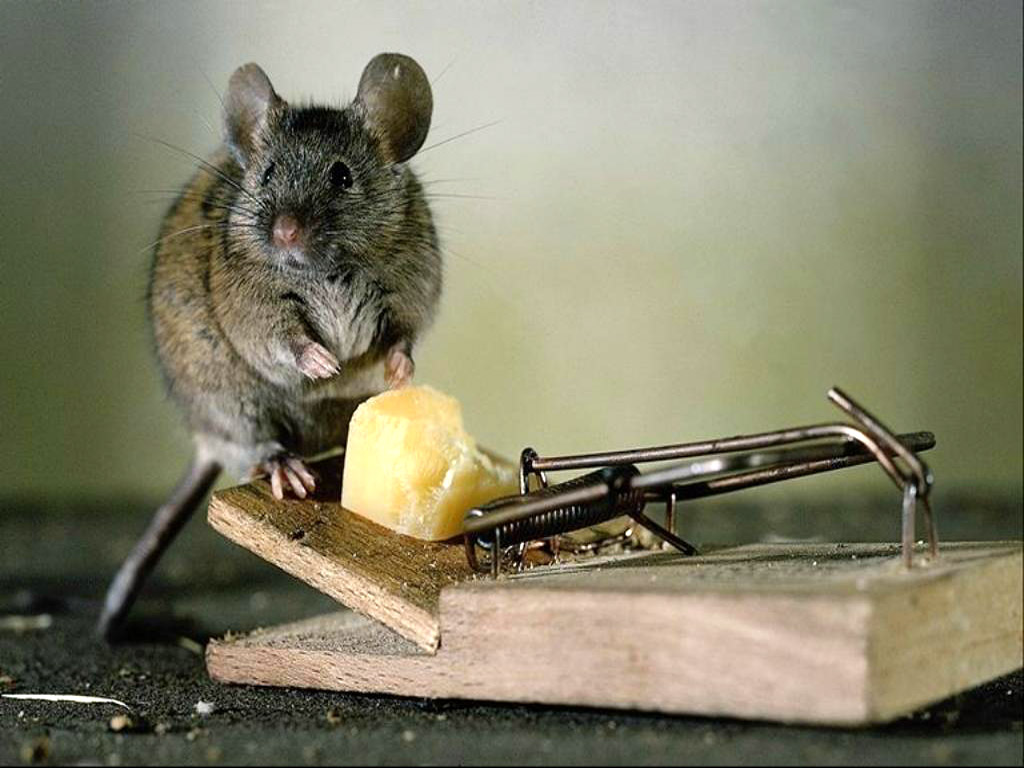
A classic mousetrap with that same "free cheese"
Oh, and I had a mouse from somewhere—one pregnant one—run up to the 14th floor. The babies were born and started running all over the apartment. I had to buy mousetraps. I caught them all that way, but it was such a shame to throw them away.
Secondly, glue traps have become increasingly popular in recent years: mice are simply glued to the trap by their paws and die of exhaustion after a while. This method is quite cruel and, again, not particularly hygienic, but it is still viable and is also better suited for non-residential premises.
Rodent Repellent Glue - Photo Gallery
-
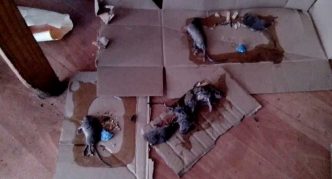
- Glue traps filled with mice look something like this
-

- "Rat Death" - a well-known rodenticide now in glue form
-

- "Expert Catch" - glue trap for mice
-

- Rodent Glue "Clean House"
There's a special glue for rodents; we caught a whole family of mice in less than a week. You spread the glue on a small piece of cardboard, placing it in the middle of something tasty. The mice come running at night and get stuck. Sometimes, as many as three mice got stuck. Dad would throw the mice, cardboard and all, into a bag and into the trash or outside the door, and throw them out in the morning. Don't let animals into the room with the cardboard and glue; they'll get stuck, and then you'll have to sit there and try to peel the glue off your dog's face.
Third, you can try making your own trap. They're made from glass jars, plastic bottles, boxes, and anything else a mouse could theoretically get caught in.
Glass Mouse Trap – Video
Plastic Bottle Rodent Trap – Video
The advantage is that you can catch the animal alive and remove it from the house. The disadvantage is that it will take quite a while to catch all the mice. You'll also have to carry the rodent far enough away from the house to prevent it from returning that evening.
Prevention of rodent infestations
As you can see, fighting mice in the house is a very, very troublesome task. Simply leaving everything as is is not an option, because even if you don’t mind sharing your supplies with the animals, you shouldn’t forget about the many diseases they carry. So, it's obviously worth trying to take steps to prevent mice from infesting your home in advance.
Cleanliness and order. While the need to maintain order in an apartment or house is more or less clear to everyone, it's worth repeating separately for owners of garages, sheds, basements, and crawl spaces. Yes, all these utility spaces also need to be regularly cleaned using household chemicals. Also, if you store food there, be sure to store it in sturdy, airtight containers and ensure they remain intact.
No trash! If you store your trash in an outdoor container, make sure it's not too close to your home. Also, make sure it's tightly closed and the trash is emptied promptly. The container itself should also be cleaned and disinfected regularly.
Protective barrier. Even if you haven't seen any rodents around yet, it's a good idea to make your home less attractive to them. A wide range of plants with unpleasant odors are suitable for this purpose, including rat repellent, wormwood, wild rosemary, chamomile, and peppermint. These can be hung in bunches or placed in sachets.
Repellers. Many housewives consider ultrasonic rodent repellents to be very effective. It might be worth purchasing such devices for your home, garden, garage, or shed. Just make sure to check in advance whether these repellents are compatible with your pets: if you keep hamsters, rats, or guinea pigs, they might not appreciate these new additions.
An ultrasonic repeller really does work. We have an EcoSniper. The mice left, rustled around at night for another week, and then just disappeared. They haven't appeared for three months now. I think it's better than any poison.
- Sealing. Of course, you won't be able to seal yourself completely, like in a bunker in case of a nuclear war. However, it's still worth filling the cracks between bricks or panels of the house, in the door frames, around baseboards, and under windows with expanding foam. This is especially true for summer houses and wooden sheds and outbuildings.
- Pest control. If the entrance to your apartment building is frequently infested by rodents, consider hiring a pest control team to help you get rid of these pests for good.
There's no household pest that humans can't control. So if you do have a gray rodent infestation, don't despair: they can be defeated; many have succeeded, and you can too. And after the last mouse leaves your home, simply try to be more vigilant in the future and take preventative measures.