Quite often, uninvited guests in the form of various insects and parasites wander into people's homes. And perhaps the most harmless of these "guests" is considered the ant. Let's find out if this is actually true.
Content
Reasons why ants appear in houses and apartments
The presence of ants in the home can instantly disrupt the smooth running of any family's life. Besides being unpleasant, these insects also carry various infections. They spoil food and can leave bites. They can infect humans because they are attracted to both household waste and the food that humans eat. To save your home, you need to get to know your enemy better, and most importantly, understand why these insects are entering homes rather than staying in their natural habitat—the outdoors. The simplest and most common reason is unsanitary conditions. Ants can also enter the home from uncleanly neighbors, or they can be brought in accidentally, in a bag or on the soles of shoes. Their favorite habitats are the kitchen, pantry with food supplies, and bathrooms, where the insects thrive due to the coolness and high humidity.
If a large, single specimen appears, don't be too upset: most often, it is a representative of the forest ant species that has come to you by accident. These insects don't typically live indoors, so they won't attract their fellow insects. Garden ants, red ants, and carpenter ants can also accidentally enter a home. They don't live indoors permanently, but only come in search of food. Therefore, it's important to identify and block their entry points. These may include:
- cracks in the walls, floor and ceiling;
- sewer and water pipes;
- cracks in windows and doors;
- basement and subfloor in private houses.
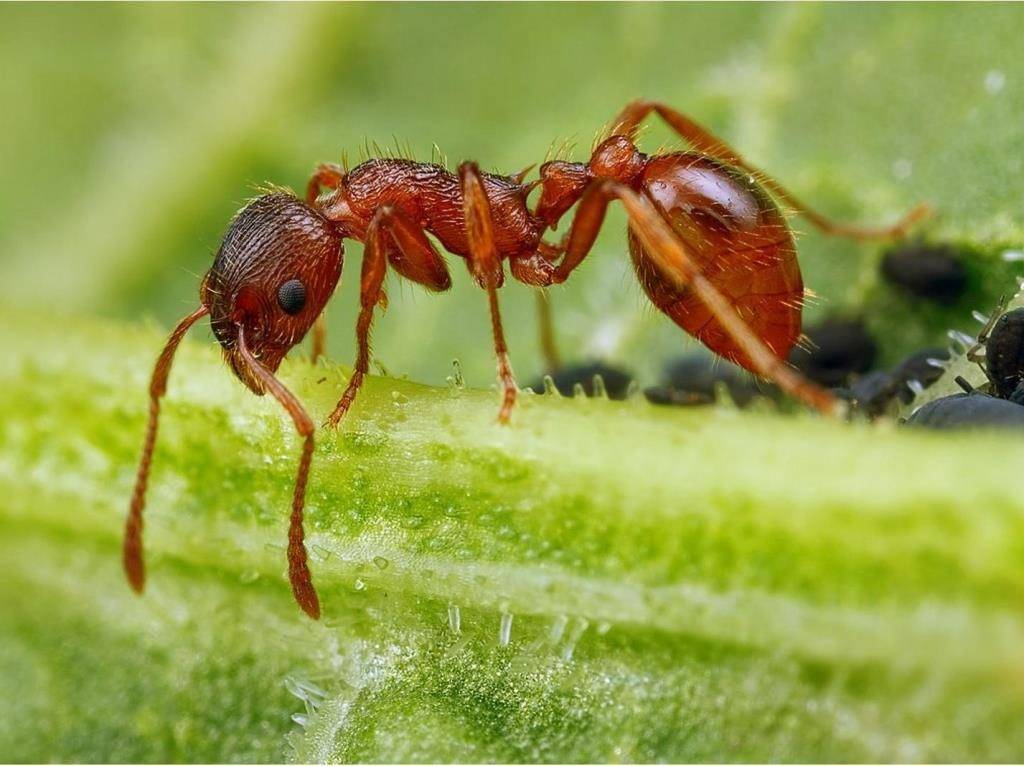
The wood ant is an accidental guest in the house
Note: Large wild ants that accidentally enter a home are the ones that can bite. This is their defensive reaction. Other domestic ants generally do not bite.
If you spot a swarm of tiny red insects surrounding a piece of food, it means pharaoh ants have moved in. They don't tolerate sudden temperature changes or unfavorable weather conditions well, preferring to nest in people's homes.
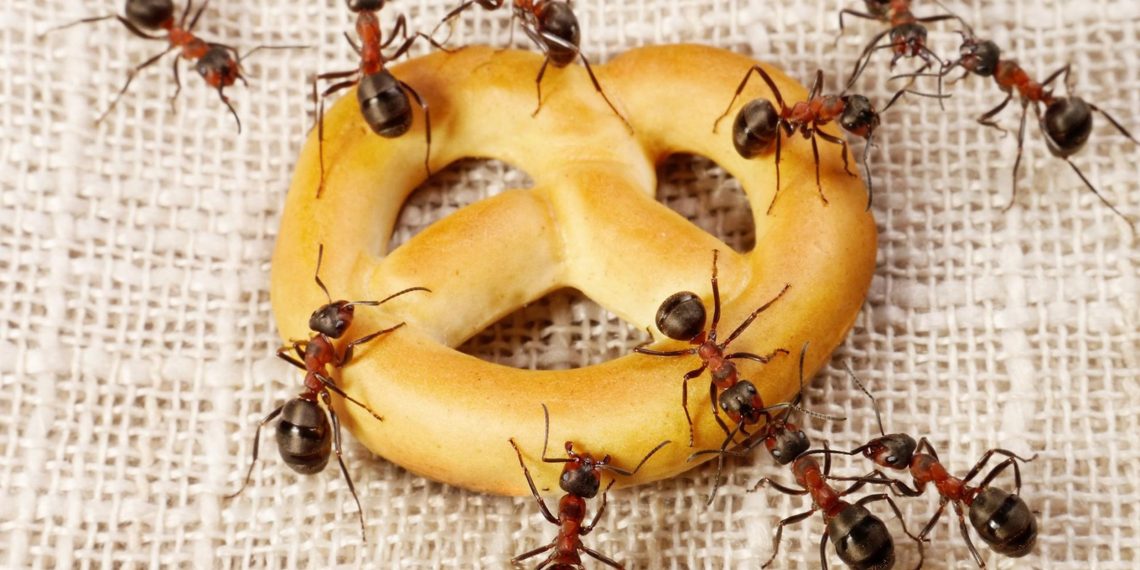
Pharaoh ants appear in houses more often than their other “brothers”
There's a saying: if ants appear in the house, the whole family will live in prosperity. This is because these insects are hard workers and prolific breeders.
How do pharaoh ants live?
Pharaoh ants prefer to live in colonies, sometimes numbering several hundred individuals, rather than alone. Their relationships are known to be characterized by a strict hierarchy. The queen, the female, leads the nest and never leaves. The habitat can be difficult to find, as it is located in secluded places: sockets, baseboards, door frames, cracks and crevices in the walls.
This is interesting. The only species of ant that can live above the third floor is the pharaoh ant.
To feed the female and ensure the nest is fully functional, hundreds of males forage for food, crawling throughout the nest. They live from a week to several months, while females can live for a year.
Methods for removing insects from your home
It's worth noting that the main difficulty in getting rid of these household pests is their incredible tenacity. They adapt quite easily to changing conditions. But difficult doesn't mean impossible.
It's important to remember. The basic rule of ant control is to find the nest. Only after destroying it can you celebrate complete victory over the enemy.
The first thing you need to do is restrict access to products and follow these steps:
- pack bread, cookies and sweets into several bags;
- open jars of jam, honey and preserves should be tightly closed and wrapped in the same way;
- carry out a general cleaning, thoroughly washing the corners in all rooms;
- If there are animals in the house, wash the bowl and put it in a new place;
- Wash the trash can with baking soda and dry it well.
Once the apartment is prepared for battle, you can move on to choosing the appropriate means.
Chemicals against ants
The easiest way to get rid of insects is to call a pest control service. This should be done jointly with your neighbors, as there's a chance the ants will enter from their homes, and vice versa. Otherwise, time and money will be wasted, and the pesky pests will return.
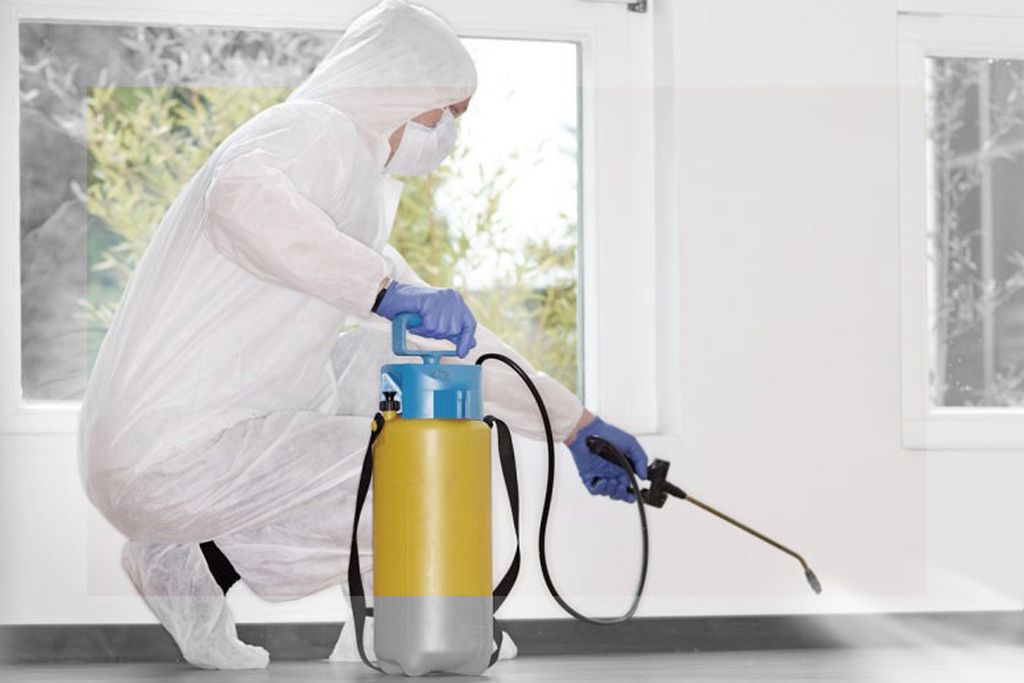
A quick and effective way to get rid of insects is to call a pest control service.
You can also use chemicals yourself, as they're now readily available at any household cleaning supply store. However, remember to be mindful of your own safety and read the instructions carefully.
Before choosing a pest control product, pay attention to its ingredients: it must contain cypermethrin, permethrin, diazolin, and tetramethrin. These components help improve performance.
Chemical-based products come in a variety of forms: sprays, gels, dusts, and pencils. Each has its own advantages and disadvantages. Let's look at each type separately.
Sprays are the most convenient to use. The product is applied directly to the nest and worker ants. This method is convenient because it allows the substance to reach hard-to-reach places and small crevices. However, if the nest is not found, sprays can only reduce the insect population. They cannot completely solve the problem without destroying the ants' habitats. Among the most powerful aerosols are Raid, Raptor, and Combat.
Important to remember: When using the spray, be careful not to let the substance come into contact with your skin or eyes!
If the nest cannot be found, using a gel is recommended. The ant, after consuming the poison, returns to the nest, where it poisons the remaining ants, including the queen. However, there is a significant drawback: the effect takes time. The final result may only be achieved after several weeks. The most effective and popular gels are Raptor, Domov, and Globol.
For many years, dusts and pencils have been the favorite means of fighting ants. Pest control powders are safe for humans, but their effectiveness is significantly lower than other forms of poison. Pencils, however, still produce good results. To treat a room, draw thick lines in areas where ants most often appear.
Folk remedies for insect control
An alternative to chemical pest control is folk remedies. They are much safer and yet quite effective. If you're facing a small infestation of insects, you can make do with homemade "weapons." They're also much cheaper. Ants are known to dislike strong and pungent odors. To repel insects, you can place lids containing repellents around the room. It's best to place them in areas where the pests frequent. Suitable options include:
- chopped garlic cloves;
- wormwood leaves;
- bay leaves;
- red pepper powder;
- citrus;
- kerosene;
- ammonia;
- cinnamon sticks;
- essential oils of mint and lavender.
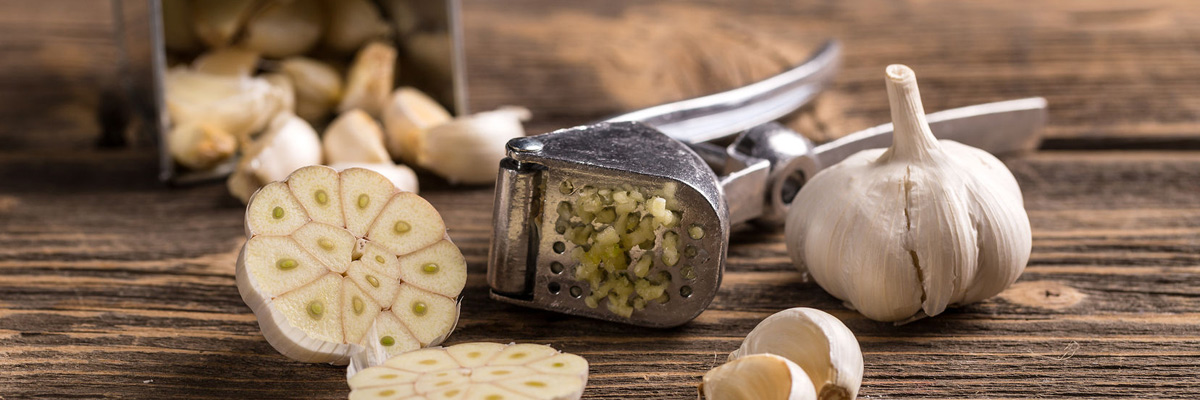
Garlic cloves will repel ants.
Another folk remedy with proven effectiveness is ordinary laundry soap. It's grated finely and sprinkled into corners and crevices. The ant eats a piece and dies. If you were able to find an anthill, it should be treated with a concentrated soap solution.
Nature itself suggested an unusual way to drive these insects out. It's believed that if you bring large forest ants into your home, they'll start eating the smaller ones. Only after they've completely exterminated them will they leave the house themselves. But before you settle on this option, consider whether you really want your home to become a battlefield.
Traps and baits to protect your home
You can also get rid of ants using traps, which you can buy in stores or make yourself. If the insects have become widespread, using such traps will help reduce their population.
There are three types of ready-made traps:
- Poisonous traps. These traps contain strong chemicals that disrupt the insects' nervous systems, thereby killing them. A wide selection of these products is available in stores. Here are a few:
- Raptor. The most popular product. It often comes with additional aerosols. It kills not only worker bees but also the nest.
- Raid. Kills several types of household pests simultaneously, including ants. However, it's not very effective at destroying anthills.
- Dohloks. A powerful poisonous bait produced domestically.
- Combat Superattack. Korean bait (valid for up to three months). Highly safe for humans and animals.
- Adhesive traps. These are sticky strips or boxes to which insects stick. The undeniable advantage of these traps is their low cost.
- Argus. Attracts ants with a strong odor and lasts for about three months.
- Mashenka. It's easy to use, but only suitable for living spaces. It's not very effective in areas with high humidity.
- Electric traps. They operate on a similar principle to glue traps: the ant is trapped and killed by an electric shock. The device is electrically powered. It's not in high demand because the high price doesn't match the results. It reduces the ant population but doesn't eliminate it completely.
For those who don't want to spend money on ready-made traps, there are several ways to make your own. Keep in mind that these traps will be just as effective as store-bought ones.
Sticky tape and double-sided tape can be used as adhesive bait, applied to baseboards, thresholds, and other areas favored by ants. You can also make syrups from water and sugar, or use jam or thickly brewed sweet coffee. Pour the solution into small containers and place them throughout the rooms. Ants have a big sweet tooth, so they easily fall into honey-based traps. To make such a trap, you need to soak an ordinary dishwashing sponge in this delicacy and leave it for a while in places where insects gather.
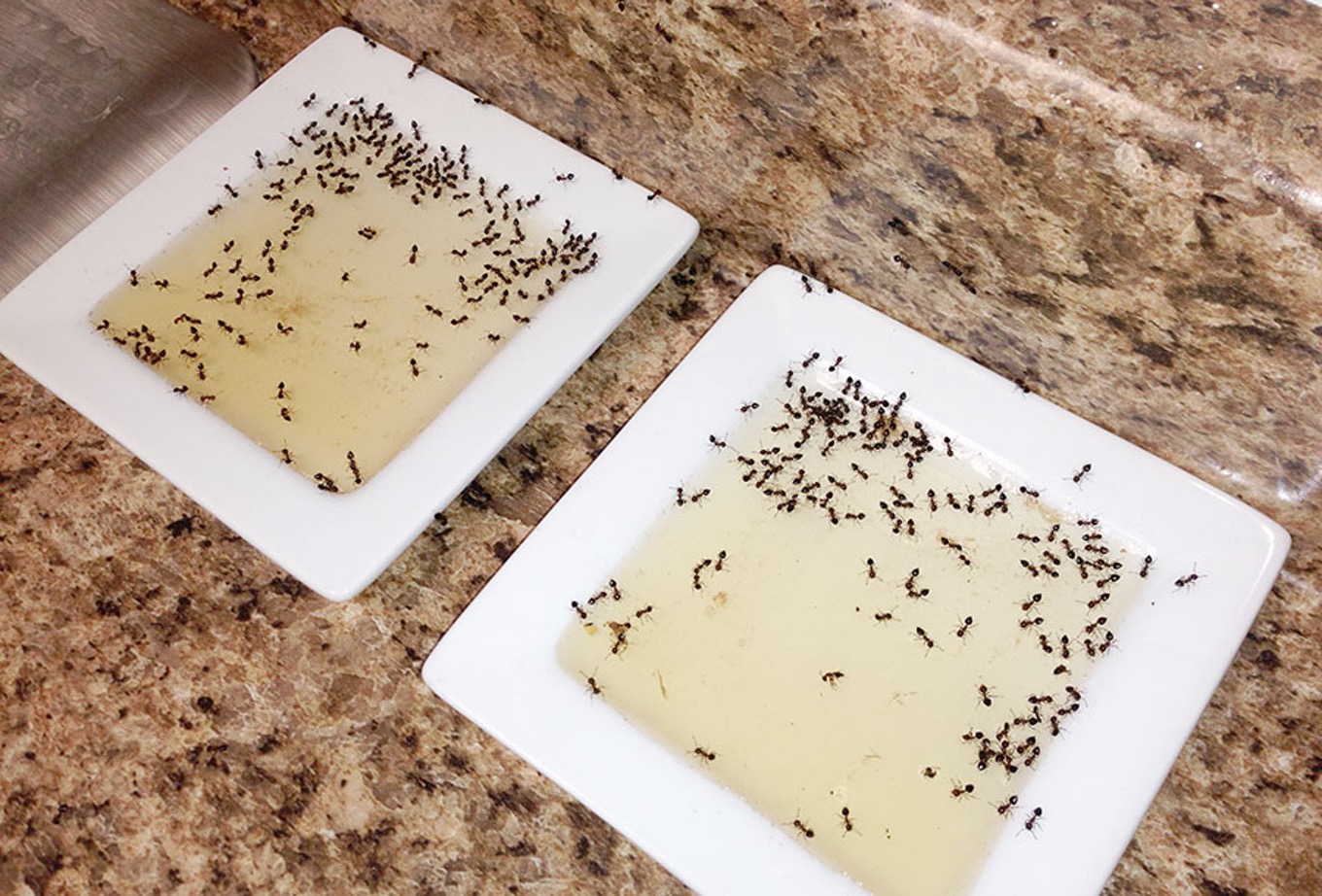
A sweet syrup ant trap is a great alternative to glue baits.
For many years, a mixture of boric acid or borax with boiled egg, sweet syrup, or honey has been used as a pest control remedy. This toxic "cocktail" is placed in small containers or matchboxes near the insects' nest. The insects consume the bait themselves and bring it back to the nest, dooming the entire colony.
Important to remember: If you decide to use traps and bait, place them in places inaccessible to children and pets.
It's most practical to use these products in the kitchen and pantry, as ants are attracted to food. Here are the best locations for traps and baits:
- behind the kitchen unit and refrigerator;
- next to the trash can;
- in the pantry and cabinets with food;
- in the ventilation hole;
- in the corners of rooms (there are often small cracks there through which insects enter the house).
It is recommended to check and update traps every 2-3 days.
Ultrasonic ant repellents
Another popular solution is the ultrasonic repellent. It operates on either electricity or batteries. The waves emitted by this device are imperceptible to humans and pets, making them completely safe. However, they are so unpleasant to insects that they quickly try to leave the premises. It is recommended that you carefully read the instructions when choosing such a device, since different devices have different wave radiation radii. The repellent should be installed so that it covers all rooms. This is a fast and effective way to kill insects. According to the manufacturers, ants will leave the house once and for all within two weeks. This product costs about 700 rubles.
Although this device is quite simple to operate, there are some safety rules that must be followed when using it:
- It is not recommended to use the repeller around the clock;
- It is advisable to install the device further away from sleeping areas;
- If there are animals in the house, you should consult a veterinarian.
Almost all repellents have the same operating principle.
Photo gallery: the most popular devices
-
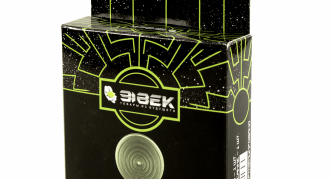
- The EcoSniper repeller has a large area of action, but at the same time has a compact design.
-
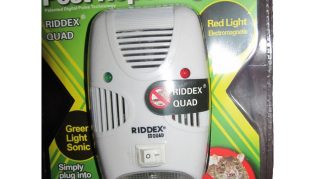
- The Pest Repeller has an attractive modern design and is quite affordable.
-
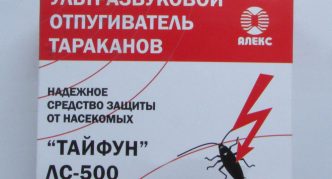
- The Typhoon repeller is recommended for use in summer cottages, bathhouses and non-residential premises.
To be fair, there's a different opinion regarding the effectiveness of ultrasound in ant control. Some users believe these trendy devices are useless, as only sound, which is audible and unpleasant to humans, can repel insects. Therefore, purchasing a device may seem like a waste of time and money to those who hold this view.
Reviews of ant control methods
I've been fighting ants for about three months now. I've tried ant chalk and gels, but it turns out Combat Superattack is the most effective. The package contains four baits. I placed one in each room, including the kitchen. If the rooms are large, you can place two per room. The ant population has really decreased; I only encountered two or three in a week. Two weeks later, I encountered one in the bathroom. Five days have passed, and so far, only one has been encountered. The manufacturer promises similar results within three months. I hope they won't bother me anymore.
A year ago, we moved into a typical nine-story building with a working garbage chute. I think everyone knows what it is. Bugs and cockroaches. I thought I'd turn on this "magic thing" (an ultrasonic repeller) and all the insects would scatter. Well, no such luck... It's been working since we moved in, but the cockroaches keep coming back. And now, gnats, flies, and even moths have arrived.
We encountered an infestation of these crawling insects this year. My mother had previously avoided ants in her house, but this year there was simply no escape. There are many treatments for them, but we settled on "Domovoy" garden ant gel. It comes in a convenient syringe-style bottle. The gel itself is clear and odorless. It's easy to squeeze out and quite economical. We applied it to the areas where the ants were concentrated and waited for results. They didn't disappear completely right away, but their numbers noticeably decreased. Within a week, the ants were completely gone. I still have some gel left over; it has a good shelf life, so I think I'll need it next year.
"Great Warrior" gel is excellent at repelling unwanted ants. It can be used both indoors, in apartments, and in gardens. It's effective in both areas. We've tested it ourselves. However, the effect lasts about two weeks, after which the ants may return.
Preventing insects from appearing in the house
As mentioned above, ants are attracted to food. Therefore, to avoid having to get rid of the tiny red insects, it's best to prevent them from entering your home in the first place. It's recommended to follow a few rules:
- take out the trash regularly and wash the bucket;
- Close food containers tightly, especially sweets;
- do not leave crumbs on the table or floor;
- keep pet bowls clean;
- seal up cracks in the walls;
- The ventilation hole should be washed at least once a quarter and lubricated with a pest control agent.
Cleanliness is key to the health of all family members and peace of mind in the home. However, if pesky insects do disturb your daily routine, we recommend combining different pest control methods. This way, you can expect more effective and long-lasting results.