Rats are considered among the most dangerous rodents for good reason: they are bold, intelligent animals that are not easy to control, and they have virtually no fear of humans. This is why many private homes have been literally swarming with these nasty rodents for ages. How can this problem be solved with folk remedies?
Content
How plants can help
Nowadays, many hardware stores offer a wide range of universal rodenticides and rodent traps. But these products aren't suitable for everyone: some are completely inhumane, others can harm pets, and picking up the decomposing carcasses of dead rats isn't the most exciting activity. Or maybe your home is in a remote village, miles from the nearest hardware store, and you need to get rid of rats right away. People have long had to tolerate these pests in their homes, so there are plenty of folk remedies for dealing with them.
You can make a private home, which has at least some semblance of a plot of land, safer by planting plants around it that rats don't like. The best plants for this purpose are black elderberry, henbane, castor oil plant, and datura bushes, as well as spicy herbs such as peppermint and cilantro. Flowers such as calendula, aconite, hydrangea, chamomile, lily of the valley, foxglove, and daffodils will not only decorate your flowerbed but also protect your property from rodent attacks.
Photo Gallery: Plants to Fight Rats
-

- Hydrangeas not only decorate the garden, but also repel rodents.
-

- Coriander, or cilantro, is not only a spice, but also a rat repellent
-

- Chamomile - fights both insects and rats
-

- Aconite is a beautiful and poisonous flower.
-

- Calendula, or marigold, also helps against rodents.
-

- Sweet lilies of the valley only seem harmless
-

- Foxglove is a beautiful flower and poison for rodents.
-

- Peppermint repels rodents
-

- Datura is an annual plant that fights rodents.
-

- The rhizomes and fruits of the castor oil plant are very poisonous.
-

- Rodents also don't like black henbane.
-

- Black elderberry roots are poisonous to rats.
-

- Black root is popularly known as "rat-killer"
There's a wonderful plant called (I think) Black Root, which is planted under trees. The ripe seeds are covered in small spines that cling tightly to mouse skins, which is why the mice don't like it and try to leave the area. It's best to leave the dry shoots of the plant over the winter; they'll continue to fight off the pests in your absence.
However, caution is advised: many of these plants are poisonous to humans and other animals. So either avoid growing highly toxic plants or keep your children and pets away from them. Besides everything else, processed tops of garden plants are also quite helpful - for example, chopped stems and leaves of tomatoes. They are laid out after the harvest, in the fall, around the house, which also creates a kind of anti-rat barrier.
You can also protect your home's interior from rats with plants. They can be collected while they're in bloom, dried, gathered into bunches, and hung on the walls, placed in corners, and placed in cabinets. If you don't like the sight of falling leaves and flowers, you can sew them into beautiful sachets. To protect yourself from rats at home, stock up first of all on rat repellent (also known as black root), as well as wild rosemary, wormwood, tansy, chamomile, and mint. By the way, burdock will also come in handy—its prickly inflorescences make a good seal for cracks and holes in the house. Even if a rodent tries to crawl through, it will inevitably get burrs on its fur and will likely flee the danger zone.
How essential oils can help
In addition to plants themselves, essential oils derived from them can be used against rats. They can be applied to furniture, walls, corners, and doorframes, or cotton balls can be soaked and placed in rodent burrows. A small drop of oil can be added to water used for washing floors and dusting. Another effective method is to mix an emulsion of water, essential oil, and vegetable or mineral oil, pour it into a spray bottle, and spray the walls and floors. The best oils for this purpose are peppermint and Japanese mint, chamomile, wormwood, and clove. However, this method should be used with caution. Firstly, essential oils can cause allergies in you or your family members, especially children and pregnant women. Secondly, the concentration of the active ingredient should be low, otherwise it will be difficult not only for rats but also for you to remain in the house. However, if you use this method in the fall, before the end of the summer season, you can overdo it a bit with the oils, but then you should wear a respirator to avoid burning your mucous membranes.
Will tobacco help?
This remedy can be considered a herbal one if we're talking about planting tobacco bushes near the house. However, the main product of these bushes—tobacco—is also effective against rats. It is best to use shag, but cigarette tobacco will also work - preferably the coarsest and strongest one, "Prima", "Astra" and "Belomor" will help. You can sprinkle it in closets and corners, or you can make a strong infusion and spray it on furniture and cracks in the house. Some gardeners even steep cigarette butts and then use the resulting solution to treat rooms. However, due to its distinctive smell, tobacco is usually used in basements, cellars, yards, sheds, and attics. Incidentally, shag scattered in garden beds will also protect plants from rodents.
How to use ash against rats
Many private homes, especially in rural areas, usually have a stove. And where there's a stove, there's ash. Take the time and effort to clear out some of it, and you'll have another effective rat repellent.

Ordinary ash from a stove or fire pit will drive rats out of the house.
Ash or crushed charcoal should be scattered in areas where rodents are found—along walls, in hidden corners, in the basement and attic, in the yard, and under the porch. This substance contains an alkali that is activated when rats lick their ash-stained paws and faces. The alkali will cause severe irritation of the mucous membrane and digestive problems, and the pests will try to leave the unpleasant place.
You need to fill the basement with charcoal. After a while, these fat, cheeky, greasy creatures simply leave. Why? It's because when they step on the coals, their heels become irritated. To relieve the irritation, they periodically lick them. In turn, constant exposure to coals irritates the esophagus.
How to use ammonia against rats
The smell of ammonia is perhaps one of the most unpleasant, not only for animals but also for humans. However, it's worth overcoming your revulsion and using it against rats. You need to take small pieces of cloth or cotton wool, soak them generously in ammonia and push them into the passages gnawed by rats or place them where you saw rodents. Some even pour ammonia directly into rat burrows. This will discourage rats from approaching your home for a long time. Incidentally, vinegar can also be used for the same purpose.
Will tar help?
Ordinary birch tar can also help deal with rats – they hate its pungent smell.

Birch tar is an old, tried and tested rat repellent.
Tar can be used to coat corners, doorframes, and furniture edges. To increase its impact, soak sawdust in it and sprinkle it on the floor. However, this method should be used with caution: living in a house covered in sawdust is not very comfortable. Therefore, reserve it for the attic, basement, yard, basement, utility rooms, and sheds. However, if you leave the house for the winter, you can also sprinkle tar-soaked sawdust in the rooms and entryway—it will be easy to sweep up in the spring. In addition to tar, sawdust can also be soaked in turpentine, kerosene, naphthalene and formalin. But here you need to be careful, since turpentine, kerosene, and even tar are highly flammable, and the fumes of naphthalene and formalin are poisonous.
How carbide can help
Another popular rodent control substance is calcium carbide. It's typically used for welding, as it releases a lot of heat and acetylene when reacting with water. This property is precisely what we need to use to control rats.
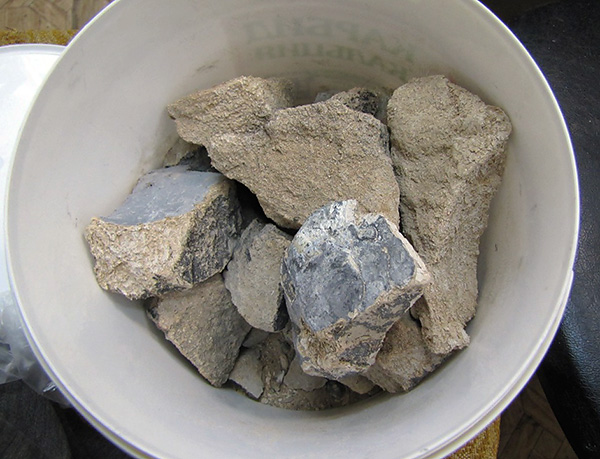
Calcium carbide also helps fight rodents.
Small pieces of carbide are lightly moistened with water and placed in rodent passages, and then covered with soil. The poisonous gas will immediately begin to fill the holes, and the rats will be forced to retreat to a safer place. The disadvantage of carbide is its exceptional flammability and explosiveness.
A great way to control rats is using calcium carbide waste, which is used in gas welding. I've completely eliminated mouse and rat nests on my property; they simply don't dig in areas where the soil is mixed with calcium carbide waste, which is 90% successful. I should note right away that, unlike calcium carbide, the waste has almost no odor, and after a short period of time, the odor disappears completely. It's harmless to pets; I've been using this method for over 20 years.
Let's get a predator
Finally, the most well-known, oldest, and most tried-and-true rat control method is a domestic predator. This must be a large, strong animal, as rats differ from smaller rodents in both size and endurance. Therefore, not every cat can handle a rat; it's best to spare your pet. Ferrets, weasels, and foxes are also natural enemies of rats—some even keep them indoors. In addition, there are some dog breeds that cope with rats better than others: dachshunds and terriers. Fox terriers and bull terriers are considered the best ratters.
Video: Dogs vs. Rats
Almost all terriers (even Yorkies) and miniature pinschers are rat catchers; bull terriers are the record-holders in catching rats (in terms of speed and duration of work).
As we can see, over the many years—even centuries—of fighting rats, people have devised a variety of ways to get rid of them, even before chemists developed specialized poisons. Moreover, many folk remedies are effective in both control and prevention. Therefore, homeowners should definitely take a closer look and choose the best ones for themselves and the worst for rats.


 Annv
Annv
1 comment