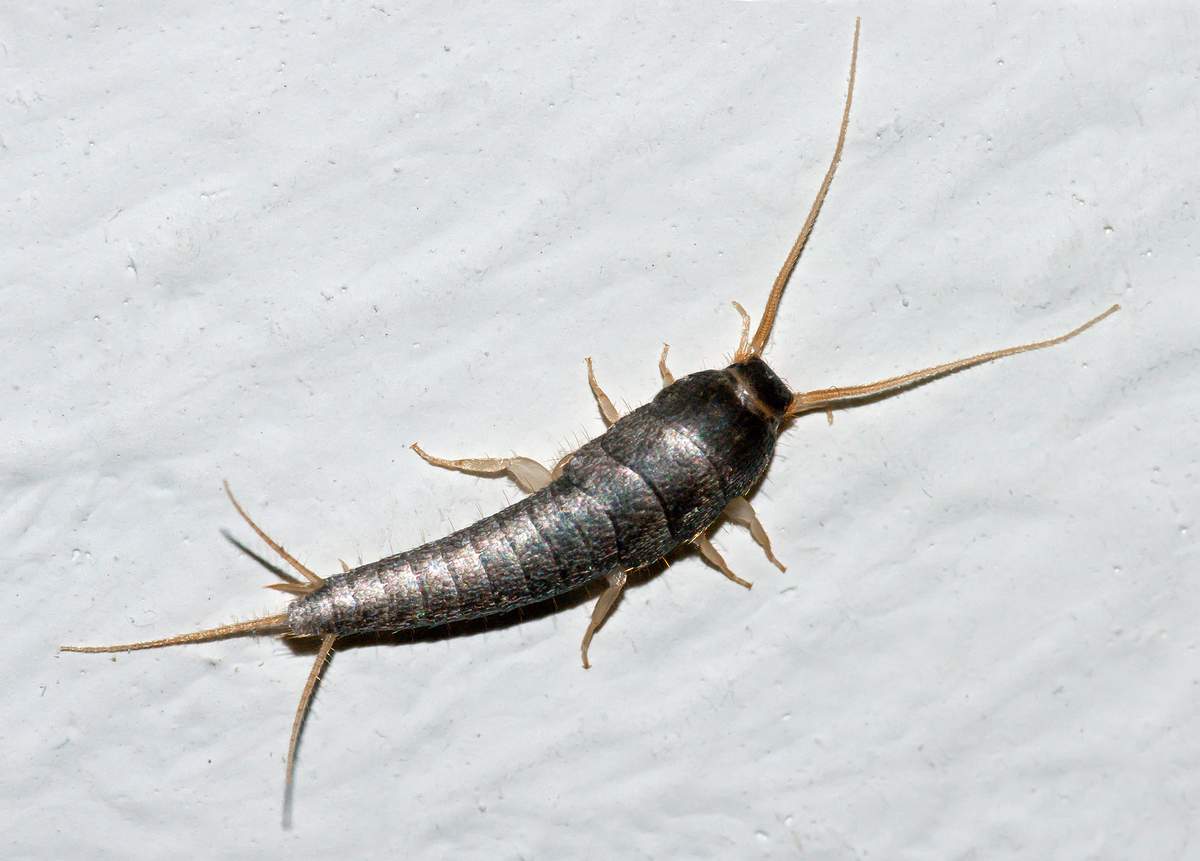
Most people are disgusted by the earwig insect: legs, antennae, and a menacing, forked stinger protruding from behind. Few people want to see one in their own home or garage. Given the myths surrounding earwigs, an encounter can evoke not only disgust but also fear. Let's try to understand the dangers of earwigs and how to protect your home and outbuildings from them.
Content
What are earwigs and why are they dangerous?
The common earwig (Forficula auricularia), also known as the earwig, is also known as the earwig. This insect belongs to the order Dermaptera and is capable of flight. However, it rarely does so because its front pair of wings is underdeveloped. The earwig inhabits rural areas, where it prefers sites near human habitation, in close proximity to vegetable gardens and orchards.
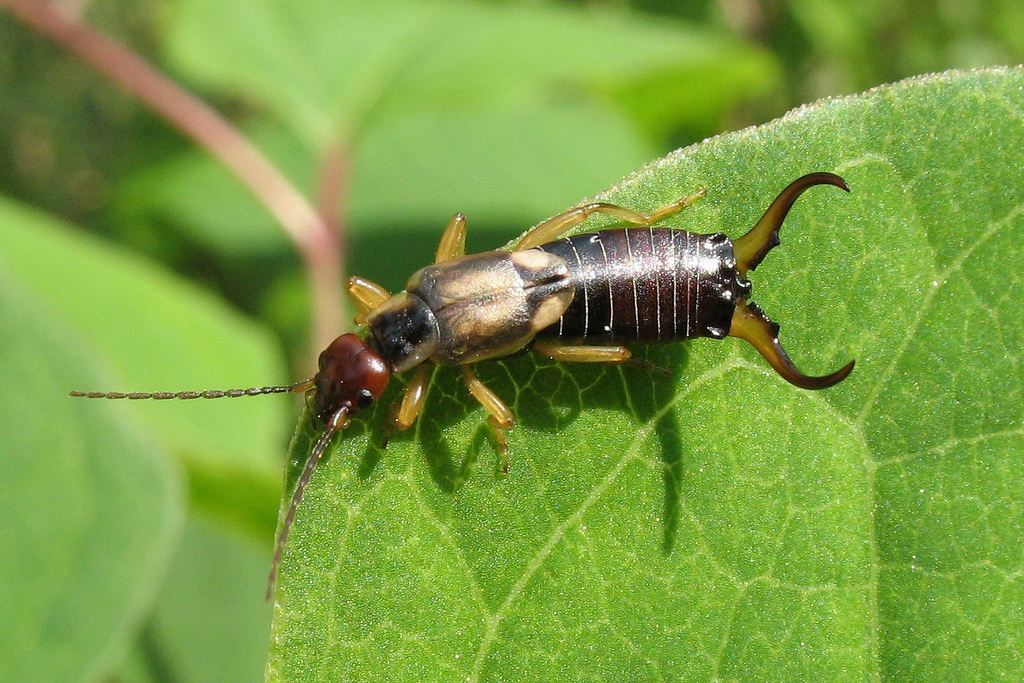
Earwigs are harmful to gardens and vegetable plots.
Earwigs are omnivores, predators, and scavengers (they attack small insects and eat their remains). They are active at night and at dusk, and during the day they usually hide in damp, dark corners.
Because they are omnivorous, earwigs are harmful to garden and agricultural crops. However, they can also be beneficial, destroying other harmful insects, such as aphids.
The earwig can reach 1.5 to 2 centimeters in length, with a flattened, brownish body. Its head is covered with threadlike antennae, and its eyes are very small. Its legs are lighter, dirty yellow, and run along the legs.
From a biological perspective, the earwig's second name—two-tailed—is inaccurate. In scientific classification, true earwigs belong to the order Cryptognatha.
Externally, the earwig has two distinctive features:
- The shape of the wings, which when unfolded, resemble a human ear.
- The forceps at the end of the abdomen resemble pincers or pliers. Earwigs use their forceps to hold prey or for defense. When threatened, the insect arches its hindquarters and extends its forceps forward.
Earwigs are not poisonous insects and will only bite humans if they suspect a threat. Their forceps are strong enough to pierce even the skin of an adult, but this will not cause serious harm. Simply treat the bite site with an antiseptic and take precautions against any possible allergic reactions.
The earwig's anatomy has given rise to the myth that the insect can crawl into the ear, pierce the eardrum, and cause brain damage. However, this is pure myth. No such case has been documented, and earwigs pose no danger to the human brain.
Earwigs can cause damage, not to humans, but to households and agricultural crops—especially in dry years and when populations are high. Because earwigs are omnivorous, they affect virtually all types of garden and vegetable crops. Earwigs are not selective in their food. They eat fruit pulp, leaves, shoots of young trees, flower petals, cereal stems, and roots with equal relish.
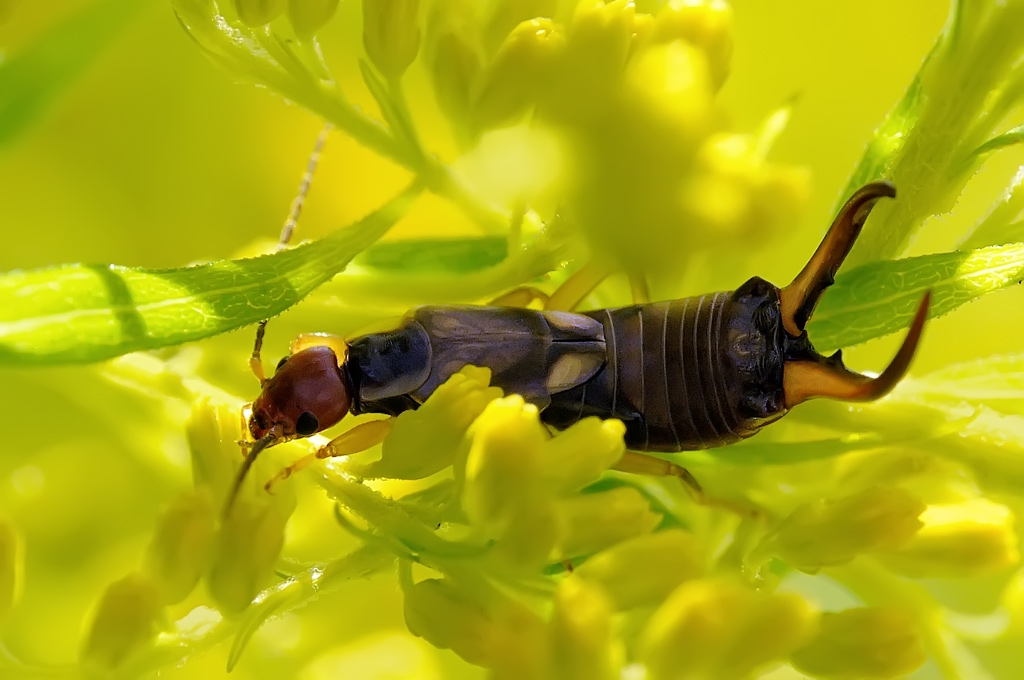
The earwig eats flowers and other garden plants.
As a predatory insect, the earwig poses a danger to apiaries. It attacks bees. After entering the hive, it feeds on honey and pollen. A single earwig can consume up to 300 mg of the bee's reserves.
Once in a human home, earwigs begin to nibble on houseplants and consume plant foods such as bread, vegetables, and fruit.
Video: Common earwig (male)
Reasons why earwigs appear in apartments and private houses
In nature, earwigs inhabit loose soil and dark, damp places, so they thrive in old wooden houses. However, they can also infest well-appointed apartments, where they prefer to settle in areas with high humidity and minimal light. Typically, this includes a bathroom, toilet, kitchen, or utility room (such as a closet).
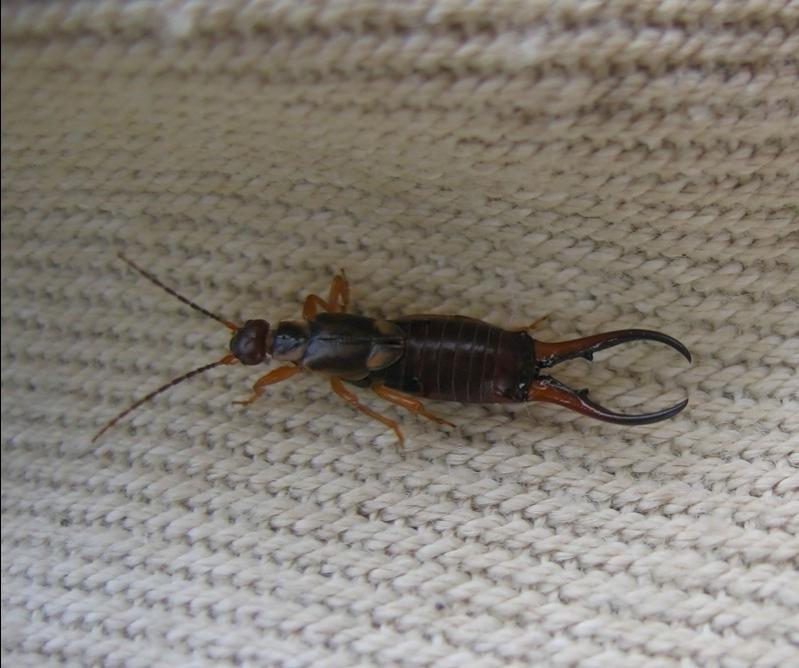
In a room, an earwig can hide under a blanket or among damp sheets.
An earwig can get into a person’s home:
- from another apartment, where earwigs had already bred;
- from the basement;
- from a garage or other outbuilding;
- along with food (fruits or vegetables);
- through an open door or window;
- with a bouquet of flowers.
If the room is rarely ventilated, the ventilation is poor, condensation forms, or a pipe leaks, then the insect can settle in the vicinity of a person for a long time.
Sometimes you come across information about the benefits of having earwigs in your apartment. They eat microscopic mites and small bugs. But keep in mind that the benefits of such a neighborhood usually don't outweigh the drawbacks.
How to get rid of earwigs in residential and utility spaces
Earwig control methods can be divided into two types: chemical treatments and folk remedies. For best results, they can be combined.
Chemicals
Indoor earwig control is not much different from other indoor insect control. Fly and cockroach repellents are the first line of defense.
- "Mashenka" cockroach chalk. It's used to mark areas where earwigs congregate.

Cockroach chalk works great against earwigs.
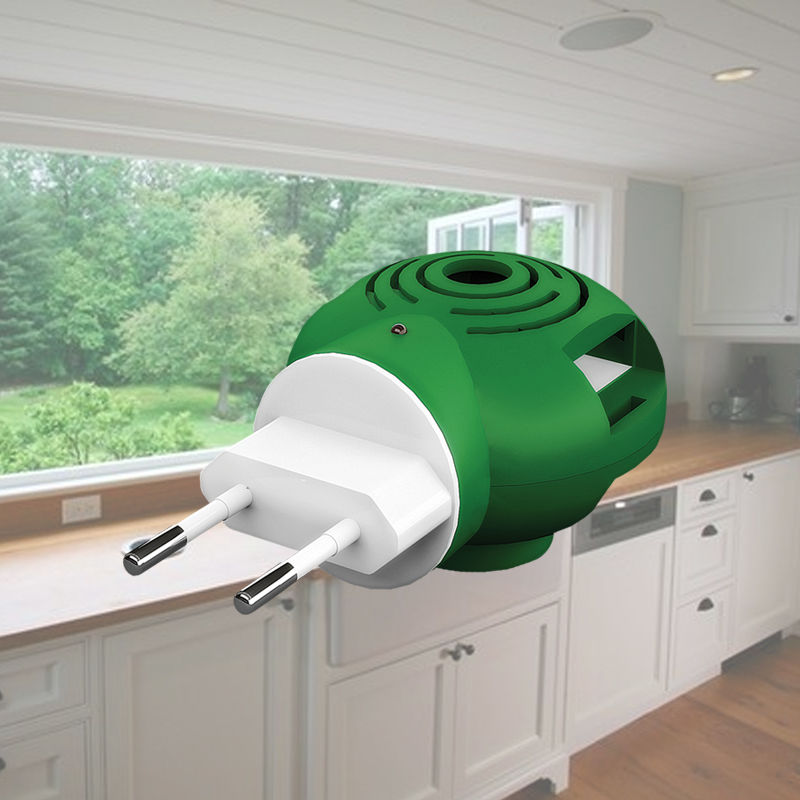
- Conventional fumigators with plates against flies and mosquitoes also destroy earwigs.
Earwigs are repelled by a fumigator with mosquito and fly plates.
- Fenaxin (powder) is sprinkled on areas where earwigs appear. It poses no danger to humans or pets.
To kill earwigs, use Fenaxin powder.
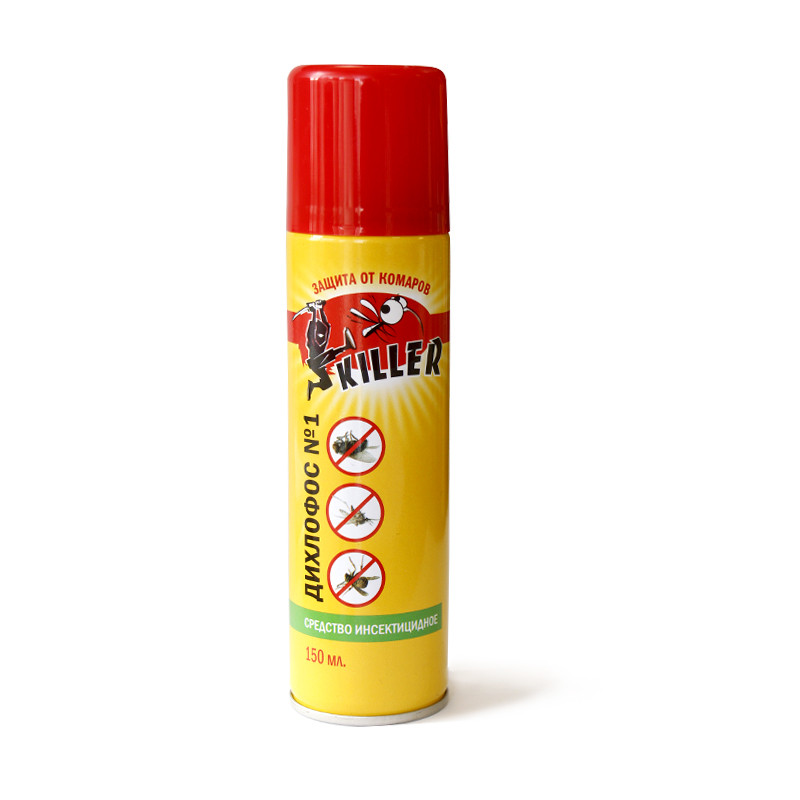
- Dichlorvos and similar insect repellent aerosols. It's best to start spraying in basements, where earwigs are likely to crawl into apartments.
Insect repellent sprays work just as well against earwigs.
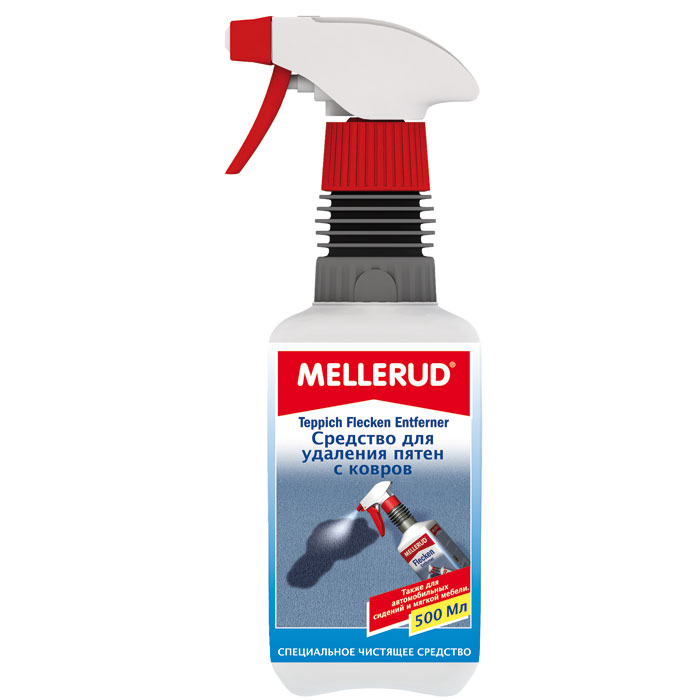
- Stain or laundry spray. Contact with it is fatal to earwigs.
Stain removers are deadly poison for earwigs.


Earwigs are nocturnal insects. Therefore, it's best to use volatile products such as sprays and aerosols in the evening. This will ensure the product stays fresh until the earwigs arrive.
Folk remedies
- Fragrant herbs. Plants such as tansy, wormwood, and mint can help combat earwigs. Spray floors, baseboards, and corners with a strong infusion or decoction of these herbs. For a more effective solution, add shavings of laundry soap.
A decoction of wormwood can keep earwigs away from your home for a long time.
- You can repel earwigs without killing them with an onion and garlic infusion: mix 100 grams of onion and 100 grams of garlic and pour boiling water over them. Let the resulting infusion steep for 24 hours, then use it to treat floors and walls. This solution is completely safe, but it has an unpleasant odor.
Earwigs cannot stand the strong smell of garlic.
- Boric acid. Roll boric acid powder and boiled potato (or egg yolk) into balls and place them in earwig habitats.
Small balls are rolled from boric acid and filler.
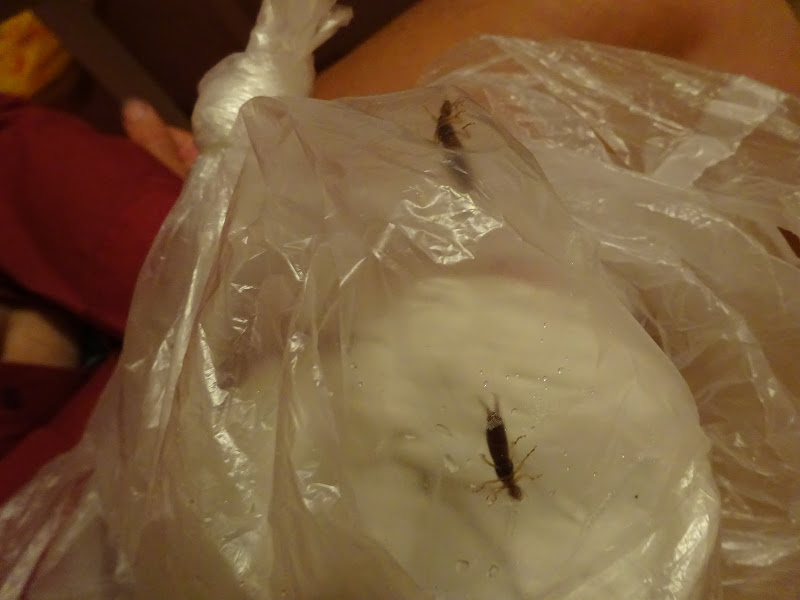
- A wet rag or cloth. A mechanical trap. Roughly crumple the wet rag and leave it near the earwigs' nest. By morning, the insects will inevitably crawl inside. Quickly place the rag with the insects in it in a bag and throw it away.



If earwigs have multiplied so much that these methods or their combinations have not yielded results, it is worth contacting the SES for help.
Preventing earwigs from appearing in your home or apartment
Earwigs prefer to live in gardens and vegetable plots. They rarely infest apartments and modern private homes. However, for complete peace of mind, you can take a number of preventative measures that will minimize the risk of these uninvited guests.
- Sealing thresholds, window frames, and screens. Blocking earwigs' access will prevent them from accidentally entering the room.
Sealed windows prevent earwigs from entering the room.
- The house must be free of cracks and holes (including in the foundation, roof, floorboards, or where plumbing and electrical lines are located).
An earwig can enter a house through a crack in the wall.
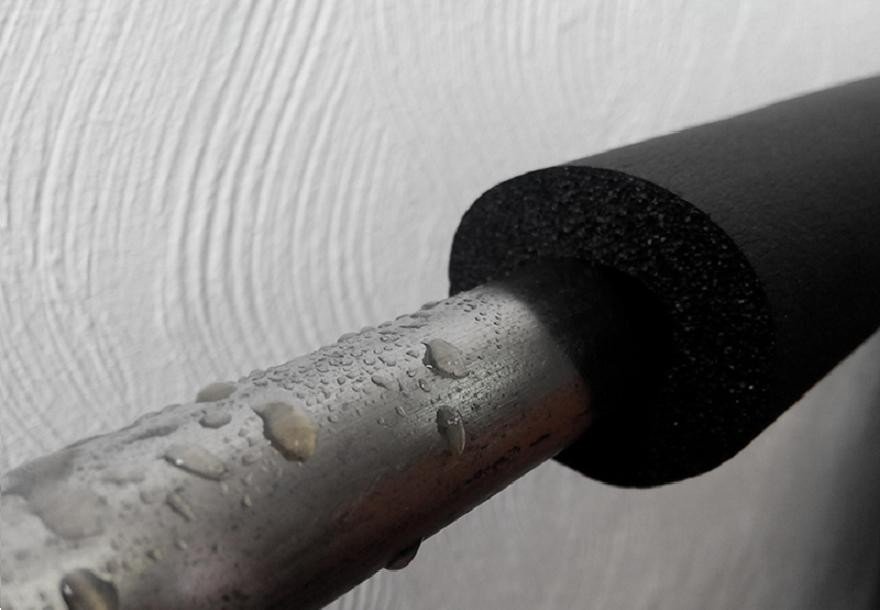
- Avoiding moisture and condensation, as well as adequate ventilation, will encourage earwigs to seek another place to live, even if they are infiltrated. A dry bathroom and toilet, and in a private home, a dry foundation and plumbing, will also encourage them to seek another place to live.
Earwigs love moisture and readily settle in places where condensation accumulates.
- Proper food storage. Keeping food scraps off the counter and open food items off the shelves will make your home unsuitable for earwigs.
Poorly sealed foods attract earwigs
- Aromatic herbs. Planted around the house or grown in flowerpots on the windowsill, aromatic plants will provide an additional barrier against earwigs entering the home.
Plants that emit a strong aroma are an insurmountable obstacle for earwigs.



Reviews of control products
I recommend trying Thiuram. It's used in the rubber industry as a termite repellent. The powder spills along the baseboards. It's only available from rubber manufacturers. At one point, it was the only thing that worked against cockroaches and other vermin.
I'll share my experience. In the spring, with the warming weather, these earwigs (earwigs) started creeping up. They were crushing, drowning, basically... In the summer, we started a radical renovation of the facade, removed the siding, which was made on a wooden block nailed directly to the polystyrene concrete, and saw hundreds and thousands of them. The nests were intact on the wooden frame. Basically, we removed the entire wooden frame, sealed all the cracks through which they were crawling into the house with caulk and foam, replaced the wooden frame with profile, then a windbreaker on top of it, then a block on top of that, then siding (with ecowool under the windbreak). The earwigs have completely disappeared. But they still bother the neighbor in the wooden house. Apparently, they nest somewhere in the wood... So, check for "hot spots," wooden structures that can get wet. They are found on the property, but not often... The main thing is that they are no longer in the house.
Although the earwig is unattractive and even frightening, it only causes serious damage to a farm if its population grows uncontrollably. Individuals of this species are virtually harmless and can be beneficial by preying on smaller pests such as aphids, flies, and caterpillars. These insects can be controlled using both chemical and natural methods. However, prevention is best, and creating unsuitable living conditions for earwigs in your home or apartment is the best option.