Gardeners love irises for their vibrant colors and low maintenance. After all, the flower thrives in any location free from stagnant moisture. However, in recent years, cases of bud rot have become more common. Why do flowers fail to bloom, instead becoming waterlogged and dying? The answer was discovered back in the 19th century, but our gardeners have only recently become familiar with this problem—the iris fly.
What does an iris fly look like?
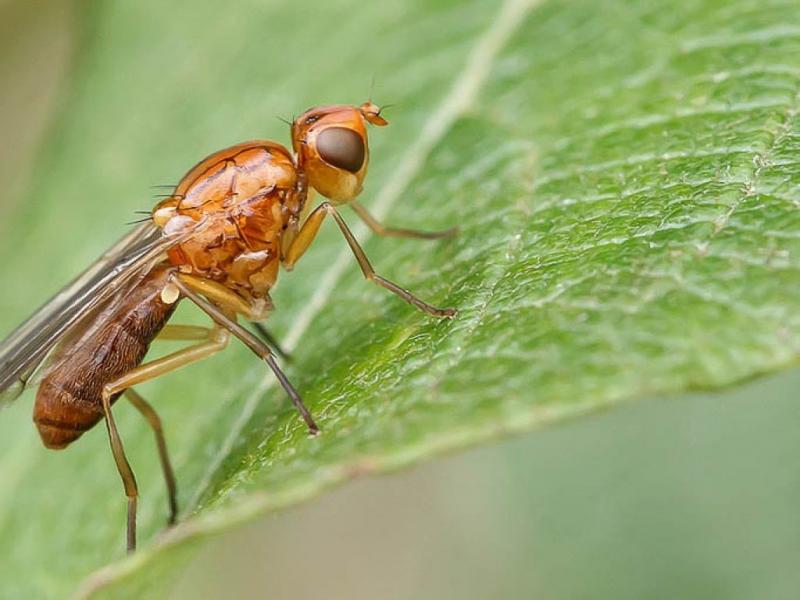
In scientific literature, this insect is known as the "iris flower fly." It looks very similar to a common housefly, differing only in coloration: its body is gray-black with yellowish spots.
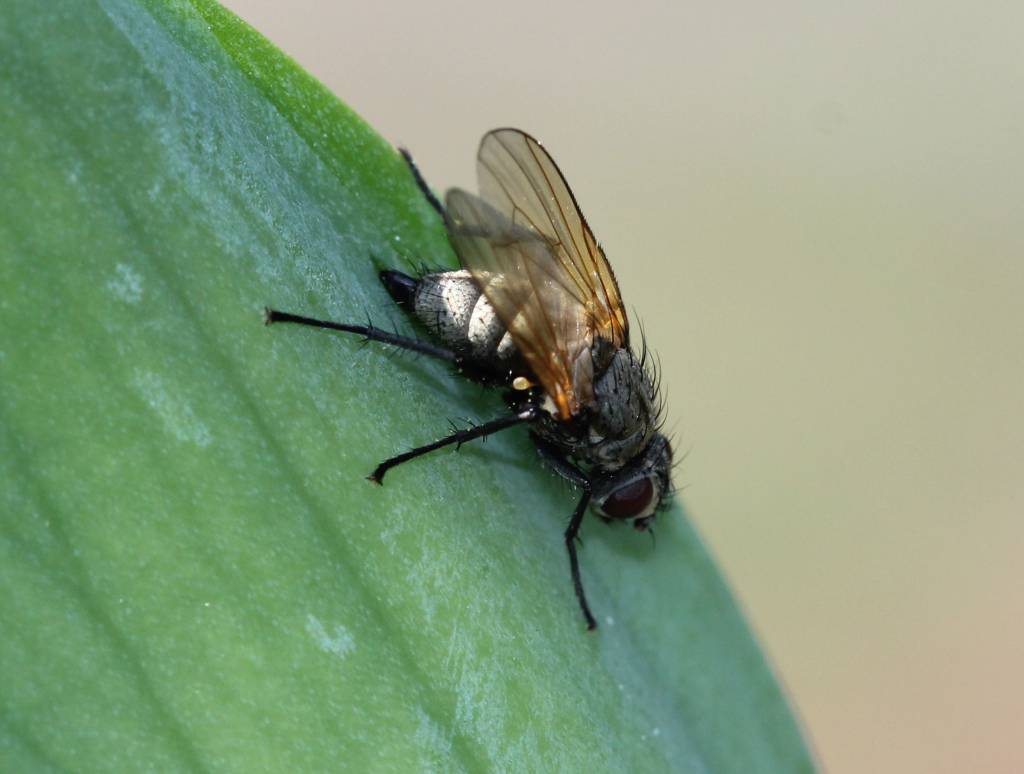
Externally, the iris fly differs from the ordinary one by the presence of yellowish spots on the body.
The pest enters the bud at the beginning of May and lives there until mating, feeding on the unopened petals of the flower. After the flower fly lays its eggs, it leaves the bud. The hatched blue-white larvae (1–2 cm long) consume what remains of the bud. The outside of the flower buds wither and rot inside. The larvae fall to the ground, pupate, and overwinter happily. And in the spring, the process repeats itself. The only consolation is that the fly lays eggs only once a year.
Table: Life cycle of the iris flower
| Decade | April | May | June | July | August | September | October |
|---|---|---|---|---|---|---|---|
| 1 | (0) | +, I | 0 | 0, (0) | (0) | (0) | (0) |
| 2 | 0 | +, I | 0 | 0, (0) | (0) | (0) | (0) |
| 3 | 0, + | — | 0 | (0) | (0) | (0) | (0) |
Designations: + — fly, y — egg, 0 — pupa, (0) — pupa in the dormant stage.
What varieties of irises and how does the fly harm them?
It is the larvae that cause the greatest harm to the plant. As a rule, mid- and late-flowering varieties of hybrid iris are at risk. While the flower stalk develops, most of the buds fail to open and become a soft, brownish mass. The petals of the blooming flowers curl after a while, and the bud itself dries up. This reaction to the pest is observed primarily in dwarf iris varieties.
The fly causes damage by piercing the petals of a blooming flower with its proboscis and drinking the sap. It uses its extended proboscis to scrape away the epidermis of the plant's surface, causing spots to appear along the petal edges. Furthermore, the fly mars the flower's surface with a green secretion.
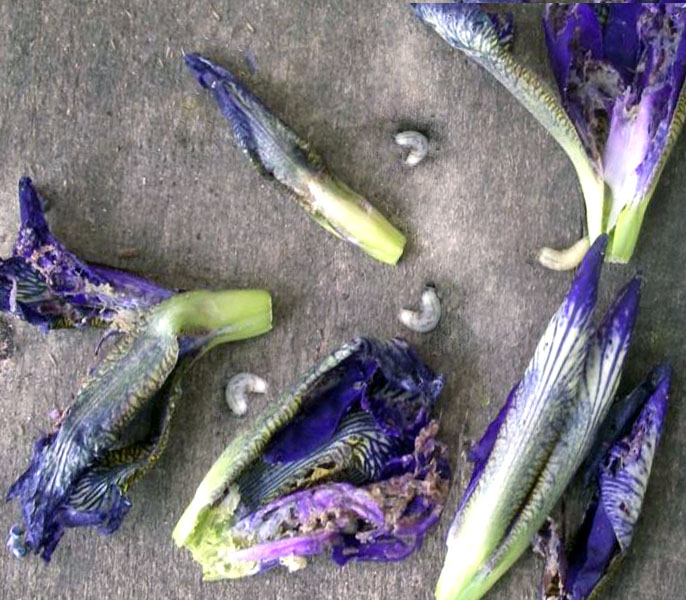
Damaged buds must be destroyed.
The pest poses a threat to hybrid (bearded) irises, which are created by crossing many species of the plant, and which are also threatened by the fly. However, scientists have noted that there are iris species that are not visited by the fly, even if they bloom near the hybrid:
- cereal-like,
- salt-loving,
- Siberian.
Previously grown varieties in the Soviet Union were rarely attacked by the fly. This situation began to change when hybrid iris varieties were imported from Europe. In the late 1980s, the fly began to destroy these plants en masse.
Control of the iris fly
Digging up the soil won't have any effect on the flies. This is simple: to kill the larvae, you need to dig up the soil no further than 5 cm from the rhizome, as this is where the flies pupate. This is no easy task. Also, there's no point in treating plants with chemicals immediately before they bud. It's best to do this when the flower stalk is just emerging from the rhizome. When the buds have appeared but haven't developed color, you can spray them again. Treating the soil under the flower will also help. If larvae are found in the buds, the flowers should be picked and burned.
Since the fly can travel to neighboring plots and infest plants there, it's advisable to treat several yards simultaneously. This will prevent the pest from finding its way to the flowers in the coming years.
You should pay close attention to the timing of plant treatments so that flowers will eventually bloom on your site.
Experienced gardeners recommend treating plants with insecticides such as:
- Aktara,
- Actellic,
- Bi-58,
- Decis.

It is important to treat the plants from the moment they shoot up.
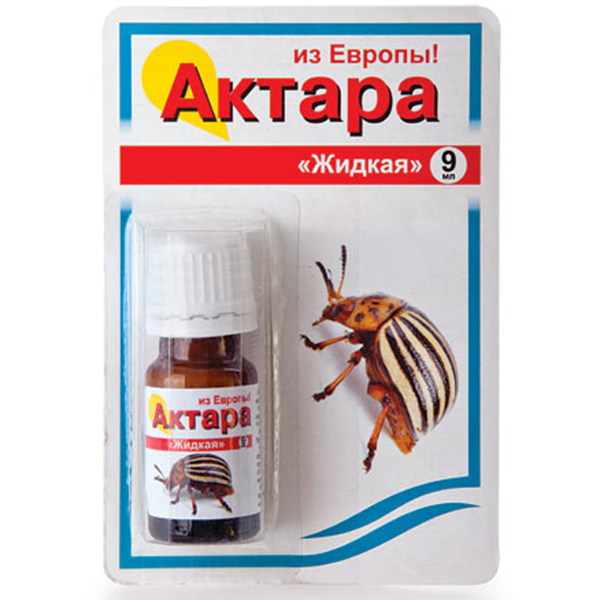
As a preventative measure, you can transplant the flowers in September to another location, treat the previous one with the same preparations and dig it up. However, the entomologists’ report, which was based on data provided by Doctor of Biological Sciences E. P. Narchuk, states the following:
Organophosphorus compounds, synthetic pyrethroids, and neonicotinoids (Confidor and Mospilan) were tested as chemical pesticides. The use of organophosphorus pesticides (BI-58N) did not reduce pest populations, while the use of pyrethroids reduced pest populations by 30%. Neonicotinoids proved significantly more effective: Confidor reduced pest populations by 90%, while Mospilan reduced pest populations by up to 100%. Treatment with these products should be carried out at the beginning of budding, when the flower stalk is just emerging from the rhizome, and for effective protection, it is important to strictly adhere to the early application times. Experience with standard dosages of products has shown that spraying plants with formed buds shortly before flowering does not produce the desired results.
On forums, you can find gardeners' advice on treating irises with ash, tobacco dust, pepper, mustard, a mixture of soap and alcohol, and so on. This is recommended when the flowers are beginning to flower. There's no data on the effectiveness of these treatments, but they won't cause any harm, so you can try this method. Infusions of all bitter herbs are also suitable for spraying.

Infusions of bitter herbs (for example, celandine) can repel pests.
In addition to chemical and folk remedies for fly control, there is also a mechanical method of protection: gauze caps placed on the flower buds after treatment. This will help if the pest has not yet penetrated the flower.
Video: Caring for irises and how to control iris flies
Reviews from flower growers
Our gardeners, who have already encountered this problem, recommend using NURELL-D (according to the instructions). Nurelle is added to a solution of laundry soap. This product works better than BI-58. A single treatment is required, as soon as the bud appears, but if your irises bloom at different times, two treatments can and should be performed. The laundry soap solution is prepared as follows: grate the soap coarsely and pour boiling water over it.
You wait and wait for flowering, but it doesn’t happen, the buds are all rotten inside, last year I didn’t have time to treat them, and the year before I watered them with some kind of flower poison, the store couldn’t recommend anything, I bought whatever was at hand, I treated them twice for sure, the first time when there were no flower stalks yet, the second time - when the buds had already appeared, they bloomed normally.
I spray my irises with Aktara 2-3 times per season. This product is absorbed by the roots, making all parts of the plant unpalatable to pests. Try it... I've never seen such a nuisance.
Control of the iris fly requires a comprehensive approach: annual repotting and soil treatment, spraying flowers, and destroying infested buds. These measures will definitely yield results, and you'll enjoy the vibrant colors of your garden.

 Lyudmila
1 comment