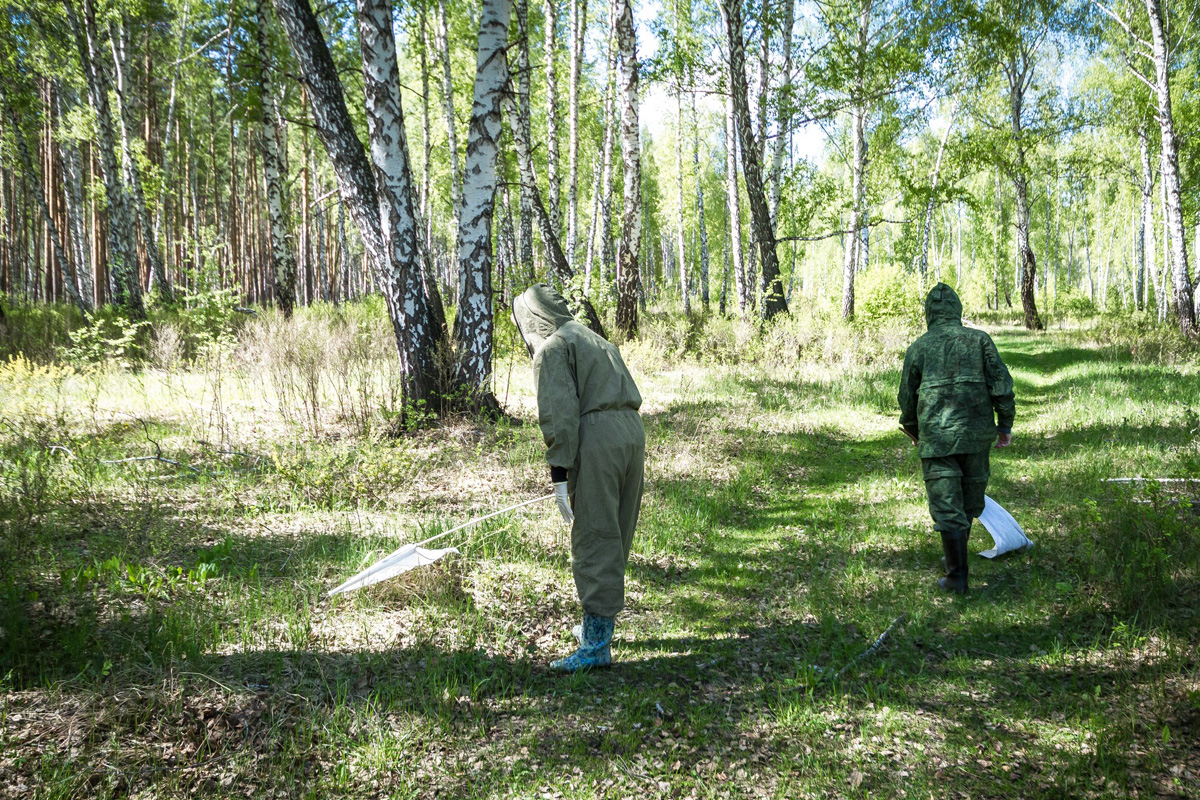
If you're afraid of ticks, don't go into the woods. Unfortunately, it's true. Everyone has encountered these small, nasty arachnids at least once in their lives. Even those of us who don't suffer from acarophobia and aren't afraid of small insects are frankly afraid of ticks. The fact is, some members of this arthropod species can carry diseases dangerous to humans. In this article, we'll explore where ticks live and what threat they pose to humans.
Content
Tick habitats, distribution range of different species
Ticks are small arachnids, reaching no more than 0.5 cm in length. They inhabit virtually every continent and a variety of climates. They belong to the class Arachnida, subclass Arthropoda, which includes over 50,000 species, each with a distinct lifestyle and diet. Most ticks prefer damp forests, grassy clearings, and shrubs. However, some live in living spaces alongside people. These so-called saprophytes, or dust mites, live in house dust and feed on dead epidermal cells. Some species live under human skin and in hair follicles.
It's important to know the habitats of ixodid ticks, which feed on the blood of animals and humans and can transmit dangerous diseases. These parasites are found on all continents, with the possible exception of Antarctica.

Endemic areas of the Russian Federation for the spread of tick-borne encephalitis
Important to know! Scientists have developed vaccines against viral encephalitis, but there are still no vaccines against such dangerous diseases as Lyme disease and Crimean hemorrhagic fever.
Habitats of ixodid ticks and periods of their activity
Optimal living conditions for parasites are places with high humidity (more than 80%). Let's highlight their main habitats:
- well-warmed slopes, densely covered with grass and low bushes;
- forest edges and adjacent clearings;
- fern-covered areas in the shade of trees;
- banks of rivers, lakes and streams.
Because parasitic ticks require other living creatures to survive, they tend to concentrate in areas where trails and forest roads pass.
Ticks don't rise above 1–1.5 meters, despite the common belief that they fall from trees onto their victims. Low shrubs and dense grasses pose the main danger.

Ticks love damp places, for example, near forest streams where animals often come
Tick activity peaks in April and May, during mating and egg-laying season. By mid-July, it subsides and then resumes again between August and September, but at a reduced intensity. During the cold season, ticks capable of causing harm to humans are virtually nonexistent.
Ticks living in nature
The lifestyle of ticks and their biological characteristics determine what they eat.
Ixodid ticks
There are many species of ixodid ticks. They are common in both tropical rainforests and desert areas. They feed on the blood of vertebrates: mammals, reptiles, and birds.
For humans in our latitudes, the two most dangerous species are the European forest tick and the taiga tick. The first is widespread in Europe (except its northernmost part), North Africa, and the European part of Russia. The taiga tick inhabits the central and southern taiga zones.
These two species are the main transmitters of dangerous diseases such as viral tick-borne encephalitis, borreliosis (Lyme disease), and hemorrhagic fever. Lyme disease from tick bites is most likely to occur in the Moscow region, Moscow, and the Krasnodar region. In the Rostov and Volgograd regions, as well as in the Caucasus region of Russia, there is a risk of hemorrhagic fever. The situation with the spread of viral encephalitis is no better. These regions include the Northwestern Federal District of the Russian Federation, Karelia, the Volga region, many areas of the Central Federal District, and the entire Far East. In the easternmost part of the country, Vladivostok occupies a leading position.
Ixodid ticks spend most of their lives lying in wait for their prey. The parasite itself does not cause diseases, but merely spreads them. Sick animals and birds act as carriers, or so-called reservoirs, of the virus. These ticks also pose a danger to pets, especially cats.
It has been established that this species of arthropod is dangerous at virtually all stages of its development. Nymphs and larvae seek out a host after hatching. The larva waits for its prey on the ground, typically small rodents. The nymph prefers larger animals.
Adults pose a greater threat to humans, as they can lie in wait for weeks, perched on grass or in bushes. They position themselves so they can instantly latch onto anyone passing by at close range. The parasite locates its prey by the scent of its sweat and the warmth emitted by its body. The head and neck are most often affected, so it is important to protect these areas when walking or relaxing in nature.
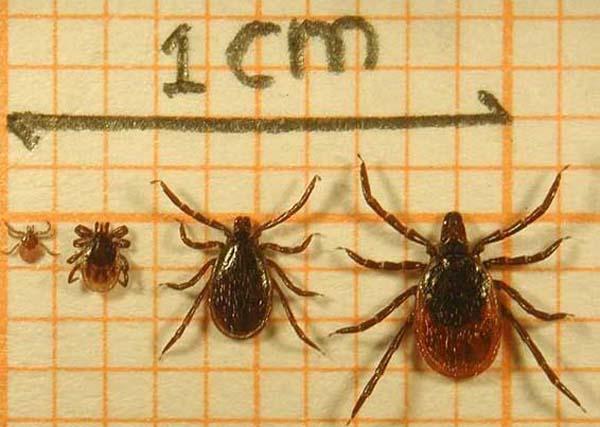
Life cycle of ticks: larva, nymph, male and female (left to right)
Interesting fact: a tick bite is invisible to humans. This is because the parasite injects an anesthetic fluid that lasts for 5–15 hours.
A person typically notices a bloodsucker on their body after 2-3 days, when discomfort at the bite site is clearly noticeable. A tick can remain on a living creature for up to 12 days, growing significantly in size during this time. After the parasite has fully fed, it detaches itself from its victim's body.
Fortunately, only 1.5-5% of individuals are actual carriers of diseases. Other mites are harmless and can only cause local skin irritation, accompanied by redness, itching, and allergic reactions. It is impossible to distinguish an infected tick from a healthy one by external signs.
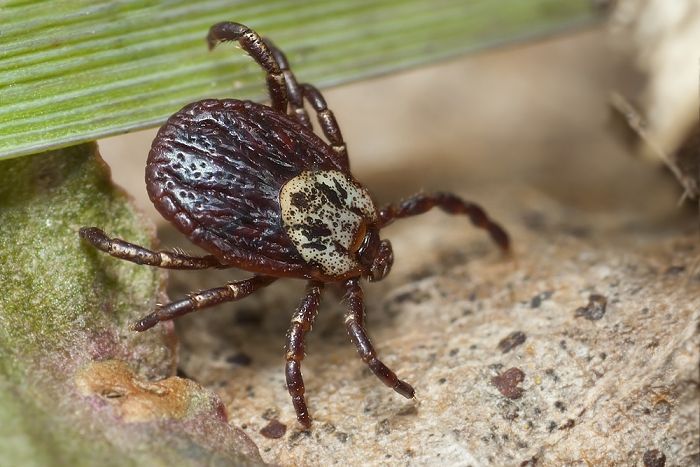
The taiga tick is a carrier of viral tick-borne encephalitis.
Human parasites - subcutaneous mites
The most widespread parasites on the human body are subcutaneous mites.
Demodex, or the iron worm
Microscopic in size, Demodex feeds on fat, residing in hair follicles or sebaceous glands on the bodies of humans and animals. The parasite is impossible to spot with the naked eye, as its body length is a maximum of 0.4 mm. In humans, these mites cause the skin disease demodicosis. In most cases, infestation with the ironworm goes unnoticed, but when the individuals actively reproduce, the skin of the face and neck becomes covered with red spots, rashes, and ulcers, which significantly spoils the patient's appearance.
Scientists haven't determined exactly how this subcutaneous mite spreads among people. It's believed that close contact and the shared use of personal hygiene products and cosmetics can transmit the disease from an infected person to a healthy one. It's worth noting that a Demodex mite carrier can appear completely healthy.
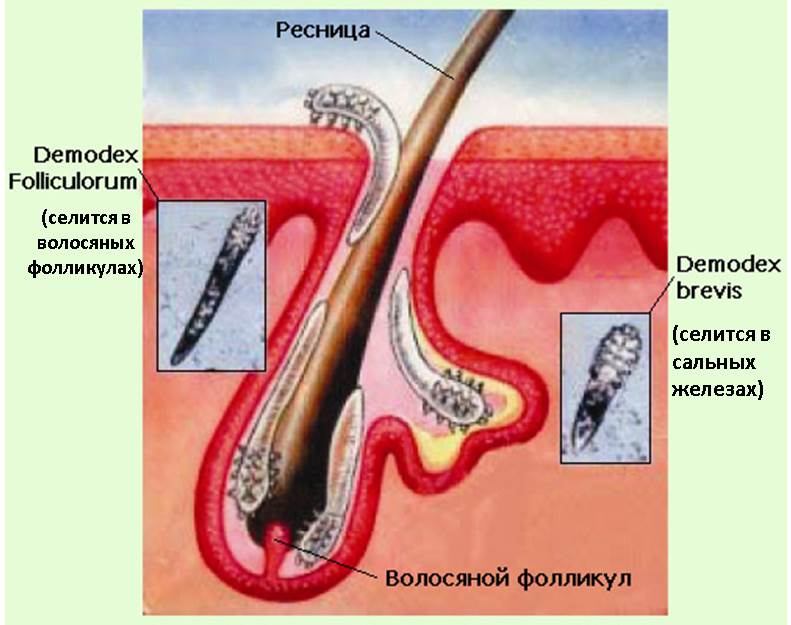
There are two types of demodex, one of which lives in the hair follicles, and the other in the sebaceous glands.
Scabies mite
It is also known as scabies mite. It causes the unpleasant disease known as scabies. It spreads from an infected person to a healthy person through close physical contact (shaking hands, skin-to-skin contact, or intimate contact). Animals do not contract human scabies, but they can be carriers.
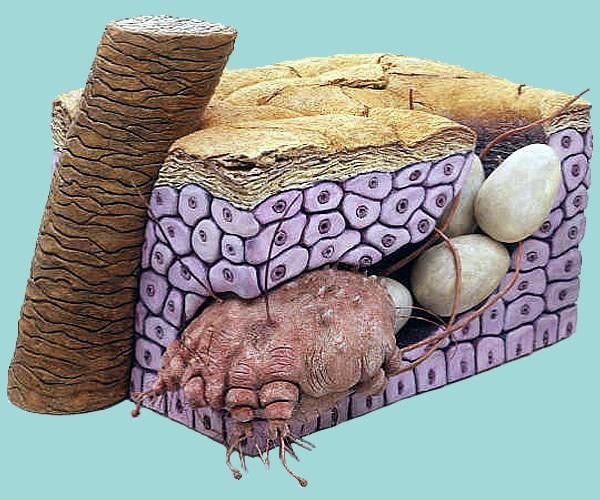
In a similar manner, the female scabies mite makes passages in the subcutaneous tissues of the body and lays eggs
House ticks
Even the cleanest house is home to so-called house mites. Some are present in household dust (dust mites), while others are found in fluff and feathers, meaning they're found in bedding and linens (linen mites). They're not parasites, but rather saprophytes (dust-feeding).
Dust mites
Microscopic in size, they are not parasites. They primarily feed on dead human and animal epidermal cells, which are present in household dust. They can also consume cellulose fibers, which explains their presence in library dust. Dust mites also enjoy feeding on mold and yeast spores.
The ideal conditions for their habitation and active reproduction are darkness and warm, humid air (relative humidity over 70% at 23–25 °C). Dust mites' favorite habitats are carpets, rugs, upholstered furniture and toys. A particularly large number of representatives of this species are found in vacuum cleaners, namely in the dust bag.
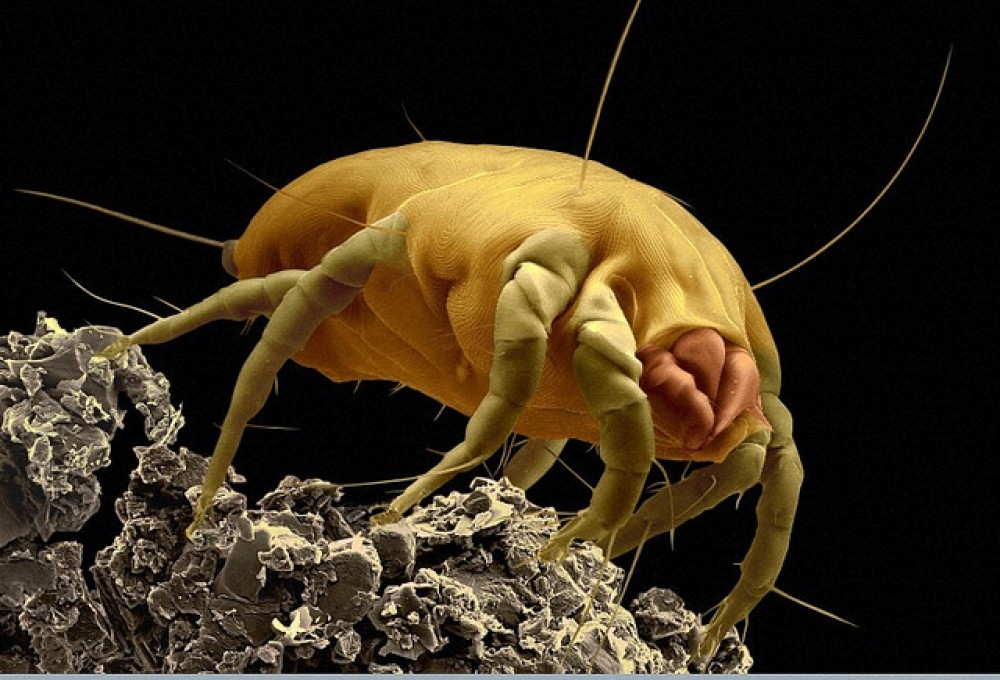
Dust mites are completely invisible to the human eye, but are found in almost every home.
Video: Dust Mite Habitat and How to Control Them
Bed mite
It lives in pillows, down duvets, and mattresses—for a comfortable life, this mite needs down and feathers, so it's important to clean bedding at least once every few years.
House dust mites can pose a danger to humans, as they often trigger allergic reactions and asthma attacks.

The good old tradition of air-drying down and feather pillows has proven to be very effective in the fight against bed mites.
Ticks that are safe for humans
Many tick species pose a danger only to animals, plants, and other tick species. These include the following:
- Ear mites. They primarily infest the ears of pets, but die on humans. They feed on sebum and earwax.
- The gamasid mite. This small parasite often preys on poultry. Its saliva is so toxic that birds lose profuse feathers. It can cause significant damage to poultry farms.
- Spider mite. It feeds on plant sap and prefers to nest on the undersides of leaves. It gets its distinctive name from its ability to spin webs. It causes significant damage to houseplants, garden plants, and vegetable gardens.
- The granary mite is an agricultural pest, as many species feed on stored grain and prepared flour.
- A predatory mite. It eats its own kind, namely microscopic dust mites.
Photo gallery: types of ticks that infest animals or plants
-
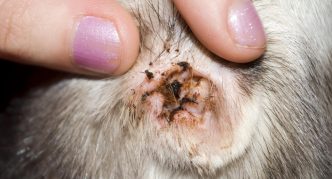
- If left untreated, ear mites can cause serious illnesses in your pet.
-
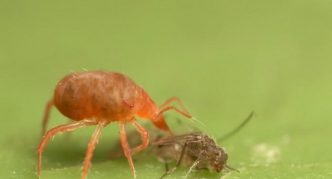
- Predatory mites are a biological control agent for spider mites.
-
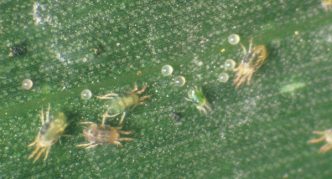
- The first sign of spider mites is the formation of a thin web between the leaves of plants.
Ticks have been on the planet long before we existed, so it's impossible to avoid encountering them. Protective measures are essential. When going fishing or on a picnic, wear protective clothing and don't neglect hats. Wash your hands frequently, and if you have the slightest suspicion of a subcutaneous parasite infestation, consult a doctor immediately. Examine your pet every time it comes in from outside. Remember that frequent cleaning will significantly reduce the presence of ticks in household dust.