We've all been familiar with ants since childhood. Many of us still remember the picture from the ABC book: a tiny insect dragging a giant blade of grass. And then some of us encountered ants in our own gardens, or even in our homes, and, cursing, looked for ways to get rid of them. But first, we'd like to understand what attracts these insects to our gardens and homes.
Ant bread - what is it like?
Every animal—and insects, by and large, are part of the animal kingdom—lives where there's food to be had. Ants are no exception. They build their nests near potential food sources. And, depending on these sources, they consume different foods.
Forest ants
Anyone who has been to the forest has certainly seen giant anthills, resembling mounds teeming with large black ants.
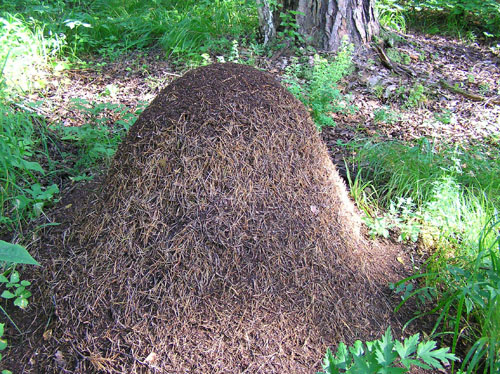
Anthills in the forest can reach very impressive sizes.
What do these forest workers eat? The ants' diet, unlike that of humans, is fat-free: only proteins and carbohydrates. At the same time, protein food is more necessary for larvae for full growth and development, while carbohydrate food, which provides energy immediately, is consumed by adults. The main source of protein is other invertebrates, such as caterpillars, butterflies, beetles, cicadas and other insects. Besides insects, ants can also attack wounded small animals. The freshness of the "meat" is irrelevant—ants can hunt for food or scavenge. They obtain carbohydrates mainly from honeydew and honeydew. Honeydew is a sweet sap secreted by some plants during temperature changes. Honeydew, equally sugary and sticky, is secreted by scale insects, aphids, and other small proboscidean insects.
Army ants
It has already been mentioned above that many ants hunt other insects, but there are those that feed exclusively in this way. Army ants are predators and eat only protein foods, which they also feed to their offspring. They kill other insects for food and can even eat small animals alive that are so badly wounded that they are unable to fight back. These can include lizards, snakes, birds, mice, or frogs. However, army ants will also scavenge the corpses of larger animals. Moreover, some species of ants have even been observed to engage in cannibalism.
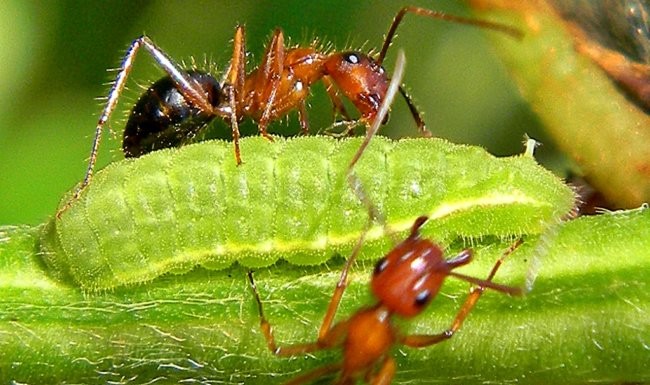
Predatory ants attack a caterpillar
Leaf cutters
Despite their name, leafcutter ants do not feed directly on plants. It's much more complicated: the leaves are chewed into a homogeneous nutritious mass, on which the mushrooms grow. But, again, the ants aren't interested in the mushrooms themselves—they only eat the mycelium. To ensure the mycelium grows further, the fruiting body of the mushroom is promptly removed.
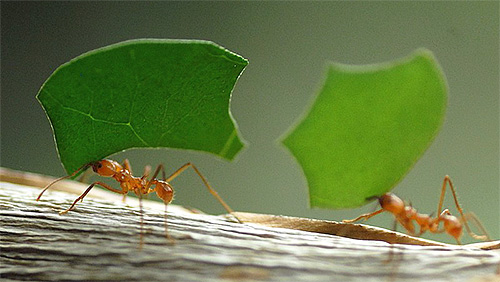
Leaf-cutting ants carry pieces of leaves for further processing.
Woodworms
A special group of ants—carpenter ants—prefer to choose old, rotten stumps or fallen trees in the forest. The insects make their homes in these, gnawing out entire labyrinths within them. Wood becomes not only their home, but also their food—a special intestinal bacterium helps them digest such tough food. People can encounter woodworms not only in the forest: these ants often raid wooden houses and build their nests right inside the logs.
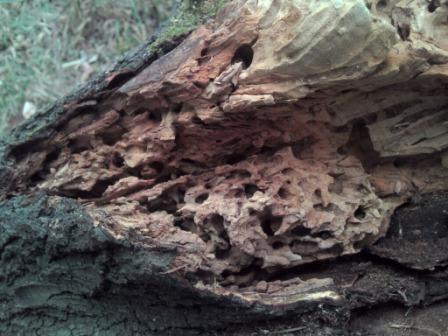
This is what carpenter ants do at work.
Reapers
Probably the most peaceful species of ants are harvester ants. These insects are strict vegetarians, they eat seeds and dry fruits of plants, as well as grains. The nutritious fruit is chewed into a homogeneous mass, which is then used to feed the offspring.
"Homestead" ants
While wood ants' interests rarely overlap with those of humans, the situation is more complex with the species that inhabit our gardens and vegetable plots. It's no wonder garden ants are considered among the most annoying pests. Their nests are not very large and are located partially underground, so you can find them in the most unexpected corners of your garden.
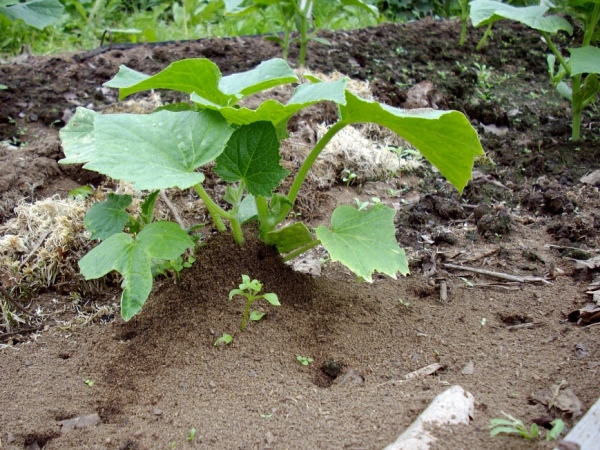
The ants made their home in the melon bed.
What attracts them there? It's the same old story: an abundance of food. Humans grow a variety of vegetables, fruits, and even flowers, all perfectly suited to feeding an ant colony.
Gathering and hunting
Among garden "delicacies," ants especially prefer sweet fruits, berries, vegetables, and root crops. So, ant nests can often be found in strawberry, melon and carrot beds.
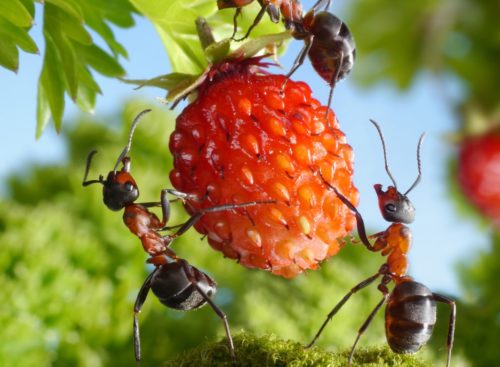
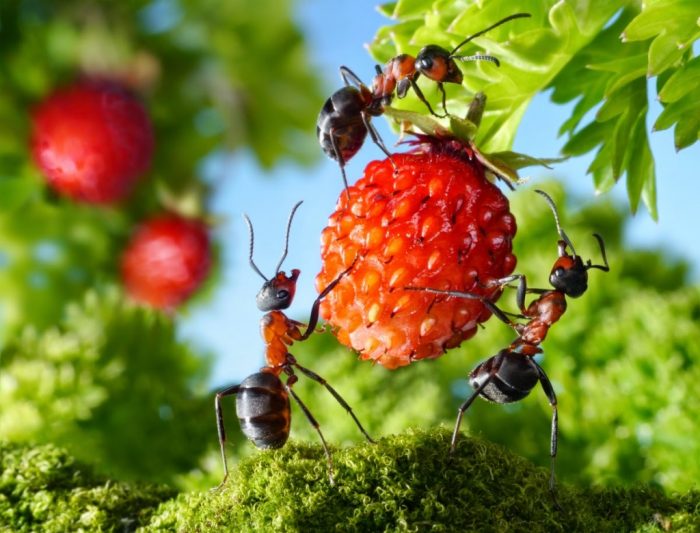
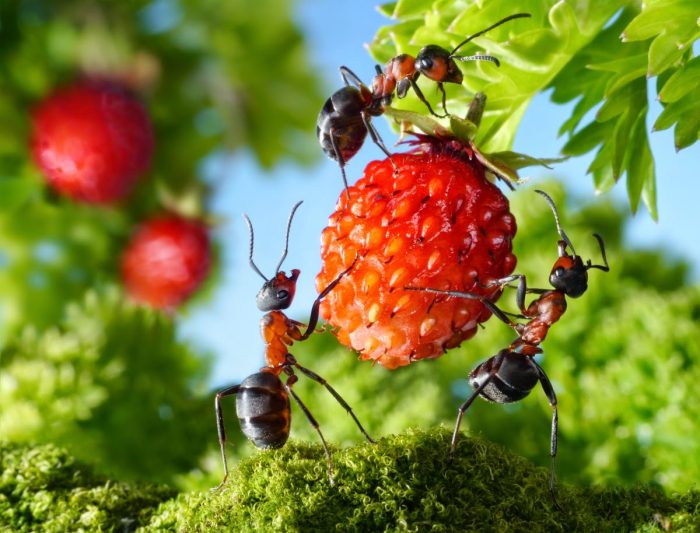
Strawberries are one of the favorite berries of garden ants.
They also don't disdain damaged fruit and fallen fruit, so anthills can be found under fruit trees. These insects often attack very young seedlings as well—the tender shoots are also eaten. In addition, ants are easy to find in flower beds: they often attack rosebuds, rose hips, and peonies, gnawing through delicate petals and sepals in pursuit of the sugary juice.
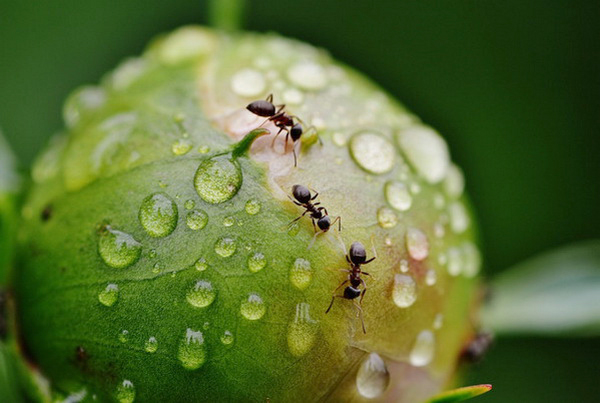
The sweet sap on the peony bud is very attractive to ants.
True, in addition to sweets, ants are also attracted to pests that live in the garden. Caterpillars, butterflies, and some beetles can all be caught and eaten by garden ants.
And animal husbandry!
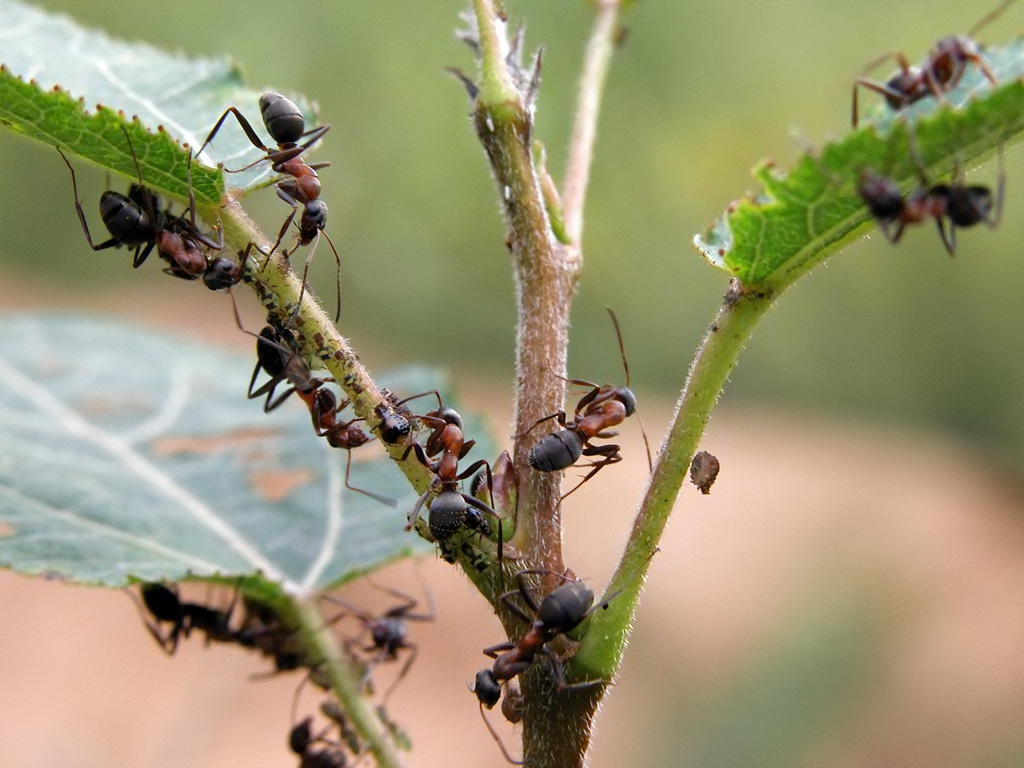
The common garden aphid is a unique "pet" for ants. Just like in the wild, in garden plots it secretes honeydew, which ants love to feast on. Moreover, they have come up with a way to obtain more of the sweet liquid: to do this, the ant tickles the aphid with its antennae, irritating it and forcing it to secrete the desired substance.
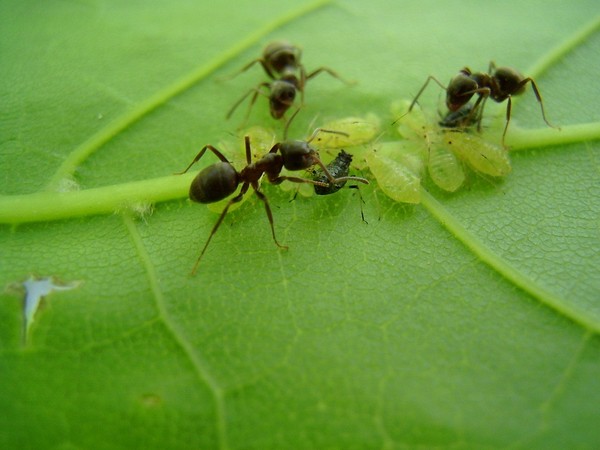
Ants in the process of "milking" garden aphids
And to ensure that the supply of honeydew does not dry up, the ants also protect their “herd” from other insects.
House ants
The situation with house ants is even more complicated. These insects tend to invade people's apartments. Typically, the red ants, known as pharaoh ants, are the ones that come there.
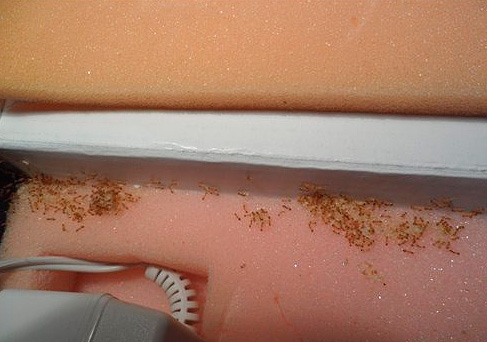
In an apartment, red ants usually move in whole swarms.
These guys don't hesitate to compete with apartment owners for food and are willing to eat almost anything that's lying around. But red ants also have their own preferences. The most delicious things for ants are sweet, floury and meaty ones, especially those that have been stale for a while. Therefore, if ants have appeared in your home, you can find them in any part of the kitchen: on shelves with flour and cereals, in the sugar bowl, in the bread bin, in carelessly left packages of candy and chocolate.
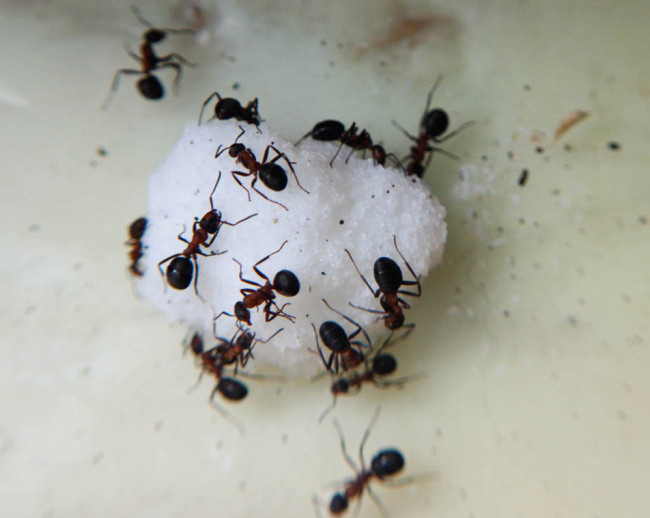
A lump of sugar is literally covered in hungry ants.
Jam, honey, syrups—any sweet liquids—are also at risk. But first of all, ants attack open surfaces - tables, floors, stoves, work surfaces on which food crumbs or traces of sweet liquids remain. The trash can will certainly suffer as well – ants are not averse to leftovers and rotten cooking waste.
As we can see, there are many species of ants in nature, each with its own taste preferences—sometimes quite specific. Humans can coexist with them as long as their interests don't conflict with those of their ants: for example, in a garden, these industrious little creatures can not only cause harm by digging up garden beds but also be beneficial by loosening the soil and destroying pests. However, we cannot coexist with those ants that find human food particularly tasty and try to fight them.