Over their long history of living alongside humans, cockroaches have become resistant to a variety of poisons. This has forced both ordinary housewives and scientists to seek alternative methods of controlling these insects. As the saying goes, everything old is new again. Boric acid-based products are once again gaining popularity.
Proven effectiveness
Baits containing boric acid and its salts have long been used to control insect pests. They were approved at the national level and included in the list of effective pesticides in 1986, when the Main Directorate of Quarantine Infections of the USSR issued "Methodological Recommendations for the Control of Synanthropic Cockroaches."
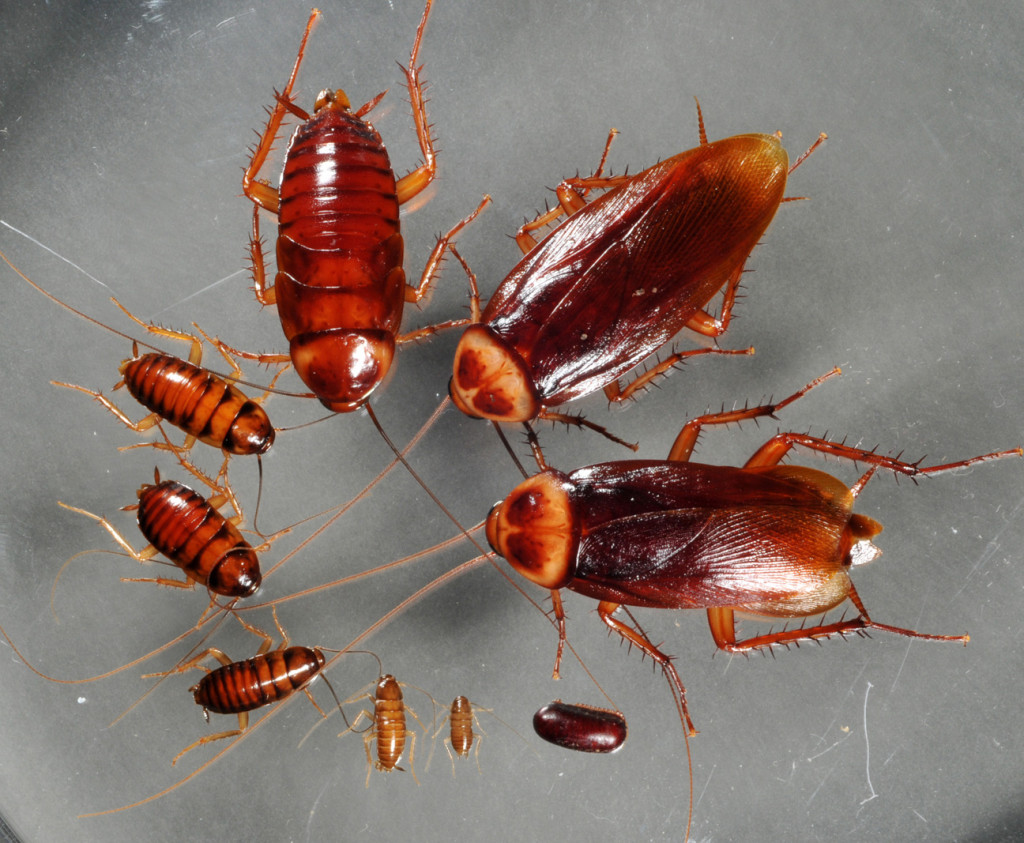
Those cockroaches whose habitat is associated with human dwellings are called synanthropic.
Synanthropic cockroaches (from the Greek syn - together, anthropos - human) are household cockroaches whose habitat is always associated with human habitation. The most common species in our country are the red cockroach (Blatella germanica L.) and the black cockroach (Blatta orientalis L.). Turkestan cockroaches (Shelfordella tartara Sauss) are found in the Asian part of the country. American cockroaches (Periplaneta americana L.) are also occasionally encountered.
In foreign countries, boric acid has long been used as a component of toxic cockroach control products, with its content in some reaching 98%.
Various chemical derivatives of boron are used to prepare poisonous agents:
- Boric acid (H3BO3).
- Borax is sodium tetraborate (Na2B4O7 ×10H2O).
- Disodium octaborate tetrahydrate (Na2B8O13× 4H2O).
- An aqueous solution of 0.5–2% boric acid.
Photo Gallery: Boron Compounds for Insect Control
-
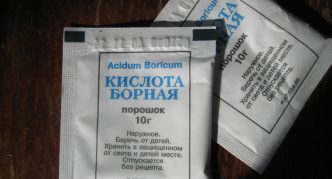
- Boric acid in powder form is most often used in cockroach baits.
-
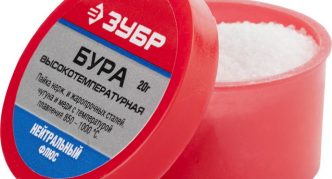
- Crystalline borax has a wide range of uses in everyday life.
-
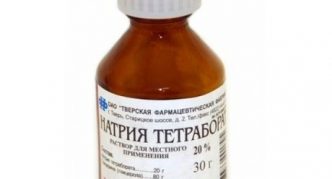
- Sodium tetraborate is also called borax.
The principle of action on cockroaches
Boron-containing substances cause irreparable harm to cockroaches at any stage of their development:
- Immediately after entering the insect's stomach, boron compounds attack its digestive system: they destroy the intestinal walls and also disrupt the water balance;
- with prolonged ingestion of poisoned baits, the reproductive system of both females and males is completely damaged;
- The combination of a lethal effect on cockroaches and the impossibility of their further reproduction guarantees a reduction in the cockroach population in an apartment or house.
Boron components are most effective in the fight against red cockroaches.
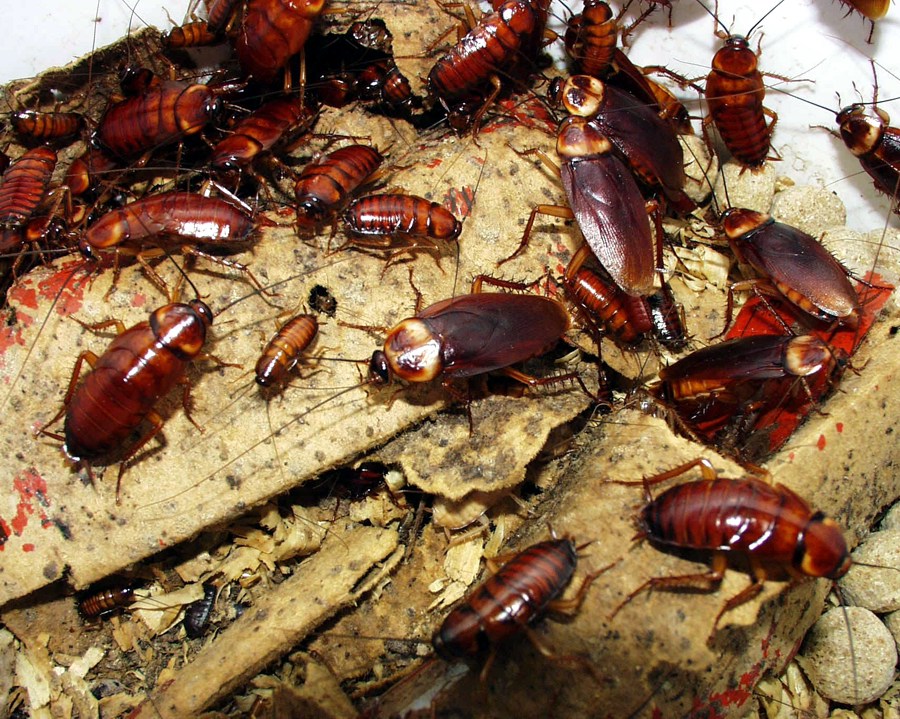
Red cockroaches are also called stove cockroaches or Prussians.
Laboratory studies have shown that boric acid-based baits have a "domino effect"—a secondary transfer of the toxic substance. After consuming the bait, adult cockroaches "transfer" the poison through their excrement. This leads to residual toxic damage to the insect larvae, as they consume these excrement.
Boric acid bait recipes
Poison baits based on boron compounds can be liquid, solid, or paste-like. The following can be used as an "edible" base:
- mashed potatoes;
- sugar and syrups;
- cereal porridges;
- bread;
- beer.
The bait is placed in lids, bottles, and other containers with low sides. Rags and cotton wool can be soaked in the liquid. It is recommended to distribute approximately 10 "portions" per apartment, each containing 15 g or 30 ml of the poison.
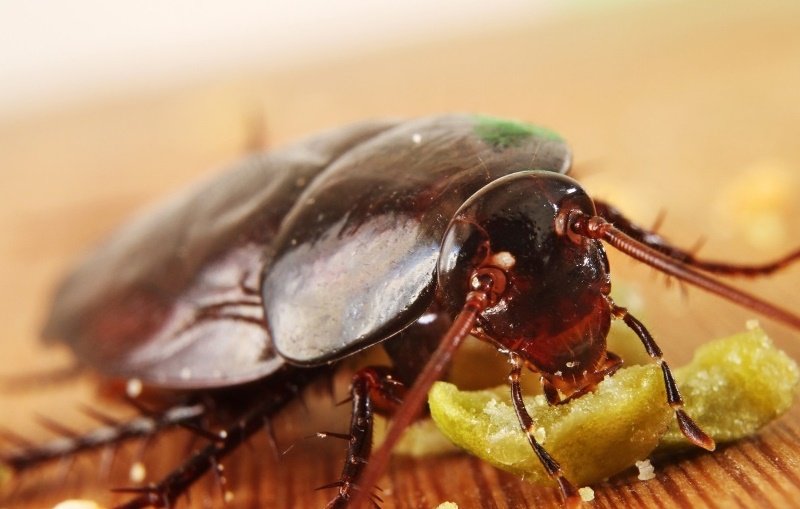
Place bait in areas where cockroaches are likely to live in your apartment.
Semolina porridge and sugar
For 100 grams of the finished “delicacy” you will need:
- boric acid (10 g);
- semolina porridge or mashed potatoes (80 g);
- some water;
- a pinch of sugar.
Mix the ingredients and, after drying, arrange them in portions into the prepared container.
Mashed potatoes and a raw egg
Ingredients:
- boric acid (5–10 g);
- mashed potatoes (80–100 g);
- raw chicken egg.
The egg is added for viscosity. The resulting mixture can be easily rolled into balls or flattened into cakes. Allow the bait to dry completely before using.
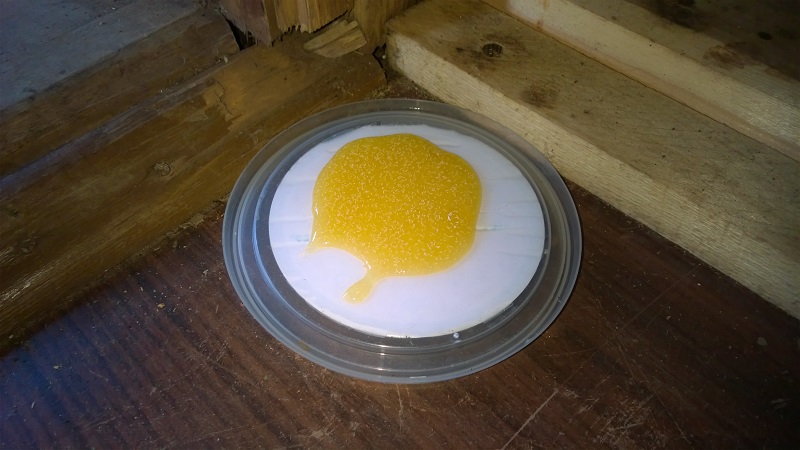
Sweet cockroach bait should be placed in a container with low sides.
Potato starch and hot water
Ingredients:
- boric acid (10 g);
- potato starch (5 g);
- hot water.
By mixing the products, a paste is formed, which should be applied to various surfaces where there is a large accumulation of cockroaches.
Pea flour and starch
Ingredients:
- crystalline borax (50 g);
- pea flour (25 g);
- starch (25 g).
The resulting dry bait can be scattered in hard-to-reach places - where it is difficult to place poison in another form.
Liquid baits are typically made with sugar syrup (10–15%) and boric acid solution (5%). The "drink" is poured into prepared containers, where stale bread can be added. It's important to add water as the bait dries.
Boric acid, which is sold in pharmacies, can only cause harm to humans or pets if accidentally ingested. It is a weak acid, and external contact with the bait will not cause serious poisoning. Boric acid was previously used as an antiseptic for wounds. Provided personal protective equipment and basic hygiene practices are followed, this method of cockroach control is considered relatively safe. In any case, products containing boric acid should be kept out of the reach of children and animals.
Video: How to make boron balls yourself
Reviews
I've personally tested this! I boiled an egg and mixed the acid with the yolk. You can roll them into small balls and place them in different places.
My grandmother gets rid of cockroaches with boric acid. I don't know where she gets it, but when they appear, she keeps two or three saucers in the kitchen where she dilutes it with a little water, and it really helps. I don't want to bother with that, especially since we have a cat. You never know. I used a syringe, but I don't remember the name (they haven't appeared since then). It's got some kind of white cream in it, and then it darkens over time and needs to be washed off... But it works!
Sprinkle boric acid powder around all water sources (sinks, toilets, bathtubs, baseboards, vents, trash can areas, and any other areas you deem necessary) just in case. You can safely sprinkle it—boric acid is harmless to both humans and animals. You can even rinse your mouth with it (in solution, of course).
Boric acid-based baits are a reliable and safe way to control cockroaches in apartments and houses. The poisoning effect is based on damage to the digestive and reproductive systems. The bait recipes are simple—anyone can make them themselves.