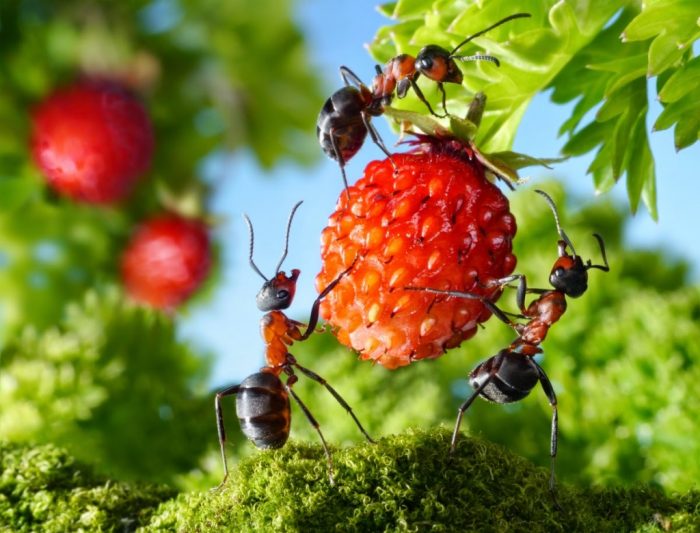
Generally, people have a positive attitude toward ants. Children's books and popular science publications extol their industriousness, complex social organization, certain usefulness, and even physical strength. Relative to their own weight, this creature is perhaps the strongest on the planet! But we're talking about ants in the wild. People rarely tolerate these insects in their homes and always try to get rid of them, using a whole arsenal of folk remedies.
Content
Why is an ant infestation dangerous?
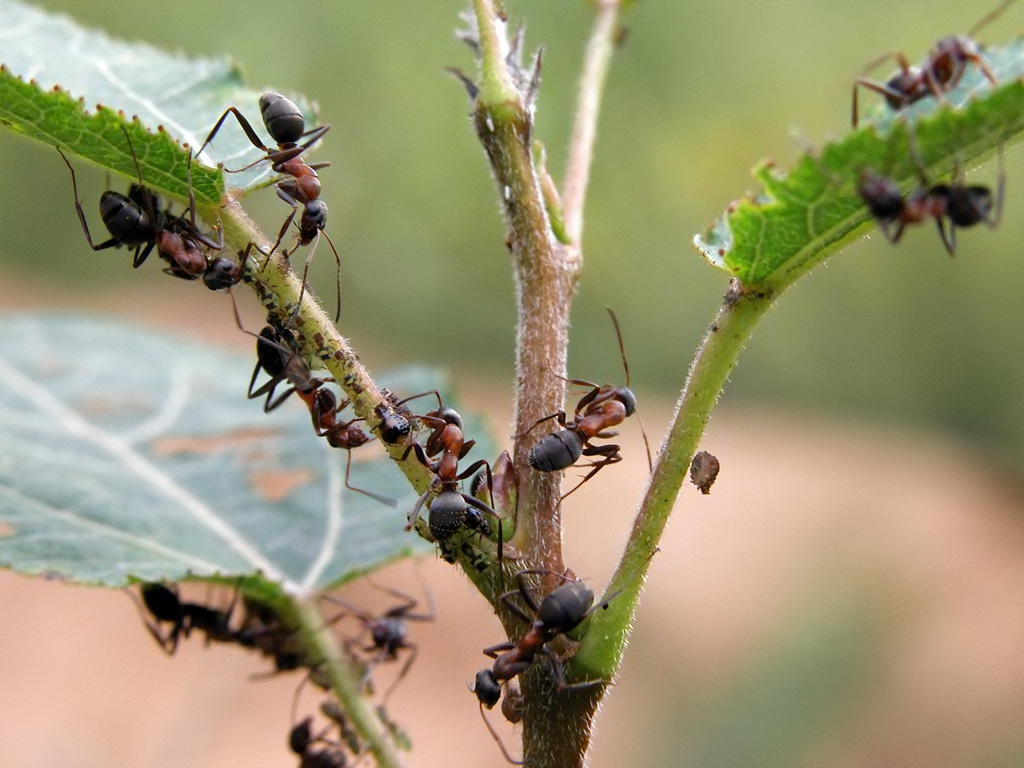
Ants spoil food and carry it around the house, contributing to mold growth. They can also "kindly" carry worm eggs or aphids. Being regulars in trash cans, they spread germs, including dangerous ones. Ants also bite, which harms both humans and pets. Moreover, an ant bite is not only painful but can also cause itching, allergies, and even viral infections.
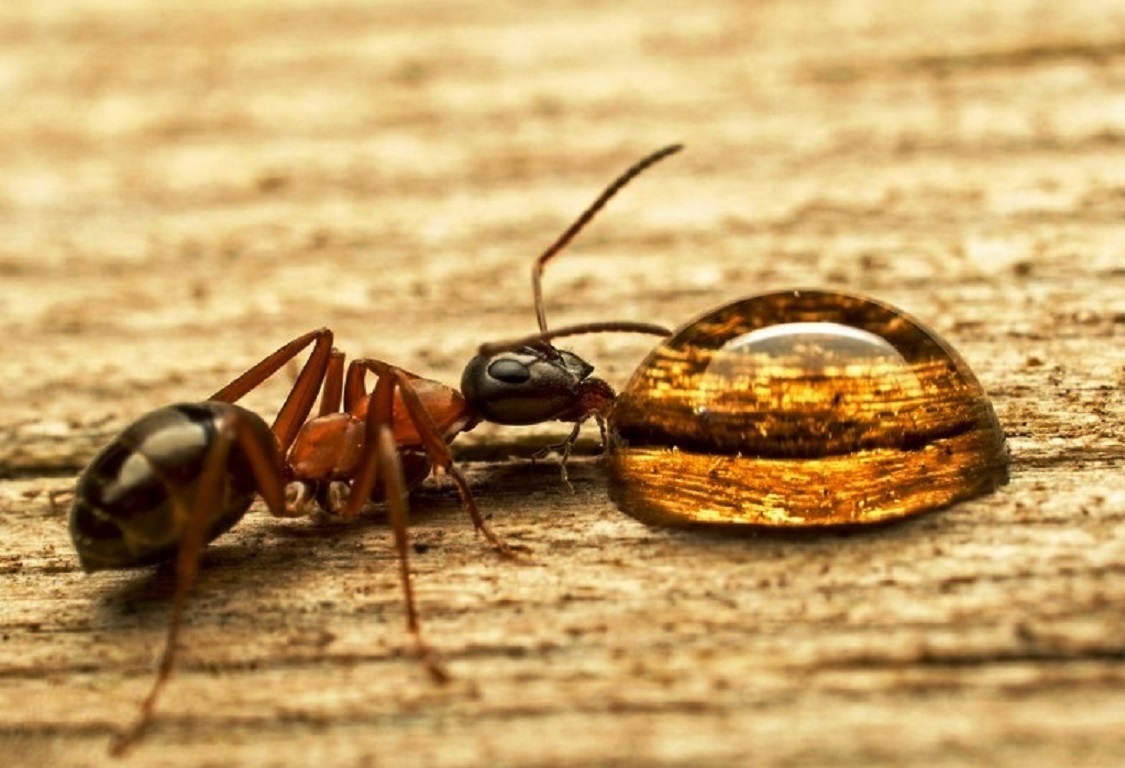
Ants can contribute to mold growth in your home.
How to get rid of ants using traditional methods
It is not surprising that many methods have emerged to combat these insects using readily available and inexpensive means.
Ammonia
Ammonia has a very pungent odor, but it's not used pure against ants; rather, it's mixed with water. This mixture isn't dangerous to humans, but the same can't be said for ants, whose sense of smell is orders of magnitude stronger. They either die or leave the house.
Ammonia is a 10% solution of ammonia that can be purchased at any pharmacy.
Use boiled water, in a ratio of about ten to one to alcohol. Apply the resulting mixture to surfaces where ants are found or likely to crawl. Meanwhile, it's best for children and pets to go for a walk to avoid inhaling the unpleasant odor. However, this won't last long: after treatment, ventilate the room, and the odor will disappear within about half an hour. So will the ants. However, you may need to repeat the procedure again.
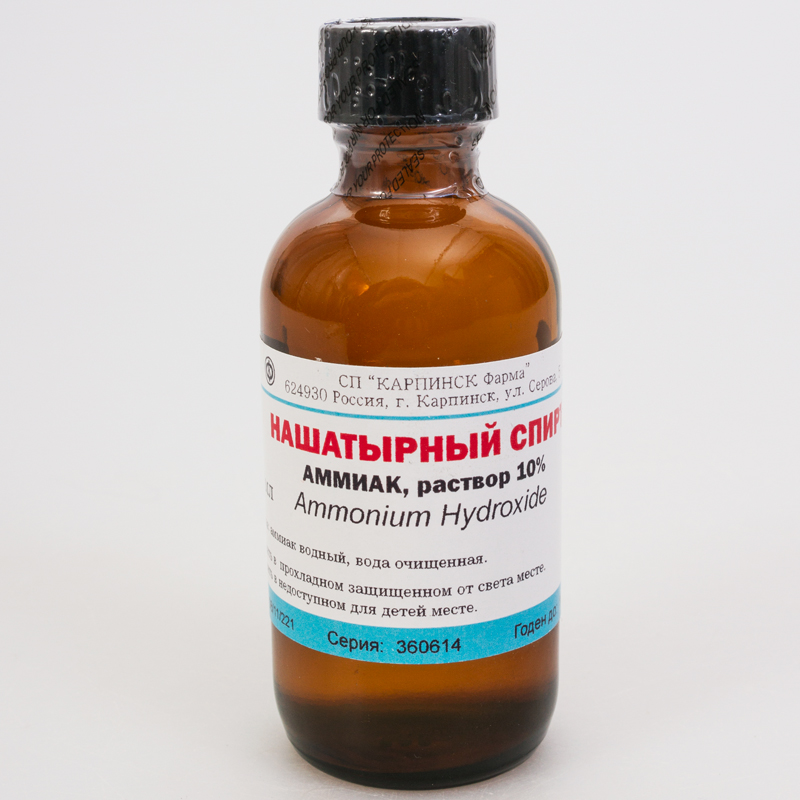
Ants can't stand the smell of ammonia.
Another option is to simply add ammonia to the water for wet cleaning. In this case, reduce the alcohol content: one tablespoon of ammonia is enough for ten liters of water. The effect will not be as strong, and you may have to repeat the cleaning process many times. However, this solution works well as a preventative measure.
I had ants in my cucumber bed. I was stunned when I saw them. Then I took a spray bottle of water, poured a little ammonia into it, and sprayed the area where the ants were. They disappeared instantly. You can sprinkle dry mustard or ground pepper (either black or red) on the area where the ants were. It helps.
Vinegar
Table vinegar also has a strong odor, though not as pungent as ammonia. It is mixed with water in a one-to-one ratio and applied to areas where ants are present or likely to appear.
The point is that the smell of vinegar destroys other smells on the ants' usual paths, completely disorienting them, and simply repels them. This product is expected to produce good and quick results. However, after a few days, the smell will dissipate, and the ants can easily return. Therefore, in areas where ants have appeared in the past, it's a good idea to perform "vinegar prophylaxis": periodically add a little table vinegar to the water used for wet cleaning.
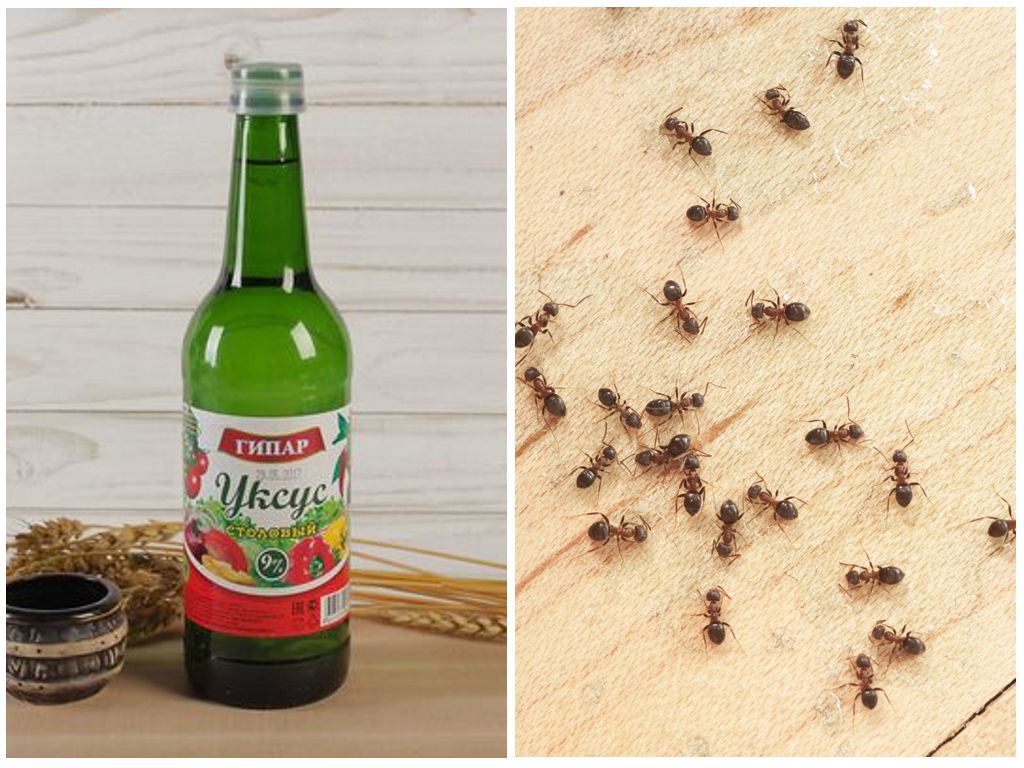
The smell of vinegar disorients ants.
Vinegar can be used in gardens and vegetable plots. The solution should be sprayed on plants where ants are found, as well as along their routes. However, while diluted vinegar can be used safely indoors (simply ventilate the area afterward), it can harm some plants in the garden. This is because vinegar "scorches" the plants and acidifies the soil. Therefore, the concentration should be very low (literally a few drops per liter of water).
You can get rid of ants with vinegar. Take a cloth, soak it thoroughly in undiluted vinegar, and wipe down the areas where ants are most often found, including their paths. You should also wipe down the windowsill, baseboards, and the kitchen counter itself. It's crucial to leave the vinegar on for a while afterward. The kitchen will smell unpleasant, but it's bearable for a couple of days. Ants absolutely hate the smell of vinegar.
Lemon juice
Lemon juice is applied using the same principle, but its mechanism of action is different: the juice contains citric acid, which kills ants.
Lemon juice is mixed with water in a ratio of one to three and used to lubricate various surfaces in the house, giving preference to areas in the kitchen and around the trash can.
Lemon juice is good at fighting ants and has a pleasant smell.
This method is safe for humans (the mixture is non-toxic), and the lemon scent itself, unlike vinegar, is quite pleasant, while its effectiveness is rated about the same or slightly lower. Furthermore, citric acid is a good natural disinfectant. But the smell of lemon scares pets, especially cats and dogs! Their owners are better off using other means.
Very simple and safe for children and animals! Just sprinkle regular citric acid (available in food-grade packets) where there are trails or lots of ants, and they'll disappear within 2-3 days. You can also dilute it and spray it, but I always sprinkle it! I've tested it myself many times!
Birch tar
Birch tar is used in gardens and greenhouses, and can be purchased at most pharmacies. In gardens, tar is applied directly to tree trunks. This method is similar to "whitewashing" against pests such as bark beetles. Another method is to soak a cloth in birch tar and wrap it around the tree. When applied to the trunk, the substance is used pure, while when soaking the cloth, it is diluted (one part to two or three parts) with water. Both methods create an impenetrable barrier to ants—they absolutely cannot stand the smell. Whitewashing and wrapping in garden plots is usually sufficient once a season.
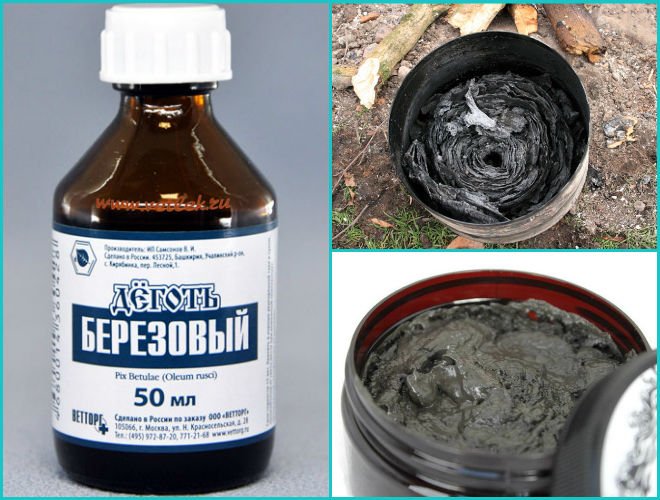
Birch tar is especially good for ants in the garden.
If there are no tree trunks (for example, in a greenhouse), simply drip tar onto the areas where ants appear. How often should you apply it? If the ants are an accident, you'll get rid of them in one go. If they're a regular presence somewhere nearby, they may reappear within a month or two. In this case, doctors say the application is symptomatic.
Tar doesn't harm people or animals, only a distinctive odor and possible stains. For this reason, it's generally not used in homes or apartments.
Birch tar works well against ants; dilute it only in warm water, water the soil, or spray the plants against aphids and all pests.
Baking soda and salt
Another interesting approach involves sprinkling ordinary baking soda. This method is both inexpensive and effective. Entomologists have discovered that ants contain a special acid that reacts chemically with baking soda, resulting in the death of the insect.
The most common way to use baking soda is as follows: half a cup of baking soda, half a cup of sugar, and a quarter cup of water. Mix everything together and set aside as bait. According to reviews, one or two "sessions" are enough to completely eliminate ants. Just be careful to keep small children, hamsters, dogs, and other animals away from the bait. Baking soda itself is not dangerous for humans and other mammals, but eating this sweet paste can easily cause an upset stomach.
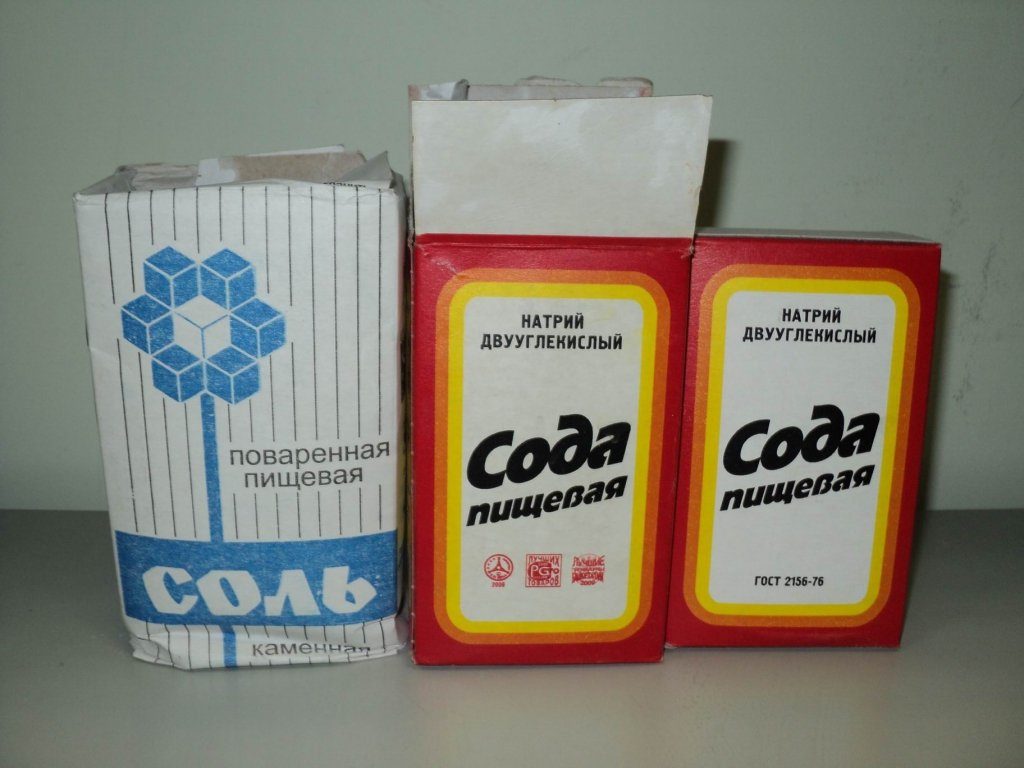
Even simple products, such as baking soda and salt, help against ants.
But there's an even simpler way: use regular table salt, preferably fine. Sprinkling it on anthills and insect nests will be effective. To enhance the effect, pre-mix the salt with water (one-to-one) or pepper (the ratio is arbitrary).
I saw on TV that baking soda helps. It really does. Our nasties, the ants, make nests right on the strawberry bushes. So, instead of pouring chemicals, we sprinkle baking soda on them, and it really does help. We dig up the nest a little until we reach the eggs and sprinkle them on it. They seem to go away.
Coffee
Some people like coffee, others don't, but ants universally detest it and flee from its aroma. The precise mechanism of this method is unknown, but it doesn't affect its effectiveness. However, unlike baking soda or salt, coffee is not as cheap, so it is used selectively and in small areas, most often in city apartments.
There are two ways to use coffee against ants: one uses natural ground coffee, the other uses dried coffee grounds (instant coffee is not an option). In both cases, the powder is sprinkled in small amounts along "ant paths," entrances and exits, and areas where ants tend to linger and nest. Basically, to use military terminology, we act along deployment and transit routes.
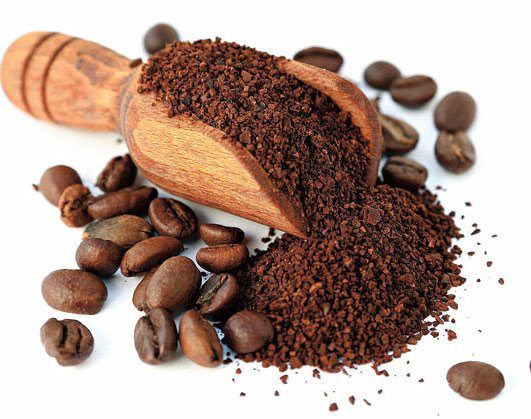
Many people love the smell of coffee, but ants absolutely cannot stand it.
The method described is completely harmless to humans and animals, and the coffee smells pleasant. Opinions on its effectiveness range from enthusiastic to somewhat skeptical. But objectively, it can be said that the use of coffee is advisable in a small apartment, when a small number of ants first appear. Don't expect immediate results: you'll need to repeat the procedure several times before the ants leave you alone. But if you have the time and don't want to mess with ammonia and vinegar, it's worth a try.
Regular black coffee helped us: we scattered it and all the ants disappeared.
Yeast
Yeast is absolutely intolerable for ants: once it enters the insect's digestive system, it instantly kills it. Moreover, the victim manages to take some of the lethal dose home and "feed" it to its fellow ants (they will have the same effect).
But yeast itself leaves ants indifferent. So how can you get them to eat it? The secret is simple: yeast is mixed with something sweet, such as honey, jam, or simply sweetened water. The resulting mixture is placed in containers with low sides (easier for the insects to climb over) and left indoors. Ants have an excellent sense of smell and love sweets, so if you have any ants, they'll certainly discover this mixture.
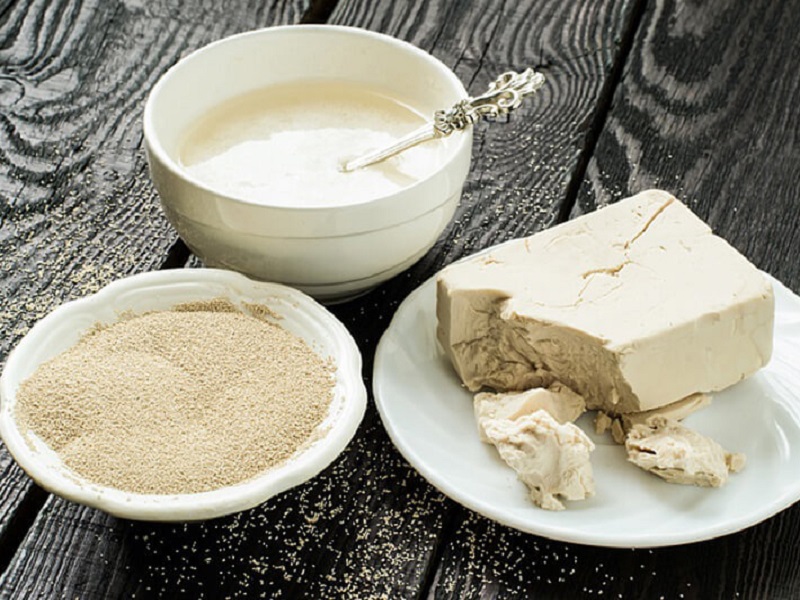
You can make a sweet bait for ants using yeast and sugar, which will kill them.
A few jars of this bait, left overnight, are usually enough to rid your apartment of pests. In severe cases, the procedure may need to be repeated twice. As with baking soda, be careful that small children and pets don't accidentally ingest the sweet mixture, as it could cause a stomach ache.
Take 2 parts honey and mix it with 1 part yeast. You'll get a paste, and this paste can be quite effective against ants. I've used this method myself several times, and I like it—no ants!
Herbs
Ants are also repelled by the scent of a number of herbs. These include:
- tansy,
- anise,
- parsley,
- mint,
- laurel,
- valerian,
- sagebrush.
Herbs are primarily used in vegetable gardens and allotments. Gardeners speak most warmly of tansy.
Tansy essential oils contain alkaloids and camphor, which ants find unbearable. There are several practical methods for using them. The most basic is scattering the flowers of this plant in areas where insects appear. This works as a preventative measure.
Another option is to dry tansy flowers, grind them into a powder, and sprinkle it on the approaches to cultivated plants. This also works, but gardeners complain that the powder "dissipates" too quickly. Tansy infusion, however, is free of this drawback. To prepare it, pour a kilogram of tansy flowers into a bucket of water, bring to a boil, and let it steep for two days. The infusion is used cooled and not in its pure form—it can be diluted with water as needed. Plants sprayed with this product become unattractive to ants for many days. You can also water the insects' paths and repel them from your garden plot within a few days.
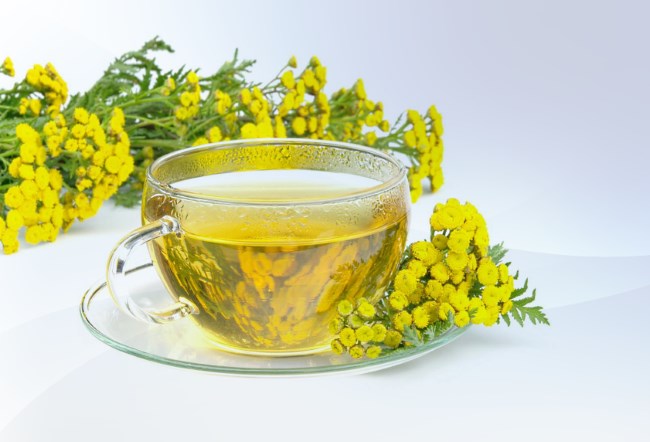
A decoction of tansy is very effective against ants in the garden.
But repelling them isn't permanent—the insects may return. What should you do? Repeat watering periodically. Or try a more original approach: plant tansy in your garden. Just imagine, some gardeners do just that. However, this approach, in turn, has its drawbacks:
- the effect is not as strong as from watering with infusion,
- Tansy is a weed, and you should be careful not to overdo it, so that you don’t have to fight it yourself later.
I read somewhere that ants don't like tansy. I tried all sorts of things in the greenhouse, but the nasty things just went away. I dug up some tansy in the field and planted it in the borage. Either the tansy worked, or they got tired of fighting me, but so far there haven't been any. Knock on wood, knock on wood, knock on wood.
Which method to choose?
So which method should you choose? Opinions vary. But most agree on the importance of hygiene as a preventative measure. Don't leave dirty dishes or food scraps out, wipe down the dining table, store food where insects can't reach it, place trash in plastic bags, and don't forget to wet-clean the area. You might even be able to keep the ants away.
Ants have no place in our homes (apartments, cottages, greenhouses, gardens, or vegetable plots), and their colonies must be eliminated decisively. Choose one of the methods suggested above. And if it doesn't seem effective, try another. Don't forget about prevention. And don't put off the fight: ants, like many other insects, reproduce exponentially, and the sooner you begin combating them, the faster you'll succeed. Good luck!