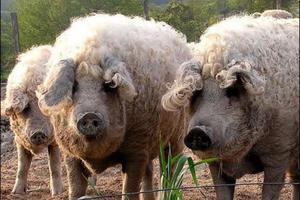
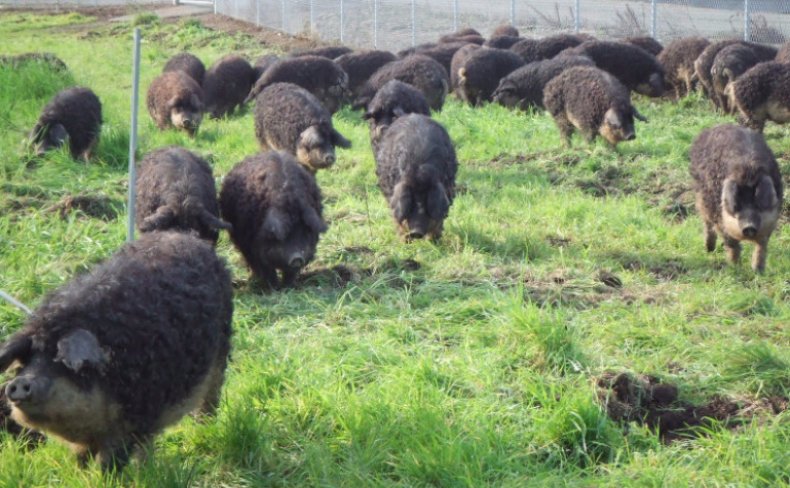
The Hungarian Mangalica is an unusual breed of pig with curly hair. From a distance, it can easily be mistaken for a sheep, and in winter, the wool becomes even denser and thicker, leading many pig breeders to call it the Hungarian Downy Mangalica.
This breed was developed in 1833 by crossing domestic Hungarian pigs with wild boars. The result was an unusual breed that can sleep in the snow and spend the night outdoors. Moreover, they have very soft fat and tasty meat.
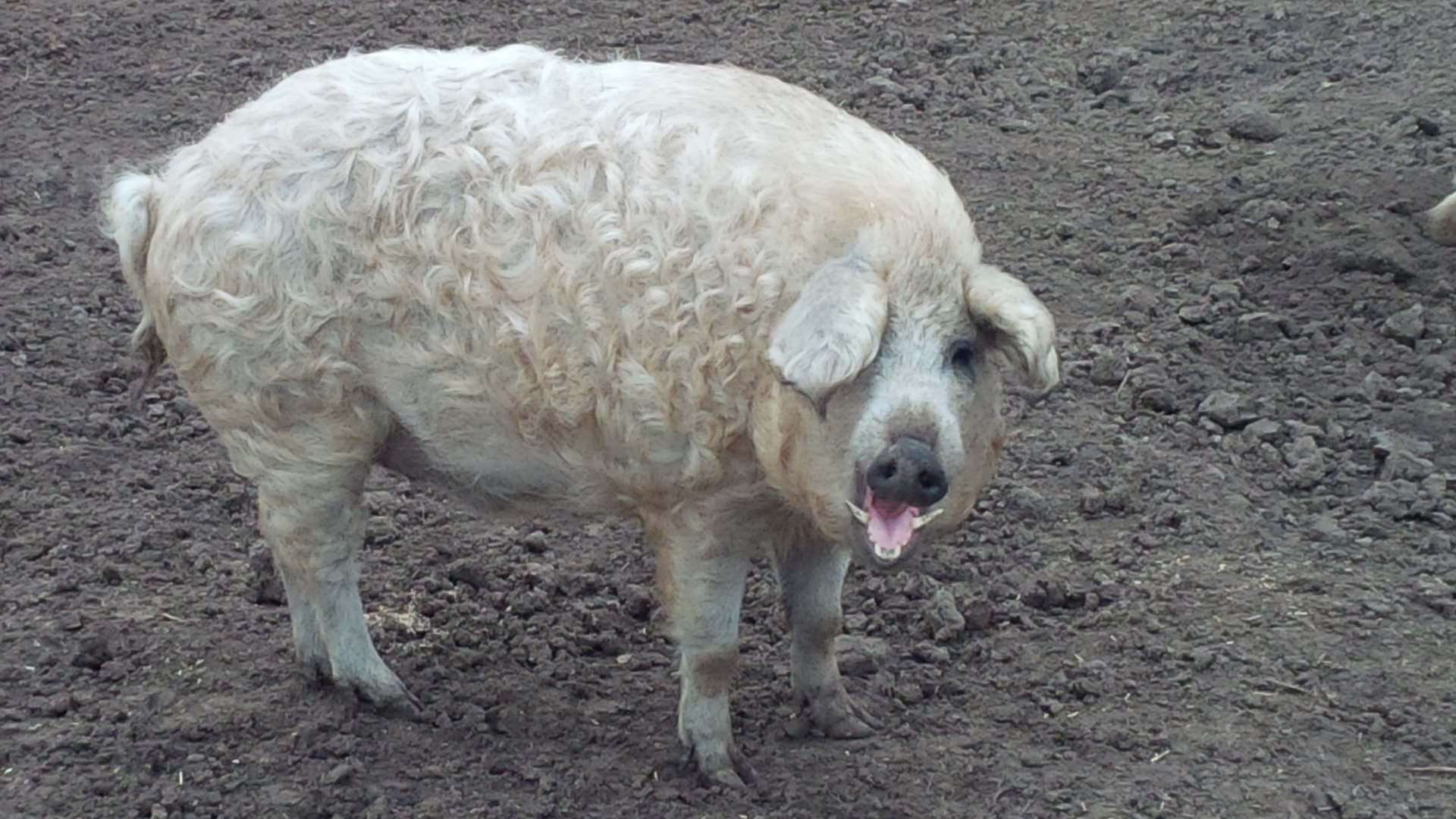
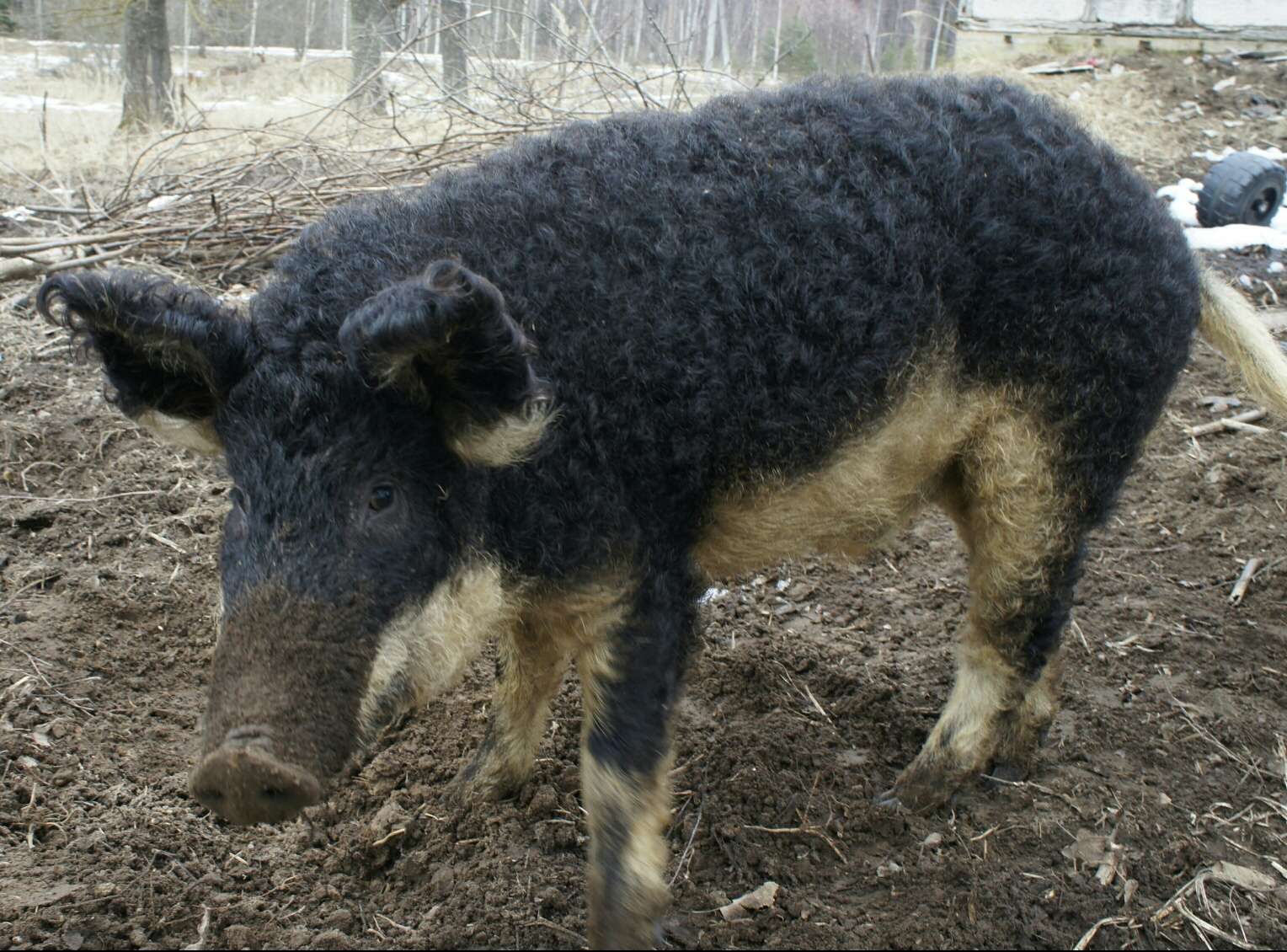
Mangalitsas have amazingly long and curly fur.
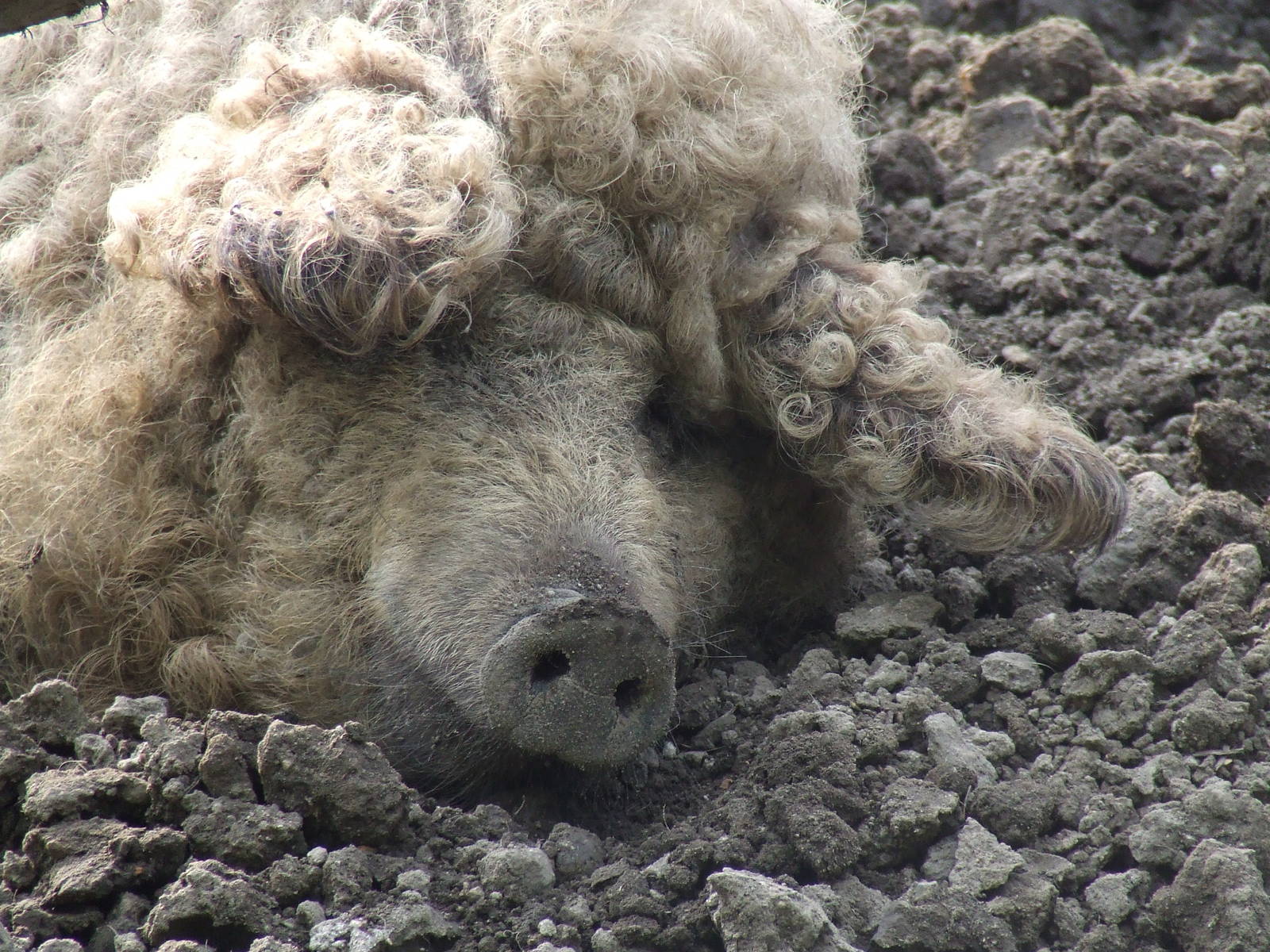
In winter, they develop a thick undercoat.
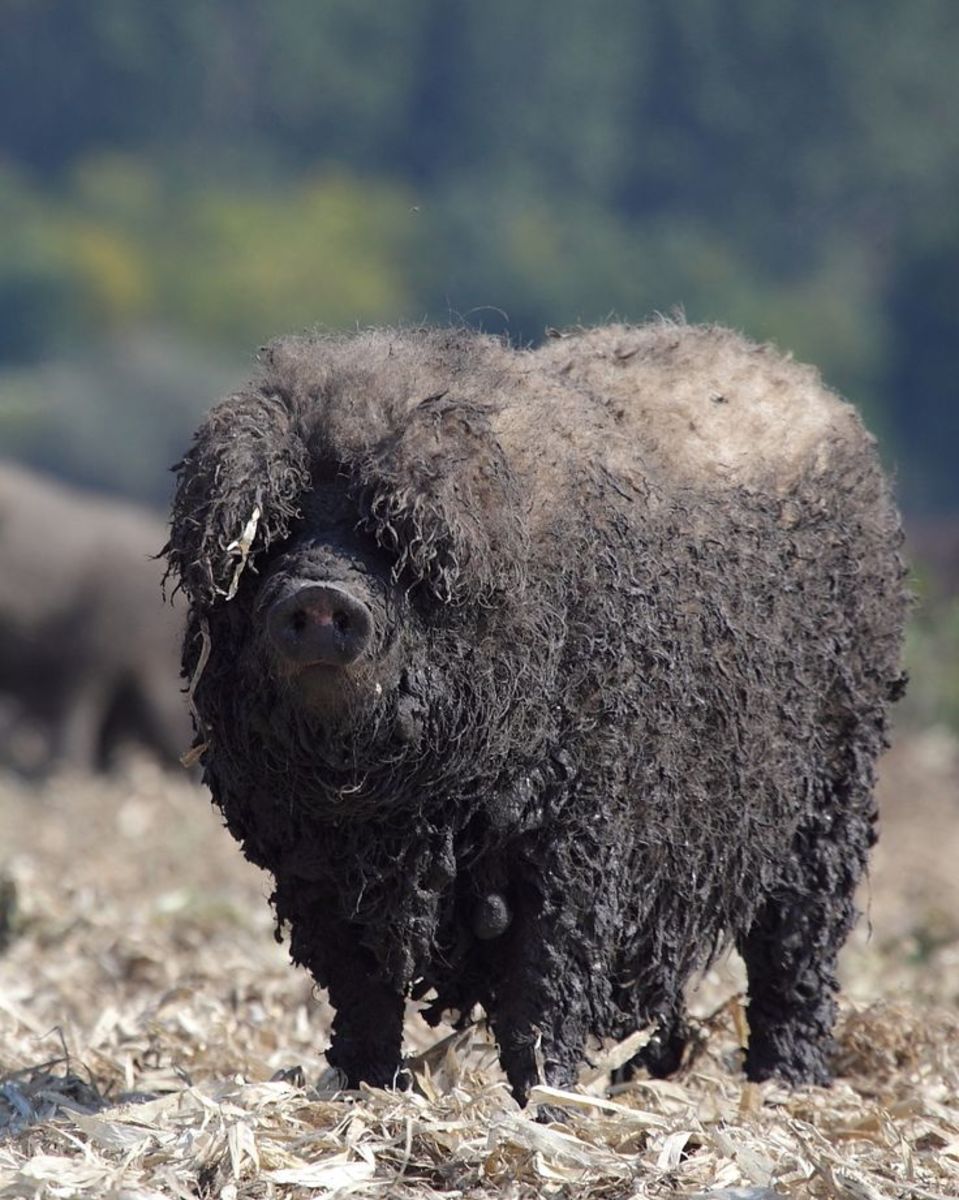
In summer, the fur becomes yellow-brown, straightens out, and the black skin shows through.
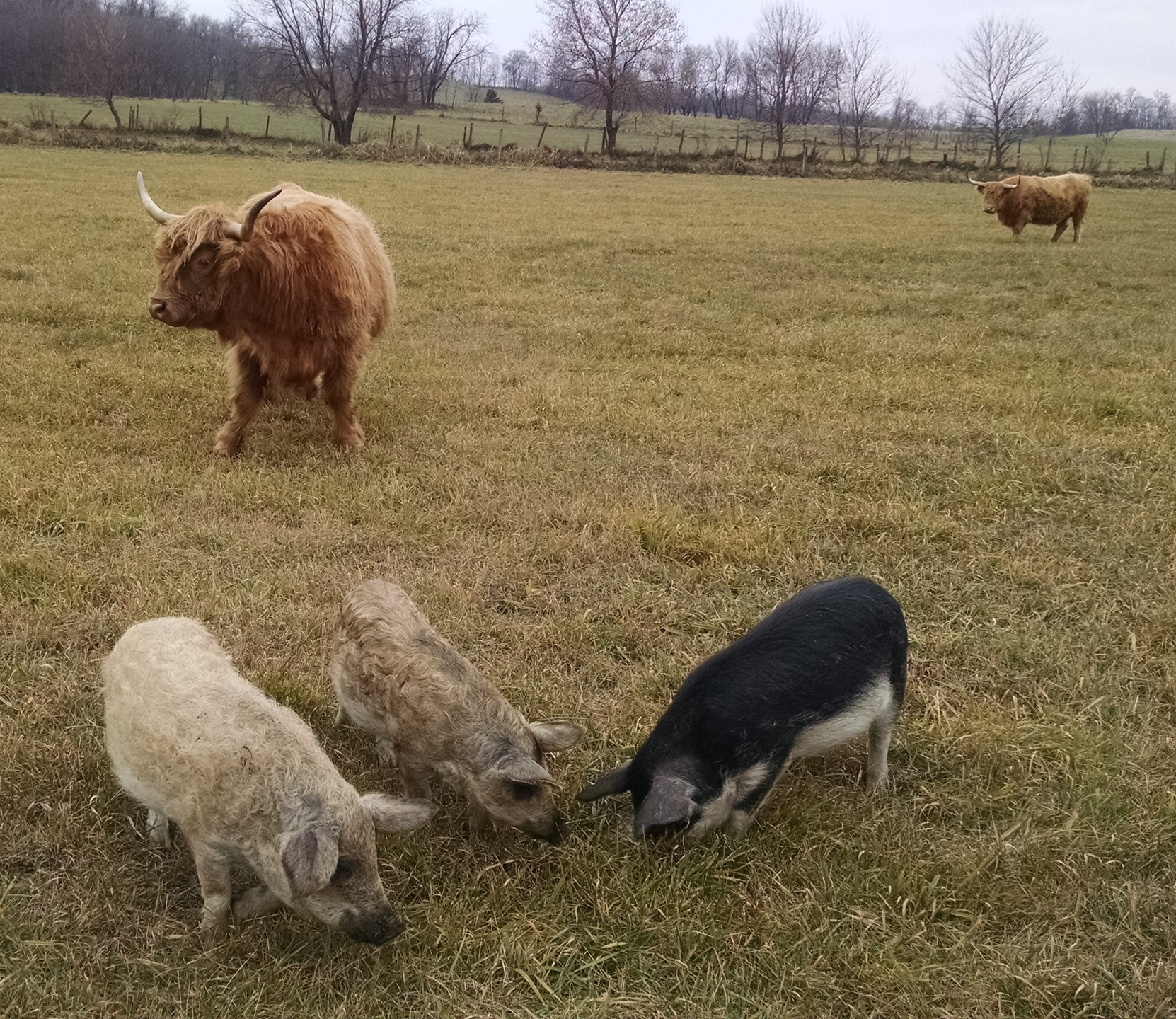
According to color, Mangalitsas are divided into white, red, black and mixed.
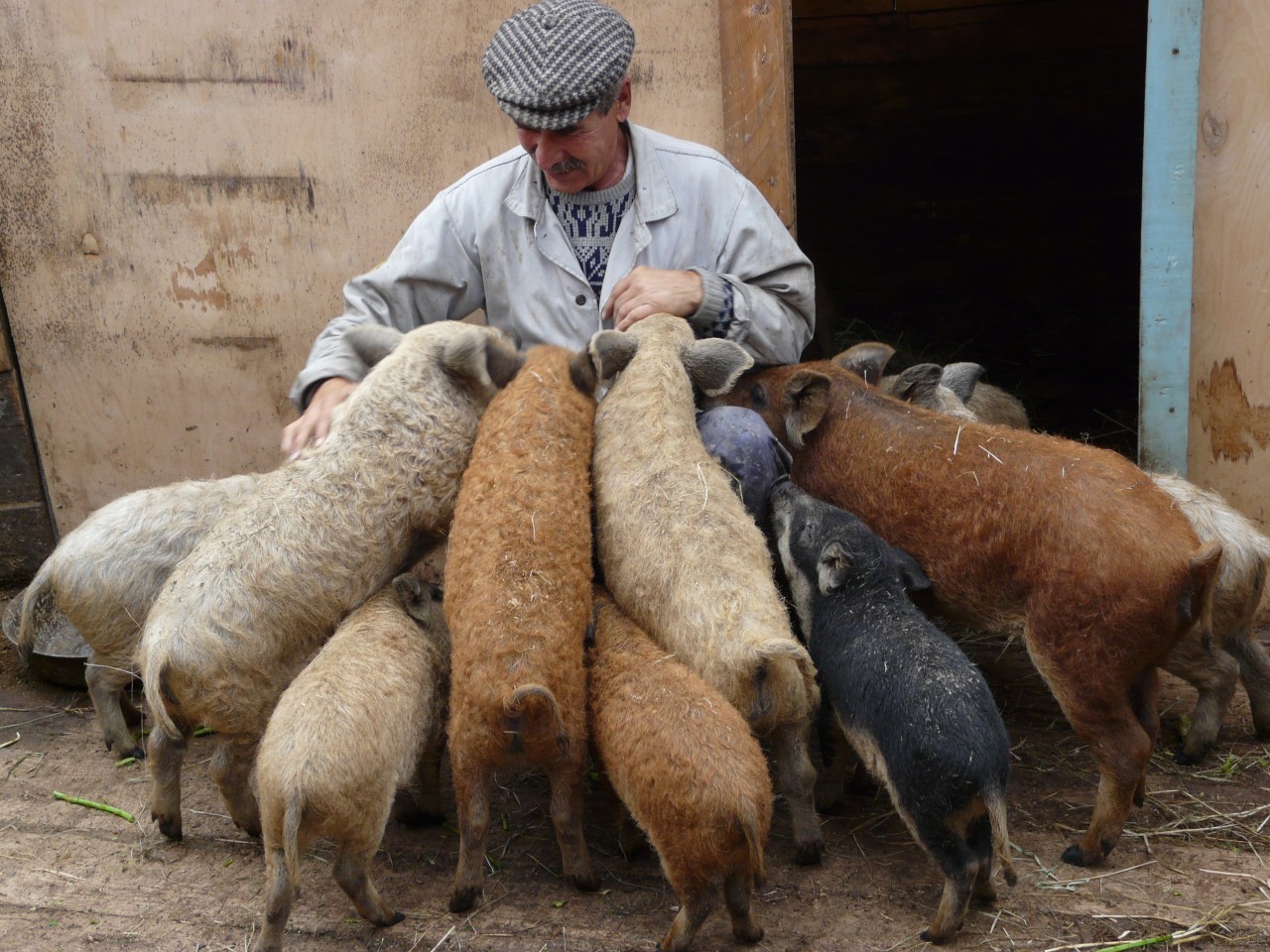
White is the predominant color, while red and black varieties are endangered. Volunteers breed them to increase their population, but sale is strictly prohibited, as the breed is considered a "Hungarium"—a typical Viennese product and a national treasure.
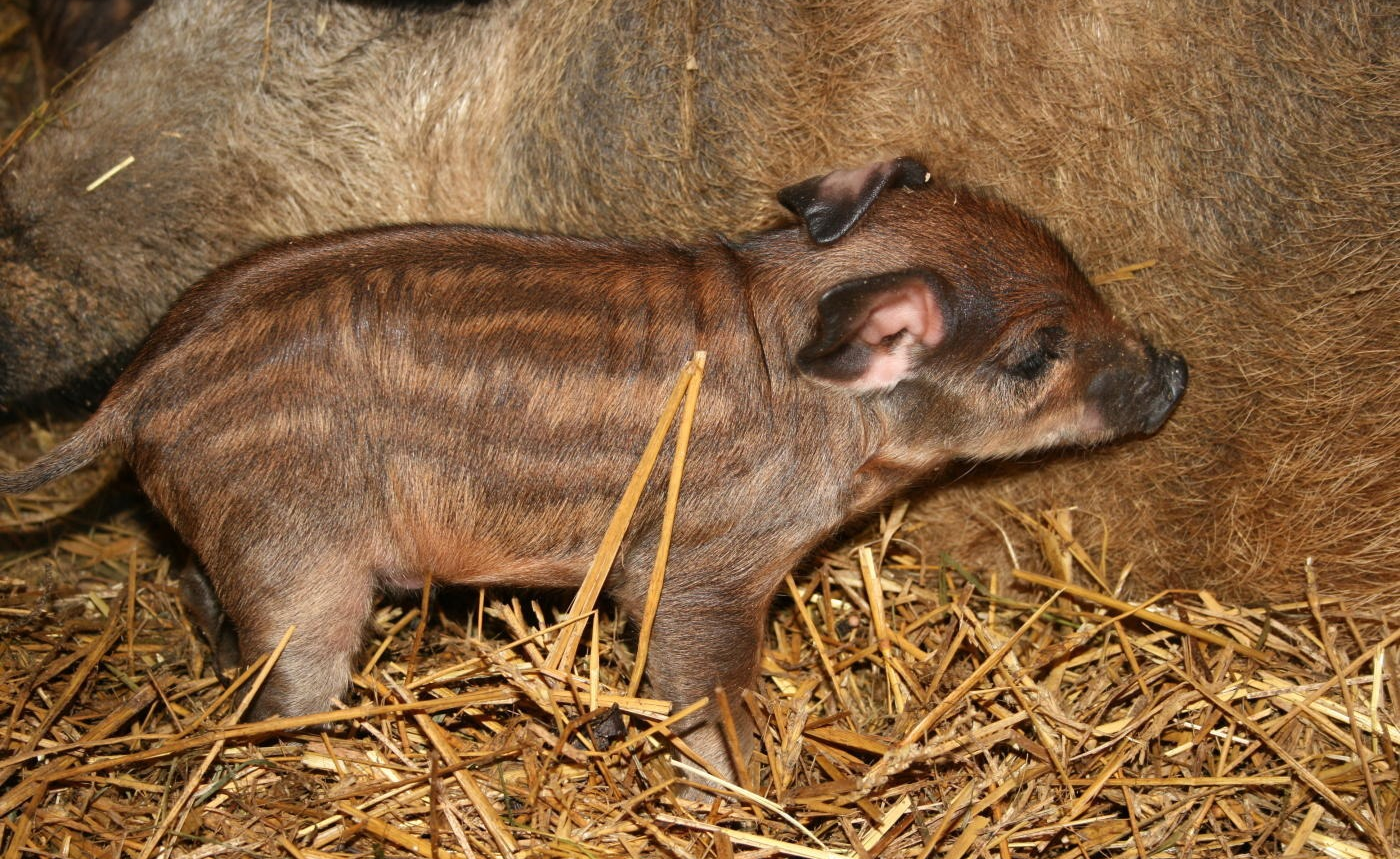
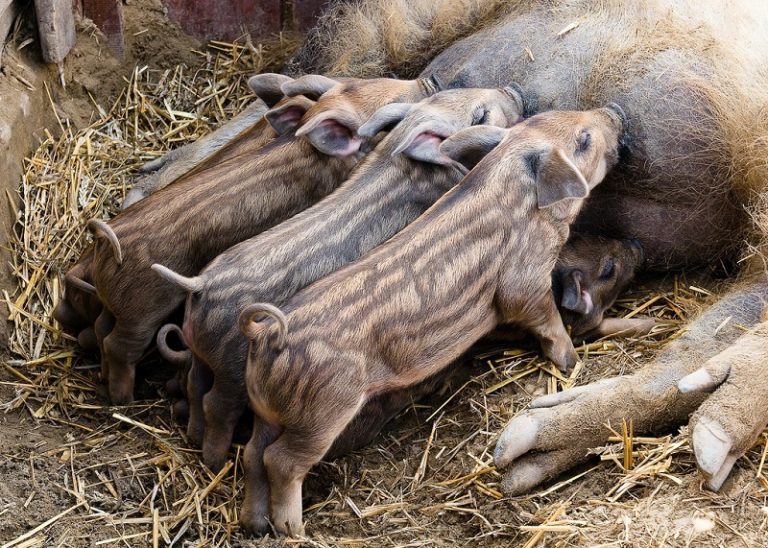
The piglets are born striped, which they apparently inherited from wild boars.
This breed has many positive qualities: a versatile diet from pastures (roots, snails, vegetables, acorns, grass...), undemanding living conditions, resistance to most diseases common to other pigs, and good piglet survival.
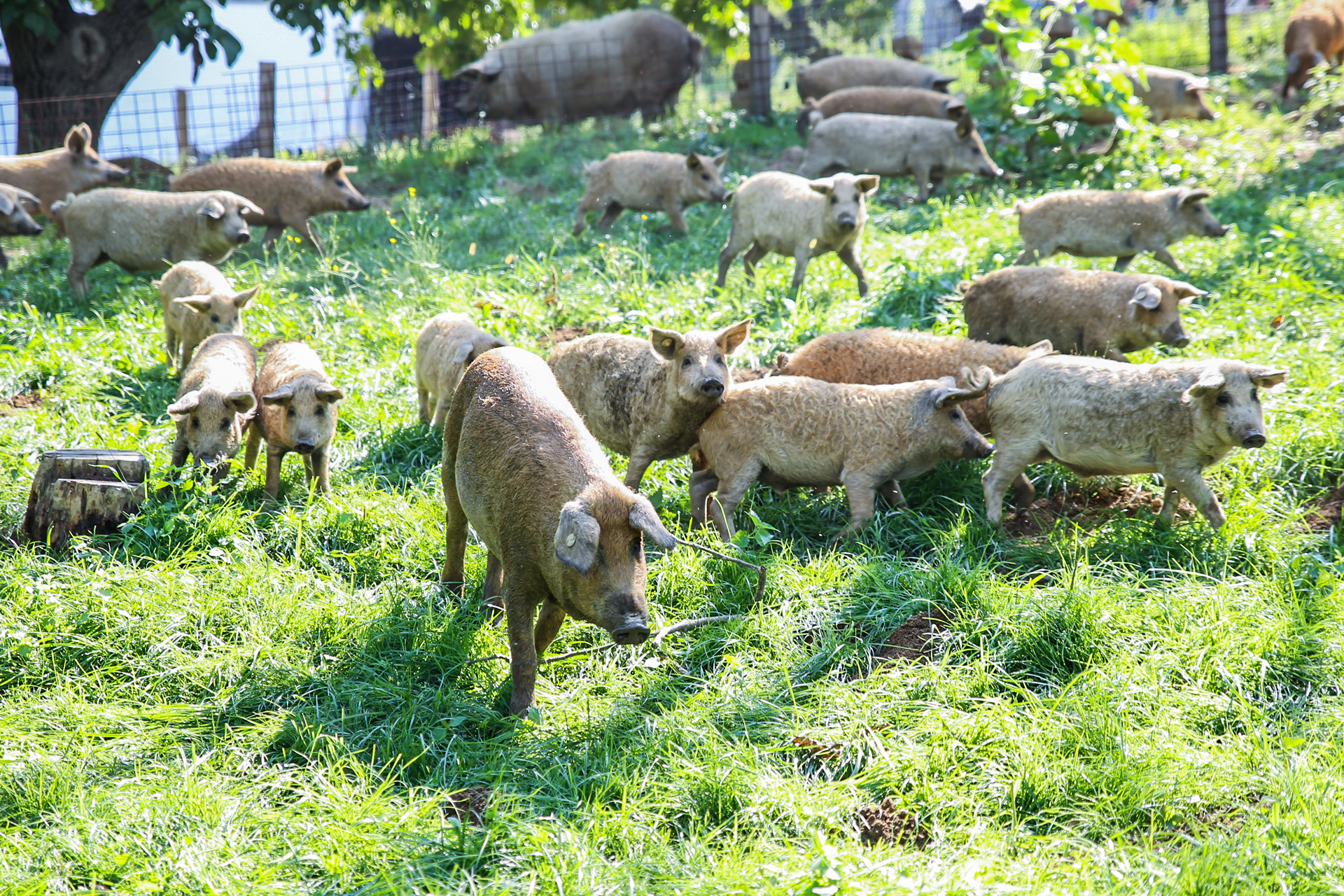
At the same time, the Hungarian Mangalitsa breed can be called intelligent - these pigs are sociable, easily tamed, curious and good-natured.
In Hungary, pigs of this breed are raised on free range, with herds being driven out into the meadows in the morning, and the pigs coming home on their own in the evening.
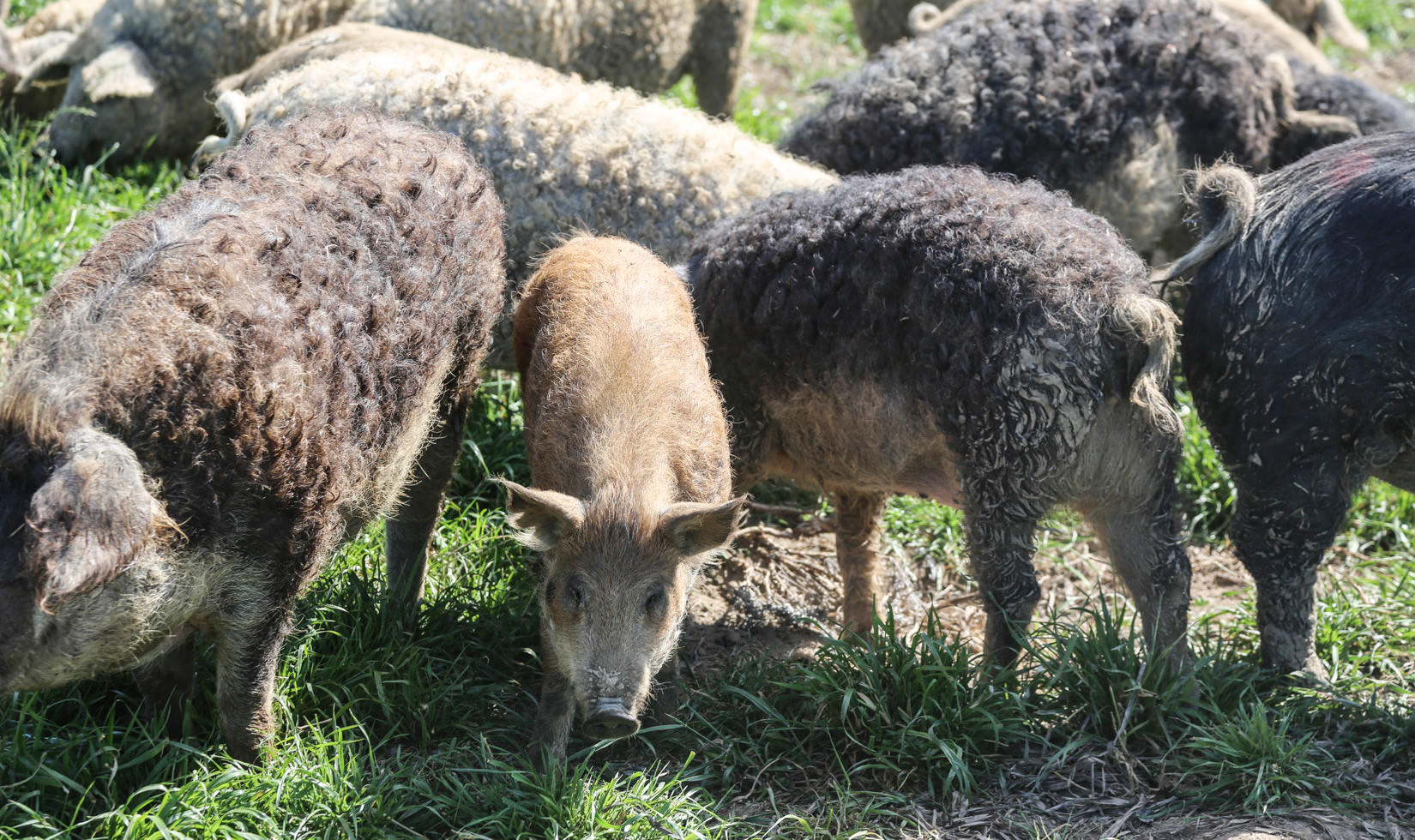
But there are also disadvantages: it is difficult to find a good breeder, and the price for these pigs is very high; they require a large pasture with good grass.
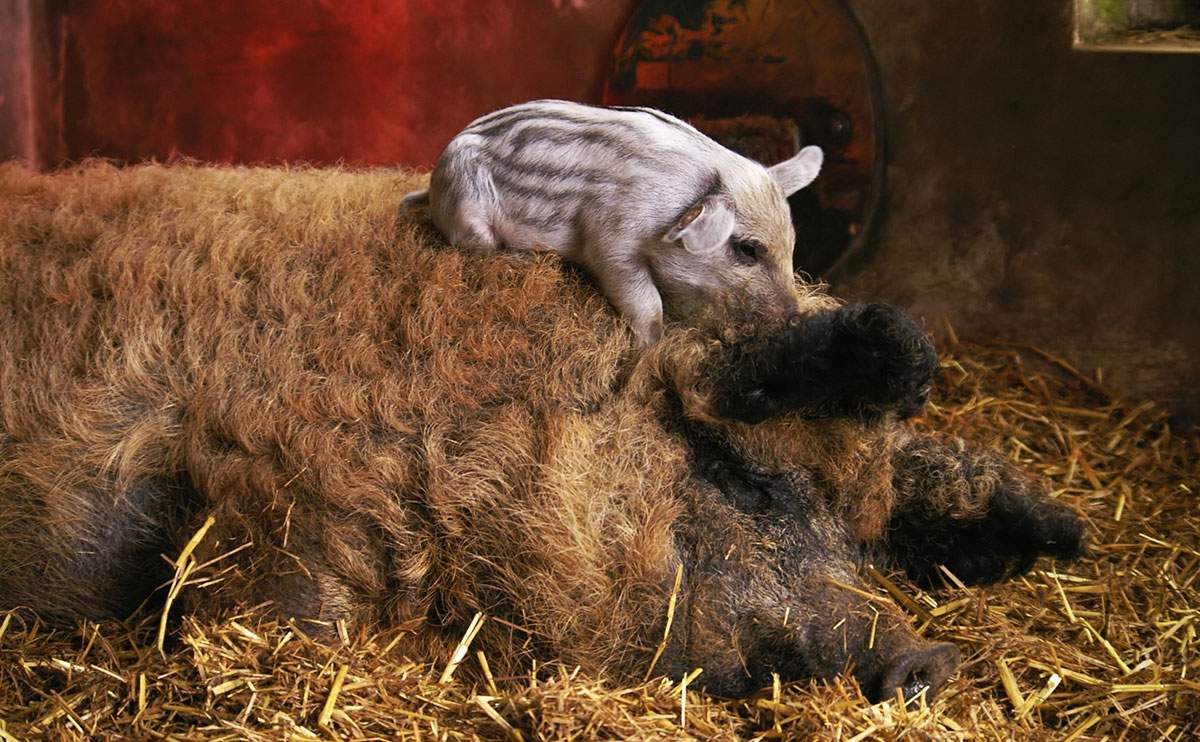
You can identify a purebred pig by the dark "Wellmann's spot," 3–5 cm in diameter, at the lower edge of the ears. Also visible are the dark skin around the eyes and nipples, black hooves, snout, and the underside of the tail.
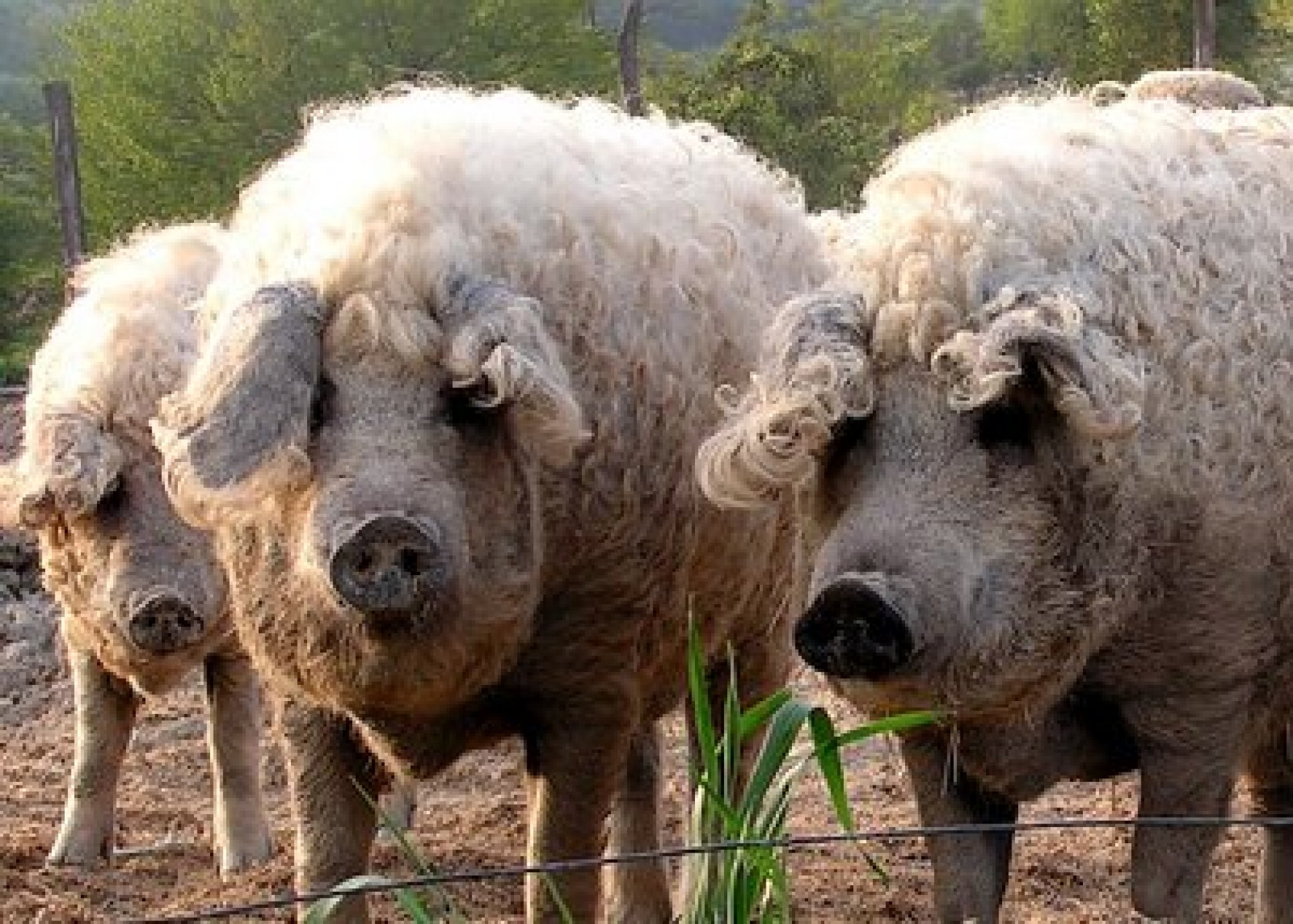
Another indicator of pedigree is fertility: in the first year, a sow produces no more than 6 piglets, and in subsequent years, no more than 10. Scientists have not yet been able to increase this number. If a sow produces more than 10 piglets, it is considered a hybrid.
Adult pigs reach a weight of 300 kg.
Video: Hungarian Mangalitsa, first winter
The Hungarian Mangalitsa is a low-maintenance breed, requiring little care and feeding, making its breeding costs low, offering farmers the opportunity to create a profitable and productive business. However, achieving positive results requires time and patience.