Sooner or later, any novice dog owner faces the question: why, when, and how to trim a dog's nails without harming the pet? To avoid mistakes, it's important to understand the animal's needs and the anatomical structure of the nail. Also, carefully study the available tools, allow time for the procedure, and exercise care during the process.
Content
Why is it necessary to trim the overgrown part of the nail?
Life itself presents us with a fact: trimming claws is necessary, otherwise dogs experience serious discomfort. Due to the overgrown claws, the animal becomes frankly clumsy:
- During walks, he finds it difficult to dig in the hard ground.
- At home, the dog clings to soft materials - carpets and rugs.
- On tile, laminate and other types of smooth floors, the poor thing slips with its paws, loses confidence and becomes restless.
- An excessively long nail can cause physical pain to the dog - when pressure is applied while walking, the hard part peels off from the soft part of the pad, leading to infection of the wounds.
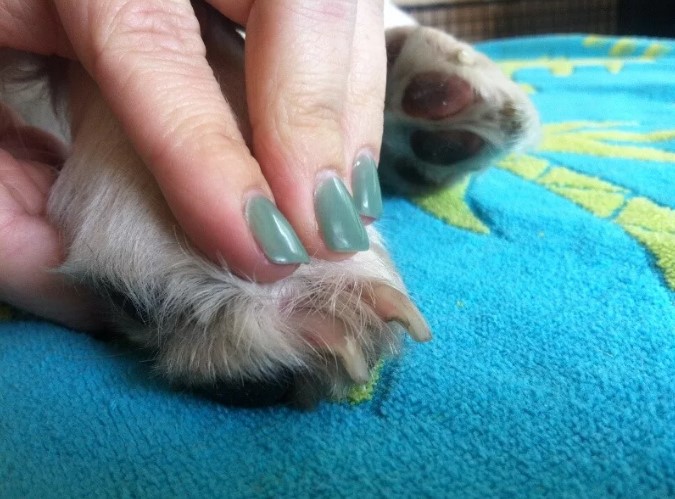
Overgrown claws cause discomfort to both the animal and the owner.
How do you know when it's time to trim your pet's claws? If you hear a clicking sound when your pet walks on a hard, smooth floor, their length has clearly grown beyond the normal range. Normally, the chitinous plate wraps around the soft pad but does not extend beyond its edge.
In the wild, animals' claws naturally wear down. Walking on asphalt and digging holes in hard soil can partially achieve the same effect. Animals (including domestic pets) also chew off the edges of their nails when they feel discomfort, acting intuitively as they begin to feel discomfort. However, these measures alone are insufficient, so owners must monitor the situation.
Preparing for pruning
Dogs don't like human intervention. During claw trimming, animals often panic and become extremely restless. It's no wonder veterinarians recommend acclimating puppies to the procedure from puppyhood—the psychological preparation eliminates the pet's nervousness during the "execution."
If you're dealing with an older animal, keep an eye on it shortly before the procedure. Play more often, and massage its paw pads during playtime. Teach it not to be alarmed by claws being touched. Meanwhile, carefully examine the structure of the claws and their condition. This is especially important when the claw and the pad are equally dark—the line between them is barely visible.
Research the range of pruning tools in advance. The following are strictly prohibited:
- household scissors (they split the animal's thick claw rather than making a clean cut);
- Regular nail clippers are designed for flat human nails. Dog nails, on the other hand, are rounded, semi-cylindrical, and the nail plate itself is much thicker.
Tools
There are several types of nail trimming tools available. Manufacturers ensure that every dog has a tool that can handle the problem painlessly and without the risk of damaging the subnail tissue.
Guillotine
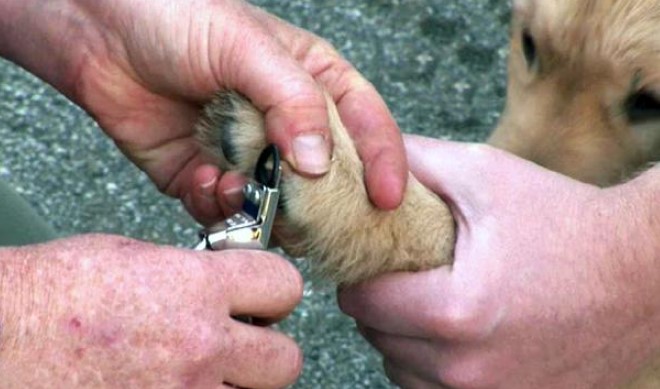
Trimming your dog's nails with a guillotine is a quick and easy process.
Features of the tool:
- the cutting occurs sharply when the upper and lower cutters close together - the claw is placed between them before pressing;
- the blade is not straight, but slightly rounded (so that the cut has an arcuate shape without sharp corners);
- ease of use;
- recommended if nails are of medium length;
- replaceable parts.
The tool is suitable for small dogs and puppies. Their nails are relatively soft and thin, without significant curves. The guillotine won't work if they're too short or too long; only a perfectly sharp tool is suitable.
If the metal has become dull, it means the blade is dull, and working with it will lead either to injury or to splitting of the edge of the claw.
Scissor nail clipper
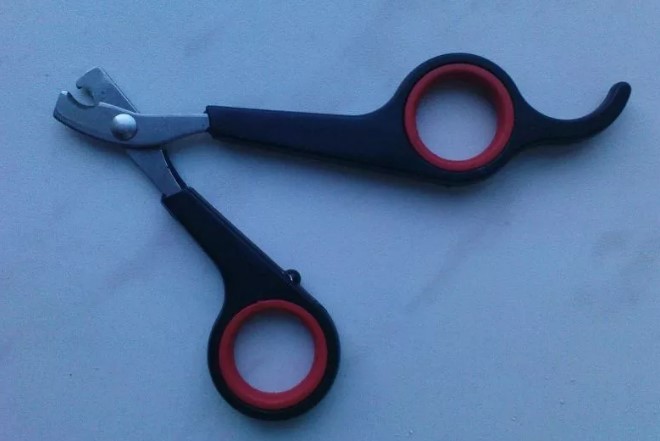
A scissor nail clipper is an inexpensive and easy-to-use tool.
Peculiarities:
- the design is the same as that of regular scissors, the only difference is in the shape - it has the appearance of a blade, slightly curved to provide a rounded cutting line;
- the cheapest tool in comparison with more “advanced” options;
- requires speed when cutting (align, press, get a perfectly even edge);
- Suitable for both small and large dogs, regardless of age and breed.
With frequent use, cutting edges become dull, and the metal takes on a dull appearance. Dull scissors should not be used. If a good sharpener cannot be found to sharpen the blades, they are discarded.
Nippers
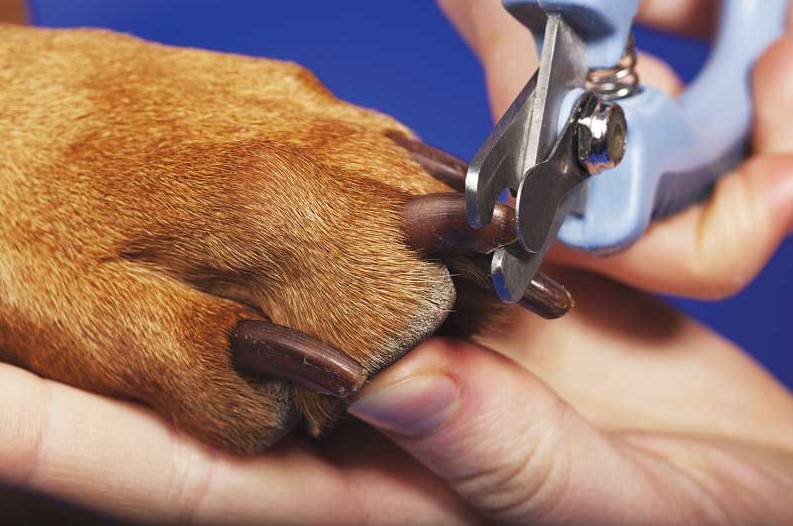
Trimming nails with nippers
This tool is more professional-grade and is often used by professionals who trim dogs' nails. Features:
- they work similarly to scissors - due to the overlap of two cutting blades;
- There are long handles, similar to garden shears, between which a spring element is placed (it helps to open the blades and returns them to a non-working state);
- There are models of different sizes available to suit the animal's build and the type of its claws.
A disadvantage is that they are disposable. A dull instrument is discarded, as the cutting elements cannot be replaced. Otherwise, there is a risk of damaging the animal's pulp and resulting in uneven cutting.
How to trim your dog's nails at home – step-by-step instructions
Before you start trimming, you need to thoroughly study the structure of the animal's claws, namely:
- where the pulp is located (it contains nerve endings and blood vessels);
- where the cutting line should be.
If you have played with your dog beforehand and examined its nails and pads, you will be able to trim your dog's nails at home without much difficulty.
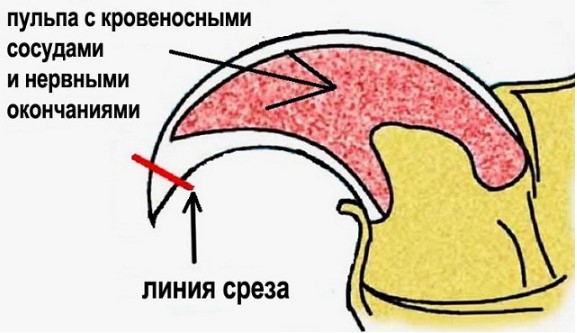
When trimming, it is important not to touch the pulp with blood vessels and nerve endings.
During the procedure it is important:
- behave relaxed, talk to your pet as if nothing had happened;
- accompany your actions with a playful and affectionate intonation;
- hold the paw firmly, but at the same time without suggesting violent actions.
The regrown nail should be cut midway between the outer edge and the pulp border. This distance is considered optimal.
Hand position:
- the master's palm should be placed under the dog's paw;
- the thumb is on top and presses lightly on the base of the dog's phalanges - if the animal is relaxed, its "fingers" will rise slightly upward;
- Shaggy breeds typically have long hair on their paws. This should be folded back and held in place with your thumb—the hair should not obscure visibility.
At this point, a neat and confident cut of the claw is made.
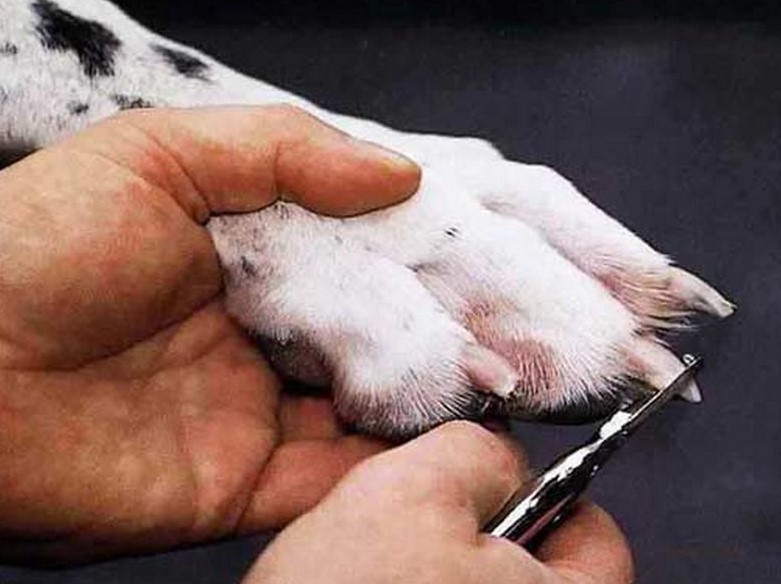
If you follow all the pruning recommendations, the procedure will be quick and painless.
What to do if your dog is injured
Sometimes, during grooming, a dog still gets injured for the following reasons:
- lack of knowledge about the structure of the claw and the owner’s anxiety;
- lack of practical experience;
- The dog jerked sharply during the process because it was not prepared for the procedure and was stressed.
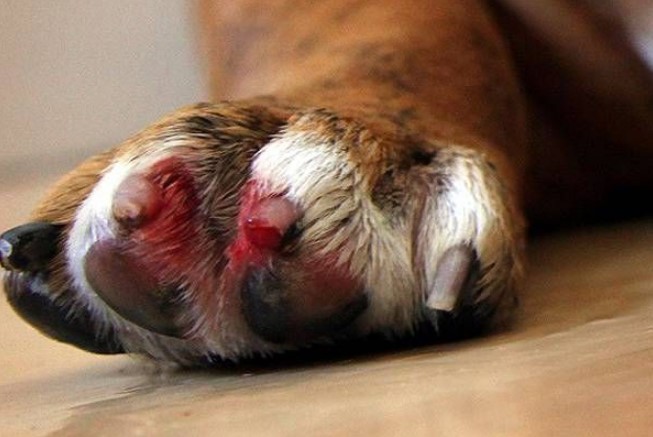
It is important to disinfect any wounds immediately.
For such cases, you need to have on hand:
- disinfectants and hemostatic agents (hydrogen peroxide, iodine, potassium permanganate solution, alum pencil, talc, wheat flour);
- dressing material - cotton swabs or discs, bandage.
If a wound appears, prompt treatment will help stop the bleeding and protect the paw pads from infection.
Extra care - dog pedicure
Dogs' nails need to be groomed throughout their life. This isn't about glamorous fashion, but a vital necessity. Domestic dogs are losing many of the advantages nature originally endowed them with centuries ago:
- Their lifestyle is such that they don't need to get their own food and use their claws to do so, meaning they don't get enough exercise and aren't worn down.
- The food includes many components typical of an urban environment (in nature, such “add-ons” would simply not be present in dog food).
As a result, dogs' nails become loose and often have a compromised structure—a problem that can be solved with proper care. Pedicure accessories will ensure the nail plate has a smooth edge and surface. While you can learn to do a pedicure yourself, professional services are also a good idea.
What you need to have in your arsenal:
- hemostatic powder and hygienic material (cotton pads, clean paper towels or napkins);
- a special nail file for dogs;
- Electric polishing tool - grinder.
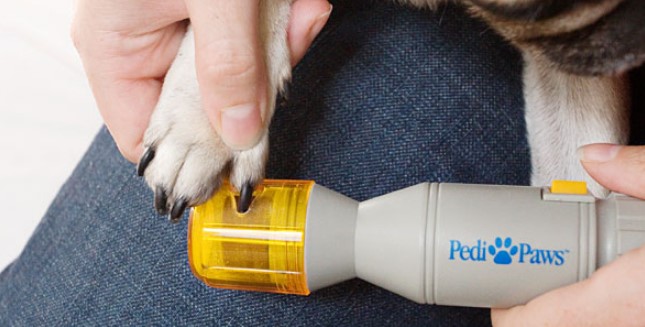
When using a grinder, the risk of injury is minimal.
An electric nail grinder can be used to trim nails year-round. This prevents them from growing too long, meaning no trimming is necessary.
An untrained dog may be irritated by the vibration and distinctive sound of the device. But this can be resolved. One or two treatments, and the pet will calm down, reassured that there's no cause for concern.
Suitable time, frequency of procedures and other tips
To ensure that both the owner and the dog feel comfortable, the following recommendations should be taken into account:
- The main recommendation is to involve the dog in the process. Forceful actions will not achieve the desired effect.
- The animal is given a play environment, after which its claws are gradually treated.
- While a haircut is relatively quick, a pedicure takes much longer. The entire job won't be completed in one session; it will have to be completed in two or even three sessions.
- The frequency of pedicures varies from person to person and depends on the condition of the nails—approximately every 1–2 months. Age, diet, and any medical conditions also play a role.
Nail growth shouldn't be left to chance—a loving owner will always take care of their condition. Regularly monitoring your dog's nails will help determine the type of treatment and frequency of procedures. Trimming and pedicures typically take half an hour, sometimes more. However, these procedures ensure normal nail growth, protect the paw pads, and overall health of the animal.