 If you have a cat, you've likely been scratched by your pet more than once. And, of course, few people enjoy it. Until recently, owners had no other option but to surgically remove their claws.
But not every owner would dare to do this, since it would involve interfering with nature, since cats need claws for normal life.
Content
What are anti-scratch posts for cats?
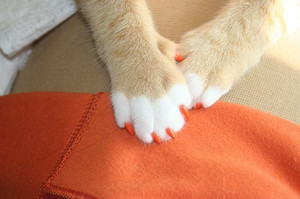
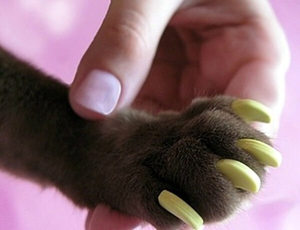 Now you don't have to think about trimming your cats' claws, as there's a gentler alternative available - anti-scratch capsNow you can keep your pet's claws intact and prevent her from scratching you.
Thanks to the special shape of the anti-scratch cap, it's very easy to put on your cat's claws, and they won't cause any discomfort. You can immediately start playing with your pet without worrying about glowing scratches appearing on your body. What's especially nice is that this protection will last for a long time. from 2 to 8 weeks.
The idea for this invention came from American veterinarian Toby Wexler. It's worth noting that Americans have been using scratch-resistant mittens on their cats for 15 years now.
Russian pet owners have only recently become familiar with them. This is unfortunate, as any owner who encounters this device for the first time finds it difficult to reconcile how they ever managed without them.
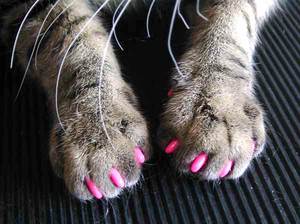
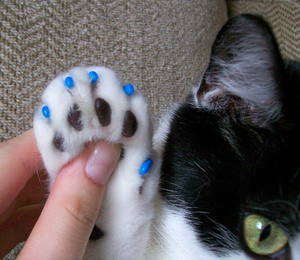
Anti-scratch mittens will help every owner forever protect furniture from damage, and also to keep the wallpaper intact. Anti-scratch caps look like silicone caps that are attached to your pet's claws with medical adhesive. To ensure your pet doesn't experience pain, manufacturers offer cat owners anti-scratch caps in a variety of sizes and colors.
Therefore, you can easily choose the right device for your pet, taking into account their age. Only small kittens, less than 6 months old, can do without them. These babies have underdeveloped claws that have not yet had time to harden.
Their active lifestyle should also be taken into account, as they can easily sharpen their claws during playtime without them. Older cats, who no longer need to keep their claws sharpened frequently, can also live comfortably without scratch guards. For animals that don't fall into either of these categories, it's advisable to have this device.
How long does the device last?
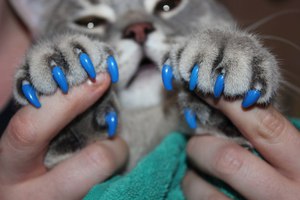 To start using anti-scratch caps, simply place the caps on your pet's claws. However, as time goes on, the claws gradually begin to grow, and the dead ones fall off on their own.
Therefore, at some point, the cat's claws will also become uncapped. And therefore, owners will have to change caps regularly as the cat's claws grow.
- Typically, it takes about 1.5–2 months for claws to grow in. This is how often you'll need to replace the nail caps.
- A standard set of anti-scratch caps includes about 40 caps and a tube of glue that remains usable for 2 years or more.
- The anti-scratch caps are very simple in design. If you choose to protect only the claws on your dog's front paws, you can use one set four times.
The anti-scratch pads are universal in size, so they can be effectively used not only on two- to three-month-old kittens, but also on adult animals that have lived in your home for several years.
If necessary, you can always reduce the length of the caps, cutting them to the correct size if you make a mistake when purchasing. Modern scratch-resistant mittens come in a variety of colors, including six different shades, ranging from transparent to red and orange.
What sizes do caps come in?
Anti-scratch mittens can be used for animals of different sizes and ages, so there are products in several categories for each group.
 If you're looking for caps for small kittens up to 6 months old and weighing between 0.5 and 2 kg, size XS is the right choice. These little ones can generally do without them, but owners can purchase them if they prefer.
- If you have an older cat weighing between 2 and 4 kg, you should purchase size S products.
- For owners of larger animals weighing between 4 and 6 kg, it is recommended to choose caps of size M.
- If you have a particularly large cat at home, for example, a Maine Coon weighing more than 6 kg, then you should choose caps from those that are size L.
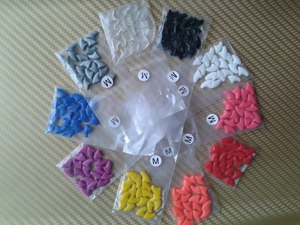 If you're looking for caps for small kittens up to 6 months old and weighing between 0.5 and 2 kg, size XS is the right choice. These little ones can generally do without them, but owners can purchase them if they prefer.
How does an animal behave when wearing anti-scratch gloves?
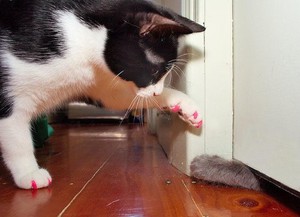 There is no need to worry too much about how your pet will feel in anti-scratch gloves. will not feel any pain - These caps are very soft and fit directly onto the cat's claws without interfering with the surrounding tissue.
The caps are made in such a way that they fit exactly repeat the shape of the clawOnce the caps are on, your pet will try to uncover its claws as usual, but this will not cause any damage to the sofa or wallpaper.
Seeing unusual objects on itself, the animal will try to get rid of them, and will even try to chew them off, but to no avail. Experience shows that your pet will make such attempts for two to three days, after which it will get used to them.
This is something you definitely need to take into account and have on hand. spare set of caps, since you'll most likely have to put on new ones after this. But after just a few days, your pet will accept the fact that they'll now have to wear these caps all the time and will behave as usual.
Instructions for putting on anti-scratch mittens
- First, you should prepare your cat. Pick her up, pet her behind the ears, and do other things she enjoys. Basically, try to relax her as much as possible.
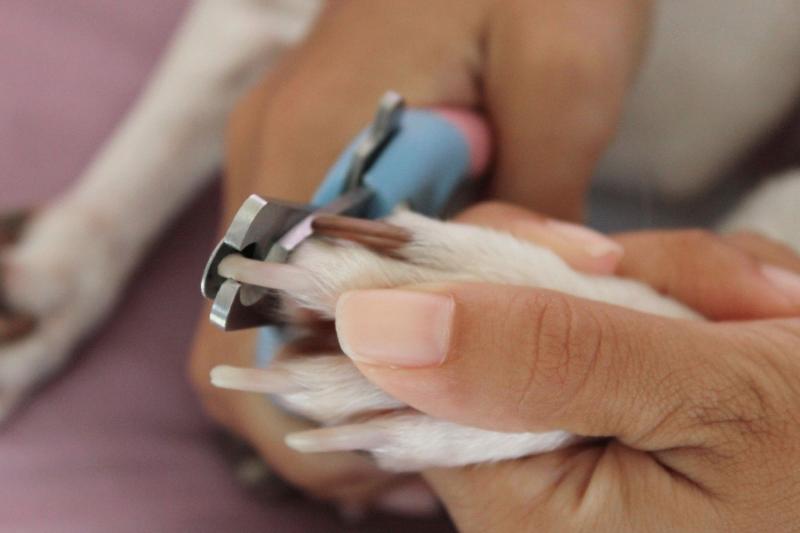
- After this, take one paw and press on the pads so that the claws protrude to a length that is sufficient for trimming.
- Next, you need to try the pad on, as your pet will experience discomfort if it is not the right size.
- If the cap is larger than required, trim it slightly from the opening side—this is easy to do, as silicone is very soft and pliable.
- It's best to put caps on your cat's claws after trimming them first. This will make them last much longer. Don't trim the claws too much—just shorten them by 1–2 mm.
- After this, coat the inside of the cap with the adhesive included with the anti-scratch kit. It's enough to fill only one-third of the cap. Be careful, as too much adhesive will simply leak out.
- Next, apply pressure to the cat's claw pads again, and when the claws protrude again, replace the cap and press it for no more than 5 seconds. This will ensure the cap is securely in place.
- If you notice your pet is upset, try to calm them down. Pet them, or better yet, give them a treat. But continue holding them for at least 10 minutes to allow the glue to set properly. After this time, you can rest assured that your furniture will be safe from now on.
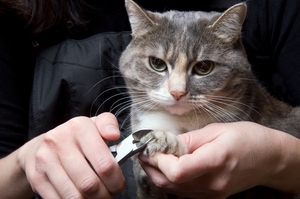 First, you should prepare your cat. Pick her up, pet her behind the ears, and do other things she enjoys. Basically, try to relax her as much as possible.
Don't agree to declaw surgery, as using anti-scratch pads is safer for your pet. He'll be declawed pretty soon. get used to these caps and will behave as before. The anti-scratch caps won't affect his instincts in any way, so after the time needed to get used to the caps has passed, he'll return to his normal routine.
Reviews
I have two cats at home. When I had the opportunity to buy them, I did so immediately, brought them home, and immediately applied them to my pets' claws. And I was immediately successful.
At first, I thought I'd have to delegate this job to professionals. The cats were naturally surprised by the pads and spent the first few minutes licking and nibbling them. However, enough time has passed, and they treat them as part of themselves.
Now I don't have to worry about my sofa being damaged, and I know my daughter won't get scratched by the cat's sharp claws. These pads are actually very soft, and I really like that about them. My daughter even once expressed a wish for similar pads for her teeth.
About three weeks ago, we bought anti-scratch caps and put them on our cat's claws. Contrary to popular belief, our kitty has been very calm. So far, we've limited ourselves to just her front paws.
There doesn't seem to be much point in attaching them to the back teeth, since the cat doesn't scratch with them. Our guests were very surprised by our pet's appearance. I think when the time comes, we'll get more scratch-resistant pads, but this time in red.
Our cat has been wearing scratch guards for three days now. She was calm when we started putting them on her claws. Although at first, she tried everything she could to get rid of them and licked her paws. We didn't have any problems putting them on our beloved cat's claws.
But this operation would have been even more convenient if the glue tube had a spout. Overall, we're completely happy with the scratch-resistant pads; our cat now looks very fashionable and won't be able to damage our new sofa even if she wanted to.
Every cat is accustomed to scratching, and this affects not only the owner and other family members, but also furniture and wallpaper. Not every owner is willing to completely trim their cat's claws.
However, this is no longer necessary, as a more gentle solution is now available – anti-scratch caps. These caps have many advantages, but the main one is that the cat can keep its natural claws and will not harm the environment in the house or the person.
One of the major advantages of anti-scratch mittens is that the animal does not experience any discomfort After they appear on her claws, she'll likely be reluctant to accept these caps at first and will try to remove them. However, thanks to the durable adhesive, the caps will stay firmly in place and will be a great help to owners.