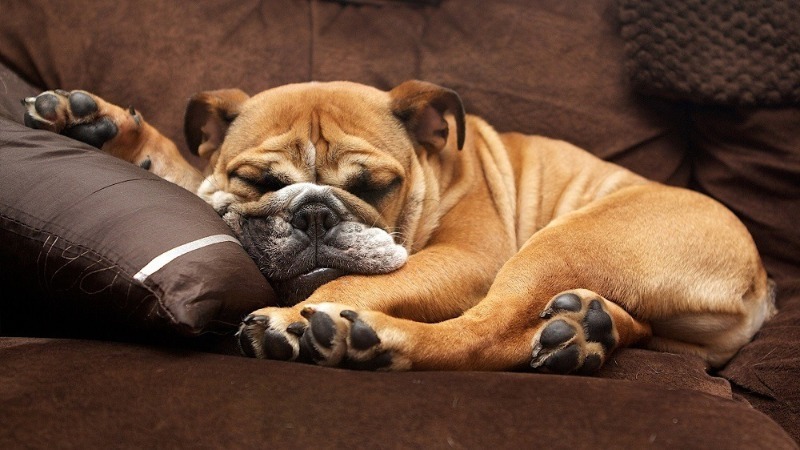
Veterinarians believe that a healthy dog's sleep schedule should roughly match that of its owner. If your four-legged friend is sleeping while you're awake, it's worth investigating the cause.
Age of the dog
One answer to this question is old age. Dogs, like people, age, becoming less active, tiring more quickly, and sleeping longer. This is completely natural and there's no cause for alarm.
If your pet is over eight years old, then by human standards he is already mature - fifty years old, and large dogs age even faster: 8 dog years are approximately equal to 76 human years.
The influence of weather
Another important reason for prolonged sleep is the weather. Our smaller brothers react to climate changes even more strongly than we do. For example, in hot weather, dogs try to hide in some secluded corner where it's cool and even damp. At this time, they become lethargic, lose their appetite, and try to sleep more or lie with their eyes closed in a daze.
Some dogs exhibit similar behavior during prolonged rains (lethargy, loss of appetite, and sleepiness). In this situation, much depends on your pet's individual characteristics (climate preferences).
Stress
All animals react to stress differently. Some become aggressive, others apathetic. Some start eating everything in sight, while others refuse food altogether. A common response to stress is deep, prolonged sleep. This allows the body to recover and the animal to gain strength.
Don't force your pet to eat or drink. Your dog instinctively understands what it needs better than you do and will eat when its body requires it.
Disease
It's no secret that when we're seriously ill, the last thing we want to do is run, jump, make sudden movements, or even socialize. On the contrary, we want to quickly lie down on the bed, close our eyes, and fall asleep. Dogs dream of the same thing when they're sick.
Sleep conserves energy that may be needed to fight illness. If your pet has become sleepy, lethargic, and has difficulty eating, they may be ill and require veterinary attention.
Lack of entertainment
Dogs are naturally designed for an active lifestyle, and stray dogs still live this way today. The more active a stray dog is, the more food it will have and the fewer chances it will get into dangerous situations—it's important to always be on guard. But domesticated pets, especially those well past puppyhood, gradually lose their survival instincts.
At home, there's always food and drink, a warm place to sleep peacefully, and loving owners. There's no need to hunt, sit in ambush for hours, or search for a safe place to sleep. Dogs get bored, and boredom leads to eating and sleeping. This kind of sleep isn't healthy; it's even harmful. Combined with an insatiable appetite, such rest will lead to muscle weakness, shortness of breath, obesity, and other ailments.
 Worker
1 comment