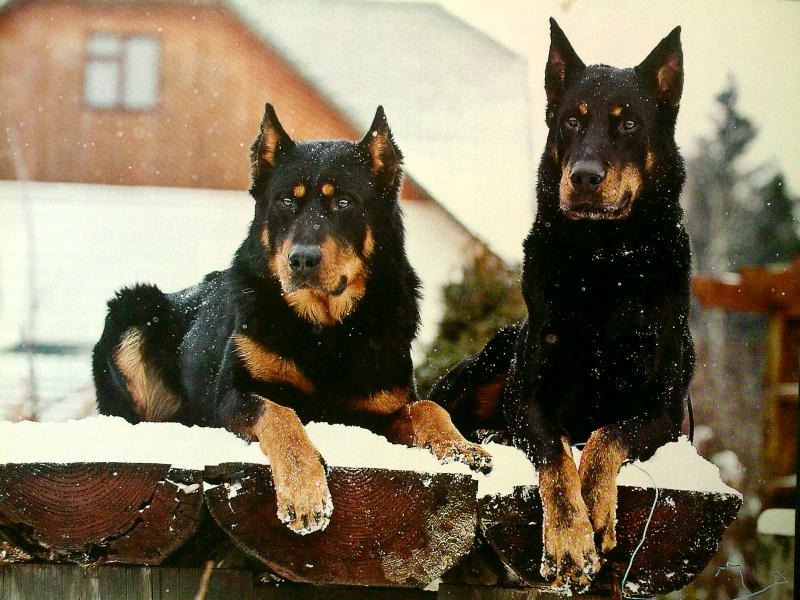
People see the world around them as vibrant and multifaceted. Their eyes are capable of distinguishing a huge number of colors and shades. But what do objects and things appear to dogs? It was long believed that dogs see everything in black and white, but is this really true?

Can dogs distinguish colors?
These animals have heightened sensitivity to light. This allows them to clearly distinguish objects on a bright sunny day. The sun doesn't blind them. Dogs also have excellent night vision. Objects around them don't blur together in the dark, as they can clearly distinguish the finest shades of gray. This allows them to hunt, spot enemies at the right time, and see what's hidden from human eyes at night.
Based on these characteristics of canine vision, scientists long believed that our four-legged friends could only distinguish three colors: black, white, and gray. However, recent research has revealed that this is not the case. Dogs don't perceive the full range of colors and shades like humans, but the world isn't black and white for them.
The only color these animals cannot distinguish is red. This is because their retina lacks the rod cells that allow them to detect this color. Dogs can see blue, white, pale yellow, and light blue. Of course, they cannot see the finest shades, as everything they see appears blurry, faded, and indistinct. In this respect, a pet is similar to a color-blind person. Thus, any dog sees:
- all bright colors (yellow, orange) are dull, having a dirty yellow tint,
- green as white,
- blue and light blue shades are very blurred and pale, although the clear sky seems to him as beautiful as it does to a person,
- lilac, like gray or blue, depending on its saturation and brightness.
How Dogs Really See
Our four-legged friends see everything around them as blurry. Unlike humans, they don't see the sharp outlines of various objects. This is reminiscent of the vision of a visually impaired person. But for a dog, this isn't a tragedy, as they receive most of their information about the world around them through their acute sense of smell and hearing. It's the nose and ears that help them navigate well.
A pet receives only 30% of all information through its eyes, while humans receive a full 90%. They are completely unable to rely entirely on their hearing and sense of smell, as these senses are not developed to the same degree as a dog's. For these animals, vision serves only a supporting function. It helps them understand the location of objects, follow their owner's commands, play fetch, and serve as a guide dog.
Incidentally, when performing its duties as a guide dog, a dog must be able to help its owner cross the road. However, the pet never uses traffic lights, as it doesn't distinguish between red and green. It simply follows the people around it. However, some guide dogs learn what to do when a certain light comes on.
It's well known that dogs are better at spotting moving objects than standing still. For example, they'll see a running hare 800 meters away much more clearly than a motionless doe 500 meters away. This is because dogs weren't originally domesticated. They had to hunt extensively to obtain food. When hunting, they needed to have a clear view of their prey, especially while they were chasing.
Another characteristic of these animals is that their field of view is much wider than that of humans. It's 250 degrees, not 180 degrees like humans. This is because dogs have elongated skulls, while humans have round ones. The more elongated a dog's muzzle, the wider its field of view.
Of course, our four-legged friends don't see the world as particularly colorful, vibrant, or diverse. However, they haven't completely lost their sense of color, and they are quite capable of distinguishing certain shades and hues.