The French Bulldog is beloved by many for its friendly nature, intelligence, charm, and sweet face. These wonderful dogs get along well with other animals and make best friends and caring babysitters for small children. Affectionate and energetic, they are gaining increasing popularity among toy dogs year after year.
Content
History of the breed's origin
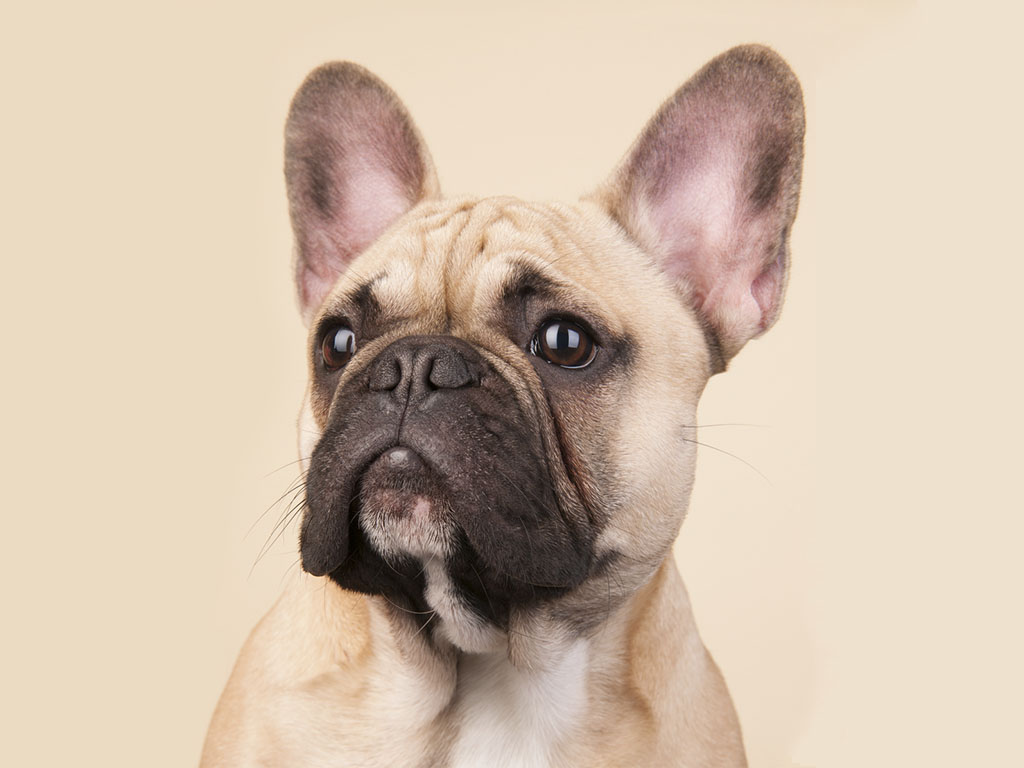
The French Bulldog dog breed is very popular these days.
There is no reliable information about the origin of the breed, but today there are two most popular versions. According to one theory, French bulldogs descended from the small Old English Bulldogs, whose ancestors, in turn, were the Molossian mastiffs native to Athens. According to this theory, they arrived in France during the Industrial Revolution with migrant workers, where they became incredibly popular.
Another group of researchers believes that the ancestors of modern "French Bulldogs" are Spanish bulldogs (the so-called medieval Alans). Dogs of this now-extinct breed were used by their owners to fight bulls.
Description and standard of the French Bulldog breed
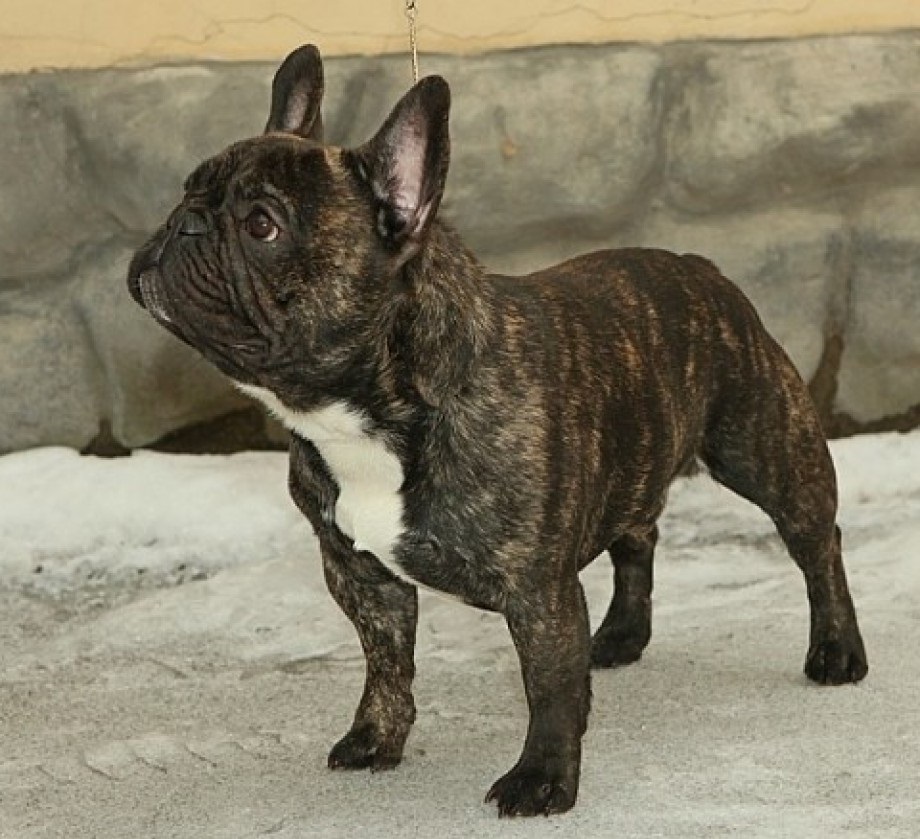
The brindle color of the French Bulldog is included in the breed standard.
French Bulldogs are small dogs with a strong, muscular build and a smooth, dense, short coat. Adults weigh between 8 and 14 kg (17 and 30 lbs) and stand between 26 and 35 cm (11 and 13 in) tall.
The French Bulldog's head is massive and broad, with pronounced folds and wrinkles, erect ears, and an upturned nose and muzzle. The eyes are set wide and low, slightly bulging.
The tail is naturally short; this is genetic. However, sometimes puppies are born with a tail longer than the standard. In this case, it can be docked between 3 and 5 days old.
Ears usually stand up at the age of 2 months, sometimes a little later.
If the puppy's ears haven't erected by 3-4 months, the ears are bandaged using a bandage made of gauze, cotton rolls, and adhesive tape. The rolls, tightly wrapped in bandage, are positioned vertically over the ears and secured with adhesive tape. The bandage is worn for 1-2 weeks.
These dogs come in several colors: black, white, blue, brindle, and all shades of red and fawn. However, solid black is not considered standard. Dark chocolate, gray, and tricolor colors are also excluded from the standard—they will not be accepted for shows. Regardless of color, the nose and eyelids must be black.
Character
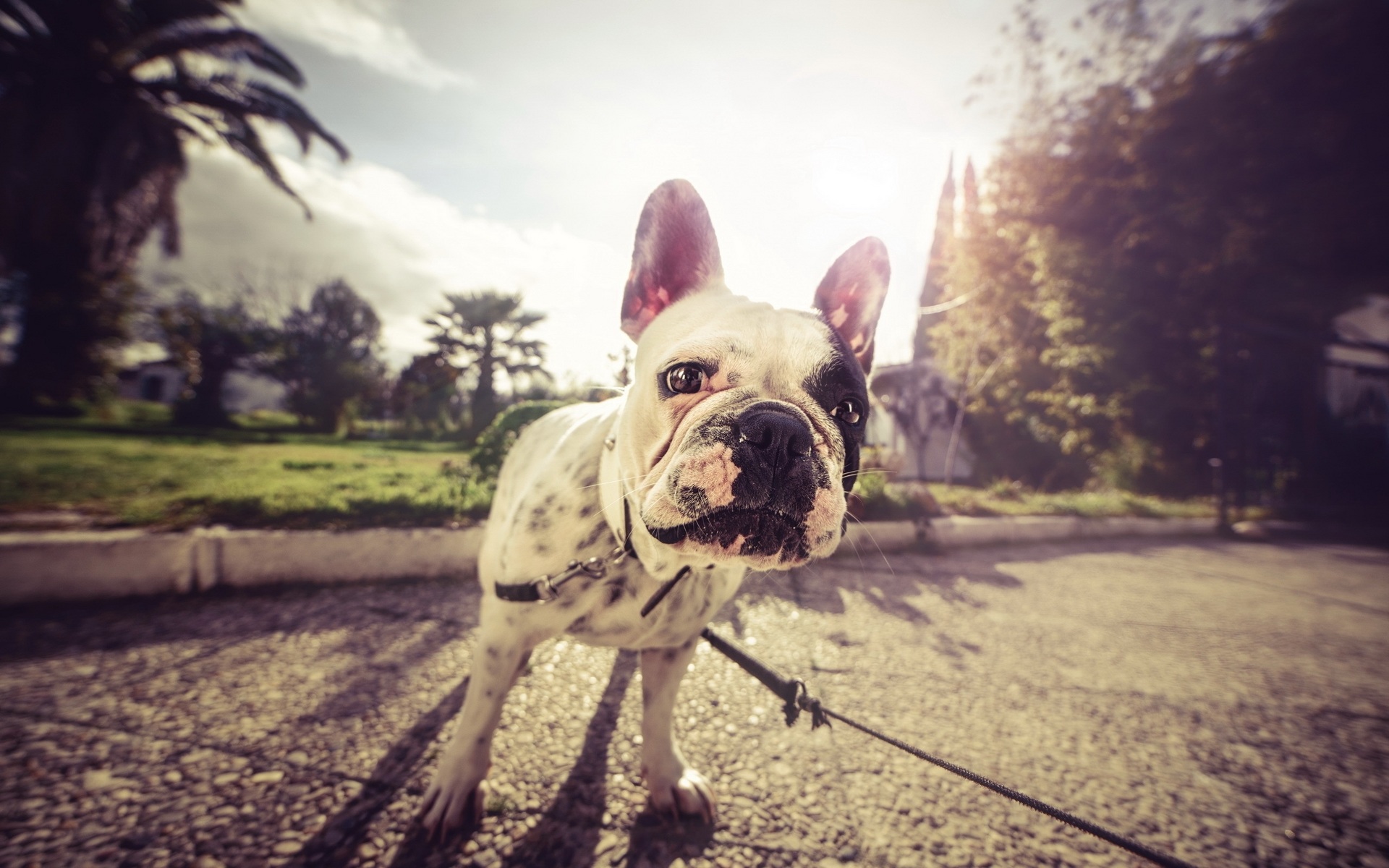
French bulldogs are very curious.
French Bulldogs are sociable and friendly dogs. They are quite calm and, at times, even lazy. But they are also very playful and rarely refuse a short walk or a game of fetch.
They are easy to train and get along well with all family members, including small children and the elderly. They are equally comfortable in a quiet environment as in a noisy group. They are very sociable and incredibly loyal.
These dogs are not aggressive and do not conflict with other dogs on walks. They are often used as guide dogs.
The French are not at all cowardly. In times of danger, they are capable of defending their master, even if they are inferior to the enemy.
Pros and cons of the French Bulldog
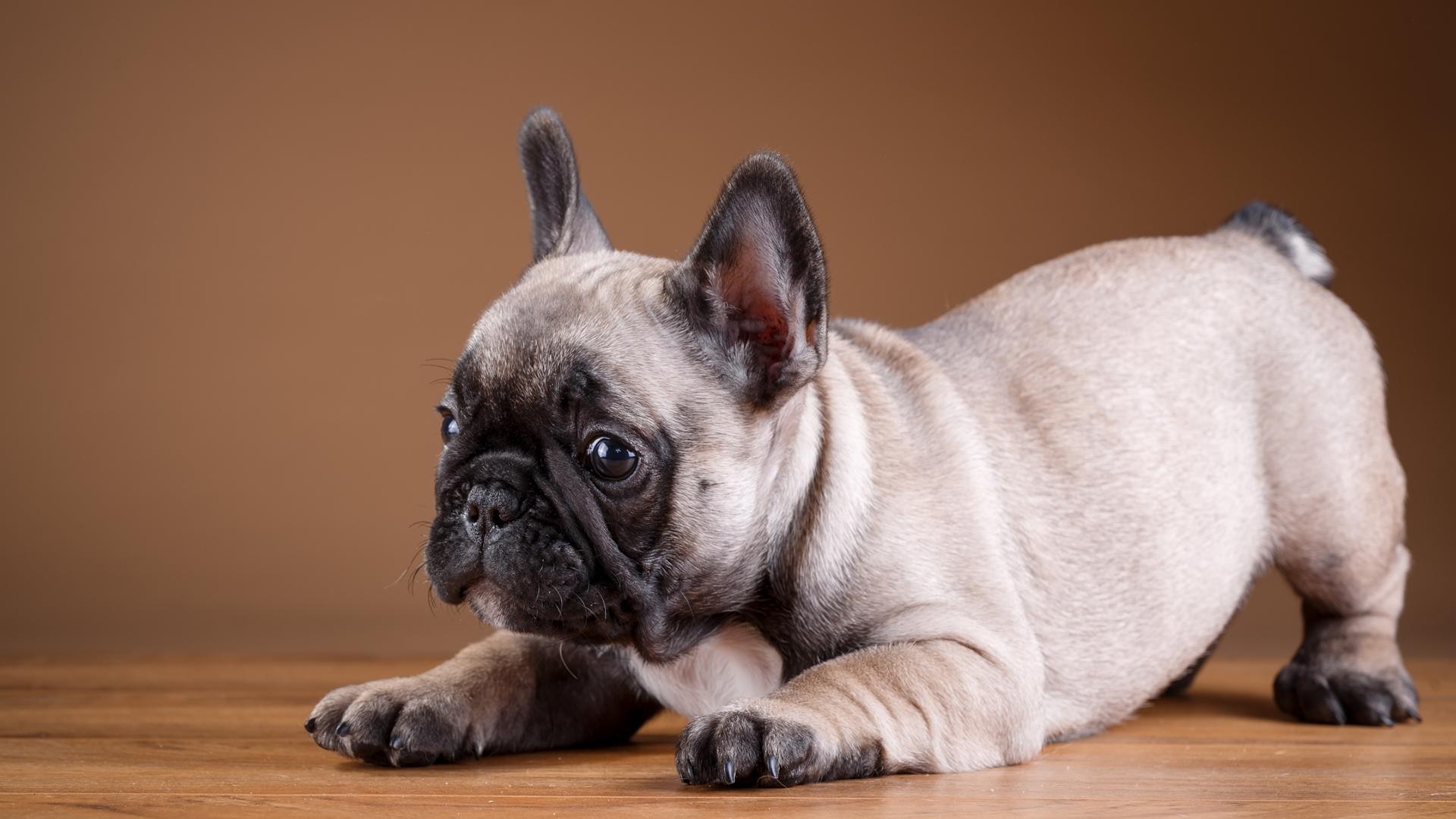
French bulldogs are very friendly and playful.
Before getting a French Bulldog, it is important to carefully read all the pros and cons of the breed.
Among the undoubted advantages of these dogs:
- small size - can be kept even in a small apartment;
- short hair is easy to comb and does not require special care;
- love children and enjoy playing with them;
- there is no unpleasant odor;
- they practically don't bark;
- smart and easy to train;
- friendly, affectionate character, non-conflict with other animals.
Along with the long list of advantages, there are also several disadvantages that may deter some people looking for their perfect dog. Among the breed's disadvantages are:
- may snore and make a peculiar grunting sound in their sleep;
- they are very afraid of both heat and cold, drafts;
- susceptible to certain diseases, especially allergies;
- Dogs' ears need to be cleaned periodically;
- They practically do not swim.
Care and maintenance
Feeding Bulldogs

It is important to remember that dogs of this breed have a good appetite, so if you do not limit their food intake, they can quickly gain excess weight.
Proper nutrition can maintain your pet's health and prolong their life. Food should be balanced and include not only proteins, fats and carbohydrates, but also vitamins and mineral salts.
Meat and organ meats should make up at least half of a dog's diet. Beef, veal, lamb, and poultry are preferred. Boiled fish (boneless) and organ meats (heart, liver, etc.) can be given occasionally.
Buckwheat and rice are the most digestible grains. Eggs, fermented milk products (but not milk), and raw and cooked vegetables are acceptable: carrots, zucchini, bell peppers, cucumbers, and cabbage—except potatoes. A small amount of fruit or berries can be given as a treat: banana, apple, melon, cherries, or raspberries.
All fried, salted, smoked and pickled foods, fatty meats, bones, legumes, citrus fruits, sweets and flour products are prohibited.
The dog must have access to clean water.
Grooming
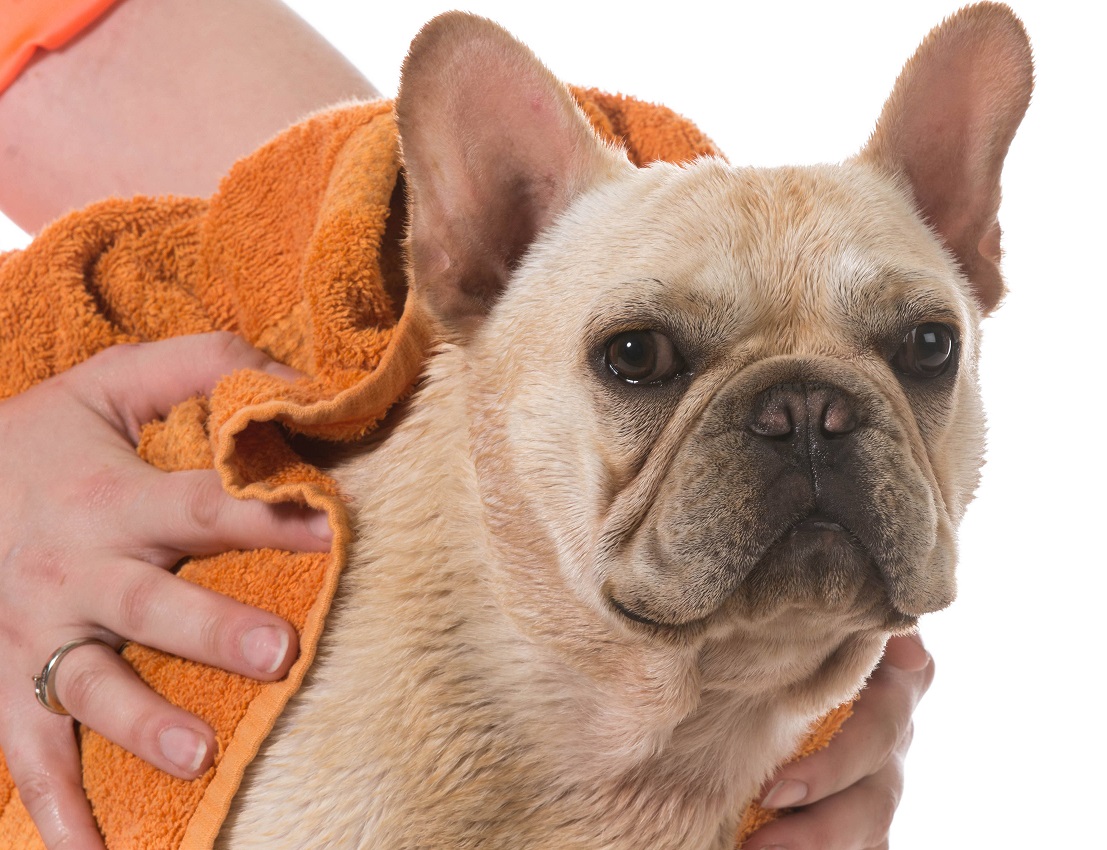
If the bulldog often walks and gets dirty during walks, you can carry out water procedures more often, but no more than once a month.
The French Bulldog's coat is short, so grooming it is not a burdensome task. However, these dogs shed throughout the year and intensify during stressful situations and with the onset of the heating season. To keep their coat clean, they need to be brushed regularly (at least once a week) with a massage brush or a mitten brush.
Due to the French Bulldog's short coat, it is not recommended to use slicker brushes or furminators.
Bathing your dog 2-3 times a year is sufficient. Otherwise, the protective oil layer won't have time to form, which will weaken the dog's immune system and cause skin irritation.
Every 2-3 months, check your pet's overgrown nails and trim them if necessary, and brush their teeth once a week. Also, regularly inspect the dog's ears and wipe them with a swab soaked in a special hygienic lotion. Similarly, wipe the folds of the dog's face to remove accumulated dirt.
Education and training
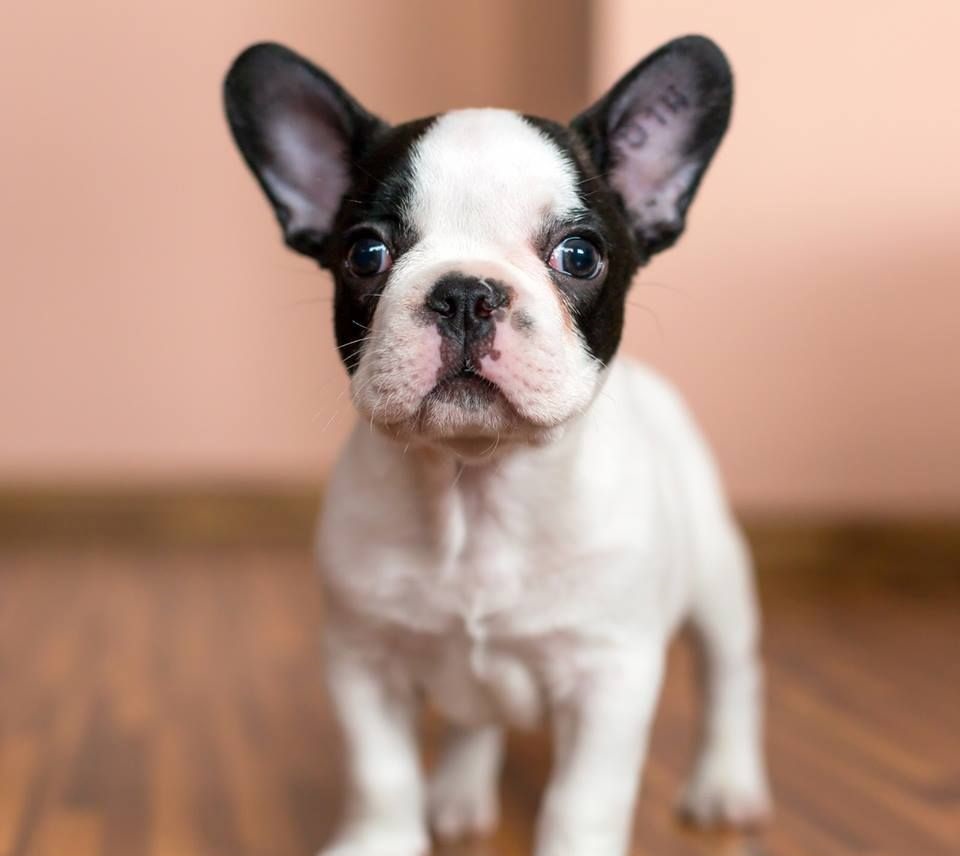
Once the puppy has settled into its new home, you can begin training it.
The first thing you need to do when bringing a puppy to its new home is to introduce it to the family and the apartment, let it get used to the environment and examine everything thoroughly.
Bulldogs are intelligent and quick-witted, and despite their naturally slow and somewhat stubborn nature, they can learn many commands. It's important to train your pet from the very first day they arrive at home—even such sweet and playful dogs can cause their owners many problems if left untrained.
A prerequisite for successful training is that it should be done in a playful manner. Once your pet has learned its name, you can move on to teaching basic commands: "Sit," "Down," "Stay," "Come," and "No."
In order for commands to become firmly ingrained in the dog's mind, they must first become equally firmly ingrained in the owner's mind: it is unacceptable to use "No" and then "No" for the same action; this will only confuse the dog further.
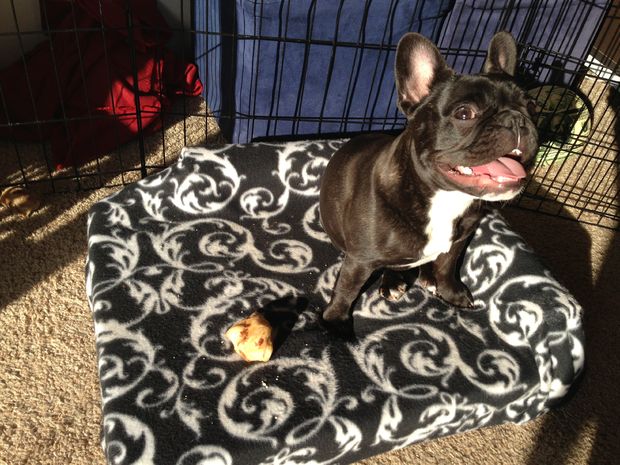
Before you bring a new puppy home, you need to prepare his place
To teach the “Place” command, you first need to independently carry the puppy to its place (it must be permanent) and voice the command.
For the "Come" command: move away from your pet with their food bowl, tap the bowl, and say the command. After successfully completing the command, be sure to praise your dog: give a small treat or simply pet them.
You can train a puppy to use a litter box or pad using the "Toilet" command. If the dog is marking its territory, use a negative command, such as "No." This is said in a stern voice, and the puppy is taken to its designated toilet area. When the puppy begins to go to the toilet in the designated area, be sure to praise it.
You can use no-no commands to stop a puppy from biting. This is done when the pet growls and bites when you try to pet it or when you go to its food bowl. If the dog accidentally bites during play, don't punish it. It's best to temporarily stop playing and wait until the puppy calms down or offer it a toy. At the same time, it's important to teach the bulldog that your body and clothing are not toys, and as soon as the dog starts behaving too aggressively, use commands to stop it.
Games with your pet
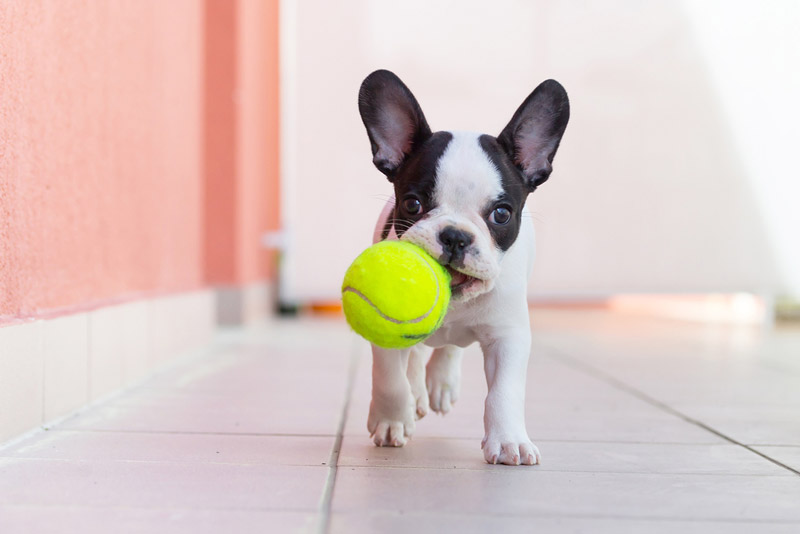
French bulldogs love to retrieve toys thrown by their owners.
These dogs are very playful, but sometimes lose interest in games that are repeated often. A French bulldog should have a variety of toys in its arsenal: balls, frisbees, ropes, etc.
Dogs of this breed love long walks and enjoy playing outdoors with other dogs.
Diseases and treatment
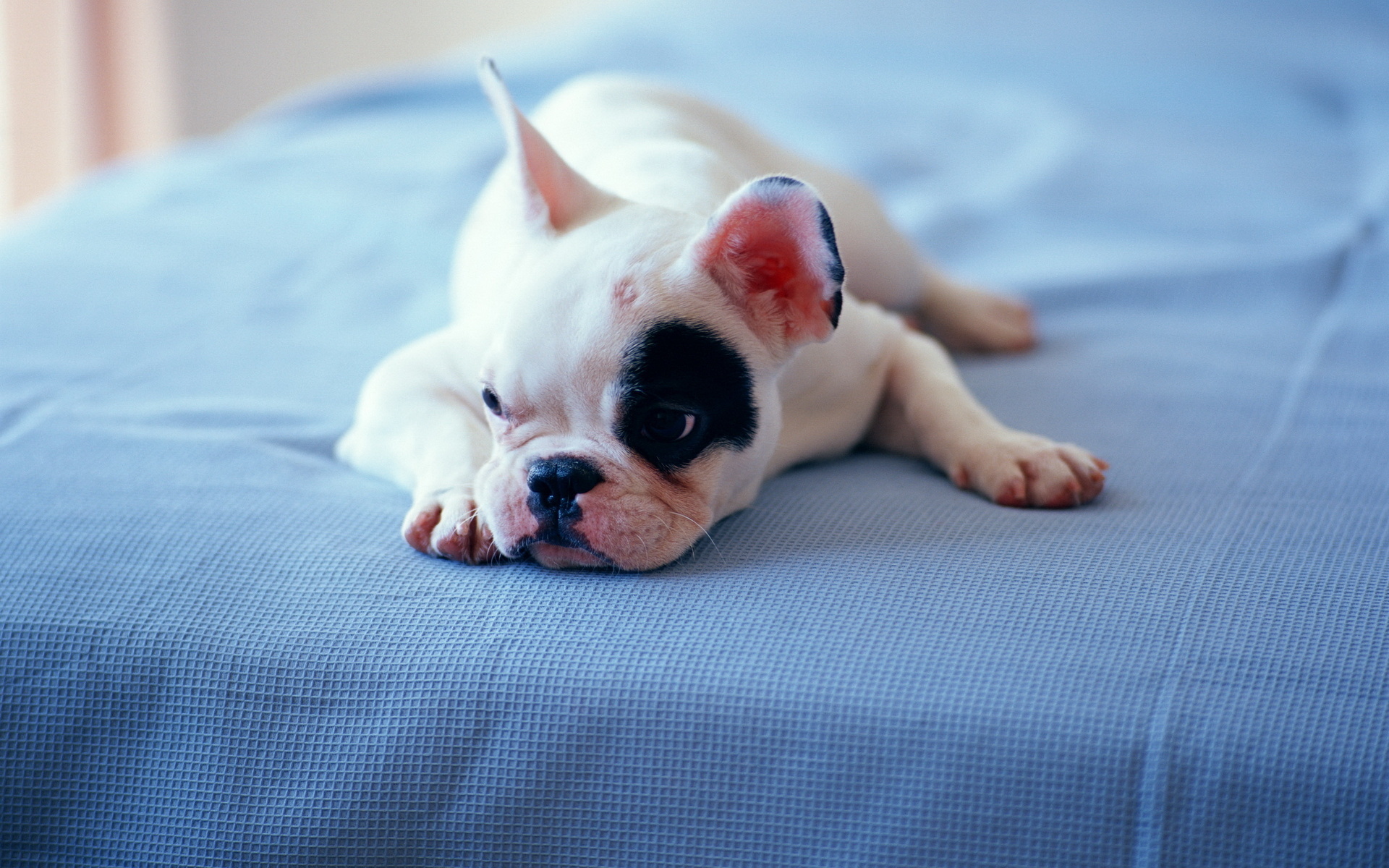
French bulldogs are quite sickly, so it is necessary to carefully monitor their health.
Most often, French bulldogs suffer from heart failure, hernia, otitis, cancer, allergies, and respiratory problems.Due to the unique structure of these dogs' eyes, they often suffer from third eyelid prolapse, conjunctivitis, and other eye diseases. Problems are indicated by the appearance of redness, pus, and tearing.
Signs of illness in a pet include a body temperature above 39°C (102.4°F), rapid breathing, loss of appetite, and lethargy. The nose becomes dry and hot and may become coated with mucus. Increased salivation can indicate various illnesses, including poisoning, viral infections, ear injuries and diseases, and gastrointestinal problems.
Constant sneezing, discharge from the eyes and nose, and coughing can be caused by a cold or allergy. If the dog isn't treated promptly, severe swelling of the throat and eyes can develop. Skin rashes, scratching, difficulty breathing, and hair loss in certain areas also indicate an allergy.
Due to the peculiarities of the spine's structure, bulldogs can develop a herniated or displaced disc during unsuccessful jumps, which can lead to atrophy of the hind legs and require immediate medical attention.
Lifespan
French Bulldogs live an average of 9–12 years, but some reach 15 years. To ensure your pet lives not only a long but also a happy life, it's important to monitor their health, have regular veterinary checkups, and vaccinate against rabies, hepatitis, parvovirus, and other serious infections.
Breeding
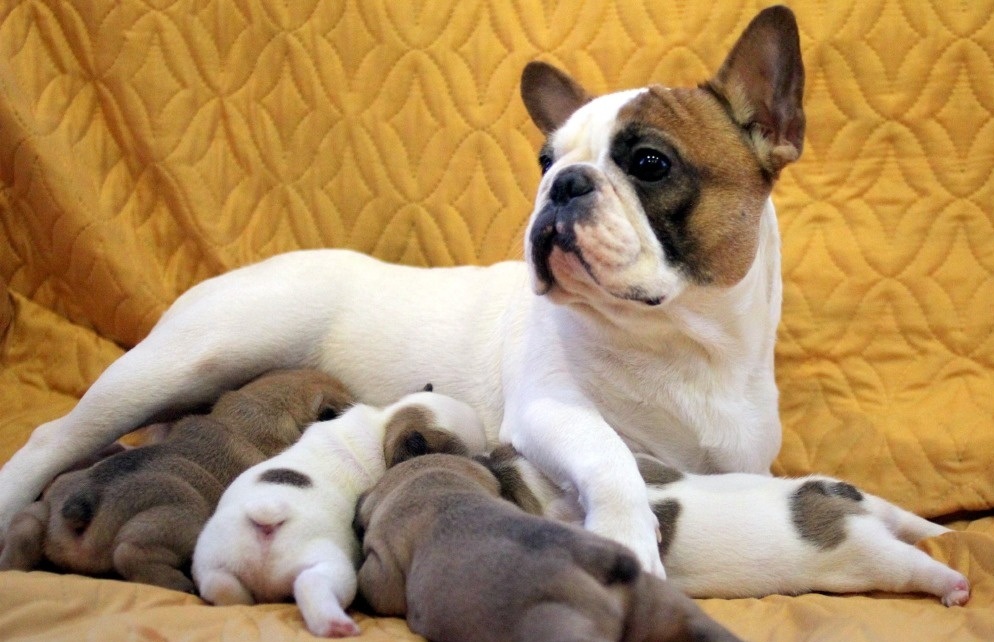
Before breeding French Bulldogs, both dogs must be checked by a veterinarian.
Knitting
The optimal age for a healthy mating is no earlier than 18–25 months for bitches and 2 years for males (but not older than 10 years).
A dog's heat cycle is indicated by the appearance of discharge and swollen external genitalia. It is best to mate at the end of the second week after the onset of heat. Both dogs should be free of illness and should not be experiencing stress. In some cases, especially if this is the female's first mating, she may exhibit aggressive behavior, regardless of whether the mating is hand- or free-range. To prevent this, muzzle the dog.
Pregnancy lasts two months. During this time, the dog should be walked regularly and fed well, but should be protected from hypothermia, sudden jumps, and stress. Sometimes the expectant mother may refuse food or walks, in which case it's best to let her rest and offer her favorite treats.
Towards the end of her pregnancy, the dog begins searching for a future shelter where she can give birth to her puppies. You can help her with this by building a cozy nest where she won't be disturbed.
A few days before giving birth, the dog may become restless and a little aggressive.
She usually handles the birth on her own, but if you are assisting with the birth for the first time, it is better to ensure that a doctor is present or at least consult with a veterinarian during the process.
Caring for puppies

There are usually about 6-7 puppies in a litter.
After birth, it's important to ensure there are no placentas remaining in the uterus. Each puppy is cleaned of mucus, weighed, and placed on the mother's teats to nurse. The puppies will need to be placed frequently—every 1–1.5 hours—until they begin nursing independently. Some puppies may be more active than others, preventing the others from getting enough milk. This process should be regulated by moving weaker puppies to the rear teats.
After feeding, they are covered and placed in a box next to their mother. The room temperature should be at least 26 degrees Celsius, avoiding drafts and areas near radiators. Healthy puppies gain weight regularly, are well-fed, rarely whine, and are active when held. If a newborn is apathetic and not eating, it's time to take them to the vet.
How to name a dog
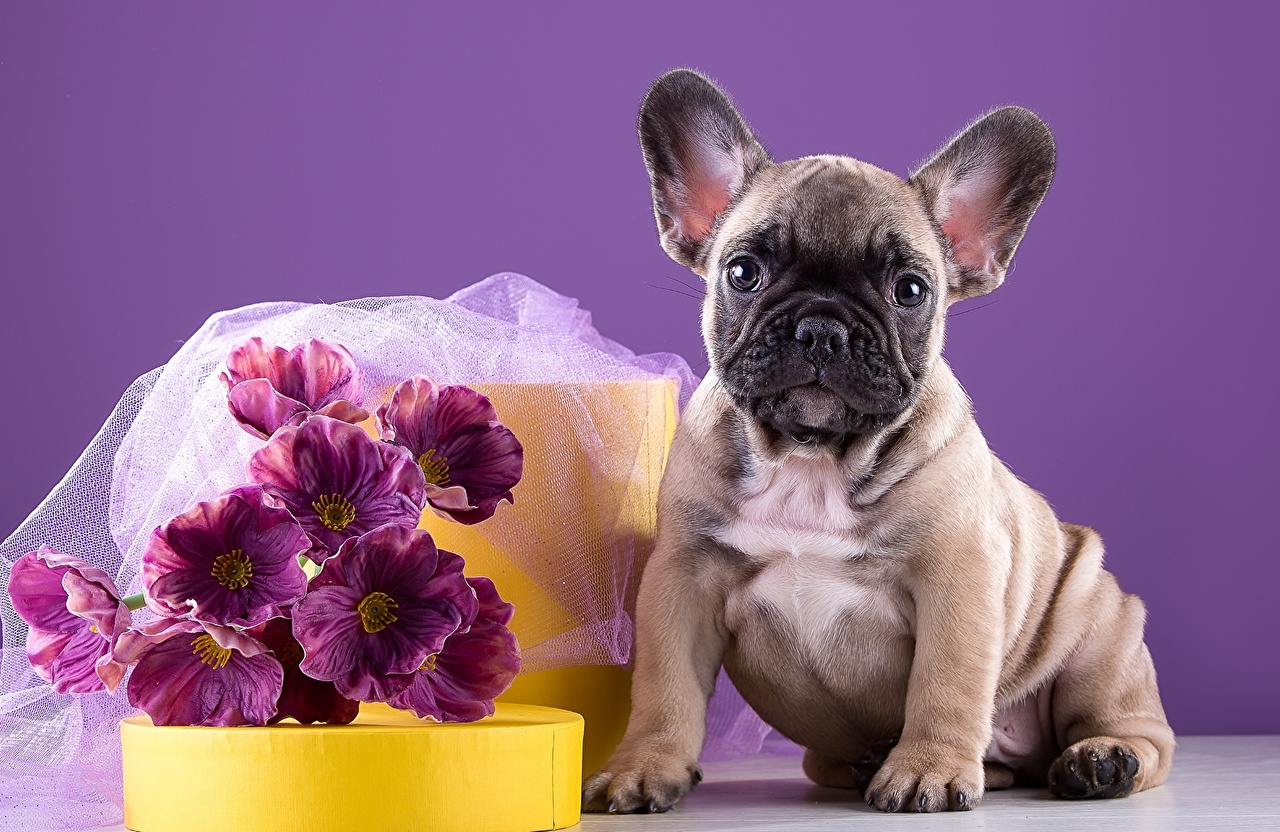
The choice of a name for a future pet largely depends on the owner's imagination.
As with any other breed, a French Bulldog's name should be short, sonorous, and easy to pronounce. Considering the small size of the French Bulldog and its origins, avoid names like Tiger, Mukhtar, and Druzhok. Short French and other foreign names are best.
Nicknames for girls
For girls the following are suitable: Annette, Bonnie, Blanche, Betsy, Amy, Giselle, Justine, Agatha, Michelle, Linda, Josephine, Susie, Chloe, Rosie, Bella, Julie, Bruna, Ines, Zoe, Amelie, Molly, Gerda, Tori, Claire, Desi, Marla, Cora.
What to name a boy
For boys, you can choose the following nicknames: Leo, Jacques, Jean, Simon, Gary, Laurent, Marcel, Paul, Theo, Leon, Louis, Cupid, Toby, Chris, Vincent, Alan, Jean, Noel, Larry, Stefan, George, Sam, Solo, Romeo, Archie, Fred, Charlie.
Interesting facts
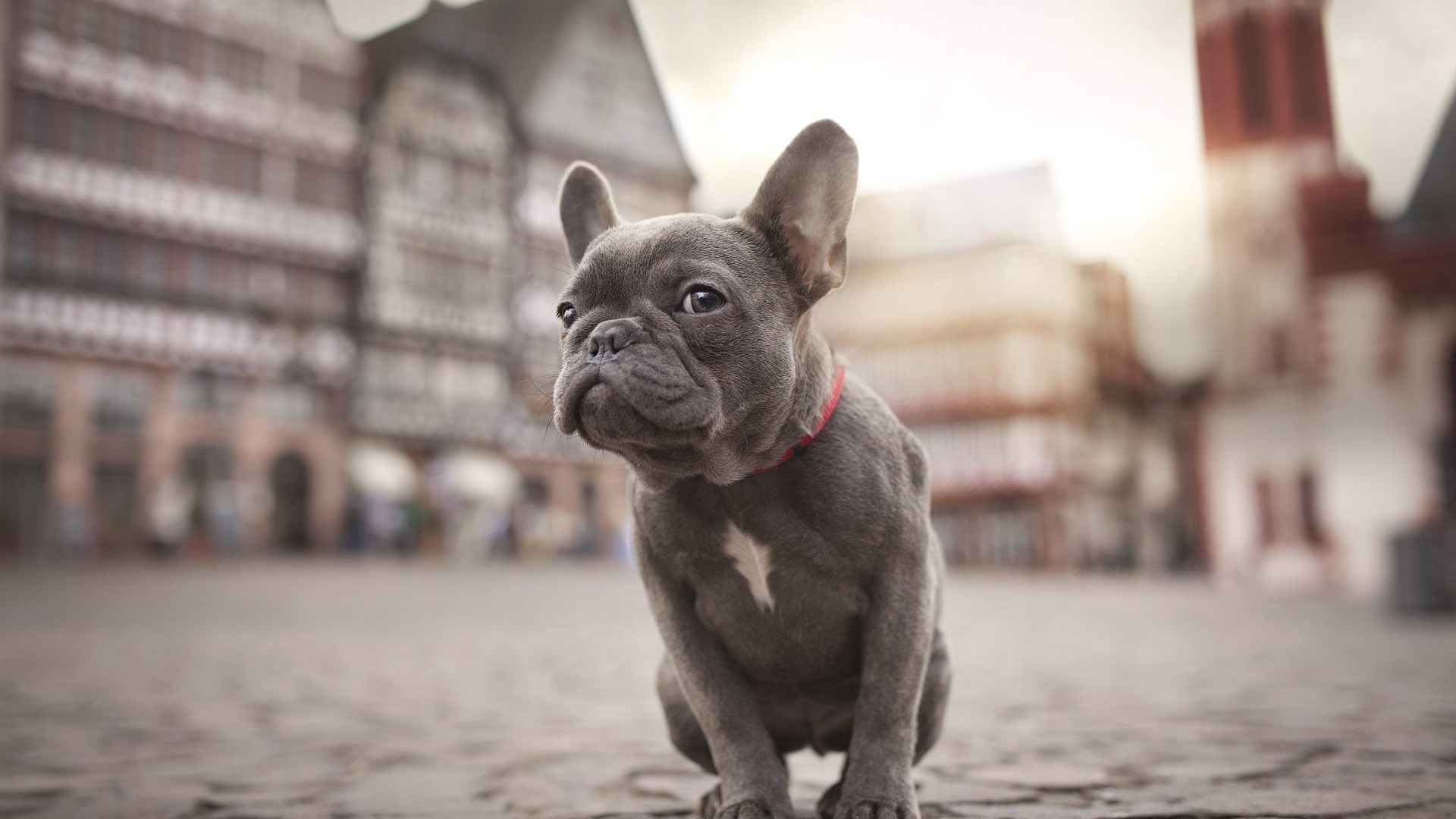
These adorable dogs can catch mice and rats just as well as cats.
Dogs of this breed never cease to amaze their owners and those around them. It turns out:
- A French bulldog sailed on the Titanic with its new owner to New York. After his pet died in the disaster, the man sued the company and won a large settlement for the loss of his pet.
- There are many creative personalities among the admirers of this breed: Mayakovsky, Henri Toulouse-Lautrec, Elton John, Yves Saint Laurent, Marilyn Manson, Leonardo DiCaprio and others.
- In France, there's a café called "La Bulldogge." Its interior is adorned with a sizable gallery of paintings depicting French bulldogs from all over the world. Dogs are also very welcome here, and if you don't have one, two charming local dogs are available to keep you company.
Owner reviews
Overall, he's a wonderful dog! He's very playful and cheerful, but he won't bother playing with anything unless his owner wants him to. He doesn't carry sticks or balls. He loves to just run after children or run around on his own. He's very kind and gentle. As soon as I sit down, he jumps into my lap like a cat. I pet him, and he grunts with delight. I've never regretted choosing a French Bulldog.
For five years now, I've had a sweet, wonderful friend, a French bulldog named Eva. I gave her to myself for my birthday. You can't imagine how smart and beautiful she is, and how she understands me instantly. When I come home upset and tired, she sits quietly and waits for me to sit down. She comes over, crouches on my lap, and looks at my face with such a pitiful expression that all my bad mood disappears. But when you come home in a good mood, she starts to rejoice, running, jumping, and as soon as you say "Eva, that's enough," she immediately sits down and waits to be fed.
He's very stubborn! He suffers from selective deafness. So, I can't hear you and won't do anything, but for a piece of cheese I'll make a whole choir of teams and show you more! And our Frenchman is terribly touchy; if you yell at him, he'll go sit with his face in the corner and his backside to you and just sit there and sulk.
With proper training, the French Bulldog will become a reliable friend and companion for anyone who loves this wonderful breed.