The English Bulldog is a dog breed considered a national treasure. Only wealthy owners can afford to raise this pet. Requiring constant care and attention for its health, this pet repays this attention with devotion and love. With a friendly disposition and unhurried demeanor, this dog is a true gem in any home. While not suitable for country houses or summer cottages, with proper training, it will become a reliable protector and guardian of the apartment where it lives. This dignified pet doesn't require special attention or long walks; its psyche is comparable to that of a teenager, who clearly knows what they want and is accountable for their actions.
Content
The origins of the English Bulldog
English Bulldogs may appear stern, but they have a truly gentlemanly disposition. Originally, these animals were bred for bull baiting (as reflected in the breed's name) and were used as ring fighters. In the 17th century, Old English Bulldogs were still considered hunting dogs; along with mastiffs, they were used to hunt boar, lynx, and bear, and to fight large animals. When such pastimes were banned, this rather vicious breed was threatened with extinction.
The modern "Englishmen", which appeared in the first third of the 19th century, are the result of long-term work on developing a new decorative breed based on the British fighting dog, mastiff and the Alano-Dog-like variety.
Description and standard of the breed, criteria for choosing a puppy
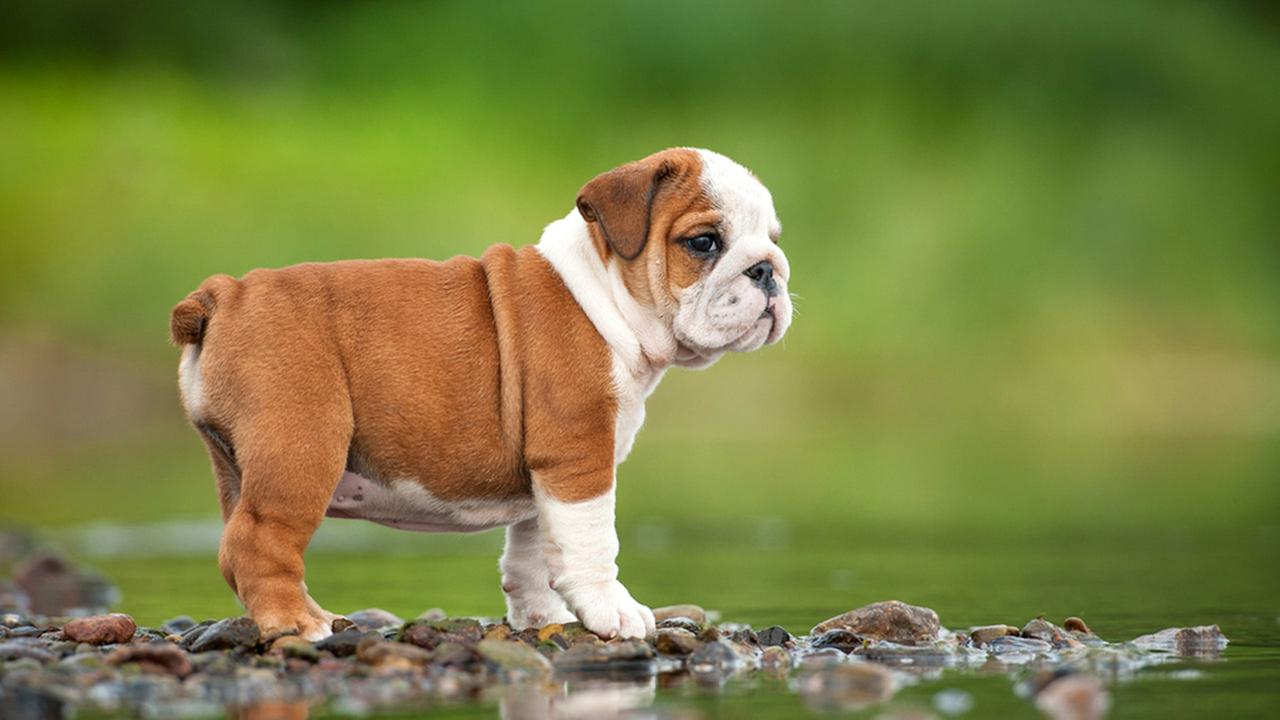
Despite the many rules for choosing a puppy, some people take the one they like
The English Bulldog's appearance is remarkable; some may find its face amusing, but a closer look at this good-natured dog reveals a truly bulldog-like, jutting jaw. Its strong teeth are visible even when closed.
The skin folds are caused by the need for fighting dogs to enter the ring. They protect the eyes from blood flowing into them, allowing the dogs to remain mobile during fights. According to the breed standard, these dogs have the following traits:
- Stocky, dense and compact build with a broad chest.
- The high-set head is square in shape with a short, flattened, slightly upturned muzzle and a flat forehead. Large, round cheeks extend beyond the eye line, and the eyes are separated by a distinct depression.
- The nose is large, as are the nostrils, with black pigmentation. Any other color is unacceptable.
- The lips are thick and wide, hanging down. The small, rosette-shaped ears are set high.
- The eyes are low-set, round, and small. They do not protrude beyond the cheekbones, nor do they appear sunken or protruding. The iris is only dark brown, almost black.
- The legs are strong and muscular, the front ones are much more powerful than the back ones, turned slightly inward.
- The belly should be tucked up, not hanging down. The tail is round, without fur fringe, thick at the base, and always carried level with the back.
The Bulldog is a short-haired breed with a profuse, soft, and silky coat. The standard allows for a uniform coat color in all shades of red. This can be brindle, pure white, or piebald—a combination of white and the above shades. Black, black and tan, and brown colors are undesirable.
The bulldogs' bodies are disproportionate - they have a large head and a small pelvis. This causes difficulties during the female's delivery, so the participation of a veterinarian is required during the delivery, and it is carried out using a cesarean section.
The disproportionate body size also affects the dogs' health—they are prone to many hereditary diseases, including cardiovascular and musculoskeletal disorders. English Bulldogs are considered a medium-sized breed. Adult males weigh up to 25 kg and stand up to 40 cm at the withers. Females are slightly shorter and weigh a couple of kilograms less.
When choosing a puppy, you need to be guided by the following characteristics:
- Shiny coat, eyes clear, pink, mucous, without nitrous oxide or inflammation.
- The amount of folds is moderate, excess skin often leads to diseases in the future.
- The paws are medium-length, strong, cat-like, and tightly knit, with toes that are not splayed. The gait is smooth and crab-like, without lameness.
- The lower jaw is wide and curved, and the teeth are hidden by the lips. The chin is pronounced, and the bridge of the nose is short.
- The muzzle is good-natured with an open expression.
- The skull is broad and flat. The ears are set at the sides.
- The tail is kinked, not ingrown, and moves freely.
- The body is square with a raised croup.
Character and temperament
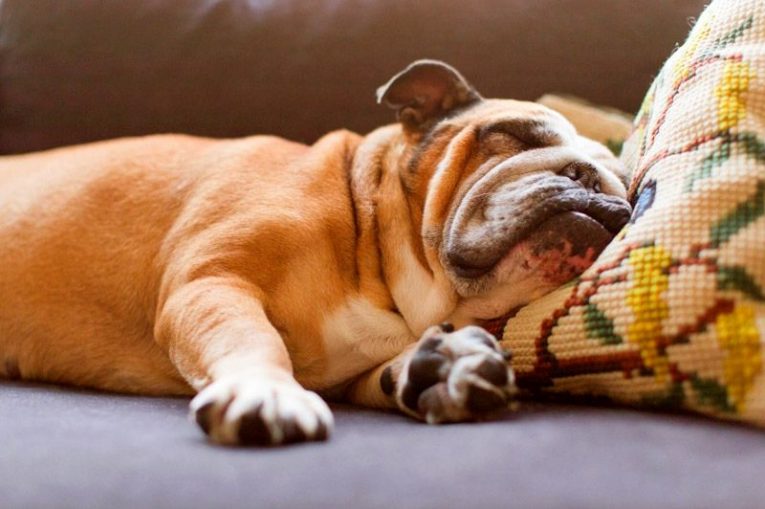
An English Bulldog can lie on the couch all day.
The English Bulldog has long since evolved from a purely fighting dog into a friend and companion, which is reflected in its character. They are reserved, calm dogs, extremely devoted to their family. Although they are phlegmatic, they have a tendency to be dominant. Therefore, puppies should be trained from the start to recognize who is boss in the house.
These pets become very attached to the family, becoming members of it, and suffer when their owners change. They have a well-developed intelligence and are able to quickly understand what is wanted from them. They make friends not only with people but also with other four-legged inhabitants of the apartment. They are extremely patient with children and the elderly, but this should not be overused by trying to involve them in long, dynamic games. This behavior is not typical of a sedate and leisurely dog.
Bulldogs' slowness isn't a sign of laziness or stupidity. They tend to think things through first. Rather, they're phlegmatic thinkers and excellent companions on long journeys. Traveling by public transport doesn't tire them out, but rather brings them pleasure.
Early training of puppies is crucial, otherwise they may exhibit some aggressiveness. Even so, some unneutered males can be unfriendly, so it's advisable to keep females in households with children.
Pros and cons of the breed
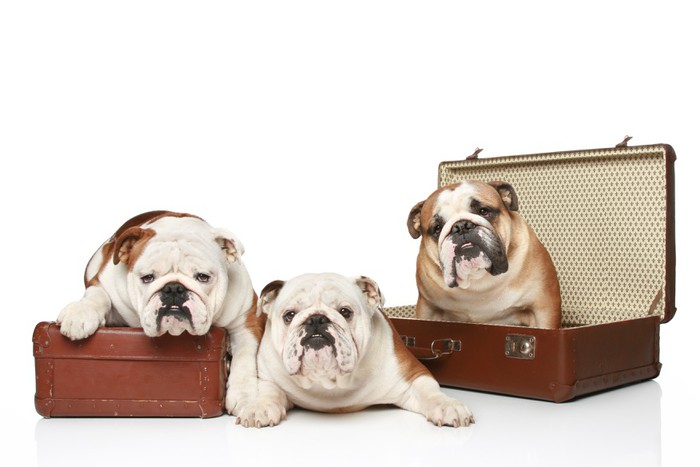
Because of the affection English Bulldogs have for their owners, it is best to take them with you on holiday.
Owners of English Bulldogs note the following advantages of this breed:
- cheerful, good-natured disposition;
- sociable and gets along well with children, and if there are cats or other dogs in the family, then the bulldog is peaceful with them too;
- senses the owner's mood well;
- smart and balanced;
- indispensable as a companion on long journeys.
However, everyone notes that this dog isn't for everyone, as it's expensive and requires expensive treatments due to frequent health issues. Grooming is simple, but it requires constant attention. It's not suitable as a guard dog; without proper training, it can be stubborn and mischievous. Its affection is often expressed through joy, leaving saliva on clothing. It also produces a lot of fur, and snores loudly when sleeping.
Care and maintenance
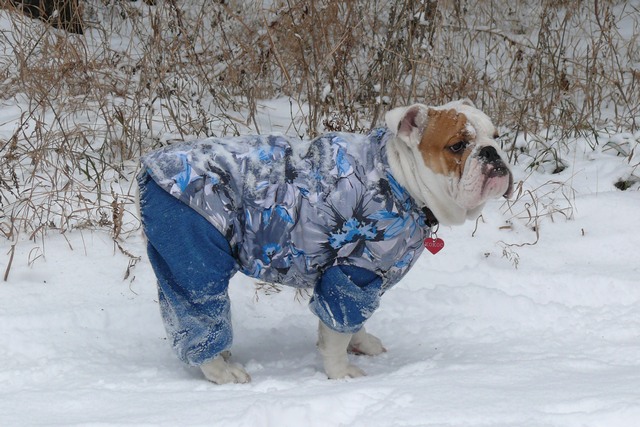
The English Bulldog gets very cold in the cold.
The best place to live for English bulldogs is an apartment or a house; this short-haired breed cannot tolerate the streets with their temperature changes.Because of this, they should be walked in the heat early in the morning or at sunset, and it's a good idea to bring a bottle of water to wet their belly and paws.
In winter, to prevent hypothermia, dogs should be dressed in warm clothing for walks. Before going outside, coat their paws with vegetable oil to prevent road salt from corroding their toes, and wash them thoroughly afterward.
Place your pet's bed in a warm, draft-free area, lined with removable fabric that should be washed periodically. A bowl of fresh water is essential, and any uneaten food should be removed and washed each time. Dogs also need toys without small parts, which they can easily chew off.
What to feed
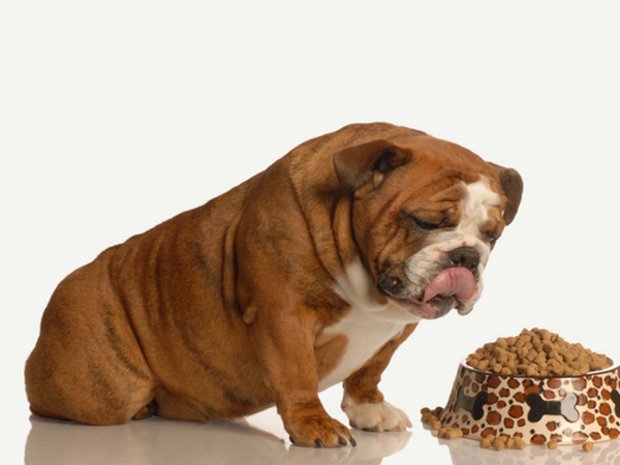
You can also feed your English Bulldog with premium ready-made food that contains all the necessary vitamins and microelements.
The best food for an English Bulldog is fresh food without additives. Their diet should consist of the following products:
- meat at the rate of 60 g per kilogram of a puppy’s weight and 250 g daily for an adult;
- cereal porridges;
- eggs;
- dairy products - kefir, cottage cheese, yogurt;
- fresh herbs, vegetables, fruits and berries.
Raw veal or beef (preferably frozen) is considered the best meat. If your pet doesn't like raw meat, scald it with boiling water. Cooked heart, udder, liver, lungs, and kidneys are also offered. Bulldogs don't need natural bones; soft cartilage or pressed sinew bones are more beneficial.
For water-based porridges, choose rice, wheat, and buckwheat, season them with vegetable oil, and optionally add chopped fresh herbs. From an early age, puppies are introduced to fermented milk products and cottage cheese, which can be supplemented with calcium supplements. A boiled egg or raw yolk is added to the food a couple of times a week.
Vegetables are offered to pets raw, shredded. For flavor, season them with vegetable oil or sour cream. Cooked vegetable dishes are also available. Fruits don't require such tricks; dogs eat them just fine.
Grooming
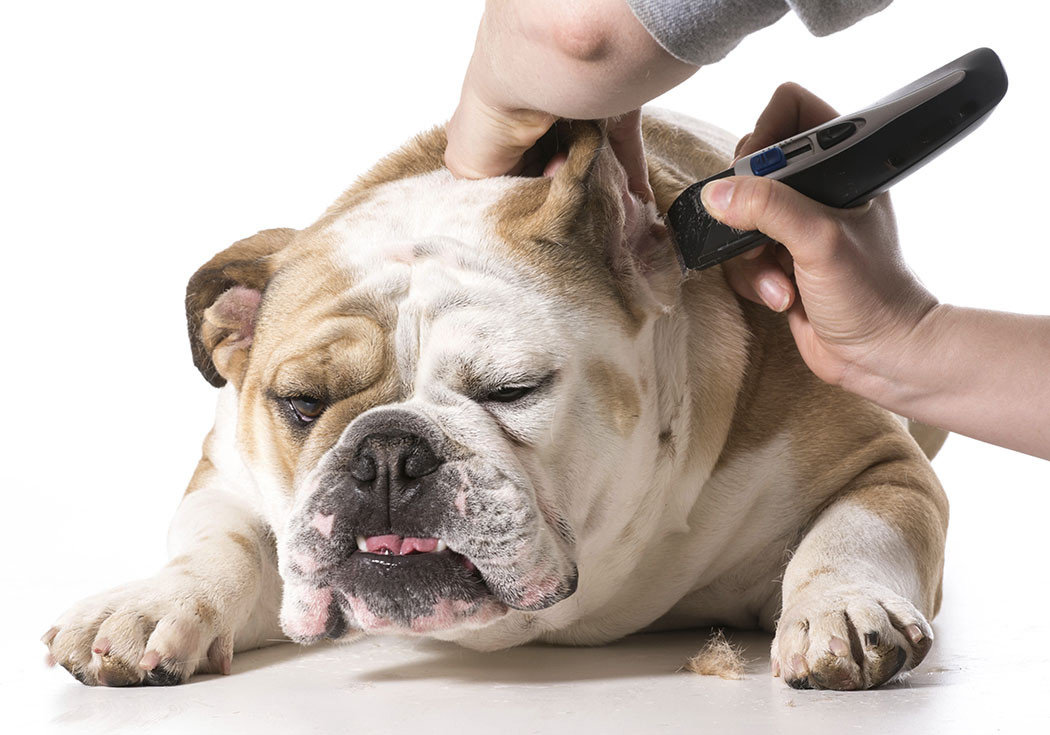
Once a month, you can trim excess hair from the ears of an English Bulldog.
Grooming your pet's fur is simple: brush it 2-3 times a week with a brush or rubber glove, and daily during shedding season. In winter, bathe your pet infrequently to avoid hypothermia. When bathing, use products designed for short-haired dogs. Pay particular attention to cleanliness around the anus, wiping the skin with a damp swab.
The muzzle is wiped after every meal and walk. The ears are cleaned weekly with a cotton pad soaked in antiseptic. The nails are trimmed twice a month with nail clippers. The eyes are cleaned daily with a cotton pad soaked in boiled water. The teeth are brushed daily with special canine products.
The chapped skin between the toes is sprinkled with baby talc or a mixture of a tube of salicylic-zinc ointment with ten crushed tablets of chloramphenicol.
The English Shepherd's nose requires special attention. It often becomes dry, and due to the structure of its muzzle, the dog is unable to lick it to moisturize it and remove flaky skin particles. The nose becomes hard and covered with a bumpy crust. This problem can be addressed as follows:
- In the morning, moisten your nose with vegetable oil with a few drops of vitamin E;
- in advanced cases, repeat the procedure in the evening;
- the next morning, when the keratinized layer has softened sufficiently, it is scraped off with a plastic spatula;
- This manipulation should be repeated once a week or a week and a half.
Education and training
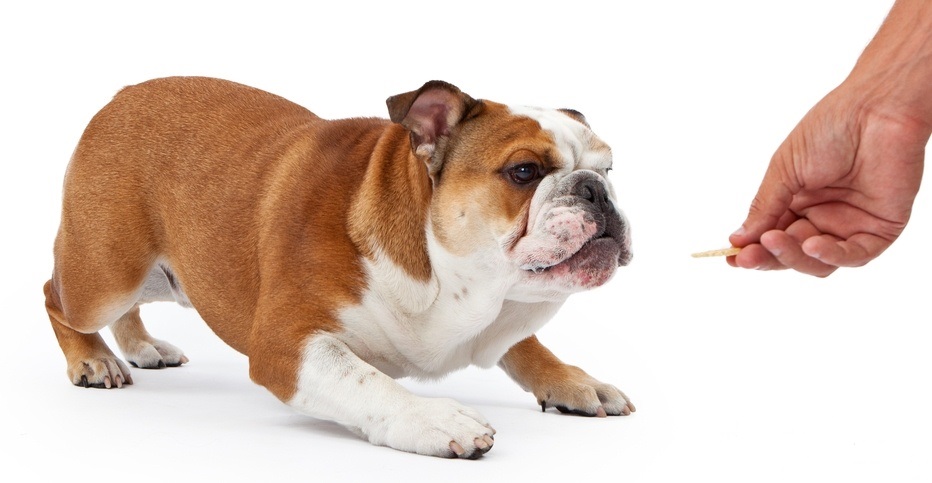
When training an English Bulldog, it is better to use the "carrot" method.
English bulldogs are very intelligent, capable of remembering up to three hundred words. However, their slow nature requires a lot of patience when training them. Regular dog training consists of the following:
- Establishing clear rules of conduct.
- Encourage acts of kindness with encouraging tones and treats. It's appropriate to celebrate your pet's successes. Dogs are sensitive to their owner's moods and better remember commands that evoke positive emotions.
- Mandatory communication with other four-legged animals and the surrounding world.
- First you need to teach him the commands: “come”, “heel”, “place”, “sit”, “lie down”, “no”.
- Toilet training in a tray or outside.
- The dog is prohibited from chewing things, picking up food or taking it from strangers, biting during play, jumping on the owner when meeting, etc. If all prohibitions are patiently explained, the dog will obey the requirements and is easily trained, even by a child as young as 9 years old.
Games with your pet
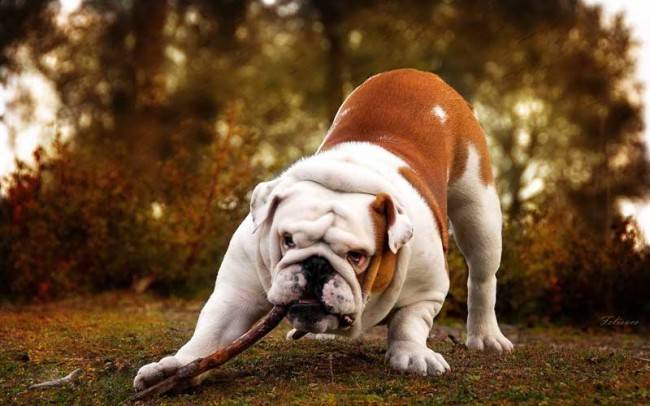
The English Bulldog doesn't like long games; he gets bored quickly.
The English Bulldog is not suitable for active and long games. He's calm and even-tempered, but a terrible couch potato and lazybones. He loves to lounge on the couch for hours without even changing position. For walks, 40 minutes twice a day is enough, and even less in winter.
Diseases and treatment
English Bulldogs are particularly at risk for musculoskeletal diseases, including hip dysplasia and hip dislocation, and obesity due to an excessive appetite and a sedentary lifestyle. It happens that dogs, especially older ones, experience hind leg failure. They are equally susceptible to heart disease, such as mitral valve stenosis and pulmonary artery stenosis.
Dermatological problems arise from skin infections getting into the folds of the skin and from improper grooming. English Sheepdogs often suffer from a narrowed airway, which makes breathing difficult, so they need to be protected from extreme heat and cold.
This dog breed suffers from various allergies, most commonly skin allergies. Sausages, smoked meats, baked goods, and canned foods should be excluded from their diet. They may also be allergic to dust, pollen, or dirt, which often causes itching, hair loss, eye and ear infections, and vomiting.
Many problems are difficult to detect in the early stages with screening tests, and veterinarians believe that many diseases are genetic. English breeds are prone to gastric torsion, so pets should not be turned onto their backs.
In addition, they are predisposed to entropion and third eyelid adenoma, which leads to suppuration of the eye, corneal damage, and vision loss. Cataracts, keratitis, and other eye diseases are also common.
It's important to approach teething in a small bulldog with great care, as there's a high risk of infection entering the oral cavity through the wounds left by lost baby teeth and saliva. This process lasts for about a month, from ages 4 to 7.
All pet health issues should be taken seriously, and you should seek help from an experienced veterinarian, not self-medicating. Keep your dog's food dishes clean, and don't allow it to finish stale food or pick up anything from the street. This can lead to severe poisoning and allergic reactions.
As soon as you notice changes in your animal's behavior, you should immediately contact a veterinarian.
Average life expectancy
Due to frequent health problems, English Terriers can't boast of a long lifespan, living only 8–10 years. However, this is two years longer than the average lifespan of their fighting breed ancestors. With proper care, a dog can live up to 12 years.
Breeding English Bulldogs
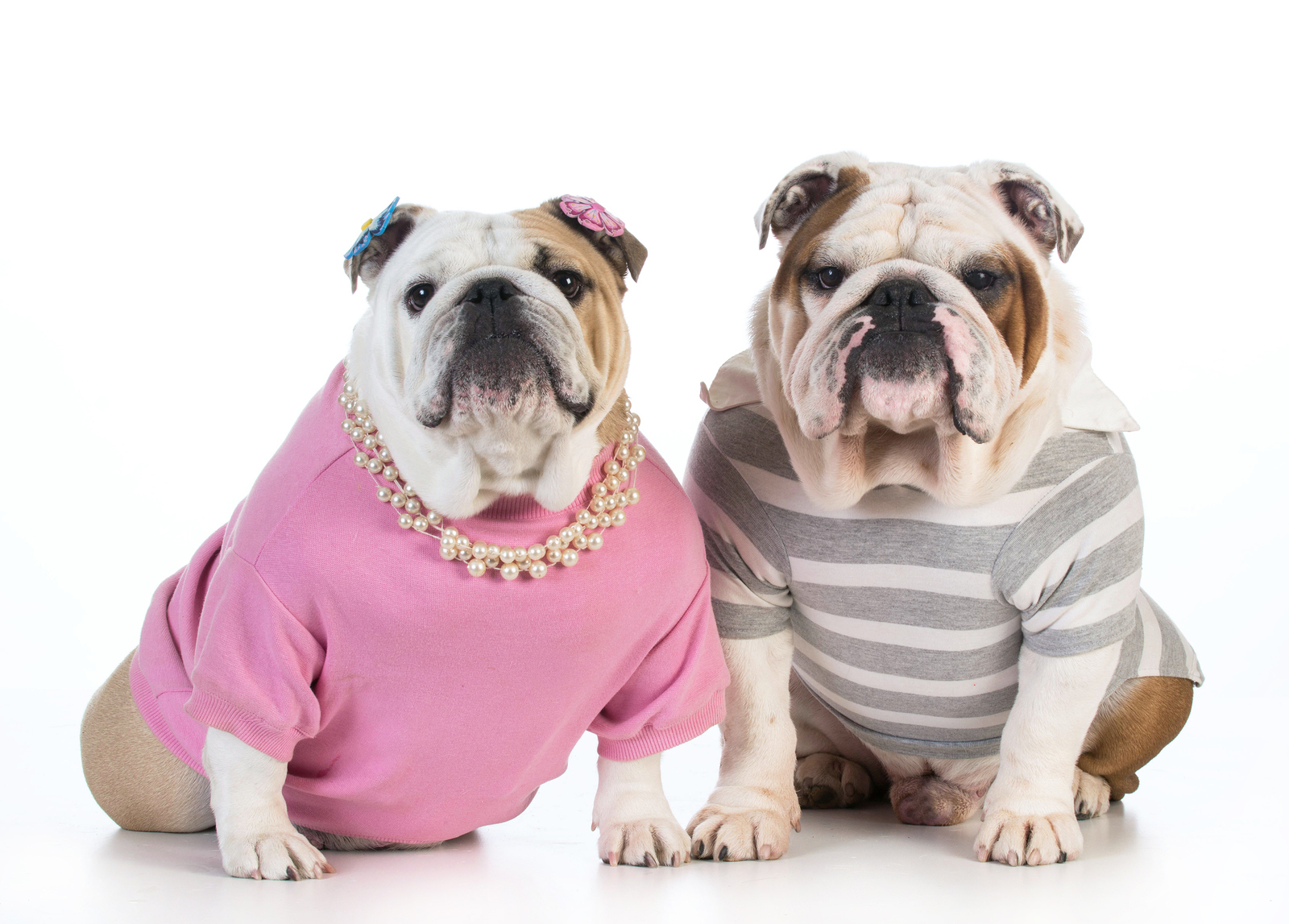
Before mating, the animals need to be introduced to each other so that they get used to each other.
Breeding in English Shepherds is not easy. Females reach sexual maturity at 7-10 months, and 90% of them give birth by Caesarean section. Litters typically number 5-9 puppies.
Mating, pregnancy and childbirth
English Bulldogs go into heat at 7-10 months. During and immediately after estrus, the female dog will try to attract the male's attention for up to two weeks. Two months after estrus, a false pregnancy may occur, accompanied by nipple engorgement and abdominal rounding, which soon resolves painlessly.
In Russia, female English Bulldogs are permitted to be bred after their third heat. Mating takes place on the male's property under the supervision of an experienced trainer. The female's breathing and tongue color are monitored. Two matings are performed, including a test mating one day after the first.
From the second month onward, minerals and vitamins are added to the dogs' diet. On the 57th day, anal temperature is monitored. If it drops to 37 degrees Celsius, it's time to call the veterinarian. Due to the spherical heads of babies and the disproportionately narrow pelvis of the mother, a cesarean section is often performed. By the time the babies arrive, you need to prepare lots of rags, hot water bottles, and a basket lined with diapers.
A rubber bulb is used to suction mucus from the newborn's mouth and nose, rub it, and place it in the mother's lap. Don't let her eat the afterbirth, as it can cause diarrhea. Subsequent puppies are born every fifteen minutes to half an hour. The umbilical cord is tied with thread disinfected with alcohol.
After giving birth, the mother is given warm tea to drink; for the first few days, she is fed porridge and fermented milk products, then boiled meat is added.
Caring for puppies
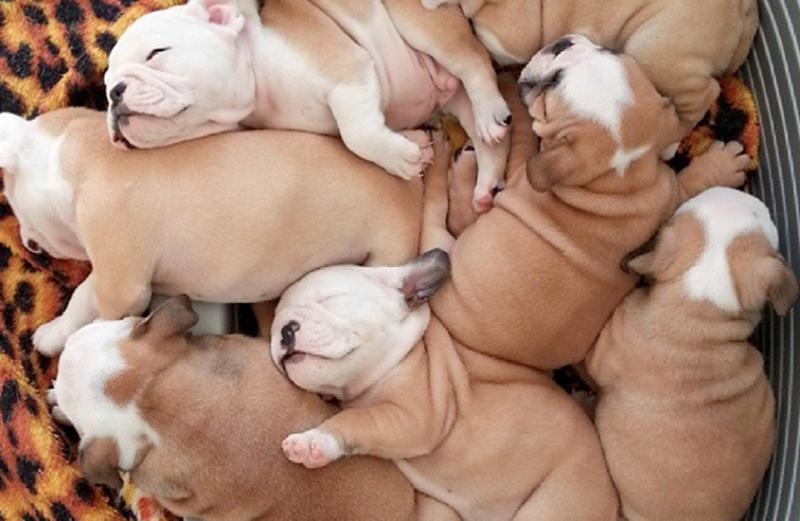
To ensure that puppies grow up strong and healthy, they need to be carefully looked after and fed properly.
Newborn puppies feed every three hours for the first two weeks. They are usually fed powdered milk diluted with warm water from a bottle or tube. During the first week, complementary feeding includes 10 grams of meat per day, increasing to 100 grams in 3-5 servings by the fourth week. Cottage cheese with milk and kefir are also given. A couple of weeks after birth, porridge and white bread with milk are beneficial. Dry food can be introduced only after a month, soaking it in kefir or water.
The amount of food depends on the age of the baby:
- Up to 2 months this is six meals a day with three-hour breaks.
- At 2–3 months, feed five times a day at equal intervals.
- From 4 to 7 months - four times a day.
- From 8 months on, you can feed your puppy three times a day, and by the age of one, you can transition to morning and evening meals. Food should be delivered to the bowl at the same time each day.
At 8–9 weeks of age, puppies are vaccinated against adenovirus infection, infectious hepatitis, leptospirosis, parainfluenza, enteritis, and distemper. At 12 weeks, they receive a booster shot against the same viruses, along with a rabies vaccination. At one year of age, after teething, all vaccinations are repeated, and boosters are given annually.
How to name a dog
Dogs remember short names well, so one- or two-syllable names are preferable. Common nickname options for girls and boys are offered below.
Names for boys
Addie, Baron, Harold, Gaston, Earl, John, Jacques, Colin, Lord, Thomas, Phil, Hart, Charles, Flint.
Nicknames for girls
Alba, Alma, Becky, Burma, Vesta, Dina, Irma, Lada, Linda, Laura, Lorna, Cecil, Chelsea.
Interesting facts
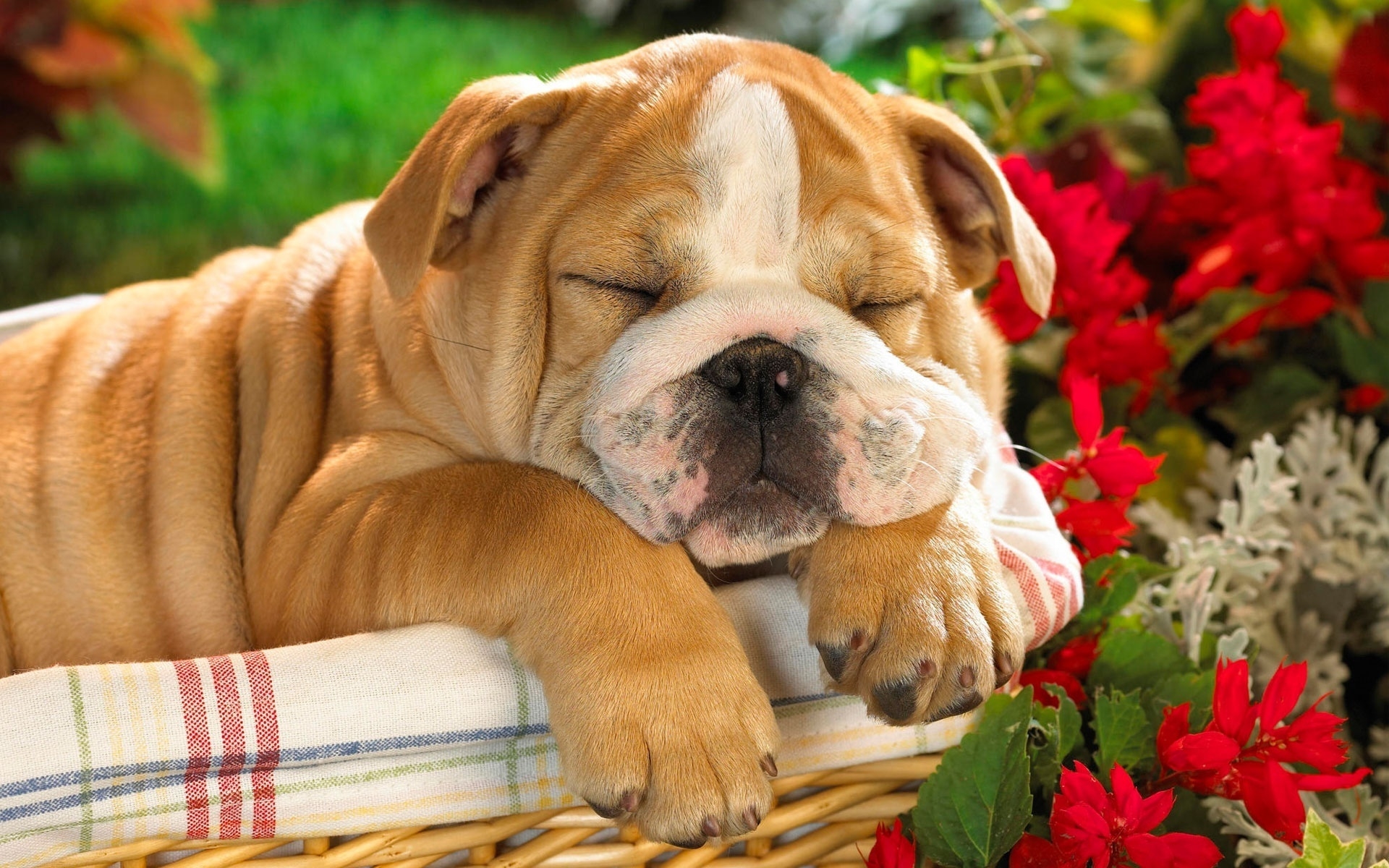
The English Bulldog is a dog with an unusual and unpredictable character.
There are many interesting stories about the English Bulldog, here are some of them:
- The cartoon characters Rubble from Paw Patrol and Spike from Tom and Jerry are English. These dogs also appear in the films Hotel for Dogs, The Adventures of Sherlock Holmes and Dr. Watson, and others.
- In Daugavpils, Latvia, there is a monument to the former mayor and his bulldog.
- Winston Churchill was often compared to dogs of this breed due to certain qualities and physical resemblance; one might even come across the nickname "Churchill." However, the Prime Minister's favorite breed was the poodle. He himself described this dog as a beauty taken to the extreme.
- The ancestors of modern English horses are considered to be the pair Rose and Crib, their names were entered into the stud book in 1817.
Owner reviews
English Bulldogs are somewhat unique compared to other breeds. They have a very distinctive character and behavior. They require more careful grooming, both in terms of appearance and health.
But Bulky owners wouldn't trade their pet for any other breed. These touching, funny, clumsy, fat-bottomed, grunting, snorting, and farting creatures make you fall in love with them for life.
I never dreamed of owning an English Bulldog, as I love large dogs. But it turned out we were looking for a good home for a Bulldog whose previous owners had nowhere to put him. I agreed, and I'm incredibly happy that fate brought us together. He's like my reflection in the mirror: stubborn, mischievous, cheeky, and he'll 100% do what he sets his mind to. And I love all of that about him, because he doesn't try to "dance" around his owner like others; he considers himself a full-fledged member of the family.
The English Bulldog is a wonderful dog! A great friend, a lifelong child, a funny, spontaneous little chubby. You'll never feel sad or lonely with him. My Churchill is already five years old, and I know all the advantages and challenges of the breed very well.
The English Bulldog is a companion dog with a friendly and calm disposition, ideal for busy people. A well-trained dog with an unwavering sense of self-worth makes an excellent watchdog. While they are easy to maintain, constant monitoring is necessary because they are unpretentious about their food and quantity, and can be susceptible to a host of hereditary diseases. They are very attached to their owners and especially love children, but playing with them is not for an English Bulldog. However, even a teenager can train and raise this breed.