Even the most loving and attentive owner often finds it difficult to gauge their furry companion's mood. However, gauging a cat's mood is actually not that difficult. Just pay attention to the animal's movements, tail position, and body position. Such observations can reveal a lot about what to expect from your beloved pet at any given moment.
Raised
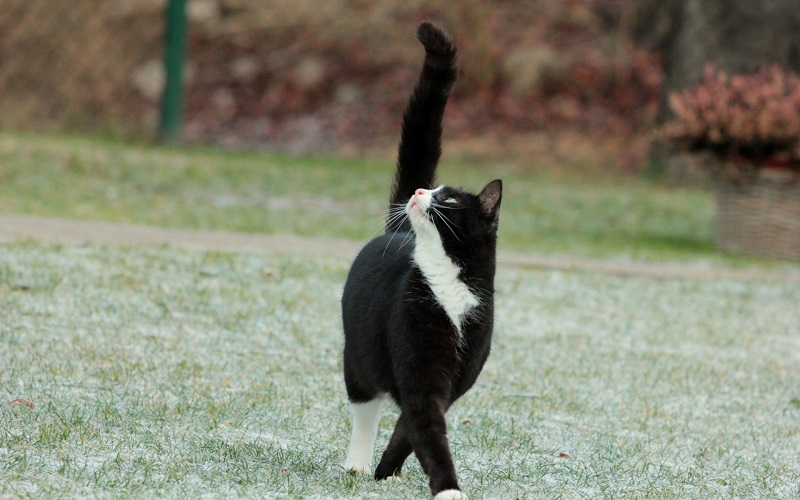
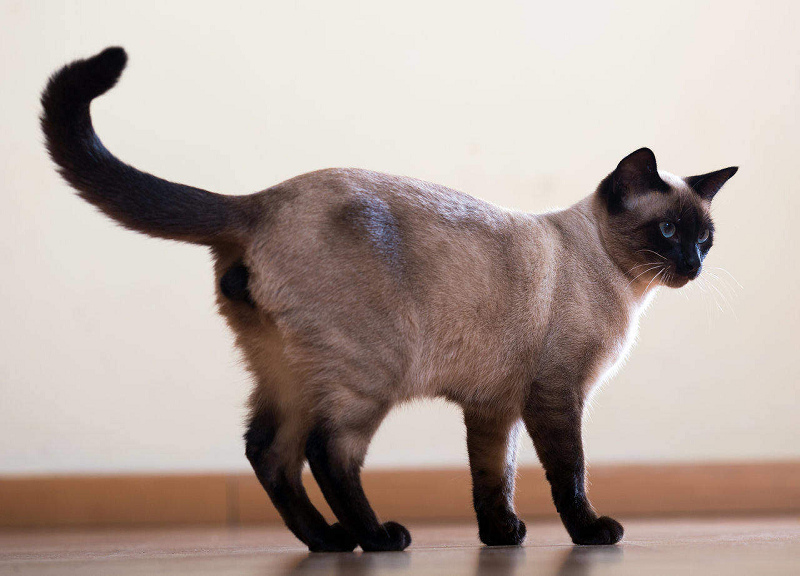
A cat's tail, raised and sometimes slightly curved at the end, is a sign of the so-called "greeting".
This is often demonstrated by pets when meeting familiar people, in whose company the animal feels confident and calm. It could be said that in this way, cats, as much as possible, express their joy at meeting and interacting with humans.
The animal readily makes contact, experiencing positive emotions and a friendly attitude. It's likely expecting some kind of response from the person, such as a treat or a game.
Fluffy
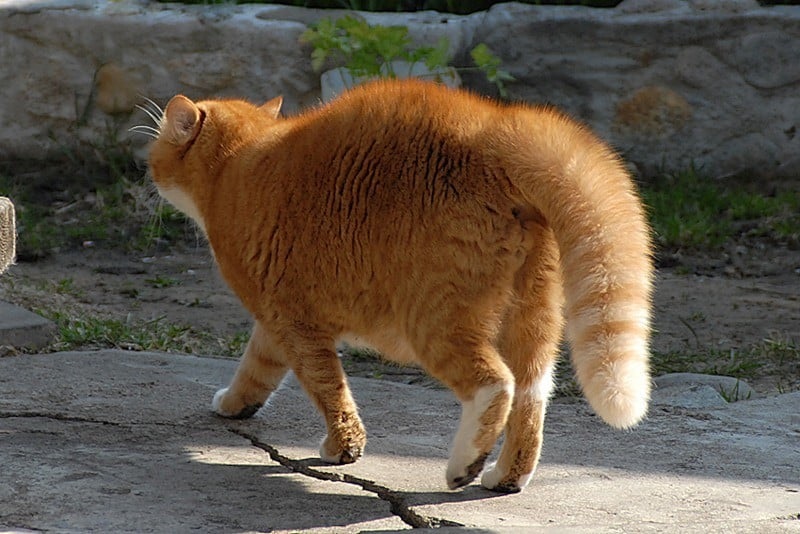
A sign of fear, anxiety, and worry in cats is a fluffed-up tail, slightly raised relative to the body. Rising fur signals to an adversary that the animal is capable and ready to defend itself, if necessary.
A cat, involuntarily, experiencing a sense of danger or anticipating an attack in its direction, tries to visually make itself larger and bigger in size in the eyes of an opponent in order to prevent a possible attack by the enemy.
If the animal continues to feel threatened, its state, depending on its own temperament and the actions of its opponent, can literally transform in a few moments into either a desire to run away from danger and hide, or into the need to attack first.
Horizontally mounted
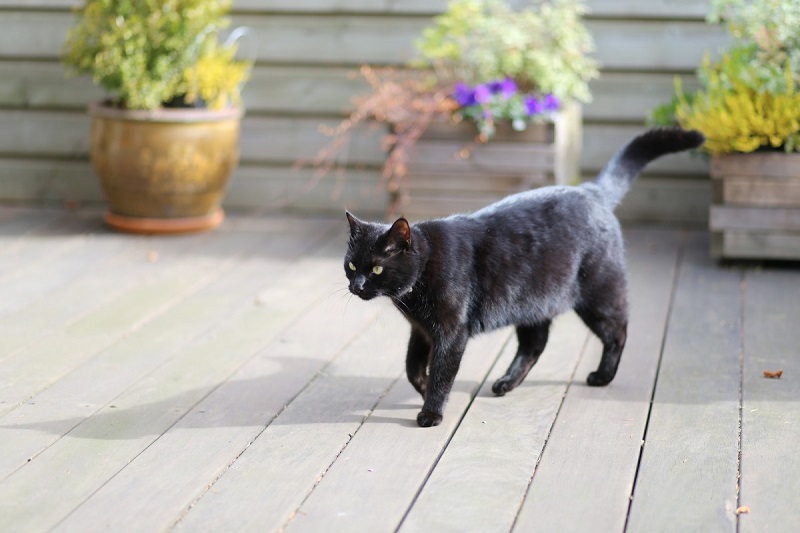
A cat experiencing ambivalent feelings, feeling tense and hyperfocused, straightens its body as much as possible, pulling its tail back. A slightly twitching tail, held in line with the cat's body, conveys anxiety and self-doubt.
The pet is confused and unable to assess its surroundings. However, this will only take a few seconds. It's possible that it will react quite unexpectedly, harshly, and not always favorably.
To avoid this, the owner must immediately try to show his affection and sympathy towards the animal, convincing it of the harmlessness of his intentions.
With a soft intonation, an ingratiating, calm voice, and smooth movements, you can relax and distract your pet, letting him know that there is no source of any threat nearby.
Slow movement
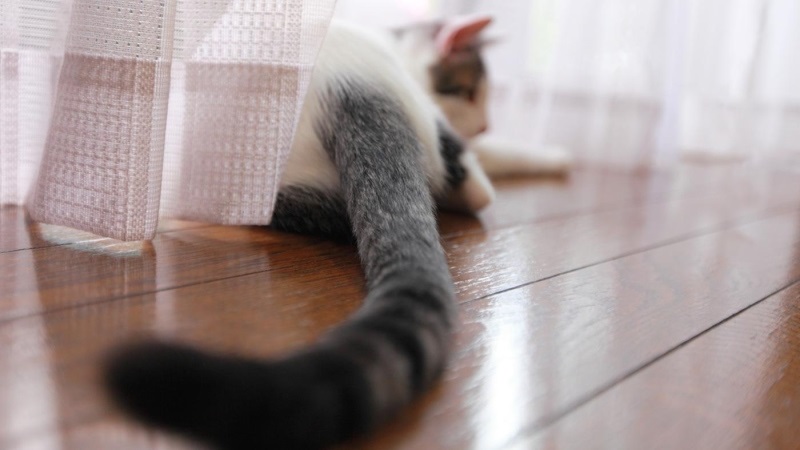
Slowly swinging the tail from side to side, a narrowed gaze, smooth movements of the body, alternating with the animal’s complete freezing, signal that the pet is extremely irritated and is clearly uncomfortable with what is happening around it.
The reason for such an emotional reaction in a cat can be loud sounds, unpleasant movements, or human touches.
Curved downwards
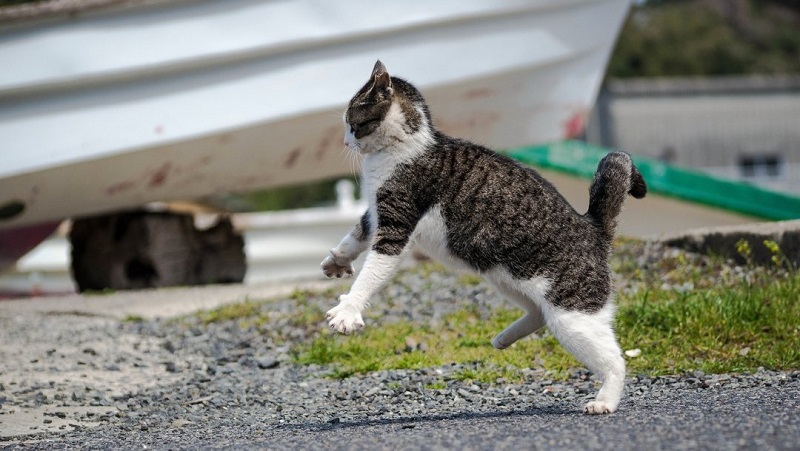
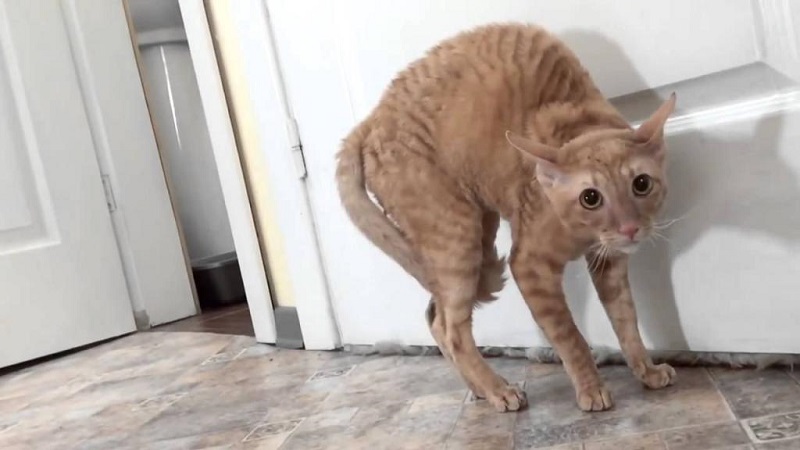
A cat's tail, curved in an arc and lowered slightly, resembling an inverted "U", indicates that the animal is preparing to take a defensive position.
If the cat begins to move smoothly, sideways, toward the source of visible danger, be aware that the defensive stance and state of tension will quickly turn into defensive aggression, and the temperamental animal may well begin to attack abruptly.
Rhythmic blows to the sides
Sharp, nervous twitching of the tail from side to side indicates that the cat is experiencing severe irritation.
This is a kind of warning that if the source of negativity does not leave the animal's personal space soon, the pet will be forced to deliver a warning blow.
The cat isn't aggressive and has no particular desire to attack the enemy at the moment. But circumstances leave him no choice, as he's seriously concerned about eliminating the source of irritation.
Caught between the legs
A cat's tail, lowered and tucked between its hind legs, is an obvious sign of uncontrollable fear that the animal is unable to resist.
Escape becomes the only option the cat can consider at that moment for salvation. In less than a second, the pet will rush to hide and remain hidden for a long time.
Typically, this behavior is characteristic of insecure animals that have often experienced human anger and physical violence.
Preventing this behavior in such animals is impossible, either through persuasion or treats. It's instinctive. Only patient compassion and long-term support can overcome the situation and restore the animal's faith in humans.
However, even rehabilitated animals retain for a long time the unusual habit of lowering and tucking their tails under themselves, as a symbol of submission and unconditional surrender to human force.