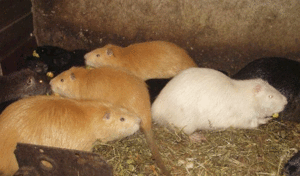
 Nutria, also known as swamp beavers, are unusual animals. They live in South American countries near warm bodies of water, yet they can easily adapt to the cooler climate with its long winters in our country.
How to breed nutria?
Nutria is a mammal from the rodent order, therefore eats only plant foodsThese animals have quite strong incisors, so they need to be given plenty of branches with thick knots so they can sharpen them.
This animal has been bred for meat for centuries. However, many farmers encountering nutria for the first time don't know how to care for them. It's crucial to know the conditions in which they should be kept and how to care for them. The goal of nutria breeding is crucial. If the goal of nutria breeding is meat, then caring for them is simpler. If the goal of nutria breeding is skinning, then the animal must be properly cared for. a swimming pool needs to be installedNutria can dive into water and wash off dust and dirt. Also, nutria bred in cages with a pool produce healthier and stronger specimens.
The most important thing when breeding nutria is choosing the right breed. In Russia, the most popular breeds are:
- Regular or standard;
- Brown swamp.
Along with these, it's rare, but still possible, to encounter the breeding of the white Italian breed. Among importers, however, the golden, pearl, and black breeds are particularly popular.
It's recommended to purchase nutria from nurseries, livestock farms, and private farms. You can, of course, find ads online, but be sure to check the animal's health and documentation. The price depends on the breed of nutria. The more unique the coloring and the purer the breed, the higher the price. They also require more care. Therefore, beginners are better off choosing a common breed.
Maintenance and care at home
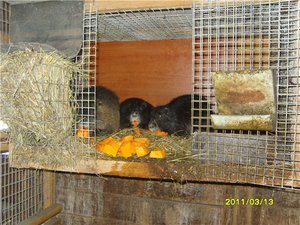 In order for an animal to be comfortable at home, it needs organize the place correctly, where it will live and breed, and also take care of its nutrition. This will allow you to obtain the maximum amount of meat and skin from the nutria. In principle, animal care is the same for all breeds. The main thing is to separate individuals intended for fur production from those needed for further breeding.
Beavers can be kept in either a cage or an enclosure. A cage is a good choice to save space, and is especially useful if the region experiences moderately cold winters. Enclosures are, of course, much more comfortable for the animal, as they provide ample space to roam. While nutria farming is a rare, but still common practice, it's not uncommon. in wooden houses reinforced with mesh, and they are specially insulated. Such houses require much more space.
If nutria are kept in cages, it's a good idea to take them outside when the weather warms up so they can warm up and breathe fresh air. If the animals are young, several can be kept in a single cage. However, pregnant and lactating females should be placed in a separate cage. While it's impossible to provide a pond for animals in cages, a basking area can be provided in enclosures, which is highly desirable for swamp beavers.
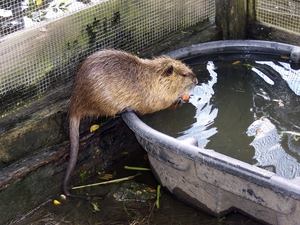
In practice, nutria can also be kept in special enclosures with a concrete floor and mesh walls. Such an enclosure can include a designated swimming area and shelter. Marsh beavers feel very comfortable in an enclosure at any time of year. They have the opportunity to splash in the water and, if necessary, hide in a shelter.
Keeping nutria at home during winter
Maintenance and care of animals during the cold season has its own specificsThe most important requirement for breeding nutria during the cold winter is warm houses. The offspring born during this period must be kept in a special, insulated place. Even if the winter is not cold, the hatchlings will have a hard time surviving it and may even die. If the room where the animals are kept is heated, there will be no problems. If not, it is necessary to monitor the temperature in the room; it should not drop below freezing.
Mature animals must have their cages insulated for the winter, as their reproductive capacity declines in cold weather. The same rule applies to young animals and females that are about to breed. Pregnant females should be provided with the most comfortable conditions possible. Insulating her cage is essential to prevent the newborn animals from dying of cold.
If an animal's tail is frostbitten, it must be amputated immediately. This requires a sharp movement. cut off the frozen tailThe tail area must be treated with iodine and tightly bandaged.
Feeding
Marsh beavers are not picky eaters; they eat very simple foods, regardless of their breed. Their diet consists primarily of:
 Grass;
- Hay;
- Young cobs;
- Carrot;
- Corn stalks;
- Zucchini.
 Grass;
Also nutrias are very love unprocessed grain and cooked porridges. In the wild, beavers feed on shellfish, crayfish, and small fish. These animals do not consume meat at all. Therefore, to increase their protein intake, you can feed them fishmeal, skim milk, whey, and cooked offal. When feeding, these products should be mixed with grains or root vegetables. Particular attention should be paid to their water. It should always be clean, fresh, and plentiful.
Watch the video below on how to breed nutria correctly.