 Rabbit breeding has gained popularity not only due to the ease of care and upkeep of these animals, but also due to their attractive appearance. Breeding ornamental breeds of this rodent species is quite appealing. They are smaller in size than the meat-producing giants and not as fluffy as the downy breeds.
Content
Rabbit breeds used for domestic breeding
Rabbit meat is one of the most expensive and nutritious types of meat. Modern meat breeds gain weight very quickly and are easy to feed and care for. At three months of age, the rabbits already weigh more than two kilograms and can be used for their intended purpose, and upon reaching six months of age they produce excellent skins.
 Domestic rabbit breeds are divided into three types:
- for breeding for down;
- for breeding for meat;
- decorative or indoor breeds that are kept as pets.
Description of downy breeds
Down breeds include:
 Angora rabbit.
- White downy rabbit.
 Angora rabbit.
Despite the small variety of breed names, in this section the quality of their wool covers all human needs and does not cause serious difficulties in breeding.
Angora breed
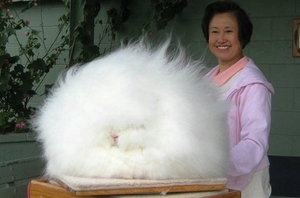
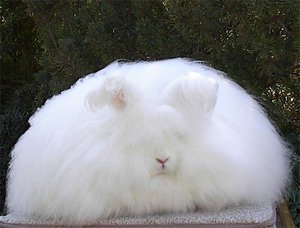
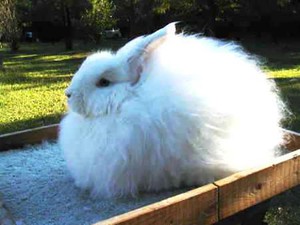
The Angora rabbit comes in several colors: white, black, red, gray, and blue. It was bred in Turkey, from where it came to Europe in the 18th century. From then until today, it dense soft wool with fine hair is in high demand. The highest quality Angora rabbit fur is produced in France, with China leading in volume.
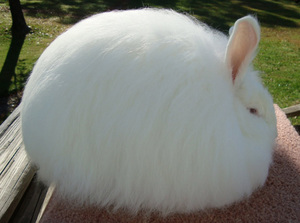 The breed has excellent health and easily adapts to any climate.
According to the standard, the rabbit should be solidly built, with a body size of 40 to 50 cm, resembling a cylinder. The animal's head is round, and the ears are medium-sized, erect, and framed with thick fur. The Russian version of the Angora rabbit does not have this fringe.It disappeared through selective breeding, which greatly improved the animal's characteristics.
Guard hairs make up only ten percent of the total coat; the rest is down. The length of down hairs reaches 23 cm. An Angora rabbit can produce up to 100% of its coat per year. you can get up to one and a half kilograms of fluff, which is considered very high. The wool is soft and silky to the touch.
Angora rabbits are also highly productive: a female produces 5 to 9 kits per pregnancy. They grow quickly, reaching half the adult weight by six months.
 The Angora rabbit has three subtypes:
- European Angora;
- Kirov Angora;
- Solntsevsky Angora.
The last two were bred in Russia and can be immediately recognized by the lack of down on their ears. The Kirov rabbit is large and more robustly built than the European rabbit. Coat with a large amount of guard hair, so there's less chance of matting. Solntsevskaya rabbits are smaller, and their fur is less bristly.
White down breed
Despite their name, the color of these animals (see photo) ranges from white to blue and even black. In 1957, the White Downy Rabbit was recognized as a distinct breed. It was bred from French Angoras, which were crossed with representatives of the Kirov breed, then work was carried out on performance indicators such as good survival rate, fertility, quality and quantity of down produced, weight, etc.
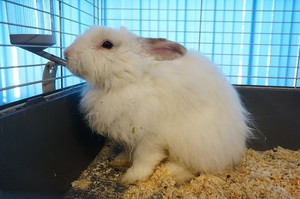 According to the accepted standard, the animal has a round body, unlike the cylindrical Angora, a small round head, and straight ears without down fringes. The body size is up to 55 cm, the chest is shallow, up to 35 cm in circumference. The back can be slightly arched, wide, and muscular. The down percentage is up to 97%, the hairs are strong and elastic, half as long as those of the Angora.
Description of meat breeds
Among the wide variety of breeds, it's worth noting the most meat-producing ones. These include:
- Giants.
- New Zealand white and red.
- Californian.
- Burgundy.
- Rabbits of the ram breed.
Giants
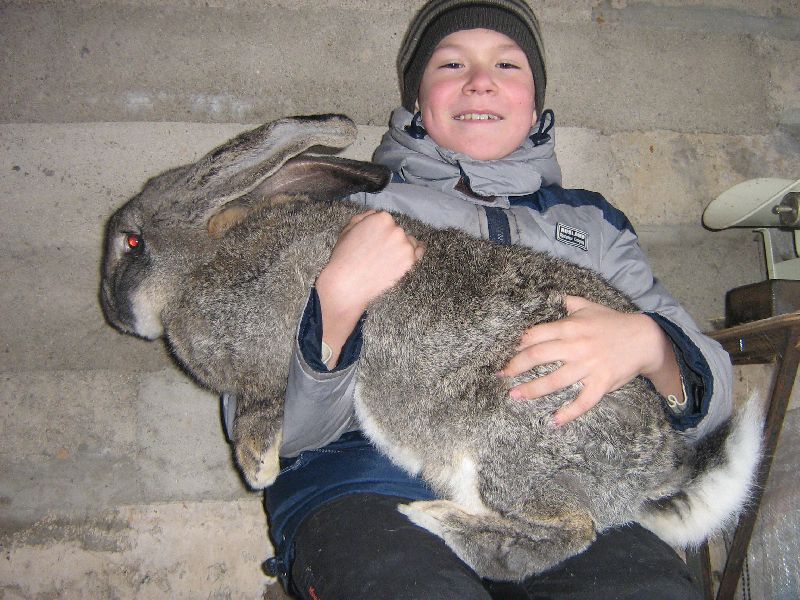
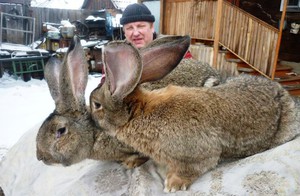 The breed's name speaks for itself. This variety of rodent is the most common in Russia. The largest of them is the Flemish giant, native to Belgium. highly prized for its meat Excellent quality. Slaughter weight accounts for almost 70% of the total, which reaches 8 kg by adulthood.
In appearance, rabbits appear large, with a dewlap extending from the chin to the lower chest, especially pronounced in females. Their ears are erect and long, and their eye color always matches their coat color. albinos have red eyes, colorless claws. Their skin is highly prized because it lacks pigment and can be easily dyed. Baby rabbits mature quickly and can mate and produce offspring by the age of 11 months.
The breed's shortcomings include poor health and a non-dominant size gene, which makes rabbits prone to degeneration and loss of breed characteristics.
New Zealand rabbits
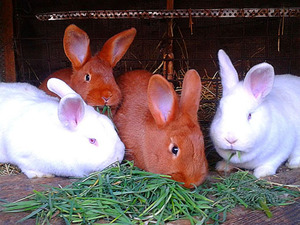 This breed comes in two colors: red and white, and they are often classified as two varieties of the same breed due to minor differences.
The New Zealand White rabbit is fine-boned, yet sturdy and hardy. They weigh an average of 4 kg, plus valuable animal skin, which is easy to paint. These rodents' hearing is not very good, which makes them less skittish and more calm.
The red breed was developed through selection from small, wild individuals with a yellow camouflage color, however, Breeders have achieved the brightest, almost fiery color of the coatThe skin of this rabbit is no less valuable than that of the white one, due to its resistance to wear.
Both varieties are prolific and undemanding eaters.
Californian
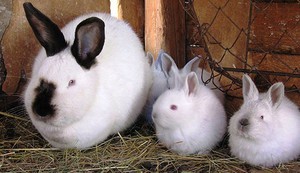 This breed is easily recognized by its distinctive coloring (as shown in the photo), which resembles a Siamese cat—a white body, dark nose, ears, and paws. It adapts easily to any conditions, has robust health, and a fine coat. the rabbit is unusually fertile – the annual litter size of a single female rabbit is over 20 kits. At 4 months of age, the young are slaughtered for meat, by which time they reach a weight of up to 4 kilograms.
Burgundy
It is considered the most successful meat breed in the world. The meat of these rabbits has a pleasant taste and is very juicy. The skin color is borrowed from the New Zealand Red rabbit, from which the fertility of female rabbits is inherited A single litter can contain more than ten rodents. They are healthy and gain weight quickly when young.
Ram
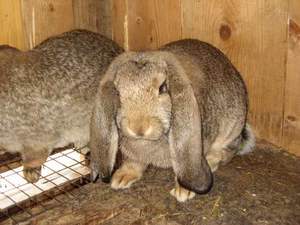 This breed gets its name from its distinctive head shape—oval with a blunt nose. Another recognizable feature is its long, drooping ears. These individuals are comparable to the Flemish breed, which also has large, the best rabbits weigh 8 kgHowever, their health is even more fragile and they require warm, draft-free and direct sunlight-free conditions. The young grow quickly and can be bred at nine months.
Decorative domestic breeds
Some people prefer to have unusual-looking animals at home instead of cats and dogs. Decorative rabbit breeds - this is exactly what is needed in this case.
Decorative species include the following:
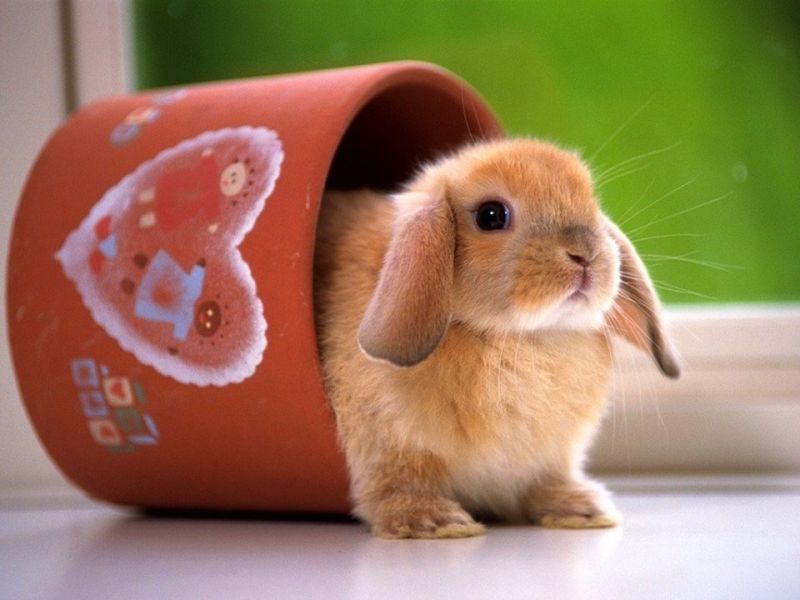
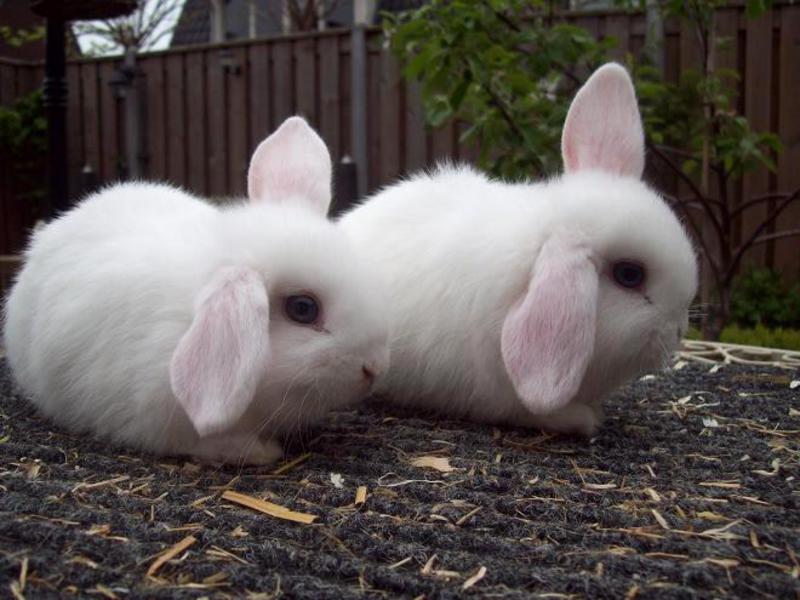
- Dwarf Ram (photo). This breed's distinctive feature is its long, drooping ears, which give the animal's head the appearance of a ram. Like its full-sized counterpart, the Dwarf Ram is the largest of the decorative rabbits, weighing over three and a half pounds (1.5 kilograms) when fully grown. However, this breed is the most docile and tame of the decorative rabbits. The fur of these rabbits is exceptionally soft and plush.
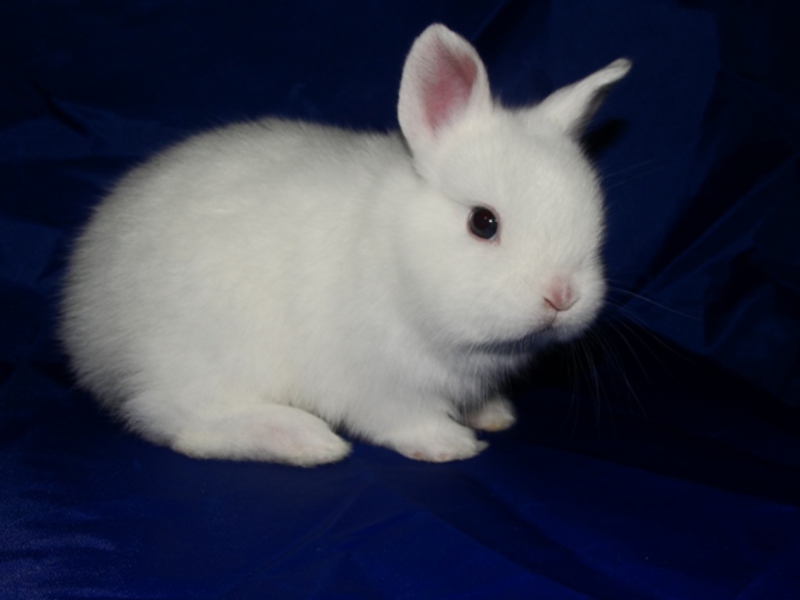
- Hermelin. This decorative rabbit somewhat resembles an exotic cat, perhaps due to its unusually round skull and short muzzle. Hermelins are exclusively white, but not red-eyed. At first glance, this animal resembles a snow-white ball with short, pointed ears. Weighing less than a kilogram, it requires some care and is susceptible to infectious diseases.
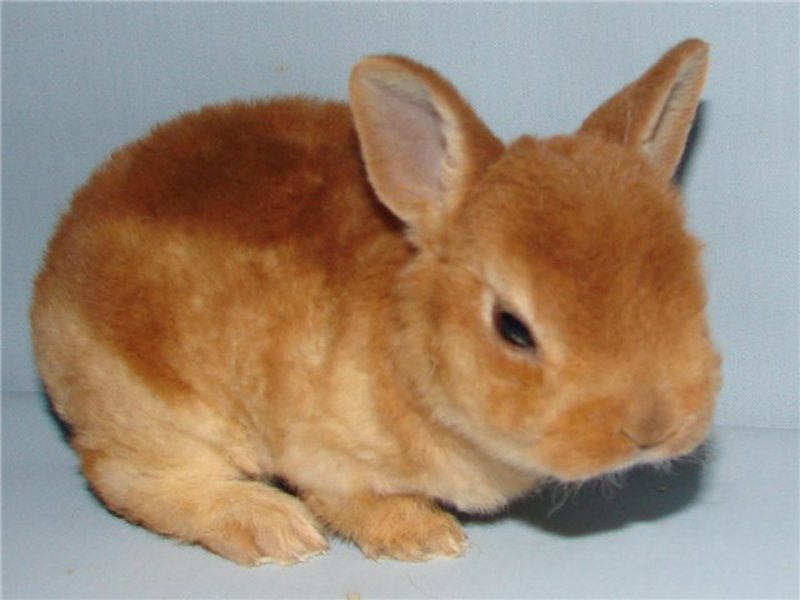
- Dwarf Rex. This breed is easily recognized by its short, curly whiskers and incredibly soft fur. This is a very affectionate animal that enjoys company and is easily trained. Adults are quite large, weighing up to two kilograms. Their appearance resembles that of a bunny from a children's book: medium-length ears, straight ears that lie flat on the back, and an elongated head and body.