Everyone knows that a cat has nine lives, but few people consider the origins of this phrase. It turns out that superstition has been around for thousands of years, and different cultures have given it their own interpretation.
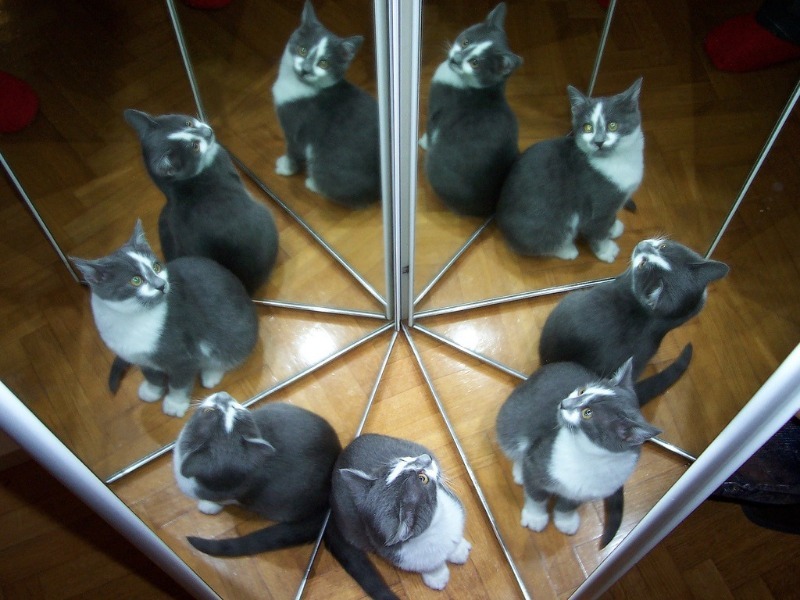
Where did this myth come from?
The origins of the legend can be traced to Ancient Egypt, where the cat was a true deity. It was believed to embody the goddess Bastet on Earth—she was sometimes depicted as a cat, and sometimes as a woman with a cat's head and a musical instrument in her hands. According to myth, this creature died and was resurrected exactly nine times.
Perhaps the reason these furry creatures were so prized among all other animals was their incredible resilience and ability to heal people. Today, owners of these pets also note that, despite their wayward nature, they treat cats with special affection and love.
Why is it believed that a cat has 9 lives?
This number can be found in ancient texts of various peoples. According to legend, in India, there was a cat who was incredibly intelligent—he even learned to count. When the animal grew old, Shiva himself noticed it. The god promised to grant the furry creature as many lives as it could count. The cat began counting numbers, but out of boredom, fell asleep at number nine. Shiva kept his word, granting nine earthly incarnations to the unusual "interlocutor."
Freya, the most beautiful goddess of the Norse pantheon, had a chariot pulled by two enormous wild cats, which Thor himself gave her. Freya possessed power over nine worlds, which may be why it is believed that cats have nine lives.
According to legend, the ancient Roman goddess Diana could transform herself into a fluffy black cat. The goddess was also associated with the moon. A lunar year lasted nine months, during which this celestial body disappeared from the starry sky nine times, only to reappear (be reborn). Over time, all this may have given rise to the belief that cats have nine lives.
This number is also mentioned in a Turkish belief. An English proverb also says: "A cat has nine lives. Three are spent playing, three are spent wandering, and the remaining three are spent standing still."
The number 9 didn't appear by chance. Various cultures have endowed it with incredible magical properties. References can even be found in religious texts.
Scientific explanation for this prejudice
There's also a scientific explanation for this superstition. Self-healing is one of the most unique abilities of these pets. For example, a cat can fall out of a high-rise window, correctly position itself in mid-air, and land on its feet. Despite multiple injuries from such incidents, these furry creatures manage to survive in circumstances where it would be futile for humans to count on luck.
History is rich in incredible examples. For example, in 1964, an accident occurred on a Dutch ship. The crew was saved, but the cat on board was not immediately found. More than a week later, the ship was raised, and the pet was found safe and sound.
Scientists believe cats can recuperate by purring at a specific frequency, ranging from 22 to 44 Hz. These sounds promote cell regeneration, which is why many owners consider their furry companions to be domestic healers. Cats seem to sense when a person is in pain, coming and laying down on the affected area, and then lulling them to sleep with their purring. Their purring helps neutralize illnesses, and health problems quickly disappear after these unusual treatments.
Doctors claim that cat owners live longer than other people and are less susceptible to stress and various serious illnesses. They recover and recuperate more quickly from illness, and are less prone to depression and cardiovascular disease.
And “9 lives” is just a beautiful legend.


 Ilya
Ilya
1 comment