Many cats love to chew or lick plastic bags. This behavior is not normal. Let's explore the reasons behind this habit and the dangers.
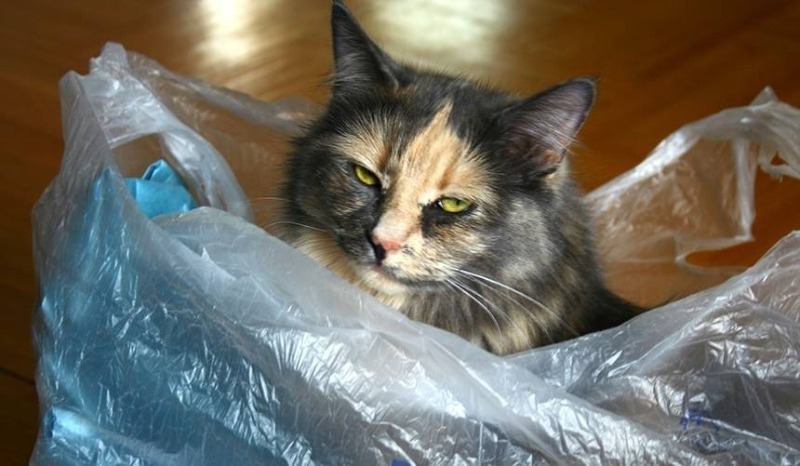
The package still retained the smell of food.
Cats may be attracted to the smell of the food stored in the bags, especially meat and fish. It's best to dispose of such bags immediately.
Soft polyethylene relieves toothache
Chewing can be a way to relieve pain. If a cat has dental or oral disease, they may instinctively lick or chew soft plastic bags to relieve the pain.
Besides dental diseases, other reasons may lead to the desire to "treat" to plastic bags:
- state of stress (change in family composition, renovation, moving to a new place);
- poor nutrition;
- digestive problems (hairballs stuck in the stomach).
The cat is attracted to the material
To prevent bags from sticking together, lubricants are added to them during production. These contain stearic acid, which is derived from animal fat. Some felines really enjoy the smell and taste of these substances.
Manufacturers are now producing biodegradable bags. They're made from cornstarch, which cats may also find palatable.
And don't forget that your pet may be attracted to the color or shape of the bag.
The cat is attracted to the rustling sound
The feline family has a special affinity for rustling and swishing sounds. This is due to their ability to detect moving objects during times of danger or hunting. Therefore, the rustling sound is a powerful irritant for pets. If a domestic cat lacks physical and emotional stimulation (which is provided by regular, adequate play), it will try to compensate by licking plastic bags.
Plastic bags pose a potential risk to the life and health of animals. Pieces of plastic can become lodged in the respiratory tract and cause asphyxiation (suffocation) in cats. Ingestion can lead to intestinal obstruction, requiring emergency surgery to save the pet's life.