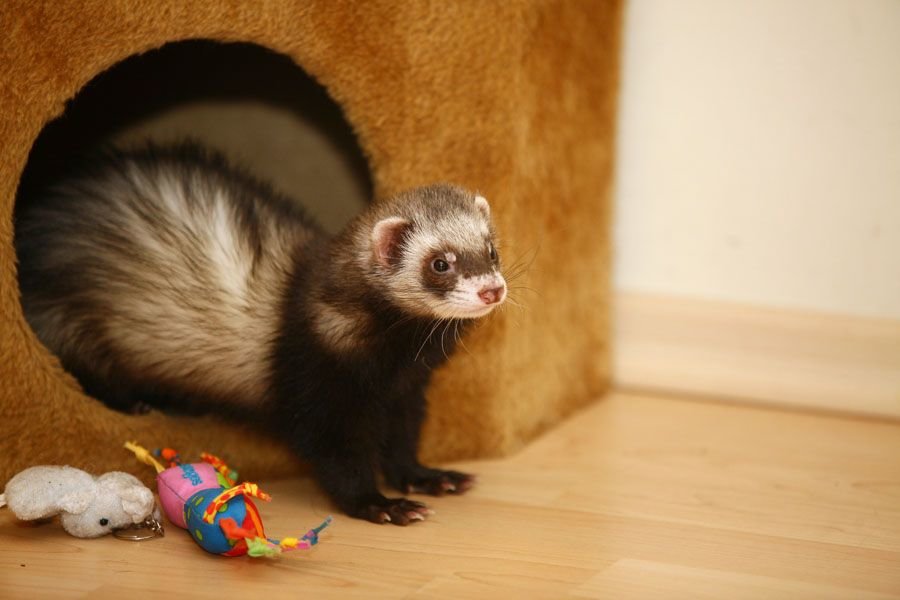
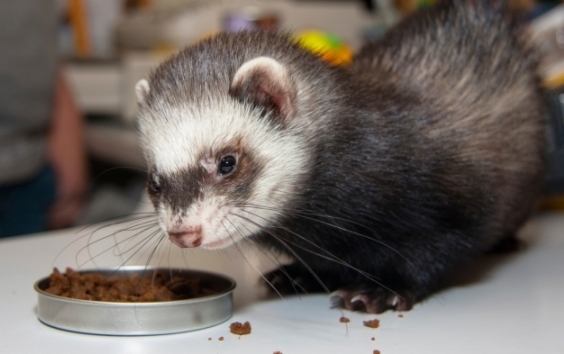
 Today, many people choose exotic pets. Raccoons, turtles, snakes, and tigers live alongside people in ordinary houses or apartments. Ferrets, a member of the mustelid family, have also found a place among them.
Exotic animals are very different from ordinary dogs and cats in that they are little studied. Keeping them as pets can be detrimental, but ferrets are generally easy-to-care-for animals and should still be trained and provided with a favorable environment. Ferrets kept as pets are called ferrets.
Content
Features of keeping ferrets
 Ferrets, unlike other animals, adapt easily to domestic life. They thrive on affection and care, and their insatiable curiosity makes them explore every nook and cranny of their new home.
Raising such an animal is easy, but it is still necessary use some recommendations, which will help make the ferret a fully-fledged tame animal and organize the conditions for its maintenance.
When creating a living space for a ferret, remember that it is first and foremost a predator and will never be a quiet and shy animal like cats. A ferret's curiosity and cheerfulness will constantly push it into dangerous adventures around the apartment, so it's important to address this immediately. restrict the area for its movement.
This animal is accustomed to living in burrows, so the first step is to seal all cracks, voids, and spaces between sofas, cabinets, and other furniture. If you ignore this rule, there's a good chance the ferret will simply get stuck in the opening and injure itself.
When arranging the home, you can choose a location that best matches the description of the burrow. If such a location is not available, you need to adapt any space as much as possible and create housing for a ferret, which he was accustomed to in the wild.
Where is it better to keep ferrets, in a cage or an apartment?
 A ferret's private space is the best option for the animal itself. It can roam freely around the apartment, choose secluded spots to sleep, and simply expend its energy running around the entire apartment. However, this option is often unsuitable for owners. Ferrets are wild animals with many instincts.
For example, he'll constantly drag food into hidden places, and rotting meat under the sofa is no fun. All flowerpots will need to be removed immediately, as the animal is constantly searches for the earth and digs itFurniture, baseboards, wires, shoes, and other objects will become toys for ferrets within the first week. They chew on almost everything they see.
Driven by curiosity and instinct, ferrets try to get into every corner of the apartment. Cracks, empty spaces between furniture, and even the gas stove can become objects of exploration. This often results in injuries to the animal itself and significant financial losses for the owners.
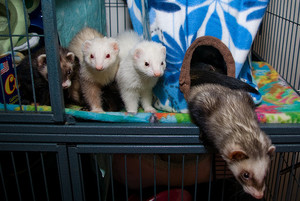
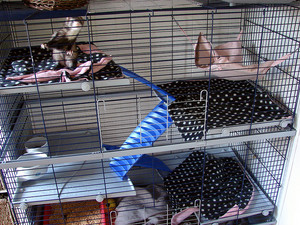
A cage is considered a suitable option, as all belongings and furniture remain intact, but the enclosure should be prepared in advance. The enclosure should be at least 1 square meter in size. Its furnishings should include the following items:
- drinking bowl;
- tray;
- house;
- organic bedding;
- food bowl.
When creating an enclosure, a polypropylene pipe is often installed in the form of a labyrinth. Ferrets really like this structure. It's also important to remember that the enclosure should be adapted to serve as a burrow. That is, it should be a dark and cool place, where the animal can rest during the day.
Even if you put a ferret in a cage, it still you need to walk him constantlyAs a rule, ferrets should be walked at least two hours a day. Without access to nature and fresh air, ferrets become sick and weak.
Compatibility with other pets
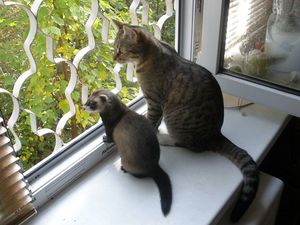 In an apartment, people usually only have one pet, and in our case, it's a ferret. In summer cottages, the number of different types of animals can reach 10 or more, and therefore it's necessary take into account the compatibility rules them with ferrets.
This animal gets along best with dogs and cats, but it's still best to introduce them gradually. For example, ferrets can get along well with cats, but cats may become jealous, as the introduction of a new animal and the shared attention is always stressful for them.
Dogs are initially wary of small animals, but eventually they become accustomed to them. Even if the dog tries to attack, the ferret can easily fight back or simply run away. However, this rule doesn't apply to hunting dogs, which are trained to catch animals from the mustelid family.
You can't house a ferret with small rodents, which include:
- Mouse.
- Rat.
- Guinea pig.
- Hamster.
For ferrets, this is prey in the wild, so it's best not to risk it.
How to potty train a ferret
Some individuals can learn to use their designated litter box on their own, but this is extremely rare. Therefore, it's important to follow some guidelines to help your ferret learn to use the litter box in its designated area.
 Initially, place the litter box in a cage or other area with limited space. This will help the animal get used to it.
- A new litter box is often overlooked. Ferrets simply don't trust new toileting spots, so it's important to replace their feces in it. This will stop the litter box from acting as a deterrent.
- If your ferret is free to roam the house, you should install several litter boxes in the corners of the home. Keep in mind that ferrets are very clean animals. They won't use the toilet where they sleep or eat.
- The tray needs to be cleaned regularly.
- When ferrets go in the wrong place, they simply need to be punished. It's best to catch them in the act, as that will ensure they understand their guilt. If they go in the right place, praise them and give them a treat.
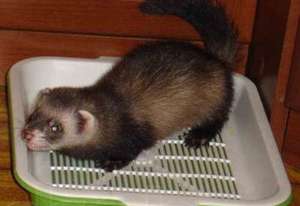 Initially, place the litter box in a cage or other area with limited space. This will help the animal get used to it.
You can tell that your ferret needs to go to the toilet by its actions. If the animal starts back away and raise tail He urgently needs to be taken to the toilet.
Peculiarities of walking with ferrets
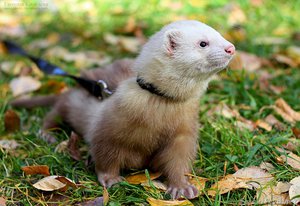 Ferrets don't need to be walked, but they love to be. The open world and nature bring them great joy, and a simple walk can be a real mini-trip, but you shouldn't let them wander on their own.
They almost always run away. Therefore, for walks use harnessesThis is a special device that attaches to the ferret's neck and chest, thus preventing discomfort. A simple neck leash will interfere and chafe the ferret.
Ferrets should be trained to wear a harness separately. Initially, it's worn for just a few minutes, and the time is gradually increased. In some cases, the animal may refuse to wear it at all, but this is usually due to the harness being too tight. There should be at least two fingers' width of space between the body and the harness.
In some cases, it is better to avoid walks:
- Ferrets don't tolerate heat or sun exposure well. They easily get sunstroke, so it's best to avoid going for walks in such weather.
- Slush, puddles, and deep snow won't be fun for your ferret. They'll just get dirty, and they don't like that. In the worst case, hypothermia can occur.
If there is a deep layer of snow or slush on the roads, it is better to refuse a walk, but the ferret is very loves to walk in winterThe walk should not last more than 4–5 minutes.
Ferrets as Pets: Pros and Cons
Ferrets are exotic animals that can add a lot of joy and fun to people's lives. It's easy to identify the main advantages of choosing a ferret as a pet.
- Ferrets are very sociable, curious, love to play and become very attached to their owners;
- Ferrets are quiet and small animals;
- small predators sleep almost all day long, so you can safely go to work and leave them home alone;
- Ferret fur does not cause allergies;
- Pets can be easily trained to use the toilet and cage.
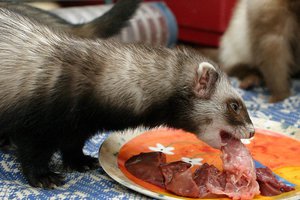 Ferrets are very sociable, curious, love to play and become very attached to their owners;
Even despite the many advantages, there are also disadvantages that often prevent people from getting a ferret.
- They have a specific smell and, like cats, like to mark their territory.
- Ferrets constantly bite, run around the apartment, can hide food, and ruin furniture or clothing.
- Ferrets are predators and therefore require special nutrition, which often requires significant financial investment.
- Every pet has its own temperament. Often, an animal's character leaves much to be desired.
Ferrets are wonderful pets that will add joy to any home. They are easygoing, get along well with people, and are easily accustomed to a cage and litter box. If you follow the common ferret care guidelines, life with this pet will be trouble-free. The main thing is educate him and limit spaceto save furniture and things.