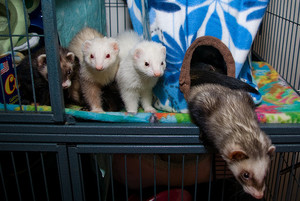
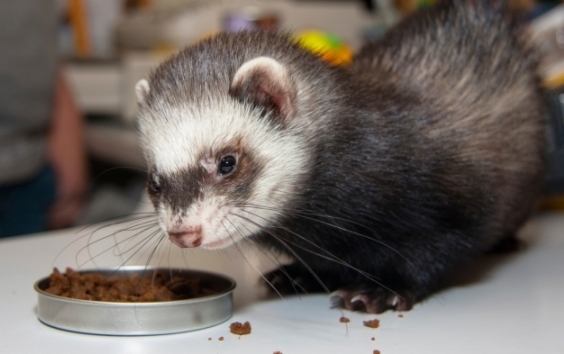
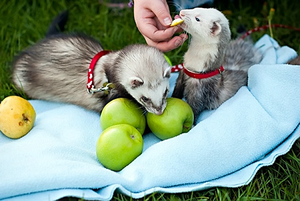
 Ferrets are quite common as pets. Naturally, before purchasing a ferret, everyone wonders how to care for one at home. In this regard, it's quite simple. Ferrets love to play, but sometimes they can show their teeth. Below, you'll learn about the specifics of care and maintenance.
Content
A place for a ferret to live at home
A new ferret will require a lot of attention. You can let it roam around the apartment, but it will constantly cling to you for playtime.
Another option for keeping a pet is in a cage. Potential owners must decide for themselves what conditions in their home are best suited for the animal's comfort.
For the ferret itself, an acceptable option would be free movement around the apartment, because he loves to play outdoors. However, ferrets have certain qualities that need to be taken into account:
- easy to toilet train;
- clean;
- They like to hide in cracks and secluded places.
However, on the other hand, free movement will negatively affect the condition of things in the house that your pet can gnawHe likes:
- plastic;
- furniture;
- rubber;
- wood and much more.
Cell
 If you choose a cage for keeping a ferret at home, then it should be spacious and large, so it doesn't feel cramped. It's best to arrange it for the animal's comfortable living conditions; it's recommended to divide it into the following zones:
- one zone is completely hidden from people, where you can put a house for rest and sleep;
- the second one is a game;
- the third is for eating;
- toilet.
Think about how you will arrange each of them; you can divide the cage into several levels, install rings, pipes, and ladders so that the ferret has enough space for active play.
When setting up the cage, consider the bedding; soft fabrics are a good option. Add a bowl, litter tray, and water bottle. It's best to choose a cage with a mesh construction material to prevent your pet from breaking their teeth.
Peculiarities of caring for ferrets at home
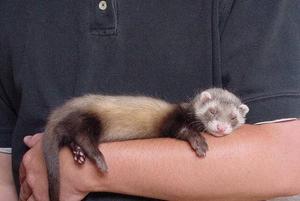 Keeping ferrets requires the presence of cages or rooms for them, household items and beds.
A small ferret should be trained from an early age. These animals, as soon as they open their eyes, they become active They'll try to bite almost everything they see. A little later, the animal will try to control its owners, but it's important to show it what it can and can't do. For example, if a ferret wants to bite someone, show it that it's unacceptable, say "no," and shake it gently. A gentle flick on the nose is also an option.
Other "training punishments" include spraying water, locking them in a cage for a while, or something else, but avoid excesses and violence. If you show weakness once, your pet will then control you as they please. You need to follow this algorithm:
- a mistake was made;
- you punished the ferret;
- He realized his guilt and is making amends.
All efforts to improve should be encouraged with treats, but You should not give the following products:
- sausage;
- chocolate;
- candies;
- cookie.
Care for this animal at home should be tailored to its personality, but avoid cruelty. Over time, they will understand their owner's wishes and become obedient. However, training an adult ferret will be more difficult, and sometimes training will fail. This should be taken into account if you plan to purchase an adult ferret.
Care and hygiene
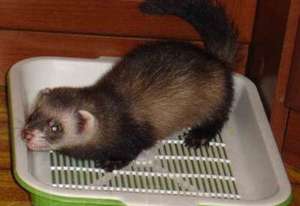
As for toileting, care includes litter training. You can use a cat litter box, placing it in the cage or in a designated area. To help the ferret understand its purpose, you can lightly soil it with its feces. If you have cats in the house, your ferret can also use their litter box.
This device should always be kept clean, otherwise the animal will look for other places to go to the toilet.
If your ferret has done something in the wrong place and you want to punish it, do so immediately, otherwise it won't understand why you're angry. After successfully "getting" into the litter box, praise the animal and give it a treat.
Very important in terms of care observe hygiene rules and perform cosmetic procedures. Ferrets' claws grow quickly; special clippers and a nail file are used to trim them. Trim only the downward-growing tip, not the nail at the root. This area contains the animal's blood vessels and can cause severe bleeding. If you are unsure, take your pet to a veterinarian.
Bathe your ferret a maximum of twice a month and only when necessary, for example, if your ferret is very dirty. Use special shampoos for ferrets or cats. The water temperature should be a maximum of 38 degrees Celsius (100.4 degrees Fahrenheit) or very cold. Some ferrets love to dive and swimYou can add more water to the bathtub or mini-pool and throw in some toys. However, in such cases, you should create a special resting area for your pet. After your pet has finished bathing, dry it and clean its ears.
Ferret vaccinations
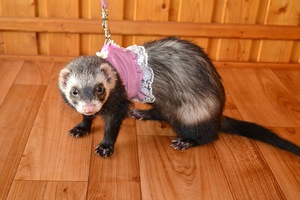 The care and maintenance of these animals includes the need for vaccinations. Ferrets are prone to a number of diseases that they can pick up even indoors, for example, from your shoes or clothing you've brought home from outside. Therefore, in addition to basic ferret care, you need to regularly vaccinate starting at three monthsFor this, choose a reputable veterinary clinic. When vaccinating, use vaccines designed for dogs, such as:
- Nobivac;
- Trivirovax;
- "Hexadog".
They can prevent distemper infection. If your ferret shows any signs of illness, take it to the vet immediately, as the consequences can be very serious.
How to feed a ferret at home
You can choose to feed your ferret dry food or natural food. Remember that in the wild, ferrets are carnivores that feed primarily on rodents, so keep this in mind if you plan to feed them natural food.
The ferret's diet should include:
- bird;
- offal;
- fish;
- eggs.
With this diet, the animal should be fed twice a day. Ferrets don't require plant-based foods, so these foods should make up a maximum of 2 percent of their diet. Fish can be given sparingly and infrequently. The following varieties are recommended:
- cod;
- trout;
- flounder;
- mackerel.
Boil chicken eggs first, and small poultry eggs can be fed raw if the animal can digest them well. Dairy products are acceptable in moderation, such as a small piece of cheese daily.
Natural feeding of a ferret also includes the presence of vitamin supplements in the diet, which are especially important during pregnancy, growth, or shedding.
You can cook a specific dish based on minced meat:
- mince the chicken giblets and meat, a little fish, some boiled vegetables and cereals;
- mix everything well and cool;
- Add vitamins and mineral supplements.
Recently, it's been considered that this type of food isn't the healthiest for ferrets; it's most often fed to animals on special farms where the focus isn't on the animals' health, but on their fur. Therefore, experts recommend feeding it to ferrets as food. small rodents and chickens.
Feeding dry food
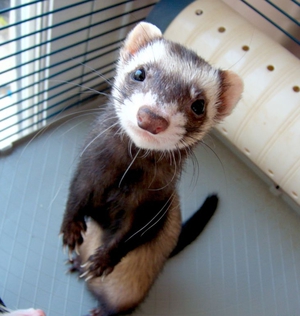 It's worth noting that feeding these animals naturally is quite difficult and only suitable for experienced breeders. Keeping them healthy will be easier if you choose professional-grade dry food. You'll ensure your pet has constant access to water and nutrition, and this food already contains all the necessary ingredients.
There are special premium class feeds Ferrets are fed with commercial kitten food, but they can also be fed with professional kitten food, as their nutritional needs and nutrients are identical to those of kittens under one year old. Feeding ferrets with budget food or dog food is not recommended. The best choice is poultry-based food.
If you are buying food for ferrets, the following are recommended:
- Evo;
- Bosch
- Eagle Pack.
If you choose professional food for kittens, then opt for these brands:
- Hills;
- Purina;
- Eagle Pack;
- "Yam";
- Gut Choice
- Innova
- "Ekanuba".
For a rewarding treat, you can give your pet plenty of vegetables or fruits, not citrus, but in moderation. You can find both in pet stores. special chews for ferrets, but they are quite high in calories and it is not recommended to give them to your pet in large quantities.
Key rules for the care and maintenance of animals
To summarize all of the above, here is a list of the basic requirements for keeping and caring for a ferret at home:
 Trim your ferret's nails regularly. They are very sharp, and they can injure others and themselves. Use special nail clippers.
- Take your pet for regular walks to ensure they feel well-attended. Play with them both indoors and in their cage.
- Train your animal, stop it from trying to bite you while playing;
- Clean the litter box regularly, as the unpleasant smell from it will spread throughout the entire apartment;
- Bathe your ferret periodically using a special shampoo and adding toys.
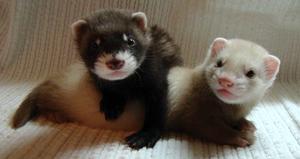 Trim your ferret's nails regularly. They are very sharp, and they can injure others and themselves. Use special nail clippers.
A ferret is a domestic animal, requiring attention, he needs to be provided with the necessary conditions in terms of maintenance at home, hygiene and nutrition.