Felids are amazing creatures. Big, wild cats have so much in common with our domestic cats. Their habits are remarkably similar, which speaks to the similarities between these animals overall. Therefore, it's safe to say that within every domestic cat lives a tiger or a lion.
The boss goes first
Every happy cat owner has probably noticed more than once, for example, when they go to the kitchen, the cat runs after them, trying to overtake them. But not everyone stops to think about why this happens. There's a perfectly logical explanation. Cats feel like they're the alpha male in the house or apartment, and they don't care what you think about it. This is precisely why they strive to be first everywhere.
Protection from enemies
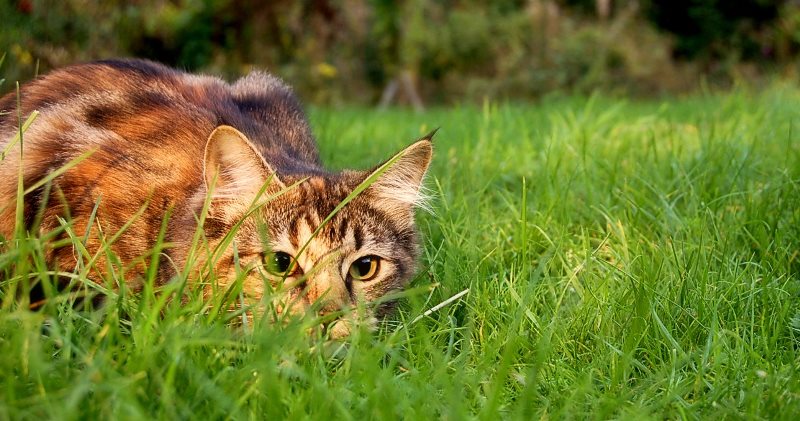
In the wild, everything is built on natural selection and survival. The weak perish at the hands of the strong. That's why even at home, in complete safety, cats continue to behave very cautiously. You've probably noticed how they try to cover their tracks. They do this to throw off their enemies.
In domestic apartments, they show this habit in every possible way - they carefully bury their litter box, bowls with uneaten food, and also try very hard to lick themselves completely.
Rub against things in the house
When your cat rubs against things in the house, they're marking their territory. Both wild and domestic cats have scent glands everywhere, especially around their faces. For this reason, they rub their faces against everything in the house—the corner of the sofa, the walls, the table, or even their owner. This is your pet's way of showing their love for you.
Daily routine
Your cat spends most of its time sleeping, just like its wild relative. Their favorite time to sleep is between 4:00 and 8:00 PM. There's a reason for this. In the wild, hunting activity subsides during this time. Sleep gives animals a boost of energy. However, cats are always on the alert; if they sense prey or danger nearby, their sleep is instantly over.
You've probably also noticed how cats are sometimes active in the evening and at night. This is the best time for hunting, so domestic cats are awake, sometimes disturbing their owners' sleep.
Water is dangerous
Both domestic and wild cats dislike water, despite being excellent swimmers. This is partly due to their optimal body temperature being 39 degrees Celsius (102.4 degrees Fahrenheit). Water is often colder.
Cats lack sweat glands, which are responsible for thermoregulation. Their undercoat takes over this function. As a result, when a cat gets wet, it either begins to feel cold or, conversely, overheats if the water is hot. This makes it impossible for its body to regulate its temperature.
Domestic cats even drink water with great caution. Furthermore, a huge number of cats simply ignore water bowls that are available 24/7 and right under their noses. Instead, they wait for the moment when their owner turns on the cold water faucet to get a drink.