Peterbalds resemble Sphynxes in appearance, but are more graceful, affectionate, and friendly. They require constant contact with their owner and are so sociable that their behavior resembles that of dogs.
The breed is officially recognized by major international felinology associations. Peterbalds are bred by experienced breeders. Keeping these cats at home presents certain challenges, due to their almost complete lack of hair.
Content
How the breed was created
The Peterbald is one of the youngest breeds. The idea to create a hairless cat with a refined appearance came from Olga Mironova, a renowned St. Petersburg felinologist. The project began in 1993. The new breed began with four kittens, produced by mating a Don Sphynx with an Oriental cat. Subsequently, breeders sought to consolidate the characteristics of the Siamese and Oriental cats: a graceful body, long legs, a narrow muzzle, and large ears. To this end, until 2005, they used Siamese, Javanese, and Balinese cats for subsequent matings.
The breed has been recognized by felinologists and included in official catalogues:
- 1996, SFF (Selection Feline Federation), registration of the breed and assignment of the PBD code;
- 1997, TICA (The International Cat Association) is the world's largest felinological organization, breed code PD;
- 2003, WCF – World Cat Federation, breed code PBD.
In the standards catalogues of other associations it has the following designations:
- in FIFe - PEB;
- in ICU - PD;
- in MFA - PTB.
Hairless cats with the gracefulness characteristic of oriental breeds immediately gained recognition from lovers of these pets.
Description of the exterior and breed standard
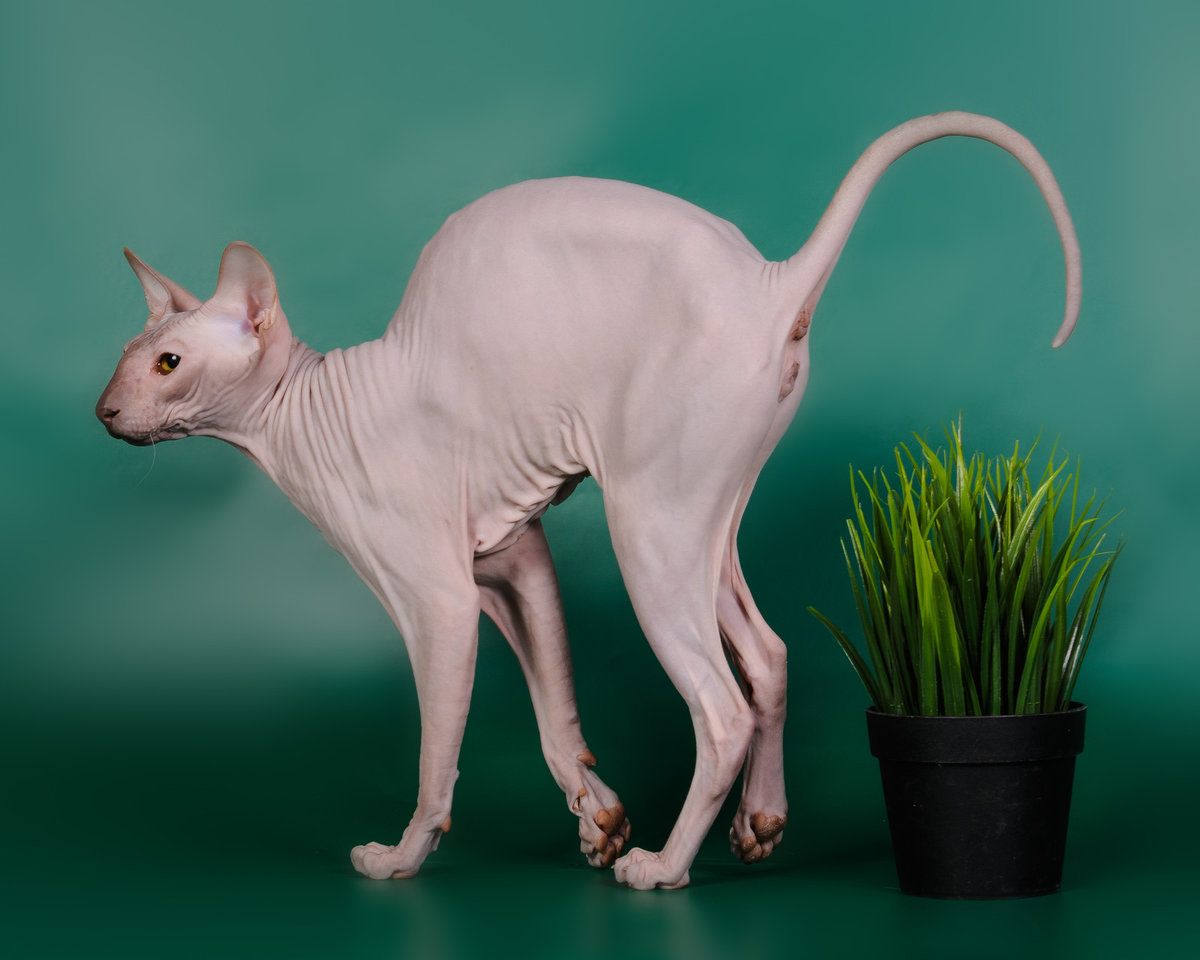
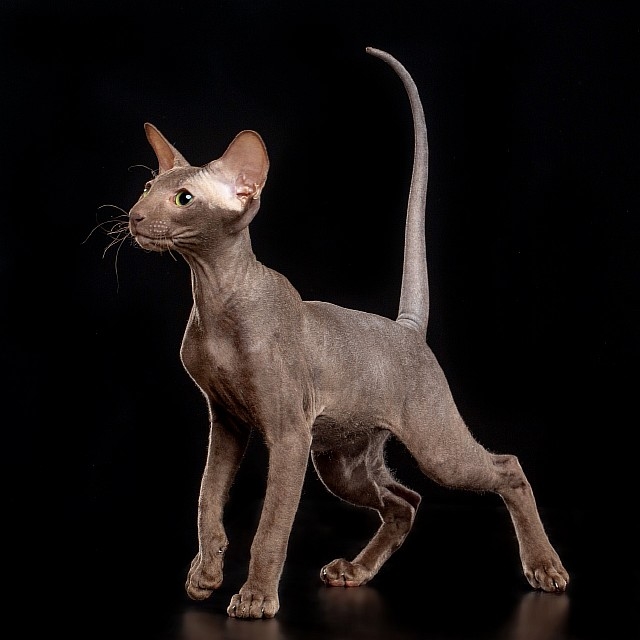
St. Petersburg sphinxes have an elongated body and elongated limbs. The thin skin with movable folds is covered in places with residual hair (most often near the ears, on the paws, muzzle and tip of the tail). On a narrow head with bluish-green almond-shaped eyes and a straight profile with vertical folds, large, bat-like ears sit low.
Parameter | Description |
Head | Shape: Wedge. The wedge starts at the nose and widens on both sides in straight lines to the ears. Long muzzle with a flat forehead. Slightly convex profile. |
Chin | The chin and the tip of the nose form a vertical line. |
Ears | Very large, with a wide base. They are positioned so that they continue the sides of the wedge. |
Eyes | Almond-shaped, set at an angle, maintaining the harmonious wedge shape of the head. Bright green (in the case of point colors, intense blue; the darker the better). |
Body | An elegant, muscular animal of medium size. Elongated, flexible body. Long and thin neck. The chest and shoulders are no wider than the hips. |
Limbs | Long and thin, the forelimbs are straight, the paws are oval with long toes (“monkey toes”). |
Tail | Very long, thin at the beginning and with a pointed end. |
Skin | Soft and mobile on the body, completely naked or covered with light down. Lots of folds on the head, less sweet. Young animals may have a light coat, which should fall off by the age of 2. Hairless cats are preferred. All colors are acceptable. |
Flaws | Missing folds on the head, unstraight front legs, and an excessively oriental type. (Explanation from O.S. Mironova: this refers to excessively lightened skeleton, leading to increased injury risk. Such excesses are faults not only for Peterbalds but also for traditional oriental breeds such as Orientals and Siamese.) |
Knitting | Mating with other Sphynx cats is prohibited. Only Siamese, Balinese, Oriental Shorthairs, and Javanese are permitted. |
There are five main types of skin:
- brush - has wavy, hard hair that partially disappears by the age of 2;
- naked - there is no hair, the skin feels like rubber;
- flock - smooth silky fur shorter than 1 mm, feels like velvet, no vibrissae;
- velour - soft wool that was present in childhood, with age almost all of which falls out;
- Suede is a dry, short, very soft wool, the texture of which resembles the material of the same name or peach.
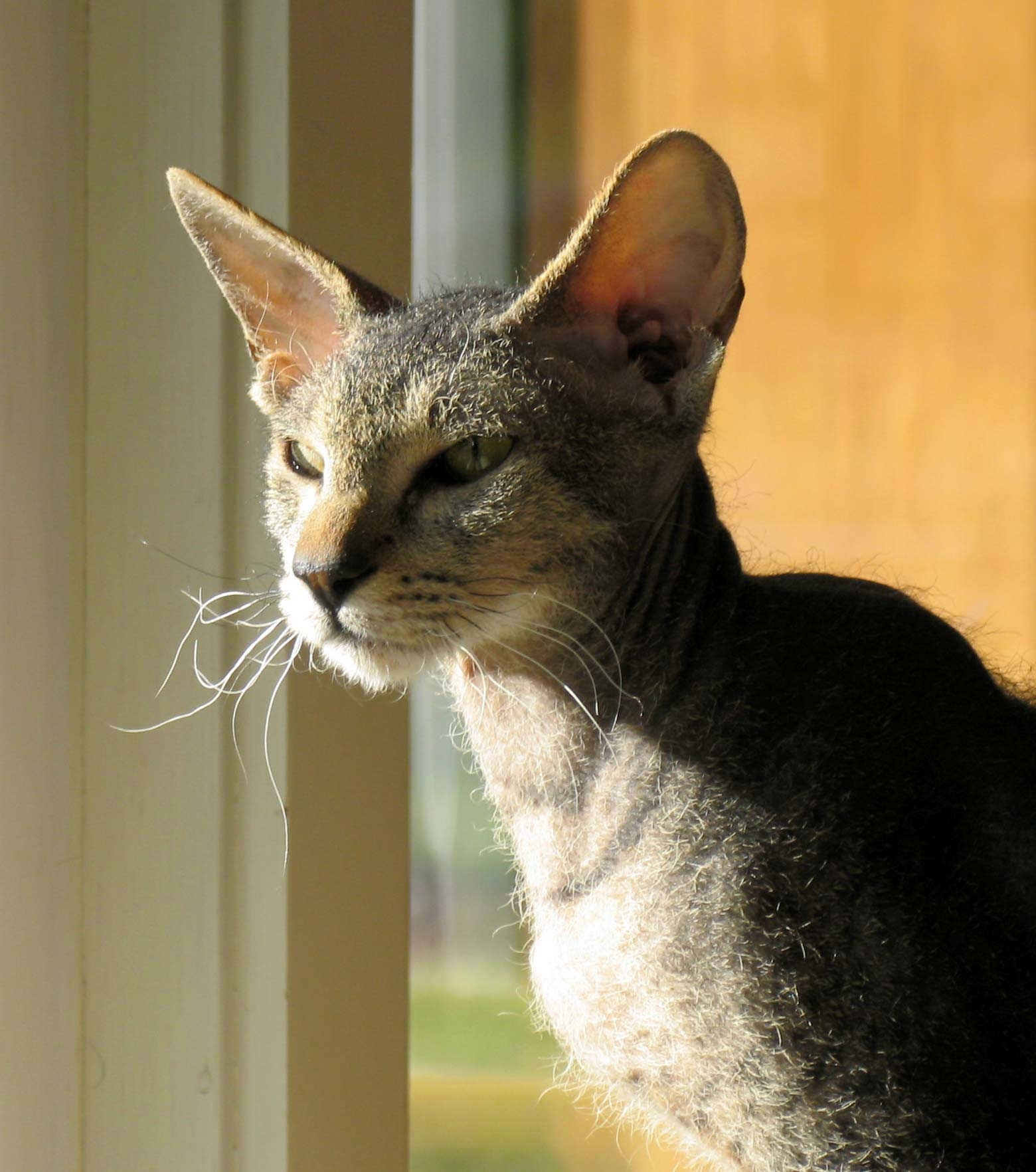
Adolescent kittens often retain a residual coat of fur. By the time they reach full maturity, around two to three years of age, Peterbalds' coat type changes: hairs either disappear or regrow. This process depends on the season or hormonal factors (pregnancy, nursing). The first to grow hair is on the paws and tail.
Saliva, dander, and skin secretions from cats can provoke an adverse reaction in allergy sufferers.
Character
Peterbalds do not tolerate loneliness, need constant communication, become attached to people like dogs, and are ready to sit on their owner’s lap for hours. They are sociable and curious, not shy of strangers, and do not get into conflict with other animals or children. Being intelligent and active, they are trainable, especially if done through play.
Peterbalds are unusually talkative, meowing at every opportunity, grumbling constantly, and even muttering in their sleep. Moreover, these animals have a loud, harsh voice.
Pros and cons of the breed
Positive qualities of Peterbalds:
- smart, easy to learn;
- active, willing to play;
- docile, not aggressive;
- sociable, they get along without problems with everyone who lives in the house.
Negative traits:
- sometimes become intrusive;
- claim increased comfort and special care;
- they meow loudly and for a long time.
Care and maintenance
The lifespan of Peterbalds, their health and mood depend on proper care and attention. Necessary conditions for St. Petersburg sphinxes:
- maintain a comfortable temperature in the room;
- do not allow the animal to stay in the sun for a long time;
- ensure a balanced diet;
- carry out hygiene procedures in a timely and high-quality manner;
- monitor your health, get vaccinated on time;
- Give enough attention, communicate and play with the cat.
Like all hairless breeds, Peterbalds love warmth. The optimal room temperature for comfort is 22–25°C. If the room is cold, the cat's bed should be warmed. The cat should always have clothing: a vest or special overalls. The delicate skin of hairless Peterbalds is sensitive to direct sunlight, which can cause sunburn.
What to feed
They require more energy to maintain their body temperature than other cats, so they have a faster metabolism. This means they also require more food than other breeds.
Adult cats are recommended to be fed up to five times a day. They eat meat, preferably beef and beef heart, raw eggs, milk, fish, cereals, and fresh greens. In a diet consisting of natural products, the proportion of animal proteins should be about 50%. Commercial food is also suitable for Sphynxes, but it is preferable to use premium food, specially designed for hairless breeds.
Grooming
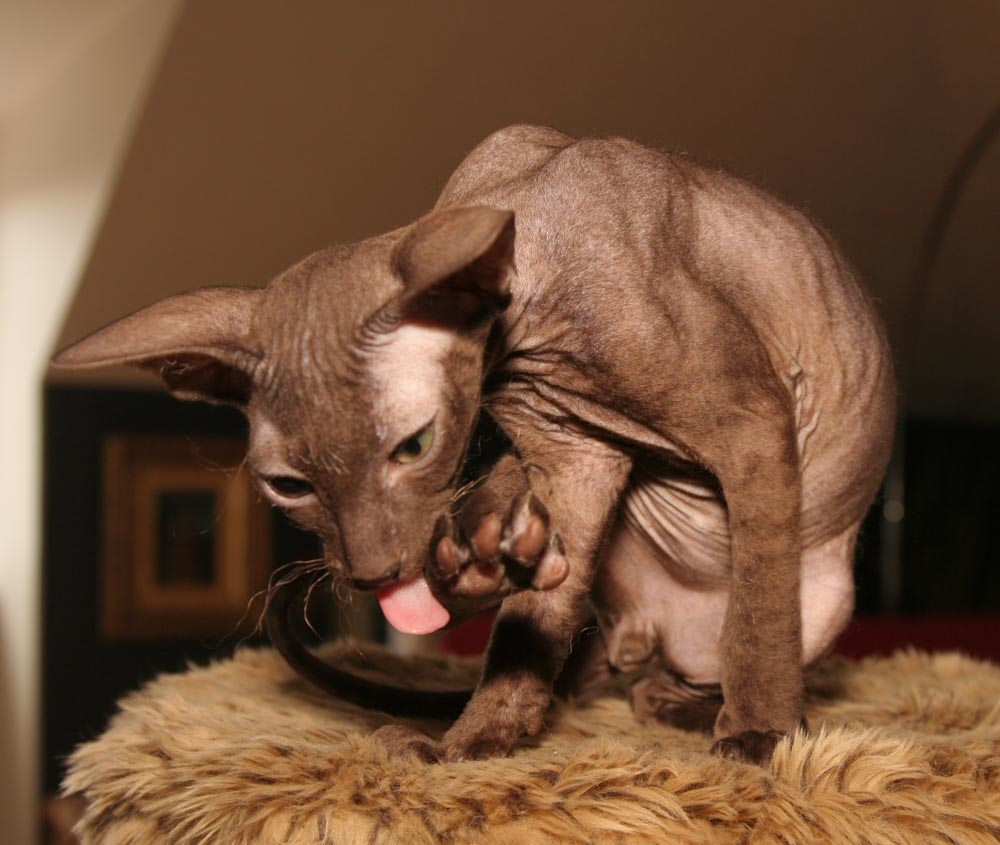
Peterbalds' skin secretes a protective layer of brownish-red fluid. This slightly highlights the animal's coat and serves as a protective layer against bacteria. The greatest amount of this fluid is secreted on bald areas of the body. It is recommended to wipe the animal daily with a damp cloth or sponge, paying particular attention to skin folds, areas around the ears, and spaces between the toes. Special care lotions are available.
Trying to scrub away the waxy coating as best you can is dangerous, as without it, the animal's skin will become vulnerable to harmful bacteria. Bathing in warm water should be done sparingly, a couple of times a month, using a special shampoo. Afterward, be sure to dry the cat thoroughly and wrap it in a warm towel. Frequent bathing dries out the skin. In this case, lubricate it with baby oil or cream and give it a gentle massage.
When grooming a Sphynx's skin, you must carefully remove dead hairs, without damaging or shaving living hairs under any circumstances.
Other hygiene procedures to maintain the animal's health:
- Daily eye and ear checks. Since hairless cats may lack eyelashes, their eyes are more susceptible to contamination. Rinse them with warm water and a soft cloth.
- regular inspection of the paws between the toes, the tail and their timely cleaning;
- trimming claws once a week;
- keeping the litter clean.
Education and training
Kitten training should begin from a very early age. The first step is litter box training. This won't take much time; kittens quickly understand what's expected of them. Once you've prepared a special litter box, carefully observe the kitten's behavior. As soon as it stops playing, begins lowering its head, and sniffing, gently place it on the potty. You can also say out loud, "Potty."
Three to five such sessions are usually sufficient. Other skills are taught in a similar manner. Toilet training a cat will take longer.
Punishing is counterproductive: it often backfires, making her more mischievous. Emotional connection with her can achieve a lot. Animals recognize their owners' emotions, remember words and intonations, and decide for themselves how to act.
Peterbalds inherited the intelligence of their Eastern ancestors, and many are easy to train. With enough persistence, you can teach your pet to fetch objects and obey commands. This should be done in a playful manner, rewarded with affection, praise, and treats. Due to their nature, Peterbalds will enjoy interacting with their owners.
Diseases and treatment
The key to an animal’s health is timely vaccinations. The first is administered when the kitten is 9-12 weeks old. The schedule for subsequent procedures and vaccine selection should be determined by a veterinarian.
Diseases characteristic of Peterbalds have been identified:
- A congenital anomaly in the development of the thymus, the organ that controls the immune system. If it is underdeveloped, the kitten dies.
- Gingival hyperplasia. Tissue overgrowth occurs as a result of trauma from foreign bodies, malocclusion, or chronic inflammation. Treatment is determined by a veterinarian at the clinic. This includes tooth extraction, the use of antimicrobial agents, or surgical correction. Gum hyperplasia in kittens is not a threat, but a veterinary consultation is still necessary.
- Presumed predisposition to genetically inherited ectodermal dysplasia. This anomaly in the development of teeth, skin and hair causes malocclusion.
- The animal's skin is hypersensitive and prone to dermatitis, eczema, and acne. Therefore, it is necessary to take good care of it.
- Respiratory diseases common to all hairless breeds.To avoid them, it is necessary to prevent the animal from becoming overcooled.
In complex cases, a veterinarian will recommend treatment, disease prevention, and care. Animals with genetic defects should not be bred.
Viral infectious diseases such as calicivirus, infectious peritonitis, viral leukemia, Aujeszky's disease, and immunodeficiency are fatal. Infection can occur through contact with an infected animal or its excreta.
Average life expectancy
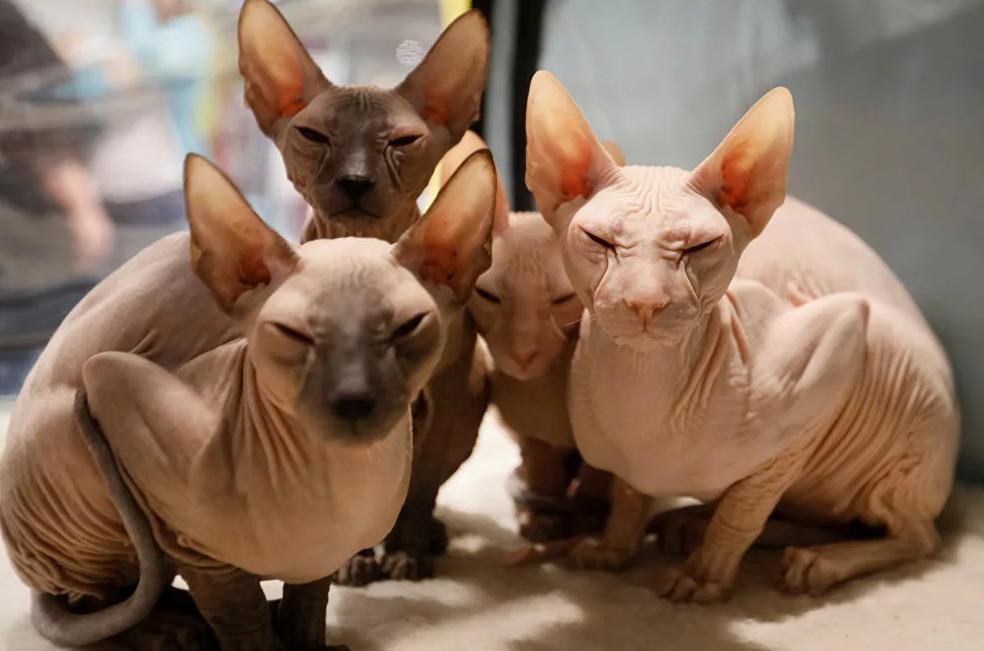
Exotic breed lovers are concerned about how often Peterbalds get sick and how long they live. There's a common misconception that animals from artificially bred breeds are susceptible to dangerous genetic diseases and have a short lifespan. This isn't the case. Peterbalds have inherited a strong immune system from their Eastern ancestors. Under normal conditions, with good care and attention, they live 13-17 years. This is normal for cats.
Breeding
Peterbalds are bred by nurseries and experienced breeders. To preserve and improve the breed's characteristics, they carefully select mating pairs. Currently, crossbreeding with other Sphynx cats is prohibited, as this would be a step backwards, resulting in a more robust build. Crossbreeding with Siamese, Oriental, and Balinese cats is permitted.
Some catteries are trying to consolidate the hairless trait. Others are seeking to emphasize the Siamese-Oriental appearance. Experts from feline associations believe it's time to move toward breed stabilization and selective breeding without outcrossing with other cats.
When kittens are bred at a cattery, they undergo a certification test at two months of age. This test verifies their compliance with the breed standard and identifies any defects or illnesses. As a result, the entire litter receives registration documents.
Knitting
A male cat feels more comfortable mating in his own territory. Two to three days after the onset of heat, the female is brought to the male and left with him for three to five days.
The following rules apply:
- At the first mating, the female cat should be between one and a half and three years old, and the male cat should be between one and three years old; this is the optimal age for animals to have their first offspring;
- for a cat, the first mating is permissible only after two or three heat cycles;
- a cat should not be mated more than twice a year;
- one of the partners must already have sexual experience;
- both partners are healthy and vaccinated;
- The pair must be genetically similar to avoid serious illnesses of the kittens or their intrauterine death.
Caring for offspring
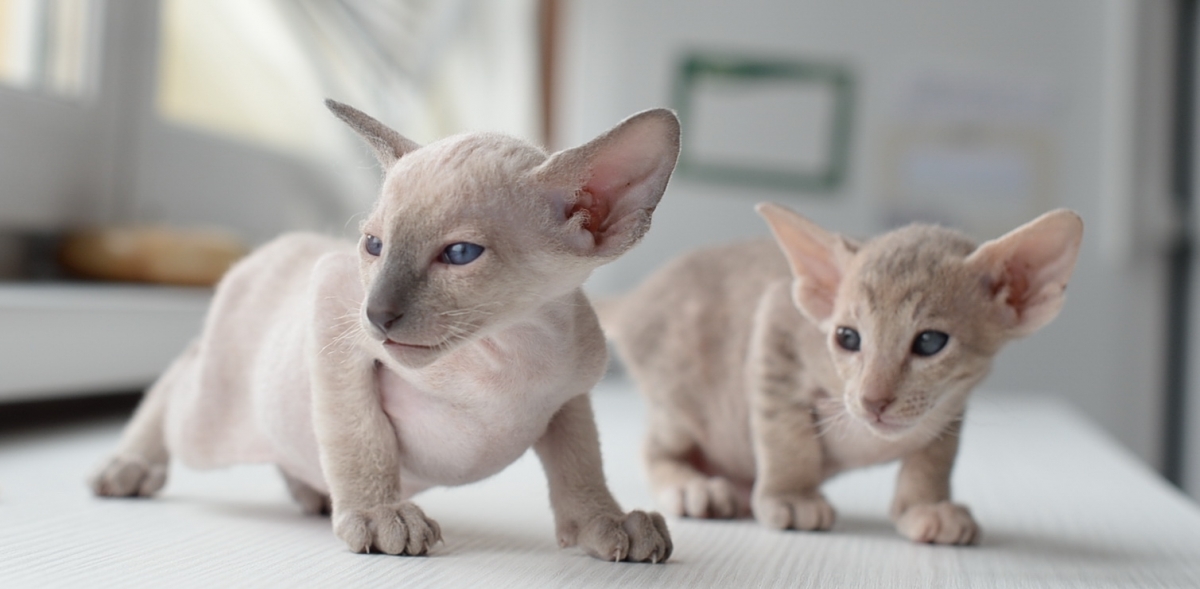
Peterbald kittens show activity early, opening their eyes on the 2nd or 3rd day. Newborns are usually covered in fur. Rarely, they are born completely naked.
Removing a kitten from its mother at one month is too early. It feeds independently and is ready to use a litter box, but it is still psychologically weak and, having lost its mother's immunity, will be susceptible to illness. Breeders transfer kittens to their new owners after they have had their first vaccinations and are now on adult food, which is no sooner than 12 weeks.
The first vaccination is administered when they are 8-12 weeks old, and the second is administered after teething, at 6-8 months. Subsequently, vaccinations should be repeated annually as recommended by your veterinarian.
The first thing you need to do is provide the kitten with a warm, cozy house or bed.
Rickets prevention should be prioritized. Kittens born in spring or winter, or those who were bottle-fed, are at risk. If a blood biochemistry test reveals a calcium and phosphorus deficiency, correction should be initiated by introducing a special diet.
The conditions for keeping and caring for a healthy kitten are no different from those for an adult cat. Active play is essential for kittens, helping them grow and develop both physically and psychologically.
How to choose a name
When choosing a name for a purebred cat, keep in mind that it will be recorded in its veterinary passport, pedigree, and title certificate, as well as in subsequent generations of documents. This name is also recorded in cattery lists and show system catalogs. For this reason, they are commonly called "sounding names."
Each community and exhibition system establishes its own naming system. There are general principles:
- In catteries, all kittens in a litter are given names beginning with the same letter. Breeders, being members of a specific club, are guided by the club's general list of litters. Clubless systems decide everything themselves.
- If a kitten was born in a cattery, its name, known as its surname, is added to its name on the documents. Otherwise, this is not done.
- Feline systems have set a length limit for names, including the cattery name. It's 25-35 characters.
- It is not customary to use the names of ancestors, elements of the cattery address or the name of the owner.
- It is welcomed if the cat's name matches the breed.
If the breeder hasn't come up with a name themselves, when handing over the kitten, they must inform the new owner of the letter under which the entire litter is registered in the cattery or club's stud book. It's not necessary to come up with a fancy name; the main thing is to properly complete the relevant paperwork with the name.
A name given in accordance with these principles is official. At home, the kitten is given a nickname that both it and its owners like. It is said that if you say one or more names out loud, the kitten will be able to indicate which one it prefers. Websites, catalogs, and zoological club lists offer numerous name options.
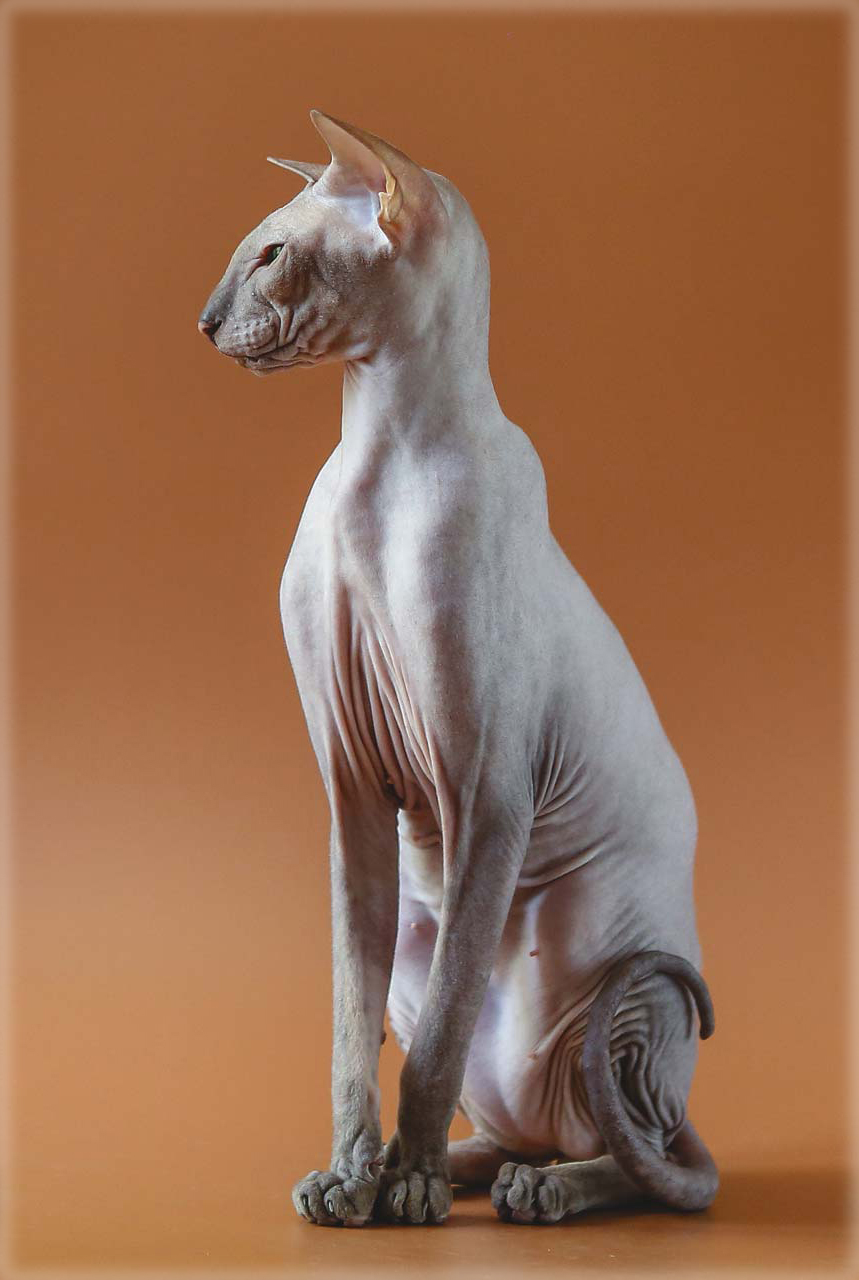
One can take into account the majestic appearance of adult cats and recall the pedigree of their ancestors - the sphinxes.
After all, in Egypt, cats were elevated to the rank of deities.
As an example, we can offer the names of ancient Egyptian gods, pharaohs, goddesses and queens:
- Nicknames for boys:
- Aikhi (Ihi) - the god of music;
- Aker is the patron of the dead and protector of people;
- Anti (Nemti) - god of the eastern desert;
- Bennu represented the resurrection from the dead;
- Ver is the god of the daytime sky and light;
- Geb is the patron of the earth;
- Horus is the patron of the sky and the sun;
- Min is the god of fertility;
- Montu is the god of war;
- Sia is the god of the mind;
- Thoth is the god of wisdom and knowledge, patron of scientists;
- Fandi (Dundee) is the patron saint of the city of Hermopolis;
- Hedi-Hati is the god of flax and linen fabrics;
- Khonsu is the god of the moon;
- Shedu is the protector of all those who wander in the desert;
- Djoser (for a kitten: Jos, Joe);
- Cheops (for a kitten: Khufu, Khuf, Cheopsik);
- Pepi II (for kitten: Pepi);
- Thutmose III (for kitten: Thutmose, Tutti);
- Tutankhamun (for a kitten: Tutkhan, Tutti);
- Ramses II (for kitten: Ramses, Ramsi, Rami).
- Nicknames for girls:
- Amanta is the patroness of the West and the dead in Duat;
- Bastet is the goddess of love, joy, feminine beauty and the hearth;
- Isis (Isis) - the mistress of fate and life;
- Mut is the mother of all gods and the patroness of motherhood;
- Neith is the patroness of war and hunting;
- Seshat is the goddess of writing;
- Soti is a goddess who personified the morning sunrise and the brightest star in the sky;
- Hathor is the goddess of the sky, fertility, femininity and love;
- Female pharaoh Hatshepsut (for cat: Hatti, Hetty);
- Cleopatra (for a cat: Cleopatra, Cleo, Pati, Leo, Kleopa).
Peterbalds combine the best qualities: a graceful, proud silhouette and a gentle, cheerful disposition. They endear themselves to everyone who meets them. The care they receive brings the cat and their owners even closer together.