 The day has finally arrived when your beloved cat becomes a mother. This moment is often a very exciting one for owners, as in addition to caring for the cat, they now also have the responsibility of caring for her litter. In this article, we'll try to answer one of the most common questions: when do newborn kittens open their eyes?
What does a young family need in the first days of life?
In the first days of its life, a kitten is a defenseless creature. It is completely in the care of its mother cat. Besides feeding, the cat carries out hygiene procedures — the kittens themselves are unable to go to the toilet. For several days after birth, the mother will not leave the "nest" with her kittens.
During the first two to three weeks of life, kittens will need their own separate space. This typically involves a box with soft bedding and a sanitary pad, which should be changed as it gets dirty. If your pet feels the kittens' surroundings aren't clean enough, she can easily move them to another location—a closet or behind the sofa, for example.
It's best to place the box in a dark place, away from light, until their eyes begin to fully open. How many days this may take and what factors influence this will be discussed below.
It's time to open your eyes
 Eye opening is one of the most important stages in a kitten's life. From this moment on, the little cat becomes more independent. trying to crawl on his paws and explore the world around us.
How long does it take for kittens to begin to open their eyes after birth? Eyes open approximately 5 to 14 days after birth. However, there are several factors that influence this process:
- kitten breed;
- gender and physical condition;
- duration and complexity of pregnancy.
Dependence of the rate of development on the breed
Kittens of any long-haired breeds develop more slowly than shorthaired ones.
- So, Persian and Siberian kittens will open their eyes only on the 12th day, or even on the 18th.
- Individuals of breeds such as Sphynx, Oriental, Abyssinian and Siamese can open their eyes as early as the second or third day after birth.
- Cornish Rex or "plush" Sphynx kittens begin to see at 4-7 days.
- British and Scottish Folds, while slightly fluffier than Cornish Folds, open their eyes somewhat later—after seven or even twelve days. Experts attribute this to their much softer undercoat.
It has been observed that newborn female cats become sighted somewhat earlier than male cats. Furthermore, more active and strong kittens will open their eyes sooner, even if only for a few hours.
Gestation period Your cat's pregnancy directly affects the timing of eye opening. If the pregnancy is prolonged, lasting approximately 70 days, the kittens may be born with their eyes already open, or they may open immediately. In such cases, there's no need to worry excessively, but the kittens will still require extra care—blindness or various eye diseases are quite likely to develop. This is due to the tear ducts not yet functioning properly. To prevent negative consequences, it's essential to maintain constant eye moisture, i.e., moisturize them yourself.
How does the process work?
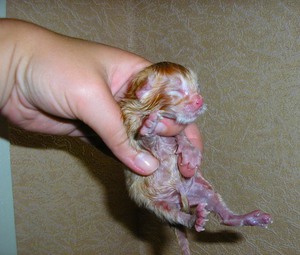 Kittens' eyes don't open all at once, but gradually. First, a small slit appears, usually on the inside of the eye. Then, after a certain amount of time (which varies for each kitten), the iris becomes fully visible. Don't be surprised if the eye opens in the first few days. has a cloudy blue color — while the kitten is not able to see, it can only distinguish light and shadow.
For about a week, the kittens' eyes remain cloudy; the pupils are delicate and easily damaged by bright light. Therefore, it's best not to rush into moving the box to a brighter area. Moreover, the mother often begins to bring the kittens out into the light herself or asks the owners to do so.
Should I worry?
As already mentioned, many factors influence the process and speed of eye opening. If more than two weeks have passed and the kitten is still showing no signs of opening its eyes, don't panic. In this situation, it's best to consult a veterinarian. If signs of an inflammatory process, then you shouldn't delay seeking medical attention. At the clinic, they recommend special drops for your child, which will help overcome the illness much faster and be more effective than regular tea infusions.
If there is no inflammation as such, but the eyes are simply sore, with crusts visible in the corners, then gentle rinsing with a cotton swab soaked in boiled water or tea will only bring benefits.
Is there a way to speed up the process?
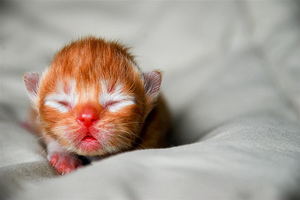 There's an interesting theory that some cat owners diligently use to speed up the process of newborn kittens opening their eyes. According to it, kittens should be picked up and gently petted from the first days of life. The mother cat will then thoroughly and thoroughly lick her offspring. trying to get rid of someone else's smellThis, in turn, helps kittens gain tactile experience and grow faster.
However, some cats can't stand having their babies handled. They become extremely nervous and anxious. Therefore, you shouldn't abuse your pet's trust if it only causes her discomfort. In such cases, it's best to wait for nature's appointed moment.
When does true eye color appear?
As you know, all little kittens have the same eye color - blue or gray-blueIt changes over time to match the cat's breed and color. This occurs around 3 months of age, but the timing can vary depending on the breed.