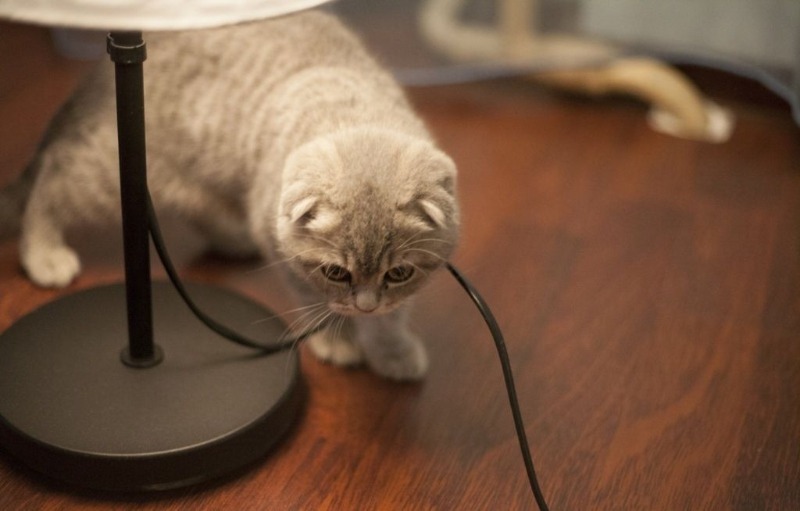
This habit typically develops in young, playful kittens during teething. Less commonly, cats chew wires out of boredom, as they don't get enough playtime. This problem is not only unpleasant but also poses a significant danger to the pet. Let's explore what steps can be taken to stop your pet from chewing wires.
Don't leave wires in plain sight.
Get into the habit of always unplugging cords. Dangling wires are especially enticing to pets, as they may be perceived as toys. Keep all electrical cables out of their reach. Travel cables can be kept in a closed bag. Cables used for charging devices at home should be kept in closed cabinets. Other cables can be hidden:
- for furniture placed close to the wall;
- for indoor border;
- nail tightly to the wall.
You can purchase special fasteners for attaching wires to surfaces or tape them along the table leg.
If possible, you can set up a charging station in a closet, making it more difficult for the cat to reach its targets. It's also convenient to place the wires in cut-out holes in the box. This will hide most of the cables, reducing the risk of damaging the cable.
Pay special attention to cords from appliances and computers. Check all areas where a pet could easily crawl. If possible, keep hanging cables to a minimum.
Hide the wire in a special sheath
You can use a special protective sheath for wires, which is a transparent tube. Protective sheaths are available in a variety of colors and have special attachments for furniture. Several wires can be concealed within a single sheath.
You can also protect the cable with an aquarium hose or sew a protective cover for the wire yourself. The simplest method, but not always effective, is to wrap the wire with electrical tape.
Develop a reflex in your cat
This method is suitable for those who are often at home and can monitor the cat's behavior. The next time the cat tries to bite the wire, spray it with water from a spray bottle. The next time it tries to bite, spray it again. After a few repetitions of this action, the pet will learn that if it tries to bite again, it will get wet again.
Considering that spraying water near electrical appliances is unsafe, you can use other methods that are unpleasant for the animal, such as gently flicking its nose or distracting it with a loud noise (screaming or clapping). The deterrent should be unexpected.
Treat the wires
Cats are particularly attracted to the smell and taste of cables. To deter them, make the cables unpalatable. Any repulsive odor will do:
- special spray to repel cats;
- lemon juice;
- garlic (or onion) gruel;
- Orange juice;
- aloe juice;
- hot pepper;
- mustard;
- lavender oil and others.
Cats dislike any bitter or citrusy scents. It's important to ensure the product is safe for your pet's health, and the scent should linger on the cords for a long time. Dry the cords thoroughly before plugging them in. Repeat the treatment after a short time.
You can also coat the cable with nail polish, which is specially designed for children to discourage them from biting their nails.
In rare cases, men's deodorants with a menthol scent can help.
If, despite everything, you can’t break your cat of this bad habit, consult a veterinarian and include the missing vitamins in your pet’s diet.