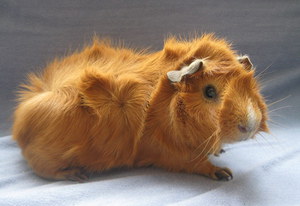
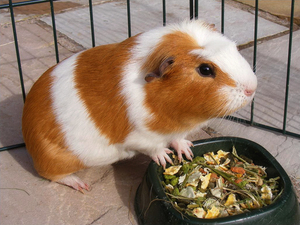
 When we were little, we probably dreamed of having a pet, a fluffy little bundle of joy that would be our favorite thing in the world. Many envied those children whose parents were especially generous, buying them puppies, kittens, or guinea pigs. And no matter what we had to do with this amazing creature—bathing, playing, or grooming it—every minute was an unforgettable pleasure. Those who were deprived of the opportunity to own a guinea pig back then can now redeem themselves and bring home this adorable, furry creature.
Content
How to care for a guinea pig at home?
In fact, caring for a guinea pig isn't all that difficult, and even if certain challenges arise, they're easily resolved with the right knowledge. Following these rules is especially helpful; if you follow them, you're sure to avoid any problems. And seeing how happy your pet is will make you happy along with them.
Caring for guinea pigs is so simple that any schoolchild can handle it. And to do this, you need learn the following rules:
 The animal should eat at least 2-3 times a day.
- The feeder where your pet lives should be cleaned and aired at least once a day.
- Every three days you need to change his bedding.
- At least once a week you should clean your pet's cage.
- Every three days you should conduct a preventive examination of the animal for signs of illness.
- Every two to three days, brush your pet's fluffy fur.
- You should trim your pig's nails twice a year.
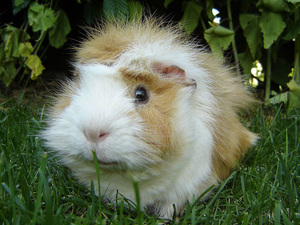 The animal should eat at least 2-3 times a day.
There are also other important aspects of keeping a pig at home that you should keep in mind. This animal is characterized by high activity, so he'll be naturally inclined to wander from birth. If your pet lives in a small cage, it's recommended to take him outside into the yard of a private home or let him roam near a multi-story building if there's a fenced area nearby.
You shouldn't deprive your pet of this opportunity, as during walks, pigs often do funny things that can bring joy to their owner.
Guinea pigs are very sociable creatures. Therefore, they should not be left alone. Without human companionship, they will become sad. Therefore, you should treat your pet in a special way, demonstrating your love, tenderness, and affection. This animal loves being held and will certainly repay you for it.
Keep in mind that you need to keep the cage with the pig in a lighted placeIf there is insufficient light, she may develop rickets.
We bathe the pig as needed.
Don't assume that just because you have a guinea pig, you'll have to bathe and clean it frequently. This should only be done when absolutely necessary. For example, your guinea pig might get dirty during diarrhea. You'll also need to clean it if you've recently taken it for a walk outside and it's been digging in the ground.
If you can’t do without water treatments, then it is necessary to prepare for them.
- To do this, take a plastic container and fill it with water at room temperature. Determine the amount of water as follows: the water level should be three centimeters from the bottom of the container.
- Then carefully pick up the animal and lower it into the water. Only the dirty parts, not its entire body, should be submerged. Then, begin washing it slowly. Be careful to keep its head above the surface of the water during this process.
- You can use baby shampoo when bathing your guinea pig. However, avoid pouring it on your guinea pig's head. After using the shampoo, be sure to thoroughly remove any residue.
- Once the bathing process is complete, remove the pig from the container and dry it with a soft towel. This should be done very carefully to remove all traces of water.
- If you decide to wash your pet in cold weather, after drying with a soft towel, it's recommended to also use a warm hairdryer. Blow-drying may be especially necessary for pets with long hair. To do this, first set the hairdryer to the lowest temperature.
- Once your pet is washed and dried, it is transferred to a cage, which you should first clean and put fresh hay in.
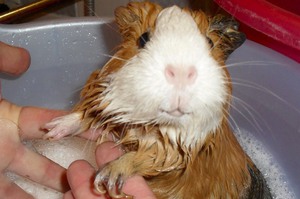 To do this, take a plastic container and fill it with water at room temperature. Determine the amount of water as follows: the water level should be three centimeters from the bottom of the container.
Make sure there are no drafts in the room, for this lock all vents and windows in the roomBathing is very dangerous for these animals, because if they get caught in the draft, they can catch a cold.
Basics of feeding a domestic guinea pig
The beauty of guinea pigs is their tiny size, so they'll eat little. However, when bringing this animal into the home, every owner should remember that guinea pigs are vegetarians. Therefore, their The diet should consist of the following ingredients:
- Hay, straw, and dried grass should make up half of your guinea pig's diet. In the summer, you can feed them fresh grass, which can also be dried. Pay particular attention to the plants you feed your guinea pig—avoid grasses that can cause bloat. In winter, guinea pigs' main food is hay and straw. Procuring this food is easy for those living in rural areas. They can begin harvesting grass in the summer to ensure a winter supply. Feeding a guinea pig isn't too difficult for city dwellers either. You can find food for them at any pet store. Dandelions are a particular favorite, and they consider them a delicious treat.
- Various grains. These components should make up approximately a third of the total diet. The most nutritious grains your pet needs are found in special food available at the store. Alternatively, you can feed your pet rabbit or pet rat food.
- Fresh vegetables. Vegetables should make up a fifth of your guinea pig's diet. They're especially fond of cucumbers, but they shouldn't be chemically grown or freshly picked. They'll also enjoy apples and fresh carrots. You can occasionally give your pet cabbage leaves, but only in small amounts.
- Crackers. Feeding them to your pig should be done with caution. If you're tempted to spoil him, limit yourself to a small amount of dried bread.
- Water. Make sure your pet always has fresh water. There's no limit to the amount. Your pet will determine how much they need. If desired, you can make the water slightly acidic by adding lemon juice.
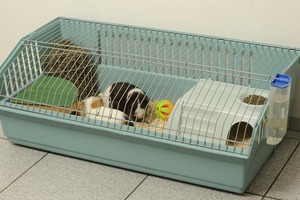 Hay, straw, and dried grass should make up half of your guinea pig's diet. In the summer, you can feed them fresh grass, which can also be dried. Pay particular attention to the plants you feed your guinea pig—avoid grasses that can cause bloat. In winter, guinea pigs' main food is hay and straw. Procuring this food is easy for those living in rural areas. They can begin harvesting grass in the summer to ensure a winter supply. Feeding a guinea pig isn't too difficult for city dwellers either. You can find food for them at any pet store. Dandelions are a particular favorite, and they consider them a delicious treat.
Be very careful with your pet as this is very gentle creatures, and any mistake you make during care can seriously impact their health. To reduce illness, be careful what you feed them and eliminate all foods that fall under the "forbidden" category.
Never feed your guinea pig anything you eat yourself. This includes cooked food, overly salty foods, and fried foods.
You should also not give it to pigs sweets and canned goodsBe careful with the herbs you feed your pet: they should not have dew on them.
You will also have to exclude fresh bread, potatoes, peas and other legumes, as well as nuts and berries from the list of “dishes” that can be fed to a guinea pig.
How to keep a guinea pig at home?
To make your pet feel comfortable, you must create comfortable living conditions for it.
House arrangement
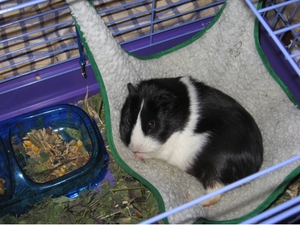 Before you get a guinea pig, you should take care of creating a comfortable corner for it, and this will be comfortable and spacious cage, which will make caring for it much easier. You can even keep it in a cage designed for mice, rats, and parrots.
The easiest way is to buy one from a store, but if you have an old cage at home, you can make some minor modifications to its design and use it for your guinea pig.
An empty aquarium can also be a good option for housing a guinea pig. However, keep in mind that it shouldn't be closed. For safety reasons, especially for those who keep a cat, you'll need to partially cover the aquarium, covering about two-thirds of its surface.
Choosing a drinking bowl
You can buy this container from which your animal will drink water at any pet store. a fairly cheap accessory, so it won't cost much. Once you get this dish, you'll need to attach it to the cage wall.
Scoop
This accessory will help you keep your pet's cage clean. But you don't have to buy it from a specialty store. If you have a toy or plastic scoop, you can use it for this purpose. You can make the bedding from:
- hay;
- tyrsa.
You can also use unconventional options - cat litterIf you're more interested in bedding made from sawdust, we recommend choosing one with large granules.
If the sawdust is too small, it could accidentally get into the animal's nose, which could end very tragically. Therefore, to avoid such consequences It is recommended to use sawdustThis litter has traditionally been very popular among owners. Moreover, you won't have to spend money on it, as it can be found on the street. Its cost-effectiveness makes it especially attractive, so you won't have to frequently stock up on large quantities of sawdust.
Conclusion
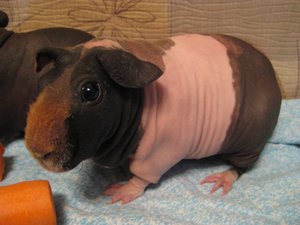 Some may think a guinea pig is the most suitable pet for home living. This belief is often based on its small size. However, this is not the case. Although guinea pigs require little food, they require ample attention during care. They are very delicate creatures that require special care. This applies primarily to nutrition—they should not be fed human food.
They can give only vegetarian dishes — mainly grass combined with vegetables. It's also important to remember that guinea pigs need walks. This will not only help maintain their health but also give the owner the opportunity to enjoy pleasant moments observing how their pet behaves in a new environment.